
Understanding the Current F&B Landscape in Malaysia
Malaysia’s Food & Beverage (F&B) sector is a vibrant and dynamic industry, reflecting the nation’s rich culinary heritage and evolving consumer preferences. Post-pandemic recovery has injected new life into the market, but it also presents unique challenges and opportunities, particularly when it comes to a effective Salary Defining Strategy for all job titles in Food & Beverage field in malaysia. Understanding this complex landscape is crucial for businesses aiming to attract, retain, and fairly compensate talent, while also navigating the various factors that influence remuneration across the industry.
From bustling hawker stalls to high-end fine dining establishments, the F&B sector is a significant employer and economic contributor. However, wage structures are not monolithic; they are shaped by a confluence of market trends, economic pressures, and geographical variations. This section delves into these key elements, offering a comprehensive overview of the current F&B market in Malaysia and highlighting the critical factors influencing salary structures and trends.

1. Current F&B market trends and growth areas (F&B salary trends Malaysia)
The Malaysian F&B market is experiencing a robust recovery and transformative growth. Consumer dining habits have diversified, with increasing demand for convenience, healthier options, sustainable practices, and unique experiential dining. This shift fuels the growth of specific segments, such as cafes, casual dining, food delivery services, and specialized eateries focusing on international or niche cuisines. The expansion of these areas directly impacts F&B salary trends Malaysia, creating new roles and increasing demand for skilled professionals.
For instance, the surge in food delivery services has led to a greater need for kitchen staff, packers, and logistics coordinators, while the burgeoning cafe culture requires skilled baristas and pastry chefs. Businesses adopting digital transformation, such as online ordering systems and data analytics, also seek professionals with tech-savvy skills. These evolving trends necessitate that a Salary Defining Strategy for all job titles in Food & Beverage field in malaysia remains agile, constantly benchmarking against industry standards and recognizing the value of specialized skills in high-growth areas. The competition for talent in these burgeoning segments often pushes wages upwards, especially for roles requiring specific expertise or extensive experience.
2. Impact of economic factors (inflation, tourism) on F&B wages
Economic forces play a profound role in shaping F&B wages across Malaysia. Inflation, a persistent concern, directly impacts both the operational costs for F&B businesses and the purchasing power of employees. As the cost of ingredients, utilities, and rent rises, businesses face pressure to increase menu prices, which can affect consumer demand. Simultaneously, employees grapple with a higher cost of living, leading to demands for increased wages to maintain their living standards.
Conversely, the resurgence of tourism, both domestic and international, is a significant booster for the F&B sector. A vibrant tourism industry translates to higher patronage, increased revenue, and a greater capacity for businesses, especially in hotels, resorts, and popular tourist destinations, to offer more competitive F&B wages. The latest Malaysia’s Economic Report 2023/2024 highlights the projected economic growth, which generally correlates with stronger consumer spending and a healthier job market, influencing salary definitions. However, the balance is delicate; businesses must strategically manage their financial health to offer attractive compensation while remaining profitable amidst fluctuating economic conditions.
3. Regional salary variations (Kuala Lumpur vs. other states)
One of the most significant considerations for any Salary Defining Strategy for all job titles in Food & Beverage field in malaysia is the pronounced regional variation in F&B salaries. Kuala Lumpur, as the nation’s capital and economic hub, typically offers higher wages across all job titles in the F&B sector. This is primarily due to the higher cost of living in the metropolis, a greater concentration of high-end and international establishments, and intense competition for skilled labor. Executive chefs, restaurant managers, and even experienced service staff can expect to command better salaries in KL compared to other states.
In contrast, while major urban centers like Penang and Johor Bahru also boast competitive F&B markets, wages tend to be slightly lower than in Kuala Lumpur, reflecting a comparatively reduced cost of living and potentially a different market density. In more rural or less developed states, F&B salaries are generally lower still, often aligning with the local economic conditions and the prevalence of smaller, local businesses. Therefore, a successful Salary Defining Strategy for all job titles in Food & Beverage field in malaysia must be granular, accounting for these geographical disparities to ensure fair compensation that is regionally competitive and sustainable for both employers and employees.
Key Factors Influencing F&B Salaries
Delve into the specific elements that determine an individual’s earning potential within the Malaysian F&B sector, from experience to specialized skills.
The vibrant and ever-evolving Food & Beverage (F&B) sector in Malaysia offers a diverse range of career opportunities, each with its own unique compensation structure. Understanding the key factors that influence F&B salary Malaysia is crucial for both aspiring professionals and seasoned veterans looking to optimize their earning potential. A robust Salary Defining Strategy for all job titles in Food & Beverage field in malaysia involves evaluating several interconnected elements, from individual capabilities to the operational specifics of the establishment. For current Malaysian F&B sector data, professionals can often refer to comprehensive industry reports and salary benchmarks. This comprehensive guide explores the primary determinants of F&B compensation across the nation, shedding light on what drives earnings in this dynamic industry.
1. Experience level and seniority (Career progression F&B salary)
Experience remains a cornerstone in determining F&B salary Malaysia. Entry-level positions, such as junior waitstaff, kitchen helpers, or barbacks, typically command base wages that reflect foundational duties and a learning curve. As professionals accumulate years of service and demonstrate consistent performance, their earning potential significantly increases. A clear career progression F&B salary is evident as individuals move from operational roles to supervisory and then managerial positions. For instance, a commis chef will see their Chef salary Malaysia significantly lower than a Sous Chef or an Executive Chef, who brings extensive culinary expertise and leadership to the table. Similarly, a junior waiter or Waiter salary Malaysia will be base-level, while a seasoned Restaurant Manager with a proven track record in operations, staff management, and customer satisfaction will command a much higher hospitality industry pay Malaysia compared to a junior supervisor. Seniority not only signifies a longer tenure but also a deeper understanding of industry best practices, operational efficiencies, and problem-solving skills, all of which are highly valued and reflected in higher F&B industry compensation Malaysia. The ability to mentor junior staff, manage budgets, and contribute to the strategic growth of an outlet further solidifies one’s position for elevated pay.
2. Specialized skills and certifications (Skills impact on F&B pay)
Beyond general experience, specific skills and professional certifications play a pivotal role in boosting an individual’s F&B salary Malaysia. In the competitive Malaysian F&B landscape, possessing unique or highly sought-after talents can significantly enhance one’s market value. For example, a sommelier with WSET (Wine & Spirit Education Trust) certifications can command a premium in fine dining establishments due to their expertise in wine selection, pairing, and service. Similarly, skilled baristas with latte art proficiency or mixologists capable of crafting innovative cocktails will often see their Bartender salary Malaysia elevated more than general service staff. Culinary skills pay Malaysia is particularly sensitive to specialization; chefs trained in specific cuisines (e.g., French, Japanese, Halal-certified), pastry chefs, or those with expertise in dietary restrictions (e.g., vegan, gluten-free) often find themselves in higher demand. Health and safety certifications (e.g., HACCP), food hygiene credentials, and even language proficiency (especially for tourist-heavy areas) are additional skills impact on F&B pay factors that can differentiate candidates and justify higher wages. Investing in continuous learning and acquiring specialized skills is a vital aspect of increasing one’s F&B career progression Malaysia and overall earning potential. The more unique and valuable the skill set, the greater the leverage an individual has in salary negotiations within the restaurant salary Malaysia and hotel F&B salary segments.
3. Type of establishment (fine dining, casual, hotel, chain – Hotel F&B roles pay)
The nature and prestige of the establishment where one works profoundly influence F&B salaries. Generally, fine dining salary Malaysia, luxury hotels, and high-end resorts offer more attractive compensation packages compared to casual dining pay Malaysia outlets, fast-food chains, or smaller independent eateries. This disparity arises from several factors:
- Customer Base and Pricing: Fine dining restaurants and luxury hotels cater to a clientele willing to pay premium prices, allowing them to allocate a larger budget for staff salaries and benefits.
- Service Standards: These establishments demand a higher level of professionalism, specialized training, and meticulous attention to detail from their staff, which justifies better pay. Hotel F&B roles pay, particularly in 4-star and 5-star properties, often include service charges, tips, and a comprehensive benefits package, significantly boosting the overall remuneration.
- Operational Scale: Large hotel chains and prestigious standalone restaurants often have more structured salary scales, better opportunities for career advancement, and superior employee welfare programs.
- Brand Reputation: Working for a renowned brand can also indirectly lead to better pay, as these establishments attract top talent and are willing to invest in retaining them.
Conversely, while casual dining and chain restaurants might offer entry points into the industry and relatively stable employment, their salary structures are typically more standardized and may not offer the same high earning potential as their luxury counterparts. However, management roles within large casual chains, such as a multi-unit F&B management salary Malaysia position, can still be quite lucrative due to the scope of responsibility and revenue managed. The market for F&B salary Malaysia is diverse, reflecting the vast array of dining experiences available across the country.
Salary Benchmarks by Job Title in Malaysia
Malaysia’s vibrant food and beverage (F&B) industry is a cornerstone of its economy, offering diverse career paths from the bustling kitchens to sophisticated dining rooms and lively bars. Understanding the typical salary ranges for various popular F&B positions is crucial for both employers seeking to attract top talent and professionals looking to advance their careers. This section provides a detailed look at salary benchmarks across key roles, offering concrete figures and insights to help define a robust Salary Defining Strategy for all job titles in Food & Beverage field in malaysia.
The F&B landscape in Malaysia is dynamic, with salaries influenced by numerous factors including the type of establishment (e.g., fine dining, casual restaurant, hotel, fast food), geographical location (Kuala Lumpur, Penang, Johor Bahru typically offer higher wages), level of experience, skill set, and even the economic climate. Benchmarking these salaries is essential for competitive hiring and ensuring fair compensation for employees.
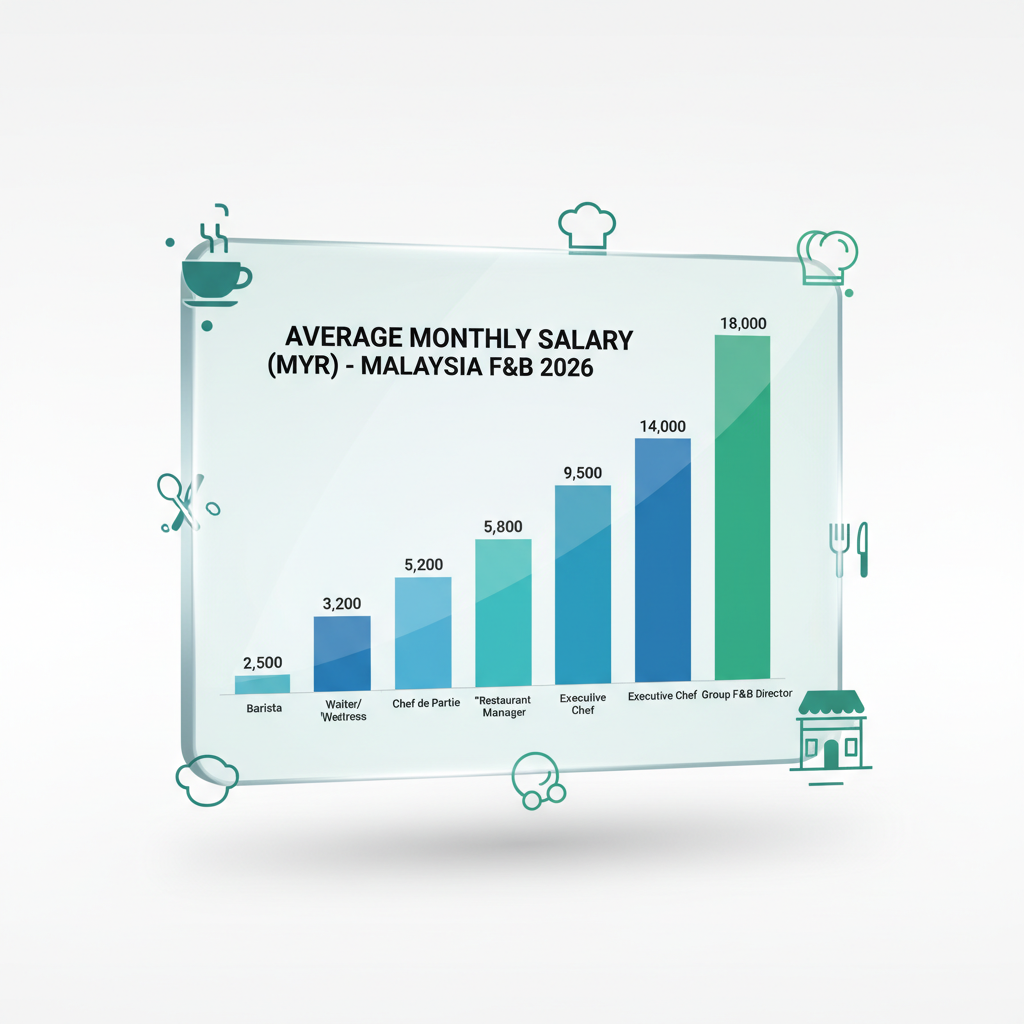
1. Chef salaries (Executive, Sous, Commis – Chef salary Malaysia)
Chef salaries in Malaysia vary significantly based on experience, culinary expertise, and the prestige of the establishment. The journey from a novice cook to an Executive Chef is marked by increasing responsibility and, consequently, higher remuneration.
- Executive Chef: As the head of the kitchen, an Executive Chef is responsible for menu creation, kitchen management, budgeting, and maintaining food quality standards. This top-tier role demands extensive experience (typically 10+ years), strong leadership, and business acumen. Salaries for an Executive Chef can range from RM 8,000 to RM 18,000+ per month, especially in five-star hotels or renowned fine dining restaurants.
- Sous Chef: The Sous Chef is the second-in-command, assisting the Executive Chef in daily operations, managing staff, and ensuring smooth kitchen flow. They often step in for the Executive Chef when absent. Requiring 5-8 years of experience, a Sous Chef can expect to earn between RM 4,500 and RM 7,500 monthly.
- Commis Chef: An entry-level position, the Commis Chef works under the guidance of senior chefs, learning various stations and techniques. This role is crucial for gaining foundational experience. Salaries typically range from RM 1,800 to RM 2,800 per month, often with opportunities for growth and skill development.
Factors impacting chef salaries include the cuisine specialty (e.g., Western, Asian, pastry), the volume of service, and whether the role involves supervisory duties over a large team.
2. Restaurant and Bar Management roles (Restaurant manager salary Malaysia)
Management positions in F&B demand a unique blend of operational prowess, leadership, and customer service skills. These roles are critical for the overall success and profitability of an outlet.
- Restaurant Manager: A Restaurant Manager oversees all aspects of a restaurant’s operations, including staff training, customer satisfaction, financial management, and compliance with health regulations. They ensure a seamless dining experience and efficient business performance. With 5+ years of experience in hospitality, a Restaurant Manager can command a salary of RM 4,000 to RM 8,000 per month, depending on the size and type of establishment.
- Bar Manager: Similar to a Restaurant Manager but focused specifically on bar operations, a Bar Manager handles inventory, beverage procurement, staff supervision, and ensures a vibrant bar atmosphere. Strong product knowledge and trend awareness are key. Salaries typically fall between RM 3,500 and RM 6,500 monthly.
The revenue generated by the outlet, its brand reputation, and the manager’s ability to drive sales and control costs significantly influence these salary figures.
3. Service staff (Waiters, Baristas, Bartenders – Barista salary Malaysia)
Front-of-house service staff are the direct interface with customers, playing a vital role in customer satisfaction and the overall dining or drinking experience. Their salaries often include a base wage plus tips and service charge.
- Waiters/Waitresses: Responsible for taking orders, serving food and beverages, and ensuring customer comfort. While often seen as entry-level, experienced waiters in high-end establishments can provide exceptional service. Base salaries usually range from RM 1,600 to RM 2,500 per month, often supplemented by service charge and tips.
- Baristas: Specialists in coffee preparation, baristas craft various coffee beverages, maintain equipment, and interact with customers. Their skill in latte art and knowledge of coffee beans can add value. A typical barista salary Malaysia ranges from RM 1,800 to RM 2,800 monthly.
- Bartenders: Mixologists who prepare alcoholic and non-alcoholic drinks, manage bar stock, and engage with patrons. Expertise in cocktail crafting and speed are highly valued. Bartenders can expect to earn between RM 2,000 and RM 3,500 per month, not including potential tips.
For service staff, the type of venue (e.g., bustling café vs. luxury hotel lounge), shift patterns, and potential for tips and service charges are significant contributors to their overall earnings. According to recent salary guides and career resources, the F&B sector continues to be a key employer, with a constant demand for skilled and dedicated professionals.
In conclusion, while these benchmarks provide a solid starting point, it’s crucial for F&B businesses to consider their unique operational needs, brand positioning, and the local market context when establishing their compensation structures. For professionals, continuous skill development, a focus on customer service excellence, and adaptability to industry trends are key to achieving career progression and higher earning potential in Malaysia’s dynamic food and beverage industry.
Crafting Your Compensation Strategy for F&B Roles
In Malaysia’s vibrant and competitive Food & Beverage (F&B) sector, a well-defined compensation strategy is not merely a budgetary exercise; it’s a cornerstone for success. For both employers striving to attract and retain top talent and employees seeking fair recognition for their skills, understanding and articulating a Salary Defining Strategy for all job titles in Food & Beverage field in Malaysia is paramount. This section delves into actionable strategies to construct competitive and equitable salary packages and benefits, ensuring a mutually beneficial relationship within the dynamic F&B landscape.
1. Researching market rates and industry benchmarks (Industry benchmarks F&B)
For employers, establishing competitive salaries begins with rigorous market understanding. This involves diving deep into Industry benchmarks F&B to gauge what competitors offer for similar roles, from executive chefs and restaurant managers to front-of-house and back-of-house staff. Leverage comprehensive salary surveys, industry associations, and competitor analysis to gain insights into typical remuneration. This data helps develop a robust compensation framework that attracts and retains skilled individuals, preventing high turnover. Understanding regional variations within Malaysia (e.g., Klang Valley vs. other states) is also critical for accurate benchmarking.
Employees, conversely, must empower themselves with knowledge of their market value. Utilize online salary aggregators, consult recruitment agencies specializing in hospitality, and network with peers to understand prevailing restaurant salary benchmarks Malaysia. This research forms the foundation for confident salary expectations and effective negotiation. Being informed about average salaries for F&B supervisors, pastry chefs, or even entry-level kitchen assistants ensures you are not underpaid and that your expectations align with industry standards, especially considering local Malaysian economic factors.
2. Understanding compensation structures (base salary, bonuses, incentives – Compensation structure Malaysia F&B)
Beyond the basic wage, a holistic approach to a Compensation structure Malaysia F&B encompasses a range of elements. For employers, this includes clearly defining base salaries, outlining performance-based bonuses tied to sales targets or customer satisfaction, and implementing incentive programs. Other vital components often include service charge distribution (common in Malaysian F&B), staff meals, transportation allowances, health and dental benefits, EPF, and SOCSO contributions. A transparent and attractive benefits package is crucial for employee retention and satisfaction, demonstrating commitment to their well-being and career growth.
From an employee’s perspective, it’s essential to look beyond the monthly paycheck. Evaluate the complete value proposition, including expected service charge, staff discounts, training opportunities, and career progression pathways. For roles like hotel F&B managers or head chefs, robust health insurance or a substantial annual bonus can significantly outweigh a marginally higher base salary elsewhere. Understanding how these diverse elements contribute to your overall F&B compensation Malaysia package is key to making informed career decisions and assessing your true earning potential in the hospitality pay structure.
3. Negotiating salary and benefits effectively (Salary negotiation F&B Malaysia)
Effective Salary negotiation F&B Malaysia is a skill that benefits both parties. Employers should approach negotiations with transparency, presenting a clear breakdown of the proposed package and being prepared to discuss components beyond base salary. Highlighting non-monetary perks, growth opportunities, and a positive work culture can significantly strengthen an offer. Flexibility, within reasonable limits, can differentiate your establishment in a competitive talent market, fostering goodwill and a stronger initial commitment from new hires.
For employees, preparation is paramount. Before discussions, clearly articulate your skills, experience, and specific contributions, quantifying achievements where possible (e.g., “increased customer satisfaction by 15%,” “managed food cost reduction”). Be clear about your expectations based on market research and the total compensation structure. Don’t shy away from discussing benefits like professional development budgets, flexible working hours (if applicable), or enhanced leave entitlements, as these add substantial value. A confident, well-reasoned approach to salary negotiation for F&B professionals in Malaysia demonstrates professionalism, leading to satisfying outcomes in Malaysia’s vibrant food scene.
Crafting a thoughtful and competitive compensation strategy is a continuous process. By diligently researching market rates, understanding compensation structures, and honing negotiation skills, both F&B employers and employees in Malaysia can forge fair, attractive, and sustainable remuneration agreements that propel the industry forward.
Future Outlook and Sustaining Competitiveness
The dynamic landscape of the Food & Beverage (F&B) sector in Malaysia demands a forward-thinking approach to talent management and compensation. As the industry evolves, F&B professionals and businesses must adapt to upcoming trends and develop long-term strategies to remain competitive, not only in service delivery but also in attracting and retaining top talent. A robust Salary Defining Strategy for all job titles in Food & Beverage field in malaysia is paramount for achieving sustainable growth and maintaining a competitive edge in a rapidly changing economic and technological environment. This includes proactively addressing factors like talent acquisition and retention, ensuring equitable compensation benchmarks, and fostering continuous development.

1. Impact of Technology and Automation on F&B Jobs and Salaries
Technology is rapidly reshaping the F&B industry, from front-of-house operations to back-end logistics. Automation, AI-driven inventory management, robotic kitchen assistants, and digital ordering systems are becoming increasingly prevalent. While these innovations streamline operations and enhance efficiency, they also necessitate a significant shift in the required skill sets for F&B professionals. Entry-level, repetitive tasks may see a decline, pushing demand towards roles requiring technological proficiency, data analysis, customer experience management, and creativity. This evolution will inevitably impact compensation benchmarks, leading to higher salaries for those with specialized tech skills and potentially re-evaluating wages for roles that become augmented or automated. Businesses must conduct a thorough skill gap analysis to understand these changes and adjust their performance-based pay structures accordingly to reflect new value contributions. Embracing HR technology to track these shifts will be key to informed salary decisions. Understanding these future trends is crucial for setting competitive salaries. For more insights into the broader impact of technology on the workforce, refer to reports like PwC’s The Future of Work in Asia.
2. Importance of Continuous Upskilling and Professional Development
In this evolving landscape, continuous upskilling and professional development are not just beneficial but essential for career longevity and improved earning potential in the F&B sector. As technology takes over routine tasks, the emphasis shifts to uniquely human skills such as critical thinking, problem-solving, emotional intelligence, adaptability, and creativity. F&B professionals must invest in acquiring new competencies, whether it’s mastering new software, understanding data analytics for menu engineering, or enhancing leadership and communication skills. Employers, in turn, must foster a culture of lifelong learning, offering structured training programs, certifications, and clear career progression paths. This commitment to development can significantly influence talent retention, as employees feel valued and see opportunities for sustainable wage growth. Offering robust training initiatives can become a strong component of an attractive employee benefits package, enhancing the overall value proposition beyond just the base salary.
3. Adapting to Changing Workforce Expectations and Cost of Living (Cost of living Malaysia F&B)
The modern workforce, particularly younger generations, brings new expectations regarding work-life balance, flexibility, and purpose-driven employment. F&B businesses must move beyond traditional remuneration models to encompass holistic well-being and a supportive work environment. This includes reviewing working hours, offering mental health support, and promoting diversity and inclusion. Furthermore, the rising cost of living Malaysia F&B professionals face, especially in urban centers, puts immense pressure on existing salary structures. To maintain competitiveness and ensure fair wages, businesses must regularly conduct market rate adjustments and consider regional salary disparities. A comprehensive Salary Defining Strategy for all job titles in Food & Beverage field in malaysia needs to account for these external economic pressures, offering not just competitive base salaries but also attractive benefits, flexible working arrangements, and potentially productivity incentives. This strategic approach ensures both employee satisfaction and the business’s long-term competitive advantage in attracting and retaining skilled talent. For deeper insights into salary strategies, explore resources like Salary Defining Strategy for all job titles in Food & Beverage field in malaysia.
In conclusion, the future of F&B competitiveness in Malaysia hinges on a proactive and holistic approach to human capital. By embracing technological advancements, prioritizing continuous professional development, and adapting to evolving workforce expectations and the realities of the cost of living Malaysia F&B workers encounter, businesses can craft an effective Salary Defining Strategy for all job titles in Food & Beverage field in malaysia. This multi-faceted strategy is crucial for securing top talent, ensuring equitable compensation, and fostering a thriving and sustainable F&B sector for years to come.
Partner with Shelby Global
You are looking for reliable HR Sevice Suppliers? Contact Shelby Global Now! To connect with verified talents and upgrade your orginization.
—————————————
References
– :
– Restaurant Manager Salaries in Malaysia – Indeed: https://my.indeed.com/career/restaurant-manager/salaries/Malaysia
– salary guides and career resources: https://www.jobstreet.com.my/career-resources/salary-guide
– Salaries & Wages Survey Report 2022 by Department of Statistics Malaysia: https://www.dosm.gov.my/portal-main/release-content/salaries-and-wages-survey-report-2022
– PwC: The Future of Work in Asia: https://www.pwc.com/my/en/publications/future-of-work-asia.html