Navigating Singapore’s Dynamic Tech Landscape
Singapore has firmly established itself as a vibrant epicentre of technological innovation and digital transformation in Southeast Asia and beyond. Its strategic location, pro-business policies, robust infrastructure, and commitment to fostering a skilled workforce have collectively propelled it to the forefront of the global technology arena. This report delves into the intricate dynamics of Singapore’s tech sector, offering a comprehensive market demand trend analysis designed to equip businesses, investors, and policymakers with actionable insights. Understanding the evolving landscape, emerging opportunities, and critical challenges is paramount for anyone looking to thrive within this competitive yet incredibly rewarding ecosystem. This market demand trend report of technology field in singapore aims to shed light on key growth areas, talent demands, and the broader economic implications of Singapore’s relentless pursuit of technological excellence.
1. Singapore’s Position in the Global Tech Arena
Singapore’s journey to becoming a global tech powerhouse is a testament to its forward-thinking vision and proactive governance. The city-state consistently ranks high in global competitiveness indices, attracting significant foreign direct investment into its technology sector. Its commitment to research and development, coupled with initiatives like Smart Nation, has cultivated an environment ripe for innovation across various domains, including artificial intelligence, cybersecurity, fintech, biotech, and urban solutions. Singapore’s role as a regional hub for major multinational corporations, alongside a burgeoning startup ecosystem, underscores its magnetic appeal. The government’s continuous investment in digital infrastructure and talent development programs further solidifies its standing as a leader in digital economy Singapore and innovation. This sustained focus on cutting-edge technologies and creating a conducive regulatory framework ensures that Singapore remains an attractive destination for tech companies seeking growth and expansion into the wider Asia-Pacific market. Its advanced digital infrastructure and robust connectivity make it an ideal testbed for new technologies and a launchpad for businesses aiming for regional dominance. The country’s commitment to upskilling its workforce also means a steady supply of highly qualified professionals, a critical factor for any thriving tech hub.
2. Purpose and Scope of This Report
The primary purpose of this market demand trend report of technology field in Singapore is to provide a granular analysis of the current and projected demands within Singapore’s technology sector. We aim to identify key growth drivers, emerging technologies shaping the landscape, and the skill sets most sought after by employers. The scope encompasses various sub-sectors, including but not limited to software development, cloud computing, data analytics, cybersecurity, AI/ML, and digital marketing. This report is designed to serve as a vital resource for a diverse audience: businesses looking to establish or expand their presence, investors seeking promising opportunities, educational institutions tailoring their curricula, and professionals planning their career trajectories. By examining both quantitative data and qualitative insights, we seek to present a holistic view of the market, highlighting where the most significant demands lie and how various stakeholders can strategically position themselves for success in Singapore tech innovation. Our analysis is not merely descriptive but also predictive, offering forward-looking perspectives on potential shifts and long-term trends.
3. Data Sources and Analytical Approach
Our comprehensive market demand trend report of technology field in Singapore is built upon a robust foundation of diverse and authoritative data sources. These include official government statistics from agencies such as the Infocomm Media Development Authority (IMDA) and the Ministry of Manpower (MOM), industry reports from leading market research firms (e.g., Gartner, IDC, Forrester), financial disclosures from key industry players, and academic research. We also integrate insights from extensive job market analysis, examining thousands of job postings across various platforms to identify in-demand skills and roles. Our analytical approach combines quantitative methods, such as trend analysis, statistical modeling, and economic forecasting, with qualitative techniques, including expert interviews with industry leaders, HR professionals, and technology specialists. This multi-faceted methodology ensures a well-rounded and accurate understanding of the market dynamics. Special attention is paid to cross-referencing data points to validate findings and eliminate biases, ensuring the reliability and credibility of our conclusions. By employing this rigorous approach, we strive to deliver an unbiased, data-driven assessment that provides clear, actionable intelligence on the technology market demand in Singapore.
Emerging Technology Sectors Driving Demand
Singapore’s reputation as a global innovation hub is largely fueled by its dynamic technology landscape. The city-state is not merely adopting new technologies but actively shaping their evolution and application across various industries. This proactive stance, coupled with robust government support and a highly skilled workforce, has created a vibrant ecosystem where specific technological domains are experiencing significant growth, thereby creating high demand for talent and fostering innovation. Understanding these shifts is crucial for anyone interested in the market demand trend report of technology field in singapore, as they dictate the future direction of economic development and employment opportunities.
1. Artificial Intelligence (AI) and Machine Learning Growth
Artificial Intelligence and Machine Learning continue to be at the forefront of technological advancement in Singapore. The nation’s commitment to becoming a Smart Nation is intrinsically linked to its ambitious National AI Strategy 2.0, which outlines plans to leverage AI across key sectors like healthcare, finance, logistics, and urban living. This strategic push has spurred remarkable growth in AI innovation, with companies actively integrating AI-driven solutions to enhance efficiency, personalize customer experiences, and unlock new business models. From predictive analytics and natural language processing to computer vision applications, the deployment of AI is becoming ubiquitous. This pervasive adoption naturally translates into a soaring demand for specialized talent, including data scientists, AI engineers, machine learning specialists, and AI ethicists. Universities and polytechnics are rapidly expanding their AI-focused curricula to meet this burgeoning need, preparing a new generation of professionals to drive Singapore’s AI ambitions forward.
2. Cybersecurity and Data Protection Imperatives
As Singapore accelerates its digital transformation journey, the imperative for robust cybersecurity and stringent data protection measures has never been more critical. The increasing sophistication of cyber threats, coupled with the exponential growth in data generation and exchange, places a premium on resilient digital defenses. Singapore has established itself as a leader in cybersecurity, implementing comprehensive frameworks like the Cybersecurity Act and the Personal Data Protection Act (PDPA) to safeguard its digital infrastructure and citizens’ data. This commitment creates a significant market for cybersecurity solutions and expertise. Businesses across all sectors are investing heavily in fortifying their digital perimeters, driven by both regulatory compliance and the need to protect sensitive information from breaches. Consequently, there is an immense demand for cybersecurity analysts, ethical hackers, security architects, data privacy officers, and incident response specialists. The dynamic nature of the cyber threat landscape ensures that this sector will continue to expand, offering continuous opportunities for professionals dedicated to securing the digital frontier.
3. Cloud Computing and Digital Transformation
Cloud computing serves as the fundamental backbone for much of Singapore’s digital transformation initiatives. The scalability, flexibility, and cost-efficiency offered by cloud platforms have made them indispensable for businesses of all sizes, from startups to multinational corporations. Singapore has seen a massive acceleration in cloud adoption, with major cloud service providers expanding their presence and local enterprises migrating their operations to the cloud at an unprecedented pace. This shift is not just about infrastructure; it’s a holistic digital transformation that redefines how businesses operate, innovate, and interact with customers. Government agencies are also leveraging cloud technology to deliver more efficient and citizen-centric services. This widespread embrace of cloud-first strategies generates substantial demand for a wide array of skilled professionals. Cloud architects, DevOps engineers, site reliability engineers, cloud security specialists, and full-stack developers are highly sought after to design, implement, and manage complex cloud environments. The continuous evolution of cloud technologies, including edge computing and serverless architectures, ensures sustained growth and innovation within this critical sector, further solidifying its role in Singapore’s thriving tech economy.
In-Demand Skills and Talent Gaps in Singapore Tech
An analysis of the critical technical and soft skills that employers are actively seeking, alongside an examination of current talent availability and future skill requirements.
Singapore’s technology landscape is experiencing unprecedented growth, solidifying its position as a leading digital hub in Southeast Asia. This rapid expansion, fueled by significant government initiatives and a thriving startup ecosystem, has generated an acute demand for specialized tech talent. Consequently, understanding the market demand trend report of technology field in singapore is crucial for both employers seeking to bridge talent gaps and professionals aiming to future-proof their careers. While the city-state boasts a highly educated workforce, a persistent challenge remains: matching available talent with the evolving needs of the industry, particularly in areas like advanced digital capabilities and innovative product development. This analysis delves into the critical skills in demand, identifies existing talent shortfalls, and anticipates future requirements in Singapore’s dynamic tech sector, offering insights into strategic workforce planning and career development.

1. Core Programming and Development Skills
At the foundation of any digital economy lies robust programming and development expertise. In Singapore, the demand for skilled software engineers and developers remains consistently high across various industries, from fintech and e-commerce to deep tech and government services. Employers are actively seeking professionals proficient in popular programming languages such as Python, Java, and JavaScript (especially with frameworks like React, Angular, and Node.js) due to their versatility in web development, backend systems, and data-driven applications. Beyond language proficiency, a strong grasp of cloud platforms like Amazon Web Services (AWS), Microsoft Azure, and Google Cloud Platform (GCP) is non-negotiable, as businesses increasingly migrate their infrastructure and services to the cloud. DevOps practices, encompassing continuous integration/continuous delivery (CI/CD), containerization with Docker, and orchestration with Kubernetes, are also paramount for streamlining development cycles and improving operational efficiency. Full-stack developers, capable of navigating both front-end and back-end environments, are particularly sought after, reflecting the need for versatile talent that can contribute across different stages of the software development lifecycle. Furthermore, foundational knowledge in cybersecurity principles is becoming integrated into development roles, ensuring secure by design practices.
2. Data Science and Analytics Expertise
The proliferation of data in today’s digital age has elevated data science and analytics into a critical discipline. Singaporean companies are eager to harness insights from vast datasets to drive strategic decisions, enhance customer experiences, and develop innovative products. This fuels a strong demand for data scientists, data engineers, machine learning engineers, and business intelligence analysts. Key technical skills include proficiency in data manipulation and querying languages like SQL, along with statistical programming in Python or R. Expertise in various machine learning techniques—from supervised and unsupervised learning to deep learning—is highly valued for building predictive models and intelligent systems. Familiarity with big data technologies such as Apache Spark and Hadoop, coupled with data visualization tools like Tableau and Power BI, enables professionals to process, analyze, and communicate complex data effectively. As Singapore pushes towards a smarter nation vision, the ability to translate raw data into actionable intelligence and drive innovation through artificial intelligence and machine learning applications is paramount, highlighting a significant talent gap that needs to be addressed.
3. Product Management and Agile Methodologies
As Singapore’s tech ecosystem matures, there’s a growing recognition of the importance of strategic product development. This has led to a surge in demand for skilled product managers and professionals adept in agile methodologies. Product managers are crucial for bridging the gap between business strategy, customer needs, and technical execution. They require a unique blend of analytical, communication, and leadership skills, along with a deep understanding of user experience (UX) and user interface (UI) principles. Core responsibilities include defining product vision and strategy, developing roadmaps, conducting market research, and collaborating closely with engineering and design teams. The adoption of agile frameworks such as Scrum and Kanban is widespread, necessitating professionals who can facilitate agile processes, manage backlogs, and foster continuous improvement. Roles like Scrum Masters and Agile Coaches are increasingly vital for guiding teams towards efficiency and responsiveness. This emphasis on customer-centric product development and iterative delivery underscores the need for individuals who can not only build products but also ensure they meet market needs effectively, propelling the next wave of innovation in the Republic. The TechSkills Accelerator (TeSA) initiative by IMDA, for instance, actively supports the upskilling and reskilling of the workforce in these areas, acknowledging their strategic importance.
In conclusion, Singapore’s thriving tech sector presents immense opportunities but also critical challenges regarding talent availability. Addressing these talent gaps requires concerted efforts from both government and industry to invest in education, continuous upskilling, and attracting global talent. Focusing on these in-demand technical and soft skills will be key to sustaining Singapore’s growth as a global technology leader and ensuring its workforce remains competitive in the rapidly evolving digital economy. Beyond these, emerging areas like AI ethics, quantum computing, and Web3 technologies are on the horizon, hinting at future skill requirements that will shape the next generation of tech talent.
Government Initiatives and Industry Support Systems
Description: This section details the proactive role of Singapore’s government and collaborative industry efforts in fostering tech growth, talent development, and a supportive ecosystem.
The vibrant technology landscape in Singapore is not merely a product of market forces but a deliberate cultivation driven by strong government initiatives and robust industry support systems. These concerted efforts are pivotal in shaping the nation’s digital future, addressing evolving challenges, and capitalizing on new opportunities within the global tech sphere. Understanding the confluence of these strategies is essential for any comprehensive market demand trend report of technology field in singapore, revealing how policy and partnership propel innovation and growth. Singapore’s foresight in planning for its digital future underscores its position as a leading technology hub in Asia, continuously attracting investment, fostering innovation, and developing a highly skilled workforce crucial for sustained economic expansion and digital transformation.
1. National AI Strategy and Implementation
Singapore’s commitment to artificial intelligence is codified in its comprehensive National AI Strategy, a cornerstone for building an AI-powered future. This strategy outlines a clear roadmap for integrating AI across various sectors, from healthcare and urban solutions to financial services and logistics. The government, through agencies like the Infocomm Media Development Authority (IMDA) and AI Singapore, actively invests in AI research and development, providing grants, infrastructure, and a conducive regulatory environment for AI innovation. These initiatives aim to solve national challenges, enhance productivity, and create new economic value, thereby generating significant demand for AI professionals and solutions.
For instance, the adoption of AI in smart city initiatives, such as intelligent transport systems and predictive maintenance for public infrastructure, directly influences the market demand trend report of technology field in singapore, particularly for AI engineers, data scientists, and machine learning specialists. The strategy encourages collaboration between public agencies, academic institutions, and private enterprises to accelerate the translation of research into deployable solutions. This multi-pronged approach not only nurtures a vibrant AI ecosystem but also ensures that Singapore remains at the forefront of global AI advancements, driving innovation and preparing its economy for the future. The emphasis on ethical AI governance further solidifies its position as a responsible and trustworthy AI hub.
2. Digital Economy Blueprint and Roadmaps
Complementing the AI strategy, Singapore’s broader Digital Economy Blueprint and various sectoral roadmaps provide a strategic framework for the nation’s overall digital transformation. These blueprints articulate a vision for a digitally-powered economy, encompassing areas such as digital infrastructure, cybersecurity, data governance, and the adoption of emerging technologies like 5G, IoT, and blockchain. They act as guiding documents for both the public and private sectors, identifying key growth areas and outlining the necessary steps to achieve digital maturity. This comprehensive approach directly influences the market demand trend report of technology field in singapore, indicating where future growth and talent needs will emerge.
The government actively promotes the digitalization of Small and Medium Enterprises (SMEs) through grants and support schemes, helping them adopt digital solutions to improve efficiency and reach new markets. Initiatives to build a robust digital infrastructure, including nationwide 5G deployment, underpin the growth of cloud computing, edge computing, and other data-intensive technologies. These efforts create a fertile ground for tech companies to innovate and expand, leading to a sustained demand for skilled professionals in areas like cloud architecture, cybersecurity, and data analytics. Analyzing these blueprints is crucial for understanding the trajectory of market demand trend report of technology field in singapore as they directly shape the economic landscape and identify priority technology sectors for investment and development.
3. Talent Development Programs (e.g., TechSkills Accelerator)
Recognizing that a skilled workforce is the bedrock of a thriving digital economy, Singapore has invested heavily in comprehensive tech talent development programs. Foremost among these is the TechSkills Accelerator (TeSA), an initiative by IMDA and SkillsFuture Singapore. TeSA aims to develop and reskill Singaporeans for the infocomm technology (ICT) sector, addressing the evolving skill demands of the digital economy. It offers a wide array of programs, from intensive bootcamps and industry attachments to professional certifications, covering critical areas like AI, cybersecurity, cloud computing, data analytics, and software development.
These programs are crucial in bridging the skills gap identified in any market demand trend report of technology field in singapore, ensuring that the local workforce possesses the competencies required by the rapidly evolving tech industry. Furthermore, the government actively promotes a culture of lifelong learning through SkillsFuture, providing individuals with credits to pursue training and upskilling opportunities. Beyond local talent, Singapore also adopts pragmatic immigration policies to attract global tech talent, ensuring a robust pipeline of expertise to support its ambitious digital transformation goals. The combination of local talent development and strategic global recruitment positions Singapore as a magnet for tech innovation and a dynamic hub for professionals seeking to contribute to cutting-edge projects. These initiatives are vital for sustaining growth and competitiveness in the face of global technological shifts.
Future Outlook and Strategic Recommendations for 2026
As Singapore continues to solidify its position as a leading technology hub in Southeast Asia, understanding the trajectory of its tech landscape is paramount. This section offers a forward-looking perspective, projecting the key market demand trends towards 2026 and providing actionable strategic advice for businesses, educators, and professionals to not only adapt but thrive amidst evolving dynamics.
1. Projected Market Growth Areas by 2026
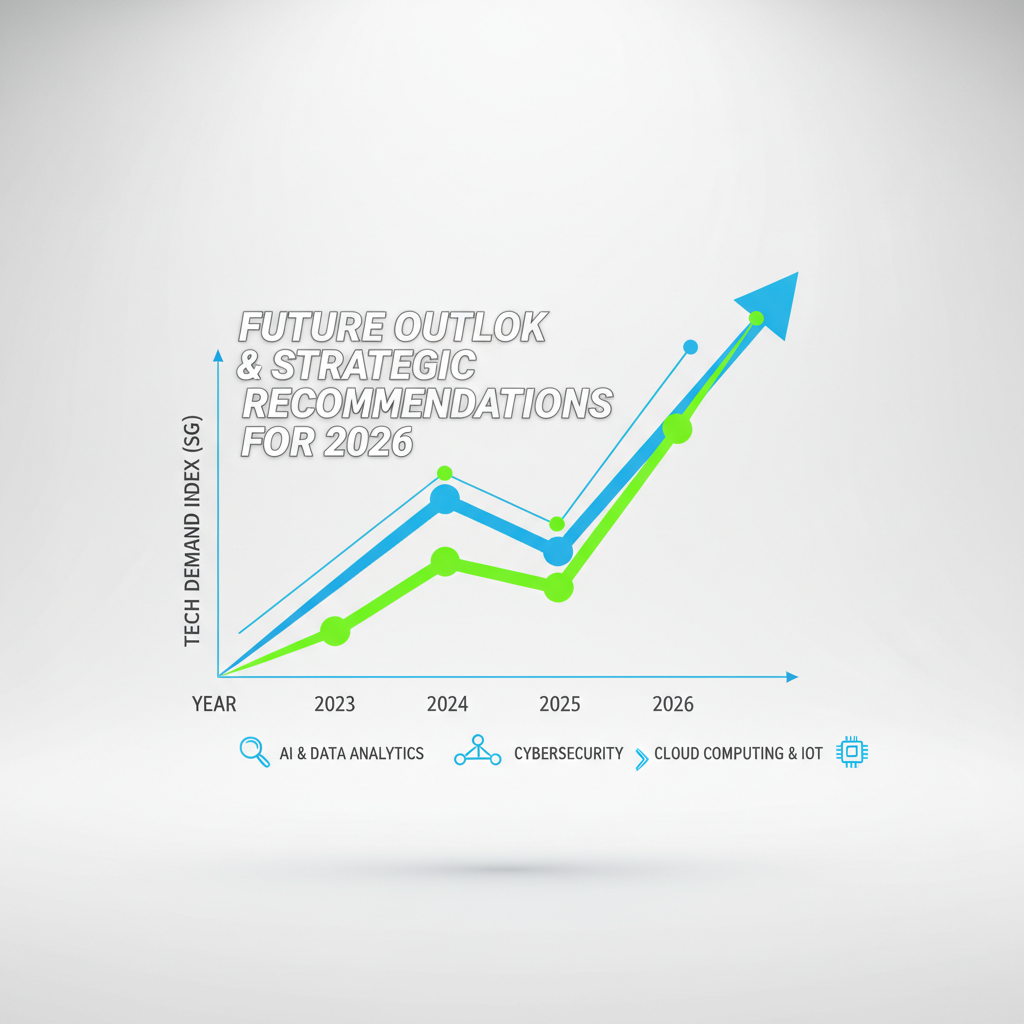
The next few years are poised to witness accelerated growth in several critical technology sectors within Singapore. Artificial Intelligence (AI) and Machine Learning (ML) will continue to permeate various industries, from finance to healthcare, driving demand for specialized talent and innovative solutions. Fintech remains a cornerstone, with blockchain technology and digital payments seeing sustained investment and adoption, fueled by regulatory support and a digitally-savvy population. Cybersecurity will experience heightened demand as digital transformation initiatives broaden the attack surface, making robust protection indispensable for businesses and critical infrastructure.
Beyond these established areas, emerging sectors like Green Technology and Sustainability Tech are gaining significant traction, aligning with Singapore’s national sustainability goals. This includes smart energy solutions, sustainable urban development technologies, and carbon capture innovations. Advanced Manufacturing and Industry 4.0 technologies, such as IoT, robotics, and automation, will also see increased integration to enhance productivity and resilience in supply chains. Healthcare technology, driven by an aging population and the push for personalized medicine, will expand into areas like telehealth, AI-powered diagnostics, and genomics. Staying informed on these shifts is crucial for any market demand trend report of technology field in singapore.
2. Anticipated Challenges and Opportunities
While the growth outlook is robust, Singapore’s technology sector will face its share of challenges. The persistent talent gap, particularly in niche areas like AI ethics, quantum computing, and advanced cybersecurity, remains a significant hurdle. Global economic volatility, geopolitical shifts, and intense regional competition could also impact investment flows and market stability. The imperative for continuous upskilling and reskilling of the workforce is paramount to bridge these gaps and maintain competitiveness.
However, these challenges are often accompanied by substantial opportunities. Singapore’s proactive government support, exemplified by initiatives from the Infocomm Media Development Authority (IMDA), provides a strong foundation for innovation and digital transformation. The nation’s strategic location and well-developed infrastructure make it an ideal launchpad for regional expansion. Furthermore, the strong emphasis on R&D, innovation labs, and startup ecosystems fosters a fertile ground for new technologies and business models. Companies that can leverage Singapore’s open economy and robust intellectual property framework will find ample opportunities for growth and collaboration.
3. Recommendations for Businesses and Investors
To thrive in this dynamic environment, businesses must adopt a multi-faceted strategy. Firstly, prioritize talent development and retention. Invest in continuous learning programs, foster a culture of innovation, and explore diverse talent pools, including global talent attraction and local workforce upskilling initiatives. Secondly, embrace digital transformation not just as a technology upgrade, but as a fundamental shift in business operations and customer engagement. Leverage data analytics and AI to derive actionable insights and personalize services.
Strategic partnerships, both local and international, will be critical for expanding capabilities and market reach, especially in emerging tech sectors like sustainability and advanced manufacturing. Agility and adaptability in business models are non-negotiable, allowing companies to pivot quickly in response to market changes. For investors, the focus should be on ventures that demonstrate strong innovation, scalability, and a clear path to addressing market demand in identified growth areas. Early-stage investments in AI, green tech, and specialized cybersecurity firms are likely to yield significant returns. Furthermore, evaluate companies with strong governance frameworks and a commitment to ethical AI and sustainable practices, as these will increasingly define long-term success in the technology field. Cultivating a forward-thinking approach, grounded in continuous analysis of the market demand trend report of technology field in singapore, will be key to unlocking future success.
Partner with Shelby Global
You are looking for reliable HR Sevice Suppliers? Contact Shelby Global Now! To connect with verified talents and upgrade your orginization.
—————————————
References
– Singapore ranked among top innovators in the world for digital economy: https://www.imda.gov.sg/about-imda/news-and-events/News-Clippings/2023/singapore-ranked-among-top-innovators-in-the-world-for-digital-economy
– :
– IMDA TechSkills Accelerator (TeSA) Program: https://www.imda.gov.sg/programme-listing/techskills-accelerator-tesa
– AI Singapore’s National AI Strategy: https://www.aisingapore.org/ai-strategy/
– :