
Overview of Singapore’s F&B HR Landscape
Singapore’s Food & Beverage (F&B) industry is a dynamic and essential part of its economy and cultural identity. From bustling hawker centres to Michelin-starred restaurants, the sector is characterized by intense competition, high consumer expectations, and unique operational complexities. This vibrant landscape demands a highly adaptable and resilient human resources (HR) environment, often grappling with a unique set of challenges and opportunities. Navigating the HR landscape within this diverse industry requires a deep understanding of its nuances, particularly when considering the Differences between the SMEs’ HR Structure and the Corporates’ HR Structure in Food & Beverage field in singapore.

1. Key characteristics of Singapore’s F&B sector
Singapore’s F&B sector is defined by several distinctive characteristics that profoundly influence its HR demands. Firstly, its sheer **diversity and dynamism** are unparalleled, catering to a wide spectrum of tastes from traditional local fare to cutting-edge international cuisine. This necessitates a workforce with diverse culinary skills and cultural sensitivities. Secondly, **high competition** is a constant, with new establishments frequently emerging, driving a continuous need for innovation, efficiency, and exceptional service to stand out. This intense rivalry puts pressure on businesses to optimize their staffing and HR practices to maintain a competitive edge.
Thirdly, **demanding consumer expectations** mean that customers expect not just high-quality food, but also efficient service, unique dining experiences, and increasing attention to dietary preferences and sustainability. This requires well-trained staff capable of delivering consistent excellence under pressure. The sector’s dual reliance on **tourism and local demand** also creates fluctuating operational demands, requiring HR flexibility to scale up or down based on seasonal and economic shifts. Finally, the **operational intensity** of F&B, characterized by long operating hours, peak periods, the handling of perishable goods, and a fast-paced environment, places significant stress on employees and management alike, making employee well-being and retention critical HR concerns.
2. Common HR challenges faced across the industry (e.g., labor shortage, high turnover)
Despite its vibrancy, Singapore’s F&B industry is perennially plagued by several acute HR challenges. A **persistent labor shortage** stands as the most formidable hurdle. Singapore’s aging population, coupled with a societal preference for white-collar jobs, results in a perennial scarcity of local talent willing to undertake the demanding operational roles inherent in F&B. This issue is further exacerbated by government restrictions on foreign labour, necessitating businesses to do more with fewer hands.
Concurrently, the industry experiences **high employee turnover**. The demanding work conditions, irregular hours, and often perceived limited career progression paths contribute to employees frequently moving between establishments. This high churn rate incurs significant recruitment and training costs for businesses. Furthermore, there are discernible **skill gaps** within the workforce, particularly in areas requiring advanced culinary techniques, digital literacy for new technologies (e.g., POS systems, delivery platforms), and sophisticated customer service skills. Balancing **wage pressures** – attracting talent with competitive salaries while operating within tight profit margins – is another tightrope walk. The recently implemented Progressive Wage Model (PWM) aims to address wage growth and upskilling, but undeniably adds to operational expenses. For SMEs, these challenges are often amplified due to limited resources, lack of dedicated HR departments, and less bargaining power compared to larger corporate chains, highlighting the fundamental Differences between the SMEs’ HR Structure and the Corporates’ HR Structure in Food & Beverage field in singapore.
3. Regulatory landscape and labor laws impacting F&B HR practices
Singapore’s F&B sector operates within a robust and evolving regulatory framework designed to protect workers and ensure fair employment practices. The **Employment Act** serves as the cornerstone of labor law, dictating fundamental terms of employment, working hours, leave entitlements, and dismissal procedures. Compliance with this act is mandatory for all employers.
Critically for F&B, **foreign manpower policies** play a significant role. The Ministry of Manpower (MOM) enforces strict quotas (Dependency Ratio Ceiling – DRC), levies, and eligibility criteria for Work Permit and S Pass holders, reflecting the government’s efforts to control the foreign workforce and encourage local employment. These policies are subject to regular reviews and can significantly impact staffing strategies. The **Progressive Wage Model (PWM)** has been extended to the food services sector, mandating minimum wages and defining clear career progression pathways for various roles. According to the Ministry of Manpower’s Progressive Wage Model for the food services sector, employers must adhere to specific wage floors and provide training to upskill their local workers, ensuring fair remuneration and career development. This initiative, while beneficial for workers, necessitates careful financial planning and HR training investment from F&B businesses.
Furthermore, the **Fair Consideration Framework (FCF)** requires employers to advertise job vacancies on the MyCareersFuture portal and fairly consider Singaporean candidates before hiring foreign professionals, managers, and executives. Post-pandemic, **Safe Management Measures** continue to be crucial, impacting workplace layouts, hygiene protocols, and staffing levels to ensure public health and safety. Navigating this intricate web of regulations requires constant vigilance and proactive HR management to avoid penalties and foster a compliant, equitable work environment.
HR Structure in Food & Beverage SMEs
The vibrant and fast-paced nature of the Food & Beverage (F&B) sector in Singapore presents unique human resource challenges, particularly for Small and Medium-sized Enterprises (SMEs). Unlike their larger corporate counterparts, F&B SMEs operate with leaner resources, demanding an HR structure that prioritizes agility, multi-functionality, and direct owner involvement. Understanding these nuances is crucial for appreciating the distinct operational dynamics and the significant Differences between the SMEs’ HR Structure and the Corporates’ HR Structure in Food & Beverage field in singapore. While large F&B corporations often boast specialized HR departments covering a wide array of functions from talent acquisition to compensation and benefits, performance management, and organizational development, SMEs frequently condense these roles, adapting their HR approach to fit their scale and operational tempo. This often translates into a more hands-on, integrated approach where HR isn’t just a department but an inherent aspect of daily management.
1. Lean HR teams and multi-hat roles
In the vast majority of F&B SMEs, a dedicated, multi-person HR department is often a luxury. Instead, HR functions are typically handled by a lean team, sometimes comprising just one HR generalist, or even falling under the direct purview of the business owner, an operations manager, or finance controller. These individuals wear multiple hats, juggling traditional HR duties with other operational responsibilities. For instance, a manager might handle staff scheduling and inventory while simultaneously recruiting a new chef, managing payroll, or addressing a staff disciplinary issue. This multi-functional approach fosters a high degree of agility. Decisions can be made rapidly without navigating complex organizational hierarchies, allowing F&B SMEs to respond quickly to staffing needs, market shifts, or internal challenges. While this demands a broad skill set and adaptability, it also means that HR strategies are often highly practical and directly tied to immediate business needs. This contrasts sharply with specialized HR teams in corporate F&B entities, where distinct roles like talent acquisition specialists and compensation analysts work in silos. The lean structure in SMEs necessitates generalists who can perform a wide range of tasks, ensuring essential HR functions are maintained even with limited dedicated resources.
2. Focus on essential HR functions: recruitment, retention, and basic compliance
Given resource constraints, HR efforts in F&B SMEs naturally gravitate towards the most critical functions impacting daily operations: recruitment, retention, and basic compliance. The F&B sector, especially in Singapore, is characterized by high staff turnover, making effective recruitment a constant priority. SMEs must continuously attract, interview, and onboard staff, from kitchen crew to service personnel, often in a competitive labor market. Recruitment strategies are often more informal, relying on word-of-mouth, local job boards, or direct referrals rather than extensive employer branding. Simultaneously, employee retention is paramount. Losing a skilled chef or an experienced front-of-house manager can significantly disrupt operations. Hence, HR efforts often focus on creating a positive work environment, offering competitive (albeit often basic) benefits, and fostering team cohesion to reduce turnover. Furthermore, navigating Singapore’s robust labor laws and regulations – from employment contracts to CPF contributions and workplace safety – is non-negotiable. While large corporations might have dedicated compliance teams, SME HR personnel must ensure basic adherence to these regulations to avoid penalties and maintain operational legality. This means understanding the Employment Act, foreign worker regulations, and health and safety standards. Small Business HR Challenges, as highlighted by SHRM, underscore the universal importance of these foundational aspects across various industries, including F&B. More complex HR functions like elaborate performance management systems or extensive learning and development programs are often streamlined or deferred, as the immediate priority remains staffing and compliance.
3. Impact of owner-manager involvement on HR decisions and culture
Perhaps the most defining characteristic of HR in F&B SMEs is the profound and often direct involvement of the owner-manager in HR decisions and the shaping of workplace culture. Unlike corporate structures where HR policies are often formulated centrally, in an SME, the owner’s vision, values, and personality are intrinsically woven into every aspect of human resources. This direct involvement can be a double-edged sword. On one hand, it fosters a highly personalized and often familial work environment. Employees frequently have direct access to the decision-maker, leading to quicker issue resolution, more flexible arrangements, and a stronger sense of belonging. The owner-manager often acts as the de facto HR director, personally overseeing hiring decisions, mediating disputes, and directly communicating changes. This immediate engagement ensures that HR decisions are closely aligned with business goals, promoting agility and adaptability. For instance, a restaurant owner might personally interview every new waitstaff member to ensure cultural fit. On the other hand, this direct involvement can sometimes lead to a lack of formal processes, potential for bias, or an over-reliance on ad-hoc solutions rather than structured HR policies. While large corporations meticulously document procedures, SME HR practices are often more informal, reflecting the owner’s personal approach. This close relationship, however, often defines the unique culture of an F&B SME, creating a strong sense of team and shared purpose that larger, more bureaucratic organizations struggle to replicate.
In conclusion, the HR structure within Food & Beverage SMEs in Singapore is a testament to resourcefulness, adaptability, and direct engagement. Moving away from the highly specialized HR functions found in large corporations, SMEs thrive on lean teams, multi-functional roles, and an intense focus on recruitment, retention, and compliance. The indelible mark of the owner-manager on HR decisions and organizational culture further distinguishes this model, fostering environments that are often more agile and personally connected. These Differences between the SMEs’ HR Structure and the Corporates’ HR Structure in Food & Beverage field in singapore underscore not just a disparity in scale but a fundamentally different philosophical approach to managing human capital in one of the most dynamic industries.
HR Structure in Food & Beverage Corporates
Large Food & Beverage (F&B) corporations in Singapore operate on a significantly different scale compared to their SME counterparts. This distinction profoundly impacts their Human Resources (HR) structure, moving beyond generalist roles to specialized, strategic, and data-driven functions. Understanding the Differences between the SMEs’ HR Structure and the Corporates’ HR Structure in Food & Beverage field in Singapore reveals a landscape where HR is not merely administrative but a pivotal strategic partner. These large entities leverage advanced practices to manage vast workforces across multiple locations, diverse brand portfolios, and complex operational demands, ensuring talent acquisition, development, and retention align seamlessly with overarching business objectives. The emphasis shifts towards robust frameworks that support growth, drive innovation, and maintain competitive advantage in a dynamic market.
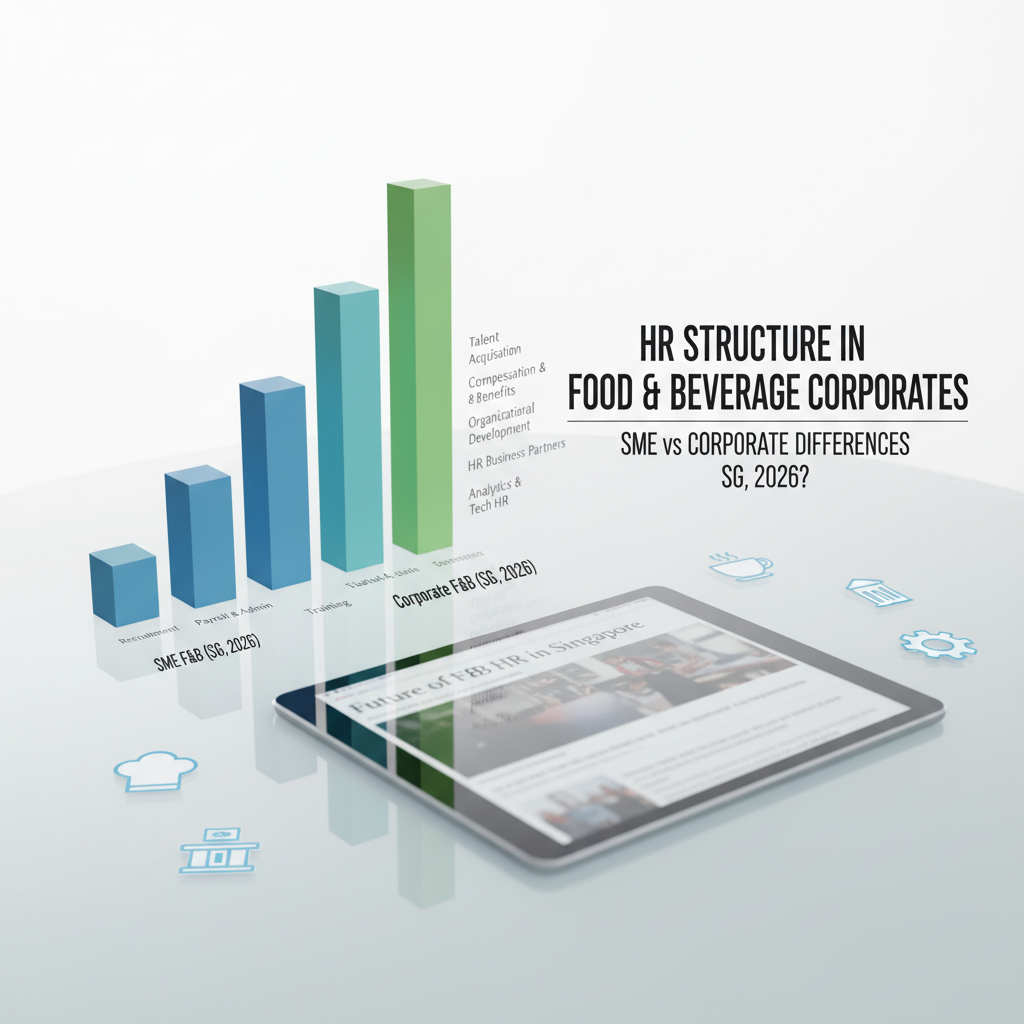
1. Specialized HR departments (e.g., talent acquisition, L&D, C&B)
Unlike the often lean, generalist HR teams found in F&B SMEs, large corporations boast highly specialized HR departments. This specialization is crucial for effectively managing the intricacies of a large and diverse workforce. Functions such as Talent Acquisition are dedicated solely to identifying, attracting, and onboarding the best candidates, often employing sophisticated recruitment technologies and employer branding strategies to fill roles ranging from production line staff to executive chefs and marketing specialists. Learning & Development (L&D) departments design and implement comprehensive training programs, critical for skill enhancement, compliance, and career progression within various F&B segments – from hygiene standards to culinary innovation and leadership development. Compensation & Benefits (C&B) teams are responsible for designing competitive remuneration packages, incentive schemes, and employee welfare programs that attract top talent and ensure equity across the organization. Other specialized units might include HR Operations, HR Information Systems (HRIS), Employee Relations, and Diversity & Inclusion, each contributing to a holistic and professional HR service delivery model.
2. Strategic HR planning and business partnering models
In large F&B corporates, HR transcends transactional duties to become a strategic business partner. This shift involves aligning HR strategies directly with the corporation’s long-term business goals, such as market expansion, new product launches, or digital transformation. HR Business Partners (HRBPs) are embedded within different business units or functions (e.g., R&D, operations, marketing) and work closely with senior leadership to understand their specific talent needs and challenges. They provide expert advice on workforce planning, organizational design, change management, and talent management, ensuring that HR initiatives proactively support operational efficiency and strategic objectives. This model facilitates a deeper understanding of the business context, enabling HR to contribute significantly to decision-making processes, from mergers and acquisitions to market entry strategies. According to SHRM, effective HR business partnering is essential for driving organizational performance and achieving strategic goals, a principle profoundly adopted in the sophisticated HR frameworks of large F&B entities.
3. Extensive use of HR technology and data analytics for decision-making
The scale and complexity of large F&B corporations necessitate the extensive adoption of advanced HR technology and data analytics. Integrated Human Capital Management (HCM) systems serve as central platforms for managing everything from payroll and benefits to performance management and talent development. These systems automate routine tasks, improve data accuracy, and enhance employee self-service capabilities. Beyond operational efficiency, these technologies generate vast amounts of data, which sophisticated HR analytics teams leverage to inform strategic decision-making. HR data analysts track key metrics such as employee turnover rates, recruitment effectiveness, training ROI, and compensation equity. This data-driven approach allows F&B corporates to identify trends, predict future workforce needs, optimize talent investments, and measure the impact of HR initiatives on business outcomes. For example, by analyzing sales data against training participation, they can pinpoint the most effective L&D programs, or by reviewing attrition rates across specific roles, they can proactively address retention challenges. This reliance on data ensures that HR decisions are evidence-based, leading to more impactful and strategically aligned outcomes.
Key Differentiating Factors and Their Implications
The culinary landscape in Singapore is a vibrant tapestry, woven from the dynamic operations of both nimble Food & Beverage (F&B) Small and Medium-sized Enterprises (SMEs) and established F&B Corporates. While both strive for culinary excellence and customer satisfaction, their approaches to Human Resources (HR) management diverge significantly, creating a cascade of implications for business operations, employee experience, and long-term growth. Understanding the Differences between the SMEs’ HR Structure and the Corporates’ HR Structure in Food & Beverage field in singapore is crucial for stakeholders aiming to thrive in this competitive sector.
-
Budget allocation for HR initiatives and technology
A fundamental distinction lies in the financial resources dedicated to HR. F&B SMEs, often operating on tighter margins, typically allocate limited budgets to HR. This translates into a reliance on manual processes for tasks like payroll, leave management, and basic compliance, or the use of generalist software that may lack industry-specific functionalities. HR technology, if present, is usually confined to essential administrative tools, leading to less automation and often higher administrative burdens on staff. The implications are far-reaching: HR personnel in SMEs often find themselves stretched thin, managing a broad spectrum of tasks with minimal technological support. This can hinder data-driven decision-making, make it challenging to attract tech-savvy talent, and divert focus from strategic HR initiatives towards routine administrative functions. Furthermore, the absence of sophisticated HR analytics can obscure critical insights into workforce performance, turnover trends, and training needs, potentially impacting operational efficiency and profitability.
In contrast, F&B Corporates possess substantially larger HR budgets, enabling them to invest in sophisticated Human Resources Information Systems (HRIS), Applicant Tracking Systems (ATS), and learning management platforms. Many even leverage AI and machine learning for recruitment, performance analytics, and employee engagement surveys. This technological prowess streamlines operations, enhances employee self-service portals, and provides HR teams with robust data for strategic planning. The ability to automate routine tasks frees up HR professionals to focus on higher-value activities like talent development, succession planning, and strategic workforce forecasting. This investment not only improves the overall employee experience by providing efficient tools and transparent processes but also positions the corporate entity to be more agile and responsive to market changes, ultimately bolstering its competitive edge.
-
Scope of HR responsibilities and strategic influence within the organization
The scope and influence of HR within F&B SMEs versus Corporates present another critical divergence. In SMEs, HR responsibilities are frequently absorbed by the owner, a general manager, or a single HR generalist. The focus is predominantly reactive and administrative—handling immediate issues like onboarding, payroll, employee relations, and ensuring basic compliance with Singapore’s employment laws. Strategic HR input, such as long-term workforce planning, talent pipeline development, or integrating HR strategies with overall business objectives, is often minimal or entirely absent. This limited scope means HR is rarely perceived as a strategic partner, leading to missed opportunities for proactive talent management and development that could drive business growth. It can also expose the business to greater risks of non-compliance if the HR person lacks specialized knowledge or resources to keep up with evolving regulations, especially in a dynamic sector like F&B.
Conversely, F&B Corporates typically boast dedicated HR departments with specialized roles spanning talent acquisition, learning and development (L&D), compensation and benefits, HR business partnering, and HR operations. These specialized teams operate proactively, aligning HR strategies directly with the organization’s overarching business goals. HR leaders often hold C-suite positions, participating in executive decision-making and shaping the company’s strategic direction. This strategic influence ensures that talent management, employee engagement, and organizational development are integral to business planning, fostering a robust talent pipeline, enhancing organizational culture, and building a strong employer brand. The strategic role of HR in corporates enables a more holistic approach to human capital, ensuring that the organization is not only compliant but also optimized for growth and innovation.
-
Employee development, training, and career pathing opportunities
The opportunities for employee development and career advancement also differ significantly. In F&B SMEs, training is often ad-hoc, informal, and primarily focused on addressing immediate skill gaps or basic operational requirements. Employees typically learn on the job, with limited access to formal development programs, certifications, or structured mentorship. Career pathing, if it exists, is often informal and opportunistic, relying more on individual initiative or the organic growth of the business rather than a predefined structure. This can lead to a sense of stagnation among ambitious employees, making it harder for SMEs to retain top talent. The lack of structured development also means that employees may not acquire a broad range of skills or gain exposure to different facets of the business, which can limit their upward mobility and overall job satisfaction.
F&B Corporates, on the other hand, invest heavily in comprehensive learning and development (L&D) programs. These include structured training modules, leadership development initiatives, succession planning frameworks, and clear, transparent career matrices. Employees are often encouraged to pursue external certifications, attend industry workshops, and participate in cross-functional projects. Many corporates have dedicated L&D teams that continuously assess training needs and curate development pathways designed to not only enhance current performance but also prepare employees for future leadership roles. This significant investment in human capital fosters a culture of continuous learning and growth. The implications are profound: enhanced employee engagement, lower turnover rates due to clear advancement opportunities, a strong internal talent pool capable of filling critical roles, and a robust employer brand that attracts high-caliber professionals. Organizations like Enterprise Singapore often highlight the importance of continuous skill upgrading, which corporates are better equipped to deliver.
In conclusion, the Differences between the SMEs’ HR Structure and the Corporates’ HR Structure in Food & Beverage field in singapore fundamentally shape their operational capabilities, talent management efficacy, and potential for sustainable growth. While SMEs offer agility and a close-knit culture, corporates leverage resources and specialized expertise to build more resilient, strategically aligned, and talent-rich organizations. Recognizing these disparities is the first step towards formulating targeted HR strategies that address the unique challenges and opportunities within each organizational context.
Best Practices and Future Trends for F&B HR in SG
Singapore’s Food & Beverage (F&B) sector is a vibrant yet demanding landscape, continually reshaped by evolving consumer tastes, technological advancements, and a tightening labor market. For businesses to thrive, optimizing Human Resources (HR) structures isn’t just about compliance; it’s a strategic imperative. This section explores best practices and future trends for F&B HR in Singapore, offering actionable insights for both Small and Medium-sized Enterprises (SMEs) and large Corporations. While their resources and scale differ, both must adapt to remain competitive and nurture a resilient workforce.
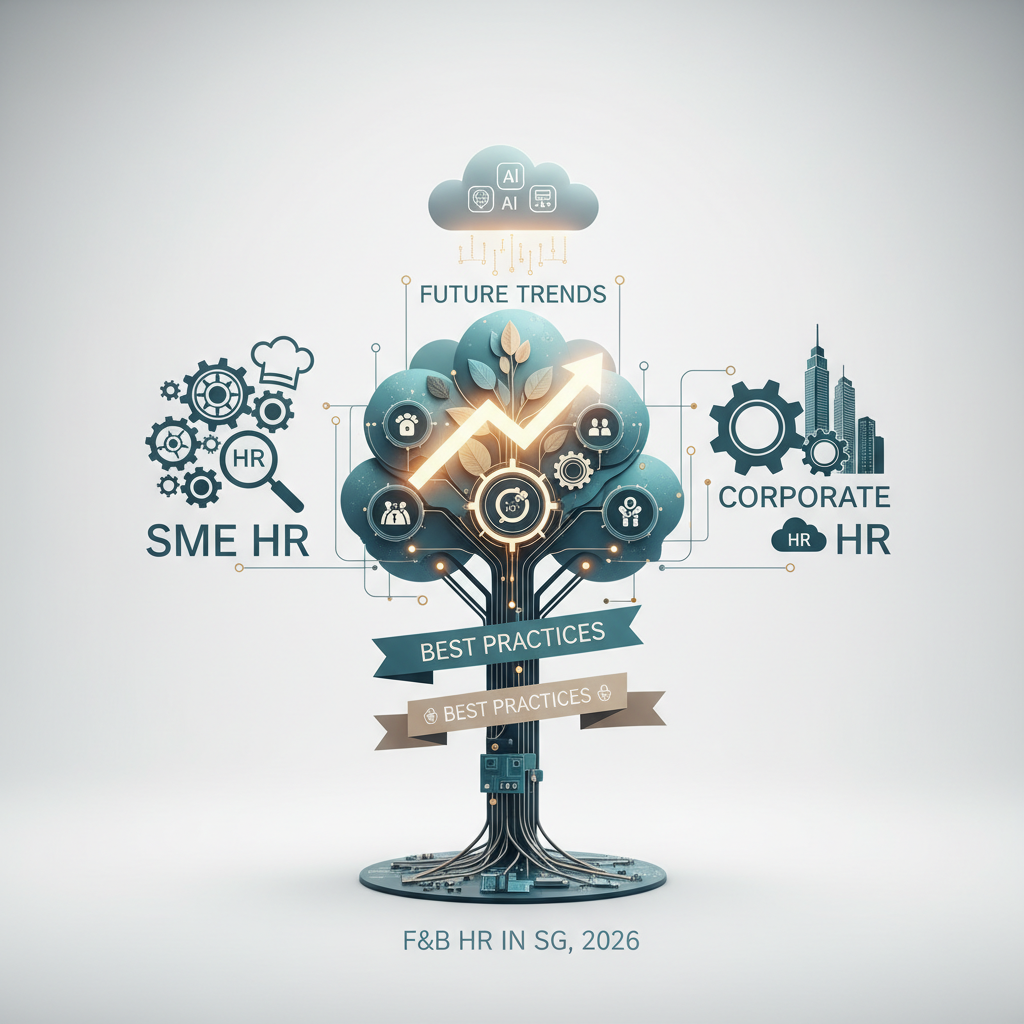
The fundamental differences between the SMEs’ HR Structure and the Corporates’ HR Structure in Food & Beverage field in singapore often lie in depth and specialization. SMEs typically have lean HR functions, often managed by a single HR generalist or even the business owner, covering a broad spectrum from recruitment to payroll. This ‘jack-of-all-trades’ approach demands agility but can lack specialized expertise in areas like talent analytics or sophisticated learning and development. Corporates, conversely, benefit from dedicated departments for recruitment, compensation & benefits, training, and HR technology, allowing for more strategic and proactive HR initiatives, albeit with potentially slower decision-making processes. Despite these structural disparities, the core challenges of attracting, developing, and retaining F&B talent remain universal.
-
Leveraging technology for HR efficiency and employee engagement
In the digital age, technology is no longer a luxury but a necessity for F&B HR. For SMEs, cloud-based HR Information Systems (HRIS) and payroll software can automate routine tasks, freeing up valuable time for strategic HR planning. These tools streamline onboarding, leave management, and performance tracking, significantly boosting efficiency. Corporates can further leverage advanced HR analytics, AI-powered recruitment platforms, and sophisticated learning management systems (LMS) to personalize employee development paths and forecast talent needs. Beyond efficiency, technology also plays a crucial role in employee engagement. Mobile-first communication apps, feedback platforms, and gamified training modules can foster a more connected and motivated workforce, enhancing their overall experience and reducing turnover in a demanding industry known for high attrition.
-
Innovative talent attraction and retention strategies for F&B workforce
Attracting and retaining talent in Singapore’s F&B sector requires moving beyond traditional approaches. Both SMEs and Corporates need to cultivate strong employer branding, showcasing their unique culture, growth opportunities, and commitment to employee well-being. For attraction, this means active social media presence, compelling career websites, and partnering with culinary schools. Retention strategies must focus on more than just competitive salaries; flexible work arrangements, such as staggered shifts or part-time options, can appeal to a broader talent pool. Robust mentorship programs, clear career progression frameworks, and recognition schemes are vital. Personalised development plans that address individual aspirations can significantly boost loyalty, ensuring valuable staff see a long-term future within the organisation, countering the industry’s often high turnover rates.
-
Upskilling and reskilling programs to address labor gaps and future needs
Addressing Singapore’s tight labor market and preparing for future F&B demands necessitates continuous upskilling and reskilling. This is critical for both frontline staff and management. For SMEs, this might involve tapping into government-supported training grants and schemes, focusing on practical skills like digital marketing for F&B, advanced culinary techniques, or customer service excellence. Corporates can invest in comprehensive in-house academies, cross-training initiatives, and partnerships with educational institutions to develop specialized skills for roles emerging from automation and digitalization. Programs should not only focus on technical skills but also soft skills like problem-solving, adaptability, and emotional intelligence. By proactively investing in their workforce’s capabilities, F&B businesses can build a resilient, future-ready team capable of navigating industry shifts and maintaining high service standards. Singapore’s SkillsFuture for Enterprises initiative, for example, offers various grants and resources to support companies in their workforce transformation journey.
Singapore’s F&B HR landscape is dynamic, demanding continuous adaptation from businesses of all sizes. By strategically leveraging technology, implementing innovative talent strategies, and committing to continuous upskilling, F&B establishments can not only overcome current challenges but also build robust, agile HR structures. This proactive approach will empower them to attract, nurture, and retain the best talent, ensuring sustainable growth and future success in an ever-evolving market.
Partner with Shelby Global
You are looking for reliable HR Sevice Suppliers? Contact Shelby Global Now! To connect with verified talents and upgrade your orginization.
—————————————
References
– Ministry of Manpower’s Progressive Wage Model for the food services sector: https://www.mom.gov.sg/employment-practices/progressive-wage-model/food-services-sector
– Small Business HR Challenges: https://www.shrm.org/resources-and-tools/hr-topics/small-business-hr-resources/small-business-hr-challenges
– SHRM: Human Resource Business Partners: https://www.shrm.org/resources–and–tools/hr-topics/human-resource-business-partners
– :
– SkillsFuture for Enterprises: https://www.skillsfuture.gov.sg/enterprises