Fundamental Organizational Context and HR Imperatives
The vibrant and highly competitive education landscape in Singapore presents a unique set of challenges and opportunities for Human Resources (HR) management. From agile EdTech startups to established private education institutions and multi-national corporations, understanding the inherent organizational context is paramount for crafting effective HR strategies. This section delves into the foundational characteristics and strategic HR needs driving Small and Medium-sized Enterprises (SMEs) and Corporates within Singapore’s education sector, highlighting the critical Differences between the SMEs’ HR Structure and the Corporates’ HR Structure in education companies in singapore.

-
Defining SMEs vs. Corporates in Singapore Education
In Singapore, SMEs are typically defined by annual revenue of up to S$100 million or headcount of up to 200 employees. In the education sector, this encompasses a wide array of entities, from niche tuition centres and boutique training providers to innovative EdTech startups and smaller private schools. Their HR structures are often lean, with HR functions frequently handled by business owners, administrative staff, or generalist managers. This multi-functional approach means that strategic HR planning, while vital, may be reactive rather than proactive, and compliance tasks often take precedence due to limited dedicated resources. The Differences between the SMEs’ HR Structure and the Corporates’ HR Structure in education companies in singapore are stark here; SMEs often lack dedicated HR departments, relying on external consultants or basic administrative support for critical functions like payroll and basic recruitment.
Conversely, Corporates in the Singapore education space—such as large international school chains, university satellite campuses, or global EdTech giants—operate on a significantly larger scale. They typically exceed the SME thresholds in both revenue and headcount, boasting complex organizational structures and established HR departments. These departments are often specialized, featuring dedicated teams for talent acquisition, learning and development, compensation and benefits, HR operations, and industrial relations. This specialization allows for more sophisticated, data-driven HR strategies and robust policy frameworks, enabling them to attract, develop, and retain talent more systematically.
-
Core Business Objectives Driving HR Strategy
The fundamental business objectives of SMEs and Corporates dictate vastly different HR imperatives. For SMEs in education, survival, agility, and niche market penetration are often paramount. Their HR strategy, if formalised, is typically geared towards cost-efficiency, rapid response to market changes, and fostering a strong, often founder-led, organizational culture. Attracting and retaining multi-skilled educators and staff who can wear multiple hats is critical. HR initiatives focus on direct communication, on-the-job training, and creating a familial work environment to compensate for limited financial incentives. The ability to adapt quickly to new curriculum demands or technological shifts relies heavily on a flexible and engaged workforce. The Differences between the SMEs’ HR Structure and the Corporates’ HR Structure in education companies in singapore are evident in their resource allocation: SMEs invest in adaptable generalists, while corporates build specialist teams.
Corporates, on the other hand, are driven by objectives such as market leadership, scalability, brand reputation, and long-term sustainability. Their HR strategies are designed to support extensive growth, ensure consistent quality across multiple locations, and manage a diverse, often international, workforce. This necessitates robust talent acquisition pipelines, comprehensive learning and development programs, structured career progression paths, and competitive compensation packages. Employer branding becomes crucial to attract top-tier educators and administrative talent. HR departments in corporates actively engage in strategic workforce planning, succession planning, and fostering a culture of continuous professional development to maintain their competitive edge and uphold their institutional reputation.
-
Regulatory and Market Factors Influencing HR Decisions
Both SMEs and Corporates in Singapore’s education sector operate within a highly regulated environment, yet the impact of these regulations varies significantly based on organizational size and resources. Singapore’s employment regulations, including the Employment Act, Fair Consideration Framework, and Personal Data Protection Act (PDPA), apply universally. For SMEs, compliance can be a significant administrative burden, often consuming valuable time and resources that could otherwise be directed towards growth or innovation. Their HR functions must prioritize adherence to these regulations, often with limited expertise, making the Differences between the SMEs’ HR Structure and the Corporates’ HR Structure in education companies in singapore most pronounced in their capacity for proactive compliance.
Corporates, with their dedicated legal and HR compliance teams, are better equipped to navigate this complex regulatory landscape. They can implement sophisticated systems and training to ensure full adherence, minimizing risks and penalties. Beyond local regulations, international corporations also contend with global compliance standards and cross-border talent management complexities.
Market factors further shape HR decisions. The ongoing talent crunch for skilled educators, especially those proficient in digital pedagogy or specialized subjects, impacts both types of organizations. SMEs might leverage their flexible work arrangements or unique culture to attract talent, while Corporates rely on robust recruitment campaigns, attractive benefits, and global sourcing strategies. The rapid evolution of educational technology (EdTech) demands continuous upskilling, a challenge for SMEs with limited training budgets but an area where Corporates can invest heavily to maintain their technological advantage. Furthermore, fluctuating student enrollment and parental expectations compel HR to adapt staffing levels and skill sets swiftly, a task made easier in larger organizations with deeper resource pools.
Structure and Scale of HR Departments
The human resources (HR) landscape within Singapore’s education sector presents a stark contrast when comparing small-to-medium enterprises (SMEs) and large corporations. These differences are not merely superficial but delve deep into the core operational mechanics, strategic priorities, and overall organizational capabilities of their HR functions. Understanding the Differences between the SMEs’ HR Structure and the Corporates’ HR Structure in education companies in singapore is crucial for stakeholders, employees, and those seeking to navigate career paths within this dynamic industry. From team size and specialization to reporting lines and decision-making authority, the formalization of HR in education varies significantly, impacting everything from talent management in education SMEs to employee engagement within both SME HR structure education and corporate HR structure education environments. This analysis will highlight the crucial distinctions in Singapore education HR.
1. Lean vs. Layered: Team Size and Specialization
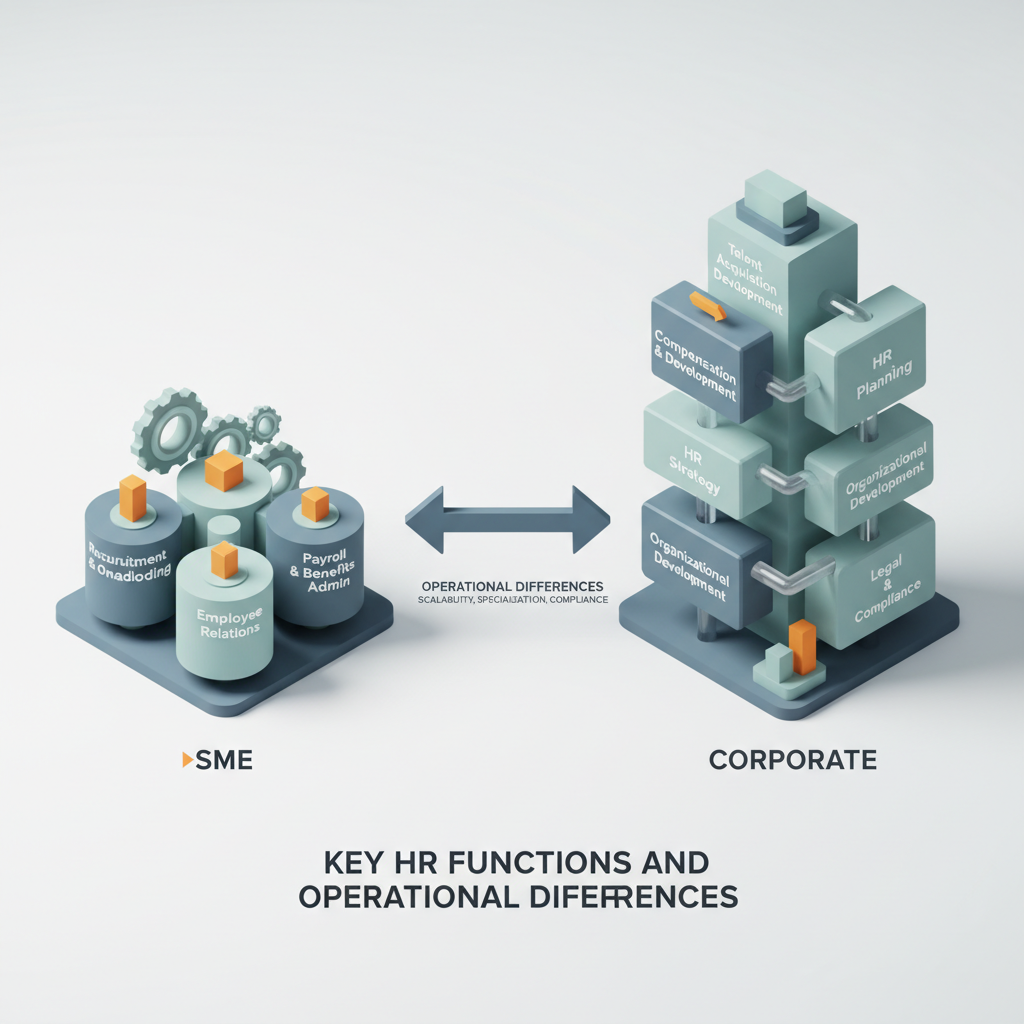
In Singapore’s vibrant education sector, the HR team size education sector varies dramatically. SMEs, often characterized by their agility and closer-knit cultures, typically operate with lean HR departments Singapore. These teams might consist of just one or two individuals, or even a single HR manager who juggles a multitude of responsibilities. This SME HR structure education necessitates a broad skillset, emphasizing efficiency and resourcefulness. The focus here is often on immediate operational needs, ensuring compliance, managing payroll, and handling basic employee relations. The scope for HR specialization Singapore in these smaller setups is limited, with HR personnel often acting as a central point for all people-related matters. They are the backbone for workforce planning education Singapore, even without dedicated specialists.
Conversely, large education companies, such as multinational language schools, university systems, or extensive vocational training providers, possess significantly more layered HR teams education sector. Their HR departments can comprise dozens, sometimes hundreds, of professionals. This scale allows for extensive HR specialization Singapore, with dedicated units for distinct functions. For instance, a large education corporation might have separate teams for talent acquisition, learning and development, compensation and benefits, HR information systems (HRIS), and HR business partnering. This specialization enables a deeper, more strategic approach to human capital management, addressing complex needs like global talent mobility, sophisticated reward strategies, and advanced analytics. These layered structures support a more formalization of HR in education, implementing robust policies and procedures across diverse employee groups and reflecting a distinct corporate HR structure education.
2. HR Generalists vs. Specialized Functions
The distinction between HR generalist roles education and specialized HR functions Singapore forms another critical differentiator. Within education SMEs, the HR generalist is the norm. These individuals are expected to wear many hats, overseeing the entire employee lifecycle from recruitment and onboarding to performance management, training coordination, and offboarding. Their role is inherently broad, requiring adaptability and a comprehensive understanding of various HR domains. While this offers a varied and often fast-paced work environment, it can also limit the depth of expertise available for highly complex or strategic HR challenges. HR strategy for education SMEs often relies on the generalist’s ability to prioritize and execute across multiple fronts simultaneously, ensuring basic compliance and employee satisfaction.
In contrast, large education corporations leverage specialized HR functions to drive strategic objectives. Talent management in education SMEs might be an informal process, but in large firms, dedicated talent acquisition teams are responsible for sophisticated recruitment strategies, employer branding, and pipeline development. Compensation & benefits education corporations have specialists designing competitive pay structures, benefits packages, and incentive schemes to attract and retain top educators and administrative staff. Learning and development teams craft extensive training programs, leadership academies, and career progression frameworks. These specialized units allow for greater expertise, efficiency, and the development of best-in-class HR practices, supporting a proactive HR strategy for large education companies. This division of labor ensures that each aspect of HR receives focused attention and expert execution, contributing to a more robust and sophisticated HR ecosystem.
3. Reporting Structures and Decision-Making Authority
The organizational hierarchy and the locus of HR decision-making autonomy also reveal significant variations. In smaller education businesses, HR reporting structures education are typically flat and straightforward. The HR manager often reports directly to the CEO, founder, or a senior operational leader. This close proximity to top leadership allows for swift decision-making and a direct influence on organizational strategy. Policies can be adapted quickly, and HR initiatives can be implemented with minimal bureaucratic hurdles. The HR strategy for education SMEs is often closely intertwined with the overall business strategy, driven by the immediate needs and vision of the leadership.
For large education companies, HR reporting structures education tend to be far more complex and multi-layered. HR departments might have regional heads, business unit HR partners, and specialists reporting up through various functional lines, eventually consolidating under a Chief HR Officer (CHRO) or VP of HR. Decision-making autonomy can be distributed, with some operational decisions made at the business partner level, while strategic policy formulations occur at the corporate HR leadership level. This complexity, while ensuring consistency across a large organization, can sometimes lead to longer decision-making cycles. However, it also allows for more thorough deliberation and alignment with broader corporate goals. Global trends in HR organizational design, such as those discussed by SHRM (Society for Human Resource Management), often influence these structures, emphasizing strategic partnership and data-driven insights. The formalization of HR in education within these corporations ensures that policies are robust, equitable, and legally compliant across diverse operations.
Key HR Functions and Operational Differences
The human resources landscape in Singapore’s education sector reveals distinct operational models between Small and Medium-sized Enterprises (SMEs) and large corporate entities. The fundamental differences between the SMEs’ HR structure and the Corporates’ HR structure in education companies in Singapore significantly impact critical HR functions. While both seek talent, their approaches are shaped by varying resources, strategic priorities, and complexities. SMEs often rely on lean HR teams, while corporates utilize specialized departments and robust infrastructures. This section explores how recruitment, training, compensation, and employee relations are managed differently, highlighting strategic shifts by organizational size.
1. Talent Acquisition and Onboarding Strategies
Attracting and integrating talent is paramount for education companies in Singapore. SMEs, often budget-constrained, typically use personal networks and cost-effective online portals. Many Singaporean SMEs struggle with various HR issues, impacting their recruitment. Their process is agile, with hiring managers directly involved. Onboarding is often highly personalized, integrating new hires rapidly into close-knit teams through on-the-job learning, though it may lack formal structure.
Conversely, large education corporates leverage extensive resources, utilizing sophisticated Applicant Tracking Systems (ATS), professional recruiters, and strong employer branding. Their onboarding programs are structured, multi-phased, and comprehensive, involving formal orientations and detailed training. While thorough, this can sometimes feel less personal. These contrasting approaches underscore the differences between the SMEs’ HR structure and the Corporates’ HR structure in education companies in Singapore in talent sourcing and integration.
2. Compensation, Benefits, and Performance Management
Remuneration and performance frameworks distinctly highlight the differences between the SMEs’ HR structure and the Corporates’ HR structure in education companies in Singapore. SMEs typically offer flexible, less standardized compensation, often negotiated individually. Benefits are generally basic, focusing on statutory requirements, with non-monetary perks like flexible hours acting as motivators. Performance management often relies on informal feedback and direct observation, fostering immediate accountability.
Corporates operate with highly structured compensation bands, detailed job grading, and comprehensive benefits like health insurance and retirement plans. Their scale allows sophisticated benchmarking. Performance management systems are formalized, involving KPIs, regular appraisals, and succession planning. While providing clarity, these systems can sometimes be rigid. Such varying approaches significantly impact an organization’s ability to motivate and retain its workforce in Singapore’s competitive education sector.
3. Learning & Development and Career Progression Pathways
Employee growth and clear career paths are vital for retention, but execution varies considerably. In SMEs in Singapore’s education sector, Learning and Development (L&D) is often opportunistic, driven by immediate needs. Employees gain diverse skills through multiple roles and direct mentorship. Formal training budgets are limited, leading to reliance on on-the-job learning. Career progression may be less linear but offers rapid advancement and broad business exposure.
For corporates, L&D is a strategic imperative with dedicated budgets. They offer structured training, leadership development, and professional certifications. Career progression pathways are clearly defined, with robust frameworks for promotions and internal transfers, offering clear growth trajectories. This extensive development support is a significant draw. Understanding these distinct approaches is crucial when navigating the differences between the SMEs’ HR structure and the Corporates’ HR structure in education companies in Singapore. Both models cater to different employee expectations and capacities.
In conclusion, while both SMEs and corporates in Singapore’s education sector aim for effective HR management, the differences between the SMEs’ HR structure and the Corporates’ HR structure in education companies in Singapore are profound. SMEs thrive on agility and personalized approaches, appealing to those seeking broader exposure and direct impact. Corporates offer structured paths and comprehensive benefits, attracting individuals desiring stability and extensive development. Understanding these nuances is vital for HR professionals and job seekers, ensuring HR strategies are tailored to each organizational size, fostering a thriving education ecosystem.
Technology Adoption and Data Utilization in HR
The landscape of Human Resources (HR) management has been profoundly reshaped by technological advancements, with a stark contrast in adoption and utilization strategies between Small and Medium-sized Enterprises (SMEs) and large corporates, particularly within the dynamic education sector in Singapore. Understanding these Differences between the SMEs’ HR Structure and the Corporates’ HR Structure in education companies in singapore is crucial for appreciating their respective approaches to managing human capital efficiently. While both strive for optimal talent management and operational excellence, their scale, resources, and strategic imperatives dictate vastly different technological footprints and data utilization capabilities.
1. HRIS and HR Tech Stacks: From Basic to Enterprise-Level
For SMEs in Singapore’s education sector, the adoption of an HR Information System (HRIS) often begins with a focus on foundational HR functions. Many start with basic HR tools, spreadsheets, or integrated solutions that offer essential features like payroll processing, leave management, and core employee data management. Their HR tech stacks are typically lean, budget-conscious, and designed for immediate operational needs rather than long-term strategic planning. Challenges often revolve around limited budgets for sophisticated systems and a lack of dedicated IT personnel to manage complex installations or integrations. These SME HR structures prioritize cost-effectiveness and ease of use, often opting for cloud-based, off-the-shelf HRIS solutions that require minimal customization.
In contrast, large corporate HR structures in education companies in Singapore deploy robust, enterprise-level HRIS platforms. These comprehensive systems, such as Workday, SAP SuccessFactors, or Oracle HCM, integrate a vast array of HR functionalities including talent acquisition, performance management, learning and development, and advanced payroll processing. The investment in such enterprise-level HR systems is significant, accompanied by dedicated HR technology teams or substantial IT support to ensure seamless integration, customization, and ongoing maintenance. Their HR tech stacks are designed to support complex organizational structures, global operations, and highly nuanced HR policies, providing a unified platform for all aspects of human capital management.
2. Data Analytics for Strategic HR Planning
The ability to leverage HR data analytics for strategic HR planning also presents a significant divergence. SMEs generally possess limited data analytics capabilities. Their approach to data is often reactive, relying on basic reports generated from their HRIS (if available) or manual collation from spreadsheets. The focus typically remains on operational metrics like headcount, turnover rates, and payroll costs. While valuable, this level of analysis often falls short of identifying deeper trends, predicting future workforce needs, or informing proactive talent strategies. The challenge lies in both the lack of specialized tools and the expertise to transform raw data into actionable insights for optimizing talent management or enhancing employee engagement.
Conversely, large education companies in Singapore with corporate structures have sophisticated HR data analytics teams. They utilize advanced analytical tools and techniques, including predictive analytics and machine learning, to gain profound insights into workforce dynamics. These insights are critical for strategic workforce planning, optimizing talent acquisition processes, identifying high-potential employees, and understanding drivers of employee retention. By interpreting HR reporting and various data points, these corporates can make data-driven decisions that directly impact business outcomes, enhance HR efficiency and resource optimization, and provide a competitive edge in attracting and retaining top talent.
3. Automation and Digital Transformation Initiatives
The pace and scope of automation and digital transformation HR initiatives further highlight the gap. For SMEs, automation is often adopted incrementally, targeting specific, repetitive HR tasks such as leave applications, expense claims, or simple onboarding procedures. Their digital transformation journey is typically piecemeal, driven by immediate needs for cost-saving or efficiency improvements in isolated processes. While beneficial, these efforts may not constitute a cohesive, organization-wide digital strategy, often limited by resource constraints and a focus on core service delivery in the education companies in Singapore market.
Corporates, however, embrace comprehensive digital transformation strategies across all HR functions. They leverage advanced technologies like Artificial Intelligence (AI) for recruitment, Robotic Process Automation (RPA) for administrative tasks, and machine learning for personalized learning pathways and performance management. Extensive HR automation creates end-to-end digital HR experiences, from automated recruitment workflows and self-service portals to AI-driven feedback systems. This holistic approach not only dramatically improves HR efficiency but also elevates the employee experience, allowing HR professionals to shift from administrative duties to more strategic, value-added activities, ultimately reinforcing the strength of their corporate HR structure.
In conclusion, while both SMEs and corporates in Singapore’s education sector acknowledge the importance of HR technology and data, their strategies for adoption and utilization diverge significantly. Corporates lead with enterprise-level systems, sophisticated analytics, and comprehensive digital transformation, leveraging substantial resources for strategic impact. SMEs, conversely, adopt more pragmatic, budget-conscious approaches, focusing on essential functions and gradual automation. These Differences between the SMEs’ HR Structure and the Corporates’ HR Structure in education companies in singapore underscore the varied challenges and opportunities presented by technology in managing the modern workforce.
Strategic HR Impact and Future Outlook
In Singapore’s dynamic education sector, Human Resources (HR) is increasingly recognized as a strategic imperative, evolving from a purely administrative function to a critical business partner. The impact and future outlook of HR, however, vary significantly between Small and Medium-sized Enterprises (SMEs) and larger corporate educational organizations. Understanding these distinctions is crucial for effective talent management, organizational development, and navigating the future landscape of education in the city-state.
1. HR as a Business Partner: Varied Levels of Influence
The strategic influence of HR as a business partner differs considerably based on an organization’s size and structure within Singapore’s education industry. In SMEs, HR often operates with a broader, more generalist scope. HR professionals in these agile setups are frequently involved in all aspects of the employee lifecycle, from recruitment and onboarding to performance management and basic compliance. Their proximity to leadership allows for direct input into business strategy, albeit with limited specialized resources. They often act as direct consultants to founders and managers, shaping culture and talent development initiatives through hands-on engagement. The strategic contribution here lies in rapid adaptation, fostering a strong, cohesive culture, and ensuring that every hire aligns directly with the company’s immediate growth objectives. The specific Differences between the SMEs’ HR Structure and the Corporates’ HR Structure in education companies in singapore dictate how HR priorities are set and executed.
Conversely, larger corporate education entities in Singapore typically feature highly specialized HR departments. These organizations have dedicated teams for talent acquisition, learning and development, compensation and benefits, HR analytics, and HR business partnering. Their strategic influence stems from data-driven insights, robust talent pipelines, and sophisticated HR technologies. Corporate HR is often tasked with aligning global HR strategies with local market needs, ensuring scalability and consistency across multiple brands or institutions. They play a pivotal role in succession planning, complex compensation structures, and driving large-scale organizational change initiatives. While potentially less agile than their SME counterparts, their ability to leverage extensive resources and specialized expertise allows for a more comprehensive and long-term strategic HR impact, focusing on systemic growth and talent retention on a larger scale.
2. Challenges and Opportunities for Each Structure
Both SMEs and corporates in Singapore’s education sector face unique challenges and opportunities regarding their HR structures. For SMEs, a primary challenge is resource constraint, making it difficult to compete with larger players for top talent, especially when offering comprehensive benefits or extensive career development pathways. Compliance with evolving labor laws can also be daunting without dedicated legal or HR specialists. However, opportunities abound in their inherent agility and ability to cultivate a strong, unique organizational culture. SMEs can foster a sense of belonging and direct impact, often attracting individuals who thrive in dynamic, less bureaucratic environments. Their HR can quickly implement new initiatives or policies, fostering rapid innovation.
Corporates, while having greater resources, often grapple with challenges such as bureaucracy, maintaining employee engagement across a vast workforce, and integrating diverse global strategies with local nuances. Talent retention can also be a significant issue, as internal mobility or external opportunities might tempt employees in a competitive market. Yet, their opportunities are substantial: robust internal systems, structured career development programs, and the ability to leverage economies of scale in training and benefits. Corporate HR can also invest heavily in advanced HR tech and analytics, providing deeper insights into workforce trends and predicting future talent needs. The sheer volume of 17 (sub-keyword) employees managed by these larger HR structures necessitates sophisticated strategic planning.
3. Adapting to Future Trends: Hybrid Work, Skills Gap, DEI
Singapore’s education sector HR, regardless of organizational size, must proactively adapt to several emerging trends. Hybrid work models, accelerated by recent global events, are reshaping how educators and administrative staff interact, collaborate, and deliver learning. HR departments must develop flexible policies, invest in remote work infrastructure, and train managers to lead hybrid teams effectively while maintaining productivity and employee well-being. This requires a delicate balance between flexibility and accountability, ensuring both educational quality and employee satisfaction.
Another critical trend is the growing skills gap. As education evolves with new technologies (AI, AR/VR in learning) and pedagogical approaches (personalized learning, competency-based education), HR must lead the charge in identifying future-ready skills. This involves designing continuous learning and development programs, upskilling existing educators in digital literacy and innovative teaching methods, and strategically recruiting talent with emerging skillsets. Partnering with government initiatives like SkillsFuture Singapore will be vital to ensuring the workforce remains competitive and relevant. Furthermore, Diversity, Equity, and Inclusion (DEI) is no longer just a buzzword but a strategic imperative. HR needs to champion DEI by implementing inclusive recruitment practices, fostering equitable career progression, and creating a workplace culture where all employees feel valued and respected. This not only enhances employee morale and retention but also enriches the learning environment for students, preparing them for an increasingly diverse global society.
Partner with Shelby Global
You are looking for reliable HR Sevice Suppliers? Contact Shelby Global Now! To connect with verified talents and upgrade your orginization.
—————————————
References
– Ministry of Manpower – Employment Act: https://www.mom.gov.sg/employment-practices/employment-act
– SHRM (Society for Human Resource Management): https://www.shrm.org/resources-and-tools/hr-topics/organizational-development-and-culture/pages/default.aspx
– Singapore SMEs Struggle with HR Issues: https://www.hrdmag.com/hk/news/employee-relations/singapore-smes-struggle-with-hr-issues/280031
– SHRM: Analytics That Improve HR Outcomes: https://www.shrm.org/resources-and-tools/hr-topics/talent-acquisition/pages/analytics-that-improve-hr-outcomes.aspx
– The Future of Jobs Report 2023: https://www.weforum.org/reports/the-future-of-jobs-report-2023/