
Understanding Vietnam’s Travel Industry HR Landscape
Vietnam’s travel sector is a vibrant and rapidly evolving ecosystem, characterized by its unique blend of traditional charm and modern development. This dynamism presents both immense opportunities and significant human resource challenges for enterprises of all sizes. From bustling metropolises to serene coastal towns and majestic mountains, the industry thrives on a diverse workforce. However, navigating the intricate HR landscape requires a nuanced understanding, particularly when examining the distinct operational models of small and medium-sized enterprises (SMEs) versus larger corporate entities. A key area of focus is understanding the Differences between the SMEs’ HR Structure and the Corporates’ HR Structure in Travels field in Vietnam, as these foundational differences dictate approaches to recruitment, retention, training, and compliance.
The general HR challenges prevalent in Vietnam’s travel sector often intersect with the specific capabilities and limitations of a company’s scale. While talent acquisition and development are universal concerns, the strategies employed and the success rates achieved vary considerably. This section delves into the defining characteristics of this sector’s HR environment, setting the stage for a deeper exploration of how enterprises — both small and large — manage their most valuable asset: their people.

1. Growth and Dynamics of Vietnam’s Tourism Market
Vietnam’s tourism market has experienced extraordinary growth over the past decade, transforming into a crucial pillar of the national economy. Pre-pandemic, international arrivals soared, and domestic tourism maintained robust expansion, driven by a growing middle class and improved infrastructure. Post-pandemic recovery has been swift and impressive, with the country consistently attracting millions of visitors annually. This explosive growth fuels an insatiable demand for labor across all segments of the travel industry, from hotels and resorts to tour operators, transportation services, and MICE (Meetings, Incentives, Conferences, Exhibitions) providers.
This dynamic environment directly impacts HR. For SMEs, often agile and adaptable, the rapid growth presents opportunities for niche market penetration but also strains their limited HR capabilities. They frequently rely on informal networks for recruitment and on-the-job training. In contrast, large corporates, with their established brands and structured HR departments, are better positioned to absorb rapid growth, often through bulk recruitment drives, graduate programs, and partnerships with vocational schools. The sheer scale of operations for corporates allows for more sophisticated workforce planning and development strategies, highlighting one of the primary Differences between the SMEs’ HR Structure and the Corporates’ HR Structure in Travels field in Vietnam when responding to market dynamics.
2. Common HR Hurdles Across the Travel Sector (e.g., talent scarcity, seasonality)
Despite the sector’s growth, several persistent HR challenges plague both small and large travel enterprises in Vietnam. Talent scarcity is perhaps the most significant. While a large labor pool exists, a shortage of highly skilled professionals, particularly those proficient in multiple languages, advanced digital marketing, and international customer service standards, is keenly felt. This gap necessitates continuous investment in training and development, a task that proves more arduous for resource-constrained SMEs.
Seasonality is another pervasive hurdle. The cyclical nature of tourism, with peak and off-peak periods, leads to fluctuating staffing needs. This often results in high employee turnover, as temporary workers seek more stable employment or skilled staff move between establishments based on demand. Managing this ebb and flow efficiently requires robust HR planning. Corporates often employ sophisticated scheduling software, offer more diverse employment contracts, and provide more comprehensive benefits to encourage retention during slower periods. SMEs, however, often resort to more ad-hoc solutions, which can contribute to greater instability and lower morale. This fundamental disparity in handling fluctuating demand underscores crucial Differences between the SMEs’ HR Structure and the Corporates’ HR Structure in Travels field in Vietnam.
Additionally, high expectations for service quality, coupled with demanding work hours, contribute to burnout and churn across the industry. Effective HR strategies are essential for fostering a positive work environment, ensuring fair compensation, and providing opportunities for career progression. Without these, businesses struggle to build a stable, motivated workforce.
3. Regulatory Frameworks Impacting HR in Vietnamese Travel
Vietnam’s labor laws provide a structured, albeit evolving, framework for employment. The primary legislation, including the Labor Code and associated decrees, governs aspects such as employment contracts, working hours, wages, social insurance, and dispute resolution. For the travel sector, specific regulations pertaining to hotel licensing, tour operator permits, and health and safety standards in hospitality also have direct HR implications, often requiring specific training and certification for employees.
Navigating this regulatory landscape can be particularly challenging for SMEs, which frequently lack dedicated legal or HR compliance departments. Owners or general managers often bear the responsibility for staying abreast of changing laws, potentially leading to unintentional non-compliance or inefficient practices. In contrast, large corporates typically have in-house legal teams or established relationships with external consultants, ensuring meticulous adherence to regulations. They can also invest in comprehensive HR information systems to manage employee data, payroll, and benefits in strict accordance with the law. This capacity to manage regulatory complexities is a significant point of divergence and another clear example of the Differences between the SMEs’ HR Structure and the Corporates’ HR Structure in Travels field in Vietnam, highlighting how scale impacts the burden and efficiency of HR operations. Adherence to these frameworks is not merely about avoiding penalties but also about fostering a fair and transparent work environment, which is crucial for attracting and retaining talent in a competitive market.
The HR Structure in SMEs within Vietnam’s Travel Field
The vibrant and rapidly expanding travel industry in Vietnam presents a dynamic landscape for businesses of all sizes. While large corporations often boast sophisticated and well-resourced Human Resources departments, Small and Medium-sized Enterprises (SMEs) navigate a distinct path. Understanding the Differences between the SMEs’ HR Structure and the Corporates’ HR Structure in Travels field in Vietnam is crucial for comprehending the operational realities and competitive dynamics within this sector. SMEs, forming the backbone of Vietnam’s economy, particularly in tourism, often adopt pragmatic and flexible approaches to HR, which starkly contrast with the more structured and formal methodologies seen in larger, corporate entities. This section delves into the typical HR organization within Vietnamese travel SMEs, highlighting their unique characteristics, HR management practices, and the common challenges they face in talent acquisition, development, and retention.
1. Informal vs. Formalized HR Practices
In most Vietnamese travel SMEs, HR practices tend to be considerably more informal compared to their corporate counterparts. Larger travel corporations, with their extensive workforces and complex operational structures, typically implement highly formalized HR systems. This includes comprehensive employee handbooks, detailed policy manuals covering everything from leave requests to disciplinary procedures, and rigorously documented performance appraisal systems. For SMEs operating in the travel sector, however, the approach is often ad-hoc and relationship-based. Decision-making regarding recruitment, compensation adjustments, or conflict resolution might rely heavily on the owner’s discretion or the immediate supervisor’s judgment rather than predefined policies. This informality, while fostering a close-knit, family-like atmosphere and allowing for quick, flexible responses to emerging situations, can also lead to inconsistencies, a lack of transparency, and potential legal vulnerabilities. Without clear guidelines, employees might feel uncertainty about career progression or equitable treatment within the small business environment. Conversely, corporate HR structures prioritize standardization and legal compliance, ensuring consistency across departments and branches, a luxury many travel SMEs cannot afford in terms of time, dedicated resources, or complexity of operations. The absence of a robust formal HR framework makes it essential for SME owners and managers to possess strong leadership and interpersonal skills to manage their teams effectively and mitigate potential disputes, ensuring smooth operation in the competitive travel market.
2. Multi-functional Roles and Limited Dedicated HR Staff
One of the most defining characteristics of the HR structure in Vietnamese travel SMEs is the prevalence of multi-functional roles. Unlike corporations that can afford dedicated HR specialists for recruitment, training, compensation & benefits, and employee relations, SMEs often delegate HR tasks among existing staff members. It’s not uncommon for an office manager, an accountant, or even the business owner themselves to handle various HR responsibilities alongside their primary duties. This means the person responsible for payroll might also be in charge of sourcing new tour guides, managing employee records, and organizing team-building events. This “wearing many hats” approach is a direct consequence of limited budgets and a smaller workforce, a common feature of small businesses in Vietnam. While it promotes cross-functional understanding and efficiency in some aspects, it can also dilute expertise and prevent a deep focus on strategic HR initiatives vital for long-term growth. The lack of dedicated HR professionals means that critical functions like talent development, succession planning, or comprehensive employee engagement programs often take a backseat to more immediate operational demands within these travel enterprises. For instance, while a corporate travel agency might invest heavily in leadership training for its branch managers, an SME might rely on on-the-job learning and informal mentoring, if any. This operational model highlights the resource constraints faced by travel SMEs and their pragmatic approach to allocating human capital and HR functions.
3. Focus on Recruitment, Payroll, and Basic Compliance
Given the constraints of limited staff and informal practices, the core HR functions prioritized by Vietnamese travel SMEs are typically pragmatic and essential for day-to-day operations. Recruitment is paramount; finding reliable and skilled tour guides, travel consultants, and administrative staff is critical for service delivery in a customer-centric industry. SMEs often rely on personal networks, word-of-mouth referrals, and local job boards rather than sophisticated applicant tracking systems or extensive employer branding campaigns used by larger corporations. Following recruitment, payroll management becomes a central HR task, ensuring employees are paid accurately and on time, which is fundamental for staff retention and morale. This often involves calculating wages, commissions, and bonuses, and managing statutory deductions, a complex area in any business environment. Finally, ensuring basic legal and regulatory compliance is another key focus. This includes registering employees for social insurance, health insurance, and unemployment insurance, adhering to minimum wage laws, and respecting working hour regulations set by Vietnamese labor law. While larger corporations have dedicated legal and HR compliance teams to navigate complex regulations and proactively manage risks, SMEs typically react to immediate requirements, sometimes relying on external consultants or basic online resources for guidance. The International Labour Organization (ILO) provides valuable insights into labor standards and practices within Vietnam, which SMEs must strive to understand and implement. Strategic HR functions like talent retention strategies beyond fair pay, robust performance management systems, or extensive employee welfare programs are often aspirational rather than standard practice for travel SMEs. This prioritization reflects the immediate needs of maintaining operational viability over long-term strategic HR development, showcasing a fundamental difference from the holistic and often proactive HR strategies embraced by larger entities.
The HR Structure in Corporates within Vietnam’s Travel Field
In contrast to the lean, often generalist HR functions prevalent in Small and Medium-sized Enterprises (SMEs), large corporations within Vietnam’s dynamic travel sector operate with significantly more complex, specialized, and departmentalized HR structures. These sophisticated frameworks are essential for managing a diverse and extensive workforce, complying with intricate regulations, and driving strategic growth in a competitive market. The differences between the SMEs’ HR Structure and the Corporates’ HR Structure in Travels field in Vietnam are stark, particularly in the scale of operations, strategic involvement, and technological integration. For these larger entities, HR is not just an administrative support function but a strategic partner critical to achieving business objectives, managing talent, and enhancing employee experience across multiple locations and service lines, from luxury resorts to international tour operators and airline services. Navigating the specific challenges of a rapidly evolving tourism landscape in Vietnam necessitates a robust and adaptive HR infrastructure.
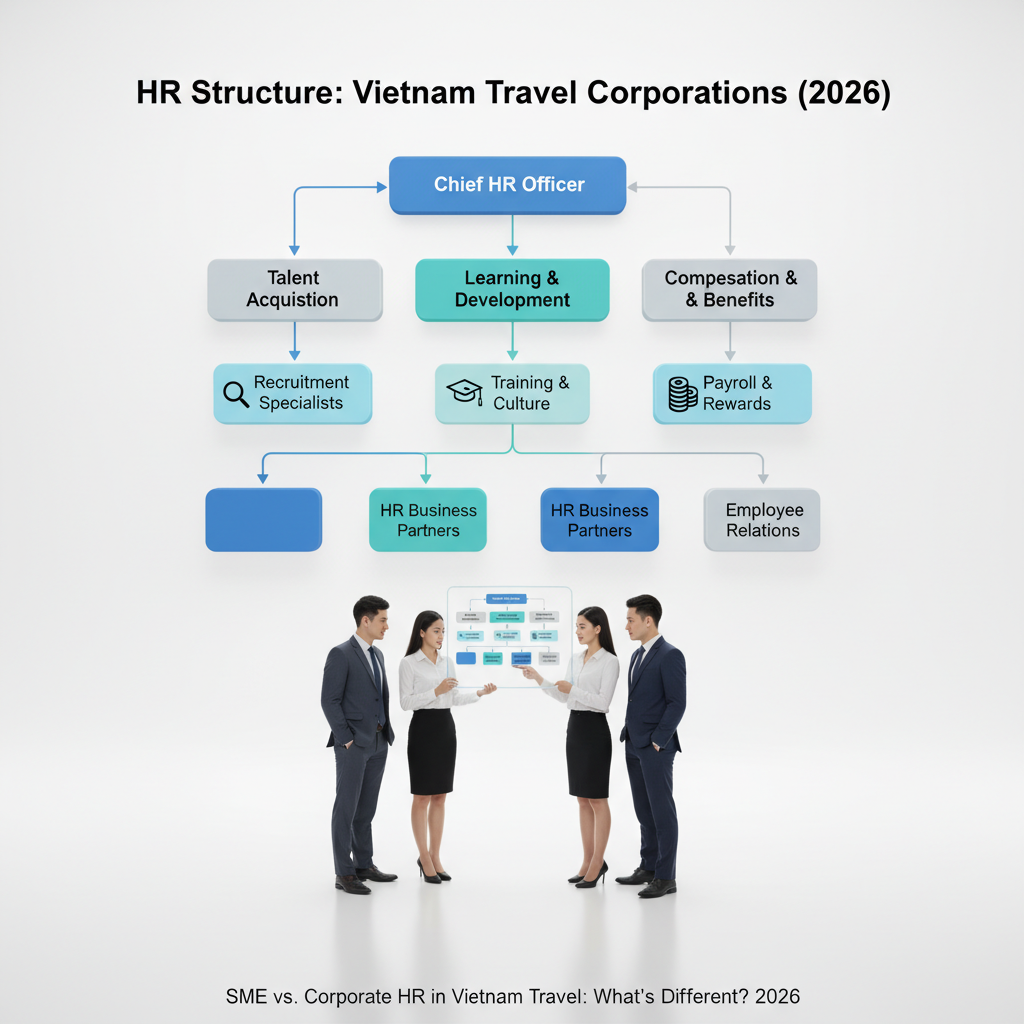
1. Specialized HR Departments (e.g., Talent Acquisition, C&B, L&D)
Unlike SMEs where one HR generalist might cover all people-related tasks, large corporations in Vietnam’s travel sector typically boast highly specialized HR departments. This specialization allows for deeper expertise and more strategic focus within each HR discipline. Key departments often include: Talent Acquisition, dedicated solely to sourcing, attracting, and hiring a diverse pool of skilled professionals, from hospitality managers to specialized guides and digital marketing experts. This function often involves complex recruitment strategies, employer branding, and sometimes international recruitment. Compensation & Benefits (C&B) teams design and manage competitive salary structures, incentive programs, health benefits, and retirement plans, ensuring market competitiveness and compliance with Vietnamese labor laws. This is crucial for attracting and retaining top talent in a high-demand industry. Furthermore, Learning & Development (L&D) departments are vital for continuous skill enhancement, career pathing, and leadership development programs, ensuring that the workforce is future-ready and capable of delivering world-class service. Other specialized areas might include HR Business Partners (HRBPs) who act as strategic advisors to specific business units, HR Operations for administrative efficiency, and dedicated HR Compliance teams. This intricate setup ensures that every aspect of the employee lifecycle is managed by experts, contributing to a superior employee experience and robust talent management.
2. Structured Policies, Procedures, and Employee Handbooks
The operational scale of corporate entities in Vietnam’s travel industry demands a high degree of formalization in HR practices. Robust, well-documented policies and procedures are foundational, covering everything from recruitment and onboarding to performance management, disciplinary actions, grievance handling, and exit processes. These structures ensure consistency, fairness, and transparency across the organization, irrespective of department or location. Comprehensive employee handbooks serve as a vital resource, outlining company values, codes of conduct, workplace safety guidelines, leave policies, and anti-discrimination policies. This meticulous documentation not only streamlines operations but also significantly mitigates legal and compliance risks. Given the complexities of Vietnam’s labor regulations, adherence to statutory requirements is paramount. Large corporations often invest in legal counsel and HR compliance specialists to ensure all HR practices align with the latest labor laws and industry standards, providing a secure and ethical working environment. Understanding and adapting to changes in Vietnam’s labor law is a continuous effort for these structured HR departments.
3. Integration of HR Technology and Analytics
A defining characteristic of corporate HR structures in Vietnam’s travel field is the extensive adoption of HR technology. Moving beyond manual processes, these organizations leverage sophisticated Human Resources Information Systems (HRIS) or Human Capital Management (HCM) platforms. These systems automate routine tasks such as payroll processing, time and attendance tracking, benefits administration, and performance reviews, freeing up HR professionals to focus on more strategic initiatives. Furthermore, these platforms facilitate robust HR analytics, enabling data-driven decision-making. HR departments can track key metrics like employee turnover rates, recruitment costs, training effectiveness, and employee engagement levels. This data provides invaluable insights into workforce trends, helping predict future talent needs, identify areas for improvement, and measure the impact of HR interventions. For instance, analyzing attrition data can inform new retention strategies, while recruitment analytics can optimize sourcing channels. The integration of technology not only enhances operational efficiency but also provides a strategic edge, allowing companies to proactively manage their human capital and make informed choices to support business objectives. Exploring the full spectrum of Differences between the SMEs’ HR Structure and the Corporates’ HR Structure in Travels field in Vietnam reveals how corporates utilize these advanced HR solutions to maintain a competitive advantage.
Key Differentiating Factors and Their Operational Impact
In Vietnam’s vibrant and rapidly evolving travel sector, the approach to human resources (HR) is as varied as the businesses themselves. From nimble SMEs’ HR structure to expansive corporate entities, the fundamental differences between the SMEs’ HR Structure and the Corporates’ HR Structure in Travels field in Vietnam are profound. These disparities don’t merely reflect company size; they significantly influence operational efficiency, shape the employee experience, and dictate strategic capabilities. Understanding these critical distinctions is paramount for anyone navigating or contributing to the Vietnamese tourism landscape, impacting everything from recruitment to long-term talent management and overall business resilience.
1. Resource Allocation: Budget, Staffing, and Technology
The allocation of resources forms the bedrock of any HR operation, and here, the divergence between SMEs and corporates in the travels field Vietnam is stark. For small and medium-sized enterprises (SMEs), HR functions are often managed with lean budgets and minimal staffing. It’s common for a single HR generalist, or even the business owner, to juggle multiple responsibilities, from recruitment and payroll to basic compliance. This limited HR staffing often means a reactive rather than proactive approach to people management. Technology adoption is also typically nascent; many SMEs still rely on manual processes, spreadsheets, or basic payroll software, limiting their ability to gather actionable data or streamline complex tasks. The lack of investment in dedicated HR technology can lead to inefficiencies, increased administrative burden, and potential compliance gaps, directly impacting operational efficiency.
Conversely, corporate travel entities boast significantly larger and more specialized HR resource allocation. These organizations often have dedicated departments for various HR facets, including talent acquisition, compensation & benefits, learning & development, and HR business partnering. Their substantial HR budget allows for investment in advanced Human Resources Information Systems (HRIS) or Human Capital Management (HCM) platforms. These sophisticated systems enable data-driven decision-making, automate routine tasks, and provide comprehensive insights into workforce analytics. This robust technological infrastructure and specialized staffing contribute to a more strategic HR function, allowing for proactive workforce planning and enhanced support for a diverse workforce, ultimately fostering a superior employee experience and supporting grander strategic goals.
2. Scope and Depth of HR Functions and Services Offered
The breadth and depth of HR functions delivered by SMEs versus corporates also present a significant contrast, directly influencing their strategic capabilities. For SMEs in the Vietnamese travel industry, the scope of HR functions is often restricted to essential, transactional services. This typically includes core recruitment to fill immediate vacancies, payroll processing, and ensuring basic adherence to local labor laws. Strategic initiatives like comprehensive performance management, elaborate compensation and benefits schemes, or dedicated employee well-being programs are often either informal or non-existent due to resource constraints and the immediate operational focus. While this lean approach can be agile, it may limit the company’s ability to compete for top talent or build a resilient, highly engaged workforce, affecting overall HR services Vietnam quality.
In larger corporate structures, the array of HR functions Vietnam is far more expansive and integrated. Beyond the transactional, corporates engage in strategic talent management, succession planning, robust performance appraisal systems, and designing competitive total rewards packages. They invest in creating comprehensive employee handbooks, developing clear internal policies, and offering a wide range of employee support services, including counseling, wellness programs, and elaborate onboarding experiences. This holistic approach ensures that HR is not just an administrative unit but a strategic partner in achieving business objectives, attracting and retaining high-caliber professionals, and cultivating a thriving organizational culture. Adapting to evolving HR trends is a continuous process for these larger entities, enabling them to maintain their competitive edge.
3. Employee Development, Retention, and Career Pathing
The final crucial area of differentiation lies in how SMEs and corporates approach employee growth, long-term commitment, and professional progression, all vital for talent management Vietnam. In SMEs within the travel sector, employee development is often informal and opportunistic. Training usually occurs on-the-job, driven by immediate needs rather than structured programs. Employee retention Vietnam in these smaller settings frequently hinges on the strong personal relationships between employees and leadership, a tight-knit company culture, and a sense of shared mission. However, formal career pathing Vietnam can be limited due to flatter organizational structures and fewer promotion opportunities, which might prompt ambitious employees to seek advancement elsewhere.
Corporates, conversely, typically implement sophisticated and multi-faceted strategies for employee development Vietnam and retention. They invest heavily in structured training programs, leadership development initiatives, professional certifications, and robust mentorship schemes. Performance management systems are often directly linked to learning opportunities and career advancement, providing clear ladders for professional growth. These larger organizations design comprehensive retention strategies that go beyond compensation, including employee engagement surveys, work-life balance initiatives, and robust internal mobility programs. By offering transparent career pathing and continuous development, corporates can build a strong talent pipeline, reduce turnover costs, and foster a highly skilled workforce, ultimately enhancing their long-term strategic capabilities and ensuring a positive employee experience across all levels.
Strategies for Optimizing HR in Vietnam Travel (SMEs & Corporates)
Vietnam’s travel industry is experiencing robust growth, presenting both exciting opportunities and complex human resources challenges. From the nimble operations of Small and Medium-sized Enterprises (SMEs) to the expansive structures of corporates, effective HR strategies are paramount for navigating this dynamic landscape. Understanding the critical differences between the SMEs’ HR Structure and the Corporates’ HR Structure in Travels field in Vietnam is the first step towards tailored optimization. While SMEs often thrive on agility and close-knit teams, corporates contend with global standards and the complexities of large-scale talent management. This section provides actionable insights and best practices, leveraging each organizational structure for future success amidst rapid industry evolution and talent market shifts, directly impacting areas like talent acquisition, retention, and compliance.
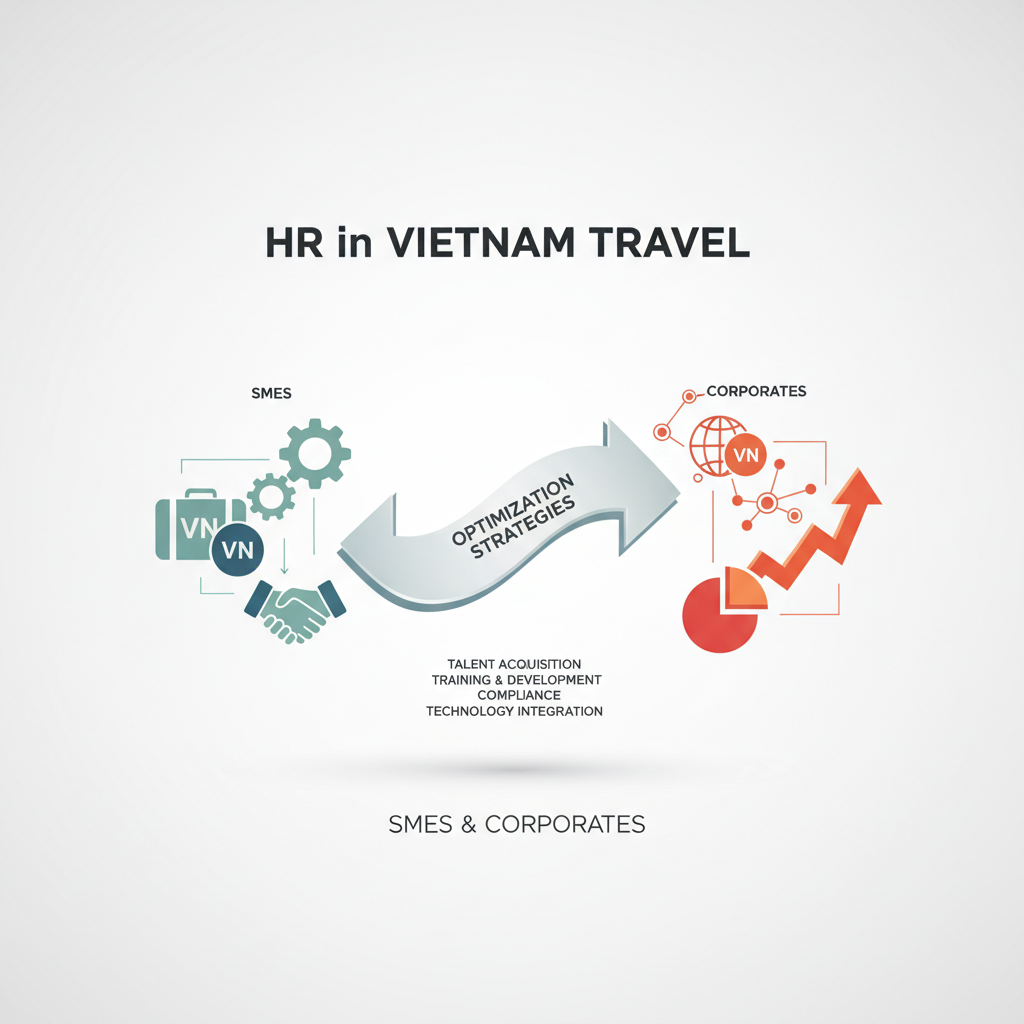
1. SME Strategies: Outsourcing, Lean HR, and Community Building
For SMEs in Vietnam’s travel sector, resource constraints often mean a lean HR function, sometimes with no dedicated HR personnel. The key to optimizing HR here lies in smart outsourcing, efficient lean HR practices, and cultivating a strong community. Outsourcing non-core HR functions like payroll processing, benefits administration, and even basic compliance ensures that SMEs meet legal obligations without significant overhead. This allows internal teams to focus on core business operations, enhancing productivity. A lean HR approach emphasizes multi-skilled employees who can handle various administrative tasks, fostering flexibility and quick adaptation to market changes. Moreover, building a robust internal community is vital for SMEs. A close-knit team culture, open communication channels, and shared vision can significantly boost employee engagement and retention. Investing in informal team-building activities, recognizing individual contributions, and providing clear growth paths, even within a smaller structure, helps create a loyal and motivated workforce. These strategies help SMEs punch above their weight, attracting and retaining talent through a compelling work environment rather than extensive benefits packages.
2. Corporate Strategies: Fostering Agility, Innovation, and Global Standards
Corporates in Vietnam’s travel industry face a different set of HR challenges, often involving larger workforces, multiple departments, and the need to align with international best practices. Here, the focus shifts to fostering agility, driving innovation within HR, and upholding global standards. Agility in HR means developing flexible organizational structures, enabling quick redeployment of talent to emerging projects or market demands. This includes cross-functional teams and project-based assignments that allow for dynamic resource allocation, crucial in a fast-paced industry. Innovation in corporate HR involves adopting advanced HR technologies, implementing sophisticated performance management systems, and developing creative talent acquisition strategies to compete for top-tier talent. Regular upskilling and reskilling programs, particularly in digital competencies, are essential to keep the workforce future-ready. Furthermore, corporates must adhere to global standards in areas like ethical recruitment, diversity and inclusion (D&I), and robust compliance frameworks, ensuring fair labor practices and mitigating risks. Aligning with international norms not only safeguards the company’s reputation but also appeals to a broader, more diverse talent pool, essential for global expansion.
3. Leveraging Technology for Efficiency and Engagement in 2026
Regardless of size, technology is an indispensable tool for optimizing HR in Vietnam’s travel industry, especially as we look towards 2026. For both SMEs and corporates, HR technology can streamline operations, enhance employee engagement, and provide valuable data-driven insights. Implementing Human Resources Information Systems (HRIS) or Human Capital Management (HCM) platforms automates routine tasks such as onboarding, leave management, and performance reviews. This reduces administrative burden, freeing HR professionals to focus on strategic initiatives like talent development and employee experience. For SMEs, cloud-based HR solutions offer an affordable entry point, providing essential functionalities without significant IT investment. Corporates can leverage more comprehensive HR analytics tools to identify trends in employee turnover, measure the effectiveness of training programs, and forecast future workforce needs. Artificial intelligence (AI) and machine learning (ML) are increasingly being integrated into recruitment processes for intelligent candidate matching and in learning platforms for personalized employee development. Furthermore, mobile HR apps are boosting accessibility and engagement, allowing employees to manage personal information, access training, and communicate with HR from anywhere. Embracing these technological advancements is not just about efficiency; it’s about creating a more connected, engaged, and future-proof workforce that can adapt to the evolving demands of the travel sector. For a broader understanding of the economic context shaping these HR strategies, insights from the World Bank’s overview of Vietnam‘s economy offer valuable perspective on labor market dynamics and growth drivers.
Partner with Shelby Global
You are looking for reliable HR Sevice Suppliers? Contact Shelby Global Now! To connect with verified talents and upgrade your orginization.
—————————————
References
– Improving compliance with labour laws and international labour standards in Vietnamese enterprises: https://www.ilo.org/hanoi/Whatwedo/WCMS_857635/lang–en/index.htm
– International Labour Organization (ILO) Vietnam: https://www.ilo.org/hanoi/lang–en/index.htm
– Vietnam’s Labor Law in 2024: Major Changes and Key Insights: https://www.vietnam-briefing.com/news/vietnams-labor-law-in-2024-major-changes-and-key-insights.html/
– Vietnam HR Trends 2023 and Beyond from PwC: https://hrmagazine.com.vn/en/vietnam-hr-trends-2023-and-beyond-from-pwc/
– World Bank’s overview of Vietnam: https://www.worldbank.org/en/country/vietnam/overview