
Defining the Scope of HR Responsibility
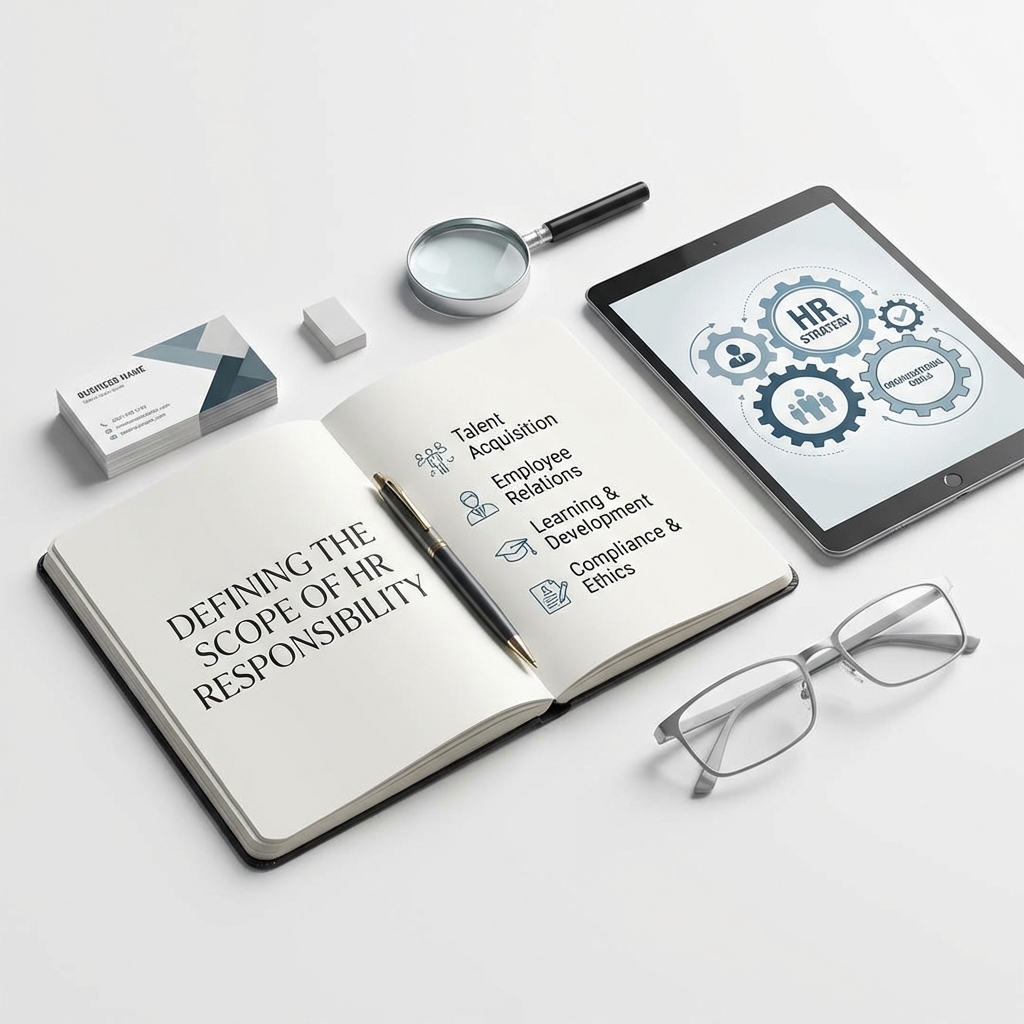
The landscape of Human Resources (HR) in Malaysia exhibits a stark contrast between Small and Medium-sized Enterprises (SMEs) and large corporate Fast-Moving Consumer Goods (FMCG) entities. This distinction profoundly shapes the duties, strategic input, and accountability of HR professionals. Understanding the Differences between the SMEs’ HR Manager and the Corporates’ HR Director in FMCG companies in malaysia is crucial for appreciating the diverse nature of HR contributions.
In Malaysian SMEs, the HR Manager typically acts as a versatile generalist, managing daily operations from recruitment to payroll, often with limited support. Their focus is primarily operational, ensuring immediate HR needs are met. Conversely, within large FMCG corporations, the HR Director commands a broader strategic mandate, overseeing complex talent ecosystems, driving organizational development, and serving as a key business partner. This fundamental shift reflects not just a difference in scale, but in the very nature of HR’s strategic value and impact.
-
Strategic vs. Operational Focus of HR
For an HR Manager in a Malaysian SME, the role is predominantly operational and hands-on. Daily tasks include processing payroll, managing attendance, basic recruitment, and administering employee benefits. Due to resource constraints, they often handle diverse administrative duties beyond core HR. Strategic planning is typically reactive and short-term, driven by immediate business needs, focusing on maintaining compliance with fundamental Malaysian labor law, like the Employment Act 1955, and ensuring smooth daily HR functions.
In contrast, the HR Director within a large corporate FMCG entity operates with a distinctly strategic lens. While operational tasks exist, they are delegated to specialized teams. The HR Director’s remit is to align HR strategies with overarching business objectives, such as optimizing market share and fostering brand loyalty. This involves leading initiatives in talent acquisition, succession planning, performance management, and organizational restructuring. Their focus is on long-term impact, cultivating a high-performance culture, and positioning the workforce to meet future challenges in a highly competitive industry. They are a critical voice at the executive table, driving business strategy.
-
Policy Development & Implementation Authority
In Malaysian SMEs, the HR Manager’s authority in policy development is often constrained. Policies might be informally set by owners or adapted from generic templates, with formal documentation sometimes taking a backseat. Implementation is direct and typically less formalized, with fewer approval layers. Policies tend to be foundational, covering leave, conduct, and basic employment terms, primarily focusing on local statutory requirements rather than comprehensive frameworks.
Conversely, a Corporate HR Director in a large Malaysian FMCG company holds significant authority in policy development. They lead the creation of comprehensive, robust HR policies spanning global mobility, diversity & inclusion, complex remuneration, and ethical conduct. These policies must comply with intricate local regulations and often international standards. Development involves extensive collaboration with legal teams and department heads. Implementation requires sophisticated change management strategies, detailed communication plans, and robust training across multiple business units and regions. Policies are designed to manage a large, diverse workforce, mitigate significant risks, and support strategic business goals.
-
Compliance & Risk Management Scope
The compliance and risk management scope for an HR Manager in a Malaysian SME is generally narrower and more reactive. Their primary concern is adherence to fundamental Malaysian labour laws, including the Employment Act 1955, EPF, and SOCSO. Risk management typically involves addressing immediate issues like employee grievances or basic workplace safety. The complexity and potential exposure are lower compared to larger corporations, with basic data privacy handling and fewer stringent industry-specific compliance demands.
For a Corporate HR Director in a Malaysian FMCG company, the compliance and risk management scope is exponentially broader and proactive. Beyond standard labour laws, they navigate industry-specific regulations related to food safety, manufacturing, and ethical sourcing, with significant legal and reputational implications. Responsibilities include occupational safety and health (OSHA) across multiple facilities, sophisticated data protection (PDPA) for vast databases, and anti-bribery policies. Risk management involves identifying potential threats to brand, reputation, and operational continuity, such as industrial relations disputes or supply chain disruptions. This proactive approach includes robust crisis management, regular compliance audits, and continuous monitoring of legal and regulatory changes, reflecting the high stakes of managing human capital for a large, visible enterprise.
In conclusion, the Differences between the SMEs’ HR Manager and the Corporates’ HR Director in FMCG companies in malaysia highlight a fundamental divergence in HR responsibilities and strategic impact. The SME HR Manager is a hands-on generalist ensuring operational stability, while the Corporate HR Director acts as a strategic leader, shaping organizational capability and driving long-term business success. Recognizing these distinctions is vital for HR professionals and businesses navigating Malaysia’s diverse economic landscape.
Resource Allocation and Budgetary Constraints
Analyzing how varying financial resources and budget allocations significantly impact HR functions, technology adoption, and program development in both organizational sizes within FMCG Malaysia is crucial for understanding the operational realities faced by HR professionals. The stark Differences between the SMEs’ HR Manager and the Corporates’ HR Director in FMCG companies in malaysia are often amplified by the financial levers they can pull. While large corporate FMCG players leverage substantial budgets to drive innovation and efficiency, smaller SMEs frequently operate under tight fiscal limitations, forcing them to prioritize and innovate within their means. These disparities shape everything from strategic talent management to daily operational tasks, directly influencing the effectiveness and reach of HR initiatives across the Malaysian FMCG landscape.
1. HRIS & Technology Adoption Capabilities
The capacity for HRIS (Human Resources Information Systems) and technology adoption stands as a primary differentiator driven by budgetary constraints. In large FMCG corporations in Malaysia, HR Directors are typically allocated significant funds to invest in cutting-edge HR technology. This includes integrated cloud-based HRIS platforms, advanced payroll systems, AI-driven recruitment software, performance management suites, and sophisticated HR analytics tools. Such investments enable these organizations to automate routine tasks, gather comprehensive data for strategic decision-making, enhance employee experience through self-service portals, and maintain competitive advantages through data-driven insights into workforce trends. The ability to adopt and scale these technologies means HR functions within corporates are often more efficient, strategic, and capable of supporting complex global or regional operations.
Conversely, HR Managers in Malaysian FMCG SMEs face severe limitations in this area. Their budgets often restrict them to basic, often manual, HR processes using spreadsheets or, at best, entry-level, off-the-shelf HR software with limited functionalities. The high upfront costs and ongoing maintenance fees associated with advanced HRIS solutions are often prohibitive. This results in HR departments within SMEs spending more time on administrative tasks, less on strategic initiatives, and struggling with data consolidation and analysis. The lack of robust technology impacts their ability to scale operations efficiently, comply with evolving regulations, and provide a seamless employee experience, thus widening the operational gap between them and their larger counterparts in the FMCG sector.
2. Training & Development Budget Limitations
Budgetary allocations for training and development (T&D) programs also delineate a significant divide. Corporate FMCG HR Directors in Malaysia benefit from extensive budgets that allow for comprehensive, multi-faceted T&D initiatives. These often include leadership development programs, specialized technical skills training, external certifications, executive coaching, mentorship programs, and even international secondments. Such investments are strategically designed to nurture a strong talent pipeline, enhance employee engagement, ensure compliance, and drive innovation, directly contributing to organizational growth and competitiveness. By investing heavily in employee development, these corporations can better retain top talent and adapt to market changes.
For SME HR Managers in FMCG Malaysia, T&D budgets are often extremely constrained. Training typically relies on internal knowledge transfer, on-the-job learning, or occasional low-cost workshops. Opportunities for external certifications or advanced leadership training are rare, largely due to cost. While innovative SMEs find creative, low-cost ways to upskill their workforce, the breadth and depth of training rarely match that of larger organizations. This limitation can lead to skill gaps, reduced career progression opportunities for employees, and challenges in retaining ambitious talent who may seek growth opportunities elsewhere. Consequently, SMEs might struggle to keep pace with industry advancements and maintain a highly skilled workforce, impacting their overall productivity and ability to innovate in the fast-moving consumer goods market.
3. Recruitment & Talent Acquisition Spend
The financial resources dedicated to recruitment and talent acquisition represent another critical area where SMEs and corporates diverge. Large FMCG corporations possess significant budgets for attracting top-tier talent. This enables them to invest in robust employer branding campaigns, utilize premium job boards, engage executive search firms, attend career fairs, implement sophisticated applicant tracking systems (ATS), and offer highly competitive compensation packages, including attractive benefits and bonuses. Their ability to globalize talent searches and offer extensive onboarding programs further enhances their appeal. This substantial investment ensures a strong influx of qualified candidates, allowing them to selectively build high-performing teams and maintain a competitive edge in a talent-scarce market.
In contrast, SME HR Managers in the Malaysian FMCG sector often operate with minimal recruitment budgets. They typically rely on more cost-effective methods such as direct postings on free or low-cost job portals, leveraging personal networks, and word-of-mouth referrals. Their capacity to offer highly competitive salaries, comprehensive benefits, or elaborate employer branding initiatives is often limited. This financial constraint makes it challenging for SMEs to attract and retain highly skilled professionals, especially those with specialized experience in the FMCG industry. They frequently find themselves competing against larger corporations with deeper pockets, leading to longer hiring cycles, a smaller pool of applicants, and a higher risk of losing promising candidates to organizations that can offer more lucrative packages and extensive career development paths. Ultimately, limited recruitment spend directly impacts an SME’s ability to innovate and expand, as talent is the backbone of any successful FMCG operation.
Organizational Structure and Influence
The organizational structure of a company profoundly dictates the influence, autonomy, and decision-making power afforded to its Human Resources (HR) professionals. This distinction becomes particularly stark when examining the differences between the SMEs’ HR Manager and the Corporates’ HR Director in FMCG companies in Malaysia. In fast-moving consumer goods (FMCG) sectors, where market dynamics are rapid and talent acquisition competitive, the structural variations between small and medium-sized enterprises (SMEs) and large corporations significantly shape the strategic impact of HR functions.
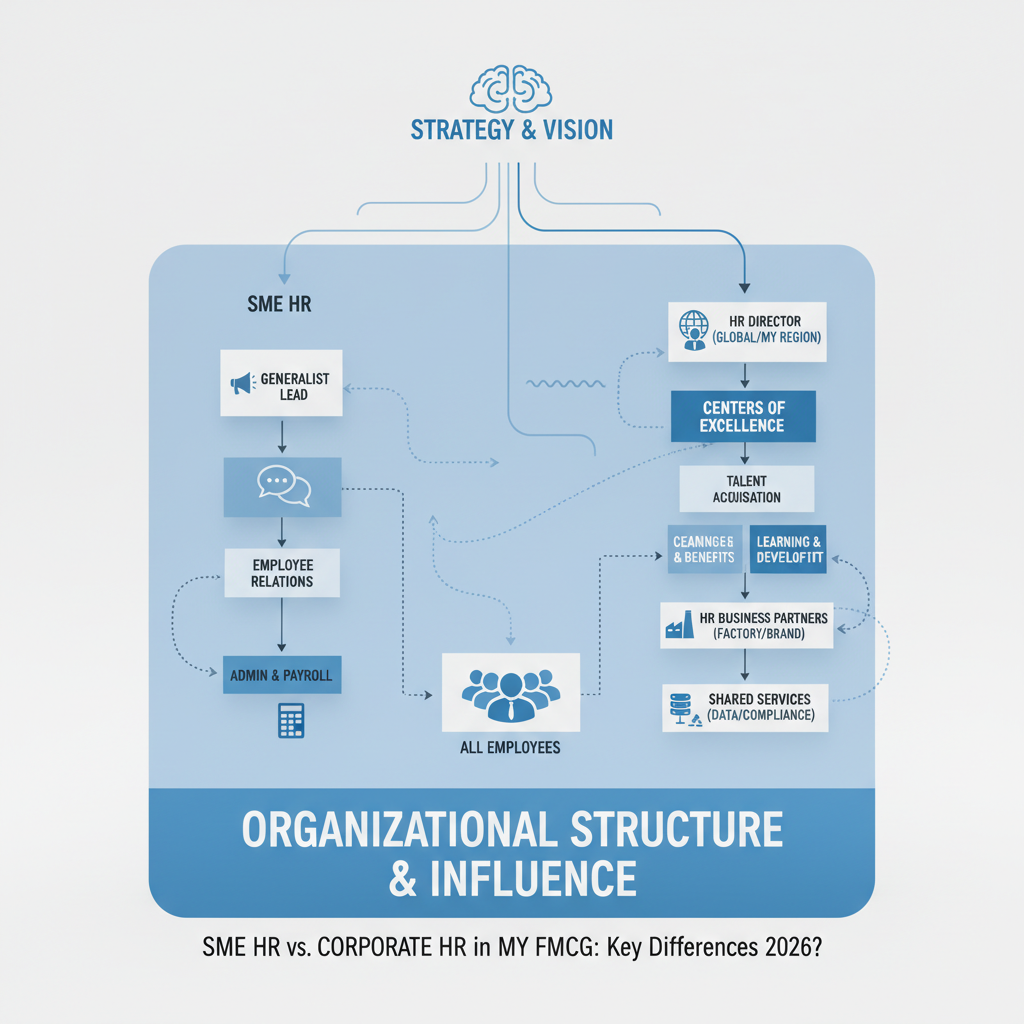
In a Malaysian SME, the HR Manager often juggles a multitude of responsibilities, ranging from day-to-day operational tasks like payroll and benefits administration to recruitment and employee relations. Their influence is broad but often constrained by limited resources and direct involvement in all aspects of HR. Conversely, a Corporate HR Director in a large FMCG entity typically operates within a more specialized and hierarchical framework, focusing on strategic initiatives, organizational development, talent management, and policy formulation, often overseeing a dedicated HR department with various specialists. Understanding these foundational structural disparities is crucial for aspiring HR professionals navigating Malaysia’s diverse business landscape and understanding the strategic vs. operational differences between the SMEs’ HR Manager and the Corporates’ HR Director in FMCG companies in Malaysia.
1. Proximity to Leadership & Decision-Making
In SMEs, the HR Manager typically enjoys direct and frequent access to the company’s owner or CEO. This close proximity to leadership allows for rapid communication and direct input into business decisions. The HR Manager’s advice is often sought due to their intimate knowledge of the entire workforce. This direct line can accelerate HR initiative implementation and foster a sense of being a core business partner, integral to the operational pulse of the organization. However, strategic HR might sometimes be overshadowed by immediate operational needs, with decision-making often centralized at the very top.
In contrast, a Corporate HR Director in a large Malaysian FMCG conglomerate operates within a multi-layered hierarchy. While part of the senior leadership team, reporting lines can be complex, involving regional or global HR leads. Their influence is primarily exerted through strategic HR councils, data-driven proposals, and alignment with overarching corporate objectives. Decision-making power is significant but often delegated and subject to approval processes to ensure alignment across various departments. This positions the HR Director as a strategic advisor contributing to long-term organizational success, shaping policies and strategies that impact thousands of employees across diverse product lines and markets.
2. HR Team Size & Support Staff Availability
The HR Manager in a typical Malaysian SME often works with a very lean team, sometimes even as a sole practitioner. This necessitates a ‘jack-of-all-trades’ approach, responsible for everything from recruitment, onboarding, training, and employee welfare to legal compliance and compensation & benefits. The lack of extensive support staff means administrative tasks consume significant time, leaving less bandwidth for strategic planning or in-depth analysis. Their ability to influence is tied to their capacity to manage a diverse workload while providing essential HR services. This operational heavy lifting can limit the time available for proactive HR strategies that could drive business growth.
Conversely, the Corporate HR Director in a large FMCG company benefits from a robust and specialized HR department. This department might include dedicated teams for talent acquisition, learning & development, compensation & benefits, HR business partners (HRBPs), and HR shared services. This division of labor allows the Director to delegate operational tasks and focus almost entirely on strategic HR leadership. They leverage insights from their specialized teams to formulate comprehensive HR strategies supporting aggressive growth targets. The availability of resources, including technology and specialist expertise, significantly amplifies the Director’s capacity to drive large-scale initiatives, influence corporate policy, and implement sophisticated talent management programs across various business units in Malaysia and potentially beyond.
3. Impact on Organizational Culture & Values
In an SME, the HR Manager plays an extraordinarily direct and personal role in shaping the organizational culture. Due to close interaction with all employees and immediate proximity to leadership, they are often the custodian of company values, directly addressing cultural nuances, mediating disputes, and fostering employee engagement. Their influence on culture is profound and immediate, often acting as a key arbiter of the workplace environment. Decisions regarding employee recognition, communication styles, and even small perks directly emanate from or are heavily influenced by the HR Manager, making them instrumental in defining the day-to-day employee experience and reinforcing core company values within a relatively small, tight-knit community.
For a Corporate HR Director in a large FMCG enterprise, shaping culture involves a more systemic and programmatic approach. While still a key driver, their influence is exerted through the development of comprehensive cultural frameworks, values-driven initiatives, diversity & inclusion policies, and leadership development programs. Their strategies aim to embed desired values across thousands of employees and multiple locations, often involving significant change management efforts. The challenge lies in ensuring consistent cultural messaging and adherence across a vast and diverse workforce, often contending with established sub-cultures within different departments. The HR Director’s role is to define, champion, and measure the cultural impact of large-scale HR strategies, aligning it with global corporate values and ensuring it supports the company’s brand image and market positioning in Malaysia’s competitive FMCG landscape. Their decisions on talent retention, succession planning, and employee experience have far-reaching implications for the entire organizational ethos.
Talent Management & Development Strategies
Delve into the distinct approaches to attracting, retaining, and developing talent, tailored to the unique needs, scale, and strategic objectives of SMEs and Corporates in Malaysia’s FMCG sector.
Malaysia’s fast-moving consumer goods (FMCG) sector is a dynamic landscape, heavily reliant on a skilled workforce, from supply chain and manufacturing to sales and marketing. However, the strategies for managing and developing this critical talent pool vary significantly, largely driven by the Differences between the SMEs’ HR Manager and the Corporates’ HR Director in FMCG companies in Malaysia. These distinctions are not merely a matter of organisational size but fundamentally shape their talent management priorities, resource allocation, and overall HR capabilities. Understanding these divergences is crucial for both types of organisations to build effective HR strategies FMCG SMEs and robust strategic HR planning corporates, ensuring a competitive edge in a demanding market.
While both strive for operational excellence and market leadership, their approaches to nurturing human capital diverge significantly. SMEs often operate with tighter HR budget constraints SMEs and a smaller, multi-faceted HR team, whereas Corporates typically boast dedicated departments, extensive resources, and a more structured framework for FMCG talent management Malaysia. This impacts everything from talent acquisition FMCG to employee retention strategies and comprehensive workforce development Malaysia initiatives, often addressing common SME HR challenges distinct from larger entities.
1.
Employer Branding & Attraction Methods
For Malaysian FMCG SMEs, employer brand building is often an organic, culture-driven effort. Lacking large marketing budgets, they leverage their unique company culture, flexibility, and the promise of broader exposure to various roles as key selling points. Their recruitment methods Malaysia frequently rely on personal networks, referrals, local universities, and community outreach. The HR Manager in an SME is often hands-on, directly engaging with potential hires, highlighting the intimate, agile work environment and opportunities for rapid learning and impact. They often seek individuals who are adaptable and possess a strong entrepreneurial spirit, willing to wear multiple hats.
Conversely, Corporate HR Directors in the FMCG sector employ sophisticated, multi-channel employer branding campaigns. These often involve significant investments in digital marketing, partnerships with prominent job portals, career fairs, and targeted university recruitment programmes. Their brand message typically emphasizes stability, global career opportunities, structured leadership development programs, and a comprehensive benefits package. They also leverage their established reputation and market presence to attract top-tier talent. The HR Director oversees teams dedicated to specific recruitment functions, ensuring a consistent brand message and a streamlined candidate experience across a larger volume of applicants for various corporate HR roles Malaysia.
2.
Career Progression & Succession Planning
SMEs in Malaysian FMCG often feature flatter organisational structures, meaning formal career progression paths can be less defined. Growth for employees frequently involves expanding their scope of responsibilities or transitioning into new functional areas based on business needs. Succession planning FMCG in SMEs tends to be informal, relying heavily on the HR Manager’s intimate knowledge of the existing team’s capabilities and potential. Key roles might have one or two potential successors identified through informal mentorship or on-the-job training. Skill gap analysis FMCG is often reactive, addressed as immediate needs arise rather than through proactive, long-term forecasting. Employee engagement FMCG in SMEs is often fostered through direct leadership interaction and a sense of belonging within a close-knit team.
In contrast, Corporates have highly structured career progression frameworks, complete with competency models, leadership pipelines, and clearly articulated job levels. Their succession planning FMCG is a systematic, proactive process involving talent reviews, high-potential programmes, and detailed development plans for critical roles. The Corporate HR Director oversees the implementation of robust HR development programs designed to groom future leaders, often including international assignments, cross-functional projects, and executive coaching. They invest heavily in proactive skill gap analysis FMCG using advanced analytics and HR technology adoption to ensure a pipeline of ready talent for future business needs across their extensive operations.
3.
Performance Management Systems & Tools
For Malaysian FMCG SMEs, performance appraisal systems are typically simpler and more personal. Annual or semi-annual reviews might involve direct discussions between employees and their immediate supervisors, focusing on qualitative feedback, goal attainment, and development areas. The HR Manager’s role is to facilitate these conversations, ensure fairness, and track basic performance management metrics. While some may adopt digital tools, many still rely on manual processes or basic spreadsheets due to HR budget constraints SMEs. Feedback often comes directly from the top, fostering a sense of direct accountability and transparency within a smaller team.
Corporate FMCG entities, conversely, implement sophisticated, multi-tiered performance management systems. These often integrate advanced HR technology adoption, such as HR Information Systems (HRIS) and performance management software, enabling continuous feedback, objective setting, and real-time tracking of Key Performance Indicators (KPIs). Performance appraisal systems typically involve 360-degree feedback, regular check-ins, mid-year reviews, and year-end evaluations linked to comprehensive reward structures. The Corporate HR Director is responsible for designing, implementing, and continually refining these systems to ensure alignment with strategic objectives, fostering a culture of high performance, and conducting detailed analytics on performance data to inform workforce development Malaysia and compensation decisions. HR development programs are often tied directly to performance outcomes and identified development needs.
Emerging Challenges & Future Trends in Malaysian FMCG HR
The Malaysian Fast-Moving Consumer Goods (FMCG) market is a vibrant yet intensely competitive landscape, continuously reshaped by evolving consumer behaviors, technological advancements, and shifting economic tides. For Human Resources (HR) professionals within this sector, navigating these dynamics presents a unique set of challenges and opportunities. As we look towards 2026, HR strategies must evolve rapidly, particularly concerning the distinct operational needs and resource availability between Small and Medium-sized Enterprises (SMEs) and large Corporates. Understanding the fundamental Differences between the SMEs’ HR Manager and the Corporates’ HR Director in FMCG companies in malaysia is paramount for effective talent management and organizational resilience.
While an SME’s HR Manager often operates as a generalist, overseeing everything from recruitment and payroll to compliance and employee relations with limited resources, a Corporate HR Director typically manages specialized teams, focusing on strategic policy development, global talent acquisition, advanced analytics, and ensuring alignment with broader organizational goals. The former is hands-on and reactive, often juggling multiple hats; the latter is proactive and strategic, leveraging extensive resources and specialized expertise. This disparity fundamentally influences how each entity approaches the emerging HR challenges and trends outlined below, shaping their adaptations and resilience in the face of rapid market shifts.

1. Navigating Digital Transformation in HR
Digital transformation is no longer an option but a necessity for survival in the Malaysian FMCG sector. For HR, this means leveraging technology to streamline processes, enhance employee experience, and derive actionable insights. SMEs often face significant hurdles, primarily budget constraints and a lack of specialized IT support, hindering their adoption of sophisticated HR Information Systems (HRIS) or AI-driven recruitment tools. Their focus is typically on basic digital tools for payroll and attendance, aiming for efficiency gains rather than strategic insights. Corporates, conversely, are investing heavily in integrated HR platforms, predictive analytics for talent forecasting, and AI for automated screening, aiming to optimize talent acquisition and development on a large scale. By 2026, both will need to enhance their digital fluency; SMEs through affordable, cloud-based solutions, and Corporates by integrating advanced HR tech into their wider digital ecosystem. The ability to adapt to these changes within the next 18 months will define success.
2. Adapting to Evolving Labor Laws & Regulations
The regulatory landscape in Malaysia is continuously evolving, with recent amendments to the Employment Act 1955 bringing significant changes concerning flexible work arrangements, paternity leave, and enhanced protection against discrimination. This constant flux presents a substantial compliance burden. For SMEs, staying abreast of these changes and implementing them correctly can be resource-intensive, often requiring external legal advice or meticulous self-education, risking non-compliance due to oversight. The Employment Act 1955 (Amendment 2022), for instance, significantly impacts HR policies across all businesses. Corporate HR Directors, with their dedicated legal teams and larger compliance departments, are generally better equipped to interpret and implement these changes swiftly across their multiple entities. However, even large corporations must invest in continuous training and robust internal audit processes to ensure consistent adherence across their diverse workforce. A key trend towards 2026 will be a greater emphasis on employee welfare and rights, requiring proactive rather than reactive compliance strategies.
3. Retaining Talent in a Highly Competitive Market
The Malaysian FMCG market is characterized by fierce competition for skilled talent, from sales and marketing specialists to supply chain experts and R&D professionals. Both SMEs and Corporates grapple with attracting and, more critically, retaining top performers. SMEs often struggle to match the competitive salaries and benefits offered by larger players but can counter this with unique value propositions such as rapid career progression, greater autonomy, and a more intimate work culture. Their challenge lies in effectively communicating these non-monetary benefits. Corporates leverage their strong brand reputation, structured career development programs, and extensive training budgets to attract talent. However, they face the challenge of ‘talent churn’ where employees seek greener pastures or better work-life balance. By 2026, the focus for both will intensify on creating compelling employee experiences, fostering a culture of continuous learning, and offering flexible work arrangements to cater to a younger, more demanding workforce. Personalization of career paths and robust well-being programs will be critical differentiators in the ongoing talent war.
Partner with Shelby Global
You are looking for reliable HR Sevice Suppliers? Contact Shelby Global Now! To connect with verified talents and upgrade your orginization.
—————————————
References
– Malaysian Employment Act 1955: https://jtk.mohr.gov.my/index.php/en/legislation/employment-act-1955
– Invest in Employee Development, or Risk Losing Top Talent: https://www.shrm.org/resources-and-tools/hr-topics/talent-acquisition/articles/invest-in-employee-development-or-risk-losing-top-talent/
– The Future Of HR: It’s A Strategic Role: https://www.forbes.com/sites/forbeshumanresourcescouncil/2023/10/02/the-future-of-hr-its-a-strategic-role/
– Deloitte Human Capital Trends Southeast Asia: https://www2.deloitte.com/sg/en/pages/human-capital/articles/human-capital-trends.html
– :