Overview of HR in Singapore’s Finance Sector
Singapore stands as a premier global financial hub, characterized by a sophisticated ecosystem that spans from agile FinTech startups to established multinational corporations (MNCs). The approach to Human Resources (HR) management within this sector is not one-size-fits-all; rather, it is dictated by organizational scale, risk appetite, and strategic maturity. Understanding the Differences between the SMEs’ HR Structure and the Corporates’ HR Structure in finance field in singapore is essential for HR professionals aiming to navigate the city-state’s complex labor market effectively.

1. Growth and Demands of the SG Finance Industry
The Singapore finance industry continues to evolve, fueled by digitalization and regional expansion. Large financial corporations often benefit from centralized HR structures that leverage global best practices, allowing for specialized roles in talent acquisition and employee engagement. In contrast, SMEs in the financial sector often adopt a leaner HR model, where the focus is on rapid scalability and multi-functional capability. These smaller entities must compete for top-tier talent against the deep pockets of corporates, forcing them to adopt flexible compensation models and mission-driven cultural initiatives to remain attractive.
2. Structuring Foundational HR Policies
Foundational HR policies in large finance firms are typically rigorous and documented in extensive employee handbooks, ensuring uniformity across global offices. Conversely, SMEs are tasked with building policies that are compliant yet sufficiently adaptable to support a fast-paced work environment. As companies mature, the transition from informal HR practices to structured frameworks becomes a critical hurdle. Firms must ensure these policies are transparent, equitable, and capable of fostering long-term professional development, regardless of the company size.
3. Navigating Strict Compliance and MOM Regulations
Singapore maintains a highly regulated employment landscape. All organizations must strictly adhere to the guidelines set forth by the Ministry of Manpower (MOM). For large finance corporations, compliance is often managed by dedicated internal departments utilizing sophisticated HR Information Systems (HRIS) to track work pass requirements, Fair Consideration Framework (FCF) standards, and leave management. SMEs, however, often outsource these functions or utilize integrated digital platforms to manage regulatory adherence. Despite the difference in structure, the legal obligation to comply with MOM’s evolving directives—including changes to Employment Act provisions and workplace safety mandates—remains non-negotiable for all players in the finance sector.
Talent Acquisition and Recruitment Strategies
In the high-stakes landscape of Singapore’s financial sector, attracting top-tier talent requires distinct approaches depending on the size and scope of the firm. Understanding the differences between the SMEs’ HR Structure and the Corporates’ HR Structure in finance field in singapore is essential for professionals navigating their career paths or firms looking to optimize their human capital strategies. Large corporations often rely on established prestige and massive infrastructure, while boutique SMEs prioritize culture, equity, and personalized growth paths to compete for the same pool of elite candidates.
1. Corporate Mass Hiring vs SME Targeted Hiring
Financial corporations in Singapore typically employ a systematic, high-volume recruitment model. These organizations utilize sophisticated Applicant Tracking Systems (ATS) and global campus recruitment programs to fill hundreds of roles annually. This process is structured, standardized, and designed for scalability. Conversely, SMEs focus on highly targeted hiring. Because every hire in a smaller firm has a direct impact on the bottom line, these businesses often look for “Swiss Army knife” candidates—professionals who possess specialized financial acumen alongside an entrepreneurial spirit. While corporations aim for consistency, SMEs prioritize precision, seeking individuals who can wear multiple hats and drive immediate results.
2. Leveraging Employer Branding for Talent Acquisition
Employer branding serves as the cornerstone of recruitment in the competitive Singaporean market. Large financial institutions often lead with their global reputation, comprehensive benefits, and clear corporate ladders. These firms leverage their stability, a factor highlighted by the Monetary Authority of Singapore (MAS), to attract risk-averse, career-oriented candidates. SMEs, however, must pivot their branding to emphasize agility, impact, and autonomy. By promoting a closer-knit community and the ability to work directly with senior leadership, boutique firms effectively compete with corporate behemoths. Candidates seeking to understand how these strategies influence organizational outcomes can further explore the differences between the SMEs’ HR Structure and the Corporates’ HR Structure in the finance field in Singapore to better align their career ambitions with the right organizational culture.
3. Agility and Speed in the Interview Process
The recruitment lifecycle highlights a stark contrast in operational efficiency. Corporate hiring usually involves multi-layered interview panels, committee approvals, and extended background checks, often resulting in a prolonged onboarding timeline. While this rigorous process minimizes risk, it risks losing top talent to faster-moving competitors. SMEs excel here by offering a streamlined, decisive interview experience. An SME owner or department lead can often extend an offer after just one or two conversations. In a fast-paced market like Singapore, where passive candidates are often being courted by multiple firms simultaneously, this speed and agility provide SMEs a significant advantage, allowing them to secure high-demand talent before larger competitors have even reached the final interview stage.
Compensation, Payroll, and Employee Benefits
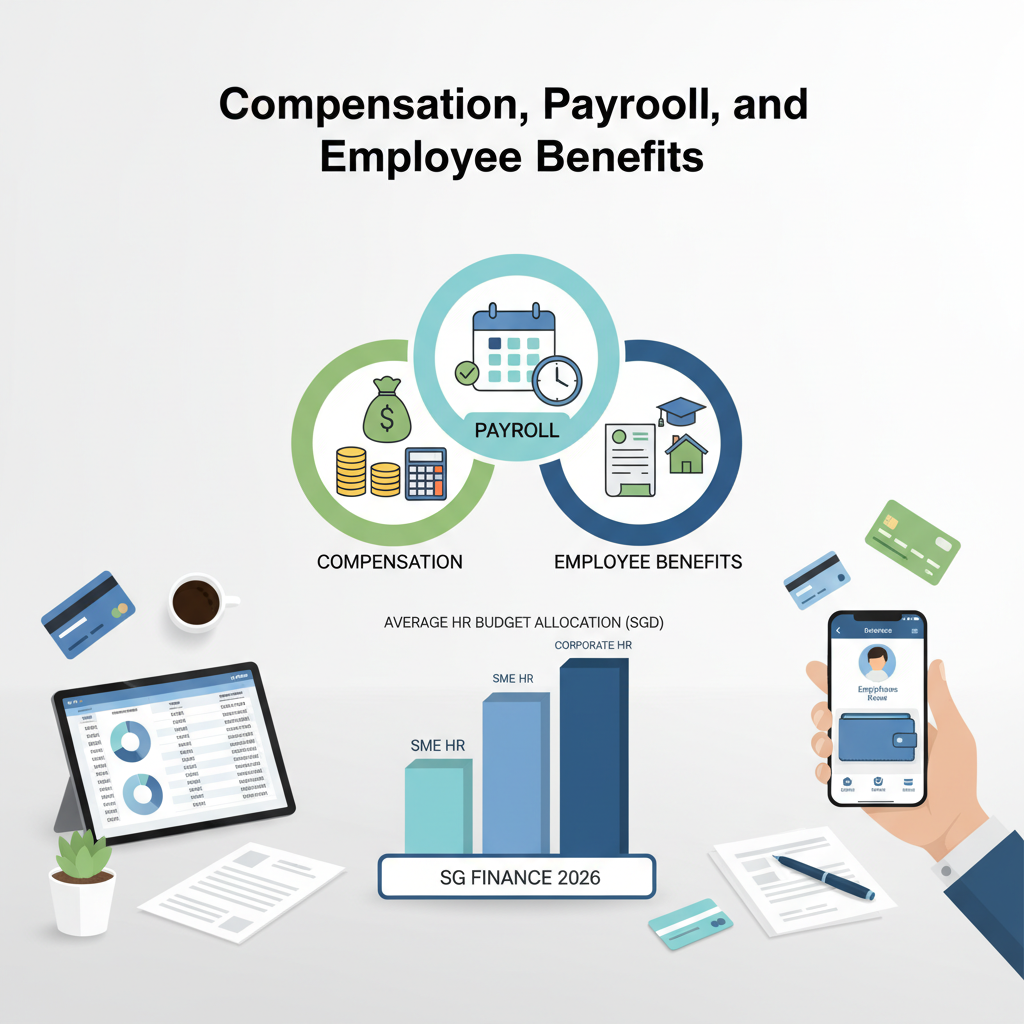
When analyzing the Differences between the SMEs’ HR Structure and the Corporates’ HR Structure in finance field in singapore, the financial reward ecosystem stands out as a primary differentiator. While large financial institutions leverage global scale to offer structured stability, SMEs rely on agility and personal value propositions to attract talent in a competitive market.
1. Standardized vs Flexible Employee Benefits
Corporate finance firms in Singapore typically operate under rigid, policy-driven benefits frameworks. Employees often enjoy comprehensive healthcare, extensive life insurance, and defined retirement contribution schemes. These are consistent across all departments, ensuring equality but often lacking personal relevance. Conversely, SMEs offer customized perks that can be tailored to the individual. For a deeper dive into the organizational nuances, refer to our analysis on Differences between the SMEs’ HR Structure and the Corporates’ HR Structure in finance field in singapore to understand how size impacts culture.
2. Handling Complex vs Agile Payroll Management
Payroll in large financial corporations is a monolithic operation. It involves sophisticated, automated ERP systems integrated with compliance modules to manage thousands of employees across international jurisdictions. This ensures high precision but limited room for ad-hoc changes. In the SME sector, payroll management is significantly more agile. Financial firms in the SME bracket often utilize cloud-based SaaS solutions, allowing HR to adjust payroll cycles or discretionary payments rapidly. As noted by the Ministry of Manpower (MOM), maintaining compliance remains mandatory regardless of size, yet SMEs often favor human-centric, flexible oversight over automated rigidity.
3. Variable Bonus Structures in the Finance Field
Variable pay is the lifeblood of the finance sector. In corporate finance, bonus structures are formulaic and tied to global performance benchmarks, individual KPIs, and long-term vesting schedules. This offers predictability but can be disconnected from daily contributions. In contrast, SMEs often implement profit-sharing models or equity-based incentives that correlate directly with the firm’s immediate financial performance. This high-risk, high-reward approach appeals to candidates seeking direct impact and accelerated career progression. While corporates offer the security of a steady, guaranteed bonus pool, SMEs provide the potential for significant wealth creation tied to the firm’s growth, making the compensation debate a question of professional risk appetite rather than just raw salary figures.
Organizational Culture and Career Progression
When navigating the finance sector in Singapore, candidates often face a pivotal decision: choosing between a nimble Small-to-Medium Enterprise (SME) or a sprawling multinational corporation. Understanding the Differences between the SMEs’ HR Structure and the Corporates’ HR Structure in finance field in singapore is essential for mapping out your professional future, as these two environments dictate not only daily operational styles but also long-term career viability.
-
Flat vs Hierarchical Organizational Culture
In Singapore’s competitive financial landscape, organizational structure defines the speed of decision-making. SMEs typically operate with a flat hierarchy, where communication lines are direct and access to senior leadership is immediate. This environment fosters a culture of agility, allowing employees to see the direct impact of their work on business outcomes. Conversely, corporate finance firms utilize rigid, hierarchical structures. While this can feel bureaucratic, it provides a stable environment with clear reporting lines, defined policies, and a well-regulated Monetary Authority of Singapore (MAS) compliant framework. Choosing between these depends on whether one prefers the autonomy of an SME or the structural support of a large firm.
-
Defined Career Progression vs Role Fluidity
Career trajectory is where the divergence between SMEs and corporates is most stark. In large financial institutions, career progression is highly structured, featuring predetermined paths, annual reviews, and specific key performance indicators for promotion. Employees often become specialists in their respective departments. In contrast, SMEs offer role fluidity. Because teams are smaller, employees are frequently expected to wear multiple hats, gaining exposure to functions outside their core responsibilities—such as operations, client relations, and compliance—within a single role. For those seeking rapid, broad-based skill acquisition, the SME model is often superior, while those prioritizing a clear, predictable climb up the corporate ladder will favor the institutional path.
-
Mentorship and Cross-Functional Training Programs
Investment in human capital varies significantly between these two tiers of organizations. Large corporates typically possess the resources to implement robust, global mentorship programs and structured cross-functional training. These organizations often rotate talent through various departments to ensure a well-rounded understanding of global finance. SMEs, while often lacking formal, classroom-based training programs, offer a form of ‘mentorship by proximity.’ The close-knit nature of these firms means junior employees often learn directly from founders or senior partners, gaining real-time feedback and high-stakes experience that is rarely accessible to entry-level staff in massive, siloed organizations. Deciding which environment suits your growth depends on whether you thrive under formal mentorship or high-pressure, hands-on learning.
The Role of HR Technology and Future Trends
In the high-stakes financial sector of Singapore, the technological landscape serves as a major differentiator between organizational tiers. Understanding the differences between the SMEs’ HR structure and the corporates’ HR structure in finance field in singapore is essential for businesses aiming to optimize talent management. While financial institutions often leverage expansive, automated ecosystems, SMEs frequently opt for agility and cost-efficiency. This comparative analysis provides insight into how these structures evolve through technological integration.

1. Enterprise vs Lightweight HR Software Adoption
Large financial corporations in Singapore typically implement comprehensive Enterprise Resource Planning (ERP) systems. These platforms integrate payroll, recruitment, and performance management into a single, seamless pipeline. Because these organizations manage thousands of employees, they prioritize scalability and compliance, often opting for highly customized suites. Conversely, SMEs in the finance sector often favor lightweight, cloud-based HR SaaS solutions. These platforms are designed for ease of use, allowing smaller teams to automate essential tasks like leave management and statutory reporting without the overhead of massive administrative departments. While enterprises prioritize deep integration across global branches, SMEs prioritize speed, intuitive UX, and modular flexibility to support their lean operational models.
2. Data Analytics in Corporate HR Decision Making
The use of advanced data analytics marks a sharp divide in how HR departments function. Large financial enterprises utilize predictive analytics to track employee attrition, identify high-potential talent pools, and forecast future staffing requirements based on market volatility. This data-driven approach is often mandated by stringent regulatory requirements and the need for standardized reporting across international borders. In contrast, many SMEs are currently transitioning from reactive, gut-feeling HR practices to a more data-informed culture. While they may not yet possess the deep-learning algorithms found in multinational banks, there is a growing trend toward using dashboards that provide real-time visibility into headcount costs and employee productivity, helping them compete for talent in a tightening labor market.
3. Future-Proofing HR Structures for 2026 and Beyond
As we look toward 2026, the convergence of Artificial Intelligence and Human Resources is inevitable. Organizations that fail to innovate risk obsolescence. For SMEs, the key to future-proofing lies in adopting flexible, scalable technologies that can grow alongside the business. For large-scale financial institutions, the focus will shift toward integrating AI-driven sentiment analysis and automated compliance monitoring to navigate the complex regulatory frameworks outlined by the Monetary Authority of Singapore (MAS). Furthermore, both segments are increasingly focusing on human-centric technology, prioritizing employee wellbeing tools and hybrid work support to retain the high-skilled talent necessary for Singapore’s continued growth as a global financial hub. By 2026, the divide between SMEs and corporates will likely narrow as affordable, high-end HR tech becomes accessible to smaller firms, leveling the competitive playing field.
Partner with Shelby Global
You are looking for reliable HR Sevice Suppliers? Contact Shelby Global Now! To connect with verified talents and upgrade your orginization.
—————————————
References
– Ministry of Manpower (MOM): https://www.mom.gov.sg/
– Monetary Authority of Singapore: https://www.mas.gov.sg/
– Ministry of Manpower Singapore: https://www.mom.gov.sg/
– Monetary Authority of Singapore (MAS): https://www.mas.gov.sg/
– Monetary Authority of Singapore: https://www.mas.gov.sg/