
The Imperative of Robust CV Assessment for Tech Managers
In Vietnam’s burgeoning technology sector, the demand for skilled leaders is escalating. Understanding why a structured approach to evaluating manager-level CVs is not just beneficial, but crucial for hiring success and sustainable organizational growth. A haphazard recruitment process at this level can lead to costly missteps, impacting everything from team morale to project delivery. This section delves into the critical need for a refined Test structure to assess Manager Level CVs in technology field in vietnam, ensuring that tech companies secure leaders who can truly drive innovation and achieve strategic objectives.

1. High stakes in tech leadership hiring
The role of a tech manager transcends mere technical proficiency; it encompasses strategic vision, team leadership, and crucial decision-making. In Vietnam’s dynamic tech landscape, where competition for market share and talent is fierce, the stakes in hiring these individuals are exceptionally high. A proficient tech leader not only guides projects to completion but also fosters a culture of innovation, mentors junior talent, and aligns technical initiatives with broader business goals. Conversely, a poor hire can derail projects, foster disengagement, and lead to significant financial losses. Therefore, implementing a robust structured interview process and comprehensive CV assessment is paramount. This emphasizes the critical need for meticulous evaluation, moving beyond surface-level claims to uncover genuine leadership potential and a proven track record, ultimately contributing to organizational growth in Vietnam’s tech sector.
2. Challenges in the Vietnamese tech talent market
Vietnam’s tech sector is experiencing unprecedented growth, yet this rapid expansion comes with significant talent acquisition challenges. While there’s a large pool of technical graduates, a scarcity of seasoned tech managers with both deep technical expertise and strong leadership qualities persists. This imbalance makes identifying and attracting the right candidates a complex endeavor. Companies often face competition from both local and international firms, driving up demand and salaries. Furthermore, evaluating a candidate’s true capabilities can be difficult amidst varying educational standards and professional experiences. A lack of a standardized Test structure to assess Manager Level CVs in technology field in vietnam exacerbates these issues, making it harder to accurately gauge a candidate’s fit for senior roles and increasing the risk of mis-hiring. Effective recruitment strategies in Vietnam must therefore incorporate rigorous CV assessment best practices to overcome these market hurdles and address any existing skill gaps for tech managers.
3. Impact of poor hiring decisions on teams and projects
The repercussions of a poor hiring decision at the managerial level ripple throughout an organization. On a team level, an ineffective tech manager can lead to decreased morale, higher attrition rates, and a breakdown in communication. Projects can suffer from delayed timelines, budget overruns, and a decline in quality due to inadequate leadership, poor resource allocation, or a lack of clear technical direction. For example, a manager lacking in specific leadership qualities tech might struggle to motivate their team or handle conflict effectively, undermining productivity. Financially, the cost of a bad hire includes not just the wasted salary and benefits, but also recruitment fees, onboarding expenses, lost productivity, and the significant opportunity cost of projects stalled or failed. By establishing a robust Test structure to assess Manager Level CVs in technology field in vietnam, organizations can significantly mitigate these hiring risks, ensuring that only candidates with proven management potential and relevant experience are advanced to the interview stage.
In conclusion, the strategic importance of tech managers in Vietnam’s evolving digital economy cannot be overstated. Given the complexities of the local talent market and the far-reaching impact of leadership hires, a sophisticated and structured approach to CV assessment is not just a best practice—it’s a business imperative. Companies that invest in developing a clear Test structure to assess Manager Level CVs in technology field in vietnam will gain a distinct competitive advantage, ensuring they recruit leaders capable of driving innovation, fostering high-performing teams, and achieving sustainable growth in this vibrant tech landscape.
Decoding Manager-Level CVs: Key Attributes & Indicators
In Vietnam’s vibrant and rapidly evolving tech landscape, identifying truly exceptional manager-level talent through CVs alone can be a significant challenge. The sheer volume of applications often means distinguishing between competent and top-tier candidates requires a nuanced understanding of key attributes. A robust Test structure to assess Manager Level CVs in technology field in vietnam is essential to unearth individuals who can not only lead but also drive innovation and deliver measurable business impact. This section delves into the specific qualifications, experiences, and soft skills that characterize a standout tech manager’s CV, tailored for the unique dynamics of the Vietnamese market.
1. Leadership & team management experience
Beyond simply stating "managed a team," a top-tier manager’s CV will vividly articulate the depth and impact of their leadership. Recruiters should look for quantifiable achievements in team growth, retention rates, and the successful completion of complex projects under their direct guidance. Evidence of initiating and nurturing mentorship programs, fostering cross-functional collaboration, and successfully navigating conflict resolution scenarios demonstrates a mature leadership style crucial for the Vietnamese context, where harmonious teamwork is highly valued. The CV should highlight instances of empowering team members, delegating effectively, and contributing to significant talent development within their previous organizations. It’s not just about leading, but about cultivating a high-performing, engaged, and resilient team capable of adapting to the fast-paced local market demands. Look for clear examples of how their leadership directly contributed to improved team performance and morale.
2. Technical depth vs. strategic oversight
A superior tech manager’s CV masterfully balances a solid foundation in technical leadership with a demonstrated capacity for strategic oversight. While an understanding of technologies like agile methodologies and the nuances of digital transformation is critical, the true differentiator lies in their ability to translate technical potential into strategic business advantages. This means showcasing a clear transition from hands-on coding or highly specialized engineering tasks to high-level strategic decision-making. The CV should provide evidence of contributing to the overarching product roadmap, effectively managing technical risk management, and communicating complex technical concepts to non-technical stakeholder management. It’s about demonstrating the foresight to anticipate technological shifts and align the team’s efforts with the company’s long-term vision, ensuring that technical initiatives serve broader organizational goals within the competitive Vietnamese tech ecosystem. For further insights on evolving leadership, consider reports on the future of tech leadership by authoritative sources like Deloitte.
3. Demonstrated project delivery and business impact
Ultimately, a manager’s value is measured by their ability to deliver tangible results that impact the business. A top-tier CV will move beyond listing projects to detailing the specific KPI achievement and the associated business impact. Candidates should quantify their successes: projects completed ahead of schedule or under budget, features launched that led to significant user growth or revenue generation, cost savings achieved through process optimization, or efficiency improvements that directly benefited the bottom line. Examples should illustrate their proactive approach to problem-solving, their ability to navigate challenges, and a deep understanding of market understanding and how their projects addressed specific market needs. Look for instances where they fostered an innovation culture, leading to new product lines or significant enhancements. These narratives should clearly connect their leadership and technical insights to concrete business outcomes, demonstrating a manager who is not just technically proficient but also commercially astute and focused on driving growth and strategic planning.
In conclusion, evaluating manager-level CVs in Vietnam’s tech sector demands more than a cursory glance at titles and job descriptions. It requires a discerning eye for authentic leadership, strategic thinking, quantifiable achievements, and a nuanced understanding of local dynamics. By focusing on these key attributes through a well-defined Test structure to assess Manager Level CVs in technology field in vietnam, recruiters can effectively identify and secure the visionary leaders who will shape the future of technology in the region.
Crafting Your CV Assessment Framework for Vietnam Tech
A step-by-step guide to building a systematic and objective framework for evaluating manager-level CVs, ensuring consistency and fairness in the selection process.
The burgeoning technology sector in Vietnam presents a unique landscape for talent acquisition, particularly for critical manager-level roles. As the demand for skilled leaders intensifies, an unstructured approach to CV screening can lead to inconsistent hiring, missed opportunities, and ultimately, an adverse impact on organizational growth. To navigate this dynamic environment effectively, establishing a robust and objective test structure to assess Manager Level CVs in technology field in Vietnam is paramount. This guide outlines a systematic framework designed to enhance the fairness, consistency, and efficacy of your recruitment process for tech managers.
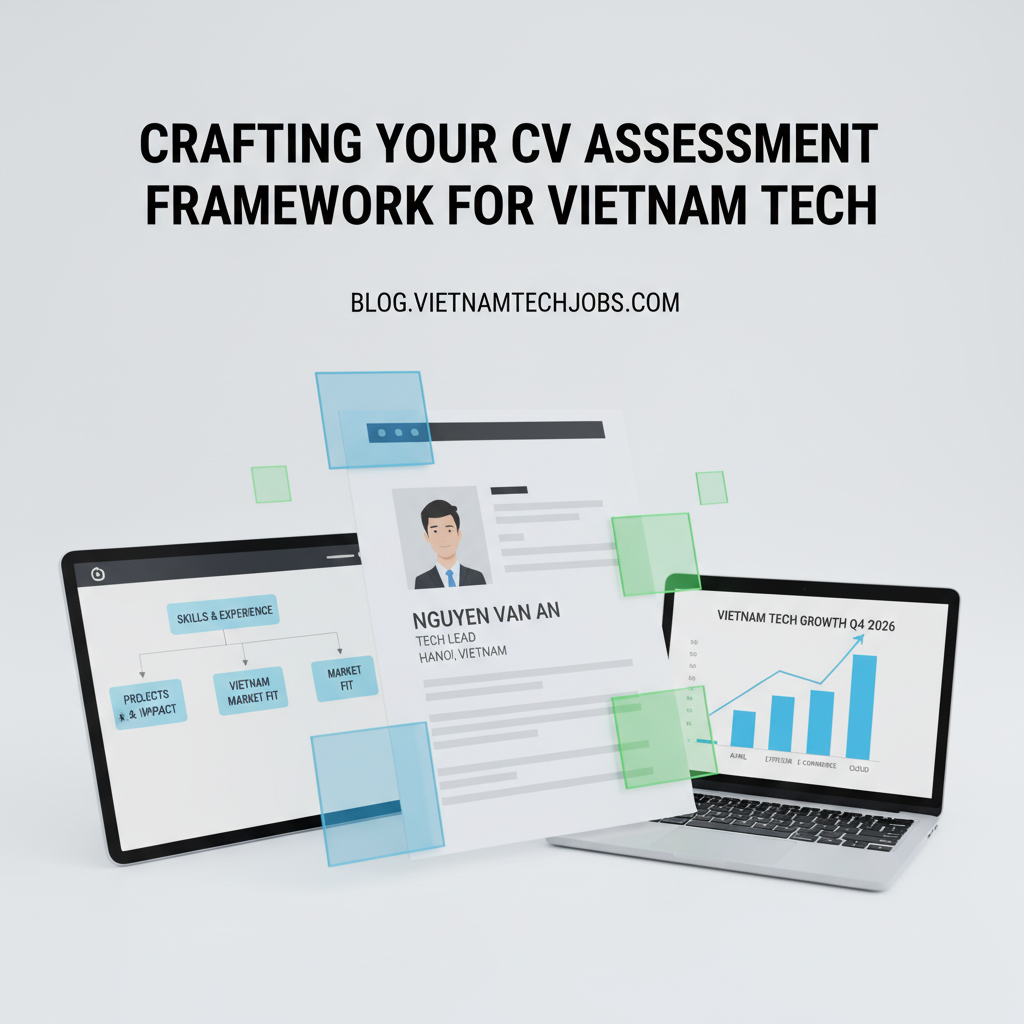
1. Defining Core Competencies and Assessment Criteria
The first critical step in building an effective CV assessment framework is to clearly define the core competencies required for manager-level roles within your organization’s specific tech context in Vietnam. These aren’t just generic leadership traits; they must reflect the unique challenges and opportunities of the local market and your company culture. For a tech manager, key competencies often include strategic thinking, technical proficiency (relevant to the domain), project management expertise, team leadership, cross-functional collaboration, problem-solving acumen, and strong communication skills. Additionally, attributes like adaptability, innovation drive, and a deep understanding of the Vietnamese business ecosystem can be crucial differentiating factors.
Once competencies are identified, translate them into concrete, observable assessment criteria. For instance, if “strategic thinking” is a core competency, criteria might include “demonstrated experience in developing long-term tech roadmaps” or “evidence of successful product strategy implementation.” Similarly, for “team leadership,” look for “experience managing diverse technical teams,” “mentorship roles,” or “impact on team performance and retention.” It’s vital to align these criteria with the specific requirements of the role and the strategic direction of the company. Understanding what makes a great leader today, especially in fast-evolving sectors like technology, is key to defining these competencies effectively. For further insights, consider exploring resources on the skills leaders need now to inform your definitions.
2. Developing Scoring Rubrics and Weighted Metrics
Objectivity and consistency are the cornerstones of a fair assessment. To achieve this, develop detailed scoring rubrics for each defined assessment criterion. A rubric typically outlines different performance levels (e.g., Novice, Proficient, Expert) with specific, descriptive indicators for what constitutes each level. For example, under “Project Management,” an “Expert” might have “Successfully delivered multiple complex tech projects on time and within budget, demonstrating proactive risk mitigation and stakeholder management across diverse teams,” while a “Novice” might only show “Limited exposure to project coordination, no clear evidence of managing full project lifecycles.” This approach ensures that all evaluators apply the same standards, significantly reducing subjective bias.
Furthermore, not all competencies carry equal weight for every managerial role. Implement weighted metrics to reflect the relative importance of each competency. A Head of Engineering might require a higher weighting on technical vision and leadership, whereas a Project Manager might prioritize project execution and stakeholder communication. Clearly defining these weights upfront ensures that the assessment reflects the strategic priorities of the position. Regularly review and refine these rubrics and weights based on hiring outcomes and organizational feedback to continuously improve the test structure to assess Manager Level CVs in technology field in Vietnam. This iterative process helps maintain the framework’s relevance and effectiveness in a rapidly changing tech environment.
3. Leveraging Local Market Insights and Industry Standards
While global best practices provide a solid foundation, successful CV assessment in Vietnam requires a nuanced understanding of the local tech landscape and cultural specificities. This involves integrating local market insights into your framework. Consider the typical career progression paths for tech professionals in Vietnam, the prevalent educational backgrounds, and the common skill sets found in the local talent pool. For instance, some technical skills might be more prevalent or advanced in Vietnam due to specific industry focuses or educational strengths. Understanding these nuances helps in setting realistic expectations and identifying promising candidates who might not fit a purely Western-centric mold but possess immense potential within the Vietnamese context.
Engage with local industry leaders, HR professionals, and tech community groups to gather insights on emerging technologies, desired leadership styles, and compensation benchmarks. Benchmarking against local industry standards ensures that your assessment criteria are competitive and relevant. Furthermore, cultural fit plays a significant role in successful integration and retention within Vietnamese organizations. While difficult to assess purely from a CV, criteria can indirectly reflect aspects like collaboration, respect for hierarchy, and communication styles. By meticulously combining universal managerial excellence with a deep appreciation for Vietnam’s unique tech ecosystem, you can craft a CV assessment framework that not only identifies top-tier managerial talent but also positions your company as an employer of choice in this vibrant market.
Practical Techniques for CV Screening & Shortlisting
In the dynamic and rapidly evolving technology landscape of Vietnam, securing top-tier manager-level talent is paramount for organizational success. Effective test structure to assess Manager Level CVs in technology field in Vietnam requires a nuanced approach, moving beyond superficial reviews to uncover true leadership potential and technical prowess. This section explores sophisticated methodologies and practical tools designed to efficiently screen and shortlist manager-level CVs, thereby ensuring a robust and relevant candidate pipeline for interviews. By optimizing your screening process, you can identify candidates who not only possess the requisite technical skills but also demonstrate the strategic thinking and leadership qualities essential for driving innovation and growth in Vietnam’s competitive tech sector.
1. Keyword Analysis and ATS Optimization Strategies
The initial hurdle in manager-level CV screening often involves navigating Applicant Tracking Systems (ATS). For tech manager roles, successful ATS optimization strategies are crucial. Modern ATS platforms utilize keyword analysis to filter candidates based on job description alignment. Recruiters must identify core competencies and technical jargon prevalent in the Vietnamese tech market—such as “Scrum Master,” “Agile leadership,” “DevOps,” “cloud architecture,” or specific programming languages and frameworks relevant to the manager’s domain. A robust test structure to assess Manager Level CVs in technology field in Vietnam begins by dissecting the job description into essential keywords and ensuring the ATS is configured to recognize these terms effectively. This proactive approach helps in avoiding the unintentional disqualification of highly qualified candidates due to simple keyword mismatches. Developing a comprehensive skill matrix for tech managers, mapped directly to job requirements, further refines the initial screening. Beyond keywords, assess the candidate’s educational background relevance tech, looking for degrees or certifications from reputable institutions that align with industry standards. Furthermore, for roles that involve product development or solution architecture, a strong portfolio review for tech leads can offer tangible evidence of their capabilities, even at the initial screening stage, showcasing past projects and their impact.
2. Evaluating Experience vs. Potential for Growth
For manager-level positions, a critical aspect of CV screening is discerning between pure experience and genuine potential for growth. While a candidate’s tenure in specific roles is important, true leadership in Vietnam’s tech sector demands adaptability and a forward-thinking mindset. Focus on qualitative indicators such as career progression within organizations, the scale and complexity of projects managed, and instances where the candidate took initiative or successfully navigated challenging situations. When evaluating experience vs. potential for growth, look for demonstrable leadership qualities in tech CVs—this might include mentions of mentoring junior team members, leading cross-functional teams, or driving significant product features from concept to launch. A detailed project management experience evaluation should go beyond listing projects; seek descriptions of their role, achievements, and the methodologies employed (e.g., Agile, Scrum, Waterfall). Look for quantifiable results, such as percentage increases in efficiency, successful on-time deliveries, or budget adherence. These details offer insights into their strategic contributions rather than just their operational involvement. Moreover, consider behavioral interview indicators hinted at in their CV, such as participation in industry forums, continuous learning initiatives, or contributions to open-source projects, all of which signal a proactive and growth-oriented professional.
3. Identifying Red Flags and Critical Deal-Breakers
Efficient CV screening also involves a keen eye for identifying red flags and critical deal-breakers that could derail a candidate’s suitability, especially for manager-level roles in a specific market like Vietnam. Common red flags include frequent job hopping without clear progression, significant unexplained gaps in employment history, or vague descriptions of responsibilities and achievements that lack quantifiable impact. Inconsistencies in dates, titles, or company names between the CV and other professional profiles (e.g., LinkedIn) warrant closer inspection. For multinational tech firms operating in Vietnam, language proficiency for international roles—particularly English—is often a non-negotiable requirement. Ensure the CV provides evidence of this, whether through educational qualifications or work experience in English-speaking environments. Another crucial aspect is gauging the candidate’s alignment with organizational values and the local work environment. A preliminary cultural fit assessment Vietnam tech involves looking for indications of collaboration, respect for hierarchy (where applicable), and a problem-solving mindset commonly valued in Vietnamese corporate culture. Discrepancies in salary expectations negotiation tech managers, if hinted at or explicitly stated in cover letters, can also be a deal-breaker. While negotiation is expected, candidates whose indicated range is significantly outside the budget might signal a mismatch. Addressing these potential issues early on in the screening process saves valuable time and resources, allowing recruiters to focus on genuinely viable candidates who align with both the technical and cultural requirements of the role. Ultimately, combining these practical techniques with a structured approach to evaluation, including rigorous reference checking best practices for shortlisted candidates, ensures a robust pipeline of manager-level talent for Vietnam’s thriving technology sector.
Elevating Assessment: Beyond the CV & Future Trends 2026
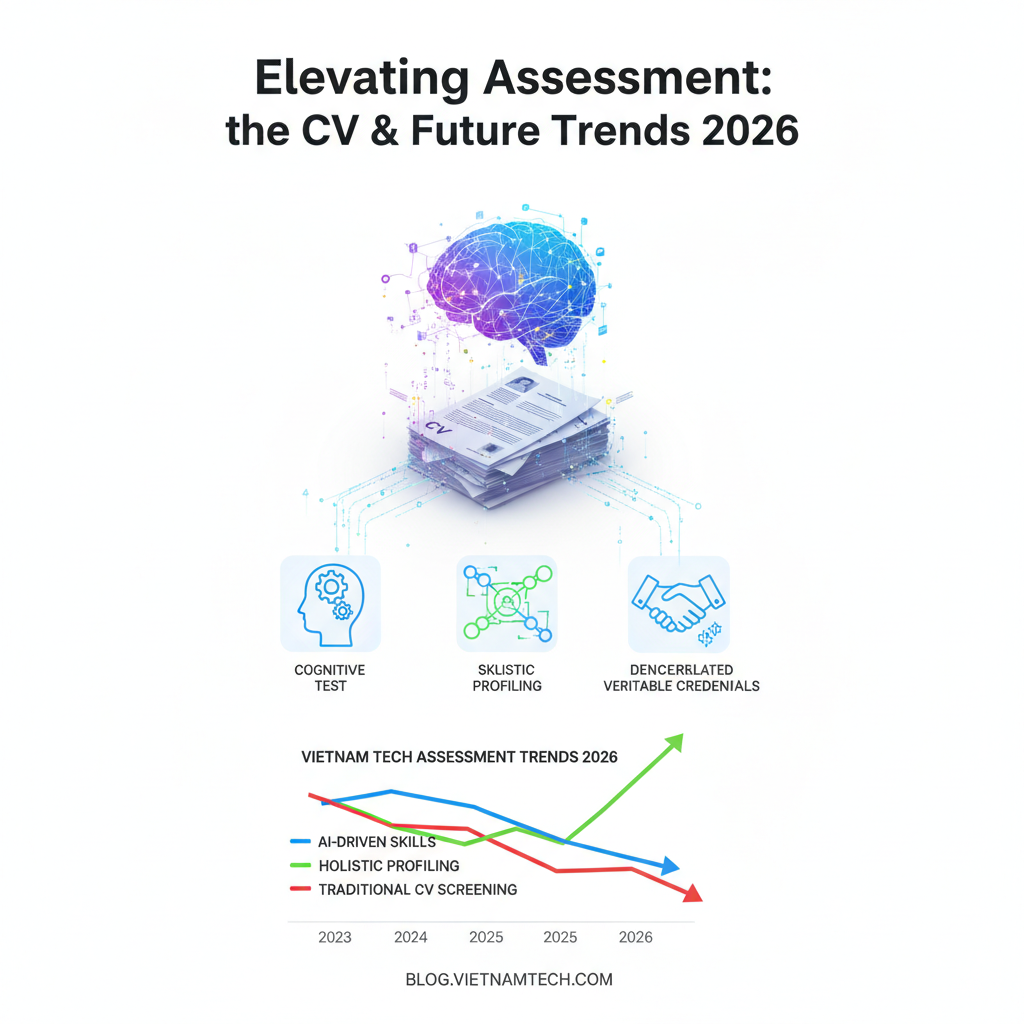
In the rapidly evolving landscape of Vietnam’s technology sector, the traditional CV, while foundational, increasingly falls short as the sole determinant for identifying truly exceptional tech managers. The complexity of modern leadership roles, coupled with the dynamic nature of technological advancements, demands a more holistic and forward-thinking approach to recruitment. By 2026, the emphasis in Vietnam will shift significantly towards robust, multi-faceted assessment strategies that complement and extend beyond initial resume reviews, aiming to uncover deep-seated capabilities, leadership potential, and cultural fit. This evolution is crucial for identifying candidates who can not only manage projects but also drive innovation, foster high-performing teams, and navigate the unique challenges of the Vietnamese market. The goal is to refine the test structure to assess Manager Level CVs in technology field in Vietnam, ensuring it captures the full spectrum of a candidate’s abilities.
Reliance on CVs alone risks overlooking critical soft skills, adaptive intelligence, and genuine leadership qualities that are paramount for managerial success in tech. The future of tech manager recruitment in Vietnam demands methodologies that provide tangible insights into a candidate’s problem-solving acumen, strategic thinking, and ability to execute under pressure. As companies vie for top talent, especially those who can navigate the nuances of a fast-growing digital economy, innovative assessment tools become indispensable.
1. Utilizing Pre-Screening Questionnaires and Video Introductions
The initial phase of talent acquisition can be significantly enhanced by integrating structured pre-screening questionnaires and video introductions. These tools serve as powerful filters, allowing recruiters to efficiently gauge a candidate’s alignment with specific role requirements and company culture before dedicating extensive interview time. Pre-screening questionnaires can delve into critical areas such as experience with particular tech stacks, project management methodologies (e.g., Agile, Scrum), team leadership styles, and challenges overcome. Crucially, they can also assess a candidate’s understanding of the Vietnamese tech market, local regulatory frameworks, and cultural sensitivities.
Video introductions, on the other hand, offer a dynamic glimpse into a candidate’s communication skills, confidence, and personality—attributes often hard to discern from a static CV. For tech managers, the ability to articulate complex ideas clearly, motivate teams, and present strategic visions is non-negotiable. These short, recorded interactions provide invaluable insights into a candidate’s presence and immediate engagement, offering a more personal dimension that traditional application forms cannot. They are particularly effective in a market like Vietnam where personal connection and communication style play a significant role in professional interactions.
2. Analyzing Portfolios and Documented Project Impact
Moving beyond bullet points of responsibilities, a robust assessment strategy for tech managers must emphasize tangible evidence of impact. This means meticulously analyzing portfolios that showcase not just technologies used, but the strategic decisions made, the challenges overcome, and the measurable outcomes achieved. For a tech manager, a portfolio might include case studies of successful product launches, architectural designs, improvements in team productivity, cost-saving initiatives, or even contributions to open-source projects that demonstrate thought leadership.
Documented project impact is key. Candidates should be encouraged to present data-driven narratives illustrating how their leadership influenced project timelines, budget adherence, team morale, and ultimate business value. This could involve metrics such as reduced bug rates, increased system uptime, improved deployment frequencies, or enhanced user engagement. Such an approach moves the evaluation from “what they did” to “what impact they created,” providing a far clearer picture of their capabilities as a strategic leader and executor. This deep dive is essential for a comprehensive test structure to assess Manager Level CVs in technology field in Vietnam, ensuring that candidates are evaluated on real-world results.
3. Leveraging Professional Networking and Referrals in Vietnam
In Vietnam, as in many Southeast Asian markets, professional networks and personal relationships hold considerable weight. Beyond formal applications, tapping into established networks and soliciting high-quality referrals can significantly streamline the recruitment process and yield superior candidates. Referrals from trusted industry peers, former colleagues, or respected mentors often come with an implicit endorsement of a candidate’s skills, work ethic, and cultural compatibility. This is particularly vital for managerial roles where leadership style and interpersonal skills are as important as technical prowess.
Actively engaging with local tech communities, attending industry events, and maintaining relationships with key influencers can create a pipeline of passive candidates who might not be actively looking but are open to new opportunities. For tech managers, referrals can provide crucial context on their leadership capabilities, conflict resolution skills, and ability to foster a positive team environment—insights that are difficult to glean from traditional interviews alone. Research consistently shows that employee referrals are often the best source of hire, leading to faster hires, lower cost-per-hire, and higher retention rates, a trend that holds strong in the Vietnamese context.
Looking ahead to 2026, the assessment of tech managers in Vietnam will be further revolutionized by advanced technologies. AI-powered analytics will scrutinize large volumes of candidate data, identifying patterns and predicting success more accurately. Virtual reality (VR) simulations could emerge as a tool for evaluating leadership in simulated crisis scenarios, testing decision-making under pressure. Continuous feedback loops and performance data integration will also become standard, allowing for ongoing assessment and development. Ultimately, the future of tech manager recruitment in Vietnam lies in a strategic blend of human insight, technological innovation, and a deep understanding of local market dynamics, moving far beyond the confines of a paper CV to create a truly comprehensive evaluation framework.
Partner with Shelby Global
You are looking for reliable HR Sevice Suppliers? Contact Shelby Global Now! To connect with verified talents and upgrade your orginization.
—————————————
References
– McKinsey: The War for Talent 2.0: https://www.mckinsey.com/capabilities/people-and-organizational-performance/our-insights/war-for-talent-20-years-later-the-resilience-of-the-talent-imperative
– future of tech leadership by authoritative sources like Deloitte: https://www2.deloitte.com/us/en/insights/topics/leadership/future-of-technology-leader.html
– the skills leaders need now: https://hbr.org/2023/11/the-skills-leaders-need-now
– Understanding Applicant Tracking Systems: https://www.linkedin.com/business/talent/blog/talent-acquisition/how-does-applicant-tracking-system-work
– Why employee referrals are still the best source of hire: https://www.hrdive.com/news/why-employee-referrals-are-still-the-best-source-of-hire/530261/