The Unique Landscape of FMCG Manager Recruitment in Vietnam
Vietnam’s Fast-Moving Consumer Goods (FMCG) sector is a vibrant powerhouse, characterized by rapid expansion and intense competition. This dynamism, while presenting immense opportunities for growth, also creates a complex and often challenging environment for talent acquisition, particularly at the managerial level. Companies frequently grapple with identifying, attracting, and retaining top-tier managers who possess the unique blend of market understanding, strategic foresight, and execution prowess needed to thrive. The stakes are high: a misstep in hiring can significantly impact market share, innovation, and long-term profitability. Therefore, understanding the distinct nuances of this recruitment landscape is paramount, setting the stage for why a robust Test structure to assess Manager Level CVs in FMCG companies in Vietnam isn’t just beneficial, but an absolute necessity. It’s about moving beyond superficial assessments to truly uncover the potential that will drive future success.

1. Growth of Vietnam’s FMCG Market & Talent Demand
Vietnam’s economic transformation has propelled its FMCG market into a period of remarkable growth. Driven by a burgeoning middle class, increasing disposable incomes, rapid urbanization, and a youthful population eager for new products, the sector continues to expand at an impressive pace. Major players, both multinational corporations and strong local contenders, are fiercely competing for consumer attention and market share. This expansion directly translates into an escalating demand for skilled managerial talent across various functions – from marketing and sales to supply chain and R&D. Companies require managers who can navigate evolving consumer preferences, leverage digital transformation, and adapt quickly to market shifts. The talent pool, while growing, often lacks the depth of experience required for leadership roles in such a fast-paced environment, making the search for qualified candidates akin to finding a needle in a haystack. According to a report highlighting Southeast Asia’s economic landscape, Vietnam’s consumer market remains a key driver of growth, further intensifying the competition for experienced professionals capable of leading teams and strategies in this dynamic sector. This constant upward trajectory in demand puts immense pressure on HR departments and hiring managers to not only fill vacancies but to find individuals who can truly make a difference.
2. Common Pitfalls in Current Managerial Hiring Processes
Despite the critical need for top-tier managers, many FMCG companies in Vietnam continue to rely on traditional, often unstructured, recruitment methodologies. A primary pitfall is the over-reliance on a candidate’s CV without a systematic approach to evaluating it. Hiring managers might focus too heavily on educational background or previous company names, overlooking critical indicators of leadership potential, problem-solving abilities, or cultural fit. Another common issue is the absence of standardized interview questions or skill assessments, leading to subjective evaluations based on “gut feeling” rather than objective criteria. This often results in generic job descriptions that fail to capture the specific nuances of the role within a Vietnamese market context, attracting a wide but often unsuitable pool of applicants. Furthermore, the pressure to fill positions quickly can lead to rushed decisions, increasing the likelihood of hiring individuals who lack the necessary competencies or, crucially, the cultural alignment with the organization. Such pitfalls contribute to high employee turnover, reduced productivity, and significant recruitment costs, hindering the very growth they aim to support. Without a clear framework to assess manager-level CVs, companies risk a revolving door of talent, undermining strategic initiatives and market positioning.
3. Why a Structured CV Assessment is Crucial for FMCG Success
To overcome these challenges and truly capitalize on Vietnam’s booming FMCG market, a structured CV assessment process becomes indispensable. This methodology moves beyond a cursory glance at resumes, providing a systematic framework to objectively evaluate candidates against predefined competencies essential for manager-level roles. By implementing a standardized Test structure to assess Manager Level CVs in FMCG companies in Vietnam, organizations can identify key performance indicators, leadership attributes, strategic thinking, and relevant industry experience more effectively. It ensures consistency across all applicants, reducing bias and promoting fairness. Moreover, a structured approach allows companies to pinpoint specific skills gaps, gauge a candidate’s adaptability to the Vietnamese market’s unique demands, and assess their potential for long-term growth within the organization. This precision in evaluation leads to better hiring decisions, reduced turnover rates, and ultimately, a stronger, more capable management team. For companies serious about maintaining a competitive edge and fostering sustainable growth in Vietnam’s dynamic FMCG landscape, investing in a well-defined CV assessment structure is not merely a recruitment strategy; it’s a strategic imperative for long-term success. Discover more about optimizing your recruitment strategy and implementing effective assessment tools by visiting our insights page on structured talent evaluation.
Core Pillars of an Effective Manager CV Assessment Structure
An effective test structure to assess Manager Level CVs in FMCG companies in Vietnam is not merely a formality; it is a strategic imperative. In a dynamic market like Vietnam, where consumer trends evolve rapidly and competition is fierce, the quality of managerial talent directly impacts a company’s ability to innovate, adapt, and grow. This assessment structure forms the bedrock of a reliable system for identifying high-potential candidates who possess the blend of leadership, strategic foresight, and operational excellence required to thrive in the fast-paced FMCG sector. It moves beyond superficial evaluations, delving into quantifiable achievements, proven competencies, and cultural fit to ensure that only the most suitable candidates progress to the interview stages, thereby optimizing recruitment efficiency and quality.
1. Defining Key Managerial Competencies for FMCG Roles
The foundation of any robust CV assessment structure lies in a clear definition of the specific managerial competencies critical for success within the FMCG landscape of Vietnam. These competencies go beyond generic leadership traits, encompassing a deep understanding of local market nuances, distribution challenges, and consumer behavior unique to the region. For instance, an effective FMCG manager in Vietnam must demonstrate strong commercial acumen, an ability to navigate complex retail environments, and proficiency in supply chain optimization tailored to a diverse geographic spread. Core competencies typically include strategic planning, market analysis, team leadership and development, results orientation, innovation, and adaptability to change. A comprehensive competency-based hiring FMCG framework allows evaluators to score CVs against predetermined criteria, ensuring that candidates are not just experienced, but experienced in areas directly relevant to the role’s demands. This ensures that the initial screening identifies candidates with a track record of not just managing, but genuinely leading teams and initiatives to deliver tangible results in a competitive market.
2. Leveraging Data-Driven Screening Criteria
To ensure consistency and efficiency in evaluating Manager Level CVs, leveraging data-driven screening criteria is paramount. This involves moving beyond qualitative impressions to establish quantifiable benchmarks for assessing candidate qualifications. Key metrics might include years of managerial experience within the FMCG sector, the size of teams managed, budget responsibility, market share growth achieved, or specific project successes (e.g., successful product launches, expansion into new regions). For a comprehensive FMCG managerial assessment, the use of Applicant Tracking Systems (ATS) can streamline the initial filtering process by automatically identifying keywords, experience levels, and educational qualifications that match predefined criteria. This systematic approach ensures that high-volume applications can be processed efficiently, allowing HR professionals to focus their attention on the most promising candidates. Establishing clear, measurable criteria helps in creating objective comparisons between candidates, reducing the chances of overlooking a strong applicant due to subjective review, and ultimately enhancing CV screening best practices Vietnam.
3. Ensuring Objectivity and Reducing Bias in CV Review
The human element in CV review, while essential, is susceptible to unconscious biases that can compromise the fairness and effectiveness of the hiring process. To mitigate this, an effective manager CV assessment structure must incorporate mechanisms to ensure objectivity and reduce inherent biases. Strategies include implementing blind CV reviews, where identifying information such as names, gender, age, and sometimes even educational institutions are redacted. Standardized scoring rubrics, directly linked to the defined managerial competencies and data-driven criteria, provide a consistent framework for evaluation, compelling reviewers to focus solely on skills and experience. Furthermore, involving multiple reviewers in the initial screening process can help average out individual biases and provide a more balanced perspective. Training for hiring managers and HR teams on recognizing and reducing inherent biases is also critical. By actively addressing potential biases, organizations in Vietnam can foster a more inclusive recruitment environment, ensuring that talent is assessed purely on merit, and enhancing the overall quality and diversity of their managerial hires through robust bias reduction HR recruitment efforts.
Step-by-Step Guide to Implementing the CV Test Structure
Provides a practical, actionable breakdown of how to design and apply the test structure, from initial filtering to in-depth analysis of candidate profiles.
In the dynamic and highly competitive FMCG sector in Vietnam, securing top-tier managerial talent is paramount for sustained growth and market leadership. A robust test structure to assess Manager Level CVs in FMCG companies in Vietnam is not just a preference, but a strategic imperative. This guide provides a comprehensive framework to streamline your recruitment process, ensuring you identify candidates with proven capabilities, relevant experience, and the right cultural fit. We will delve into best practices for FMCG recruitment Vietnam, effective manager CV evaluation, and advanced candidate screening best practices tailored for hiring for leadership roles.
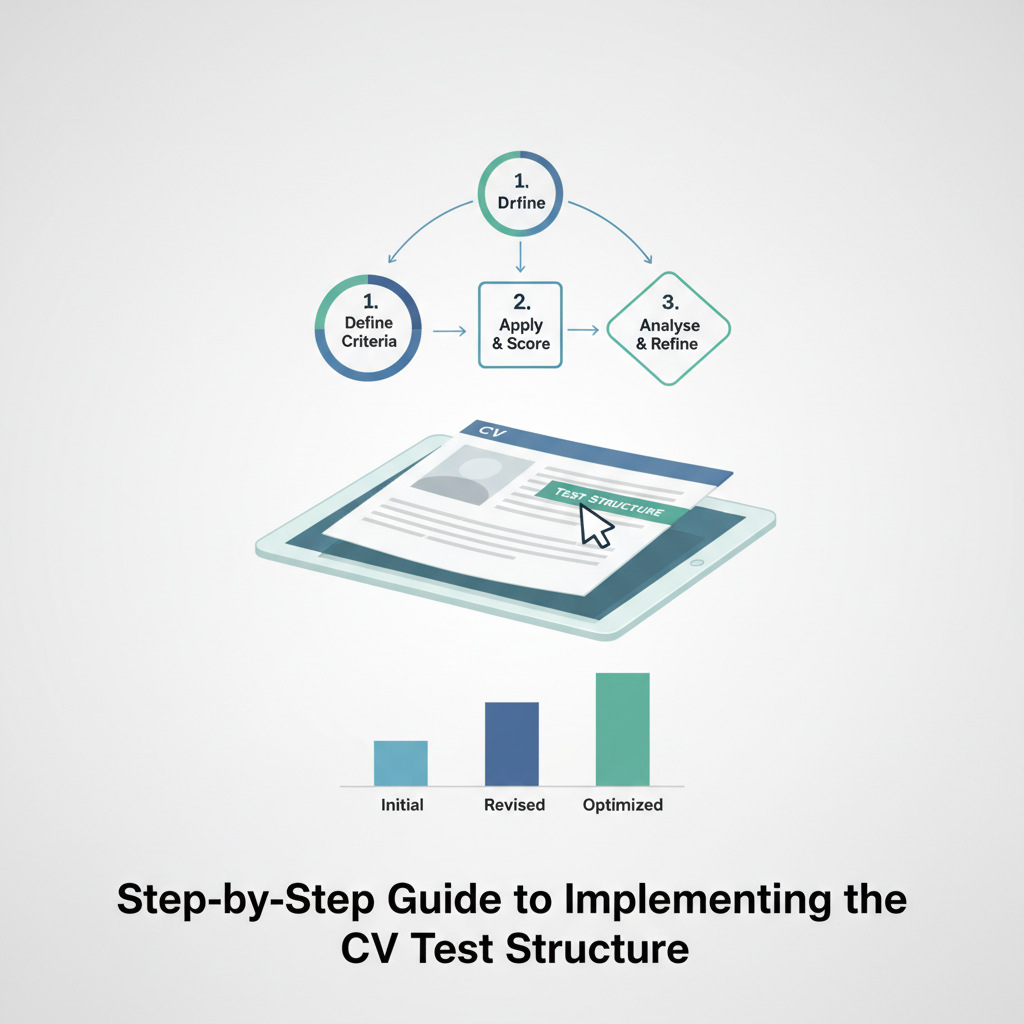
1. Phase 1: Initial Automated & Manual Screening Best Practices
The initial screening phase is critical for efficiently filtering a large volume of applications, identifying strong prospects while quickly discarding unsuitable candidates. This phase combines the efficiency of technology with the nuance of human judgment.
- Automated Filtering (ATS/AI): Implement an Applicant Tracking System (ATS) with predefined filters for essential criteria. For FMCG Manager roles in Vietnam, this includes specific years of experience (e.g., 5-7+ years), educational background (MBA, relevant degrees), language proficiency (Vietnamese/English), and mandatory keywords related to the FMCG sector (e.g., ‘supply chain management,’ ‘brand marketing,’ ‘sales operations,’ ‘distribution networks,’ ‘key account management’). Leveraging AI tools can also help in parsing unstructured data, identifying patterns, and scoring CVs based on relevance to the job description.
- Manual First Pass: Following automated filtering, a trained recruiter performs a quick manual review of the top-ranked CVs. This ‘blink test’ assesses overall presentation, clarity, and immediate red flags that an ATS might miss. Look for consistency in career progression, the type of FMCG companies worked for (local vs. multinational, specific product categories), and clear indications of managerial responsibilities. The goal here is to narrow down the pool to a manageable number for a deeper dive, focusing on candidates who clearly meet the fundamental requirements for manager CV evaluation.
2. Phase 2: Deep Dive: Analyzing Experience, Achievements & Impact
Once the initial filter is applied, the focus shifts to a thorough qualitative assessment. This phase moves beyond keywords to understand the depth and breadth of a candidate’s contribution and potential impact within an FMCG context.
- Quantifiable Achievements: Instead of merely listing responsibilities, successful managerial CVs highlight concrete achievements. Look for metrics such as ‘increased market share by X%’, ‘grew sales revenue by Y% over Z years,’ ‘managed a team of N individuals,’ ‘launched P successful products,’ or ‘optimized supply chain costs by Q%.’ These quantifiable results provide tangible evidence of a candidate’s ability to drive business outcomes in relevant FMCG environments.
- Strategic Thinking & Problem Solving: Evaluate how candidates describe challenges they faced and the strategies they employed to overcome them. Does their experience reflect a capacity for strategic planning, market analysis, and innovative problem-solving? For example, a candidate who navigated complex regulatory changes or successfully penetrated a new market segment demonstrates critical thinking vital for leadership roles.
- Leadership & Team Management: Assess the scope of their leadership experience. Did they just manage tasks, or did they lead, mentor, and develop teams? Look for evidence of building high-performing teams, fostering collaboration, and achieving collective goals. This insight is crucial for hiring for leadership roles within Vietnam’s fast-paced FMCG industry.
- Market Specific Experience: Given the unique consumer behaviors and distribution channels in Vietnam, prioritize candidates who demonstrate a clear understanding of the local market dynamics, including experience with traditional trade, modern trade, e-commerce, and regional consumer preferences.
3. Phase 3: Red Flags and Green Lights: What to Look For and Why
Identifying both positive indicators and potential warning signs is paramount for making informed hiring decisions. This phase helps in refining candidate screening best practices.
- Red Flags:
- Frequent Job Hopping: Multiple short stints (less than 1.5-2 years) without clear progression or explanation can indicate instability or difficulty in commitment.
- Vague Descriptions: Lack of specific achievements, using generic phrases, or failing to quantify results suggests a lack of impact or an inability to articulate it.
- Unexplained Gaps: Significant employment gaps without clear reasons on the CV (e.g., sabbatical, further education) warrant further inquiry.
- Inconsistent Progression: A career trajectory that lacks upward mobility or shifts erratically between unrelated roles may suggest a lack of clear career goals or consistent performance.
- Green Lights:
- Clear Career Progression: Evident growth in responsibility, scope, and seniority over time indicates ambition, continuous learning, and consistent high performance.
- Specific, Quantifiable Achievements: As mentioned, these are gold standard indicators of real-world impact.
- Leadership & Initiative: Examples of leading projects, initiating new programs, or taking on responsibilities beyond their core role.
- Relevant Industry Experience: Direct experience within the FMCG sector, particularly in Vietnam or similar emerging markets, is a strong advantage.
- Continuous Learning: Evidence of professional development, certifications, or advanced degrees indicates a commitment to staying current and enhancing skills, aligning with a structured approach to hiring.
By systematically applying this three-phase test structure, you can move beyond superficial CV reviews to a deeply insightful candidate assessment. This structured approach not only enhances the efficiency and objectivity of your recruitment process but also significantly improves your ability to identify and secure the visionary leaders essential for success in Vietnam’s competitive FMCG landscape.
Tailoring Assessment to Specific FMCG Managerial Roles
In the dynamic and competitive Fast-Moving Consumer Goods (FMCG) sector, particularly within the rapidly evolving landscape of Vietnam, a one-size-fits-all approach to candidate assessment simply doesn’t cut it. While a general framework provides a solid foundation, the true art of talent acquisition lies in meticulously tailoring the test structure to assess Manager Level CVs in FMCG companies in Vietnam based on the specific demands of each role. Different managerial functions — be it Sales, Marketing, Operations, or Supply Chain — require distinct skill sets, experiences, and strategic perspectives. This section delves into how to adapt your assessment strategy to identify candidates who possess not just general management prowess, but also deep sector-specific expertise vital for success.
1. Assessing Sales & Marketing Manager CVs: Market Acumen & Growth
For Sales and Marketing managerial roles within FMCG, the focus shifts squarely towards market acumen and a proven track record of driving growth. When evaluating CVs, look beyond generic sales targets. Prioritize candidates who demonstrate deep understanding of consumer behavior, particularly within the nuanced Vietnamese market. Key indicators include experience in successful product launches, market penetration strategies, brand building initiatives, and proficiency in both traditional and modern trade channels. Their CVs should highlight quantifiable achievements in revenue growth, market share expansion, and effective management of distribution networks. Essential skills to identify include strong negotiation capabilities, strategic planning for digital marketing campaigns, and the ability to leverage consumer insights for competitive advantage. For Vietnam-specific roles, familiarity with regional consumption patterns and adapting global strategies to local preferences are crucial. A compelling candidate will articulate how they’ve transformed market challenges into opportunities, leading to significant commercial success.
2. Evaluating Operations & Supply Chain Manager CVs: Efficiency & Logistics
Operations and Supply Chain Managers are the backbone of FMCG, responsible for ensuring products move efficiently from production to the consumer. For these roles, the assessment must prioritize efficiency and logistics expertise. CVs should reflect strong capabilities in supply chain optimization, inventory control, production planning, and quality assurance. Look for evidence of process improvement initiatives that resulted in tangible cost reductions or increased throughput. Experience with logistics management, warehousing, and transportation, especially within a complex geographical landscape like Vietnam, is paramount. Candidates should demonstrate a solid understanding of regulatory compliance, risk management in the supply chain, and the application of technology (e.g., WMS, ERP systems) to enhance operational performance. A standout candidate will showcase how they’ve navigated infrastructure challenges, streamlined complex customs procedures, or implemented robust demand forecasting models to ensure product availability and minimize waste, directly contributing to the company’s profitability and market responsiveness.
3. Cross-Functional Leadership: Identifying Strategic Thinkers
Beyond the role-specific technical skills, all FMCG managerial positions demand strong cross-functional leadership and strategic thinking. When reviewing CVs, identify candidates who can demonstrate the ability to collaborate effectively across departments – from R&D to finance and sales – to achieve overarching business objectives. Look for experience in strategic planning, project management, and leading diverse teams. Attributes like data-driven decision-making, problem-solving, and adaptability are critical in the fast-paced FMCG environment. A strategic thinker will not only manage day-to-day operations but also anticipate market shifts, identify innovation opportunities, and drive change management initiatives. Their CVs should present instances where they’ve influenced strategic direction, championed new initiatives, or successfully navigated periods of significant transformation. In Vietnam’s rapidly evolving market, the ability to pivot strategies quickly, foster a culture of innovation, and develop future leaders is invaluable. A manager who can articulate their vision and inspire teams to achieve ambitious goals, while effectively managing stakeholders, will be a significant asset to any FMCG company.
Future-Proofing Your FMCG Manager CV Assessment for 2026
In Vietnam’s dynamic fast-moving consumer goods (FMCG) landscape, the competition for top-tier managerial talent is intensifying. As companies navigate rapid digital transformation, evolving consumer behaviors, and global economic shifts, talent acquisition methods must also evolve. This section discusses how to continuously refine and optimize the assessment structure to stay ahead of industry trends, technological advancements, and the changing talent landscape in Vietnam, ensuring your recruitment process effectively identifies the best candidates through a robust test structure to assess Manager Level CVs in FMCG companies in Vietnam for 2026 and beyond.
A static approach to evaluating CVs for managerial roles in FMCG is no longer sufficient. To future-proof your talent pipeline, organizations must adopt agile talent acquisition strategies that integrate cutting-edge technology with a deep understanding of human capabilities and cultural nuances specific to the Vietnamese market. The goal is to move beyond verifying past experience to predicting future performance, leadership potential, and alignment with the company’s strategic vision.
1. Integrating AI and Machine Learning in CV Pre-Screening
The sheer volume of applications for manager-level FMCG positions often overwhelms human recruiters, leading to potential biases and missed opportunities. By 2026, Artificial Intelligence (AI) and Machine Learning (ML) will be essential components of an effective CV assessment framework. AI-powered platforms can swiftly analyze vast datasets, identifying specific keywords, quantifying achievements, and discerning patterns indicative of crucial digital transformation skills and industry-specific expertise. These tools automate initial screening, highlighting candidates who meet core requirements, possess relevant sector experience, and exhibit a strong career trajectory.
Beyond basic keyword matching, advanced ML algorithms can learn from successful hires to identify subtle CV indicators correlating with long-term success. This significantly reduces time-to-hire and enhances the fairness and objectivity of the initial candidate pool. Implementing these technologies requires careful calibration to avoid perpetuating existing biases in historical data, but when correctly applied, AI and ML can revolutionize the efficiency and accuracy of identifying high-potential FMCG managers.
2. The Role of Soft Skills and Cultural Fit in Modern FMCG Roles
While technical prowess and demonstrable business results remain crucial, the evolving FMCG market dynamics in Vietnam increasingly demand strong soft skills and profound cultural fit. Managerial roles in this sector require individuals who can lead diverse teams, adapt to rapid market changes, foster innovation, and communicate effectively across various stakeholders. Therefore, a future-proof CV assessment structure must move beyond merely listing responsibilities to identifying evidence of these critical attributes.
Recruiters should look for instances of collaborative projects, cross-functional leadership, experience in managing change, and involvement in community or volunteer work that demonstrate empathy and a proactive attitude. CVs that articulate achievements through problem-solving, team motivation, and strategic influence provide clearer insights into a candidate’s leadership competencies. Furthermore, indicators of cultural awareness and adaptability are paramount for success in Vietnam’s unique business environment. Incorporating video resumes or portfolio links where candidates showcase presentation skills or project outcomes can also effectively gauge these less tangible, yet vital, qualities early in the process.
3. Continuous Feedback Loop: Iterating and Optimizing the Structure
The most effective CV assessment frameworks are not static; they continuously adapt to new insights and industry shifts. Establishing a robust continuous feedback loop is crucial for optimizing your assessment structure for 2026 and beyond. This involves regularly analyzing the performance of newly hired managers against their initial CV assessments, collecting feedback from hiring managers on candidate quality, and benchmarking your processes against industry best practices.
For instance, if managers hired through a particular assessment methodology consistently underperform, it signals a need to refine assessment criteria for those skills. Conversely, if certain CV assessment elements consistently identify high-performers, those elements should be reinforced. This iterative process must also consider external factors like emerging technologies impacting the FMCG sector, new regulatory frameworks, or shifts in the broader Vietnamese talent pool. By actively soliciting input from all stakeholders—from candidates to senior leadership—and leveraging data analytics, organizations can ensure their test structure to assess Manager Level CVs in FMCG companies in Vietnam remains relevant, fair, and predictive of success in an ever-evolving market. Regular workshops and training for HR teams on interpreting new CV formats or assessing emerging skills are also vital components of this continuous improvement cycle.
In conclusion, future-proofing your FMCG Manager CV assessment for 2026 requires a multi-faceted approach. By strategically integrating AI for initial screening, prioritizing the assessment of critical soft skills and cultural fit, and committing to a continuous feedback loop, companies can build a resilient and effective system for identifying the next generation of leaders who will drive success in Vietnam’s competitive FMCG sector. The goal is not just to hire for today but to build a talent pipeline ready for tomorrow’s challenges and opportunities.
Partner with Shelby Global
You are looking for reliable HR Sevice Suppliers? Contact Shelby Global Now! To connect with verified talents and upgrade your orginization.
—————————————
References
– :
– Diversity, Equity & Inclusion Resources from SHRM: https://www.shrm.org/resources-and-tools/pages/diversity-equity-inclusion.aspx
– Structured Interviews: The Best Way to Hire: https://www.shrm.org/resources-and-tools/hr-topics/talent-acquisition/structured-interviews-best-way-to-hire/
– McKinsey & Company: Supply Chain Resilience in Consumer Goods: https://www.mckinsey.com/industries/consumer-packaged-goods/our-insights/supply-chain-resilience-in-consumer-goods
– The Future Of AI In Recruitment: A Paradigm Shift In Talent Acquisition: https://www.forbes.com/sites/forbeshumanresourcescouncil/2023/12/12/the-future-of-ai-in-recruitment-a-paradigm-shift-in-talent-acquisition/