Understanding the Landscape: Vietnam’s Entertainment Sector
Setting the stage for effective talent acquisition requires a deep dive into the unique characteristics and challenges of the entertainment industry in Vietnam. This context is crucial for tailoring test structure to assess Manager Level CVs in Entertainment field in Vietnam to specific local nuances, ensuring that recruitment strategies identify candidates who not only possess technical competencies but also thrive within the dynamic Vietnamese market.

1. Growth & Emerging Trends in Vietnamese Entertainment
Vietnam’s entertainment sector is experiencing unprecedented growth, driven by a youthful demographic, increasing disposable income, and rapid digital transformation. The market is vibrant, with a significant shift towards digital content consumption, including streaming services, online gaming, and social media platforms. The influence of global trends, particularly K-pop and Western media, coexists with a burgeoning appreciation for local content, from Vietnamese pop (V-pop) to domestically produced films and television series. Investment in infrastructure and content creation is surging, attracting both local and international players. This explosive expansion creates a high demand for skilled professionals, especially those capable of navigating complex projects and diverse teams. Managers in this environment must demonstrate strong adaptability, an understanding of digital strategies, and the ability to innovate continuously. Recognizing these trends is vital when assessing managerial competencies in candidate CVs, as it highlights the need for foresight and strategic thinking in a fast-evolving industry.
2. Specific Challenges for Managerial Roles in the Industry
While growth abounds, managerial roles within Vietnam’s entertainment sector come with distinct challenges that differentiate them from more mature markets. One primary hurdle is the talent gap; despite a large young workforce, there’s a relative scarcity of experienced mid-to-senior level managers with a proven track record in complex entertainment projects. This often leads to intense competition for qualified candidates, necessitating a robust talent acquisition strategy. Furthermore, the industry operates within a rapidly evolving regulatory landscape, particularly concerning intellectual property rights, content censorship, and online distribution. Managers must possess not only business acumen but also a keen awareness of compliance and risk management. The pressure to innovate constantly, integrate new technologies, and balance international best practices with local market preferences adds another layer of complexity. Therefore, when evaluating CVs for leadership positions, a test structure to assess Manager Level CVs in Entertainment field in Vietnam must scrutinize candidates for resilience, problem-solving abilities, and an understanding of the unique operational environment.
3. Cultural Nuances in Professional Applications & Expectations
Recruiting successfully in Vietnam requires a nuanced understanding of its professional culture, which significantly impacts how candidates present themselves and how their applications should be interpreted. Unlike some Western cultures that encourage overt self-promotion, Vietnamese professionals often adopt a more modest approach, emphasizing teamwork and collective achievements over individual accolades. This modesty can sometimes obscure significant accomplishments in a CV if not read with a culturally sensitive lens. Importance is also placed on long-term commitment, loyalty, and respect for hierarchy and established relationships (quan hệ). Recruiters should look beyond surface-level descriptions for evidence of these traits. Communication style also plays a role; indirect communication can be common, and understanding implied meanings is crucial. Furthermore, proficiency in both Vietnamese and English is increasingly vital for managers who need to navigate local teams and engage with international partners. An effective candidate evaluation framework for the Vietnamese entertainment sector must integrate these cultural aspects, moving beyond generic templates to assess not just hard skills but also the crucial soft skills and cultural fit that predict success in this unique market. This holistic approach ensures that the chosen manager can effectively lead, motivate, and integrate within the local professional ecosystem, driving both business objectives and team cohesion.
Deconstructing the Manager-Level CV: Key Elements to Scrutinize
Hiring for manager-level roles in the dynamic Vietnamese entertainment sector demands a keen eye that goes far beyond basic qualifications. A manager’s CV isn’t just a chronology of past jobs; it’s a strategic document that should articulate leadership potential, demonstrate strategic thinking, and provide clear evidence of relevant industry experience. For businesses navigating the unique cultural nuances and rapid growth of Vietnam’s entertainment landscape, developing a robust Test structure to assess Manager Level CVs in Entertainment field in Vietnam is paramount. This guide will help you scrutinize CVs to identify candidates who can genuinely drive impact and lead teams effectively.
To effectively screen candidates for `managerial experience Vietnam`, recruiters must employ sophisticated `CV screening techniques` that unearth more than just job titles. We’re looking for individuals who don’t just execute tasks but conceptualize, lead, and deliver measurable results. This requires a shift in focus from what they did, to how they did it, and what impact that had on the organization and its objectives, particularly within the fast-paced `entertainment industry careers`.
1.
Quantifiable Achievements & Demonstrated Impact
The most compelling indicator of a strong manager-level candidate is their ability to present achievements backed by data. Vague statements like “responsible for increasing sales” are insufficient. Instead, look for specifics: “Led a marketing campaign that boosted subscriber engagement by 35% over six months, resulting in a 15% increase in ad revenue,” or “Reduced operational costs by 10% through process optimization across three major projects.” These statements, rich in `performance metrics`, offer concrete evidence of a candidate’s contribution and their understanding of business outcomes.
In the entertainment industry, impact can manifest in various ways, from audience growth and content virality to successful project launches and revenue diversification. A strong CV will highlight instances where the candidate not only participated but spearheaded initiatives that yielded significant, measurable results. This demonstrates an results-oriented mindset crucial for `leadership potential` and driving tangible success within the competitive Vietnamese market.
2.
Leadership & Team Management Experience Indicators
Beyond simply stating “managed a team of X people,” a manager-level CV should reveal the *quality* and *depth* of their `team leadership skills`. Look for descriptions that detail how they motivated their team, resolved conflicts, fostered talent development, or navigated complex project dynamics. Examples might include: “Mentored junior staff, leading to two promotions within a year,” or “Successfully mediated cross-departmental disputes, ensuring timely project delivery amidst competing priorities.”
Evidence of developing subordinates, building cohesive units, and steering teams through challenging periods are critical. For roles in Vietnam, an understanding of `cross-cultural management` is a significant asset, indicating their ability to adapt leadership styles to diverse local and international talent pools. A candidate who can articulate how they empower others and build high-performing teams, perhaps citing specific frameworks or strategies they employed, stands out. A great leader, as Daniel Goleman highlighted in the Harvard Business Review, possesses emotional intelligence—a trait often reflected in how they describe their interactions and impact on team members.
3.
Strategic Thinking & Problem-Solving Skills
A manager is not just a doer; they are a thinker and a planner. Their CV should contain clear indicators of `strategic thinking` and proactive `problem-solving entertainment` skills. This involves looking for examples where they identified market gaps, developed new initiatives, adapted to industry changes, or overcame significant business challenges. Instead of merely stating “solved problems,” look for narratives that explain the problem, the candidate’s analysis, the various solutions considered, and the rationale behind their chosen course of action.
For instance, “Identified a declining trend in youth viewership for a key program and proposed a multi-platform digital engagement strategy, reversing the decline by 20%,” showcases strategic foresight and an analytical approach. Similarly, demonstrating experience in developing a `talent acquisition strategy` or market entry strategy reflects a broader business perspective. Managers in the entertainment sector, especially in a rapidly evolving market like Vietnam, must demonstrate an ability to anticipate future trends, innovate under pressure, and make informed decisions that align with long-term organizational goals.
In conclusion, assessing manager-level CVs requires a methodical approach that prioritizes demonstrated impact, authentic leadership, and strategic acumen. By focusing on these key elements, companies can refine their Test structure to assess Manager Level CVs in Entertainment field in Vietnam, ensuring they recruit leaders who are not just competent but truly transformative for their organizations.
Crafting an Effective CV Assessment Framework
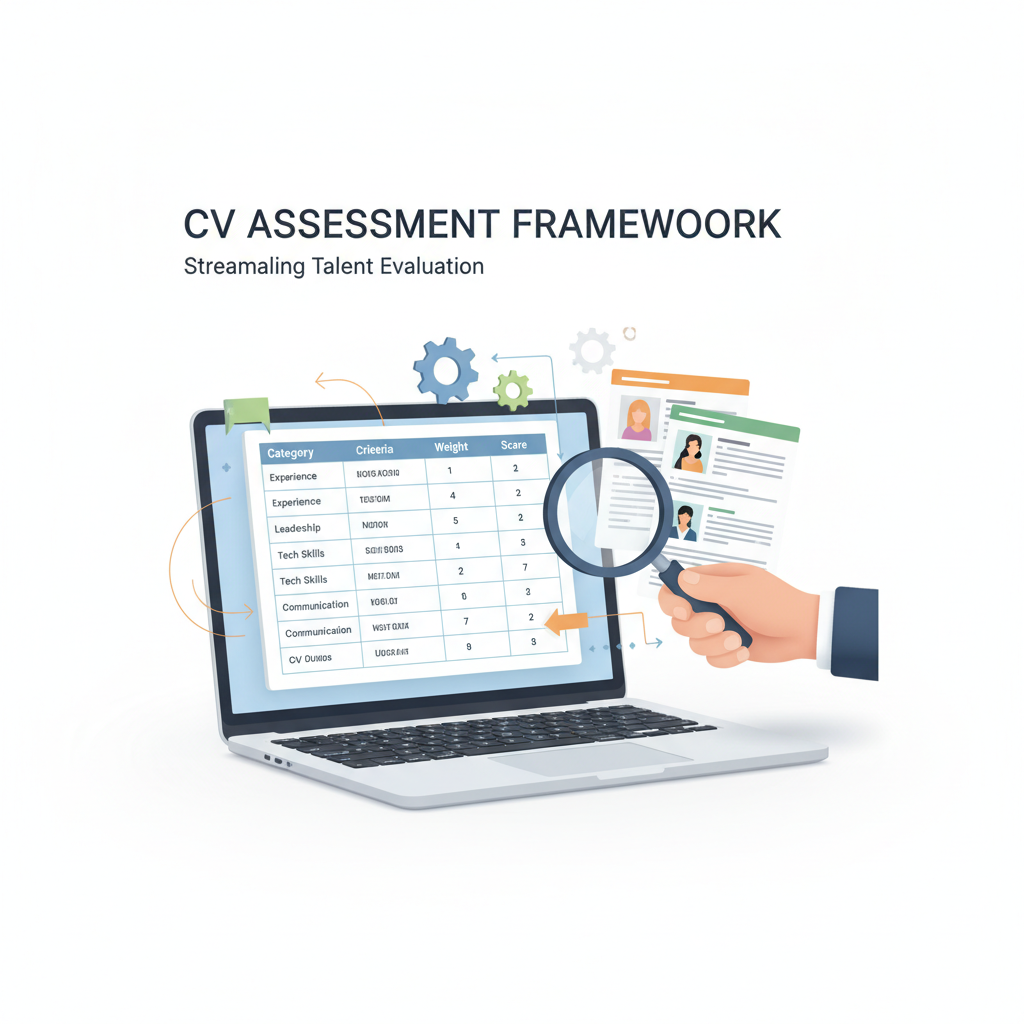
The rapidly evolving entertainment landscape in Vietnam demands a sophisticated and objective approach to talent acquisition, particularly for manager-level positions. Identifying individuals who possess the unique blend of creative vision, business acumen, and local market understanding is crucial for sustained success. This section details a step-by-step process for building a robust and objective framework specifically designed for evaluating manager-level CVs in the Vietnamese entertainment field, ensuring consistency, fairness, and ultimately, higher quality hires. Developing a well-defined test structure to assess Manager Level CVs in Entertainment field in vietnam is paramount for streamlining the recruitment process and attracting top-tier talent. It moves beyond subjective impressions, focusing instead on quantifiable criteria and demonstrable achievements, which is essential for effective talent acquisition in the entertainment sector.
-
Defining Core Competencies for Entertainment Managers
The foundation of any effective CV assessment framework lies in a clear definition of the core competencies required for the role. For entertainment managers in Vietnam, these competencies extend beyond generic leadership skills, encompassing a unique blend of strategic, operational, and creative capabilities. Key areas include strong project management skills, financial literacy, marketing and public relations savvy, an acute understanding of intellectual property rights, and demonstrable team-building capabilities. Furthermore, given the dynamic nature of the industry, adaptability, innovation, and a proactive approach to problem-solving are vital. We must consider specific leadership qualities, negotiation prowess, and stakeholder management abilities, as these are critical for navigating complex production cycles and diverse talent pools. This detailed identification of essential managerial skills assessment provides a targeted lens through which to evaluate candidates’ past experiences and achievements.
-
Developing a Standardized Scoring Rubric for CVs
To ensure objective CV evaluation and mitigate unconscious bias, a standardized scoring rubric is indispensable. This rubric assigns weighted scores to various sections of the CV, allowing for a quantitative comparison of candidates. Categories typically include: Relevant Experience (number of years, scale of projects, type of entertainment content managed), Achievements and Impact (quantifiable results, awards, successful project launches), Education and Certifications (relevant degrees, specialized training), and Demonstrated Soft Skills (leadership, communication, problem-solving inferred from descriptions). Each category should have clear descriptors for different score levels (e.g., “Exceeds Expectations,” “Meets Expectations,” “Needs Development”). For instance, a candidate demonstrating a proven track record of successful content monetization or audience growth in the Vietnamese market would score highly in “Achievements and Impact.” Implementing a competency-based evaluation approach, informed by best practices in HR, ensures that the assessment aligns with the strategic needs of the role. For insights into developing such systematic evaluation tools, resources like the Society for Human Resource Management (SHRM) offer valuable guidance on competency-based evaluation principles that can be adapted for CV screening. This structured approach helps in building a standardized hiring process and promoting consistency in applicant reviews, thus enhancing the overall entertainment industry recruitment in Vietnam.
-
Incorporating Industry-Specific & Market-Relevant Criteria
A successful framework for assessing manager-level CVs in the Vietnamese entertainment field must go beyond generic management competencies and integrate criteria specific to the local industry and market. This involves evaluating a candidate’s understanding of Vietnamese market insights, cultural nuances, regulatory environment, and consumer behavior within the entertainment sector. For example, experience with local distribution channels, an understanding of censorship laws, or a proven ability to manage talent relationships specific to the Vietnamese context would be highly valued. Criteria could include familiarity with digital content trends in Vietnam, experience with local artists or production houses, and a track record of successfully adapting international formats for the Vietnamese audience. Assessing a candidate’s network within the local entertainment ecosystem and their ability to foster cultural fit assessment in Vietnam are also critical. This localized approach ensures that candidates not only have the fundamental managerial capabilities but also possess the contextual knowledge vital for success in this unique market. Such considerations are pivotal for effectively evaluating the performance indicators of managers in this specialized field, ensuring the recruitment of individuals who can truly thrive and contribute to the growth of the Vietnamese entertainment landscape.
By meticulously defining core competencies, implementing a standardized scoring rubric, and integrating industry-specific and market-relevant criteria, organizations can establish a robust framework for screening manager-level CVs in the Vietnamese entertainment sector. This systematic approach not only enhances the fairness and consistency of the screening process but also significantly improves the likelihood of attracting and securing high-caliber talent that can drive future success in this dynamic industry. It’s an investment in strategic talent acquisition entertainment that pays dividends in organizational performance.
Integrating Beyond the CV: Holistic Candidate Evaluation
In today’s competitive landscape, particularly within the dynamic and rapidly evolving entertainment industry in Vietnam, relying solely on a Curriculum Vitae (CV) for candidate assessment is insufficient. While a CV offers a snapshot of experience and qualifications, a truly effective talent acquisition strategy demands a comprehensive and multi-faceted approach. For manager-level roles, where strategic acumen, leadership, and cultural nuance are paramount, organizations must implement a robust test structure to assess Manager Level CVs in Entertainment field in Vietnam. This involves integrating initial CV assessments with subsequent, more in-depth recruitment stages to paint a complete and accurate picture of a candidate’s potential, moving beyond mere credentials to evaluate practical skills, cultural fit, and long-term strategic value.
1. Connecting CV Insights to Targeted Interview Questions
The CV serves as the crucial starting point, providing foundational insights that should directly inform the interview process. For manager-level candidates in Vietnamese entertainment, a careful review of their CV can highlight specific achievements in areas such as project scale (e.g., managing large-scale music festivals, film productions, or digital content campaigns), budget management, team leadership, and their contributions to specific content development or marketing successes. Identifying these key performance indicators allows recruiters to formulate targeted behavioral and situational interview questions. For instance, if a CV mentions overseeing a significant digital marketing campaign, interviewers might ask: “Describe a time you successfully launched a major digital content strategy in a challenging market. What were the key obstacles, and how did you overcome them, specifically considering the nuances of the Vietnamese audience?” This approach moves beyond simply verifying experience to delving into the ‘how’ and ‘why’ behind their past successes and failures. Questions can also probe their understanding of local market trends, regulatory landscapes, and their ability to innovate within the unique cultural context of Vietnam’s entertainment scene, assessing critical leadership evaluation and strategic decision-making capabilities.
2. Utilizing Portfolio & Project-Based Assessments
Beyond interviews, practical assessments are indispensable for manager roles, especially in an industry as creative and results-driven as entertainment. For managers, a “portfolio” extends beyond creative works to encompass demonstrable project management skills, successful campaign executions, team development initiatives, and even P&L responsibilities. Project-based assessments or case studies provide an excellent opportunity to evaluate a candidate’s problem-solving abilities, strategic thinking, and practical application of knowledge. Candidates might be presented with a real-world scenario pertinent to the Vietnamese entertainment market – for example, developing a market entry strategy for a new international artist, creating a contingency plan for a large-scale event amidst unexpected challenges, or crafting a digital media strategy to engage a specific demographic in Vietnam. These exercises allow recruiters to observe their approach to complex challenges, their ability to prioritize, their communication style, and their capacity for innovative solutions. Furthermore, requesting candidates to present on a past successful project, detailing their role, challenges faced, and outcomes, can provide invaluable insights into their practical competencies and strategic acumen. According to Harvard Business Review, assessing for specific skills through practical tests can significantly improve hiring outcomes by demonstrating a candidate’s ability to perform under realistic conditions.
3. Assessing Culture Fit and Long-Term Potential
Finally, a holistic evaluation must thoroughly assess culture fit and long-term potential, particularly crucial in an industry often driven by passion, collaboration, and rapid change. For manager roles in Vietnamese entertainment, cultural alignment means understanding and valuing local traditions while embracing global trends, demonstrating adaptability, resilience, and strong stakeholder management. Interviews should include questions designed to uncover a candidate’s leadership style, their approach to team motivation and development, their ability to navigate conflict, and their values alignment with the organization. Techniques like peer interviews, where potential colleagues interact with the candidate, can offer valuable perspectives on interpersonal skills and collaborative spirit. Furthermore, considering long-term potential involves evaluating a candidate’s growth mindset, their willingness to learn new technologies or market approaches, and their strategic vision for their career and the company. The entertainment landscape in Vietnam is constantly evolving, requiring managers who are not only competent today but also possess the foresight and adaptability to lead effectively tomorrow. Assessing for curiosity, initiative, and a commitment to continuous improvement ensures that the chosen manager will not only excel in their immediate role but also contribute to the company’s sustained success and innovation.
Future-Proofing Your Recruitment: Adapting to 2026 & Beyond
The Vietnamese entertainment sector is on a dynamic growth trajectory, fueled by a burgeoning youth population, increasing digital consumption, and a vibrant creative landscape. For recruitment professionals, this presents both immense opportunity and significant challenges. To ensure continuous improvement and talent acquisition excellence, organizations must proactively adapt their strategies for 2026 and beyond. This involves not only embracing technological advancements but also fostering inclusive environments and refining core assessment methodologies, particularly when it comes to identifying top-tier management talent. Building a robust Test structure to assess Manager Level CVs in Entertainment field in vietnam is paramount for securing leadership that can navigate this fast-evolving industry.

1. Leveraging AI & Technology in CV Screening Processes
The sheer volume of applications in the competitive Vietnamese entertainment industry demands smarter, faster screening processes. Artificial intelligence (AI) and machine learning (ML) are no longer futuristic concepts but essential tools for efficient talent acquisition. AI-powered platforms can analyze vast quantities of CVs, identifying key skills, experience, and qualifications that align with specific roles, discerning nuances relevant to the gaming sector, digital content creation, or performing arts. This technology helps to reduce unconscious bias in the initial screening phase, allowing recruiters to focus on candidates who truly meet the criteria, thereby enhancing the quality of the candidate pool. Integrating AI also frees up valuable HR time, allowing professionals to dedicate more attention to strategic planning and candidate engagement.
2. Prioritizing Diversity, Equity, and Inclusion in Hiring
A diverse workforce is a powerful asset, particularly in the creative and entertainment industries where varied perspectives drive innovation and resonate with broader audiences. Prioritizing Diversity, Equity, and Inclusion (DEI) in hiring practices is not just an ethical imperative but a strategic business advantage. By 2026, companies that genuinely embed DEI into their recruitment strategies will stand out. This means actively challenging biases in job descriptions, expanding outreach to diverse talent pools, and ensuring that interview panels are themselves diverse. It involves creating an inclusive employer brand that attracts candidates from all backgrounds, reflecting the diverse fan base of the entertainment sector. For instance, ensuring fair opportunities for women in leadership roles or individuals from different ethnic backgrounds enriches the team. According to a McKinsey report on diversity, companies in the top quartile for racial and ethnic diversity are 35% more likely to have financial returns above their respective national industry medians, underscoring the tangible benefits of a diverse workforce.
3. Continuous Improvement of Assessment Methodologies
Beyond initial screening, the true challenge lies in accurately assessing the depth of talent, especially for manager-level positions within the Vietnamese entertainment field. The dynamic nature of this industry requires leaders with a unique blend of creative vision, business acumen, and adaptability. Therefore, a static assessment process is insufficient. Recruitment teams must commit to the continuous improvement of their assessment methodologies. This includes refining behavioral interviews, utilizing scenario-based assessments that mirror real-world entertainment industry challenges, and incorporating psychometric tests. Crucially, the focus should be on developing a robust Test structure to assess Manager Level CVs in Entertainment field in vietnam that goes beyond surface-level experience. This structure should rigorously evaluate strategic thinking, team management capabilities, crisis management, and an understanding of both local market nuances and global trends. Regular review and refinement of these tests, incorporating feedback, are vital as the industry evolves.
In conclusion, future-proofing recruitment in the Vietnamese entertainment sector demands a multi-faceted approach. By strategically integrating AI for efficient screening, prioritizing genuine DEI initiatives, and meticulously refining assessment methodologies, particularly for manager-level roles, companies can secure the top talent needed to thrive. The proactive development and continuous improvement of a comprehensive Test structure to assess Manager Level CVs in Entertainment field in Vietnam will be a cornerstone of sustained success in this exhilarating and rapidly expanding market.
Partner with Shelby Global
You are looking for reliable HR Sevice Suppliers? Contact Shelby Global Now! To connect with verified talents and upgrade your orginization.
—————————————
References
– Vietnam Media & Entertainment Market Value: https://www.statista.com/statistics/1269550/vietnam-media-entertainment-market-value/
– What Makes a Leader?: https://hbr.org/2004/01/what-makes-a-leader
– Society for Human Resource Management (SHRM): https://www.shrm.org/resources-and-tools/hr-topics/talent-acquisition/pages/competency-based-interviewing-questions.aspx
– Harvard Business Review, How to Hire for the Skills You Really Need: https://hbr.org/2019/04/how-to-hire-for-the-skills-you-really-need
– McKinsey report on diversity: https://www.mckinsey.com/capabilities/people-and-organizational-performance/our-insights/diversity-wins-how-inclusion-matters