
Foundations of HR in Vietnamese FMCG SMEs
Stepping into a CEO role in Vietnam’s dynamic Fast-Moving Consumer Goods (FMCG) sector demands a clear grasp of its unique human resources landscape. This section sets the stage, offering a Step by Step to understand SMEs HR Structure for the fresh the CEO in FMCG companies in vietnam. We’ll define Vietnamese SMEs, highlight FMCG-specific HR challenges, and outline key legal frameworks. For a fresh CEO, mastering these foundations is critical for building a resilient, productive workforce ready to tackle the sector’s rapid pace and competitive pressures.

1. Defining SMEs in Vietnam: Criteria and Context
SMEs are the economic backbone of Vietnam, comprising over 97% of businesses and significantly contributing to GDP and employment. The government’s Decree No. 80/2021/ND-CP defines SMEs primarily by total capital (or revenue) and average annual social insurance-contributing employees. For example, in industry and construction, a small enterprise has 10-100 employees, while a medium one has 100-200. In trade and services, these thresholds are often higher.
Understanding these classifications is crucial as they influence access to government support, tax incentives, and regulatory obligations. Vietnamese SMEs typically operate with leaner structures and agile decision-making but face tighter constraints on financial resources, technology, and skilled HR personnel compared to larger corporations. This necessitates creative, efficient, and adaptable HR management, impacting everything from recruitment to retention.
2. Peculiarities of FMCG HR: High Turnover & Seasonal Demands
The high-velocity, intensely competitive Vietnamese FMCG sector presents distinct HR challenges. A primary issue is persistently high employee turnover, especially in sales, distribution, merchandising, and entry-level manufacturing roles. Employees frequently move between companies for marginal gains, leading to constant recruitment and training needs, which impacts productivity and operational consistency.
Seasonal demands, driven by major holidays like Tet and specific product launch cycles, create significant spikes in production, sales, and logistics. This requires highly flexible staffing models, reliance on temporary workers, and careful overtime management. Effectively managing these fluctuations demands robust workforce planning, adaptable compensation, and strong internal communication to maintain morale. Without a strategic approach, companies risk burnout, operational bottlenecks, and missed market opportunities. Retaining talent in this high-pressure environment necessitates innovative HR strategies focused on engagement, development, and a compelling company culture.
3. Overview of Legal & Regulatory HR Frameworks in Vietnam
Navigating Vietnam’s HR legal and regulatory landscape is paramount. The Labor Code 2019, effective January 1, 2021, is the core legislation, covering labor contracts, working hours, wages, social insurance, occupational safety, and dispute resolution. Numerous decrees and circulars provide detailed implementation guidance. Key compliance areas include:
- Labor Contracts: Proper classification (indefinite, definite, seasonal) and content.
- Wages and Benefits: Adherence to minimum wage, overtime rules, and mandatory contributions to social insurance, health insurance, and unemployment insurance. Employers must accurately calculate these essential contributions. Understanding Vietnam’s social insurance system is critical for compliance.
- Working Hours and Leave: Compliance with maximum hours, rest breaks, and entitlements for annual, public, and other forms of leave.
- Termination: Strict adherence to procedures for disciplinary actions, dismissals, and severance payments to prevent legal challenges.
For SMEs, keeping abreast of frequent regulatory changes and ensuring compliance without dedicated legal teams is a common hurdle. Non-compliance can lead to significant fines, reputational damage, and costly labor disputes. Therefore, a new CEO must prioritize establishing robust, legally compliant internal HR policies, potentially leveraging external legal or HR consulting support. A proactive approach to legal compliance safeguards the business and fosters a fair, transparent working environment, vital for talent attraction and retention in the competitive FMCG sector.
By grasping these foundational elements—Vietnamese SME definitions, FMCG HR challenges, and the legal framework—a new CEO is well-equipped to strategically manage human capital. This understanding forms the initial Step by Step to understand SMEs HR Structure for the fresh the CEO in FMCG companies in vietnam, empowering them to build a resilient, compliant, and high-performing team crucial for success in this vibrant market.
Deconstructing the Typical FMCG SME HR Structure
For a new CEO navigating the dynamic landscape of a Vietnamese Fast-Moving Consumer Goods (FMCG) Small and Medium-sized Enterprise (SME), understanding the human resources (HR) structure is paramount. Unlike large corporations with dedicated HR departments, SMEs often operate with leaner teams, where HR functions are multifaceted and strategic. This section provides a clear, step-by-step guide to understanding SMEs HR Structure for the fresh the CEO in FMCG companies in vietnam, equipping you with the insights needed to optimize human capital and drive business success.
In the vibrant yet competitive Vietnamese market, an effective HR framework is not just about compliance; it’s a strategic pillar for talent acquisition, retention, and performance management, all critical for sustaining growth in the FMCG sector.
-
Centralized vs. Decentralized HR Models in SMEs
The organizational design of HR within an FMCG SME largely hinges on its size, complexity, and strategic focus. Primarily, two models emerge: Centralized and Decentralized HR.
A Centralized HR model is the most common and practical approach for many Vietnamese FMCG SMEs. Here, all HR functions—recruitment, compensation & benefits (C&B), learning & development (L&D), employee relations—are managed from a single HR department or even by a single HR manager. This model offers consistency in policies and procedures, cost efficiency by avoiding duplication of resources, and a clear point of contact for all HR-related matters. For an SME, this often translates to faster decision-making and easier alignment with overall business strategy, crucial for agile FMCG operations where speed to market and responsiveness are key.
Conversely, a Decentralized HR model disperses HR functions across different business units or departments. While larger corporations might utilize this for specialized support within specific divisions (e.g., a dedicated HR person for the sales division), it is less typical for a lean SME. Decentralization can lead to inconsistent application of policies, increased administrative overhead, and potential confusion regarding HR responsibilities. Therefore, for most Vietnamese FMCG SMEs, a centralized approach, even if managed by a small, dedicated team or an HR generalist, proves more effective in supporting rapid growth and operational demands with limited resources.
-
Key HR Roles & Responsibilities: Recruitment, C&B, L&D
Within the typical centralized HR framework of an FMCG SME, specific roles carry immense weight. Even if one individual wears multiple hats, understanding these core functions is vital for the new CEO to appreciate the scope of HR’s contribution.
Recruitment and Onboarding
In a high-turnover industry like FMCG, especially for critical roles such as sales, distribution, and merchandising, robust recruitment is critical. This function involves identifying talent, managing the entire hiring process from sourcing to interviewing, and conducting thorough background checks to ensure fit with company culture and values. Equally important is effective onboarding, which ensures new hires quickly integrate into the company, understand their roles, grasp product knowledge, and align with sales targets. This speed of integration directly impacts market penetration, sales performance, and team cohesion.
Compensation & Benefits (C&B)
This area is crucial for attracting and retaining talent in a competitive market. C&B in an FMCG SME involves designing competitive salary structures, implementing performance-based incentives (particularly for sales teams and distributors), and ensuring full compliance with Vietnamese labor laws regarding mandatory benefits like social insurance, health insurance, and unemployment insurance. Understanding and adhering to these regulations is not only a legal requirement but also a key factor in employee satisfaction, motivation, and long-term retention.
Learning & Development (L&D)
For an FMCG company, continuous learning and skill enhancement are paramount to staying ahead. L&D initiatives focus on upskilling the workforce, particularly sales and marketing teams on new product launches, advanced selling techniques, market trends, and customer relationship management. It also encompasses leadership development for aspiring managers and fostering a culture of continuous improvement across all departments, which is essential for maintaining a competitive edge in a fast-evolving market and adapting to consumer demands.
-
Interdepartmental HR Integration: Sales, Marketing, Operations
HR in an FMCG SME cannot operate in isolation. Its effectiveness is amplified through seamless integration with other critical departments, acting as a strategic partner rather than a purely administrative function. This collaborative approach ensures HR efforts directly support business objectives.
Integration with Sales
This is perhaps the most crucial link. HR supports the sales force by developing appropriate performance management systems, designing motivating incentive schemes that align with business goals, managing performance reviews, addressing grievances, and ensuring adequate staffing levels to meet aggressive sales targets. HR’s strategic partnership here directly impacts revenue generation, market share expansion, and channel effectiveness.
Integration with Marketing
HR collaborates closely with marketing on employer branding initiatives. This partnership ensures the company attracts top talent by effectively showcasing a positive workplace culture, career growth opportunities, and the excitement of working in the FMCG sector. This collaboration is vital for hiring for creative roles, digital marketing specialists, and effectively communicating the company’s values externally to both consumers and potential employees.
Integration with Operations (Production & Supply Chain)
HR works hand-in-hand with operations to ensure optimal workforce planning, managing staffing levels for production shifts, addressing labor relations issues, and implementing robust health and safety protocols. In a production-heavy environment, HR’s input on productivity metrics, training for operational efficiency, adherence to quality standards, and fostering a safe working environment is invaluable for minimizing downtime and maximizing output.
By understanding these interconnected roles and models, a new CEO can effectively navigate the HR landscape of a Vietnamese FMCG SME, transforming HR from a reactive support function into a proactive, strategic pillar for sustainable growth and long-term success in a highly competitive industry.
Step-by-Step HR Audit & Assessment for a New CEO
Taking the helm as a new CEO, especially within an FMCG (Fast-Moving Consumer Goods) SME in the vibrant, competitive market of Vietnam, demands a swift and strategic understanding of all operational facets. Among these, the human resources department stands as the bedrock of your company’s success, influencing everything from product innovation to distribution efficiency. This guide walks a fresh CEO through the critical process of evaluating the current HR landscape, identifying strengths, weaknesses, and areas for immediate attention to ensure a robust foundation for future growth. A comprehensive HR audit is not just a formality; it’s a strategic imperative to truly understand the existing HR structure within your FMCG SME in Vietnam and align it with your overarching business objectives.
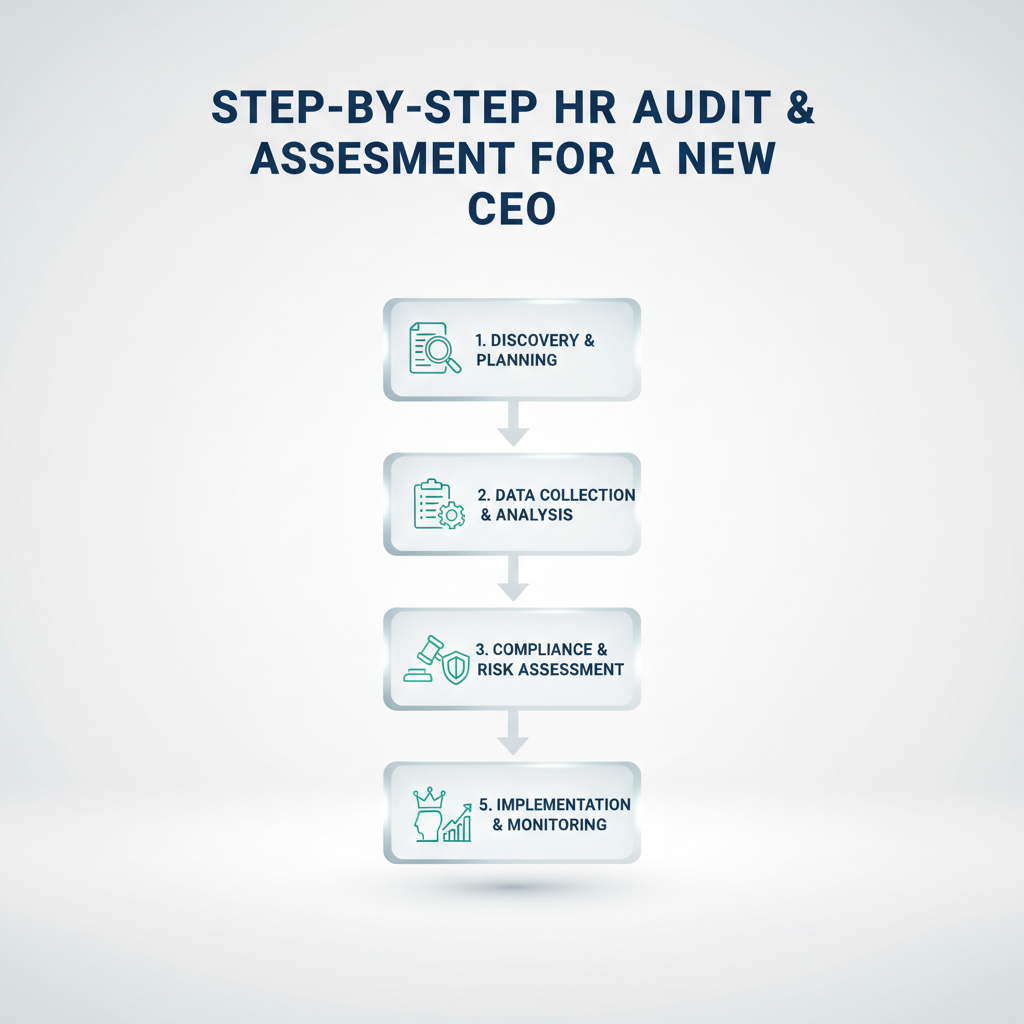
1. Identifying Current HR Strengths & Weaknesses in Your SME
Your initial steps should involve a granular examination of the current HR function. Begin by assessing the HR team itself: what are their roles, responsibilities, and core competencies? Evaluate the HR department’s structure – is it centralized, decentralized, or a hybrid? For an SME in Vietnam, understanding if the HR team is equipped to handle the demands of a rapidly evolving market, including local labor law compliance and talent attraction in a competitive FMCG sector, is paramount. Dive into existing HR policies and procedures, from recruitment and onboarding to performance management, compensation, benefits, and employee relations. Are they clearly documented, consistently applied, and compliant with Vietnamese labor regulations? Look at your recruitment strategy – is it effective in attracting top talent for sales, marketing, and operational roles crucial to FMCG? Scrutinize your performance management system: does it genuinely drive productivity and development, or is it merely a bureaucratic exercise? A thorough review will quickly highlight areas of operational excellence and significant gaps. Consider interviewing key stakeholders, including department heads and even a few long-term employees, to gauge their perceptions of HR’s effectiveness and support.
2. Analyzing Key HR Metrics & KPIs: Turnover, Absenteeism, Productivity
Data doesn’t lie, and a new CEO must leverage key HR metrics to gain an objective understanding of the workforce’s health and efficiency. For FMCG SMEs in Vietnam, where high employee engagement and consistent output are critical, specific KPIs offer invaluable insights. Start with employee turnover rate – a high rate can indicate issues with compensation, company culture, management, or career development opportunities, leading to significant recruitment and training costs. Analyze it by department, role, and tenure to pinpoint problem areas. Next, examine absenteeism rates. Persistent absenteeism can signal low morale, excessive workload, or inadequate health and safety protocols, all of which directly impact operational efficiency and productivity. Finally, assess employee productivity metrics. While challenging to quantify uniformly across all roles, in an FMCG context, this could involve sales targets, production output per employee, or even the efficiency of the supply chain team. Comparing these metrics against industry benchmarks (if available for Vietnam’s FMCG sector) and historical company data will reveal trends and immediate areas requiring strategic intervention. Understanding these numbers is crucial for developing a robust HR audit that delivers actionable insights.
3. Gathering Employee Feedback: Surveys, Interviews, Focus Groups
While data provides the ‘what,’ employee feedback reveals the ‘why’ and ‘how.’ As a fresh CEO, direct engagement with your workforce is indispensable for truly understanding the organization’s pulse. Implement a multi-pronged approach to gather honest feedback. Anonymous employee surveys are an excellent starting point, allowing staff to express opinions on topics such as work-life balance, management effectiveness, career development opportunities, compensation fairness, and overall job satisfaction without fear of reprisal. Supplement surveys with structured one-on-one interviews with a diverse cross-section of employees, from junior staff to mid-level managers across different departments (e.g., sales, production, logistics). These interviews can uncover deeper qualitative insights that surveys might miss. Finally, consider conducting focus groups to explore specific issues in more detail, fostering open discussion among peers. Crucially, ensure a safe and confidential environment for all feedback channels. The insights gained from these interactions will highlight not only points of dissatisfaction but also untapped potential, innovative ideas, and areas where employee engagement can be significantly boosted, directly impacting your FMCG SME’s performance in Vietnam.
By systematically completing these steps, a new CEO can quickly gain a comprehensive and nuanced understanding of their HR landscape. This foundation is essential for prioritizing immediate HR initiatives, fostering a positive workplace culture, and ultimately driving the overall success of the FMCG SME in Vietnam.
Strategic HR Alignment for Business Growth
In the fiercely competitive and rapidly evolving Fast-Moving Consumer Goods (FMCG) market of Vietnam, strategic HR alignment is not merely a supportive function but a critical driver for sustainable business growth. For fresh CEOs at the helm of Small and Medium-sized Enterprises (SMEs) in this sector, understanding how to integrate HR functions seamlessly with overall business objectives is paramount. This section offers a comprehensive guide, focusing on how a well-structured HR approach, especially in talent management and culture development, can propel your company forward.
-
Linking HR Strategy Directly to Business Goals and Vision
The first step in leveraging HR for growth is to elevate it beyond an administrative role to a strategic partner. For a fresh CEO in an FMCG company in Vietnam, a key initial step involves understanding the intricate relationship between human resources and overarching business objectives. Your business goals – whether it’s expanding market share, launching a new product line, optimizing supply chain efficiency, or achieving specific revenue targets – must directly inform your HR strategy. For instance, if your vision involves rapid market expansion across new provinces, your HR strategy must prioritize aggressive recruitment for a robust sales force, efficient onboarding processes, and localized talent development programs. Conversely, if the focus is on innovation and product differentiation, HR needs to foster a culture of creativity, attract R&D specialists, and implement training for new technologies and product development methodologies. This proactive alignment ensures that every HR initiative, from recruitment to compensation, directly contributes to achieving the company’s strategic vision, making HR an indispensable engine of growth rather than a cost center.
-
Effective Talent Acquisition & Retention Strategies for FMCG
The FMCG sector demands a unique blend of skills, from dynamic sales and marketing prowess to agile supply chain management and innovative product development. Attracting and retaining top talent in Vietnam’s competitive market, especially for SMEs, requires a sophisticated and strategic approach. For talent acquisition, focus on developing a compelling employer brand that highlights your company’s unique value proposition, culture, and growth opportunities. Beyond traditional job boards, explore targeted recruitment channels such as university partnerships, specialized industry forums, and data-driven digital campaigns. Implement competency-based interviewing to ensure candidates not only possess the necessary skills but also align with your company’s values and future direction. Retention, however, is where sustainable growth truly takes root. Develop clear career development paths, offering training, mentorship, and opportunities for advancement. Implement a comprehensive total rewards package that extends beyond just salary to include performance-based bonuses, health benefits, and work-life balance initiatives. A recent study by Deloitte on the Future of HR highlights the evolving expectations of the modern workforce, emphasizing experiences and growth over static roles. By investing in your people’s growth and well-being, you not only reduce costly turnover but also cultivate a loyal and highly productive workforce, crucial for maintaining a competitive edge in the FMCG landscape.
-
Developing a Performance-Driven Culture: Feedback & Recognition
A thriving, performance-driven culture is the bedrock of sustained growth in any FMCG SME. For a fresh CEO, establishing this culture from the outset is vital. Move away from a rigid, annual performance review cycle towards a system of continuous feedback and coaching. Managers should be equipped and empowered to provide regular, constructive feedback that is specific, actionable, and aligned with individual and team KPIs. This two-way communication fosters transparency and allows employees to understand their impact on business objectives and areas for development. Crucially, a performance culture also thrives on meaningful recognition. Beyond monetary incentives, recognize achievements through public acknowledgement, opportunities for professional development, and awards that celebrate contributions aligned with company values. This doesn’t just motivate individuals; it reinforces desired behaviors and creates a positive, high-energy work environment. For example, recognizing a sales team for exceeding targets or a marketing team for a successful product launch creates a positive feedback loop that encourages continuous high performance. By intertwining clear performance expectations with a robust system of feedback and genuine recognition, you empower your workforce, foster a sense of ownership, and build a resilient culture capable of navigating the dynamic challenges and seizing the opportunities within the Vietnamese FMCG market.
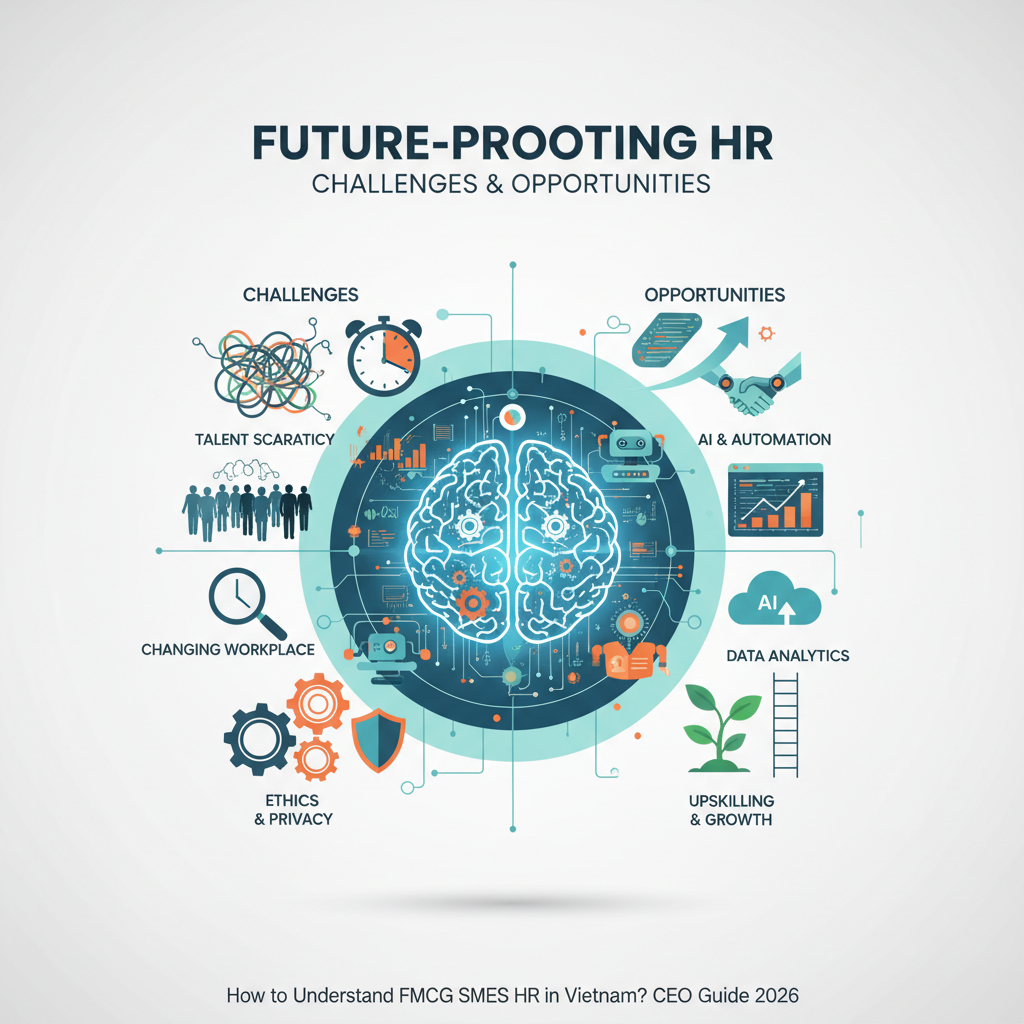
Future-Proofing HR: Challenges & Opportunities
Vietnamese FMCG SMEs operate in a dynamic and fiercely competitive landscape. For a fresh CEO stepping into this environment, understanding and strategically managing Human Resources isn’t just about compliance; it’s about building a resilient, agile, and high-performing organization capable of navigating the future. This section delves into the emerging trends, potential pitfalls, and innovative opportunities that will critically shape HR within your Vietnamese FMCG SME, ensuring you are prepared for what’s next. A Step by Step to understand SMEs HR Structure for the fresh the CEO in FMCG companies in vietnam is paramount, laying the foundation for these future-proofing strategies.
-
Embracing HR Technology & Digitalization in SME Environments
The digital transformation sweeping across industries is no longer exclusive to large corporations. For Vietnamese FMCG SMEs, embracing HR technology and digitalization presents a powerful opportunity to streamline operations, enhance employee experience, and gain data-driven insights. Many fresh CEOs might initially perceive HR tech as a costly luxury, but even foundational systems offer significant ROI. Implementing a Human Resources Information System (HRIS) can automate routine tasks like payroll, attendance tracking, and leave management, freeing up HR personnel to focus on strategic initiatives. Digital recruitment platforms can widen the talent pool and accelerate hiring. Performance management software can provide real-time feedback and align individual goals with organizational objectives.
The challenge for SMEs lies in selecting the right technology, ensuring seamless integration, and providing adequate training. It’s crucial to start with solutions that fit current needs and budget, with scalability in mind. For instance, cloud-based HR solutions are often more affordable and flexible for SMEs. By leveraging technology, your SME can move beyond manual processes, improve accuracy, reduce administrative burden, and provide a more engaging and transparent experience for employees. This strategic adoption of HR tech is a critical component for any fresh CEO looking to build a robust and efficient SMEs HR Structure in a modern FMCG company in Vietnam.
-
Navigating Talent Scarcity & Competition in Vietnam’s Market
Vietnam’s burgeoning economy and rapid industrialization have created a highly competitive talent market, particularly within the FMCG sector. SMEs often struggle to compete with larger players on salary and benefits alone, making talent attraction and retention a significant challenge. A fresh CEO must recognize that a proactive and strategic approach to talent management is essential. This includes developing a strong employer brand that highlights the unique value proposition of working for your SME – perhaps emphasizing a vibrant culture, rapid career progression, or direct impact on business outcomes.
Beyond competitive compensation, focus on non-monetary benefits like flexible work arrangements, professional development opportunities, and a supportive work environment. Upskilling and reskilling current employees is also vital, transforming your existing workforce into a future-ready team. Given the dynamic nature of the Vietnamese labor market, understanding global and local trends in talent preferences is key. Reports like Deloitte’s Global Human Capital Trends often provide valuable insights into evolving employee expectations and industry best practices for navigating talent scarcity. By investing in continuous learning and career pathways, your SME can cultivate loyalty and build a sustainable talent pipeline, mitigating the risks associated with fierce market competition.
-
Building a Sustainable & Engaging Workplace Culture for the Future
In the long run, the success of any Vietnamese FMCG SME hinges on its workplace culture. A sustainable and engaging culture is not just a ‘nice-to-have’; it’s a powerful driver of productivity, innovation, and employee retention, especially for the younger generation entering the workforce. For a fresh CEO, fostering such a culture means prioritizing psychological safety, diversity, equity, and inclusion (DEI), and open communication. Employees who feel valued, heard, and respected are more likely to be engaged and committed to the organization’s success.
Future-proofing your HR involves designing a culture that adapts to change, promotes continuous learning, and encourages experimentation. This includes implementing robust feedback mechanisms, recognizing employee contributions, and empowering teams. Consider the unique cultural nuances of Vietnam while integrating global best practices for employee well-being and engagement. Flexible work models, mental health support, and initiatives that promote work-life balance are becoming increasingly important. By consciously shaping a positive and adaptive workplace culture, your SME can become an employer of choice, ensuring long-term sustainability and a competitive edge in Vietnam’s evolving business landscape. This approach ensures a solid foundation for any fresh CEO in FMCG companies in Vietnam looking to build a high-performing team.
Partner with Shelby Global
You are looking for reliable HR Sevice Suppliers? Contact Shelby Global Now! To connect with verified talents and upgrade your orginization.
—————————————
References
– Understanding Vietnam’s social insurance system: https://www.vietnambriefing.com/news/vietnams-social-insurance-system-what-foreign-employers-need-to-know.html
– Labour Law Reforms – International Labour Organization: https://www.ilo.org/hanoi/areas-of-work/labour-law-reforms/lang–en/index.htm
– Conducting an HR Audit: https://www.shrm.org/resources-and-tools/tools-and-samples/hr-qa/pages/conductinganaudits.aspx
– Deloitte on the Future of HR: https://www2.deloitte.com/us/en/insights/focus/future-of-work/future-of-hr-human-resources.html
– Deloitte Global Human Capital Trends: https://www2.deloitte.com/global/en/pages/human-capital/articles/global-human-capital-trends.html