Current Landscape & Key Drivers of Vietnam’s Retail Market
Vietnam’s retail market is experiencing a period of robust growth and dynamic transformation, positioning itself as one of Southeast Asia’s most attractive investment destinations. Fueled by a burgeoning middle class, strategic government initiatives, and continuous integration into global trade, the sector presents a compelling narrative of resilience and potential. This overview delves into the key factors shaping the market, offering insights into its recent performance, underlying macroeconomic drivers, and the overall health of Vietnam’s vibrant retail landscape.
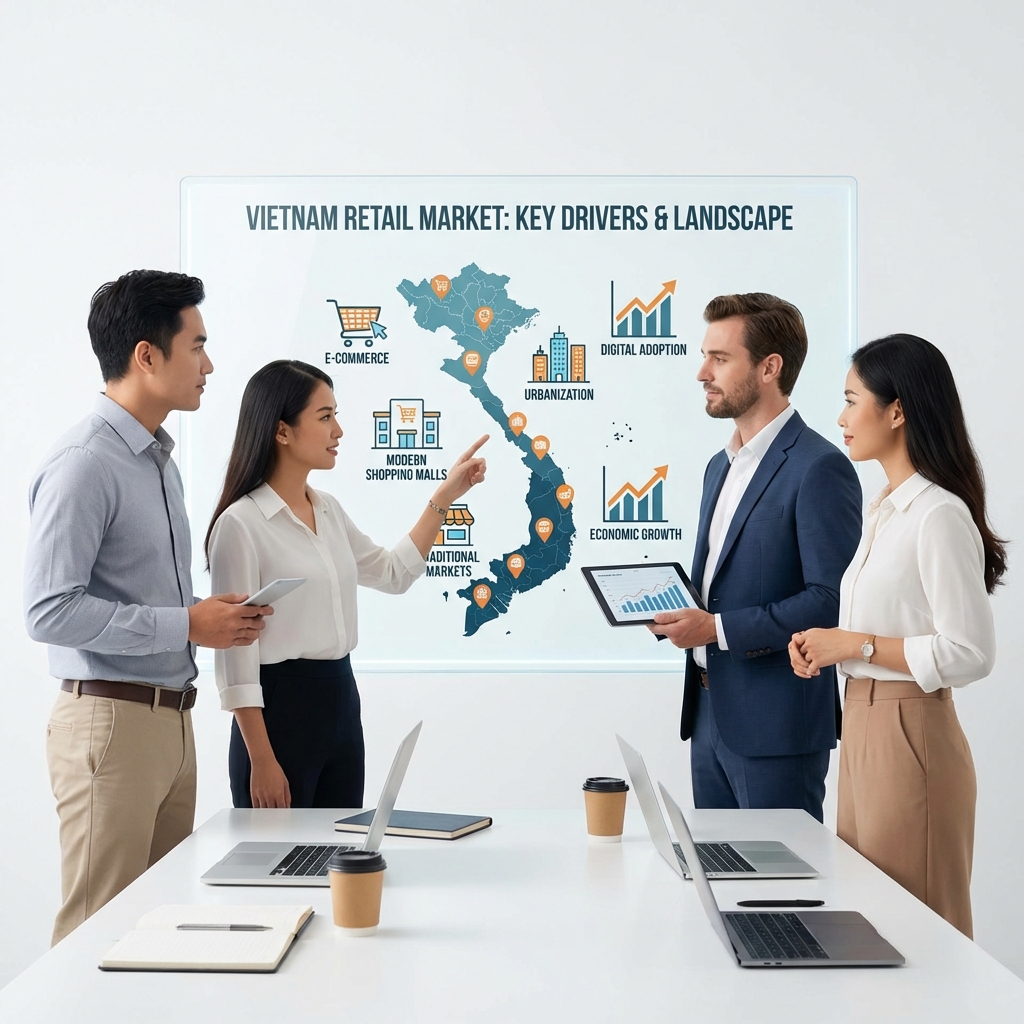
1. Overview of Vietnam retail market growth and economic resilience
Vietnam’s economy has consistently demonstrated remarkable resilience and impressive growth, even in the face of global economic uncertainties. This strength directly translates into a thriving retail sector. In recent years, the country has maintained one of the highest GDP growth rates in the region, driven by strong manufacturing, export performance, and increasing domestic consumption. This economic stability provides a solid foundation for retail expansion, attracting both local and international investors.
The retail market’s growth is further underscored by a young and increasingly affluent population. Despite global inflationary pressures, consumer spending in Vietnam has remained robust, reflecting underlying economic confidence and a steady increase in real wages. Modern retail formats, including shopping malls, supermarkets, and convenience stores, are expanding rapidly, coexisting with and gradually modernizing traditional wet markets. This blend creates a diverse and competitive retail environment. For a comprehensive understanding of these shifts, a detailed market demand trend report of Retail field in vietnam consistently highlights these positive trajectories and the evolving consumer preferences that underpin them.
2. Impact of rising disposable income and urbanization on consumer spending
The twin engines of rising disposable income and rapid urbanization are profoundly reshaping consumer spending patterns across Vietnam. As the country’s middle class expands at an accelerating pace, millions of Vietnamese consumers are gaining greater purchasing power, shifting from basic necessities to a wider array of discretionary goods and services. This demographic dividend, characterized by a large, young, and digitally savvy population, is a significant catalyst for retail growth.
Urbanization, in particular, is transforming the retail landscape. With more people moving to cities like Ho Chi Minh City, Hanoi, and Da Nang, demand for convenient, modern shopping experiences, higher-quality products, and international brands has surged. This has led to the proliferation of modern retail infrastructure and the rapid adoption of e-commerce. Consumers in urban centers are increasingly seeking premium products, health and wellness items, and technology gadgets, alongside a growing appetite for leisure and entertainment. The World Bank’s overview of Vietnam’s economic transformation frequently underscores how these demographic and socio-economic shifts are fueling an unprecedented wave of consumerism, making Vietnam a vibrant marketplace for diverse retail offerings.
3. Government policies and infrastructure development fueling demand
Supportive government policies and ambitious infrastructure development plans are critical drivers of demand and growth in Vietnam’s retail sector. The government has actively pursued pro-business reforms, including simplifying investment procedures, offering tax incentives, and signing numerous free trade agreements (FTAs) such as the EVFTA and CPTPP. These policies not only attract foreign direct investment (FDI) into retail and related sectors but also foster a more competitive and open market, broadening the choice of goods for consumers.
Furthermore, significant investments in infrastructure are dramatically improving logistics and connectivity, which are vital for retail distribution and accessibility. Projects like new highways, seaports, airports, and expanded public transportation networks are reducing transportation costs and delivery times, making it easier for retailers to reach remote areas and for consumers to access retail hubs. Digital infrastructure, including widespread internet and mobile penetration, has also played a pivotal role in accelerating the growth of e-commerce and digital payments, further fueling consumer demand. These synergistic efforts by the government create a robust ecosystem that supports sustained retail market expansion, solidifying Vietnam’s position as a dynamic retail powerhouse.
E-commerce and Digital Transformation Shaping Retail Demand
The retail landscape in Vietnam is undergoing a seismic shift, propelled by the explosive growth of online retail and the pervasive adoption of digital technologies. This transformation is profoundly impacting market demand trends, redefining consumer expectations, and compelling businesses to innovate at an unprecedented pace. From bustling urban centers to remote provinces, the digital wave is reshaping how Vietnamese consumers discover, evaluate, and purchase products, making a comprehensive understanding of these shifts crucial for any market demand trend report of Retail field in vietnam.
1. Key E-commerce trends Vietnam and platform dominance
Vietnam’s e-commerce market has witnessed remarkable expansion, establishing itself as one of the fastest-growing in Southeast Asia. This surge is fueled by a young, digitally-savvy population, increasing internet penetration, and widespread smartphone ownership. Consumers are increasingly embracing online shopping habits, transitioning from traditional brick-and-mortar stores to the convenience of digital storefronts. Major e-commerce platforms like Shopee, Lazada, and Tiki continue to dominate the landscape, offering vast product assortments and competitive pricing. The emergence of TikTok Shop has further diversified the market, popularizing live commerce Vietnam and social commerce trends where entertainment seamlessly blends with purchasing opportunities, driving impulsive buys and immediate engagement. This platform dominance means retailers must strategically position themselves across multiple channels to capture the attention of the digital consumer Vietnam. Mobile commerce, in particular, has become the preferred mode of interaction, with transactions frequently initiated and completed via smartphones, fundamentally altering the dynamics of consumer demand and pushing retailers to prioritize mobile-first strategies. The sheer volume and speed of transactions on these platforms underscore a fundamental shift in the online retail market Vietnam.
2. Rise of omni-channel retail Vietnam strategies and customer engagement
As e-commerce matures, the focus is shifting beyond mere online presence to creating integrated, seamless shopping experiences. The omni-channel strategy Vietnam is no longer a luxury but a necessity for retailers aiming to thrive. This approach emphasizes unifying online and offline touchpoints, ensuring a consistent and personalized journey for the customer, regardless of the channel they choose. Traditional retailers are investing heavily in digital infrastructure, integrating their physical stores with e-commerce platforms through services like click-and-collect, in-store digital kiosks, and personalized app experiences. This holistic view of the customer journey enhances customer engagement retail Vietnam and builds brand loyalty. Innovations such as virtual try-ons, augmented reality shopping experiences, and hyper-personalized promotions based on purchasing history are becoming more prevalent. The goal is to provide a seamless customer journey, where online browsing can lead to an in-store pickup, or an in-store visit can trigger personalized online recommendations. This blend of physical and digital touchpoints addresses the evolving expectations of the modern Vietnamese shopper, seeking both convenience and a rich, interactive shopping experience, thus reflecting a significant retail innovation Vietnam in meeting complex demand patterns.
3. Role of Digital transformation retail Vietnam and retail technology adoption
Underpinning these shifts is a broader wave of digital transformation retail Vietnam, where retailers are leveraging advanced technologies to optimize operations, enhance customer experience, and gain competitive intelligence. The adoption of retail technology adoption Vietnam extends beyond merely having an online store; it involves integrating Artificial intelligence (AI), Big Data analytics, and Internet of Things (IoT) solutions into various facets of the business. AI-driven tools are revolutionizing everything from personalized product recommendations and customer service chatbots to predictive analytics for demand forecasting. Big Data analytics provides invaluable insights into consumer behavior, allowing retailers to tailor marketing campaigns, optimize inventory, and identify emerging market demand trends. Furthermore, cloud computing solutions provide scalable and flexible infrastructure, while IoT devices are improving in-store efficiency and supply chain visibility. This technological integration is not only enhancing operational efficiency but also enabling a more responsive and agile retail environment. Understanding these technological shifts is vital for any comprehensive market demand trend report of Retail field in vietnam seeking to capture the full scope of retail dynamics. The ability to harness data-driven retail strategies for supply chain optimization retail and deliver a personalized shopping experience is becoming a key differentiator in Vietnam’s competitive retail market.
The profound impact of e-commerce and digital transformation on Vietnam’s retail demand is undeniable. Retailers who successfully adapt to these changes by embracing omni-channel strategies and leveraging cutting-edge technologies will be best positioned to meet the evolving demands of the Vietnamese consumer. The future of retail in Vietnam lies in a dynamic interplay between physical and digital realms, continuously shaped by innovation and consumer-centric approaches. The sustained growth of the digital economy in the region, as highlighted by reports such as the e-Conomy SEA 2023 Report by Google, Temasek, and Bain & Company, underscores the importance of these transformations.
Evolving Consumer Behavior and Emerging Market Segments
The Vietnamese retail landscape is undergoing a dynamic transformation, driven by a rapidly evolving consumer base and the emergence of distinct market segments. Understanding these shifts is crucial for any business looking to thrive in this vibrant economy. As disposable incomes rise and digital adoption becomes ubiquitous, Vietnamese consumers are displaying increasingly sophisticated preferences, demanding more than just basic goods. This section delves into the shifting preferences, purchasing habits, and the new market segments that are profoundly influencing retail demand across Vietnam, providing a comprehensive market demand trend report of the Retail field in Vietnam.
1.
Shifting consumer behavior Vietnam retail: Preferences for convenience and value
Modern Vietnamese consumers, particularly those in urban centers and the younger demographic, prioritize convenience and value in their purchasing decisions. The proliferation of e-commerce platforms, quick commerce, and on-demand delivery services has fundamentally reshaped shopping habits. Consumers now expect seamless, fast, and accessible shopping experiences, whether through online channels, hypermarkets, or convenience stores. This quest for convenience extends to product choices, with an increasing demand for ready-to-eat meals, pre-packaged goods, and subscription services that simplify daily life. Simultaneously, the concept of ‘value for money’ remains paramount. While consumers are willing to spend more on quality or convenience, they are also astute shoppers, actively seeking promotions, discounts, and loyalty programs. The rise of private labels and essential-focused retail formats reflects a balanced approach where consumers seek both quality and affordability. Furthermore, the digital transformation has empowered consumers with access to information, enabling them to compare prices, read reviews, and make informed decisions, pushing retailers to be more transparent and competitive. The blend of digital convenience with savvy value-seeking defines a significant portion of current consumer behavior in Vietnam’s retail sector.
2.
Growth of Luxury retail Vietnam and premiumization trends
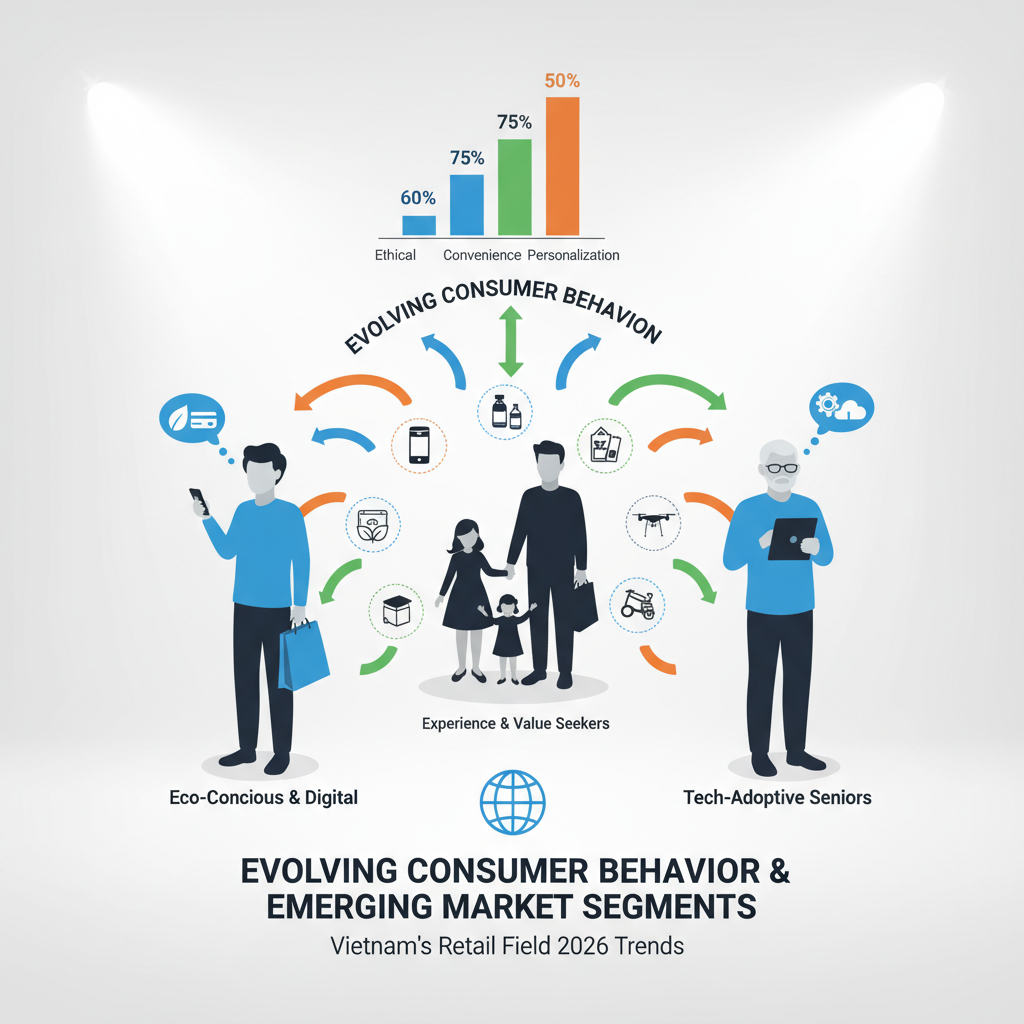
Despite the persistent demand for value, Vietnam is also witnessing a remarkable surge in luxury retail and a broader trend of premiumization across various product categories. The country’s expanding middle and affluent classes, coupled with a strong aspirational culture, are fueling this growth. Major international luxury brands, from fashion houses to high-end automobiles and jewelry, are establishing a robust presence in key cities like Hanoi and Ho Chi Minh City. This indicates a growing consumer segment that views luxury purchases not just as status symbols but as investments in quality, craftsmanship, and personal expression. Beyond traditional luxury goods, the premiumization trend extends to everyday items such as gourmet food, specialty beverages, organic produce, and sophisticated personal care products. Consumers are increasingly willing to pay a premium for products that offer superior quality, unique experiences, enhanced health benefits, or distinctive branding. This segment is often driven by younger, globally-aware consumers who are influenced by international trends and social media. Retailers are responding by curating exclusive product lines, enhancing in-store experiences, and focusing on personalized customer service to cater to this discerning and high-spending demographic. For a deeper dive into these opportunities, insights from analyses like those discussed by Vietnam Briefing on the country’s retail market offer valuable perspectives.
3.
Demand for ethical products and Sustainability in retail Vietnam
An increasingly significant, albeit still nascent, trend in Vietnamese consumer behavior is the growing demand for ethical and sustainable products. As global awareness of environmental issues and social responsibility permeates the local consciousness, particularly among younger generations (Gen Z and Millennials), consumers are becoming more conscious of the origins and impact of their purchases. This shift is driving demand for products that are organic, locally sourced, fair trade, eco-friendly, and packaged with minimal environmental impact. Retailers are observing a rising interest in brands that demonstrate transparency in their supply chains, engage in sustainable manufacturing practices, and contribute positively to local communities. While price remains a significant factor, a growing segment of consumers is willing to pay a slight premium for products that align with their ethical values. This has prompted many local and international retailers to integrate sustainability into their business strategies, from offering reusable shopping bags and reducing plastic waste to sourcing sustainable ingredients and promoting energy-efficient operations. Brands that effectively communicate their commitment to sustainability and ethical practices are finding a competitive edge, fostering deeper trust and loyalty with a segment of consumers who are looking to make more responsible choices. The emphasis on corporate social responsibility and environmental stewardship is no longer just a trend but an evolving expectation shaping the future of retail in Vietnam.
Supply Chain, Infrastructure & Foreign Investment Outlook
The dynamic landscape of Vietnam’s retail sector is inextricably linked to the efficiency of its supply chain, the robustness of its infrastructure, and the influx of foreign investment. These three pillars not only dictate the operational capabilities of retailers but also profoundly shape consumer access, product availability, and pricing strategies, directly influencing the overarching market demand trend report of Retail field in Vietnam. Understanding their interplay is crucial for deciphering future growth trajectories and investment opportunities in this vibrant economy.
1. Navigating Supply chain challenges Vietnam and logistics improvements
Vietnam’s rapid economic expansion and burgeoning e-commerce market have placed immense pressure on its existing logistics infrastructure. Retailers frequently grapple with challenges such as last-mile delivery complexities, particularly in rural or remote areas, and the need for sophisticated cold chain logistics to support the growing fresh food and pharmaceutical sectors. Geographic dispersion, coupled with traffic congestion in major urban centers like Hanoi and Ho Chi Minh City, often leads to delays and increased operational costs. Moreover, while customs procedures have improved, navigating regulatory frameworks can still pose hurdles for timely import and export operations.
In response, significant logistics improvements are underway. Both the government and private sector are investing heavily in modern warehousing facilities, equipped with advanced inventory management systems and automation. The development of integrated logistics parks in strategic locations, such as Bac Ninh and Dong Nai, aims to streamline goods movement and reduce distribution costs. Furthermore, the adoption of digital technologies, including Transportation Management Systems (TMS) and IoT-enabled tracking, is enhancing transparency and efficiency across the supply chain. These efforts are vital for ensuring that products reach consumers swiftly and cost-effectively, directly impacting their purchasing decisions and shaping the demand landscape in the Vietnamese retail market.
2. Impact of infrastructure development on retail distribution
Robust infrastructure is the backbone of an efficient retail distribution network, and Vietnam is making concerted efforts to upgrade its national framework. The expansion and improvement of national highways, expressways, and inter-provincial roads significantly reduce transit times and transportation costs, enabling retailers to serve a broader geographical area. Key projects like the North-South Expressway are enhancing connectivity between major economic hubs and industrial zones, facilitating the faster movement of goods from production sites to retail outlets and distribution centers.
Port infrastructure development, including deep-water ports like Cai Mep-Thi Vai, is crucial for international trade, reducing lead times for imported goods and supporting Vietnam’s role as a manufacturing and export hub. Similarly, upgrades to airports and railway networks further enhance multimodal transport capabilities. Critically, digital infrastructure, encompassing widespread internet penetration and 5G deployment, is revolutionizing retail by supporting the growth of e-commerce, enabling cashless payments, and facilitating data analytics for personalized marketing. These infrastructure advancements collectively expand market access for retailers, support omnichannel strategies, and ultimately make goods more accessible and affordable for Vietnamese consumers, directly influencing their demand patterns and shaping the Logistics Performance Index of the country.
3. Influence of Foreign investment retail Vietnam and new market entrants
Foreign Direct Investment (FDI) has been a transformative force in the Vietnamese retail sector, injecting capital, expertise, and innovative business models. Drawn by a rapidly growing middle class, a young population, and favorable investment policies, multinational retailers and brands have significantly expanded their presence. This includes global hypermarket chains, convenience store operators, and specialized retailers, introducing a diverse array of products and modern shopping experiences previously unavailable to Vietnamese consumers.
New market entrants bring advanced retail technologies, sophisticated supply chain management practices, and higher standards of customer service, compelling local players to innovate and upgrade to remain competitive. Joint ventures and partnerships with domestic companies are also prevalent, facilitating knowledge transfer and investment in retail infrastructure. This influx of foreign capital and expertise not only diversifies product offerings and enhances service quality but also directly shapes consumer preferences and expectations. The increased competition and modernization driven by FDI contribute significantly to the evolution of the market demand trend report of Retail field in Vietnam, pushing for greater convenience, variety, and value, and solidifying Vietnam’s position as an attractive retail destination in Southeast Asia.
Future Outlook and Strategic Imperatives for Retailers (Up to 2026)
Vietnam’s retail landscape is a vibrant and rapidly evolving sector, poised for significant growth through 2026. Driven by a burgeoning middle class, increasing disposable incomes, accelerated urbanization, and a robust digital transformation, the market presents both immense opportunities and complex challenges for retailers. Understanding the market demand trend report of Retail field in Vietnam is critical for strategic planning, allowing businesses to adapt, innovate, and thrive in this dynamic environment. Retailers must develop agile strategies that not only capitalize on emerging consumer behaviors but also effectively navigate a competitive landscape shaped by both traditional and modern retail formats.
1. Predictions for the market demand trend report of Retail field in Vietnam 2026
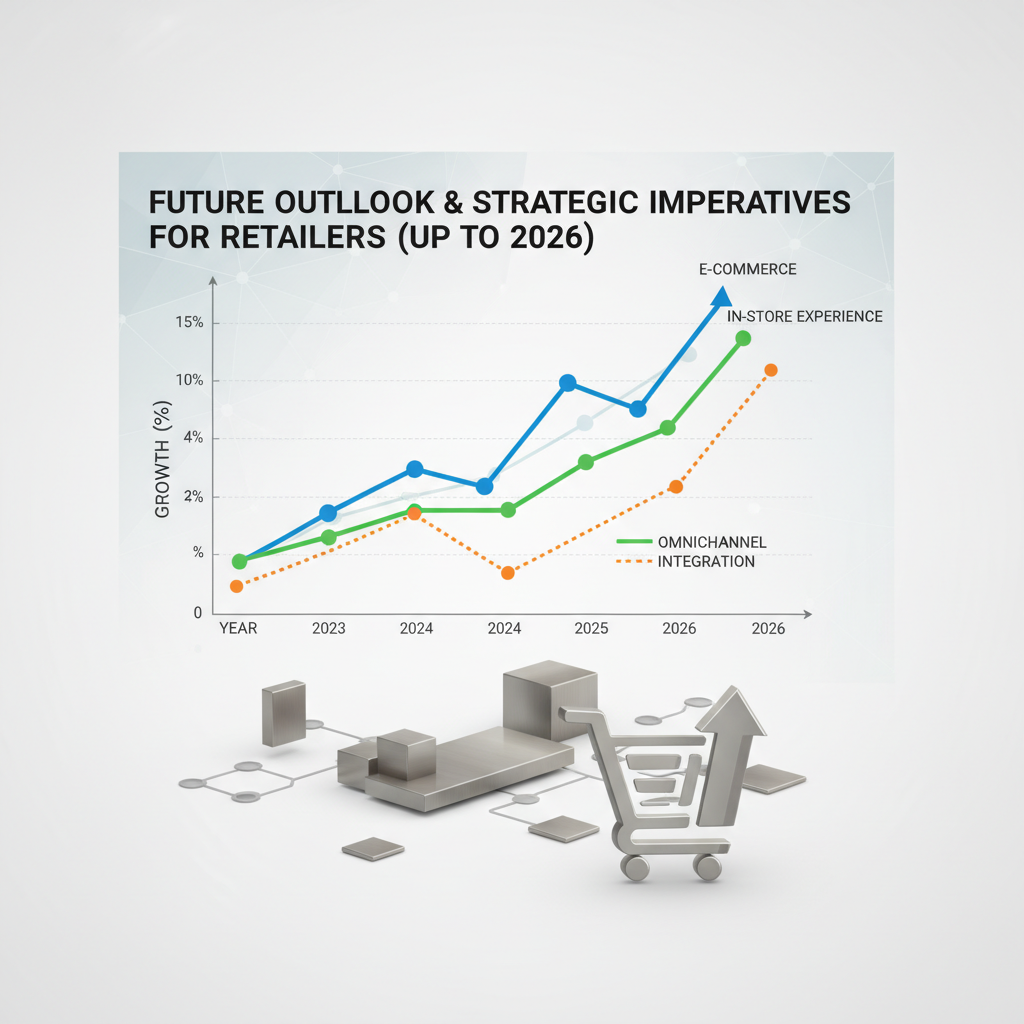
The trajectory for Vietnam’s retail sector through 2026 points towards sustained expansion, fundamentally reshaped by several key trends. E-commerce is expected to continue its exponential rise, fueled by widespread internet and smartphone penetration, especially among younger demographics. Consumers are increasingly valuing convenience, personalization, and ethical considerations, demanding seamless omnichannel experiences that blend online and offline shopping. Digital payment solutions and last-mile delivery innovations will become standard expectations, pushing retailers to invest heavily in logistics and technological infrastructure. Furthermore, the demand for high-quality, safe, and sustainably sourced products is growing, reflecting an increasing consumer awareness and preference for healthier lifestyles. The urban-rural divide in purchasing power and access to goods will narrow, creating new avenues for market entry. As per expert analyses, Vietnam’s retail market is projected to reach US$163.5 billion by 2026, underlining the immense potential for growth.
2. Adapting to the competitive landscape: Hypermarket vs. convenience stores
The competitive dynamics between hypermarkets and convenience stores will continue to evolve, requiring distinct adaptive strategies from both formats. Hypermarkets, traditionally dominating the grocery and general merchandise sectors, face pressure from specialized online retailers and the agility of smaller formats. To remain relevant, hypermarkets must transition from mere transaction points to experiential destinations, offering diverse services, entertainment, and a curated assortment of goods. This could involve integrating food courts, play areas, and community events, enhancing the overall shopping experience. Conversely, convenience stores are perfectly positioned to capitalize on urbanization and busy consumer lifestyles. Their strength lies in proximity, speed, and personalized service. Expansion strategies should focus on hyper-localization, offering products tailored to neighborhood demographics, and leveraging technology for quick self-checkout and efficient delivery services. The rise of ‘dark stores’ or mini-fulfillment centers linked to convenience stores will further enhance their last-mile capabilities, providing a robust response to the demand for instant gratification.
3. Strategies for market expansion and rural retail development Vietnam
For retailers aiming to achieve comprehensive market penetration and harness the full potential of the market demand trend report of Retail field in Vietnam, strategic expansion into rural and underserved areas is paramount. While urban centers are increasingly saturated, rural Vietnam represents a significant untapped consumer base with growing purchasing power. Strategies for rural development must be nuanced, considering logistical challenges, varying consumer preferences, and limited infrastructure. This includes establishing efficient distribution networks, potentially through partnerships with local businesses or leveraging mobile retail units. Adapting product assortments to suit local needs and price points is crucial, often requiring smaller pack sizes and affordable alternatives. Digital inclusion plays a vital role here; extending e-commerce services with localized delivery hubs or pick-up points can bridge geographical gaps. Moreover, building trust and community engagement through localized marketing and corporate social responsibility initiatives will be key. Omnichannel integration, where online platforms facilitate access to a wider product range while physical stores serve as experience centers or pick-up points, will be a winning formula across both urban and rural markets up to 2026. Retailers demonstrating agility, customer-centricity, and a willingness to embrace digital transformation will undoubtedly lead the next wave of growth in Vietnam’s dynamic retail sector, unlocking the full potential of all 13 identified strategic imperatives.
Partner with Shelby Global
You are looking for reliable HR Sevice Suppliers? Contact Shelby Global Now! To connect with verified talents and upgrade your orginization.
—————————————
References
– World Bank’s overview of Vietnam’s economic transformation: https://www.worldbank.org/en/country/vietnam/overview
– e-Conomy SEA 2023 Report by Google, Temasek, and Bain & Company: https://www.bain.com/insights/e-conomy-sea-2023-report/
– Vietnam Briefing on the country’s retail market: https://www.vietnam-briefing.com/news/vietnams-retail-market-key-trends-and-opportunities.html
– :
– Vietnam’s Retail Sector Attracts Investors: https://www.vietnam-briefing.com/news/vietnams-retail-sector-attracts-investors.html/