Why a Structured CV Assessment is Crucial for IT Managers in Vietnam
Vietnam’s technology sector is experiencing unprecedented growth, transforming the nation into a burgeoning hub for innovation and digital transformation. This rapid expansion, however, presents unique challenges for IT managers seeking to build high-performing teams, especially when it comes to hiring at the leadership level. The traditional, often subjective, approach to reviewing Curriculum Vitae (CVs) is no longer sufficient. For IT managers in Vietnam, adopting a structured CV assessment is not just an advantage; it’s a critical imperative for navigating the complexities of the local talent market and securing the right leaders.
A systematic test structure to assess Manager Level CVs in IT field in vietnam provides a clear, objective framework, moving beyond superficial impressions to evaluate candidates against predefined criteria relevant to the role’s demands and the company’s strategic goals. This approach ensures consistency, reduces bias, and significantly improves the chances of making informed hiring decisions that propel an organization forward in this dynamic environment.

1. High demand for skilled IT leadership
The acceleration of digital transformation across all industries in Vietnam has fueled an insatiable demand for skilled IT professionals, particularly those with proven leadership capabilities. Companies are scrambling to find individuals who can not only manage complex technical projects but also inspire teams, drive innovation, and align technology initiatives with overarching business objectives. The supply of such talent, however, struggles to keep pace with demand, leading to a highly competitive recruitment landscape. In this environment, a structured CV assessment becomes indispensable. It allows IT managers to meticulously screen through a large volume of applications, identifying candidates whose experience, achievements, and leadership potential truly align with the strategic needs of the role. Without a robust framework, the risk of overlooking exceptional talent or misinterpreting a candidate’s genuine capabilities is significantly high. Vietnam’s booming digital economy underscores this urgency, as companies vie for leaders who can navigate this rapid expansion and capitalize on emerging opportunities.
2. Avoiding mis-hires and their significant costs
Hiring the wrong person for an IT manager position, especially in a fast-paced market like Vietnam, can have debilitating consequences. The costs associated with a mis-hire extend far beyond the immediate recruitment expenses. They include lost productivity, impact on team morale, project delays, increased training costs for a replacement, and potential damage to the company’s reputation. For IT leadership roles, these costs are amplified due to the strategic importance of their decisions and their influence on a wider team. A structured CV assessment acts as a vital safeguard against such costly errors. By establishing clear, measurable criteria for evaluating technical expertise, project management experience, leadership styles, and soft skills directly from the CV, IT managers can make more objective and evidence-based decisions. This systematic vetting process helps to filter out candidates who might superficially look good on paper but lack the depth of experience or cultural fit required for success, ultimately saving the organization significant financial and operational resources.
3. Standardizing evaluation for fairness and efficiency
In a diverse and rapidly evolving market like Vietnam, ensuring fairness and efficiency in the hiring process is paramount. Subjective CV reviews are prone to unconscious biases, leading to inconsistent evaluations and potentially discriminatory hiring practices. A structured assessment mitigates these risks by providing a standardized set of criteria and a consistent scoring system that is applied to every applicant. This not only fosters a more equitable hiring environment but also significantly streamlines the entire recruitment process. IT managers can quickly and effectively compare candidates based on relevant qualifications, rather than spending excessive time on less pertinent details. This efficiency is crucial when dealing with a high volume of applications common in a competitive market. Furthermore, a standardized approach allows for better data collection and analysis over time, enabling companies to refine their hiring strategies and improve their ability to predict candidate success. It transforms the often-chaotic process of talent acquisition into a strategic, data-driven operation, ensuring that the best IT leaders are identified and brought on board.
In conclusion, for IT managers operating within Vietnam’s vibrant yet challenging landscape, a structured CV assessment is more than a best practice; it is a strategic imperative. It addresses the intense competition for skilled leadership, protects against the substantial costs of mis-hires, and establishes a fair, efficient, and objective recruitment process. Embracing a robust test structure to assess Manager Level CVs in IT field in vietnam empowers organizations to build resilient, innovative IT teams capable of driving growth and maintaining a competitive edge in one of the world’s most dynamic digital economies.
Core Competencies to Look for in IT Manager CVs
In Vietnam’s dynamic and rapidly expanding technology sector, the role of an IT Manager transcends mere technical oversight. It demands a sophisticated blend of strategic vision, operational excellence, and adept people management. When reviewing CVs for this pivotal position, hiring managers must look beyond basic qualifications to identify candidates who can genuinely drive digital transformation, foster innovation, and navigate the unique challenges and opportunities presented by the local market. A successful IT Manager in Vietnam is not just a technologist but a business enabler, capable of aligning technology initiatives with overarching organizational goals and contributing significantly to competitive advantage. Understanding these key competencies will streamline the assessment process, ensuring the right talent is onboarded to steer IT departments towards future success.
-
Technical leadership & domain expertise validation
While an IT Manager’s role isn’t solely hands-on, a deep, validated understanding of core technical domains is non-negotiable. For Vietnam’s market, this often means proficiency in areas like cloud infrastructure (AWS, Azure, GCP), cybersecurity best practices, data management, and familiarity with emerging technologies such as AI/ML and IoT. A strong CV will offer concrete examples of how technical expertise translated into successful projects or significant improvements, not just buzzwords. Look for evidence of leading technical teams, architectural design decisions, troubleshooting complex systems, and driving technology adoption. Reputable certifications (e.g., AWS Certified Solutions Architect, CISSP, PMP) lend credibility, but real-world application is paramount. Candidates should articulate how they stay current with rapid technological shifts, perhaps through continuous learning or industry involvement. Detail the scope and complexity of managed technical environments, including infrastructure size and critical systems supported. The ability to mentor junior technical staff and translate complex concepts to non-technical stakeholders is a critical indicator of true technical leadership. In an environment where technology trends evolve quickly, a manager’s capacity for continuous learning and strategic implementation of new tools is crucial. Globally, adapting to new technologies is a critical competency for future-ready professionals across all industries.
-
Project, people, and budget management skills
Effectively managing projects, cultivating high-performing teams, and prudently handling financial resources are core IT Manager responsibilities. On the project front, look for experience with methodologies (Agile, Scrum, Waterfall) and successful IT initiative delivery on time and within budget. CVs should highlight specific project achievements, quantifying impact (e.g., “reduced project delivery time by 15%,” “managed a portfolio of 10+ projects”). People management skills are equally vital in Vietnam’s talent landscape, where engagement and retention are key. Candidates should demonstrate experience in recruiting, mentoring, performance evaluation, conflict resolution, and fostering a collaborative team culture. Look for instances where they’ve built or scaled teams, improved productivity, or developed career paths for direct reports. Budget management requires strategic financial planning, cost optimization, vendor negotiation, and demonstrating ROI for IT investments. A robust CV will feature examples of managing significant IT budgets, identifying cost-saving opportunities, and making data-driven financial decisions aligned with business objectives. These competencies ensure IT operations are efficient, effective, and contribute directly to the organization’s bottom line.
-
Strategic thinking & business acumen demonstration
Beyond technical and operational prowess, a top-tier IT Manager in Vietnam must possess strong strategic thinking and keen business acumen. This means understanding the organization’s broader business goals, market position, and competitive landscape, then translating these into a coherent IT strategy. A CV should illustrate how the candidate has moved beyond merely reacting to business needs to proactively identifying technological opportunities that drive growth, enhance efficiency, or mitigate risk. Look for examples of contributing to strategic planning, developing IT roadmaps, and making technology recommendations that directly supported key business objectives. This includes demonstrating the ability to communicate IT value to non-technical executives, influencing decision-making, and championing innovation. Risk management, compliance adherence (especially crucial in a regulated environment), and disaster recovery planning are also key indicators of strategic foresight. Ultimately, the candidate should showcase their capacity to leverage technology as a strategic asset, not just a support function. They should be able to articulate how IT can be a differentiator in Vietnam’s competitive market, contributing directly to profitability and sustainability. To accurately assess these multifaceted skills, a comprehensive Test structure to assess Manager Level CVs in IT field in vietnam is essential, helping hiring managers identify candidates who can truly align IT with core business strategies.
Identifying the right IT Manager in Vietnam requires a holistic evaluation of their CV, focusing on a balance of technical depth, operational leadership, and strategic business insight. By carefully assessing these core competencies, organizations can secure talent capable of navigating the complexities of the local tech landscape and driving sustainable growth.
Designing Your CV Assessment Framework for Vietnam
In Vietnam's dynamic and rapidly expanding IT sector, attracting and retaining top talent, especially at the Manager Level, presents unique challenges. A robust, methodical approach to CV assessment is not just a luxury but a necessity to filter through numerous applications efficiently and effectively. This guide focuses on creating a systematic framework for reviewing CVs, incorporating objective scoring, key criteria tailored for the local context, and modern screening technologies to build an effective test structure to assess Manager Level CVs in IT field in Vietnam. By implementing a well-defined framework, organizations can reduce bias, improve candidate quality, and streamline the recruitment funnel.
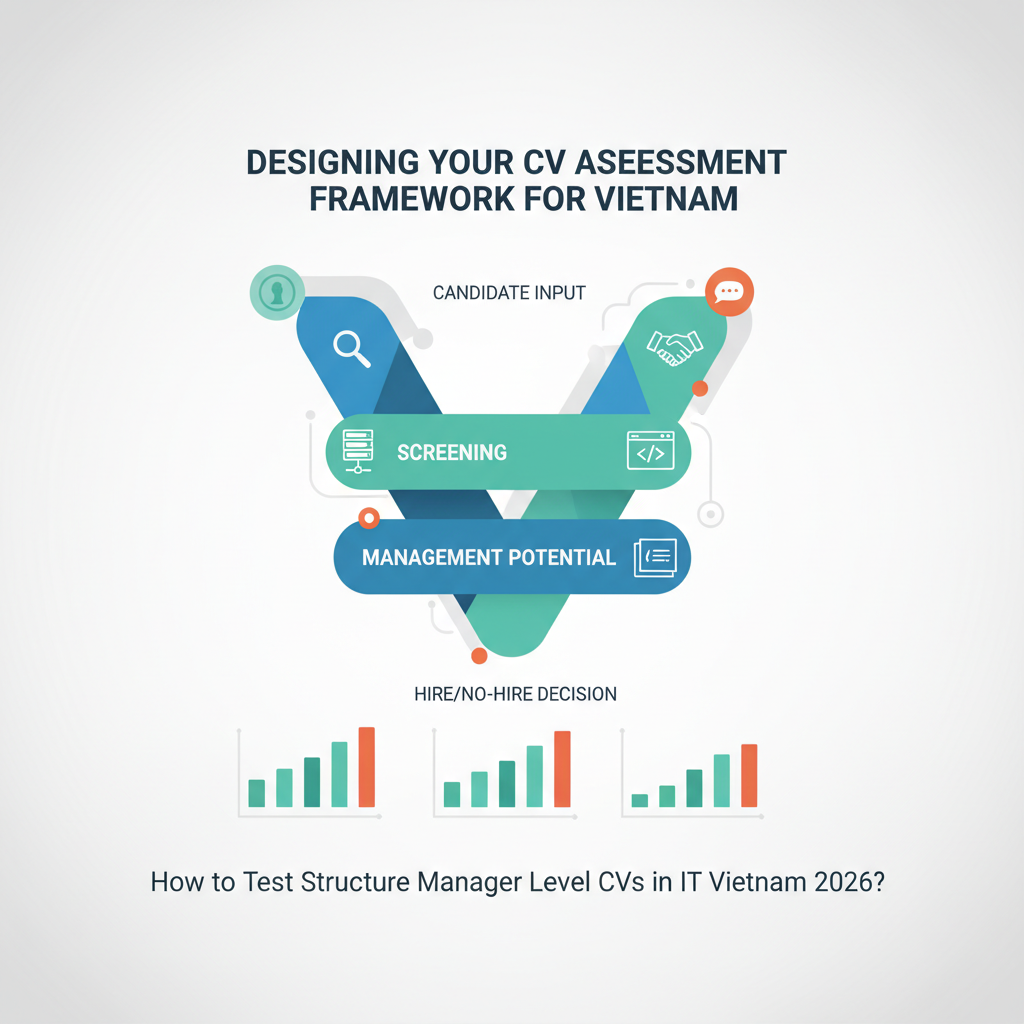
1. Defining Objective Scoring Rubrics and Criteria
The foundation of any effective CV assessment framework lies in objective scoring rubrics. For Manager Level IT roles in Vietnam, these rubrics must go beyond mere technical skills to encompass leadership qualities, strategic thinking, and cultural adaptability. Begin by breaking down the job description into quantifiable competencies. Key criteria should include:
- Technical Acumen: Assess experience with relevant technologies, frameworks (e.g., Agile, Scrum), and architectural patterns critical for the specific IT domain (e.g., Cloud, DevOps, AI/ML, Cybersecurity). Look for evidence of hands-on experience and a track record of successful project delivery.
- Leadership and Management Experience: Evaluate the candidate's experience in leading teams, managing projects, budgeting, and mentoring. Look for metrics such as team size managed, project complexity, and successful project outcomes.
- Problem-Solving and Strategic Thinking: While difficult to assess purely from a CV, look for examples of initiatives led, challenges overcome, and contributions to broader organizational strategy.
- Communication and Interpersonal Skills: English proficiency is often crucial for IT managers in Vietnam working with international teams or clients. Assess through clarity of CV, previous roles requiring cross-cultural communication, and professional references. Local context demands understanding of hierarchical communication and collaborative team dynamics.
- Cultural Fit and Adaptability: In Vietnam, an understanding of local work culture, respect for seniority, and a collaborative spirit are highly valued. Look for long-term tenures, diverse team experience, or roles requiring significant stakeholder engagement.
Each criterion should have a defined scoring scale (e.g., 1-5), with clear descriptors for each level, ensuring consistency across all reviewers. This structured approach ensures every applicant for an IT Manager role is evaluated against the same comprehensive set of expectations.
2. Utilizing Keyword Analysis and AI-powered Screening Tools
Given the volume of applications for desirable IT Manager positions in Vietnam, leveraging technology becomes indispensable. Keyword analysis and AI-powered screening tools can significantly streamline the initial phases of your assessment framework. These tools can:
- Identify Core Competencies: Programmatically scan CVs for specific keywords related to technical skills (e.g., “Java,” “AWS,” “DevOps”), methodologies (e.g., “Scrum Master,” “Agile”), and managerial experience (e.g., “Team Lead,” “Project Management,” “Budget”).
- Filter for Essential Requirements: Automatically filter out candidates who do not meet non-negotiable criteria, such as a minimum number of years of experience in a leadership role or specific certifications.
- Prioritize Candidates: Rank candidates based on the relevance and density of desired keywords and phrases, helping human reviewers focus their efforts on the most promising profiles.
While powerful, it's crucial to use these tools judiciously. Over-reliance on automation can sometimes overlook exceptional candidates whose CVs might not perfectly align with predefined keywords but possess valuable transferable skills or unique experiences relevant to an IT Manager role in Vietnam. Human oversight remains critical to catch nuances and ensure fairness. For more insights on leveraging technology in recruitment, consider exploring best practices from industry leaders. SHRM provides valuable resources on AI in talent acquisition, offering a global perspective that can be adapted to the local context.
3. Structuring Initial Shortlisting Processes Efficiently
After the automated screening, the next step is a human-led initial shortlisting process designed for efficiency and accuracy. This stage typically involves:
- First-Pass Review by HR: HR professionals conduct a quick review of the top-ranked CVs from the automated screening. Their focus is on verifying basic qualifications, identifying red flags, and ensuring the CV aligns with the overall company culture and role requirements for an IT Manager. This helps in creating a preliminary pool of candidates.
- Second-Pass Review by Hiring Manager/Team Lead: The short-list is then passed to the hiring manager or a senior member of the IT team. Their expertise allows for a deeper dive into technical accomplishments, leadership scope, and strategic contributions. They can assess the "fit" within their specific team and project needs.
- Consistency Checks: Implement a standardized checklist or a shared review sheet for all human reviewers. This ensures that everyone is evaluating candidates against the same objective criteria, minimizing individual biases and ensuring a fair test structure to assess Manager Level CVs in IT field in Vietnam. Calibration sessions can be useful to align reviewers on scoring interpretation.
- Brief Screening Calls: For the most promising candidates, a brief 15-20 minute screening call can be incredibly effective. This allows for quick verification of key information on the CV, assessment of communication skills, and gauging of basic cultural fit before investing in a full interview.
By structuring these initial shortlisting processes efficiently, organizations can quickly move from a large application pool to a manageable number of highly qualified candidates for in-depth interviews. This framework not only saves time and resources but also significantly enhances the quality of hires, ensuring you find the right IT Manager to drive success in Vietnam's competitive tech landscape.
Beyond the CV: Integrating Pre-Screening & Initial Test Elements
In the competitive landscape of Vietnam’s booming IT sector, securing top-tier managerial talent requires a sophisticated approach that extends far beyond a traditional resume review. While CVs offer a glimpse into a candidate’s experience and qualifications, they often fall short in revealing critical attributes like problem-solving acumen, leadership style, and cultural compatibility – factors paramount for success in senior roles. To truly identify high-potential IT managers, organizations must integrate robust pre-screening and initial test elements designed to validate claims, assess practical skills, and gauge suitability early in the recruitment process. This proactive strategy not only streamlines hiring but also ensures a deeper, more accurate understanding of each candidate’s capabilities, particularly when developing a comprehensive test structure to assess Manager Level CVs in IT field in vietnam.
1. Short technical or scenario-based questions for managers
For IT manager roles, a candidate’s technical proficiency, while perhaps not at the granular coding level, remains crucial for effective decision-making and guiding development teams. Short technical or scenario-based questions are an excellent way to validate their understanding of common challenges and strategic approaches. Unlike tests for individual contributors, these assessments should focus on the manager’s ability to conceptualize solutions, mitigate risks, and allocate resources effectively rather than writing code. Questions might revolve around resolving project bottlenecks, choosing between different technology stacks for a new product, scaling infrastructure to meet growing demand, or recovering a failing project. For instance, a candidate might be asked: “Describe your strategy for migrating a legacy monolithic application to a microservices architecture while maintaining business continuity.” Or, “A key developer resigns mid-project, and deadlines are tight. How do you reallocate resources and manage stakeholder expectations?” Such scenarios reveal not only technical understanding but also strategic thinking, critical problem-solving skills, and decision-making under pressure – all essential for IT leadership in Vietnam.
2. Leadership style and team management self-assessment
Effective leadership is the cornerstone of successful IT projects and cohesive teams. Therefore, assessing a candidate’s leadership style and team management approach is non-negotiable for managerial positions. A self-assessment questionnaire can provide invaluable insights into how prospective managers perceive their role in motivating, developing, and retaining talent. These assessments can explore various dimensions: how they handle conflict within a team, their approach to delegation, strategies for fostering innovation, methods for performance evaluation, and their commitment to continuous professional development for their subordinates. Questions like, “How do you motivate a demotivated team member?” or “Describe a situation where you had to mediate a significant conflict between team members and what was the outcome?” can offer a window into their practical leadership capabilities. Furthermore, understanding a candidate’s self-awareness regarding their strengths and areas for growth as a leader is vital. Integrating effective leadership assessment methodologies ensures that the manager’s approach aligns with the organization’s values and fosters a productive work environment.
3. Culture fit indicators specific to Vietnamese work environments
Cultural fit is a critical, yet often overlooked, component of successful hiring, especially in a culturally rich environment like Vietnam. The Vietnamese workplace is often characterized by a strong emphasis on hierarchy, respect for elders and authority, collective harmony over individual expression, and an indirect communication style. For a foreign or even a local manager who doesn’t appreciate these nuances, significant challenges can arise, leading to team friction and reduced productivity. Pre-screening elements should include questions or short scenarios designed to gauge a candidate’s understanding and adaptability to these cultural tenets. For example, questions could be: “How would you approach giving constructive criticism to a senior team member in a way that preserves their dignity and encourages improvement?” or “Describe your experience working in teams where maintaining harmony and consensus was highly valued.” Observing how candidates articulate their responses to questions about teamwork, respect for authority, and communication styles can reveal their potential for seamless integration. A manager who understands the importance of ‘saving face,’ values collective success, and can navigate indirect communication effectively will be far more successful in leading a Vietnamese IT team than one who applies a purely Western-centric management style without adaptation. Ensuring this alignment early on is crucial for building resilient and high-performing teams.
By moving beyond merely evaluating CVs and integrating these tailored pre-screening and initial test elements, companies hiring IT managers in Vietnam can significantly enhance the quality of their hires. This comprehensive approach provides a more holistic view of candidates, reducing the risk of mis-hires and ultimately contributing to stronger leadership and greater success in the dynamic Vietnamese IT landscape.
Adapting Your Assessment for Vietnam’s IT Market Dynamics 2026
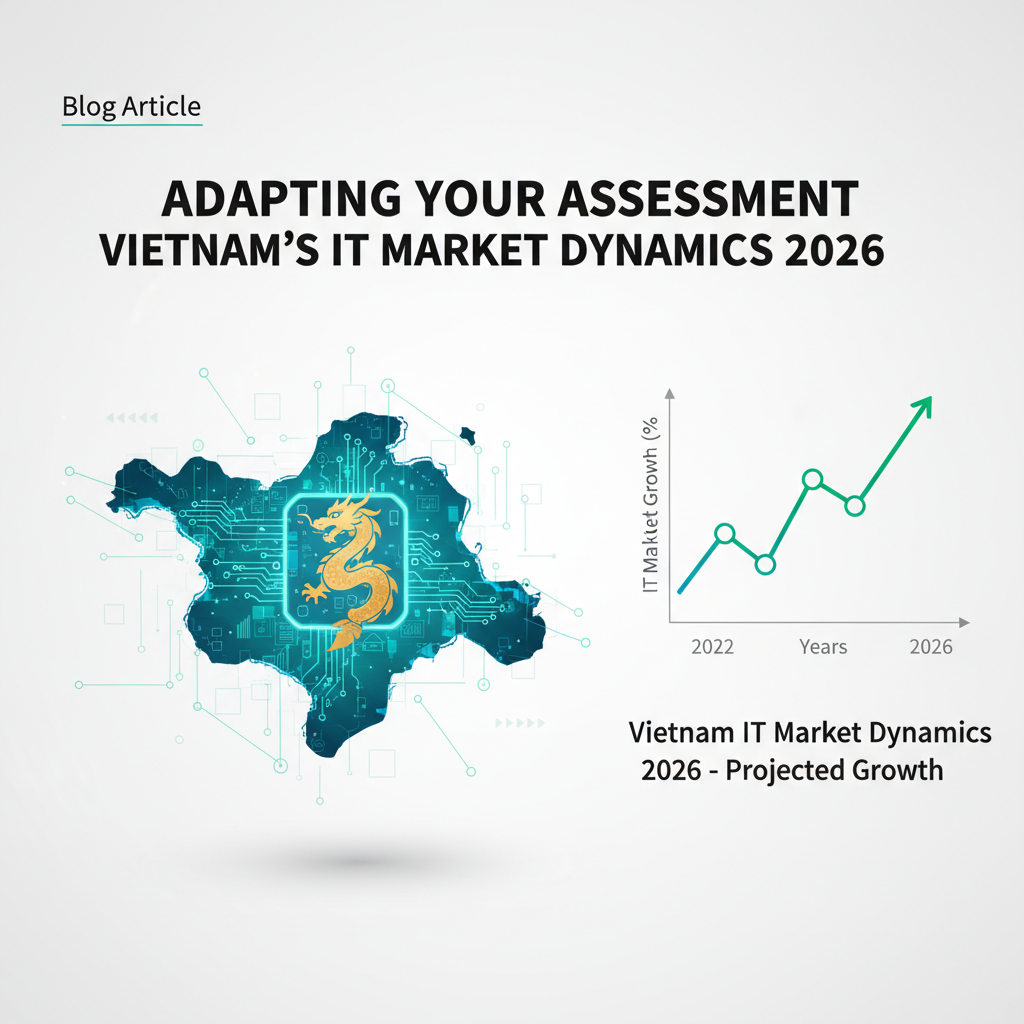
Vietnam’s IT sector is experiencing explosive growth, making it a compelling yet complex landscape for talent acquisition. As 2026 approaches, understanding the specific nuances of the Vietnamese IT job market is paramount for effective recruitment, particularly when assessing managerial-level candidates. The talent pool is vibrant and growing, fueled by a young, tech-savvy population and government initiatives promoting digital transformation. However, this dynamism also brings unique challenges, from navigating competitive salary expectations to understanding regional differences in talent concentration and specialized skill sets.
For international and local companies alike, a successful approach requires a finely tuned assessment strategy that goes beyond standard global benchmarks. It demands an appreciation for local education systems, cultural work ethics, and the evolving competitive landscape. Whether you are building a new team or scaling an existing one, optimizing your Test structure to assess Manager Level CVs in IT field in vietnam is critical to identify top-tier talent who can drive innovation and lead successful teams in this fast-paced environment.
1. Understanding Local Education and Certifications Landscape
The foundation of Vietnam’s IT talent pool lies in its robust education system, which has been increasingly focused on STEM disciplines. Universities like FPT University, Hanoi University of Science and Technology, and Ho Chi Minh City University of Technology are consistently producing highly skilled graduates. When assessing Manager Level CVs, it’s crucial to recognize the reputation and specialization of these institutions. Candidates from top-tier universities often possess strong theoretical foundations and problem-solving skills, but their practical experience might vary, especially in rapidly evolving tech stacks.
Beyond formal degrees, the prevalence of international certifications (e.g., AWS, Azure, PMP, Scrum Master) is on the rise. These certifications signal a commitment to continuous learning and adherence to global best practices, which are highly valued in managerial roles. However, local training centers and bootcamps also play a significant role in upskilling the workforce, particularly in niche areas like AI, data science, and blockchain. A comprehensive assessment structure should weigh both formal academic achievements and relevant certifications, understanding that a combination often indicates a well-rounded and proactive leader capable of navigating complex technical challenges in the Vietnamese context.
2. Navigating Competitive Salary Expectations and Benefits Packages
Vietnam’s economic growth, coupled with a booming tech sector, has led to a dynamic and increasingly competitive salary landscape for IT professionals, especially at the managerial level. Companies entering or expanding in Vietnam must be prepared for salary expectations that are rapidly converging with regional, and in some specialized areas, even global standards. Factors influencing these expectations include the candidate’s specific technical expertise (e.g., AI/ML vs. traditional enterprise software), years of experience, leadership acumen, and the industry vertical they operate in. Ho Chi Minh City and Hanoi typically command higher salaries due to a higher cost of living and greater concentration of multinational corporations and tech startups.
Beyond base salaries, a competitive benefits package is essential for attracting and retaining top IT managers. This often includes robust health insurance, performance-based bonuses, stock options (especially in startups or rapidly growing companies), professional development allowances, and flexible working arrangements. A deep understanding of current market benchmarks, often available through local recruitment agencies or salary surveys, is critical. Being perceived as an employer that offers fair compensation and attractive benefits is vital for securing high-caliber talent in Vietnam’s discerning IT market. For a broader perspective on Vietnam’s economic trajectory impacting such market dynamics, consult reports from institutions like the World Bank, which often highlight the factors driving these economic shifts.
3. Leveraging Professional Networks and Local Reference Checks
In Vietnam, professional networks and personal connections hold significant weight, particularly when evaluating candidates for leadership positions. While formal interviews and technical assessments are indispensable, insights gained from local networks can provide invaluable context and validation for a candidate’s skills, leadership style, and cultural fit. Local IT communities, industry associations, and even university alumni networks are vibrant and interconnected. Engaging with these networks can offer a deeper understanding of a candidate’s reputation, their contributions to specific projects, and their ability to collaborate within local team dynamics.
Moreover, performing thorough local reference checks is paramount. Unlike some Western markets where references might be more formal, Vietnamese references can often provide more candid and detailed insights into a candidate’s character, work ethic, and ability to manage teams effectively in a local setting. It’s important to understand cultural communication nuances during these checks and to ensure that the references provided are genuinely familiar with the candidate’s professional contributions. Leveraging these local insights, combined with rigorous standard assessment practices, ensures a holistic and culturally sensitive approach to identifying the best IT managers in Vietnam’s evolving market.
Partner with Shelby Global
You are looking for reliable HR Sevice Suppliers? Contact Shelby Global Now! To connect with verified talents and upgrade your orginization.
—————————————
References
– Vietnam’s digital economy to reach $49 billion by 2025: https://e.vnexpress.net/news/economy/vietnam-s-digital-economy-to-reach-49-billion-by-2025-4677708.html
– Future of Jobs Report 2023: Skills: https://www.weforum.org/agenda/2023/05/future-of-jobs-report-2023-skills/
– SHRM provides valuable resources on AI in talent acquisition: https://www.shrm.org/resources-and-tools/hr-topics/talent-acquisition/ai-in-recruitment/
– SHRM: How to Assess Leadership Potential: https://www.shrm.org/resourcesandtools/hr-topics/talent-acquisition/pages/how-to-assess-leadership-potential.aspx
– World Bank: Vietnam Overview: https://www.worldbank.org/en/country/vietnam/overview













































































































![TOP 4 recruitment agency in vietnam 2026 [highlight Shelby Global]](https://shelbyglobal.com.vn/wp-content/uploads/2026/04/TOP-4-recruitment-agency-in-vietnam-2026-highlight-Shelby-Global-1.webp "TOP 4 recruitment agency in vietnam 2026 111")