Understanding Vietnam’s Logistics Job Market in 2026
Vietnam’s logistics sector is on an accelerated growth trajectory, rapidly transforming into a pivotal economic engine. Propelled by robust economic policies, increased foreign direct investment, and a burgeoning e-commerce landscape, the industry is not just expanding but also evolving, creating a dynamic job market. As we approach 2026, understanding the nuances of this vibrant sector—from its key drivers to the technological shifts reshaping roles—becomes crucial for professionals and businesses alike. This comprehensive overview delves into the current state and future predictions, providing insights into the evolving demands and opportunities within the Vietnamese logistics job market, including a focus on the salary range report of jobs in logistics field in vietnam.

1. Growth Drivers of Vietnam’s Logistics Sector
The remarkable expansion of Vietnam’s logistics sector is underpinned by several powerful growth drivers. Foremost among these are the country’s strategic participation in numerous Free Trade Agreements (FTAs), including the EVFTA, CPTPP, and RCEP. These agreements have significantly boosted international trade, making Vietnam an attractive manufacturing hub and thereby increasing demand for efficient supply chain management and freight forwarding services. The explosive growth of e-commerce is another critical catalyst; as online retail penetration deepens, it fuels an ever-growing need for sophisticated warehousing solutions, efficient transportation networks, and robust last-mile delivery capabilities.
Furthermore, Vietnam’s sustained economic development and industrialization continue to attract substantial foreign direct investment (FDI), particularly in manufacturing. This influx drives demand for raw material procurement, finished goods distribution, and intricate logistics operations. Concurrent with this, significant government investment in infrastructure development—ranging from deep-water ports like Cai Mep-Thi Vai, expanded highway networks, and modernized airports—is enhancing connectivity and reducing transit times, making logistics operations more efficient and cost-effective. These combined factors solidify Vietnam’s position as a regional logistics powerhouse, creating a fertile ground for diverse logistics jobs.
2. Key Players and Market Dynamics
The Vietnamese logistics landscape is characterized by a blend of international giants and resilient domestic players, fostering a highly dynamic and competitive environment. Global logistics powerhouses such as DHL, FedEx, Maersk, and DB Schenker operate extensively within Vietnam, bringing international best practices, advanced technology, and extensive global networks. Their presence often sets the benchmark for service quality and efficiency.
On the domestic front, companies like Giao Hàng Nhanh (GHN), Viettel Post, and Vietnam Post leverage their extensive local networks and deep understanding of the Vietnamese market to dominate crucial segments, particularly in e-commerce logistics and last-mile delivery. The market also sees the rise of numerous small to medium-sized enterprises (SMEs) specializing in niche services like customs brokerage, cold chain logistics, or specific transportation routes. This competitive environment encourages innovation and efficiency, pushing all players to continuously optimize their services. Consolidation trends are also emerging, as larger players acquire smaller ones to expand their service offerings and market reach, further shaping the competitive dynamics and influencing the availability and nature of logistics jobs across the sector.
3. Impact of Digital Transformation on Logistics Roles
Digital transformation is fundamentally reshaping the competencies required for logistics roles in Vietnam. The integration of advanced technologies like automation, Artificial Intelligence (AI), the Internet of Things (IoT), and blockchain is revolutionizing every facet of the supply chain, from warehousing and inventory management to transportation and customs processes. Automation in warehouses, for instance, requires professionals skilled in operating and maintaining robotic systems, shifting demand from purely manual labor to supervisory and technical roles.
AI-driven analytics are enabling predictive insights for demand forecasting, route optimization, and risk management, creating a need for data scientists and supply chain analysts proficient in interpreting complex datasets. IoT devices are enhancing real-time tracking and visibility of goods, demanding expertise in managing and leveraging this data. Blockchain technology is improving transparency and security in cross-border trade and documentation. These technological shifts are not merely eliminating traditional roles but are actively creating new, specialized logistics jobs that require a blend of traditional logistics knowledge and digital literacy. Professionals with skills in logistics technology, data management, and process automation will be highly sought after, reflecting a significant evolution in the salary range report of jobs in logistics field in vietnam as these specialized competencies command higher remuneration.
Salary Ranges for Junior and Mid-Level Logistics Roles
Navigating the compensation landscape in Vietnam’s rapidly expanding logistics sector is crucial for professionals at all stages of their career. This detailed report provides salary breakdowns for common entry-level and mid-career positions, considering key factors such as experience, location, and company size within Vietnam’s dynamic logistics field. Understanding the current salary range report of jobs in logistics field in Vietnam is essential for career planning and negotiation.
1. Logistics Coordinator & Specialist Compensation in Vietnam
The roles of Logistics Coordinator and Logistics Specialist are often the gateway for many professionals entering the supply chain and logistics industry. These positions are foundational, involving tasks from managing shipping schedules and inventory to coordinating with suppliers and customers. The compensation for these roles in Vietnam varies significantly based on experience, the scale of operations, and the employing company.
For a Logistics Coordinator salary Vietnam, an entry-level professional with 0-2 years of experience typically earns between VND 7,000,000 to VND 12,000,000 per month. Those with 2-4 years of experience, often transitioning into a more specialized or senior coordinator role, can expect a monthly salary in the range of VND 12,000,000 to VND 18,000,000. Professionals in major economic hubs like Ho Chi Minh City or Hanoi, particularly those working for multinational corporations (MNCs) or large local enterprises, will generally command salaries at the higher end of these spectrums. Specialized roles, such as Import/Export Specialists or Freight Specialists, often fall under this category, demanding similar compensation but sometimes with added benefits due to specific regulatory knowledge or niche skill sets. Factors such as fluency in English or other foreign languages (e.g., Chinese, Korean) are highly valued and can significantly influence the starting pay, positioning candidates favorably in the competitive Vietnam logistics sector salaries.
2. Warehouse Supervisor & Operations Executive Salaries
As professionals gain more experience and take on greater responsibility for managing teams and processes, they often move into roles such as Warehouse Supervisor or Logistics Operations Executive. These positions require strong leadership, organizational skills, and a deep understanding of operational efficiencies.
The warehouse supervisor salary Vietnam for an individual with 3-5 years of experience, leading a small to medium-sized team, typically ranges from VND 15,000,000 to VND 25,000,000 per month. This figure can escalate for those managing larger warehouses, complex inventories, or multiple shifts, potentially reaching up to VND 35,000,000 or more, especially within large manufacturing firms or third-party logistics (3PL) providers. A Logistics Operations Executive, a role often requiring 4-7 years of experience and a broader scope of responsibility including process optimization and vendor management, can expect logistics operations executive pay ranging from VND 20,000,000 to VND 40,000,000 per month. These figures can be even higher in e-commerce logistics, where fast-paced operations and advanced technological integration are paramount. The demand for skilled professionals in these `logistics jobs Vietnam` roles continues to grow, reflecting the expansion of the country’s manufacturing and e-commerce sectors.
3. Factors Influencing Entry-Level Logistics Pay in Vietnam
While experience and specific job titles are primary determinants, several other crucial factors shape the `entry-level logistics salary` and subsequent `mid-career logistics compensation` in Vietnam:
- Education and Certifications: A bachelor’s degree in logistics, supply chain management, business administration, or a related field is often a prerequisite. Postgraduate qualifications or professional certifications (e.g., CSCP, CPIM from APICS) are highly advantageous, demonstrating specialized knowledge and commitment, often leading to better starting offers.
- Location: As mentioned, major economic centers like Ho Chi Minh City and Hanoi generally offer higher salaries due to a higher cost of living and the concentration of large businesses and international companies. Other industrial provinces such as Binh Duong, Dong Nai, or Hai Phong also offer competitive wages, but often slightly lower than the two main cities.
- Company Size and Type: Multinational corporations (MNCs) and large Vietnamese conglomerates typically offer more competitive `supply chain salary Vietnam` packages, including more robust benefits, compared to small or medium-sized local enterprises. The industry focus of the company (e.g., e-commerce, manufacturing, freight forwarding, cold chain) can also influence pay scales.
- Skills and Competencies: Beyond technical knowledge, soft skills are increasingly vital. Proficiency in logistics software (e.g., WMS, TMS), data analysis tools, project management skills, and strong communication and negotiation abilities are highly sought after. Bilingualism, particularly in English, is often a non-negotiable requirement for roles within international companies and significantly boosts earning potential.
- Economic Conditions: The overall economic health of Vietnam and global trade dynamics can impact salary trends. A robust economy with high foreign investment often correlates with increased demand for logistics professionals and, consequently, higher remuneration. Regular consultation of reputable industry reports can provide up-to-date insights into these trends.
Understanding these factors is key to navigating your `logistics career Vietnam` path successfully. For a comprehensive overview, stay informed on the latest remuneration trends. You can find more insights by exploring a detailed salary range report of jobs in logistics field in Vietnam. Continuous professional development and strategic career choices are essential for maximizing earning potential in this dynamic industry, serving as an invaluable `logistics salary guide` for aspiring and current professionals alike.
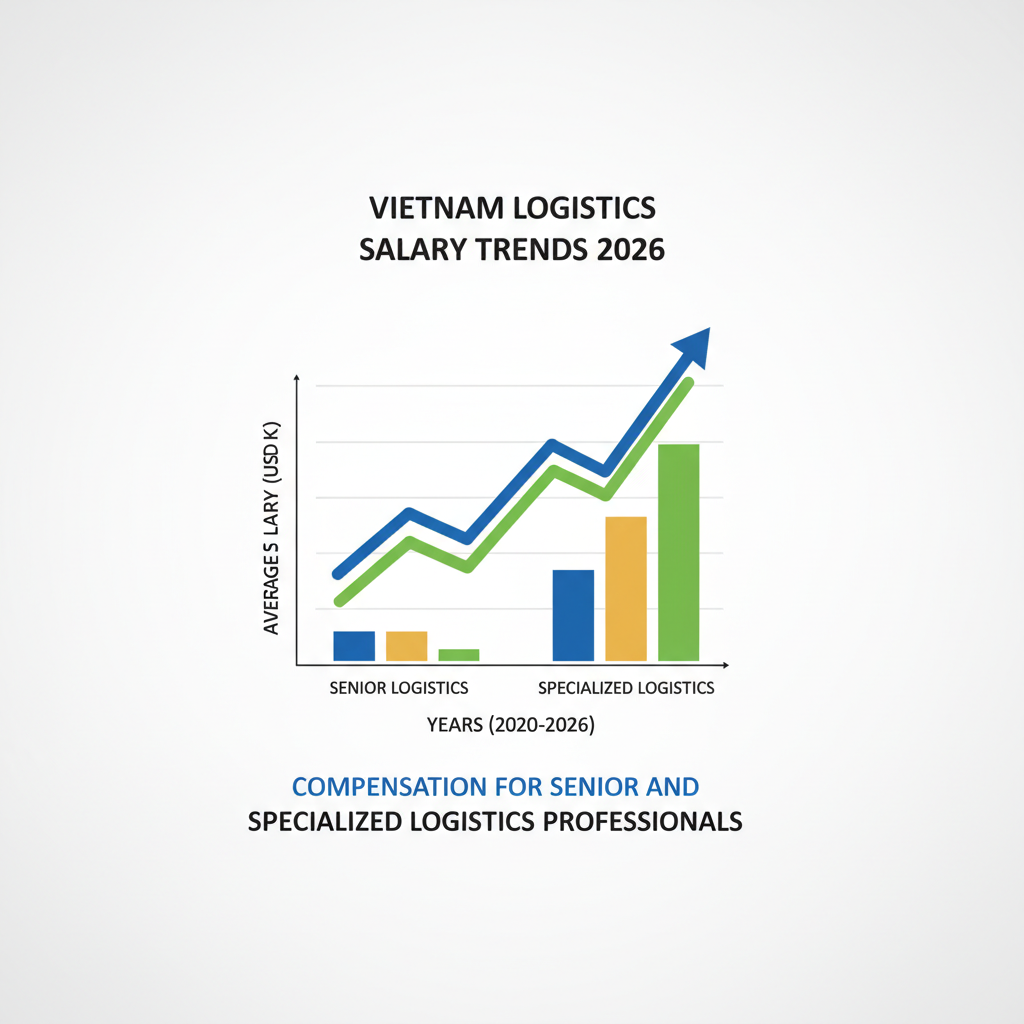
Compensation for Senior and Specialized Logistics Professionals
The dynamic and rapidly expanding Vietnamese economy has transformed the logistics sector into a critical engine of growth, demanding increasingly sophisticated expertise. This evolution directly impacts the salary range report of jobs in logistics field in vietnam, particularly for higher-paying roles, including management, specialized areas like international trade, and executive-level positions. Companies are now placing a premium on seasoned experience and very specific skill sets to navigate complex supply chains, optimize operations, and leverage technological advancements. As a result, compensation packages for senior logistics roles in Vietnam are becoming highly competitive, reflecting the strategic importance of these positions in driving business success and efficiency.
1. Logistics Manager & Director Salary Expectations
At the helm of any robust supply chain are the Logistics Managers and Directors, whose compensation reflects their critical strategic and operational responsibilities. In Vietnam, a Logistics Manager, typically with 5-10 years of experience, can expect a salary ranging from VND 25,000,000 to VND 50,000,000 per month. Factors such as the size of the company, the complexity of its operations (e.g., multinational vs. local SME), and the industry it serves (e.g., manufacturing, retail, e-commerce) significantly influence these figures. Those operating in key economic hubs like Ho Chi Minh City and Hanoi generally command higher salaries due to the greater concentration of businesses and talent.
For Logistics Directors, who are tasked with overseeing entire logistics departments, formulating long-term strategies, and managing significant budgets and teams, the compensation is substantially higher. With over 10-15 years of proven leadership and a track record of supply chain optimization and cost reduction, a Logistics Director’s salary in Vietnam can typically fall between VND 60,000,000 and VND 120,000,000 per month or even more, especially within large international corporations. Their role often encompasses risk management, technological integration (e.g., WMS, TMS), and strategic vendor relationships, making their expertise invaluable for logistics management compensation Vietnam. This level of logistics director salary Vietnam reflects the profound impact they have on a company’s operational efficiency and bottom line.
2. Supply Chain Manager vs. Freight Forwarder Salaries
While often intertwined, the roles of Supply Chain Manager and Freight Forwarder Manager present distinct career paths and salary expectations within Vietnam’s logistics landscape. A Supply Chain Manager typically oversees the entire flow of goods and services, from procurement to final delivery, focusing on strategic planning, vendor management, inventory control, and process improvement across the entire chain. Their comprehensive scope means that their salaries are generally competitive, ranging from VND 35,000,000 to VND 70,000,000 per month for experienced professionals, aligning with supply chain executive pay Vietnam trends. Proficiency in supply chain analytics, demand forecasting, and global logistics standards are key drivers for higher compensation in this role.
In contrast, a Freight Forwarder Manager specializes in the transportation aspect of logistics, coordinating the movement of goods via air, sea, or land, handling customs procedures, and managing carrier relationships. Their remuneration can be highly dependent on their network, negotiation skills, and ability to secure cost-effective and timely shipping solutions. For an experienced Freight Forwarder Manager in Vietnam, salaries typically range from VND 25,000,000 to VND 55,000,000 per month. While this may be slightly lower than a Supply Chain Manager’s base salary, the role often includes performance-based bonuses and commissions linked to volume and successful project execution. Expertise in international trade logistics salaries and regulations is a significant advantage, often leading to better pay for freight forwarding manager salary Vietnam roles.
3. Specialized Roles: E-commerce Logistics & Cold Chain Pay
The rise of e-commerce and the increasing complexity of specialized goods transportation have created lucrative niches within Vietnam’s logistics sector, driving demand for specialized logistics jobs Vietnam. E-commerce logistics professionals, crucial for the booming online retail market, are particularly sought after. Roles such as E-commerce Logistics Specialists or Managers focus on last-mile delivery optimization, warehouse automation, reverse logistics, and managing fluctuating demand. Given the rapid pace and technological demands of this sector, the e-commerce logistics specialist salary can range from VND 28,000,000 to VND 60,000,000 per month, often with additional performance incentives. Companies are willing to pay a premium for individuals who can integrate new technologies and scale operations efficiently.
Another high-value area is cold chain logistics, which deals with temperature-sensitive products like pharmaceuticals, fresh produce, and frozen goods. The stringent regulatory requirements, the need for specialized equipment, and the critical importance of maintaining product integrity mean that professionals in this field command higher salaries. A Cold Chain Logistics Manager or Specialist, with expertise in temperature-controlled warehousing, transportation, and compliance, can expect a cold chain logistics pay Vietnam ranging from VND 30,000,000 to VND 65,000,000 per month. The demand for these highly skilled individuals, especially those with international certifications and experience in pharmaceutical logistics, is consistently growing. According to the latest market report from Navigos Search, specialized logistics roles continue to see upward salary trends, reflecting their strategic value in Vietnam logistics salaries.
Key Factors Driving Logistics Salary Variation in Vietnam
Understanding the dynamics of compensation in Vietnam’s rapidly expanding logistics sector is crucial for both employers attracting top talent and professionals seeking career advancement. While the industry offers diverse opportunities, a significant salary range report of jobs in the logistics field in Vietnam reveals notable discrepancies. These variations are not arbitrary but are shaped by a confluence of factors, ranging from geographic location and company characteristics to an individual’s educational background and specialized skill sets. This section delves into the primary elements that influence logistics salaries across the nation, providing a clearer picture of what drives pay scales in this vital economic sector.
1. Impact of Location (Tier 1 vs. Tier 2 Cities)
Geographical location stands as one of the most significant determinants of logistics salaries in Vietnam. Tier 1 cities, notably Ho Chi Minh City and Hanoi, serve as the nation’s primary economic and commercial hubs. These metropolises boast a higher concentration of multinational corporations (MNCs), major manufacturing facilities, bustling ports, and extensive logistics infrastructure, leading to a greater demand for skilled logistics professionals. Consequently, the average logistics salary in Ho Chi Minh City and Hanoi tends to be substantially higher compared to Tier 2 cities and provincial areas.
The higher cost of living in Tier 1 cities, including rental expenses, transportation, and daily necessities, also plays a role in pushing salaries upward to attract and retain talent. Companies operating in these major centers often need to offer more competitive compensation packages to reflect these elevated living costs. Conversely, while Tier 2 cities like Da Nang, Hai Phong, and Can Tho are developing their logistics capabilities and attracting investment, the market saturation for high-end roles is lower, and the operational scale of logistics companies might be smaller. This typically results in a lower logistics manager pay and a reduced overall salary range for entry-to-mid-level roles compared to their Tier 1 counterparts, even for similar positions. Professionals considering opportunities outside of the major hubs should factor in these regional economic differences when evaluating job offers in the Vietnamese logistics sector.
2. Company Size, Type (Local vs. MNCs), and Industry Sector
The nature of the employing company—its size, type, and the industry sector it operates within—exerts a profound influence on logistics compensation. Multinational Corporations (MNCs) generally offer superior salary packages, comprehensive benefits, and more structured career development paths compared to local Vietnamese companies. MNCs often operate on a global scale, requiring sophisticated logistics solutions and highly skilled talent proficient in international best practices, thus justifying higher pay for roles such as supply chain manager Vietnam or international logistics jobs. They also tend to invest heavily in training and technology, further enhancing the value proposition for employees.
Local Vietnamese logistics companies, while growing rapidly, might offer salaries that are more aligned with the domestic market benchmarks, though larger local players are increasingly competing for talent. Small and Medium-sized Enterprises (SMEs) in the logistics field, regardless of ownership, typically have more constrained budgets, leading to lower average salaries across the board. Furthermore, the specific industry sector can also create disparities. For instance, logistics professionals working in high-growth areas like e-commerce logistics jobs, pharmaceutical logistics, or cold chain logistics might command higher salaries due to the specialized requirements and critical nature of their operations. Conversely, roles in more traditional freight forwarding salary or basic warehousing jobs Vietnam might see more standardized compensation unless specialized skills are involved.
3. Education, Certifications, and Specialized Skills
In an increasingly complex and technology-driven global supply chain, an individual’s educational background, professional certifications, and specialized skill sets are pivotal in determining their earning potential. A bachelor’s or master’s degree in logistics, supply chain management, business administration, or a related field provides a strong foundation and often serves as a prerequisite for management-level positions, impacting logistics analyst salary and higher. Moreover, obtaining internationally recognized professional certifications like CSCP (Certified Supply Chain Professional), CPIM (Certified in Production and Inventory Management) from ASCM (formerly APICS), or FIATA Diplomas, significantly boosts a professional’s credibility and market value. These certifications demonstrate a commitment to continuous learning and a mastery of global best practices, leading to higher compensation.
Beyond formal qualifications, specific in-demand skills are critical. Proficiency in digitalization tools such as Warehouse Management Systems (WMS), Transportation Management Systems (TMS), and enterprise resource planning (ERP) software is highly valued. Data analytics capabilities, allowing professionals to interpret complex supply chain data for optimization, are becoming indispensable. Multilingualism, particularly English, Mandarin, or Korean, is a significant advantage in Vietnam’s globally integrated logistics sector. Furthermore, soft skills like project management, negotiation, leadership, and problem-solving are crucial for senior roles, influencing supply chain manager salary Vietnam and others. As the logistics landscape continues to evolve, adapting to evolving skill requirements in the global supply chain landscape becomes paramount for securing top-tier logistics salaries Vietnam and ensuring long-term career growth.
Future Outlook and Career Advancement in Vietnam Logistics
Vietnam’s logistics sector is on an accelerated growth trajectory, fueled by robust economic expansion, increasing foreign direct investment, and a burgeoning e-commerce market. This dynamic environment not only reshapes operational paradigms but also significantly influences the career prospects and earning potential for professionals within the industry. Understanding the salary range report of jobs in logistics field in vietnam is crucial for strategic career planning. This section delves into the future trends poised to transform the logistics landscape, forecasts salary evolution, and provides actionable advice for professionals aiming to elevate their earning potential and advance their careers.

1. Emerging Trends Shaping Logistics Salaries
The Vietnamese logistics sector is at the cusp of a significant transformation, driven by several global and regional megatrends. Digitalization and automation are perhaps the most impactful, with technologies like AI, IoT, blockchain, and big data analytics becoming integral to efficient supply chain management. This shift creates a demand for new skill sets, particularly in data analysis, system integration, and automation management, directly impacting salaries. E-commerce logistics continues its explosive growth, necessitating highly efficient last-mile delivery solutions, warehouse optimization, and reverse logistics expertise, thereby increasing the value of professionals skilled in these areas.
Furthermore, sustainability and green logistics are gaining prominence, with increasing pressure for environmentally friendly practices across the supply chain. Professionals with expertise in sustainable transportation, carbon footprint reduction, and circular economy principles will find themselves in high demand. The ongoing diversification of global supply chains, often referred to as ‘China plus one’ or nearshoring strategies, positions Vietnam as a pivotal logistics hub, attracting more complex and higher-value operations. This influx of sophisticated logistics demands will inevitably push up the salary range report of jobs in logistics field in vietnam for specialized roles.
According to Deloitte’s insights into the future of supply chain and logistics in ASEAN, the region is embracing digital transformation, which is critical for enhancing operational efficiency and responsiveness. Professionals who can navigate this evolving technological landscape will command premium salaries.
2. Strategies for Salary Negotiation & Career Growth
To capitalize on these evolving trends and enhance earning potential, proactive career management is essential. When it comes to salary negotiation, preparation is key. Researching current industry benchmarks, understanding your specific value proposition, and articulating your contributions to a company’s success are paramount. Highlighting skills that align with emerging trends, such as digital proficiency or sustainable logistics expertise, can significantly strengthen your negotiating position. Beyond initial compensation, focus on continuous professional development.
Career growth in Vietnamese logistics is increasingly tied to lifelong learning and adaptability. Pursuing certifications in supply chain management (e.g., CSCP, CPIM), project management (PMP), or specialized areas like dangerous goods handling can add substantial value. Networking within industry associations, attending workshops, and seeking mentorship from experienced professionals are invaluable for gaining insights and identifying advancement opportunities. Moving into leadership or specialized consulting roles, particularly those requiring strategic planning, technological implementation, or international logistics acumen, generally offers the most significant salary jumps. Demonstrating leadership capabilities, problem-solving prowess, and a strategic mindset will distinguish you as a high-potential candidate.
3. In-Demand Skills for Higher Earning Potential
The future of logistics in Vietnam demands a blend of technical expertise, analytical capabilities, and soft skills. For higher earning potential, professionals should prioritize developing skills in:
- Supply Chain Analytics & Data Science: The ability to collect, interpret, and leverage data for optimized decision-making in inventory management, route planning, and demand forecasting is highly coveted.
- Digital Literacy & Automation: Proficiency with logistics software (TMS, WMS), understanding automation technologies (robotics, AGVs), and familiarity with AI/ML applications are becoming non-negotiable.
- Sustainable Logistics Practices: Knowledge of green supply chain initiatives, reverse logistics, and carbon reduction strategies is gaining importance as companies prioritize ESG goals.
- International Trade & Customs Compliance: With Vietnam’s growing integration into global trade, expertise in international regulations, customs procedures, and free trade agreements is critical.
- Project Management: The capacity to manage complex logistics projects, from infrastructure development to technology implementation, is crucial for efficiency and growth.
- Problem-Solving & Critical Thinking: The dynamic nature of logistics requires professionals who can quickly adapt, identify bottlenecks, and devise innovative solutions.
- Communication & Negotiation: Effective communication with diverse stakeholders, including suppliers, clients, and internal teams, along with strong negotiation skills, are vital for successful operations and partnership building.
Investing in these skills through formal education, online courses, and practical experience will not only future-proof your career but also position you for top-tier roles and significantly impact your `salary range report of jobs in logistics field in vietnam` in the evolving Vietnamese logistics market.
Partner with Shelby Global
You are looking for reliable HR Sevice Suppliers? Contact Shelby Global Now! To connect with verified talents and upgrade your orginization.
—————————————
References
– World Bank: Vietnam Overview: https://www.worldbank.org/en/country/vietnam/overview
– reputable industry reports: https://www.robertwalters.com.vn/en/salary-survey.html
– Navigos Search Market Reports: https://navigossearch.com/en/market-report/
– Deloitte’s Report on Shifting Skills and Roles in Supply Chain Planning: https://www2.deloitte.com/us/en/pages/operations-and-extended-enterprise/articles/supply-chain-planning-shifting-skills-and-roles.html
– Deloitte’s insights into the future of supply chain and logistics in ASEAN: https://www2.deloitte.com/sg/en/pages/consumer/articles/future-of-supply-chain-logistics-in-asean.html