Understanding Vietnam’s Production Management Landscape
Vietnam has rapidly emerged as a global manufacturing powerhouse, attracting significant foreign investment and becoming a critical node in international supply chains. This meteoric rise, however, brings forth a complex operational environment characterized by unique opportunities and considerable challenges. For companies seeking to capitalize on Vietnam’s industrial potential, understanding this distinctive landscape is paramount, especially when it comes to identifying and recruiting top-tier production management talent. A generic approach to candidate evaluation simply won’t suffice; instead, a tailored assessment is crucial. This section delves into the nuances of Vietnam’s production sector, laying the groundwork for developing an effective test structure to assess Manager Level CVs in the production field in Vietnam.

-
Key Challenges in Vietnam’s Manufacturing Industry
While Vietnam offers compelling advantages such as a strategic location, competitive labor costs, and a pro-business government, its manufacturing industry faces a distinct set of challenges that impact production management. These include navigating evolving global trade policies, managing supply chain resilience in a post-pandemic world, and addressing the continuous need for technological upgrades to remain competitive. Furthermore, the availability of a skilled workforce, particularly in high-tech manufacturing, presents a significant hurdle. Companies often grapple with balancing cost-efficiency with quality control and adhering to stringent international production standards. Production managers in Vietnam must therefore possess not only technical acumen but also strong problem-solving skills and adaptability to thrive amidst these dynamic conditions. For a deeper dive into the sector’s complexities, insights from reports like Vietnam’s Manufacturing Sector: Challenges and Opportunities highlight the ongoing need for strategic leadership.
-
Local vs. International Management Expectations
One of the most critical aspects of production management in Vietnam is understanding the interplay between local cultural norms and international corporate expectations. While global companies bring established best practices, quality standards, and operational methodologies, successful implementation often requires a nuanced approach that respects Vietnamese workplace culture. Local managers typically excel in navigating domestic regulations, understanding labor dynamics, and fostering team cohesion, often valuing hierarchy and indirect communication. International managers, conversely, might prioritize direct communication, data-driven decision-making, and agility. The ideal production manager in Vietnam can bridge this gap, effectively translating global objectives into locally actionable strategies while fostering a collaborative environment. Assessing a candidate’s ability to operate effectively within this bicultural context is vital, as it directly impacts productivity, employee morale, and overall operational efficiency.
-
Evolving Skill Demands for Production Managers
The role of a production manager in Vietnam is no longer confined to traditional oversight of manufacturing lines. As Industry 4.0 technologies take root and global demands for efficiency and sustainability intensify, the required skill set for these leaders is rapidly evolving. Today’s successful production managers need strong competencies in digital literacy, data analytics for process optimization, and an understanding of automation and smart factory concepts. Lean manufacturing principles, quality management systems (e.g., ISO), and supply chain management expertise are foundational. Beyond technical skills, soft skills such as cross-cultural communication, change management, strategic thinking, and leadership in diverse teams are indispensable. As companies seek to optimize their operations and embrace innovation, the ability of production managers to drive continuous improvement, foster employee development, and adapt to new technologies becomes paramount. Therefore, any effective test structure to assess Manager Level CVs in the production field in Vietnam must thoroughly evaluate these contemporary and forward-looking skill demands, ensuring that candidates are not just fit for today’s challenges but also for tomorrow’s advancements.
Core Competencies for Production Manager CVs in Vietnam
Dive into the essential skills, experiences, and qualifications that stand out in Manager Level CVs within the Vietnamese production field, focusing on tangible indicators of success.
In Vietnam’s rapidly evolving manufacturing landscape, a Production Manager’s CV must demonstrate more than just duties; it needs to be a testament to driving results and adapting to dynamic market conditions. Hiring managers seek concrete evidence of impact and leadership. To effectively test structure to assess Manager Level CVs in the production field in Vietnam, candidates must highlight specific achievements aligning with industry demands for efficiency, innovation, and strong leadership. This section outlines the core competencies that make a CV stand out, providing a framework for success in Vietnamese production management.
1. Leadership & Team Development Experience
A Production Manager is fundamentally a leader. Vietnamese manufacturing environments thrive on strong, cohesive teams, making demonstrated leadership and team development paramount. On your CV, move beyond “managed a team” by quantifying impact: did you reduce staff turnover by X% via improved training? Did you mentor supervisors, leading to Y promotions? Highlight initiatives in performance management, conflict resolution, and fostering a positive workplace culture.
Specific examples of successful cross-functional team leadership, especially in new product introductions or process overhauls, are highly valued. Show how you empowered your team, delegated effectively, and fostered continuous learning. Experience with diverse workforces, local labor laws, and cultural nuances are critical for manufacturing leadership in Vietnam. Tangible indicators include successful succession planning, improved employee engagement, and quantifiable gains in team productivity or quality. Your ability to build and sustain high-performing teams directly reflects your potential impact.
2. Operational Excellence & Process Improvement Track Record
Efficiency and continuous improvement are central to production management. Employers in Vietnam seek managers who actively optimize operations, not just maintain them. Your CV should detail specific projects implementing lean manufacturing, Six Sigma, or other continuous improvement frameworks. Quantify results: did you reduce waste by Z%? Improve production cycle time by W days? Lower operational costs by V% annually?
Emphasize proficiency in analyzing production data to identify bottlenecks. Showcase experience with new technologies or automation solutions leading to measurable output or quality gains. A strong track record in quality control systems (e.g., ISO certifications, TQM) and international standards compliance is highly desirable. For production efficiency metrics, focus on KPIs like OEE, first-pass yield, defect rates, and inventory turns. Discuss how your actions enhanced productivity, reduced downtime, and improved product quality, making you a vital asset in Vietnam’s resilient production landscape, as highlighted by reports on Vietnam’s economic growth and manufacturing sector’s contribution.
3. Problem-Solving & Strategic Decision-Making Abilities
Production managers frequently face unexpected challenges: supply chain disruptions, equipment breakdowns, quality issues. A stellar CV demonstrates not just problem encounter, but systematic solutions and recurrence prevention. Showcase analytical prowess: how did you identify root causes? What data drove decisions? Provide concrete examples of complex problems tackled and the strategic thinking behind solutions.
Emphasize data-driven decisions under pressure, balancing immediate operational needs with long-term strategic goals. Describe situations like reallocating resources due to demand surges or material shortages, detailing the process and positive outcomes. Experience in risk management, contingency planning, and adapting strategies to market changes or regulations is highly regarded. Your capacity for supply chain resilience in Vietnam indicates strategic foresight amid global volatility. A CV articulating your methodology for resolving critical issues and contributing to business strategy significantly enhances candidacy in Vietnam’s competitive production management job market.
In summary, an impactful Production Manager CV in Vietnam moves beyond generic job descriptions. It leverages a strong test structure to assess Manager Level CVs in production field in Vietnam by emphasizing quantifiable achievements in leadership, operational excellence, and strategic problem-solving. Focusing on these core competencies and providing tangible evidence of success effectively communicates your value to potential employers in Vietnam’s thriving manufacturing sector.
Designing an Effective CV Assessment Test Structure
Learning how to build a robust framework for evaluating Manager Level CVs, incorporating systematic approaches to identify the most promising candidates efficiently.
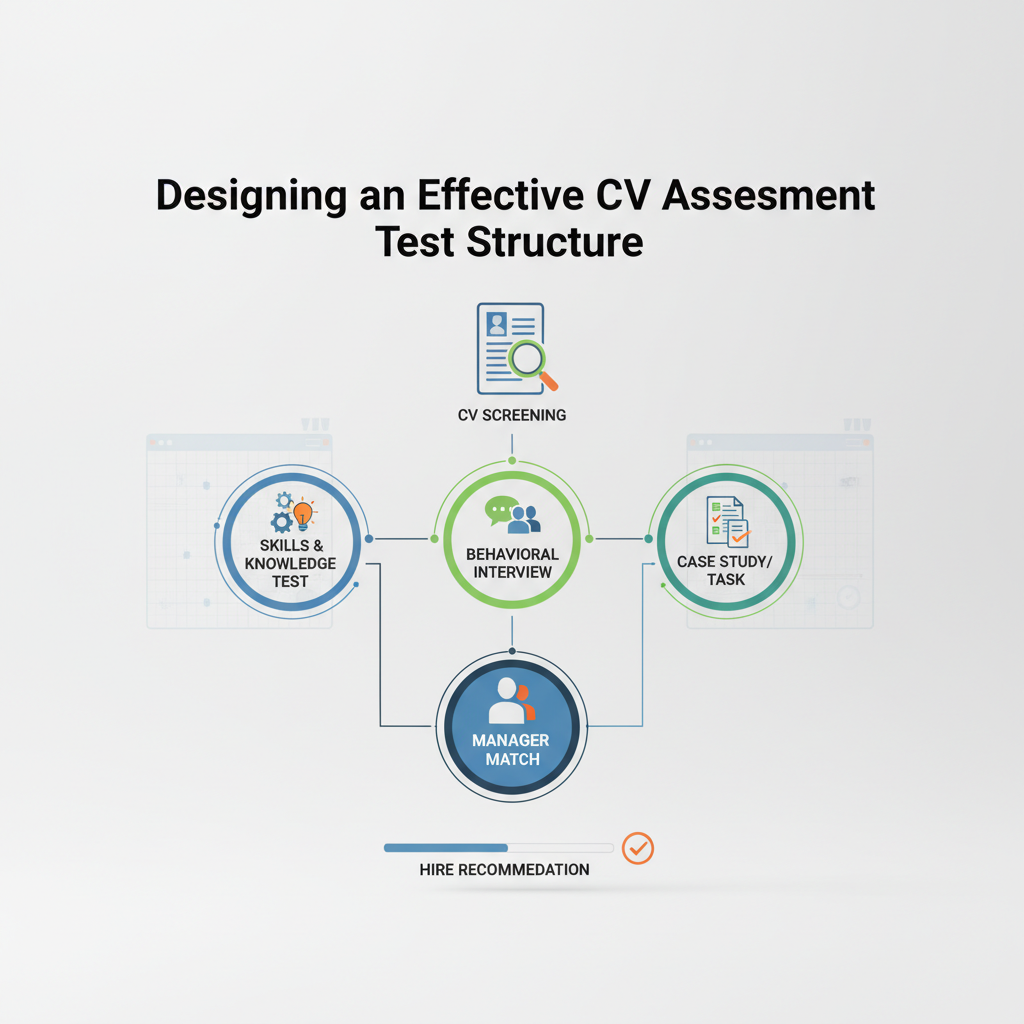
In the competitive landscape of Vietnam’s production sector, identifying top-tier managerial talent through CV assessment alone can be a daunting task. A haphazard approach risks overlooking exceptional candidates or, worse, advancing unsuitable ones. To mitigate these challenges, establishing a sophisticated test structure to assess Manager Level CVs in production field in Vietnam is paramount. This structure moves beyond superficial scanning, enabling recruiters and hiring managers to delve deep into a candidate’s potential, aligning their experience with the specific demands of a production manager role in the Vietnamese market. By systemizing the evaluation process, organizations can enhance efficiency, reduce bias, and ultimately secure leadership that drives operational excellence and innovation.
1. Keyword & Experience Matching for Initial Screening
The first hurdle in effective CV assessment is establishing a robust initial screening process. For Manager Level roles in the production field in Vietnam, this involves more than just a cursory glance. Recruiters should develop a meticulously curated list of keywords and essential experiences directly correlated with success in the local manufacturing environment. This includes terms related to specific production methodologies (e.g., Lean Manufacturing, Six Sigma), quality management systems (e.g., ISO certifications), supply chain optimization, and, crucially, experience with local regulatory compliance and labor laws. An Applicant Tracking System (ATS) can automate the initial filtering, sifting through hundreds of applications to identify those that contain critical keywords. However, human oversight remains vital to catch nuanced experiences that an ATS might miss, such as a candidate’s tenure with a prominent local producer or specific achievements in a culturally relevant context. Beyond keywords, the focus must be on quantifiable achievements and demonstrable experience in managing production teams, optimizing processes, and achieving targets within a fast-paced manufacturing setting. This meticulous keyword and experience matching ensures that only the most relevant CVs proceed to the next stage, saving valuable time and resources while adhering to CV screening best practices in Vietnam.
2. Competency-Based Scoring Rubrics for CVs
Moving beyond basic keyword matching, a competency-based scoring rubric provides a structured and objective method for evaluating Managerial CVs in the production sector. This methodology requires defining the core competencies essential for a Manager Level role in Vietnam’s production environment. Examples include strategic planning, operational excellence, team leadership and development, problem-solving, cross-functional collaboration, and adaptability to market changes. For each competency, specific indicators should be identified, and a scoring scale (e.g., 1-5) developed. For instance, under “Operational Excellence,” a candidate might score higher for demonstrating achievements like “reduced waste by 15% through process re-engineering” or “improved production efficiency by 10% year-on-year.” The rubric ensures that all evaluators assess CVs against the same criteria, significantly reducing subjective bias and enhancing the consistency and fairness of the evaluation process. This structured CV assessment methodology allows for a more granular and insightful evaluation, identifying candidates who don’t just have experience but have demonstrated the specific skills and behaviors crucial for success. Leveraging competency-based hiring strategies ensures a robust framework for selecting future leaders.
3. Identifying Red Flags and Green Lights in Applications
A discerning eye for both red flags and green lights is critical in the final stages of CV assessment for Manager Level roles. Red flags often signal potential issues that warrant further investigation or could disqualify a candidate. These might include frequent job hopping without clear career progression, unexplained significant gaps in employment, generic CVs lacking specific achievements, or inconsistent dates and information. In the context of the Vietnamese production sector, a red flag could also be a lack of any local experience for a role that demands intricate knowledge of the local supply chain or labor practices. Conversely, green lights illuminate highly promising candidates. These include a clear upward career trajectory, quantifiable achievements (e.g., “oversaw a 20% increase in production output,” “successfully launched a new product line”), experience managing diverse teams, demonstrated leadership in complex projects, and continuous professional development relevant to the production industry. Strong communication skills, evidenced by a well-written, error-free CV, also serve as a positive indicator. By systematically identifying these signals, recruiters can refine their candidate pool, focusing on individuals whose backgrounds clearly align with the strategic and operational demands of a Manager Level position. This efficient candidate identification in Vietnam’s production sector helps in building a formidable leadership team.
By implementing this structured, multi-faceted approach to CV assessment, organizations in Vietnam’s production field can move beyond merely screening résumés to truly evaluating potential. This comprehensive framework not only streamlines the recruitment process but also enhances the quality of hires, ensuring that managerial roles are filled by individuals poised to make a tangible impact on productivity, innovation, and overall business success.
Integrating Cultural Nuances and Local Market Knowledge
When assessing CVs for managerial roles within Vietnam’s dynamic production field, a superficial review of technical skills and past achievements often falls short. The unique operational landscape, deeply rooted in specific cultural norms and a rapidly evolving regulatory environment, demands a more profound evaluation. Successful managers in Vietnam’s manufacturing sector require not only robust technical acumen but also a sophisticated understanding of local market dynamics and cultural subtleties. Developing a comprehensive test structure to assess Manager Level CVs in production field in Vietnam is therefore critical to identify candidates who can truly thrive. This approach ensures that hires possess the ‘soft skills’ and contextual intelligence necessary to navigate challenges and drive success in Vietnam production management.
1. Evaluating Cultural Fit and Adaptability
Cultural fit in Vietnam extends beyond merely respecting local traditions; it encompasses an understanding of workplace hierarchy, communication styles, and the collective approach to problem-solving. Vietnamese business culture, often characterized by strong interpersonal relationships and a preference for indirect communication, can be a significant hurdle for managers lacking cultural intelligence. When reviewing CVs, look for indicators of a candidate’s adaptability and cultural sensitivity. This might include experience working in diverse teams, international assignments (especially within Southeast Asia), or roles that required significant stakeholder engagement across different cultural backgrounds. Candidates demonstrating involvement in community initiatives or cross-cultural projects often possess a higher degree of empathy and an ability to integrate into new environments. For roles in Vietnam production management, assessing this adaptability is crucial for fostering harmonious team environments and effective leadership. Understanding these nuances is essential, as highlighted by KPMG’s insights on Vietnamese business culture, which emphasize respect, relationships, and indirect communication as key elements.
2. Importance of Vietnamese Regulatory & Market Experience
The Vietnamese market operates under a specific framework of laws and regulations that can significantly impact production operations. From labor laws and environmental standards to investment policies and import/export regulations, a manager’s lack of familiarity with these can lead to costly delays, non-compliance issues, and missed opportunities. Therefore, a critical component of any test structure to assess Manager Level CVs in production field in Vietnam must be the evaluation of a candidate’s practical experience with the local regulatory landscape. CVs should ideally showcase roles where the candidate was responsible for ensuring compliance, navigating customs procedures, or establishing local supply chains. Beyond regulations, understanding local market insights Vietnam — including consumer preferences, distribution channels, and competitive dynamics specific to the production sector — is equally vital. A manager with a proven track record in market entry strategies, local partnership development, or adapting production processes for the Vietnamese consumer base will be better equipped to drive success and sustainable growth, contributing significantly to regulatory compliance Vietnam manufacturing.
3. Assessing Cross-Cultural Communication Skills
Effective communication is the cornerstone of successful management, and in Vietnam’s multicultural production environments, this skill becomes even more paramount. Managers must be able to articulate objectives clearly to local teams, provide constructive feedback sensitively, and bridge potential communication gaps between international stakeholders and Vietnamese staff. This involves not only linguistic proficiency (though English and Vietnamese bilingualism is a significant asset) but also an understanding of non-verbal cues, context-dependent communication, and the art of ‘reading between the lines.’ When evaluating CVs, look for evidence of leadership in multicultural projects, experience managing diverse teams, or roles that required significant negotiation and conflict resolution in cross-cultural settings. Candidates who have successfully led remote teams or managed international vendors often possess developed communication strategies that transcend cultural barriers. Strong cross-cultural communication skills are instrumental for a manager to effectively gather local market insights Vietnam, implement strategies, and foster a cohesive working environment, ultimately improving the overall test structure to assess Manager Level CVs in production field in Vietnam outcomes.
In conclusion, while technical expertise remains foundational, the long-term success of managerial hires in Vietnam’s production sector hinges on their ability to integrate seamlessly into the local culture and expertly navigate its unique market and regulatory environment. By prioritizing cultural fit, localized experience, and strong cross-cultural communication skills within the CV assessment process, companies can make more informed hiring decisions and build resilient, effective leadership teams capable of driving growth and innovation in this dynamic market. A truly effective test structure to assess Manager Level CVs in production field in Vietnam must embrace these critical dimensions to ensure a sustainable competitive advantage.
Best Practices for Post-Assessment & Interview Preparation
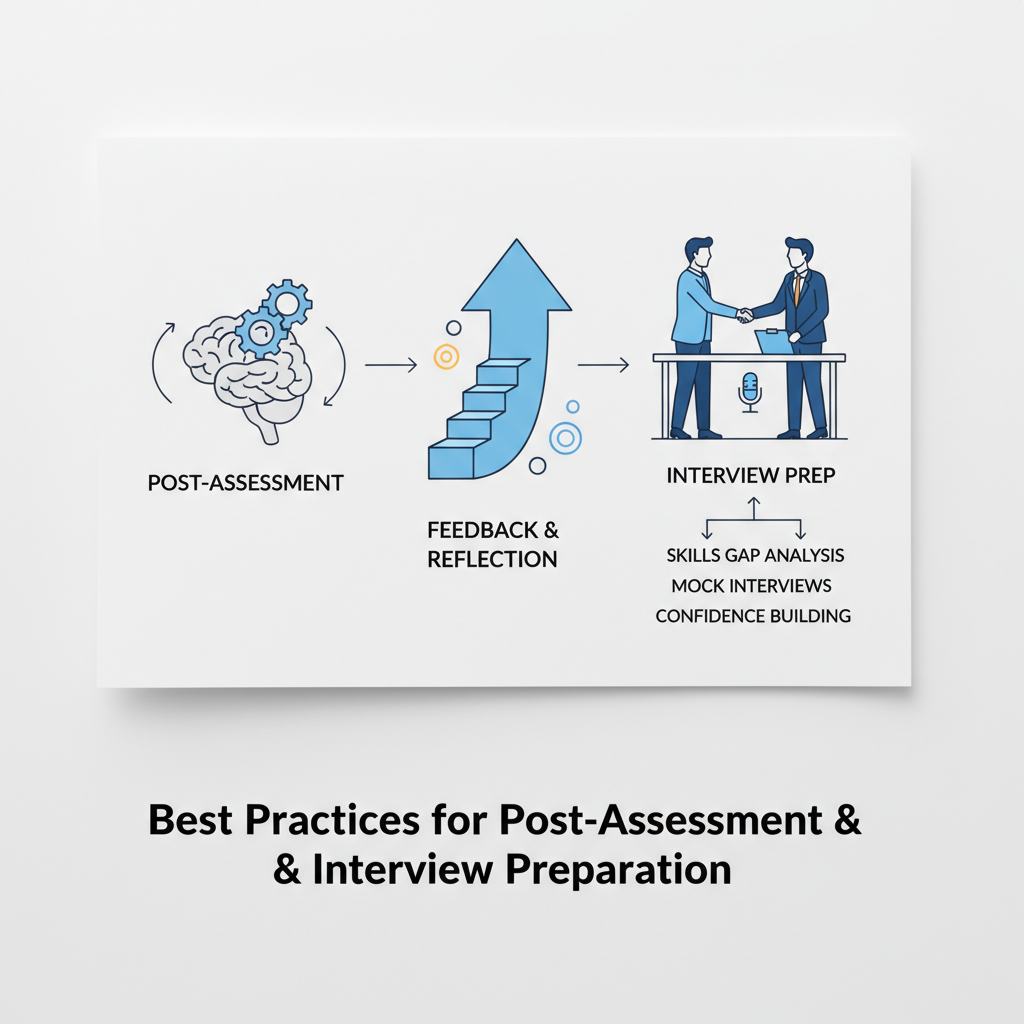
Navigating the transition from comprehensive CV assessments to impactful interview stages is critical for securing top-tier managerial talent, especially within Vietnam’s dynamic production sector. A well-structured post-assessment strategy validates initial impressions and provides a robust framework for evaluating candidates’ true potential. By meticulously leveraging insights from CV evaluations, organizations can refine their interview processes, ensuring a comprehensive and highly effective hiring journey. This section outlines key practices to transform preliminary assessments into targeted interview strategies, ultimately leading to successful placements for critical management roles.
1. Translating CV Strengths into Targeted Interview Questions
The foundation of a successful interview process lies in effectively translating a candidate’s CV strengths and experiences into pointed questions. For manager-level roles in production, identify key achievements related to operational efficiency, strategic leadership, process improvement, and team management. Instead of merely confirming available information, delve deeper into the ‘how’ and ‘why’ behind their stated accomplishments. For instance, if a CV highlights a significant reduction in production costs, formulate questions exploring the methodologies employed, challenges faced, and the candidate’s leadership role. Focus on behavioral and situational questions using the STAR (Situation, Task, Action, Result) method to elicit detailed responses revealing problem-solving skills, decision-making, and adaptability.
Understanding the nuances of the Test structure to assess Manager Level CVs in production field in Vietnam is paramount. This foundational assessment provides critical data on a candidate’s technical expertise, leadership potential, and cultural fit. By cross-referencing these initial findings with their CV, interviewers can craft questions that probe areas of both strength and potential development, ensuring a holistic evaluation. For example, if the CV assessment indicated strong analytical skills but a need for improvement in stakeholder communication, tailor questions to explore their experience in presenting complex data or managing cross-functional team expectations.
2. Structured Interview Techniques for Managerial Roles
For managerial positions, particularly in demanding environments like production, a structured interview approach is indispensable. It ensures consistency, reduces bias, and significantly improves the predictive validity of the hiring process. Develop a standardized set of competency-based questions directly tied to specific role requirements, such as strategic thinking, innovation, people development, and change management. Each candidate should be asked the same core questions, with responses evaluated against predefined criteria or scoring rubrics.
Incorporating case studies or simulated production scenarios can also be highly effective for managerial roles. These allow candidates to demonstrate problem-solving skills, decision-making processes, and strategic thinking under pressure, offering a realistic preview of their performance. Panel interviews, comprising relevant stakeholders from different departments (e.g., HR, Operations, Engineering), provide diverse perspectives and a comprehensive evaluation of the candidate’s interpersonal skills and team integration. According to SHRM, behavioral interviewing, a key component of structured techniques, significantly enhances the ability to predict future job performance by focusing on past behaviors. This approach is invaluable when assessing a candidate’s resilience, strategic leadership, and capacity for continuous improvement in a production context.
3. Effective Reference Checks and Background Verification
Beyond the interview process, thorough reference checks and background verification are vital final steps in validating a candidate’s suitability for a managerial role. These checks should go beyond merely confirming employment dates; they should aim to gather qualitative insights into a candidate’s performance, leadership style, team management capabilities, and how they navigate complex situations. Prepare targeted questions for referees that align with competencies assessed during interviews. For instance, inquire about their problem-solving skills, how they handled conflicts, their approach to mentoring subordinates, and their overall impact on previous teams or departments.
For positions in Vietnam’s production sector, it’s crucial to understand local practices and ensure verification processes comply with regional regulations while maintaining cultural sensitivity. Background checks should verify educational qualifications, professional certifications, and, where appropriate, criminal records. This multi-layered approach to assessment and verification significantly mitigates hiring risks and ensures the chosen manager possesses not only the required skills and experience but also the integrity and strategic vision necessary to drive success in their new role.
Partner with Shelby Global
You are looking for reliable HR Sevice Suppliers? Contact Shelby Global Now! To connect with verified talents and upgrade your orginization.
—————————————
References
– :
– Vietnam’s economic growth and manufacturing sector’s contribution: https://www.worldbank.org/en/news/press-release/2023/10/30/vietnam-economy-growth-remains-resilient-amid-global-headwinds
– SHRM: Competency Modeling: https://www.shrm.org/resources-and-tools/hr-topics/talent-acquisition/pages/competency-modeling.aspx
– :
– SHRM behavioral interviewing guide: https://www.shrm.org/resources-and-tools/hr-topics/talent-acquisition/behavioral-interviewing-a-guide/













































































































![TOP 4 recruitment agency in vietnam 2026 [highlight Shelby Global]](https://shelbyglobal.com.vn/wp-content/uploads/2026/04/TOP-4-recruitment-agency-in-vietnam-2026-highlight-Shelby-Global-1.webp "TOP 4 recruitment agency in vietnam 2026 111")