Understanding the Landscape of Tech Management in Malaysia
The technology sector in Malaysia is dynamic, rapidly evolving, and increasingly central to the nation’s economic vision. For organizations aiming to thrive, especially those seeking top-tier talent, understanding this unique landscape is paramount. Tech management roles here are distinct, demanding a blend of global best practices and acute local market awareness. These positions are not merely about technical oversight; they involve strategic leadership, innovation stewardship, and navigating a diverse talent pool within a region experiencing significant digital transformation. An effective test structure to assess Manager Level CVs in technology field in Malaysia becomes crucial to pinpoint individuals who can truly drive growth and innovation in this vibrant environment. The stakes are high, as the right leadership can unlock immense potential, while misaligned talent can hinder progress in an already competitive market.

1. Current trends in Malaysian tech leadership and innovation
Malaysia’s tech scene is characterized by several overarching trends influencing leadership and innovation. The government’s push towards a digital economy, spearheaded by initiatives like the Malaysia Digital (MD) program, fosters a conducive environment for technological adoption and expansion. This translates into increased demand for tech leaders who can navigate digital transformation, cloud migration, AI integration, and cybersecurity advancements across various industries. Fintech, e-commerce, and the gig economy are particularly vibrant sectors, attracting significant investment and requiring agile, forward-thinking management. Innovation is often driven by a blend of multinational corporations establishing regional hubs and a burgeoning startup ecosystem. Leaders must possess a global mindset while being adept at local market nuances, fostering collaboration between diverse teams, and leveraging emerging technologies to solve real-world problems. The emphasis is on scalable solutions and sustainable growth, demanding visionary leadership that can balance rapid development with robust strategic planning.
2. Key skills and attributes for successful tech managers in Malaysia
Successful tech managers in Malaysia require a multifaceted skill set that extends beyond traditional technical competencies. While a solid grasp of relevant technologies (e.g., software development methodologies, data analytics, cloud architecture) is foundational, soft skills are equally critical. Cultural intelligence and cross-cultural communication are paramount in Malaysia’s diverse workforce. Leaders must be adept at fostering inclusive environments and motivating teams from varied backgrounds. Strategic thinking, problem-solving, and adaptability are non-negotiable, given the rapid pace of technological change and market shifts. Project management and agile leadership skills are highly valued, enabling managers to deliver complex projects on time and within budget, often in resource-constrained environments. Furthermore, a customer-centric approach, strong business acumen, and the ability to articulate technical concepts to non-technical stakeholders are essential for driving successful product development and market penetration. The capacity for continuous learning and resilience in the face of challenges defines truly impactful leaders in this dynamic landscape.
3. Challenges in identifying top tech management talent locally
Identifying and securing top tech management talent in Malaysia presents unique challenges. A persistent talent gap, particularly for specialized senior roles, means organizations often compete fiercely for a limited pool of experienced professionals. This scarcity is exacerbated by the “brain drain” phenomenon, where highly skilled individuals may seek opportunities abroad. Furthermore, the rapid evolution of technology means that skills quickly become outdated, making it difficult to assess the long-term potential of candidates based solely on past experience. Cultural fit is another significant hurdle; what constitutes effective leadership in one organizational culture might not translate well to another. Companies also grapple with competitive compensation packages and the need to offer compelling career progression paths to attract and retain high-calibre managers. Therefore, a robust and comprehensive test structure to assess Manager Level CVs in technology field in Malaysia is not just beneficial but indispensable. It helps filter through diverse applications to identify those individuals who possess not only the technical prowess but also the strategic foresight, cultural acumen, and leadership capabilities to navigate Malaysia’s unique tech ecosystem. By refining assessment methodologies, organizations can mitigate these challenges and build stronger, more innovative tech teams.
Core Components of a Robust CV Assessment Framework
Evaluating manager-level CVs in the technology sector, particularly within the dynamic Malaysian market, demands a sophisticated framework that transcends mere keyword matching. A truly effective system moves beyond surface-level analysis to conduct a holistic assessment, identifying candidates who possess not just technical prowess but also the strategic leadership and nuanced soft skills essential for success. This robust CV assessment framework is designed to provide a comprehensive Test structure to assess Manager Level CVs in technology field in malaysia, ensuring that the right talent is identified to drive innovation and growth.
-
Defining critical assessment criteria (technical, leadership, soft skills)
The foundation of any effective CV assessment framework lies in clearly defining what success looks like for a manager-level role. For technology managers in Malaysia, this involves a multi-faceted approach. Technical criteria extend beyond individual coding ability to encompass architectural understanding, ability to guide technical strategy, oversee complex projects, and mentor technical teams. A candidate’s experience in emerging technologies relevant to the Malaysian market, or their ability to adapt to new tech stacks, would be highly valuable here. Leadership skills are paramount, including demonstrated experience in project management, team development, conflict resolution, strategic planning, and fostering a collaborative environment. Evidence of driving initiatives, managing cross-functional teams, and achieving measurable results through others are key indicators. Finally, soft skills are non-negotiable. Effective communication, emotional intelligence, adaptability in a rapidly changing tech landscape, advanced problem-solving, and robust stakeholder management are vital. A manager’s ability to navigate cultural nuances and communicate effectively with diverse teams and clients within Malaysia cannot be overstated. Establishing these criteria systematically helps in defining competency models that align with the specific demands of the role and the company culture.
-
Scoring methodologies for CV components and experience indicators
Once critical assessment criteria are established, the next step is to develop a structured, objective scoring methodology. This moves beyond subjective impressions, ensuring consistency and fairness across all applicants. For each defined criterion, a rubric should be created, detailing what constitutes “excellent,” “good,” “average,” and “below expectation.” For instance, under technical leadership, a candidate might score higher for demonstrating direct impact on product architecture scaling a system for millions of users, versus merely being a team lead on a small feature. Experience indicators should be weighted according to their relevance to the specific managerial role. For a senior manager role, strategic leadership and team growth might carry more weight than individual technical contributions from several years ago. Quantifiable achievements, such as “reduced project delivery time by 20%” or “grew team from 5 to 15 engineers,” should be given precedence over generic responsibilities. Factors like the scale of projects managed, budget responsibilities, the size and diversity of teams led, and evidence of mentorship and talent development should all be assigned specific scores. This systematic approach ensures that every CV is evaluated against the same benchmarks, leading to more data-driven hiring decisions.
-
Integrating cultural fit and local market relevance into evaluation
Beyond technical and leadership competencies, a successful manager in the Malaysian technology landscape must also demonstrate strong cultural fit and a keen understanding of local market dynamics. Cultural fit in Malaysia often emphasizes collaboration, respect, and adaptability, alongside an appreciation for diversity. A CV might implicitly reveal this through involvement in cross-cultural projects, volunteer work, or engagement in local tech community initiatives. Local market relevance is equally crucial; this involves assessing a candidate’s experience with the specific challenges, opportunities, and regulatory environment pertinent to Malaysia. Has the candidate worked on projects directly impacting the Malaysian consumer base? Do they demonstrate knowledge of the local competitive landscape or experience navigating the Malaysian talent pool? Experience with local startups, government-led tech initiatives, or roles that required significant adaptation to regional market demands would be highly indicative. While direct cultural fit might be challenging to gauge solely from a CV, look for cues that suggest an open mindset, experience in diverse teams, or a track record of adapting strategies to local contexts. This holistic perspective ensures that the chosen manager not only possesses the required skills but also aligns with the company’s ethos and can effectively operate within the Malaysian business ecosystem.
Pre-Screening Strategies for Manager-Level Tech CVs
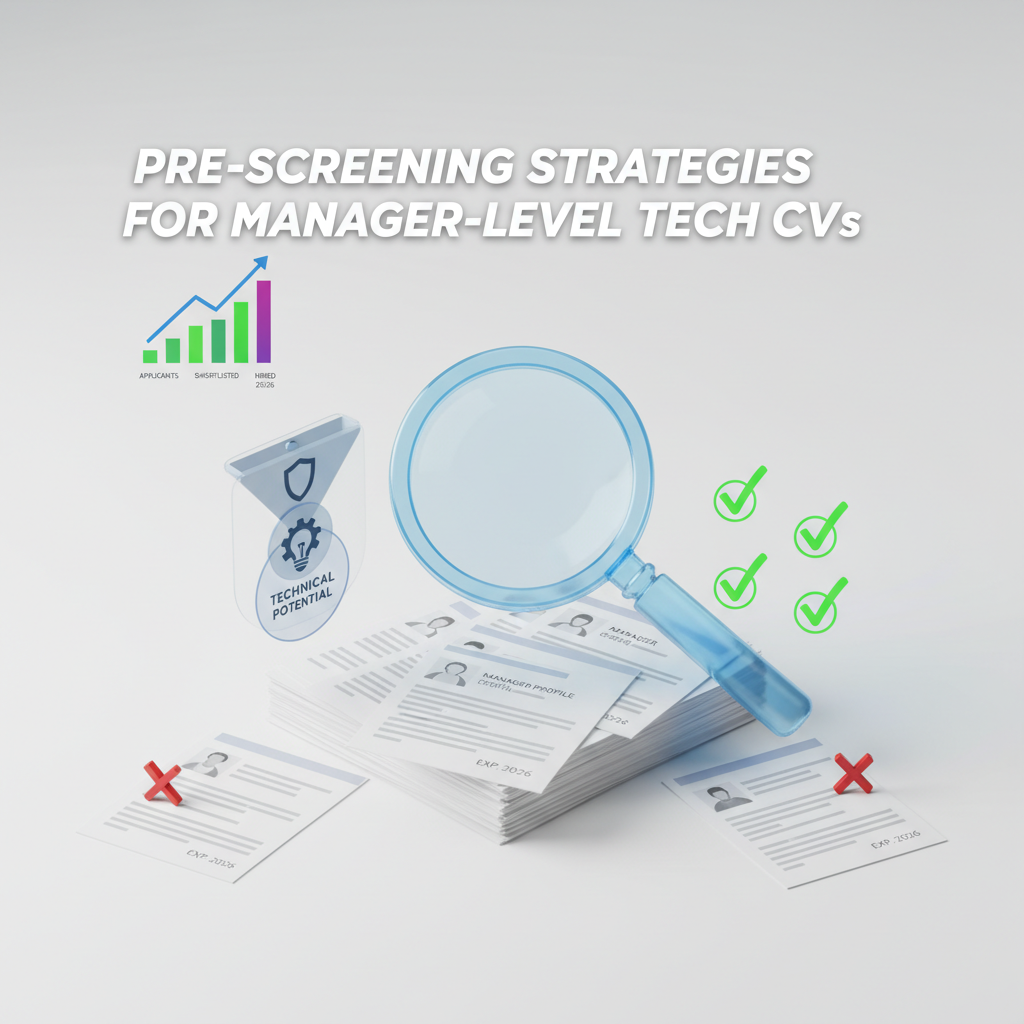
In the competitive landscape of the technology sector, particularly in Malaysia, identifying high-potential candidates for manager-level roles requires a strategic and efficient pre-screening process. This initial filtering stage is crucial for sifting through a high volume of applications, ensuring that only the most relevant and truly promising CVs proceed to deeper scrutiny. Adopting robust CV screening best practices is paramount not just to reduce the candidate pool, but to accurately identify individuals who possess the unique blend of technical acumen, leadership capabilities, and strategic thinking essential for thriving in demanding tech management positions.
-
Leveraging automated tools and AI in CV parsing and initial filtering
The sheer volume of applications for desirable tech leadership roles makes manual CV review impractical and prone to human error. Modern recruitment leverages advanced automated tools and Artificial Intelligence (AI) for initial CV parsing and filtering. These systems are adept at quickly scanning resumes for specific keywords, relevant job titles, tenure, educational background, and quantifiable achievements. For manager-level tech positions, AI algorithms can be configured to prioritize candidates demonstrating experience with specific technologies, project management methodologies (e.g., Agile, Scrum), team leadership, budget oversight, and strategic planning. They can also identify patterns indicative of career progression and stability, flagging CVs that meet predefined criteria while deprioritizing those that do not. This not only significantly accelerates the initial screening process but also introduces an objective layer, ensuring that potential biases are minimized and focusing human effort on truly promising profiles that warrant a deeper look. According to SHRM, AI in recruitment is transforming talent acquisition by automating routine tasks and improving candidate matching.
-
Identifying red flags and key indicators in manager-level CVs
Beyond automated filtering, the human element becomes critical in discerning the subtle nuances of manager-level CVs. Recruiters must be trained to identify both red flags and strong indicators of leadership potential. Red flags might include frequent job hopping without clear career progression, vague descriptions of responsibilities without quantifiable results, significant unexplained gaps in employment, or a complete absence of team management or strategic oversight in previous roles. Conversely, strong indicators often include a clear trajectory of increasing responsibility, demonstrable impact on projects or teams (e.g., “grew team by X%”, “reduced project timelines by Y%,” “managed budget of Z”), strong action verbs indicating leadership and initiative, and clear articulation of strategic contributions. Look for candidates who don’t just list tasks but describe achievements and the business outcomes of their work. Emphasis should be placed on experience managing technical teams, guiding projects from conception to completion, and influencing technical direction. This critical manual review helps validate the automated screening and prepares candidates for the next stage of evaluation, forming an integral part of an effective Test structure to assess Manager Level CVs in technology field in malaysia.
-
Initial experience and project portfolio review for leadership potential
For manager-level tech roles, a candidate’s experience and project portfolio are paramount in assessing their true leadership potential and technical depth. Beyond merely listing job titles, the review should delve into the scope and impact of their previous roles. Recruiters should look for evidence of involvement in significant projects, understanding the technologies used, the size of the teams managed, and the overall business impact of their contributions. Did they lead cross-functional teams? Were they responsible for mentoring junior engineers? Did they contribute to product strategy or architecture decisions? The focus is not just on technical skills but on how those skills were applied in a leadership context. For instance, a candidate describing their role in migrating a legacy system to a cloud-native architecture, managing a team of five engineers, and delivering the project ahead of schedule, clearly demonstrates both technical and managerial prowess. This review helps to refine the assessment, ensuring that candidates possess the blend of strategic foresight and practical execution needed for senior positions. It’s about evaluating their past leadership contributions as a predictor of future success in identifying top malaysian tech talent, setting them apart as true leaders in their field.
Deep Dive Assessment: Behavioral & Technical Indicators
In the rapidly evolving technology landscape, particularly in dynamic markets like Malaysia, the challenge of identifying top-tier managerial talent through CVs alone is significant. Traditional resume screening often falls short of revealing the nuanced blend of behavioral acumen and profound technical understanding required for effective leadership. A comprehensive and strategic test structure to assess Manager Level CVs in technology field in Malaysia goes beyond keyword matching, aiming to uncover genuine leadership potential, sophisticated problem-solving abilities, and an authentic technical depth crucial for senior roles. This deep dive explores advanced methodologies for scrutinizing CVs, transforming the recruitment process into a predictive tool for future success by focusing on critical indicators that truly matter.
The goal is to move beyond superficial claims and delve into the candidate’s actual contributions, learning agility, and inherent capacity to lead technical teams through complex challenges. By adopting a structured approach, organizations can systematically evaluate each application against a set of criteria designed to highlight the manager-level capabilities essential for driving innovation and achieving strategic objectives in the Malaysian tech sector.
1. Analyzing career progression and impact statements in previous roles
A manager-level CV isn’t just a list of jobs; it’s a narrative of increasing responsibility and demonstrable influence. When undertaking a rigorous career trajectory analysis, recruiters should scrutinize the progression of roles and the corresponding growth in scope and authority. Look for patterns of upward mobility, promotions, and lateral moves that broadened experience, indicating a candidate’s readiness to embrace new challenges and grow within an organization. Beyond mere job titles, the true gold lies in the impact statements. Instead of vague descriptions of duties, a strong candidate will articulate quantifiable achievements. For instance, ‘Led a team to reduce project delivery time by 15% through agile methodology implementation’ is far more compelling than ‘Responsible for project management.’ These statements provide concrete evidence of problem-solving abilities, strategic thinking, and the capacity to drive tangible results, which are hallmarks of effective management. Assess whether the impacts align with strategic goals and demonstrate a clear understanding of business value, indicating not just technical proficiency but also business acumen.
2. Identifying leadership and team management experiences and achievements
For a management role, the ability to lead and nurture a team is paramount. The CV should clearly delineate instances of authentic leadership, moving beyond project coordination to actual people management. Look for specific examples where the candidate has taken initiative to mentor junior colleagues, resolve team conflicts, foster collaboration, or successfully led cross-functional projects. A robust leadership potential assessment will highlight achievements such as ‘Grew a struggling team of five into a high-performing unit, increasing output by 20% over 12 months’ or ‘Implemented a new knowledge-sharing framework that improved team efficiency by 10%.’ These examples provide concrete proof of a candidate’s capacity to inspire, guide, and empower others, which are non-negotiable traits for a technology manager. Focus on the ‘how’ – the methodologies used, the challenges overcome, and the positive outcomes for both the team and the organization. Evidence of conflict resolution skills and the ability to delegate effectively also strongly indicate a candidate’s readiness for a managerial position.
3. Assessing relevant certifications, continuous learning, and innovation contributions
In the fast-paced tech world, a manager’s technical depth isn’t static; it’s continuously cultivated. Evaluating a candidate’s commitment to continuous learning and innovation is vital for a thorough technical depth evaluation. Look for recent and relevant certifications (e.g., PMP, AWS Solutions Architect, Certified ScrumMaster), which demonstrate a proactive effort to stay current with industry standards and emerging technologies. However, certifications alone aren’t enough; explore evidence of self-driven learning initiatives, such as participation in hackathons, open-source contributions, specialized online courses, or even authorship of technical blogs or articles. These signal intellectual curiosity and a genuine passion for technology. Furthermore, significant innovation contributions—whether through patent applications, implementation of novel processes, or driving new product features—show a candidate’s capacity to think creatively and contribute strategically beyond routine tasks. This ongoing engagement with learning and innovation is a strong indicator of a candidate’s ability to adapt, evolve, and lead technical teams effectively into the future, as lifelong learning is increasingly recognized as crucial for success in the digital age. The World Economic Forum emphasizes the critical role of reskilling and upskilling in the future of work, underscoring its importance for tech leaders.
In conclusion, a deep dive assessment of managerial CVs in the Malaysian technology field requires a multifaceted approach that meticulously examines career progression, leadership achievements, and a commitment to continuous learning and innovation. By adopting this structured methodology, organizations can move beyond traditional screening to identify candidates who possess the ideal blend of behavioral leadership and technical mastery to excel in demanding managerial roles.
Future-Proofing Your Tech Manager CV Assessment in Malaysia
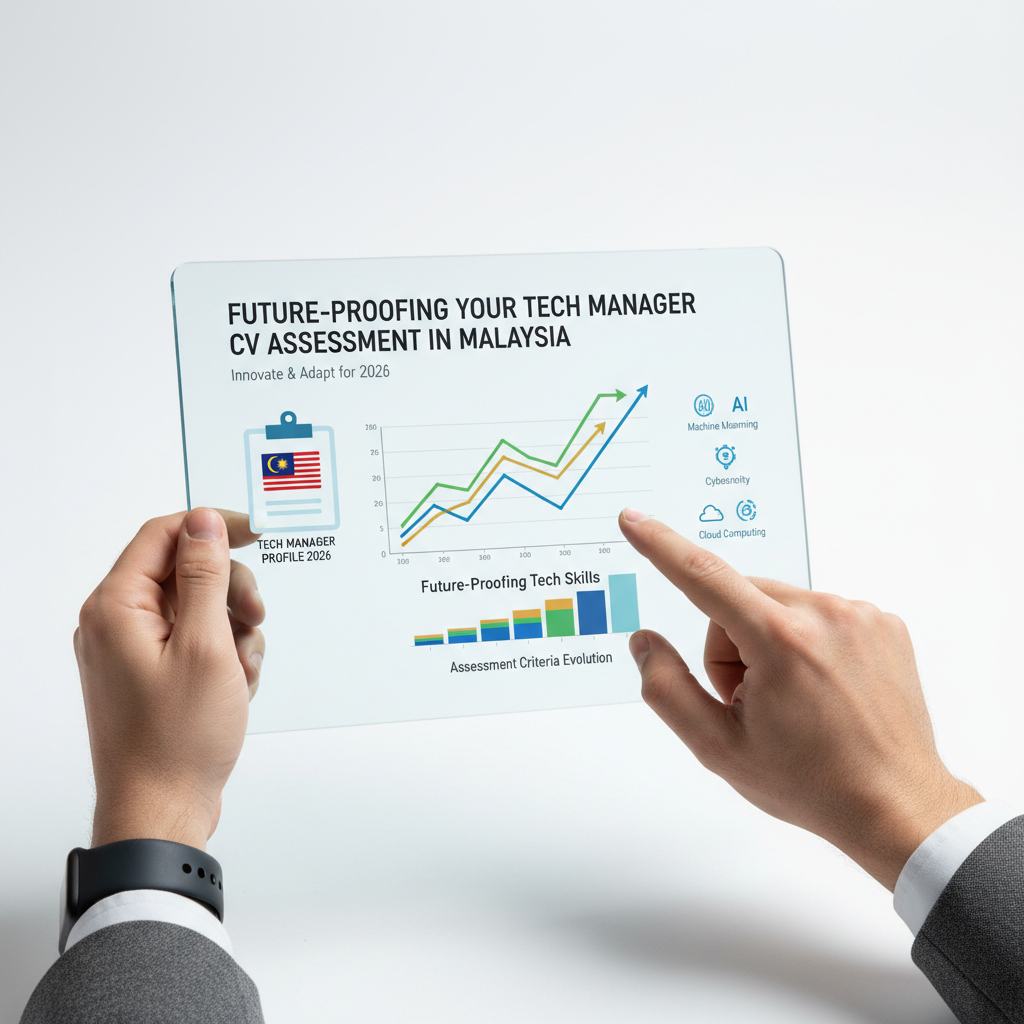
The landscape for tech manager recruitment in Malaysia is undergoing a profound transformation. As technology continues its relentless march forward, coupled with the dynamic shifts in the Malaysian tech talent market, the traditional approach to assessing manager-level CVs is rapidly becoming obsolete. By 2026 and beyond, organizations must pivot towards a more agile and forward-thinking test structure to assess Manager Level CVs in technology field in malaysia, ensuring they can identify and secure leaders who are not just competent today but are future-ready. This evolution is crucial for maintaining a competitive edge and fostering innovation in an increasingly digital economy. Adapting the assessment structure to incorporate emerging trends, advanced technologies, and a deeper understanding of Malaysian tech talent trends is paramount.
-
Leveraging data analytics for continuous improvement of assessment processes
In the pursuit of a robust and equitable assessment framework, data analytics emerges as an indispensable tool. By analyzing performance metrics of past hires, success rates of various assessment stages, and feedback from hiring managers and candidates, organizations can continuously refine their processes. This data-driven approach helps to identify unconscious biases, pinpoint areas where the assessment may not accurately predict on-the-job success, and optimize the candidate experience. Integrating AI-driven assessment tools can further enhance this capability, allowing for more objective initial screenings, pattern recognition in CVs that might indicate future leadership potential, and even predictive analytics on candidate retention. For instance, data can reveal that candidates excelling in specific problem-solving simulations are more likely to thrive in complex Malaysian tech environments. This iterative process, powered by analytics, ensures that the test structure to assess Manager Level CVs in technology field in malaysia remains relevant, efficient, and highly effective in identifying top-tier talent.
-
Incorporating diversity, equity, and inclusion (DEI) metrics in hiring
Beyond traditional qualifications, the modern tech workplace thrives on diversity of thought and experience. Incorporating robust DEI metrics into the hiring process for tech managers is not merely a moral imperative but a strategic advantage. Diverse teams have been shown to be more innovative, adaptable, and financially successful. For Malaysia, a nation rich in cultural diversity, embracing DEI in tech leadership is particularly significant. This involves more than just tracking demographics; it means actively designing assessment stages that minimize bias, ensure equitable opportunities, and value a broad spectrum of backgrounds and perspectives. Strategies include blind CV reviews, structured interviews with diverse panels, and evaluating candidates on their commitment to fostering inclusive environments. By integrating inclusive hiring practices into the assessment framework, companies can attract a wider pool of talent, better reflect their customer base, and build more resilient and dynamic leadership teams.
-
Adapting to emerging tech roles and essential skill sets for future leaders
The rapid pace of technological innovation constantly creates new roles and redefines existing ones. Tech manager CV assessments must evolve beyond evaluating historical experience to actively identify candidates with the foresight and adaptability to lead in emerging domains. Roles in AI ethics, quantum computing strategy, advanced cybersecurity, and sustainable tech solutions, for example, are becoming increasingly vital. Future tech leaders in Malaysia will need a blend of deep technical acumen, strategic thinking, emotional intelligence, and a strong capability for continuous learning. The assessment should prioritize evaluating what McKinsey refers to as future-ready skills, such as complex problem-solving, digital fluency, adaptability, creativity, and leadership in ambiguous environments. This requires moving beyond traditional technical tests to include scenario-based assessments, leadership simulations, and evaluations of a candidate’s propensity for growth and innovation. Emphasizing these future tech leadership skills ensures that the chosen managers can navigate unforeseen challenges and steer their teams towards future success, solidifying Malaysia’s position in the global tech arena.
In conclusion, future-proofing the test structure to assess Manager Level CVs in technology field in malaysia is not a one-time project but an ongoing commitment to adaptation and excellence. By leveraging data analytics, championing DEI, and proactively anticipating the demands of emerging tech roles and leadership skills, organizations can build robust, agile, and effective assessment processes that will secure the tech leaders of tomorrow.
Partner with Shelby Global
You are looking for reliable HR Sevice Suppliers? Contact Shelby Global Now! To connect with verified talents and upgrade your orginization.
—————————————
References
– Malaysia Digital Economy Corporation (MDEC): https://mdec.my/
– Developing Competency Models – SHRM: https://www.shrm.org/resources-and-tools/tools-and-samples/toolkits/pages/develop-competency-models.aspx
– AI in recruitment is transforming talent acquisition: https://www.shrm.org/resources-and-tools/hr-topics/technology/pages/ai-in-recruitment.aspx
– Why lifelong learning is key to success in the digital age: https://www.weforum.org/agenda/2020/09/lifelong-learning-reskilling-upskilling-future-of-work/
– McKinsey & Company: The Future of Work in Asia: https://www.mckinsey.com/capabilities/people-and-organizational-performance/our-insights/the-future-of-work-in-asia-the-automation-and-ai-revolution