
Understanding HR’s Unique Role in Singapore Finance SMEs
This section will explore the specific HR challenges and opportunities faced by finance-focused SMEs in Singapore, considering the regulatory environment, talent market, and the CEO’s financial perspective.
In Singapore’s dynamic financial landscape, Small and Medium-sized Enterprises (SMEs) face a distinctive set of challenges when it comes to human resources. Unlike their larger counterparts, finance SMEs often operate with leaner teams and more constrained budgets, yet they must navigate the same complex regulatory environment, compete for highly sought-after talent, and meet stringent compliance standards. For a CEO in the finance field, understanding and optimizing HR isn’t just about managing people; it’s about strategic investment that directly impacts profitability, risk management, and sustained growth. Effective HR structures for SMEs in Singapore are therefore critical, requiring a nuanced approach that balances legal compliance, talent acquisition, and financial prudence.

1. Navigating Singapore’s Employment Laws and Regulations
Singapore boasts a robust and well-defined legal framework governing employment, designed to protect both employers and employees. While beneficial, this complexity can pose a significant hurdle for finance SMEs. Key legislation such as the Employment Act, Central Provident Fund (CPF) regulations, and the Fair Consideration Framework (FCF) requires meticulous adherence. Non-compliance can lead to hefty fines, reputational damage, and even legal disputes, all of which are particularly detrimental to smaller entities with limited resources. HR in these SMEs must be highly adept at understanding and implementing policies related to work passes for foreign talent, ensuring fair employment practices, managing employee grievances, and adhering to strict payroll and benefits administration. This often necessitates either a highly competent in-house HR generalist or reliance on external HR consultancy services to ensure continuous compliance and mitigate risks. Proactive HR structures are essential to not only meet these obligations but also to leverage them to build a fair and productive workplace culture, which indirectly contributes to business stability and reduces employee turnover.
2. Attracting and Retaining Niche Finance Talent in a Competitive Market
The finance sector in Singapore is intensely competitive, with global banks and large financial institutions often setting the benchmark for salaries and benefits. This creates a significant challenge for SMEs looking to attract and retain specialized talent in areas such as FinTech, compliance, wealth management, or data analytics. These niche skills are in high demand, and professionals with this expertise often command premium packages. HR in finance SMEs must therefore develop creative and compelling value propositions beyond just salary. This might include offering greater autonomy, broader exposure to different aspects of the business, direct impact on company strategy, faster career progression, and flexible work arrangements. Developing strong learning and development programs, fostering a collaborative company culture, and creating clear growth paths can also be powerful retention tools. Building effective HR structures for SMEs the CEO in finance field in singapore involves understanding the unique aspirations of finance professionals and tailoring recruitment and retention strategies that highlight the distinct advantages of working within an agile, growing SME environment.
3. The CEO’s Perspective: Balancing Financial Prudence with HR Investment
For a CEO primarily focused on financial performance, HR can sometimes be perceived as a cost center rather than a strategic investment. However, in finance SMEs, HR plays a critical role in mitigating risks and driving value. Strategic HR investment translates into effective talent acquisition that minimizes recruitment costs and bad hires, robust compliance that avoids legal penalties, and strong employee engagement that boosts productivity and reduces costly turnover. A finance CEO needs to see HR’s contribution to the bottom line: for instance, investing in a robust onboarding program can significantly accelerate time-to-productivity for new hires, while a well-structured performance management system can align individual goals with organizational objectives. Lean HR models, such as leveraging HR technology for automation, outsourcing non-core HR functions like payroll, or engaging fractional HR experts, can offer a cost-effective way to achieve high-quality HR outcomes. The balance lies in understanding that proactive investment in people management, talent development, and compliant HR processes is fundamentally an investment in the long-term financial health and operational resilience of the finance SME itself.
Core HR Structure Models for Agile SMEs in Finance
For CEOs of agile Small and Medium-sized Enterprises (SMEs) in Singapore’s dynamic financial sector, establishing the right Human Resources (HR) structure is paramount. Navigating talent acquisition, compliance, and employee development requires strategic foresight, especially given the rapid changes and strict regulatory environment characteristic of financial services HR. This section delves into various HR organizational models, from fully in-house departments to outsourced solutions, evaluating their suitability for different SME sizes, growth stages, and financial capacities. Understanding these HR structures for SMEs allows a CEO in the finance field in Singapore to build a resilient and efficient workforce, ensuring both operational excellence and strategic advantage. The goal is to provide agile HR solutions that support rapid scaling and maintain high standards of talent management in finance.
-
The Lean In-House HR Team: Essential Roles and Responsibilities
For nascent or smaller financial SMEs with limited budgets, a lean in-house HR team often proves to be the most cost-effective initial approach. This model typically involves a generalist HR manager or even an administrative professional dedicating part of their time to HR functions. Essential responsibilities include basic recruitment, onboarding, payroll processing (often in conjunction with finance), policy implementation, and acting as the first point of contact for employee queries. While this approach offers direct control and fosters a close-knit company culture, its effectiveness hinges on the HR professional’s broad skill set and the company’s relatively low complexity. As the SME grows, the limitations become apparent, particularly concerning specialized legal compliance in Singapore’s financial sector, advanced talent development, and strategic workforce planning. This model is best suited for companies focusing on foundational HR compliance Singapore requirements and basic employee support, before significant expansion demands more sophisticated HR interventions.
-
Leveraging HR Outsourcing for Expertise, Compliance, and Efficiency
As financial SMEs scale, the demands on HR become more complex, encompassing intricate payroll systems, comprehensive benefits administration, and staying abreast of evolving labor laws and financial regulations. This is where HR outsourcing becomes a highly attractive option. Partnering with an external HR service provider allows SMEs to access specialized expertise in areas like global payroll, statutory compliance (e.g., CPF, income tax filing, specific MAS guidelines), and even specialized recruitment for finance roles, without the overhead of a full-time, senior HR team. This model is particularly beneficial for achieving operational efficiency and ensuring robust HR compliance standards. It mitigates risks associated with non-compliance and frees up internal resources to focus on core business activities. Outsourcing can range from specific functions like payroll and benefits administration (often referred to as PEO or HRO services) to a full-suite HR department for hire. It’s an excellent solution for SMEs needing immediate access to scalable HR capabilities and advanced support in talent management finance, but lacking the internal resources or budget for a fully developed in-house department. For comprehensive guidance on best practices in HR, CEOs can refer to authoritative sources like SHRM.
-
Hybrid Models: Blending Internal Strategic HR with External Operational Support
The hybrid HR model represents a sophisticated and increasingly popular choice for maturing financial SMEs. This approach strategically combines the advantages of both in-house and outsourced HR solutions. Typically, the SME retains an internal HR leader or a small team focused on strategic HR initiatives such as talent acquisition strategy, performance management frameworks, employee engagement, culture development, and succession planning – all critical for SME growth strategies. Concurrently, transactional and highly specialized functions like payroll, benefits administration, complex HR compliance filings, and possibly even parts of recruitment or HR technology management are outsourced to external providers. This model allows the internal team to focus on high-value, strategic activities that directly impact business growth and competitive advantage, while leveraging external experts for operational efficiency and risk management. It provides flexibility, scalability, and access to niche expertise, making it an ideal HR structure for SMEs navigating a complex regulatory landscape and aiming for sustainable expansion in the Singapore financial market. By optimizing their HR functions this way, a CEO in the finance field in Singapore can ensure their HR infrastructure supports both daily operations and long-term strategic goals. For further insights into developing effective HR structures for SMEs the CEO in finance field in singapore, explore our resources on effective HR strategies for financial services companies.
Choosing the right HR model is a critical strategic decision for any CEO in Singapore’s finance sector. Whether opting for a lean in-house team, comprehensive outsourcing, or a dynamic hybrid approach, the goal remains consistent: to build a compliant, efficient, and engaged workforce that drives success. The optimal HR structures for SMEs in the finance field in Singapore are those that adapt to the company’s unique growth trajectory, financial capacity, and strategic objectives, ensuring that human capital remains a competitive advantage.
Aligning HR Strategies with Financial Growth Objectives
For finance SMEs, the intricate relationship between human capital and the bottom line cannot be overstated. Designing effective HR structures for SMEs the CEO in finance field in singapore is paramount, directly influencing a company’s financial goals and growth strategies. This section will delve into how HR can be strategically designed to secure crucial CEO buy-in HR and drive overall business success, ensuring that every HR initiative contributes tangibly to the firm’s financial prosperity.
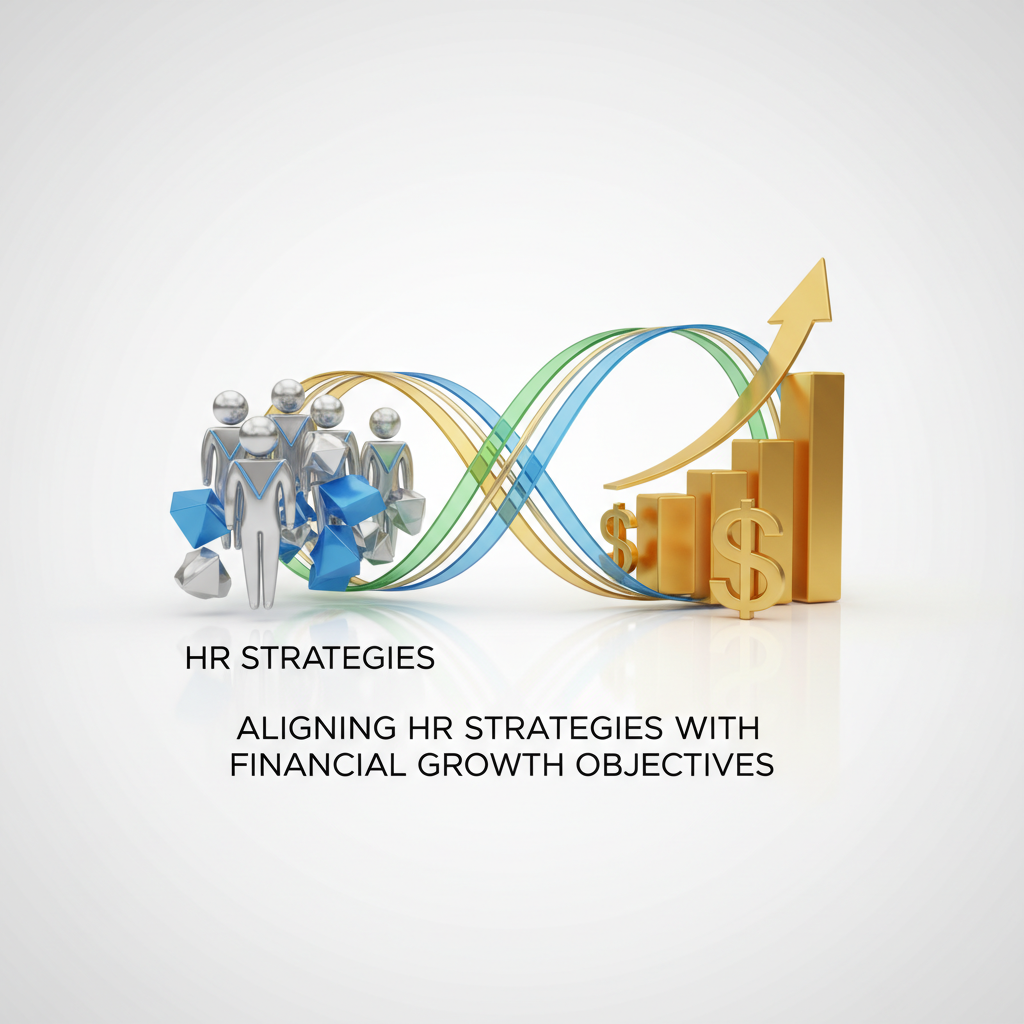
In the dynamic financial landscape of Singapore, where competition is fierce and regulatory demands are high, a robust SME HR strategy Singapore is not merely an administrative function but a strategic imperative. The CEO of a finance SME needs to see a clear return on investment from HR initiatives. By aligning HR functions directly with tangible financial outcomes, HR leaders can demonstrate their value, foster growth, and enhance overall organizational resilience. This alignment transforms HR from a cost center into a powerful driver of financial growth strategies and sustained profitability.
1. Performance Management Systems Linked to Financial KPIs and Productivity
An effective performance management system for a finance SME must transcend mere annual reviews; it needs to be intrinsically linked to the financial health and productivity of the organization. For CEOs, the appeal of HR lies in its ability to translate human effort into quantifiable financial results. This means designing systems that set clear, measurable performance indicators (KPIs) directly tied to key financial objectives such as revenue growth, cost reduction, client acquisition rates, risk management compliance, and return on assets. For instance, financial advisors might have KPIs related to portfolio growth or client retention, while back-office staff could be measured on efficiency gains that translate into operational cost savings. Implementing continuous feedback loops, regular check-ins, and data-driven performance analytics allows for real-time adjustments, ensuring employees are consistently focused on activities that boost the company’s profitability. Such a system not only enhances individual productivity but also provides the CEO with transparent insights into how HR investments directly contribute to the bottom line, thereby securing vital CEO buy-in HR for future initiatives.
2. Strategic Talent Development for Future Financial Leadership & Innovation
The long-term financial viability of any finance SME in Singapore hinges on its ability to cultivate a pipeline of skilled talent and future leaders. Strategic talent development is crucial for navigating market shifts, technological advancements, and regulatory changes within the financial sector. This goes beyond generic training; it involves identifying high-potential employees and investing in their growth through specialized programs in areas like advanced financial modeling, fintech innovation, risk management, compliance, and leadership. By proactively developing capabilities in these critical areas, HR ensures the SME is equipped with the expertise needed to seize new opportunities, mitigate risks, and drive innovation, directly impacting future revenue streams and market position. Succession planning for key financial roles—from senior analysts to potential CFOs—is another vital component, minimizing disruption and ensuring continuity in leadership. This strategic approach to talent management finance SME firms demonstrates a forward-thinking HR structure, promising sustained growth and demonstrating a clear contribution to the company’s strategic financial growth strategies. For more insights into how human capital trends are shaping the financial services industry, you might refer to Deloitte’s Human Capital Trends report.
3. Compensation and Benefits Design for Cost-Effectiveness and Motivation
Compensation and benefits (C&B) packages in a finance SME must strike a delicate balance between attracting top talent, motivating current employees, and maintaining cost-effectiveness to ensure profitability through HR. In Singapore’s competitive financial market, offering attractive C&B is essential for recruitment and retention. However, this must be done within a framework that supports the company’s financial objectives. HR structures should design C&B programs that align rewards with individual and organizational performance, particularly financial achievements. This could include performance-based bonuses tied to specific financial KPIs, profit-sharing schemes, or long-term incentives that encourage employee ownership and commitment to the company’s success. Beyond monetary incentives, HR can leverage non-monetary benefits such as professional development opportunities, flexible working arrangements, and a positive work culture to boost motivation and reduce turnover, thereby controlling indirect costs associated with recruitment and training. Regularly benchmarking C&B against industry standards ensures competitiveness while strategic design helps optimize HR expenditure, directly impacting the firm’s bottom line and showcasing a clear pathway to profitability through HR. This mindful approach ensures that every dollar spent on employee remuneration delivers maximum strategic value, supporting overall SME HR strategy Singapore goals and securing the CEO’s confidence in HR’s financial stewardship.
Leveraging Technology and Digital Transformation in SME HR
In Singapore’s dynamic business landscape, HR structures for SMEs the CEO in finance field in singapore are undergoing a significant transformation. For finance CEOs navigating the competitive environment, optimizing human resources is no longer just about compliance; it’s a strategic imperative for financial health and sustainable growth. This section examines the pivotal role of HR technology in streamlining operations, significantly improving employee experience, and providing invaluable data-driven insights. These insights empower finance leaders in Singapore SMEs to make informed decisions that directly impact the bottom line, from workforce planning to budget optimization.
1. Implementing HRIS/HRM Systems for Streamlined Administration
The foundation of digital HR transformation for SMEs lies in the adoption of robust HR Information Systems (HRIS) or Human Resource Management (HRM) systems. These platforms consolidate disparate HR functions – from payroll processing and leave management to attendance tracking and employee records – into a single, integrated database. For finance CEOs, the immediate benefits are tangible: a drastic reduction in manual administrative tasks, minimized human errors, and enhanced compliance with local regulations. Automating these routine processes frees up valuable HR personnel, allowing them to shift focus from transactional duties to more strategic initiatives that support business objectives. Furthermore, the accuracy and accessibility of data within an HRIS provide a clear overview of operational costs, helping to identify efficiencies and allocate resources more effectively. This strategic approach to managing HR structures for SMEs the CEO in finance field in singapore is crucial for controlling expenditure and ensuring transparent reporting.
2. Utilizing HR Analytics for Workforce Planning and Budget Optimization
Beyond mere administration, modern HR technology empowers SMEs with advanced HR analytics capabilities. By leveraging the data collected through HRIS, finance CEOs can gain deep, data-driven insights into their workforce. This includes understanding employee turnover rates, identifying training needs, analyzing productivity per department, and even forecasting future staffing requirements. For strategic workforce planning, these analytics are indispensable. They enable finance leaders to make proactive decisions about hiring, upskilling, and resource allocation, ensuring that the right talent is in place at the right time without overspending. For budget optimization, HR analytics can pinpoint areas of excessive expenditure, such as overtime costs or inefficient recruitment channels. By understanding the true cost of human capital and the return on investment (ROI) of various HR initiatives, Singaporean SMEs can optimize their HR budget, make informed compensation adjustments, and mitigate financial risks. This analytical approach directly supports prudent financial management and contributes to overall business resilience, critical for HR structures for SMEs the CEO in finance field in singapore.
3. AI and Automation: Enhancing Recruitment and Onboarding Processes
The advent of Artificial Intelligence (AI) and automation is revolutionizing specific HR functions, particularly recruitment and onboarding. For finance CEOs, these technologies offer significant opportunities to enhance efficiency and reduce costs associated with attracting and integrating new talent. AI-powered tools can automate resume screening, identify suitable candidates based on predefined criteria, and even schedule interviews, drastically reducing the time-to-hire. This not only streamlines the process but also improves the quality of hires by ensuring a more objective selection process. Similarly, automation transforms the onboarding experience. Digital onboarding platforms can manage paperwork electronically, deliver personalized training modules, and integrate new hires into company culture more effectively, even before their first day. This improved experience leads to higher engagement and retention rates, reducing the costly churn of new employees. According to industry experts, the benefits of HR technology for small and medium-sized businesses extend beyond mere cost savings, fostering a more productive and satisfied workforce. By strategically adopting AI and automation in these critical areas, Singapore SMEs can create more agile and effective HR structures for SMEs the CEO in finance field in singapore, ensuring that talent acquisition aligns seamlessly with financial goals and operational efficiency.
Future-Proofing HR: Trends and Adaptations for 2026 and Beyond
In the rapidly evolving landscape of global finance, Singaporean SMEs face unique pressures to remain competitive and resilient. The role of Human Resources (HR) has transcended traditional administrative functions, becoming a strategic imperative for long-term success. For the CEO in finance field in Singapore, understanding and adapting to emerging HR trends is no longer optional but essential for future-proofing their organizations. This involves a proactive reassessment of existing HR structures for SMEs the CEO in finance field in singapore, focusing on employee well-being, flexible work, sustainability, and talent development. As we look towards 2026 and beyond, organizations that strategically transform their HR functions will be best positioned to attract top talent, foster innovation, and navigate market complexities.
-
Prioritizing Employee Well-being and Mental Health Initiatives
The post-pandemic era has underscored the critical importance of employee well-being and mental health. For finance firms, where high-pressure environments are common, neglecting these aspects can lead to burnout, decreased productivity, and increased turnover. Progressive HR structures for SMEs the CEO in finance field in singapore must embed comprehensive well-being programs. This goes beyond basic health insurance to include mental health support, stress management resources, mindfulness programs, and fostering a culture of psychological safety. Finance CEOs in Singapore should consider partnerships with mental health professionals, offering confidential counseling services, and training managers to identify and support employees facing mental health challenges. Investing in employee well-being not only demonstrates corporate responsibility but also directly contributes to a more engaged, resilient, and productive workforce, reducing costly absenteeism and presenteeism. Addressing burnout proactively is crucial for sustained performance in finance. McKinsey highlights the importance of solving the right problem when addressing employee burnout, emphasizing systemic issues over individual resilience.
-
Adapting to Hybrid Work Models and Distributed Team Management
Flexible work arrangements, once a perk, are now a fundamental expectation. Hybrid work models, blending remote and in-office presence, are becoming the norm, particularly for future HR trends Singapore finance. This shift demands a radical rethink of HR strategies and infrastructure. For the CEO in finance field in Singapore, it means investing in robust digital tools for collaboration and communication, ensuring equitable opportunities for professional development regardless of location, and redefining performance metrics to focus on outcomes rather than hours spent in the office. HR must develop policies that support a distributed workforce, addressing challenges such as maintaining team cohesion, fostering a strong company culture remotely, and ensuring data security for sensitive financial information. Effective distributed team management requires clear communication protocols, regular check-ins, and a focus on empowering employees with autonomy and trust. This adaptation is vital for SME HR transformation Singapore, allowing firms to tap into a wider talent pool and enhance employee satisfaction.
-
The Role of HR in ESG (Environmental, Social, Governance) for Finance Firms
Environmental, Social, and Governance (ESG) factors are no longer just for large corporations; they are increasingly influencing investment decisions and stakeholder expectations across all sectors, including finance SMEs. HR plays a pivotal role in operationalizing the ‘Social’ aspect of ESG (the ‘S’). For finance CEOs, this means integrating sustainable practices into talent acquisition and retention, ensuring fair labor practices, promoting diversity, equity, and inclusion (DEI), and fostering a positive societal impact. HR strategy finance Singapore should involve developing ethical recruitment practices, implementing robust anti-discrimination policies, and establishing transparent governance around employee relations. Beyond the ‘S’, HR can also contribute to the ‘E’ by promoting environmentally conscious behaviors within the workplace and to the ‘G’ by upholding ethical leadership and transparent communication. By embedding ESG principles into every facet of HR structures for SMEs the CEO in finance field in singapore, finance firms can enhance their brand reputation, attract socially conscious talent, mitigate risks, and build a more responsible and sustainable business model, addressing CEO HR challenges finance in a holistic manner.
The future of HR in Singapore’s finance SMEs is one of dynamic evolution. By proactively embracing trends in employee well-being, flexible work, and ESG integration, finance CEOs can build resilient, attractive, and highly effective organizations. These strategic adaptations in HR structures are not just about compliance or efficiency; they are about cultivating a thriving workforce that drives innovation and sustainable growth in a competitive global market, ensuring a positive employee experience finance SMEs can leverage.
Partner with Shelby Global
You are looking for reliable HR Sevice Suppliers? Contact Shelby Global Now! To connect with verified talents and upgrade your orginization.
—————————————
References
– :
– SHRM – Society for Human Resource Management: https://www.shrm.org/resourcesandtools/pages/default.aspx
– Deloitte’s Human Capital Trends: https://www2.deloitte.com/us/en/pages/human-capital/articles/human-capital-trends-financial-services-industry.html
– The Benefits of HR Tech for Small and Medium-Sized Businesses: https://www.adp.com/spark/articles/2021/04/the-benefits-of-hr-tech-for-small-and-medium-sized-businesses.aspx
– Addressing employee burnout: Are you solving the right problem? – McKinsey: https://www.mckinsey.com/capabilities/people-and-organizational-performance/our-insights/addressing-employee-burnout-are-you-solving-the-right-problem



































































































