What Defines a Retail Salary Budget in Singapore?
The retail landscape in Singapore is characterized by intense competition for talent, rising operational overheads, and a shifting consumer base. For Small and Medium-sized Enterprises (SMEs), establishing Optimized Salary Budget Structures for SMEs in retail companies in singapore is no longer just a financial exercise—it is a critical survival strategy. As the cost of living index influences wage expectations, retail owners must balance competitive compensation with thin profit margins.

To remain resilient, businesses must adopt data-driven models that account for both regulatory compliance and market volatility. Failing to structure payroll effectively can lead to talent attrition, which, in the retail sector, carries a heavy price tag. By focusing on smart budgeting, SMEs can cultivate a stable workforce while maintaining fiscal health.
1. Analyzing the Progressive Wage Model (PWM)
For many retail businesses in Singapore, the Progressive Wage Model (PWM) serves as the foundational architecture for salary budgeting. This government-mandated framework ensures that lower-wage workers receive sustainable pay increases tied to skills mastery and productivity growth. For an SME, this means that wage floors are not static; they are part of a predictable, career-pathing trajectory. Integrating PWM requirements into your annual budget ensures legal compliance while providing a clear value proposition for frontline retail staff who seek long-term professional development.
2. Impact of High Turnover on Payroll Costs
The retail industry in Singapore consistently experiences high turnover, which often stems from burnout and perceived lack of career progression. When an experienced employee leaves, the costs are twofold: the immediate payout of final wages and the significant expenditure on recruitment and training of a replacement. These hidden payroll costs can destabilize an SME’s budget. By shifting funds toward retention-focused incentives—such as performance bonuses or subsidized upskilling—businesses can minimize turnover. An optimized budget accounts for the “cost of replacement,” prioritizing retention as a cost-saving measure rather than a luxury expense.
3. Understanding Base vs. Variable Pay Targets
To maintain agility, SMEs should implement a balanced approach between base and variable compensation. Relying solely on a high base salary can cripple an SME’s cash flow during slower retail seasons (such as the post-holiday lull). Instead, modern salary structures leverage variable pay—commission, performance bonuses, and seasonal incentives—to align individual output with business goals. When sales targets are met, the business pays out more, ensuring that salary costs are always proportionate to revenue. This structure protects the core budget while incentivizing staff to contribute directly to the company’s bottom line, creating a self-sustaining compensation model.
Key Components of Optimized Salary Budgets
For SMEs in the retail sector, managing payroll is not merely an administrative task but a strategic lever for growth. Creating Optimized Salary Budget Structures for SMEs in retail companies in singapore requires a precise balance between maintaining operational margins and remaining attractive in a highly competitive labor market. A well-constructed budget ensures fiscal sustainability while boosting employee retention and morale.
-
Structuring Fixed Salaries for Store Staff
The foundation of any retail payroll is the base salary. Given the high-turnover nature of retail, establishing a competitive baseline is essential. SMEs must benchmark their fixed compensation against the latest Ministry of Manpower (MOM) guidelines to ensure compliance and market relevance. For front-line staff, base pay should reflect the cost of living in Singapore while accounting for the physical demands of retail work. By segmenting roles into clear tiers—such as Sales Associates, Shift Leads, and Store Managers—businesses can create a scalable salary structure that provides employees with a sense of career progression and financial stability.
-
Designing Performance-Based Sales Incentives
To drive productivity, fixed salaries should be augmented with variable pay components. Designing a robust incentive scheme is critical for aligning individual output with organizational sales targets. For retail SMEs, this often involves tiered commission structures or team-based bonuses tied to KPIs like average transaction value, conversion rates, or customer satisfaction scores. The key is transparency; employees must clearly understand how their daily actions influence their total compensation. When properly executed, these performance incentives transform a static payroll budget into a self-funding mechanism where higher labor costs are offset by increased revenue growth.
-
Calculating Mandatory CPF Contributions Accurately
Compliance is a non-negotiable pillar of any optimized salary budget. In Singapore, Central Provident Fund (CPF) contributions constitute a significant portion of the total employment cost. Employers must be diligent in calculating the correct employer and employee contribution rates based on the employee’s citizenship status, age, and total wages. Errors in these calculations not only pose legal risks but can also lead to cash flow discrepancies that disrupt business planning. An optimized budget must treat CPF contributions as a projected fixed cost that scales proportionally with headcount and salary adjustments, ensuring that the company remains compliant with evolving statutory requirements while maintaining accurate bottom-line forecasts.
How to Allocate Payroll Budgets Effectively?
For small and medium-sized enterprises (SMEs) operating in the competitive Singaporean retail landscape, mastering financial agility is paramount. Developing Optimized Salary Budget Structures for SMEs in retail companies in singapore requires a delicate balance between retaining talent and maintaining healthy profit margins. Without a strategic framework, businesses risk overspending on underperforming roles or under-investing in mission-critical staff.
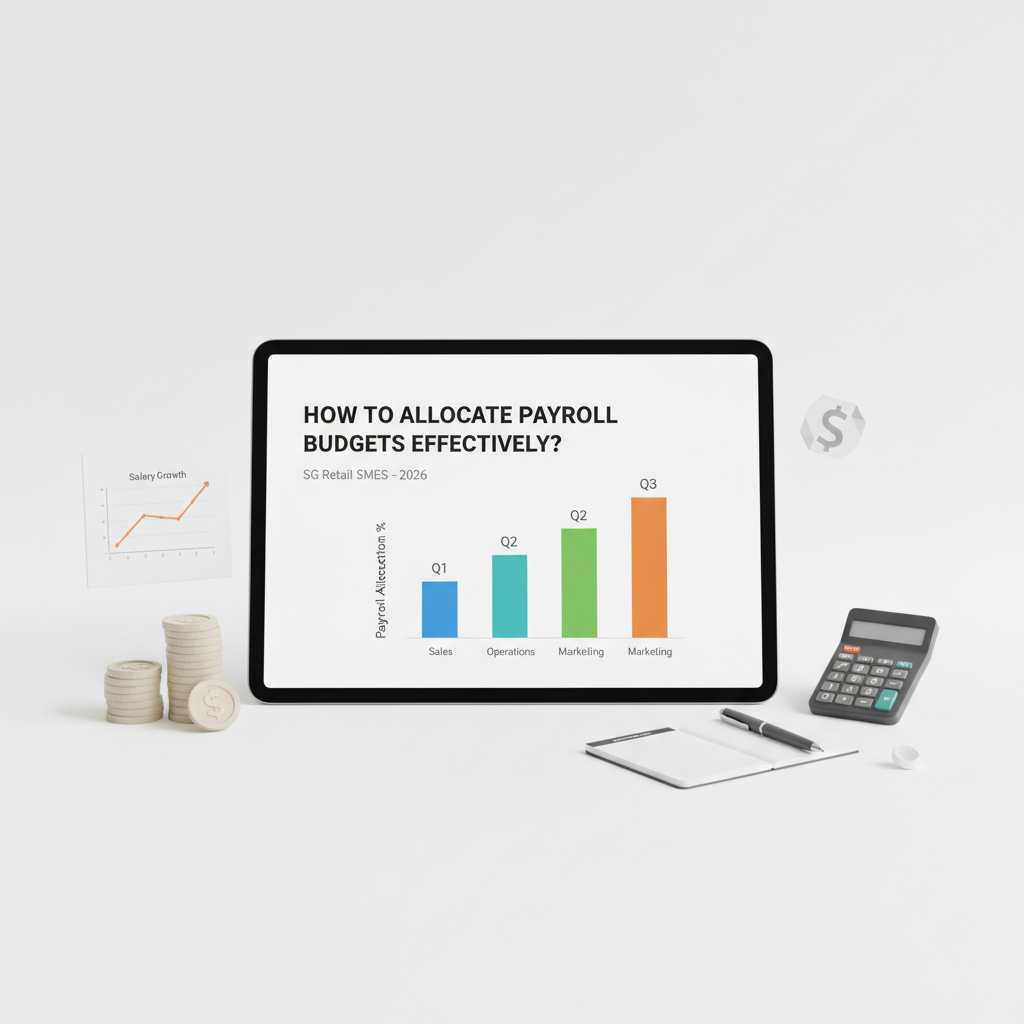
To achieve long-term sustainability, companies should adopt data-driven allocation methods. By integrating Optimized Salary Budget Structures for SMEs in retail companies in singapore, leadership can create a roadmap that aligns payroll costs with revenue generation targets. This proactive approach ensures that every dollar spent on compensation contributes directly to business growth.
1. Frontline Workers vs. Back-Office Allowances
Allocating payroll for retail requires a clear distinction between revenue-generating frontline staff and essential back-office support. Frontline employees—store associates and managers—are the face of your brand. According to Ministry of Manpower (MOM) guidelines, SMEs must ensure compliance with the Progressive Wage Model, which dictates minimum pay increments for specific service sectors. Budgeting should prioritize base salaries for frontline roles while utilizing allowances for irregular shifts, weekend work, or high-traffic holiday periods to manage operational costs effectively.
2. Implementing Sustainable Commission Tiering
Fixed salaries represent a constant liability, but a variable pay structure can turn payroll into a performance-driven asset. Implementing a tiered commission model allows SMEs to align labor costs with sales performance. Instead of offering flat commission rates, structure your model so that top-performing staff receive higher payouts only after hitting specific revenue thresholds. This protects your budget during lean months and incentivizes high output during peak periods, ensuring the business pays for results rather than just presence.
3. Cost-Forecasting for Seasonal Part-Time Hires
Singapore’s retail sector is heavily influenced by festive seasons, from Lunar New Year to the year-end Great Singapore Sale. Effective budget allocation demands a separate “seasonal payroll” bucket. Rather than hiring full-time staff to meet temporary spikes in demand, SMEs should utilize part-time labor pools. When forecasting these costs, businesses must account for mandatory CPF contributions and potential overtime pay. By maintaining a modular budget for seasonal talent, firms can scale their workforce up or down without disrupting the salary equilibrium of their core team, maintaining financial stability even in a volatile consumer environment.
Why Leverage HR Tech for Budget Optimization?
For Small and Medium Enterprises (SMEs) in Singapore’s fast-paced retail sector, maintaining a healthy bottom line requires more than just traditional bookkeeping. As labor markets tighten and regulatory requirements under the Ministry of Manpower evolve, businesses must embrace digital transformation to maintain Optimized Salary Budget Structures for SMEs in retail companies in singapore. Leveraging modern HR and payroll technologies is no longer a luxury; it is a strategic necessity for financial forecasting and reducing the administrative overhead that often stifles growth.
-
Automating Roster and Timesheet Tracking
-
Using Predictive Analytics for Labor Costs
-
Integrating Systems with Local Accounting Standards
Retail operations often suffer from “payroll leakage” due to manual data entry errors or inaccurate shift reporting. Automated rostering systems allow managers to align staffing levels precisely with foot traffic patterns. By integrating real-time timesheet tracking, SMEs can eliminate unauthorized overtime and ensure that salary disbursements are calculated based on actual, verified hours worked. This precision is vital for maintaining lean operations where every cent of the wage bill is accounted for, allowing management to reinvest savings back into inventory or marketing.
Modern HR platforms provide more than just record-keeping; they offer deep insights into workforce efficiency. By utilizing predictive analytics, retail owners can forecast labor costs during peak shopping seasons or public holidays. These tools analyze historical performance data to predict future needs, enabling businesses to adjust their staffing structures proactively. According to Gartner’s insights on HR technology, organizations that leverage data-driven decision-making in human capital management see a significant reduction in unnecessary expenditure, ensuring that talent allocation remains aligned with the company’s broader financial goals.
Compliance is a critical pillar of budget management in Singapore. When HR platforms are seamlessly integrated with local accounting standards—such as automated CPF contribution calculations and IR8A tax form generation—the administrative burden on finance teams is drastically reduced. This integration eliminates the risk of human error and potential penalties arising from regulatory non-compliance. By creating a unified ecosystem where payroll, accounting, and tax filing interact without manual interference, SMEs can ensure that their salary budget structures remain both transparent and compliant with Singaporean legal requirements, ultimately protecting the firm from costly fiscal oversights.
By shifting from manual, fragmented processes to an automated technological framework, retail SMEs can gain full visibility into their human capital expenditure. This transition not only reduces overhead costs but also positions the business to scale efficiently in a highly competitive market.
How to Future-Proof SME Compensation Plans?
In the volatile landscape of the Singaporean retail sector, maintaining a workforce while preserving thin profit margins is a constant balancing act. To ensure long-term stability, leadership must move beyond reactive annual reviews and transition toward Optimized Salary Budget Structures for SMEs in retail companies in singapore. By prioritizing data-driven foresight, your business can remain resilient against economic shifts and labor market fluctuations.

1.
Adapting Budgets to Core Inflation Rates
Retail margins are highly sensitive to inflationary pressure. As Singapore’s cost of living rises, companies must integrate real-time inflation data into their Optimized Salary Budget Structures for SMEs in retail companies in singapore. Rather than across-the-board percentage increases, leverage tiered salary bands that align with local cost-of-living adjustments, ensuring that your lowest-paid staff members are supported while management salaries remain capped to protect cash flow. Linking these adjustments to productivity KPIs helps mitigate the impact of inflation on your bottom line.
2.
Introducing Cost-Effective Non-Monetary Perks
When salary growth is constrained, non-monetary benefits become the differentiator for talent retention. Implementing flexible work arrangements, such as rotating shift patterns or remote-friendly administrative roles, costs little but provides immense value to employees. According to Ministry of Manpower Singapore data, workers increasingly prioritize flexibility and well-being alongside their base pay. Offering training subsidies or subsidized transport can also alleviate staff costs without the long-term compounding effect of base salary increases.
3.
Conducting Regular Audits of Payout Structures
Future-proofing is not a one-time initiative but a cycle of continuous improvement. Retail SMEs should conduct quarterly audits to compare internal compensation against market standards. If your payout structures are stagnant, you risk losing high-performing staff to larger retailers. By evaluating your total rewards package—including commissions, performance bonuses, and benefits—against market data, you can prune underperforming compensation models and reallocate resources toward roles that drive the most revenue. This strategic discipline ensures your payroll remains a tool for growth rather than a drain on capital.
Partner with Shelby Global
You are looking for reliable HR Sevice Suppliers? Contact Shelby Global Now! To connect with verified talents and upgrade your orginization.
—————————————
References
– Progressive Wage Model (PWM): https://www.mom.gov.sg/employment-practices/progressive-wage-model
– Ministry of Manpower Singapore: https://www.mom.gov.sg
– Ministry of Manpower Singapore: https://www.mom.gov.sg/
– Gartner’s insights on HR technology: https://www.gartner.com/en/human-resources/trends/hr-technology
– Ministry of Manpower Singapore Salary Trends: https://www.mom.gov.sg/employment-practices/salary/overview-of-salary-trends