Scope of HR Responsibilities in F&B Operations
In the vibrant Malaysian culinary landscape, the function of Human Resources varies significantly based on organizational scale. Understanding the Differences between the SMEs’ HR Manager and the Corporates’ HR Director in Food & Beverage field in malaysia is essential for professionals navigating this sector. While the core objective remains managing human capital, the daily realities differ between a singular restaurant group and a multinational franchise operation.

1. Hands-on Execution vs Strategic HR Planning
In a Malaysian SME F&B environment, the HR Manager is often a generalist wearing many hats. They are involved in the immediate “firefighting” of daily operations, ranging from resolving scheduling conflicts on the floor to handling disciplinary actions personally. Conversely, a Corporate HR Director in the Malaysian food and beverage sector operates from a bird’s-eye view. Their focus is on long-term organizational design, employer branding, and aligning workforce capabilities with multi-outlet expansion strategies. According to the Ministry of Human Resources (MOHR) guidelines, corporate leaders prioritize structural policy, whereas SME managers prioritize interpersonal stability.
2. Talent Acquisition Scale in Malaysian F&B
Talent acquisition strategies reveal a stark contrast. The SME HR Manager often manages recruitment through walk-ins, social media, and word-of-mouth, struggling with the high turnover rates common in local eateries. They act as both the recruiter and the recruiter-on-the-ground. On the other hand, the Corporate HR Director manages large-scale recruitment pipelines, often utilizing automated Applicant Tracking Systems (ATS) to manage hundreds of applicants across regional branches. They focus on talent pipelines, structured onboarding, and culture-fit assessments to ensure that the brand identity remains consistent across every store, from Kuala Lumpur to Penang.
3. Compliance and Payroll Management Complexities
Payroll in the Malaysian F&B industry is notoriously complex due to shift patterns, overtime regulations, and EPF/SOCSO/EIS contributions. For the SME manager, this is a meticulous, manual task that requires deep familiarity with every employee’s hourly shifts. Small mistakes here can lead to significant grievances and legal exposure. The Corporate HR Director, however, oversees sophisticated ERP systems and outsourced payroll providers. Their responsibility lies in governance—ensuring that national labor laws and internal corporate policies are applied uniformly across the entire organization. By implementing standardized payroll and compliance systems, corporate directors minimize legal risk at a scale that SMEs might struggle to reach without external assistance.
Ultimately, while the SME HR manager provides the essential human touch necessary for small teams to function, the corporate HR director builds the infrastructure that allows businesses to scale efficiently within the competitive Malaysian market.
Resource Allocation and Budget Management
In the Malaysian Food & Beverage (F&B) sector, the strategic approach to human resources is dictated heavily by the scale of operations and capital accessibility. The Differences between the SMEs’ HR Manager and the Corporates’ HR Director in Food & Beverage field in malaysia are most apparent in how they manage fiscal resources to support operational growth. While corporate directors utilize massive annual budgets to optimize workforce agility, SME managers must navigate strict constraints to retain talent.
1. Maximizing Limited SME HR Budgets
For an SME HR manager in Malaysia, every ringgit counts. Unlike large chains, SMEs often operate on thin margins, forcing HR to become a master of resourcefulness. With limited capital, these managers must prioritize low-cost, high-impact strategies. This often means bypassing expensive recruitment agencies in favor of direct social media sourcing or internal referral schemes. According to HRD Connect, agility in resource allocation is a critical differentiator for smaller firms that cannot afford the luxury of trial and error in hiring. SME managers must focus on multi-skilling current staff to cover operational gaps, essentially building a lean, cross-functional team that can pivot as the market fluctuates.
2. Corporate Enterprise HR Information Systems
Conversely, the F&B corporate HR director in Malaysia operates with the support of sophisticated Enterprise Resource Planning (ERP) and HR Information Systems (HRIS). These systems allow for precise, data-driven budget forecasting. With automated platforms, corporate HR can track turnover costs, optimize shift scheduling to minimize labor costs, and manage complex payroll structures across multiple outlets simultaneously. These capital-intensive systems provide the transparency needed to justify large-scale HR spending to stakeholders, allowing for advanced talent analytics that an SME manager simply cannot automate without significant investment. In this environment, the director shifts from transactional tasks to high-level strategic planning, leveraging technology to mitigate risks and enhance operational efficiency at scale.
3. F&B Training and Development Investments
Training and development (T&D) represent a major divide in budgetary philosophy. A corporate director frequently invests in structured leadership pipelines, standardized global brand training, and continuous professional development programs to ensure brand consistency across various locations. They leverage economies of scale to negotiate corporate rates for certifications. In contrast, the SME manager must adopt a ‘just-in-time’ approach to training. With constrained budgets, they focus on on-the-job training (OJT) and mentorship. While less formal, this method is often more personalized and immediate. The SME HR manager must be highly selective, investing only in essential training—such as food safety certification or basic customer service—that directly impacts the immediate bottom line. While corporates look at long-term human capital appreciation, SMEs are often forced to focus on immediate operational stability, illustrating the clear divergence in financial authority and strategic objective between these two vital roles in the Malaysian F&B landscape.
Team Structure and Leadership Dynamics
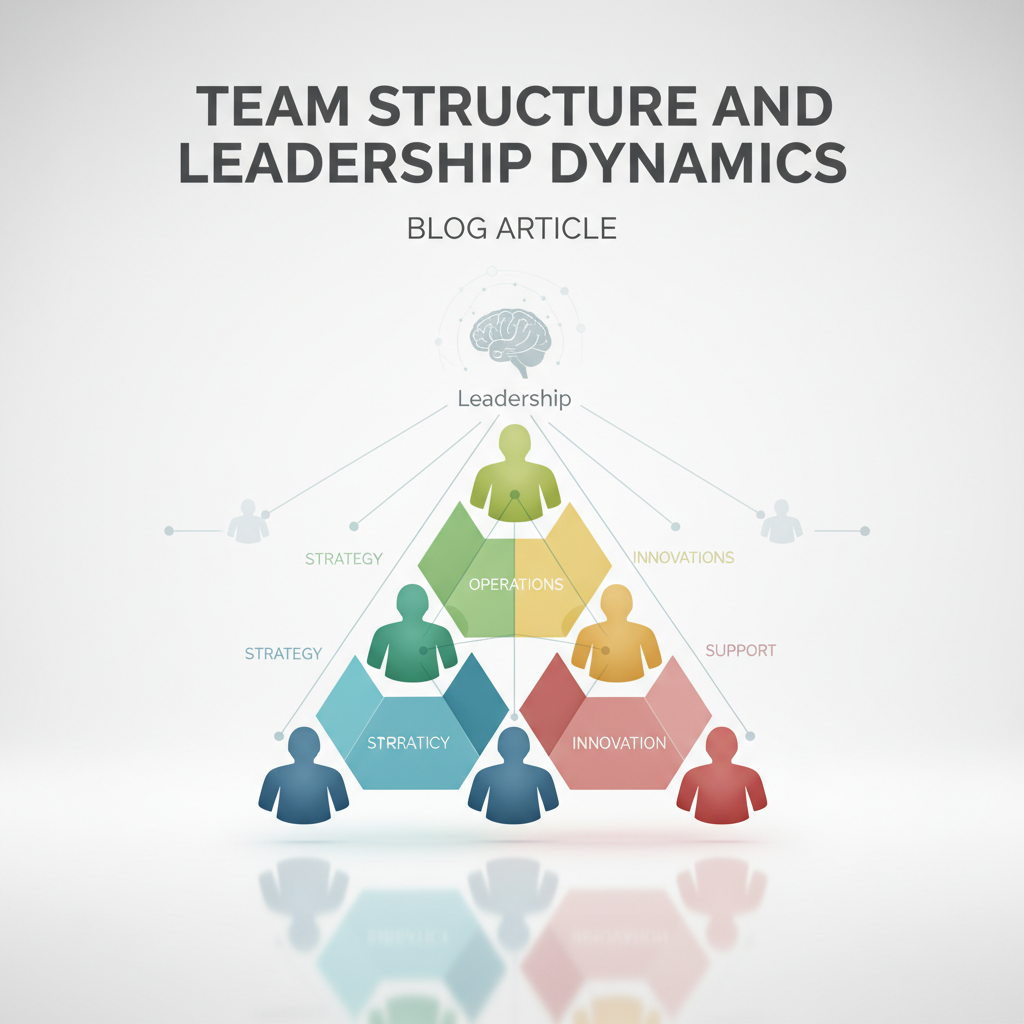
In the vibrant Food & Beverage (F&B) sector of Malaysia, the evolution of human resources is starkly visible when comparing the Differences between the SMEs’ HR Manager and the Corporates’ HR Director in Food & Beverage field in malaysia. While SMEs often operate with a singular, multitasking HR Manager, large corporate entities rely on sophisticated HR Director-led hierarchies to manage complex labor demands. Understanding these nuances is essential for operational success in a market defined by high competitiveness and rapid growth.
1. Solo HR Practitioner vs Large HR Departments
In Malaysia’s F&B SMEs, the HR Manager is typically a generalist, handling everything from payroll and recruitment to conflict resolution. This individual acts as the sole architect of the company culture. Conversely, a Corporate HR Director in the same sector leads a vast department with specialized teams for talent acquisition, learning and development, and employee relations. While the SME manager benefits from direct access to the business owner, the corporate HR Director works within complex corporate governance frameworks, ensuring that regional compliance standards, such as those monitored by the Ministry of Human Resources Malaysia, are upheld across multiple outlets.
2. Cross-functional Collaboration Protocols
Leadership dynamics vary significantly based on the scale of the organization. For the SME HR Manager, collaboration is informal and fluid, often requiring them to step into operational roles like floor management during peak hours. In contrast, an HR Director in a large corporate chain operates through rigid cross-functional protocols. They must synchronize HR policies with Finance for budget allocation, Operations for shift planning, and Legal for labor law adherence. These structured dynamics are designed to maintain consistency across a national footprint, ensuring that the brand promise remains uniform regardless of the location.
3. Strategies for High F&B Staff Turnover
Staff retention is a critical pain point in the Malaysian F&B industry. An SME HR Manager often combats turnover through personalized engagement and flexible management styles, relying on strong interpersonal relationships to keep staff motivated. The lack of formal HR resources means they must be highly creative with incentives. Meanwhile, a Corporate HR Director utilizes data-driven strategies. They implement standardized retention programs, such as structured career progression pathways, competitive benefit packages, and sophisticated performance appraisal systems. By leveraging big data to predict turnover trends, corporate leaders can proactively adjust recruitment strategies, whereas SME managers typically respond to turnover in real-time. Both leadership models aim to mitigate the labor gap, but they do so through different tools and organizational structures.
Process Agility vs Standardized Corporate Red Tape
In the Malaysian F&B landscape, the operational chasm between small-to-medium enterprises (SMEs) and multinational corporations is most visible when analyzing the differences between the SMEs’ HR Manager and the Corporates’ HR Director in Food & Beverage field in malaysia. While the former operates in an environment defined by fluidity and personal intuition, the latter manages a matrix of global compliance and rigid reporting structures. Understanding these distinct frameworks is critical for talent acquisition professionals and industry leaders looking to optimize Differences between the SMEs’ HR Manager and the Corporates’ HR Director in Food & Beverage field in malaysia.
1. Implementing Rapid Policy Changes in SMEs
For an SME HR Manager, policy implementation is often a 24-hour turnaround process. Because these companies typically operate with a flat hierarchy, the HR Manager often has a direct line to the business owner. If a new government mandate regarding minimum wage or social security (SOCSO) adjustments arises, the HR Manager can socialize the change and adjust payroll processes overnight. This agility is a competitive advantage in the Malaysian market, allowing SMEs to pivot benefits or workplace conditions based on immediate staff feedback. However, this flexibility can sometimes lead to informal record-keeping, which may present challenges as the business scales.
2. Navigating Standardized Corporate Red Tape
Conversely, a Corporate HR Director in a multinational F&B brand functions as a custodian of global standards. Implementing a policy change—even a minor one—requires navigating regional approvals, legal vetting, and sometimes global headquarters oversight. This systematic approach is designed to ensure consistency across all branches, which is essential for brand reputation management. According to HRD Connect, maintaining compliance in decentralized, multi-market organizations necessitates rigorous documentation that slows down immediate reaction times but protects the company from regulatory non-compliance. While local teams may feel constrained by this red tape, it provides a stable framework that individual store managers can rely on to manage their teams safely and legally.
3. Crisis Management Approaches in Food Service
Crisis management, such as a sudden outbreak of foodborne illness or a supply chain disruption, highlights the stark contrast between these two roles. In an SME, the HR Manager is often on the front lines, personally overseeing communication with affected staff and ensuring business continuity. The process is personal, empathetic, and fast. In contrast, the Corporate HR Director manages a crisis through pre-defined protocols and a dedicated legal and communications response team. While the Corporate approach is inherently slower due to the requirement for multi-level authorization, it ensures that every communication is legally sound and aligned with the brand’s global values. Ultimately, while SMEs win on speed, the corporate structure offers a robust safety net that shields the organization from the volatility often inherent in the F&B sector.
Career Trajectory and Compensation Realities
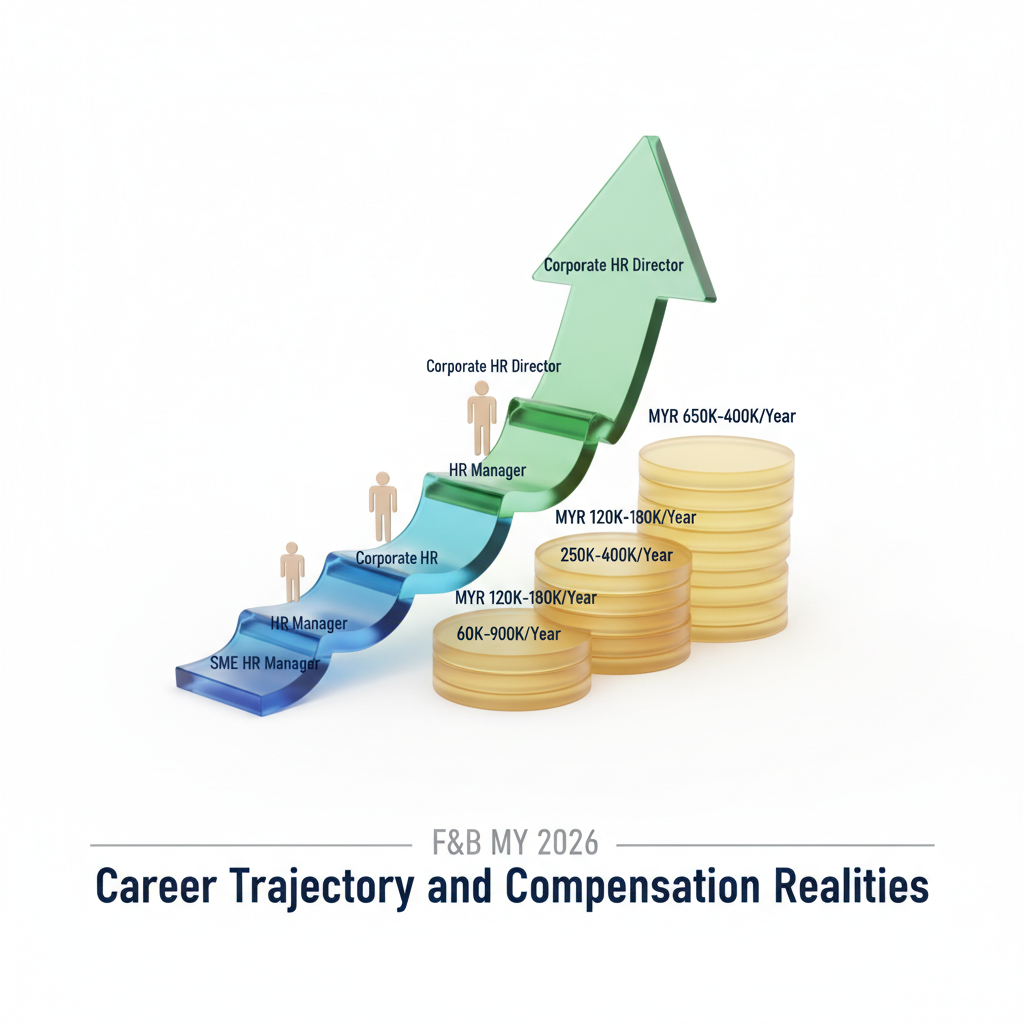
Navigating the Differences between the SMEs’ HR Manager and the Corporates’ HR Director in Food & Beverage field in malaysia requires a deep understanding of organizational scale. In Malaysia’s vibrant F&B sector, the career trajectory is heavily influenced by whether one operates within a nimble, family-owned establishment or a multi-national franchise.
1. Current HR Salary Benchmarks in Malaysia
Compensation structures in the Malaysian F&B industry are bifurcated by scale and scope. An HR Manager in an SME often wears many hats, managing payroll, recruitment, and labor relations simultaneously. According to data from Kelly Services Malaysia, while SME managers offer hands-on experience, Corporate HR Directors in large-scale F&B chains command significantly higher packages, often including executive bonuses, stock options, and regional allowances. The premium for corporate leadership reflects the complexity of managing thousands of employees across diverse geographic locations, compared to the localized focus of an SME counterpart.
2. Employee Retention Tools and Benefits
Retention strategies illustrate the divide in professional resource allocation. SMEs often rely on localized, culture-driven benefits—such as flexible scheduling, meal allowances, or family-oriented bonuses—to keep talent engaged in a high-turnover environment. Conversely, Corporate HR Directors utilize sophisticated Human Resource Information Systems (HRIS) and data-driven benefits packages, including comprehensive medical insurance, structured career development pathways, and performance-based incentive programs. While SME managers focus on personal rapport to reduce churn, Corporate Directors leverage systemic benefits to standardize culture and operational efficiency across multiple branches.
3. Choosing the Right F&B HR Career Path
The choice between these two paths depends on professional goals and tolerance for structural complexity. Choosing an SME role provides a platform for rapid skill acquisition, where the HR Manager becomes an indispensable business partner to the owner, often influencing strategic decisions directly. On the other hand, the Corporate HR Director position offers a seat at the table of large-scale change management. For those seeking career longevity and exposure to global standards, the corporate path is ideal. However, for those craving autonomy and impact in a fast-paced entrepreneurial environment, the SME sector offers unparalleled professional growth.
Partner with Shelby Global
You are looking for reliable HR Sevice Suppliers? Contact Shelby Global Now! To connect with verified talents and upgrade your orginization.
—————————————
References
– Ministry of Human Resources (MOHR): https://www.mohr.gov.my/
– HRD Connect: https://www.hrdconnect.com/
– Ministry of Human Resources Malaysia: https://www.mohr.gov.my/
– HRD Connect: https://www.hrdconnect.com/
– Kelly Services Malaysia: https://www.kellyservices.com.my/