Decoding Malaysia’s E-commerce Job Market in 2026
Malaysia’s digital landscape is undergoing a remarkable transformation, with the e-commerce sector emerging as a pivotal force driving economic growth and extensive job creation. As we approach 2026, understanding the intricate dynamics of this vibrant market is crucial for both job seekers aiming for promising career paths and employers seeking to attract top talent. This section provides an in-depth overview of the current state and anticipated trajectory of e-commerce in Malaysia, shedding light on its profound impact on employment opportunities and the evolving demand for skilled talent across various specializations.

1. Growth Trends and Market Size of E-commerce
The Malaysian e-commerce market has been on an exponential upward trajectory, fueled by increasing internet penetration, a digitally native population, and robust government initiatives promoting digital transformation. Official reports and industry analyses consistently highlight a sustained e-commerce growth Malaysia, firmly positioning the nation as one of Southeast Asia’s fastest-growing digital economies. The market size is projected to expand significantly, driven by a surge in online shopping adoption across all demographics, from urban centers to remote areas. Key accelerators include improved logistics infrastructure, the widespread adoption of secure digital payment gateways, and the pervasive use of mobile devices for online transactions. This burgeoning sector not only contributes substantially to the national GDP but also acts as a powerful engine for new employment opportunities, demanding a continuous influx of talent across diverse roles. The consistent expansion ensures that demand for professionals remains high, making the sector a primary focus for career development and economic advancement.
2. Key Players and Emerging Platforms
Malaysia’s dynamic e-commerce ecosystem is characterized by a strategic mix of established global giants and innovative local players. Platforms like Shopee and Lazada continue to dominate the marketplace operations jobs landscape, offering vast opportunities for both vendors and job seekers. These platforms have evolved into comprehensive ecosystems, encompassing not just retail but also logistics, payments, and digital advertising, thereby expanding the array of available roles. However, the market is also witnessing the rise of numerous niche e-commerce platforms, meticulously catering to specific consumer segments, ranging from halal products and sustainable fashion to specialized electronics and services. This diversification significantly broadens the scope of e-commerce career prospects, leading to a surging demand for specialized roles beyond traditional marketplace management. Furthermore, social commerce, direct-to-consumer (D2C) brands, and cross-border e-commerce are gaining considerable traction, creating new avenues for job creation in areas like digital marketing jobs Malaysia, content creation, brand management, and international logistics. The continuous entry of new players and the aggressive expansion of existing ones intensify competition but simultaneously multiply job openings, spanning from entry-level positions to senior e-commerce manager salary Malaysia roles.
3. Talent Demand and Skill Gaps
The rapid expansion of Malaysia’s e-commerce sector has created an urgent demand for a diverse range of specialized skills. There is a particularly strong need for professionals in critical areas such as advanced digital marketing, sophisticated data analytics e-commerce jobs, efficient supply chain management, and exemplary customer experience. Businesses are increasingly relying on data-driven insights to optimize sales funnels, personalize user experiences, and predict market trends, making data specialists invaluable. Similarly, with the growing complexities of online retail, expertise in supply chain e-commerce Malaysia and optimizing last-mile delivery jobs Malaysia is absolutely critical for seamless and efficient operations. Many businesses are actively seeking individuals proficient in search engine optimization (SEO), search engine marketing (SEM), social media marketing, and compelling content strategy to significantly boost their online visibility and engagement. Moreover, there’s a burgeoning need for dedicated e-commerce specialist roles and professionals focused on customer experience e-commerce Malaysia, underscoring the paramount importance of user satisfaction and retention in a competitive market. Despite this high demand, a noticeable skill gap persists, particularly in advanced digital competencies like AI integration, predictive analytics, and cybersecurity. This gap presents a unique opportunity for individuals to proactively upskill and reskill, thereby significantly enhancing their employability in this dynamic field. Detailed reports on the salary range report of jobs in Ecommerce field in malaysia highlight competitive compensation for those possessing these in-demand skills, unequivocally underscoring the value placed on specialized expertise. Understanding this evolving demand is key for anyone seeking online retail jobs Malaysia or considering a career in digital transformation jobs within the country. The outlook for e-commerce talent acquisition remains robust, promising a vibrant and rewarding future for professionals in this rapidly evolving sector.
Factors Shaping E-commerce Salary Ranges in Malaysia
The Malaysian e-commerce landscape is dynamic and growing, driven by increasing digital adoption and evolving consumer habits. Consequently, the demand for skilled professionals in this sector is on an upward trajectory, leading to varied and competitive e-commerce salaries Malaysia. Understanding the elements that dictate compensation is crucial for both job seekers and employers. This section delves into the key factors influencing the salary range report of jobs in Ecommerce field in malaysia, providing insights into how experience, specialized skills, and company attributes shape earning potential in this vibrant market. To truly grasp the current market value, one needs to look beyond just the job title and consider the intricate interplay of these determining factors. For a comprehensive overview, one might refer to a detailed salary range report of jobs in Ecommerce field in malaysia which often highlights these trends.
1. Experience Level, Education, and Certifications
A professional’s experience level is a primary determinant of their online retail compensation. Entry-level roles, like E-commerce Assistant, command lower e-commerce salaries in Malaysia than mid-level or senior positions. Those with extensive experience in strategic roles, such as E-commerce Manager or Head of E-commerce, can expect significantly higher remuneration due to their proven track record in driving sales and managing operations. The quality and relevance of experience, particularly in scaling online businesses, are highly valued in the Malaysian job market.
Education also forms a foundational aspect. A bachelor’s degree in Marketing, Business Administration, or IT is often a prerequisite, while advanced degrees can provide an edge for leadership roles. However, in e-commerce, practical skills and certifications often hold equal weight. Industry-recognized certifications from platforms like Google Ads, Google Analytics, HubSpot, Shopify, or Magento demonstrate mastery of critical tools. These credentials signal specialized knowledge and can significantly enhance a candidate’s standing and their potential e-commerce manager salary or overall e-commerce talent compensation.
2. Specialised Skills (e.g., SEO, SEM, Data Analytics)
The digital realm demands a diverse set of specialized skills, directly correlating with higher digital marketing salaries. E-commerce roles require expertise across numerous disciplines. Specialists in Search Engine Optimization (SEO) and Search Engine Marketing (SEM), crucial for boosting online visibility and driving traffic, are in high demand, influencing SEO specialist salary Malaysia ranges. Similarly, data analytics is increasingly vital for data-driven decisions. Professionals skilled in tools like Google Analytics or advanced statistical software for market trend analysis often command premium data analyst salary Malaysia packages.
Other high-value skills include content marketing, social media strategy, email marketing automation, UX/UI design (especially for e-commerce platforms), and CRM system proficiency. Project management skills are also highly valued for overseeing complex e-commerce projects. The more niche and in-demand a skill, particularly if it directly contributes to revenue generation or operational efficiency, the higher the e-commerce skill demand and potential compensation. Scarcity of these specialized talents in the Malaysian e-commerce market further pushes salary potential upwards, reflecting their direct impact on business growth.
3. Company Size and Type (Startup vs. MNC)
The type and size of the employing company significantly determine e-commerce salaries in Malaysia. Multinational corporations (MNCs) generally offer more structured and often higher base salaries, along with comprehensive benefits. They typically have established pay scales and career progression paths, seeking seasoned professionals for roles like Head of E-commerce. These contribute to higher MNC e-commerce jobs compensation. According to market analysis, such as the Robert Walters Salary Survey for Malaysia, larger firms provide competitive packages to attract top e-commerce talent.
In contrast, e-commerce startups and smaller local businesses might have tighter budget constraints. Their initial tech startup salaries may be lower than MNCs, but they often compensate with perks like equity options, greater autonomy, faster career progression, and a significant impact on the company’s trajectory. These environments appeal to individuals seeking innovation and broad responsibilities. Mid-sized companies often offer a blend of competitive salaries and growth opportunities. The financial backing and market share of a company directly influence its ability to offer attractive remuneration, making company type crucial in understanding market trends e-commerce Malaysia related to compensation.
The salary range report of jobs in Ecommerce field in malaysia is a complex tapestry woven from a multitude of factors. From the foundational elements of experience and education to the critical impact of specialized digital skills and the overarching influence of company size and type, each component contributes to the overall compensation package. As the Malaysian e-commerce sector continues its rapid expansion, professionals who strategically invest in developing high-demand skills and gain valuable experience in successful ventures will undoubtedly position themselves for the most rewarding career prospects and attractive e-commerce salaries Malaysia.
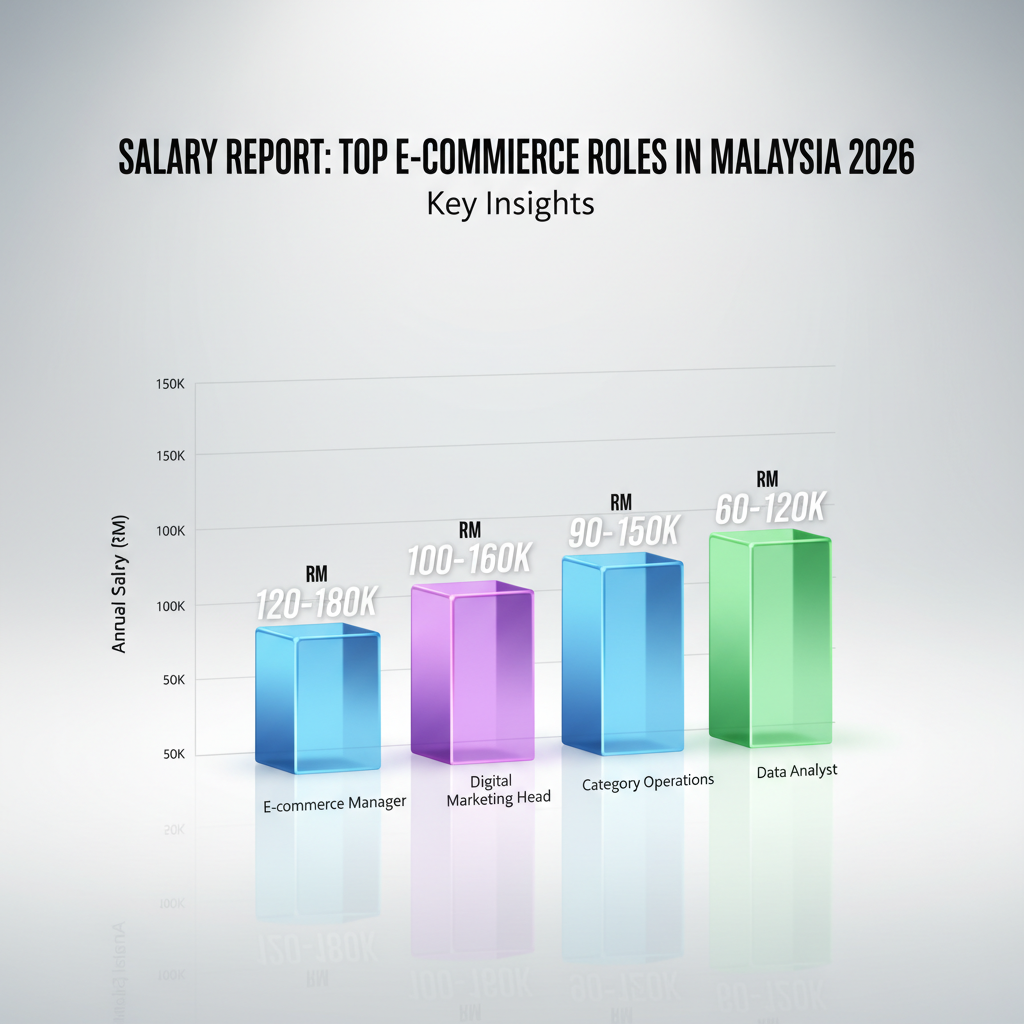
Salary Report: Top E-commerce Roles in Malaysia 2026
A deep dive into the salary expectations and actual ranges for prominent e-commerce positions, providing specific figures for different seniority levels.
Malaysia’s e-commerce landscape continues its impressive growth trajectory, fueled by robust digital adoption and government initiatives. As businesses increasingly pivot towards online channels, the demand for skilled professionals across various e-commerce functions is skyrocketing. This report, leveraging comprehensive market data and insights for 2026, aims to provide a definitive salary range report of jobs in Ecommerce field in malaysia, offering invaluable guidance for both job seekers and employers navigating the competitive e-commerce job market Malaysia.
Understanding the prevailing salary structures is crucial for attracting top talent and ensuring fair compensation within the dynamic online retail job market Malaysia. From strategic management roles to specialized technical positions, we delve into the compensation expectations that define the e-commerce salary trends Malaysia, providing a clear compensation guide e-commerce Malaysia for the coming year.
1. E-commerce Manager/Specialist Salary Range
The E-commerce Manager or Specialist is the linchpin of any online business, overseeing the entire digital sales operation. Responsibilities often include website management, sales strategy, inventory, customer experience, and performance analysis. Their expertise directly impacts revenue growth and market share.
- Junior E-commerce Specialist (1-2 years experience): Entry-level professionals focusing on operational tasks, data entry, and basic campaign support can expect salaries ranging from RM 3,000 to RM 5,500 per month.
- Mid-level E-commerce Manager (3-5 years experience): These roles involve managing specific categories, optimizing sales funnels, and executing strategies. Compensation typically falls between RM 6,000 and RM 9,500 monthly.
- Senior E-commerce Director/Head (6+ years experience): Leading entire e-commerce divisions, setting strategic direction, and driving significant growth, these senior professionals command salaries from RM 10,000 to RM 18,000+, with potential for significant bonuses and incentives in larger organizations.
2. Digital Marketing (SEO, SEM, Social Media) Salaries
Effective digital marketing is the engine driving traffic and conversions in e-commerce. Professionals specializing in SEO, SEM, and social media are highly sought after to ensure brands are visible and engaging online. This category covers various vital roles contributing to the overall digital marketing salaries Malaysia landscape.
- Junior Digital Marketing Executive (SEO/SEM/Social Media) (1-2 years experience): Responsible for executing basic campaigns, keyword research, content posting, and analytical reporting. Salaries for a junior SEO specialist salary Malaysia or social media executive are generally from RM 2,800 to RM 4,800.
- Mid-level Digital Marketing Specialist/Manager (3-5 years experience): These experts manage complex campaigns, optimize ad spend, develop content calendars, and analyze performance deeply. A mid-level SEM manager salary Malaysia or a skilled social media manager salary Malaysia typically ranges from RM 5,000 to RM 8,500.
- Senior Digital Marketing Manager/Head (6+ years experience): Overseeing entire digital marketing strategies, managing teams, and aligning efforts with business goals. These leadership positions can fetch salaries from RM 9,000 to RM 15,000+. For a more granular breakdown of digital talent compensation, you can explore the salary range report of jobs in Ecommerce field in malaysia.
3. Content Creator/Strategist & UI/UX Designer Compensation
In the visually driven world of e-commerce, compelling content and intuitive user experiences are non-negotiable. Content Creators and UI/UX Designers play pivotal roles in captivating audiences and ensuring seamless online journeys, making their roles critical for business success and contributing significantly to tech salaries Malaysia.
Content Creator/Strategist:
From captivating product descriptions to engaging blog posts and video scripts, content professionals shape a brand’s voice and engage its audience.
- Junior Content Creator (1-2 years experience): Focusing on writing, editing, and basic content creation tasks, typically earning between RM 2,500 and RM 4,500. This often includes entry-level content creator salary Malaysia roles.
- Mid-level Content Strategist (3-5 years experience): Developing content calendars, guiding content creation, and analyzing content performance. Salaries for these strategic roles are usually between RM 4,800 and RM 7,800.
- Senior Content Lead (6+ years experience): Leading content teams, defining brand storytelling, and aligning content strategy with marketing and business objectives, commanding salaries from RM 8,000 to RM 12,000+.
UI/UX Designer:
These professionals are crucial for designing user-friendly and aesthetically pleasing e-commerce platforms that convert visitors into customers.
- Junior UI/UX Designer (1-2 years experience): Assisting with wireframes, prototypes, and user testing. The starting UI/UX designer salary Malaysia is generally from RM 3,000 to RM 5,000.
- Mid-level UI/UX Designer (3-5 years experience): Designing and optimizing user flows, conducting usability tests, and creating intuitive interfaces. Salaries range from RM 5,500 to RM 9,000.
- Senior UI/UX Lead/Architect (6+ years experience): Leading design teams, setting design principles, and ensuring optimal user experience across all digital touchpoints. These senior roles can earn between RM 9,500 and RM 16,000+. For broader insights into employment and salary trends in Malaysia, refer to reputable sources like the Hays Salary Guide.
The job outlook e-commerce Malaysia remains exceptionally strong for 2026 and beyond. While the figures provided offer a general benchmark, actual salaries can vary based on several factors, including company size, location (Kuala Lumpur typically offers higher wages), specific skill sets, educational background, and negotiation prowess. Professionals who continuously upskill in areas like data analytics, AI tools, and omnichannel strategies will find themselves in a highly advantageous position within this competitive and rewarding sector.
Geographical & Company-Specific Salary Insights
The dynamic landscape of e-commerce in Malaysia presents a complex picture when it comes to compensation. Salaries for e-commerce jobs are not uniform; they exhibit significant variations influenced by geographical location, the type of employer, and even the prevailing company culture. Understanding these nuances is crucial for both job seekers and employers aiming to attract and retain top talent within the burgeoning digital commerce sector. This section delves into how economic hubs, company structures, and startup ecosystems shape the salary range report of jobs in Ecommerce field in malaysia.
1. Salary Disparities: Klang Valley vs. Other States
The most pronounced geographical disparity in e-commerce salaries in Malaysia is observed between the economic powerhouse of the Klang Valley (comprising Kuala Lumpur and parts of Selangor) and other states. As the nation’s primary economic and commercial hub, Klang Valley offers a higher concentration of e-commerce opportunities, from established marketplaces to rapidly growing online retail businesses. This concentration, coupled with a higher cost of living, naturally drives up salary expectations for roles such as E-commerce Manager, Digital Marketing Specialist, Data Analyst, UX Designer, and Logistics Coordinator. Professionals in the Klang Valley can typically expect a 15-30% higher base salary compared to their counterparts in other regions, reflecting the increased competition for talent and the premium for urban living.
Conversely, states like Penang, Johor, Sabah, and Sarawak, while developing their own e-commerce ecosystems, generally present lower salary benchmarks. While the cost of living in these areas is also significantly lower, the market for specialized e-commerce talent is less dense. However, as regional e-commerce activity grows, particularly in areas focusing on specific product categories or cross-border trade, salaries for skilled professionals are gradually rising. Remote work has begun to blur these lines for certain roles, allowing individuals to earn Klang Valley-level salaries while residing elsewhere, but core operational and leadership positions often still adhere to regional compensation structures. For instance, an entry-level E-commerce Assistant in Kuala Lumpur might earn between RM2,500-RM3,500, whereas the same role in Ipoh or Kuantan might range from RM2,000-RM3,000. Senior roles like an E-commerce Strategist or Supply Chain Director can see even wider gaps, with Klang Valley packages potentially exceeding RM15,000-RM25,000 compared to RM10,000-RM20,000 in other major cities.
2. Local Companies vs. Multinational Corporations Pay Scales
The employer’s origin and scale significantly impact compensation for e-commerce jobs. Multinational Corporations (MNCs) operating in Malaysia are generally known for offering more competitive salary packages, often benchmarked against regional or even global standards. They attract top talent with attractive base salaries, comprehensive benefits (including health insurance, dental, sometimes car allowances, and stock options), and structured career progression paths. Roles like Regional Marketing Lead, Head of E-commerce, or Senior Product Owner in an MNC typically command salaries at the higher end of the spectrum, reflecting their global exposure, sophisticated systems, and often larger budgets. The appeal of an MNC extends beyond pay, encompassing robust training programs, exposure to diverse markets, and strong employer branding.
On the other hand, local enterprises, ranging from small and medium-sized enterprises (SMEs) to established Malaysian conglomerates, offer a different compensation dynamic. While some larger local companies can match MNC pay for strategic roles, many SMEs might offer slightly lower base salaries. However, they often compensate with a more agile work environment, opportunities for broader responsibilities, and a chance to make a more direct impact on the company’s growth. Benefits might be less comprehensive but can include unique perks tailored to local culture. It’s also common for local companies, especially those with rapid growth, to offer performance-based bonuses that can significantly boost total compensation for high-achieving individuals in roles like Growth Hacker or Digital Marketing Manager. According to insights from the Michael Page Malaysia Salary Guide, MNCs consistently lead in base salary offerings for mid to senior-level e-commerce roles, particularly for specialized positions such as E-commerce Solution Architect or Online Retail Category Manager.
3. Impact of Startup Culture on Compensation Packages
Malaysia’s vibrant startup ecosystem, particularly within the e-commerce and tech sectors, introduces another layer of complexity to compensation. Startups, often characterized by rapid growth, innovation, and lean operations, frequently cannot compete with the high base salaries offered by established MNCs. Instead, they structure their compensation packages to attract talent through other means. A common element is the offer of equity or stock options, providing employees a stake in the company’s future success. This compensation model appeals to individuals willing to take calculated risks for potentially high long-term financial rewards should the startup achieve significant growth or an exit event.
Beyond equity, startups often offer a fast-paced learning environment, significant autonomy, opportunities for rapid career advancement, and a chance to work on cutting-edge projects. Perks might include flexible working hours, casual dress codes, free meals, and a strong sense of community. While the immediate cash salary for an E-commerce Specialist or Full Stack Developer at a startup might be lower than an equivalent role in an MNC, the total compensation package (including equity, experience, and growth potential) can be highly attractive. For example, an experienced E-commerce Product Manager might accept a slightly lower base salary at a promising startup for the chance to contribute significantly to product strategy and gain valuable equity. The trade-off is often a demanding work environment with longer hours, but for many, the impact and learning opportunities outweigh the initial lower cash compensation. This trend is shaping the broader digital commerce compensation landscape, making startups compelling options for those seeking innovation and potential wealth creation beyond immediate paychecks.
Future Prospects and Career Progression in Malaysian E-commerce
The Malaysian e-commerce landscape is undergoing a dynamic transformation, fueled by increasing digital adoption, robust government support, and evolving consumer behaviors. This section delves into the promising future trajectory of e-commerce jobs in Malaysia, highlighting key growth areas, identifying emerging roles, and outlining strategic pathways for career advancement. Understanding these dynamics is crucial for professionals seeking to thrive in this rapidly expanding sector.

1. Emerging E-commerce Roles and Technologies
The rapid evolution of technology is continuously reshaping the Malaysian e-commerce growth trajectory, giving rise to specialized roles and demanding new skill sets. Artificial Intelligence (AI) and machine learning are no longer futuristic concepts but essential tools, driving personalized customer experiences, predictive analytics, and automated operations. Consequently, roles such as AI Specialists for E-commerce, Machine Learning Engineers, and Personalization Strategists are becoming highly sought after. Data science, in particular, underpins much of this innovation, with Data analytics e-commerce jobs focusing on extracting actionable insights from vast datasets to optimize marketing campaigns, inventory management, and customer lifetime value.
Beyond AI, blockchain technology is beginning to impact supply chain transparency and security, creating demand for Blockchain Developers specializing in logistics for online retail. The rise of sustainable e-commerce practices is also fostering new roles centered around ethical sourcing, reverse logistics, and environmental impact assessment. Furthermore, the enhanced integration of augmented reality (AR) and virtual reality (VR) in online shopping experiences is paving the way for AR/VR Content Creators and Immersive Experience Designers. These future e-commerce careers demand a blend of technical prowess and creative problem-solving, moving beyond traditional e-commerce functions. The continuous innovation in areas like last-mile delivery optimization and drone delivery trials further indicates a fertile ground for logistics and operations specialists who can integrate advanced technologies. Professionals looking to secure a foothold in these areas should prioritize learning platforms and tools specific to AI in e-commerce Malaysia to remain competitive.
2. Upskilling and Reskilling for Higher Earning Potential
To navigate the evolving e-commerce job market Malaysia and secure higher earning potential, continuous upskilling and reskilling are paramount. The traditional lines between marketing, technology, and operations are blurring, necessitating a multidisciplinary approach. Core competencies now include advanced digital marketing techniques, particularly in SEO, SEM, social media commerce, and performance marketing, where a digital marketing specialist salary Malaysia can be significantly influenced by demonstrable results. Proficiency in data literacy is non-negotiable; individuals must not only understand how to collect data but also how to interpret it to inform strategic decisions. Skills for e-commerce success Malaysia also encompass strong analytical abilities, project management expertise, and an acute understanding of customer experience (CX) design. E-commerce managers, for instance, are increasingly expected to leverage data insights to drive growth and optimize conversion funnels, making a strong analytical background a crucial asset for an e-commerce manager career path.
Furthermore, technical skills in areas like web analytics tools (e.g., Google Analytics, Adobe Analytics), CRM platforms, and e-commerce platforms (e.g., Shopify, Magento) are essential. Professionals should consider certifications from reputable institutions or industry bodies to validate their expertise. Understanding new payment gateways, cybersecurity protocols, and even basic coding for front-end adjustments can provide a competitive edge. Embracing a mindset of continuous learning and actively seeking out courses or workshops focused on emerging technologies and best practices is vital for upskilling for digital economy roles. This proactive approach not only enhances an individual’s value proposition but also directly impacts their ability to command a more competitive salary.
3. Industry Outlook and Predicted Salary Growth
The outlook for the Malaysian e-commerce sector remains exceptionally positive, bolstered by ongoing digital transformation efforts and increasing internet penetration. According to the Malaysia Digital Economy Blueprint (MyDIGITAL), the digital economy is projected to contribute 25.5% to Malaysia’s Gross Domestic Product (GDP) by 2025. This robust growth, detailed by the Malaysia Digital Economy Corporation (MDEC), signals a thriving job market. The expansion is further fueled by online retail trends Malaysia, such as cross-border e-commerce, mobile commerce dominance, and the integration of social commerce. These factors are creating a high demand for skilled professionals across all tiers of the e-commerce value chain.
Consequently, predicted salary growth in e-commerce jobs is expected to remain strong, particularly for specialized roles and those with proven track records in driving online sales and efficiency. While entry-level positions offer foundational experience, significant salary range report of jobs in Ecommerce field in malaysia show that mid- to senior-level roles in areas like data science, performance marketing, and e-commerce management often command premium compensation. Experts anticipate continued salary appreciation for professionals proficient in areas like supply chain optimization in e-commerce, where efficiency translates directly into cost savings and increased profitability. As the market matures, companies are willing to invest more in talent that can leverage technology and strategic insights to capture a larger share of the growing digital market. This makes the Malaysian e-commerce sector an attractive domain for long-term career planning and substantial earning potential.
Partner with Shelby Global
You are looking for reliable HR Sevice Suppliers? Contact Shelby Global Now! To connect with verified talents and upgrade your orginization.
—————————————
References
– Malaysia E-commerce Market Growth: https://www.trade.gov/country-commercial-guides/malaysia-ecommerce
– Robert Walters Salary Survey for Malaysia: https://www.robertwalters.com.my/content/dam/robert-walters/global/files/salary-survey/salary-survey-2024-malaysia.pdf
– Hays Salary Guide: https://www.hays.com.my/hays-salary-guide
– Michael Page Malaysia Salary Guide: https://www.michaelpage.com.my/salary-guide/malaysia-salary-guide
– Malaysia Digital Economy Corporation (MDEC): https://mdec.my/digital-economy-blueprint/