Understanding MOM Regulations for Educators
Navigating the complex landscape of labor laws in Singapore is a critical responsibility for any organization operating within the education and tuition sector. Ensuring compliance with the Ministry of Manpower (MOM) guidelines is not merely a legal obligation; it is a fundamental pillar for building a reputable and sustainable educational institution. For business owners, understanding the Employment Act is the first step toward safeguarding both the company and its employees.

Proper management of human resources involves adhering to specific statutes regarding work hours, compensation, and contractual obligations. When managing a diverse workforce—ranging from full-time teaching staff to part-time specialized tutors—educational centers must be diligent in categorizing staff correctly to remain compliant with Legal HR terms & conditions for education companies in singapore.
1. Employment Act Applicability
The Employment Act serves as the primary legislation governing employment in Singapore. For educators, the application of this Act depends largely on the employee’s salary and their role within the institution. Generally, all employees, including teachers and administrative staff, are covered under the Act, with the exception of seafarers, domestic workers, and public servants. For education companies, it is vital to draft employment contracts that explicitly state the terms of engagement. These contracts must clearly define the scope of work, notice periods, and termination procedures. Employers should be aware that failure to provide a written key employment term (KET) document is a violation of MOM regulations. Educators earning a basic monthly salary of up to $2,600 (or $2,600 for workmen) are entitled to the full range of protection under Part IV of the Employment Act, which provides specific rules regarding rest days, hours of work, and annual leave.
2. Working Hours & Overtime Rules
In the tutoring sector, evening and weekend work are often unavoidable. Consequently, education companies must manage these schedules with precision. Under MOM guidelines, an employee is generally not allowed to work more than 12 hours in a single day, unless authorized under specific exemptions. For employees covered under the Part IV regulations, the maximum working hours are capped at 44 hours per week. If a tutor or educator exceeds this, they are typically entitled to overtime pay at 1.5 times their hourly basic rate. However, educational institutions often engage professionals in managerial or executive positions. These employees are generally exempt from the Part IV limitations on working hours. It is imperative that owners correctly classify their staff; misclassifying a non-exempt teacher as an exempt manager to avoid overtime payments can lead to severe penalties during MOM audits. Companies should implement robust time-tracking systems to ensure transparency in hours worked and compensation provided.
3. Part-Time Tutors vs Full-Time Staff
The education sector relies heavily on a flexible workforce. Many centers employ part-time tutors to manage seasonal fluctuations in enrollment. MOM defines a part-time employee as anyone who is under a contract of service and is required to work fewer than 35 hours a week. It is a common misconception that part-time staff have fewer rights. In reality, part-time employees are entitled to pro-rated benefits, including sick leave, maternity leave, and annual leave, provided they meet the minimum service requirements. Employers must issue a specific ‘Part-Time Employment Contract’ that clearly outlines the pro-rated benefits. For example, if a part-time tutor works 20 hours a week, their leave entitlements should be calculated based on the ratio of their hours to a standard 44-hour work week. Furthermore, the CPF Board mandates that both full-time and part-time employees (who are Singapore Citizens or Permanent Residents) must be covered by mandatory CPF contributions. Keeping accurate payroll records for these varying contract types is essential to avoid disputes regarding underpayment or miscalculation of statutory benefits.
Drafting Academic Employment Contracts
In the highly competitive education sector, human capital is the primary asset of any institution. Whether you are scaling a tutoring center, a private academy, or an ed-tech startup, securing the right talent requires more than just a competitive salary. It necessitates robust Legal HR terms & conditions for education companies in singapore. Because the Ministry of Manpower (MOM) maintains strict guidelines regarding employment contracts, education businesses must navigate local labor laws while protecting their unique curriculum, proprietary teaching methodologies, and student databases.
Drafting these documents requires a delicate balance between fostering a collaborative academic environment and shielding the firm from intellectual property theft or unfair competition. Below are the critical components necessary for creating comprehensive academic employment agreements.
1. Confidentiality & IP Clauses
In the academic world, the value of a business often lies in its secret sauce—be it a proprietary curriculum, custom learning management systems, or exclusive pedagogical frameworks. Employees, particularly curriculum developers and lead instructors, are frequently privy to sensitive information. An ironclad confidentiality clause must explicitly define what constitutes ‘Confidential Information’ to include lesson plans, student data, trade secrets, and institutional strategy.
Furthermore, under Singapore law, intellectual property created by an employee during their course of employment typically vests in the employer. However, contracts must be explicit to avoid disputes. You should ensure the document states that all materials, assessments, and digital content produced by the employee remain the sole property of the organization. For a deeper dive into the complexities of regional hiring, you can explore Legal HR terms & conditions for education companies in singapore to ensure your internal policies align with industry best practices.
2. Non-Compete Agreements
Retention is a significant challenge in education. When a star teacher leaves, there is an inherent risk that they may take their client base or proprietary teaching methods to a competitor. A non-compete clause (or restrictive covenant) is essential, but it must be carefully drafted to be enforceable under Singaporean law. Courts in Singapore generally view restraint of trade clauses with skepticism; they will only be upheld if the employer can prove that the restriction is necessary to protect a legitimate business interest and is reasonable in scope, duration, and geographic area.
Rather than a blanket ban on working in the education sector, it is often more effective to include a ‘Non-Solicitation’ clause. This prevents former employees from poaching your students or staff for a defined period post-employment. According to the Ministry of Manpower, ensuring that all contracts are clear and fair is vital for maintaining a healthy workplace culture and avoiding legal pitfalls during staff departures.
3. Termination & Notice Periods
Clear termination clauses provide security for both the institution and the academic staff. Given the cyclical nature of the academic year, it is common for education companies to implement longer notice periods for senior teaching or management roles to ensure continuity for students. Your contracts should explicitly outline the notice period requirements or payment in lieu of notice, as mandated by the Employment Act.
Special consideration should be given to termination for ‘just cause’ or ‘misconduct.’ In an educational context, this might include breaches of child safety protocols, professional negligence, or failure to adhere to the code of conduct. Clearly articulating these conditions prevents ambiguity if a dismissal becomes necessary. Additionally, the contract should outline the transition process, including the return of all digital assets, curriculum materials, and student records, ensuring that the institution’s operations remain seamless even after a high-level staff member departs.
By prioritizing these three pillars, education companies can build a legal framework that not only complies with Singapore’s regulatory environment but also protects the long-term sustainability of their academic mission.
Work Passes for Foreign Educators
For educational institutions operating in the highly competitive landscape of Singapore, securing top-tier international talent is essential for maintaining academic excellence. However, the process requires strict adherence to Legal HR terms & conditions for education companies in singapore to ensure full compliance with the Ministry of Manpower (MOM) regulations. Navigating these requirements effectively is critical for operational stability and growth.
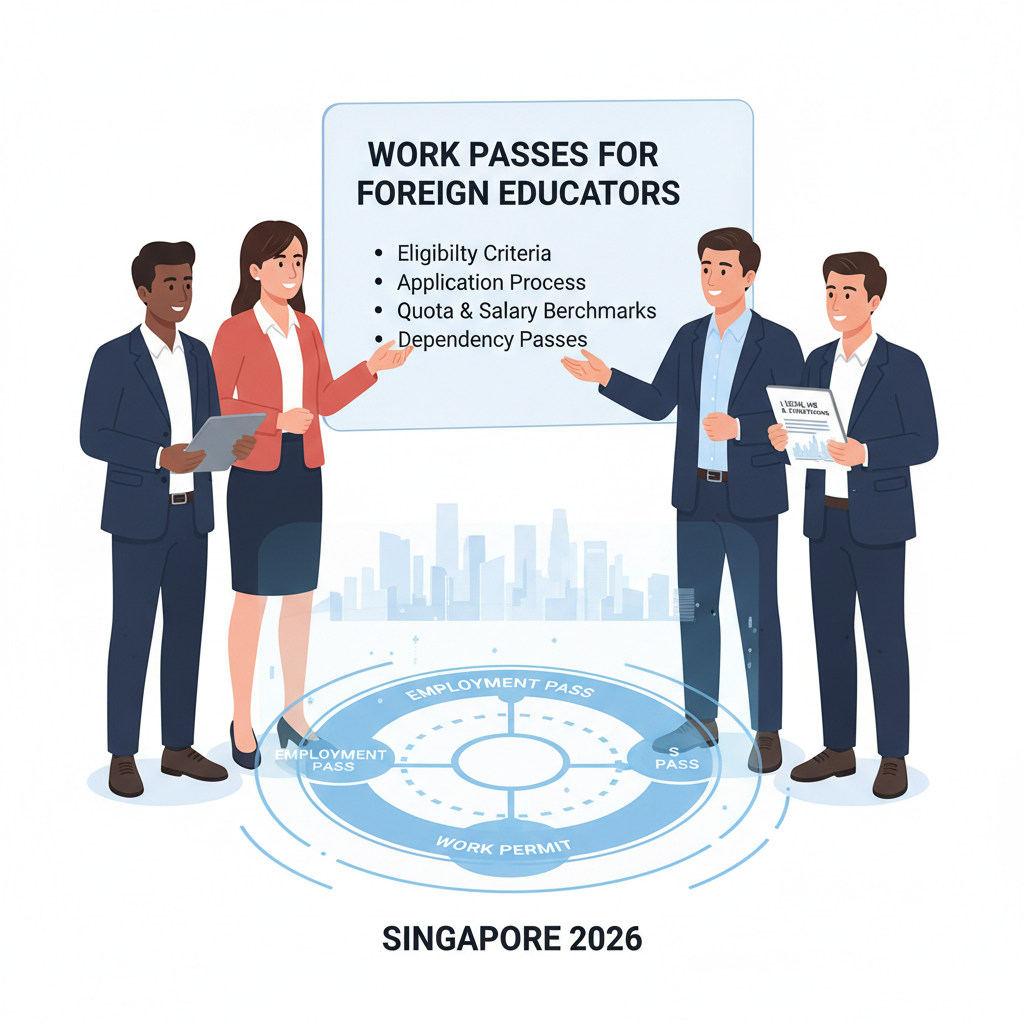
Managing expatriate staff involves a complex framework of work passes. Below, we detail the core pillars of these regulations.
1. Employment Pass (EP) Criteria
The Employment Pass (EP) is the primary work visa for foreign professionals, including educators, managers, and specialized administrators. To successfully sponsor an EP, organizations must navigate the COMPASS framework, which evaluates candidates based on both individual and firm-related attributes. Key criteria include meeting the qualifying monthly salary, which is adjusted periodically based on the candidate’s age and experience, as well as holding recognized educational qualifications from accredited institutions. Employers must demonstrate that they have conducted a fair selection process, typically through the Fair Consideration Framework, ensuring that qualified local candidates were given due consideration before hiring foreign nationals.
2. S Pass Quotas in Education
While the EP caters to high-level professionals, the S Pass is designed for mid-skilled staff, such as teaching assistants, specialized technical support, or administrative officers. It is vital for HR departments in education to understand that the S Pass is subject to a strict quota system. The Legal HR terms & conditions for education companies in singapore dictate that schools must adhere to specific Dependency Ratio Ceilings (DRC). This limit restricts the percentage of foreign staff allowed relative to the total local workforce. Failure to monitor these quotas can result in significant penalties or the inability to renew existing staff permits, making strategic workforce planning an essential component of school administration.
3. Letter of Consent (LOC) Updates
The Letter of Consent (LOC) serves as a specific work authorization for certain categories of visa holders, such as Dependant’s Pass (DP) holders. In recent years, the Ministry of Manpower has streamlined processes regarding LOCs. For educators who may be on a DP and wish to contribute to the school’s operations, obtaining an LOC is the standard procedure. It is imperative for school HR teams to stay updated on the latest policy shifts regarding LOC eligibility, as these conditions are frequently revised to balance the availability of the local talent pool with the need for specialized niche roles. Ensuring that all expatriate staff hold valid work authorization is the cornerstone of maintaining a legally compliant educational environment in Singapore.
Leave Policies & Employee Benefits
Operating an educational institution in Singapore requires a comprehensive understanding of the Legal HR terms & conditions for education companies in singapore. As the Ministry of Manpower (MOM) sets the regulatory framework for all local businesses, education providers must balance these statutory requirements with the unique operational demands of an academic calendar. Ensuring compliance not only mitigates legal risks but also fosters a professional environment that attracts top-tier educators and administrative talent. For a deeper dive into industry-specific nuances, you may review our comprehensive resource on Legal HR terms & conditions for education companies in singapore.
1. Annual Leave & Sick Leave
Under the Employment Act, employees are entitled to statutory annual leave and sick leave. New employees typically earn 7 days of annual leave in their first year, increasing by one day for every subsequent year of service. However, in the competitive education sector, it is standard practice for private institutions to offer 14 to 21 days of annual leave to remain attractive to highly qualified academic staff. According to official guidelines from the Ministry of Manpower, employers must provide paid sick leave once an employee has served for at least three months. This includes up to 14 days of outpatient sick leave and 60 days of hospitalization leave (inclusive of the 14 days of outpatient leave). For educational institutions, managing this requires clear HR policies that mandate the submission of medical certificates to prevent operational disruptions during busy term times.
2. Maternity & Paternity Benefits
Singaporean law provides robust protection for expectant parents to ensure work-life balance. Eligible female employees are entitled to 16 weeks of government-paid maternity leave, provided they have been employed for at least three months prior to the birth. Education companies must accommodate these long-term absences by planning for substitute teachers or interim administrative support. Paternity benefits are also strictly regulated, with eligible fathers entitled to two weeks of government-paid paternity leave. Additionally, Shared Parental Leave allows fathers to share a portion of the mother’s maternity leave, further supporting family-centric company cultures. Compliance with these mandates is non-negotiable, and HR departments in the education sector must maintain precise records of employee eligibility to qualify for government reimbursement schemes.
3. School Holiday Entitlements
Unlike standard corporate roles, the education sector in Singapore operates on a unique cadence defined by school term breaks. Many education companies structure their contracts to align with the Ministry of Education’s academic calendar. While the Employment Act mandates minimum leave, many private education firms offer ‘non-working’ periods during school holidays as an additional benefit. It is essential for employers to clarify in their employment contracts whether these periods are considered paid leave, time-off-in-lieu, or part of the standard contractual annual leave entitlement. Failure to clearly define these terms can lead to ambiguity regarding pay during seasonal closures. By formalizing these arrangements in the offer letter, schools ensure that staff understand their obligations and rights, creating a transparent relationship that supports long-term retention and high-quality student outcomes.
Managing Grievances & Disciplinary Actions
In the highly regulated landscape of Singapore’s private education sector, maintaining professional standards and fostering a safe learning environment requires rigorous adherence to labor laws. Education companies, including private schools and enrichment centers, must navigate the complexities of employee relations with precision. Understanding the Legal HR terms & conditions for education companies in singapore is essential to mitigate operational risks and maintain institutional integrity.
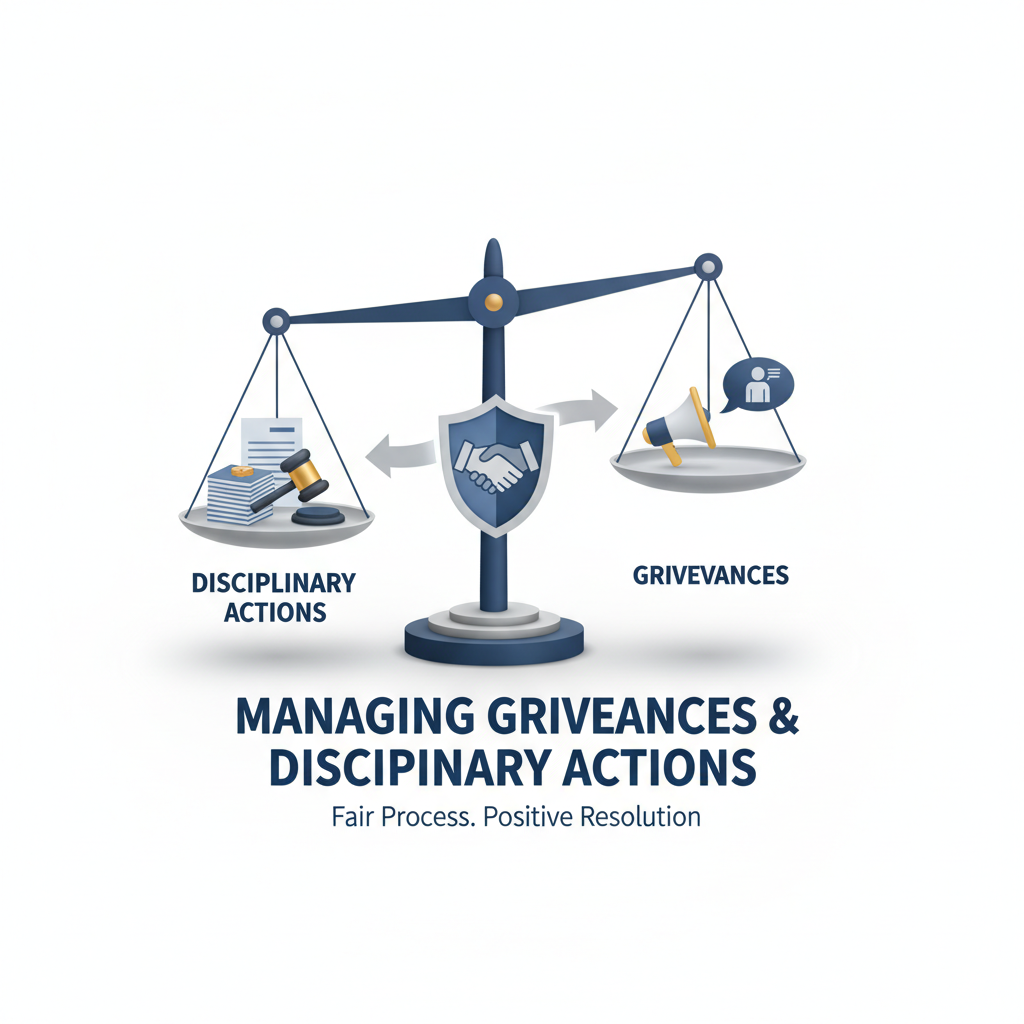
1. Tripartite Guidelines Compliance
For any educational institution in Singapore, the Tripartite Guidelines on Fair Employment Practices set the benchmark for workplace conduct. Compliance is not merely a formality; it is a legal requirement that protects both the employer and the employee. When drafting contracts or internal handbooks, schools must ensure that policies regarding grievance handling, disciplinary measures, and performance management are aligned with these national standards. Non-compliance can lead to severe reputational damage and regulatory intervention by the Ministry of Manpower (MOM). By establishing transparent internal processes—such as clear escalation pathways for reporting harassment or discrimination—schools create an environment of accountability. Managers should receive regular training on these guidelines to ensure that daily interactions with staff remain objective and legally sound.
2. Handling Parent-Teacher Conflicts
Private schools and enrichment centers occupy a unique position where the client (parents) often exerts significant influence over the service delivery. Conflicts between parents and educators can quickly escalate, affecting staff morale and performance. Management must act as a neutral mediator, ensuring that the educator’s rights and mental health are protected while addressing the valid concerns of the parent. Effective grievance management in this context involves thorough documentation of the incident, active listening sessions, and a clear “code of conduct” for parent-teacher interactions. When an educator feels unsupported by management during a conflict, performance naturally wanes. By implementing robust HR policies that prioritize professional decorum, schools can ensure that staff feel safe and valued, even when faced with challenging external pressures.
3. Fair Dismissal Procedures
Terminating an employment contract is a high-stakes decision that must be handled with extreme care to avoid claims of wrongful dismissal. In Singapore, the law emphasizes the importance of procedural fairness. Before considering dismissal, management must ensure that the performance issues or misconduct have been clearly communicated to the employee in writing. This includes providing opportunities for the employee to improve through a Performance Improvement Plan (PIP). If the situation does not resolve, the disciplinary process must be documented with meticulous detail, including records of warnings, counseling sessions, and the employee’s responses. All final dismissal decisions must be substantiated by legitimate business reasons, such as persistent poor performance, willful breach of the employment contract, or serious misconduct. By strictly adhering to the mandated 17 key performance and conduct indicators, schools can demonstrate that their actions were fair, reasonable, and conducted in good faith, thereby insulating the institution from potential legal disputes.
Partner with Shelby Global
You are looking for reliable HR Sevice Suppliers? Contact Shelby Global Now! To connect with verified talents and upgrade your orginization.
—————————————
References
– Employment Act: https://www.mom.gov.sg/employment-practices/employment-act
– Ministry of Manpower: https://www.mom.gov.sg/
– MOM Employment Pass Eligibility: https://www.mom.gov.sg/passes-and-permits/employment-pass/eligibility
– Ministry of Manpower Leave Guidelines: https://www.mom.gov.sg/employment-practices/leave
– Tripartite Guidelines on Fair Employment Practices: https://www.tal.sg/tafep