Understanding the Vietnamese Film Industry Market
The Vietnamese film industry is currently undergoing a transformative period, evolving from a local, niche market into a dynamic creative powerhouse in Southeast Asia. As domestic production quality rises and international interest surges, understanding the economic underpinnings of this sector is essential for professionals. Implementing a rigorous Salary Defining Strategy for all job titles in Films field in vietnam is no longer just a human resources requirement; it is a competitive necessity for studios looking to retain top talent in a fluid, project-based economy.

To navigate this landscape, it is vital to analyze the macroeconomic factors, contractual structures, and global partnerships that influence compensation frameworks today.
1. Current Growth and Film Budgets
The Vietnamese cinema sector has witnessed unprecedented growth over the last decade, with box office revenue consistently breaking records. According to Statista’s market analysis on the film industry in Vietnam, the steady increase in disposable income among the younger demographic has driven demand for high-quality, local content. This growth has directly influenced budgets; where once local films operated on shoestring funding, contemporary projects now command larger capital injections for post-production, visual effects, and marketing.
Increased budgets allow production houses to move beyond simple cost-cutting and toward value-based hiring. As projects become more technically demanding, the reliance on specialized roles—such as colorists, sound designers, and VFX artists—increases. Consequently, studios must account for these premium skill sets in their budgetary planning. A standardized salary strategy ensures that project managers can allocate funds effectively, balancing the need for high-end equipment with the imperative of attracting skilled crew members who understand the nuances of the local market.
2. Freelance vs Full-Time Contracts
The Vietnamese film industry relies heavily on a hybrid workforce model. Understanding the distinction between freelance and full-time compensation is critical for any Salary Defining Strategy for all job titles in Films field in vietnam. Freelancing remains the dominant model for technical and creative roles, as productions often have seasonal or project-based cycles.
Freelance contracts in Vietnam often demand a higher day rate to compensate for the lack of long-term stability and corporate benefits, such as social insurance and health coverage. Conversely, full-time contracts are becoming more common in major studios and streaming production houses that require permanent creative teams to maintain a consistent brand voice. A robust salary strategy must clearly delineate these roles, offering competitive baseline salaries for full-time staff while maintaining a flexible, project-indexed pay scale for freelancers. Failure to distinguish between these two modes of employment leads to payroll volatility and potential talent attrition, as professionals move toward organizations that provide transparent, equitable financial roadmaps.
3. Impact of International Co-productions
International collaborations have acted as a catalyst for professionalization in the Vietnamese film scene. When foreign studios partner with local production houses, they introduce global standards of budget management, safety compliance, and labor compensation. These partnerships are a double-edged sword; while they bring much-needed investment and technical training, they also create a discrepancy in pay scales between local productions and international-standard sets.
Local producers are now forced to align their pay structures with international benchmarks to prevent a “brain drain” where local talent shifts exclusively toward international projects. This creates a pressure cooker environment where the Salary Defining Strategy for all job titles in Films field in vietnam becomes the primary tool for defense against talent poaching. By establishing clear salary tiers based on global standards, Vietnamese companies can ensure they remain competitive. Furthermore, these co-productions encourage the adoption of transparent compensation policies, which professionalize the sector and foster long-term loyalty among creative professionals. As the market matures, those who leverage data-driven salary models will undoubtedly lead the next wave of Vietnamese cinematic innovation, ensuring both artistic excellence and financial sustainability.
Key Salary Defining Strategies for Pre-Production
Establishing a robust Salary Defining Strategy for all job titles in Films field in vietnam is the cornerstone of sustainable project management. Pre-production is where the creative vision is codified, and compensating key talent accurately is essential for attracting top-tier professionals. In the rapidly evolving Vietnamese film industry, understanding the nuances of fair compensation requires a data-driven approach that balances local market realities with international professional standards.
1. Screenwriters Fees Vietnam
In the Vietnamese market, screenwriting compensation often varies significantly based on the project’s scope, the writer’s portfolio, and whether the work is original or an adaptation. Establishing a clear fee structure is vital. Typically, writers are compensated through a combination of a fixed script fee and, occasionally, royalties or performance-based bonuses. According to industry analysis by The Writers Guild of America, professional script fees generally follow a tiered structure, a model increasingly adopted by professional production houses in Vietnam. When formulating this strategy, production companies should consider the complexity of the script, the required research depth, and the number of rewrites expected, ensuring the contract clearly defines deliverables to avoid scope creep.
2. Film Director Salary Vietnam
The compensation for directors in Vietnam is highly tailored, often reflecting their ability to command an audience or deliver high-quality production value on a budget. A director’s pay scale is rarely flat; it is usually dictated by the director’s track record (previous box office performance or festival accolades), the scale of the production, and the duration of their commitment across pre-production, filming, and post-production. Many successful strategies involve a base directing fee supplemented by a “backend” percentage of net profits, which aligns the director’s incentives with the commercial success of the film. This approach requires transparency in accounting and precise contractual language to ensure all parties are aligned regarding the definition of profit.
3. Producer Pay Scale and Profit Sharing
Producers are the engine behind any film, and their compensation structure must reflect the immense risk and workload they manage. In Vietnam, while entry-level producing roles may have fixed salaries, experienced executive producers often opt for a lower base salary in exchange for a larger equity stake in the project. This is a critical component of a comprehensive salary defining strategy. Effective compensation frameworks for producers often include a producer fee (a fixed percentage of the production budget, typically ranging from 5% to 10%) plus a share of the net profits. This structure encourages responsible budget management while rewarding successful ventures. Creating a clear, tiered approach for different producer tiers—Associate Producer, Line Producer, and Executive Producer—helps in standardizing internal costs and maintaining long-term financial stability.
By implementing these strategies, production companies in Vietnam can create a transparent and competitive environment, ensuring that talent is motivated and the financial health of the project is preserved from the very first day of pre-production.
Production Crew Wages and Day Rates
Budgeting for a film project in Vietnam requires a sophisticated approach to labor costs. Developing a consistent Salary Defining Strategy for all job titles in Films field in vietnam is essential for maintaining project viability and professional standards. Production managers must balance international quality expectations with local market realities to ensure competitive compensation.
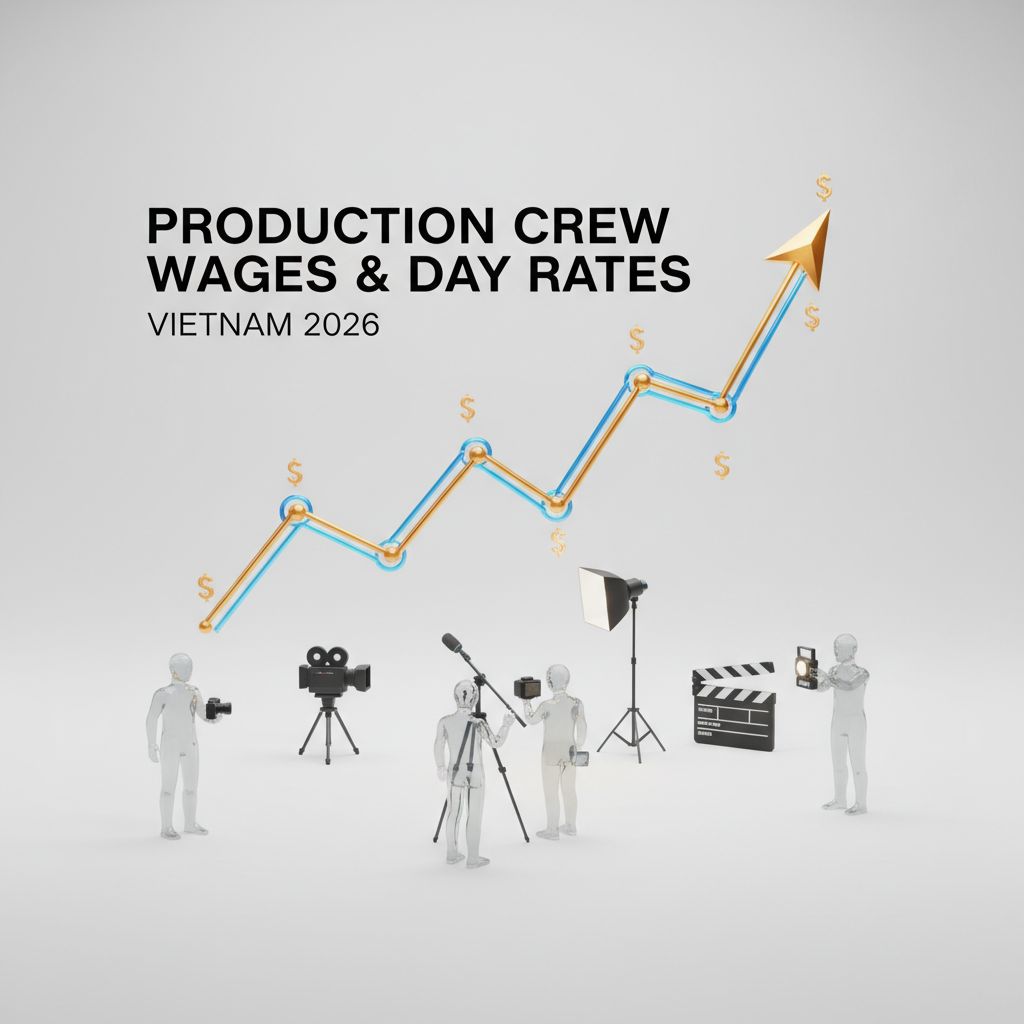
When establishing your budget, consider that the Vietnam film industry is evolving rapidly, with rates often dictated by project complexity, union-equivalent standards for high-end commercials, and the experience level of the crew. A standardized approach prevents budget creep and fosters long-term industry relationships.
1. Cinematographer Day Rate
The Cinematographer (DoP) is often the highest-paid crew member on set. In the Vietnamese market, rates for a top-tier DoP are determined by their portfolio, the scale of the production, and the equipment package utilized. According to industry analysis by the American Society of Cinematographers, the visual impact of the DoP directly influences the production value of the final product. Locally, daily rates can vary significantly, ranging from mid-level professionals to internationally recognized directors of photography who may charge a premium for their creative expertise and specialized lighting knowledge.
2. Lighting Technician Wages
Lighting teams are the backbone of production efficiency. Wages for Lighting Technicians (Gaffers, Best Boys, and sparks) in Vietnam are typically calculated based on a 10 to 12-hour day. When defining salaries for these roles, producers should account for the weight of the equipment, the complexity of the rig, and the safety requirements of the set. Experienced technicians command higher wages due to their ability to troubleshoot electrical issues rapidly, ensuring the filming schedule remains on track without risking safety or image quality.
3. Actor Compensation Guide
Actor compensation follows a different structure than technical crew wages. It is largely defined by the actor’s profile, usage rights (territory and media platform), and the scope of the role. For commercial work, talent fees often include a ‘buyout’ fee for the usage of the actor’s image in advertisements. It is crucial to have clear contracts that specify the duration of the shoot and the exact usage rights to avoid future legal disputes. A transparent compensation strategy for talent not only ensures professional performance but also protects the production company from hidden costs.
Ultimately, a robust budget strategy for crew and talent hinges on thorough research and clear documentation. By implementing a standardized salary structure, production houses can navigate the dynamic Vietnamese film sector with confidence, ensuring they attract the best talent while remaining fiscally responsible.
Post-Production Compensation Guidelines
Strategizing fair pay for the technical experts who bring a film to its final polished form is a critical component of budget management in the Vietnamese cinema industry. Navigating the complex landscape of post-production requires a robust Salary Defining Strategy for all job titles in Films field in vietnam, ensuring that studios attract top-tier talent while maintaining financial feasibility.
1. Post-Production Wages Overview
In Vietnam, the compensation for post-production roles has evolved significantly alongside the growth of the local creative economy. Unlike pre-production or principal photography, post-production is often structured around a mix of project-based fees, daily rates, or monthly retainers. When developing a comprehensive compensation plan, production companies must account for the specialized software licenses, hardware maintenance, and long hours inherent in the workflow. Factors such as the complexity of the film (e.g., commercial versus independent feature), the studio’s geographic location in hubs like Ho Chi Minh City or Hanoi, and the experience level of the creative staff significantly dictate the market rates. It is essential to refer to the current labor market analysis for post-production roles to ensure that internal pay scales align with regional standards, preventing talent attrition.
2. Sound Engineer Salary
Sound design and audio engineering are the silent architects of a film’s emotional impact. In Vietnam, a Sound Engineer’s salary is highly contingent on their ability to handle both technical post-production tasks—such as Foley, ADR (Automated Dialogue Replacement), and final mixing—and creative soundscaping. Entry-level sound technicians may be compensated on a per-project basis, while senior engineers who operate their own studios or serve as Lead Sound Designers often command premium rates. Compensation strategies should distinguish between basic sound editing and complex mixing for cinematic sound stages. Budgeting should also consider whether the sound engineer will be overseeing a team for larger scale projects, which adds a layer of project management responsibility that warrants a higher salary bracket. For high-end productions, it is common to offer a base fee plus a percentage of completion bonuses to incentivize precision and quality output.
3. VFX and Editing Rates
Visual Effects (VFX) and Video Editing represent the most labor-intensive segments of the post-production pipeline. Because these roles are heavily reliant on high-performance computing, current salary structures often differentiate between ‘in-house’ staff and ‘freelance’ talent. Editors in Vietnam are typically paid based on the scale of the edit—whether it is a short-form advertisement or a long-form feature film. For VFX artists, pricing models have shifted towards ‘shot-based’ compensation or daily rates for complex compositing, 3D modeling, and motion graphics. A fair salary strategy must account for the ‘crunch time’—the period leading up to the final delivery—where additional overtime compensation or project completion bonuses are standard. By standardizing these rates, production companies create a transparent environment that fosters long-term partnerships with freelance technical experts, ensuring that the film’s final aesthetic remains consistent from the first cut to the final render.
Legal Compliance and Future Outlook
Establishing a robust Salary Defining Strategy for all job titles in Films field in vietnam requires a delicate balance between fiscal responsibility, talent attraction, and strict adherence to the national regulatory framework. As the Vietnamese media landscape matures, production houses must navigate the complexities of Labor Law No. 45/2019/QH14, ensuring that all contractual arrangements remain compliant while anticipating the evolving market dynamics of 2026.

1. Film Crew Union Rates and Laws
Unlike some international markets, Vietnam does not have a single, state-mandated union for film workers. However, the legal environment is governed by mandatory insurance contributions and minimum wage standards defined by the Ministry of Labor, Invalids and Social Affairs. Producers must ensure that overtime, night shift premiums, and hazardous work allowances are clearly delineated in employment contracts. Developing a Salary Defining Strategy for all job titles in Films field in vietnam necessitates understanding the distinction between independent contractors and full-time employees, as misclassification can lead to significant tax liabilities and legal disputes.
2. Entry-Level Film Jobs Salary
Attracting emerging talent requires competitive entry-level packages that reflect the high cost of living in hubs like Ho Chi Minh City and Hanoi. When setting these thresholds, production companies should utilize a structured internal rubric. For a comprehensive guide on benchmarking your company’s compensation against current market trends, refer to our detailed Salary Defining Strategy for all job titles in Films field in vietnam. Entry-level roles—ranging from production assistants to junior editors—should not only meet the regional minimum wage but also factor in standard allowances for meals, transportation, and specialized training, which help in talent retention and long-term career growth within the local industry.
3. Adapting Strategies for 2026
The film industry in Vietnam is undergoing rapid digitalization, with the influx of international streaming platforms creating a higher demand for specialized technical roles. By 2026, the shift toward performance-based incentives and flexible working models will become the standard rather than the exception. A proactive strategy must account for the rise in the “gig economy” within film production, where project-based compensation models are replacing traditional monthly salaries. To stay relevant, leadership must regularly audit their pay scales against inflation and the surge in digital demand. Maintaining legal compliance while being agile enough to pivot toward international standards of compensation will ensure that your production house remains the employer of choice in an increasingly competitive creative market.
Partner with Shelby Global
You are looking for reliable HR Sevice Suppliers? Contact Shelby Global Now! To connect with verified talents and upgrade your orginization.
—————————————
References
– Statista’s market analysis on the film industry in Vietnam: https://www.statista.com/outlook/dmo/digital-media/movies/vietnam
– The Writers Guild of America: https://www.wga.org/
– American Society of Cinematographers: https://www.ascmag.com/
– current labor market analysis for post-production roles: https://www.talent.com/salary?job=post+production
– Ministry of Labor, Invalids and Social Affairs: https://molisa.gov.vn/en/Pages/default.aspx