Scope of Responsibilities and Organizational Structure
In the rapidly evolving Malaysian healthcare landscape, the human resources (HR) function serves as the backbone of operational success, yet the execution of this role varies significantly depending on the scale of the medical institution. The differences between the SMEs’ HR Manager and the Corporates’ HR Director in the medicine field in Malaysia are profound, rooted primarily in the organizational structure, resource availability, and strategic depth required by the setting.

Whether navigating the intimate setting of a private clinic or the complex hierarchy of a hospital chain, understanding these distinctions is critical for professionals aligning their career paths or organizational requirements. For deeper insights into these roles, one can explore the differences between the SMEs’ HR Manager and the Corporates’ HR Director in the medicine field in Malaysia.
1. Analyzing Overall Organizational Structure
The organizational structure dictates the scope of HR influence. In SME clinics, the structure is often flat, where the HR Manager operates in close proximity to the clinical staff and owners. Here, communication lines are short, and decision-making is immediate, often blurring the lines between administrative tasks and strategic oversight. Conversely, large corporate hospitals utilize a matrix structure that demands formalization and standardization across multiple departments and potentially several locations.
In the Malaysian corporate medical sector, HR Directors operate within complex hierarchies that require alignment with board members, chief financial officers, and clinical directors. Their scope includes managing multifaceted talent pipelines, ensuring compliance with strict regulatory standards set by the Ministry of Health Malaysia, and maintaining standardized HR policies across the enterprise. This structural disparity means that the HR Director in a corporate environment acts as a strategic architect, while the SME HR Manager acts as a versatile practitioner.
2. Strategic HR Planning in Large Corporates
Strategic HR planning is the defining hallmark of the Corporate HR Director. In a large medical institution, the HR Director is not preoccupied with daily attendance logs but instead focuses on long-term initiatives such as organizational development, talent management frameworks, and employer branding. They are responsible for workforce forecasting to ensure the institution remains competitive in a market where specialized medical talent is in high demand and limited supply.
Their responsibilities encompass designing comprehensive compensation and benefits packages that align with corporate budgets, fostering a cohesive organizational culture across diverse teams, and implementing sophisticated performance management systems that bridge clinical outcomes with HR metrics. They operate from a high-level vantage point, making decisions that affect hundreds or thousands of employees, ensuring that HR strategy directly drives the overall corporate mission and profitability.
3. Day-to-Day Operations in SME Clinics
Conversely, the HR Manager in an SME clinic in Malaysia is fundamentally a hands-on generalist. In this environment, they manage the entire employee lifecycle personally, from recruitment and payroll processing to conflict resolution and handling daily attendance issues. Because the team is smaller, the HR Manager is often the face of HR for every employee, building direct relationships that are essential for the tight-knit culture of an SME.
They are deeply involved in operational problem-solving. If a nurse calls in sick, they may be the ones adjusting the roster for that specific day. If a medical equipment technician leaves, they are personally screening CVs and conducting interviews. While they lack the massive resources of a corporate entity, they possess the agility to implement quick solutions to HR problems. Their primary challenge is balancing these immediate operational demands with the need to ensure regulatory compliance and maintain essential personnel documentation, often without a dedicated supporting HR staff. This high-touch approach is essential for maintaining service quality in the smaller, patient-centric settings typical of Malaysian private clinics.
In conclusion, while both roles are essential to the healthcare ecosystem, their focus, scale, and day-to-day realities differ immensely. The Corporate HR Director manages the infrastructure of success, while the SME HR Manager drives the daily execution that keeps the clinic running smoothly.
Healthcare Talent Acquisition and Recruitment
In the evolving landscape of Malaysian healthcare, the approach to talent acquisition is bifurcated between agile Small and Medium Enterprises (SMEs) and sprawling medical conglomerates. Understanding the differences between the SMEs’ HR Manager and the Corporates’ HR Director in medicine field in Malaysia is essential for professionals navigating this competitive market. While the HR Manager in an SME acts as a versatile generalist wearing multiple hats, the HR Director in a corporate entity functions as a strategic architect, overseeing expansive recruitment pipelines and complex human capital infrastructure. Both roles are pivotal, yet they demand vastly different competencies to secure top-tier clinical and administrative talent.
1. Scaling Specialized Medical Recruitment
For large medical corporates, recruitment is a high-volume, data-driven science. These organizations utilize sophisticated Applicant Tracking Systems (ATS) and global headhunting networks to ensure continuous staffing for multi-specialty hospitals. In contrast, an SME HR Manager often relies on personalized networking, local community engagement, and direct headhunting to fill niche roles. While corporates leverage their employer brand to attract a wide pool of candidates, SMEs often prioritize cultural fit and agility, aiming to hire practitioners who can perform across multiple domains. A key aspect of modern recruitment is the emphasis on credential verification, which must strictly adhere to the Malaysian Medical Council standards, a universal necessity that both roles must master despite their organizational differences.
2. Corporate vs SME Compensation Packages
The structural disparity between SME and corporate compensation models is significant. Medical corporates typically offer standardized, tiered compensation packages inclusive of comprehensive medical insurance, research grants, and structured performance bonuses tied to Key Performance Indicators (KPIs). Conversely, SME HR Managers often negotiate bespoke, flexible packages. These might include profit-sharing arrangements, flexible working hours, or equity options that appeal to specific talent cohorts seeking high-growth environments. These distinct strategies highlight the differences between the SMEs’ HR Manager and the Corporates’ HR Director in medicine field in Malaysia regarding how they leverage financial and non-financial incentives to entice practitioners in a talent-scarce market.
3. Effective Employee Retention Strategies
Retention in the medical field requires more than competitive salary; it requires long-term value alignment. Large corporates invest heavily in standardized continuous professional development (CPD) programs, clear vertical career progression tracks, and rigid performance management systems to keep talent engaged. They thrive on organizational stability. SME retention strategies are frequently more relational and community-focused. HR Managers in SMEs tend to foster a “family-like” culture, providing direct mentorship and influence over clinical operations, which can be highly attractive to physicians seeking autonomy. By focusing on personalization, SMEs mitigate the risk of turnover often caused by the impersonal nature of large corporate structures. Ultimately, whether through corporate stability or SME intimacy, the success of talent acquisition in Malaysia hinges on the HR leader’s ability to communicate the unique value proposition of their respective institutions.
Navigating Medical Compliance and Employee Relations
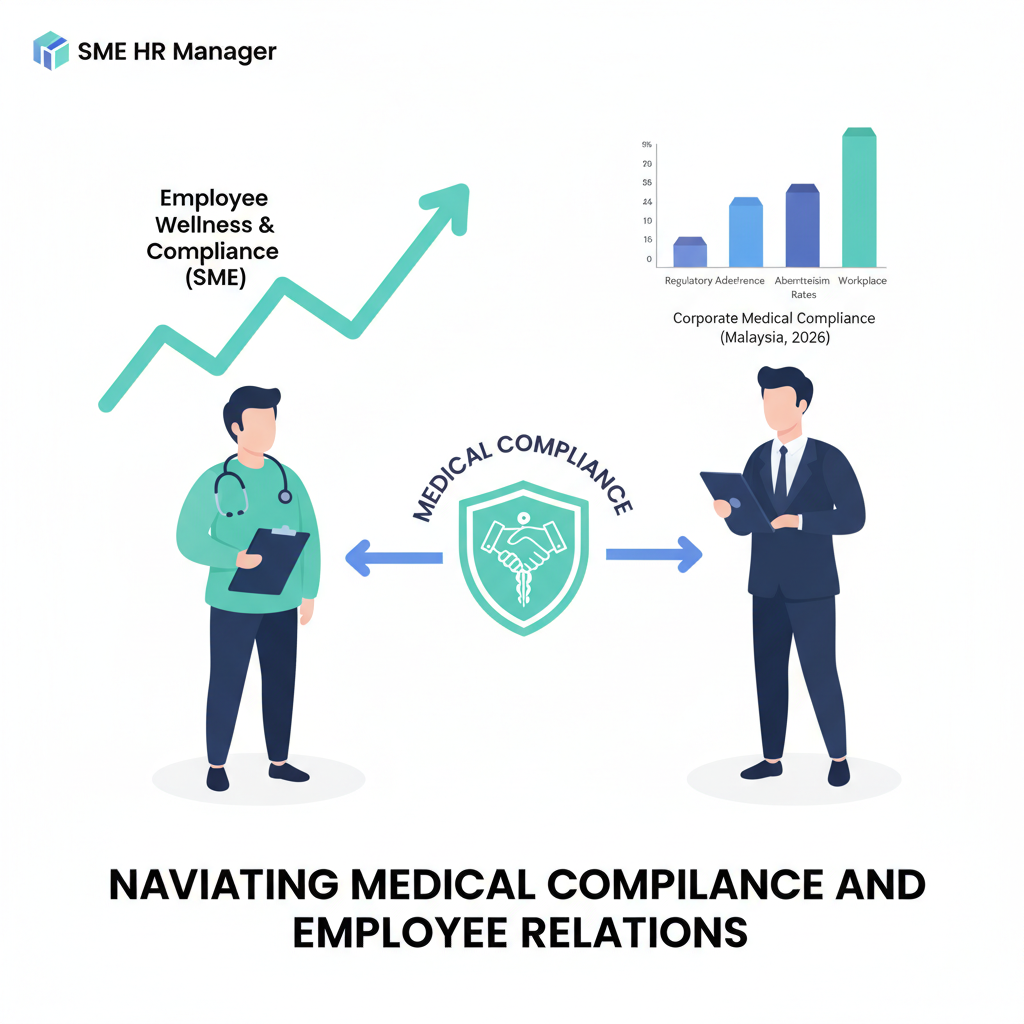
In the evolving healthcare landscape of Malaysia, the responsibilities governing human resources are bifurcated by the scale of the organization. Understanding the Differences between the SMEs’ HR Manager and the Corporates’ HR Director in medicine field in malaysia is crucial for professionals aiming to streamline operations while adhering to national regulations. Whether operating in a private clinic or a conglomerate, the intersection of talent management and medical compliance remains a constant challenge.
1. Adhering to Medical Compliance Malaysia
For an HR Manager in a small-to-medium enterprise (SME), medical compliance is often a hands-on, daily operational necessity. They must ensure that all practitioners are registered with the Malaysian Medical Council (MMC), keeping track of Annual Practicing Certificates (APC) manually. In contrast, a Corporate HR Director in the medicine field oversees a sophisticated compliance framework that utilizes automated HRIS systems to monitor the licensing status of thousands of employees across multiple regions. While the SME manager focuses on individual adherence, the Corporate Director focuses on risk mitigation and standardized protocols across the entire organization, ensuring every branch meets strict Ministry of Health (MOH) standards. To delve deeper into these nuances, you can explore the Differences between the SMEs’ HR Manager and the Corporates’ HR Director in medicine field in malaysia to understand how organizational size impacts professional scope.
2. Managing Complex Employee Relations
Employee relations (ER) take on different shapes depending on the company hierarchy. In an SME, the HR Manager is often the sole point of contact for staff concerns, handling sensitive issues like interpersonal conflicts, grievances, and compensation adjustments with a personal touch. Their role is highly relational. Conversely, a Corporate HR Director operates through structured policy frameworks and union negotiation protocols. They focus on labor law compliance under the Employment Act 1955, managing complex organizational restructuring and collective bargaining. The Corporate Director acts as a strategic partner to the board, whereas the SME manager acts as the cultural guardian of the clinic or firm.
3. Handling Staff Audits and Legal Licensing
The intensity of staff audits differs significantly based on the breadth of the medical facility. For the SME HR Manager, preparation for a licensing audit involves gathering personnel files, tracking Continuing Professional Development (CPD) points for individual doctors, and ensuring health screenings are up to date. The Corporate HR Director, however, orchestrates large-scale audits that involve data integrity verification, compliance reporting for regulatory bodies, and internal governance. These directors must manage large teams of auditors and legal counsel to protect the organization from malpractice liabilities and regulatory penalties. The scope of their audit responsibility is vastly larger, requiring a deep understanding of corporate law and medical administrative policy.
HR Budget Allocation and Compensation Frameworks
In the evolving Malaysian landscape, the strategic focus of human resources differs significantly based on organizational scale. Understanding the Differences between the SMEs’ HR Manager and the Corporates’ HR Director in medicine field in malaysia is essential for tailoring compensation strategies. While Corporate HR Directors leverage vast capital to construct comprehensive healthcare ecosystems, SME HR Managers must exercise fiscal creativity to remain competitive within tight operational budgets.
1. Mastering HR Budget Allocation Tactics
Budget allocation serves as the foundational pillar for any HR strategy. For a Corporate HR Director, budgeting is an exercise in scale, data analytics, and risk management. With substantial financial backing, these professionals often utilize actuarial data to forecast premium costs for large-scale group hospital and surgical insurance plans. They prioritize high-tier, end-to-end coverage that minimizes out-of-pocket expenses for employees, viewing these costs as vital investments for talent retention in highly competitive sectors.
Conversely, the SME HR Manager approaches budgeting with a focus on high-impact, low-cost interventions. They must carefully balance cash flow constraints while ensuring compliance with the Malaysian Ministry of Human Resources regulations. Because SMEs often lack the buying power of large corporations, HR managers must master the art of prioritizing essential coverage over comprehensive ‘nice-to-haves,’ frequently opting for outpatient-only plans or health screenings rather than fully funded extensive medical coverage.
2. Structuring Corporate Healthcare Benefits
Corporates possess the structural advantage to implement robust corporate healthcare benefits that transcend basic medical coverage. An HR Director in a large organization negotiates group contracts that often include wellness programs, comprehensive dental and optical riders, and mental health support services. This holistic approach is designed to reduce long-term absenteeism and increase overall productivity, supported by sophisticated HRIS systems to track utilization rates and adjust future benefit structures accordingly.
The administrative burden in a corporate setting is often offset by dedicated benefits teams, allowing the HR Director to focus on strategic wellness initiatives rather than purely transactional task management. These benefits become a central component of the employer branding, enabling corporations to attract top-tier talent in the medicine and biotechnology fields by promising financial security during medical emergencies.
3. Creative Financial Perks for SME Employees
For SME HR Managers, the challenge lies in maximizing perceived value without overextending the company’s financial resources. Since they cannot compete with the comprehensive insurance packages of large firms, they often lean into flexible benefits schemes and creative financial perks. This may include ‘health cash accounts’ or wellness allowances that give employees agency over how they spend their medical benefits, whether on supplements, gym memberships, or traditional preventative care.
SME HR Managers also frequently leverage partnerships with local clinics for discounted panel rates, providing localized value that feels personalized rather than institutional. By focusing on flexible scheduling, hybrid work arrangements, and performance-based wellness bonuses, SMEs can cultivate a culture of care that rival corporate benefit schemes, despite the disparity in raw budgetary power. The focus shifts from high-cost insurance premiums to high-engagement perks that directly improve the employee’s quality of life.
Medical Staff Training and HR Technology Adoption
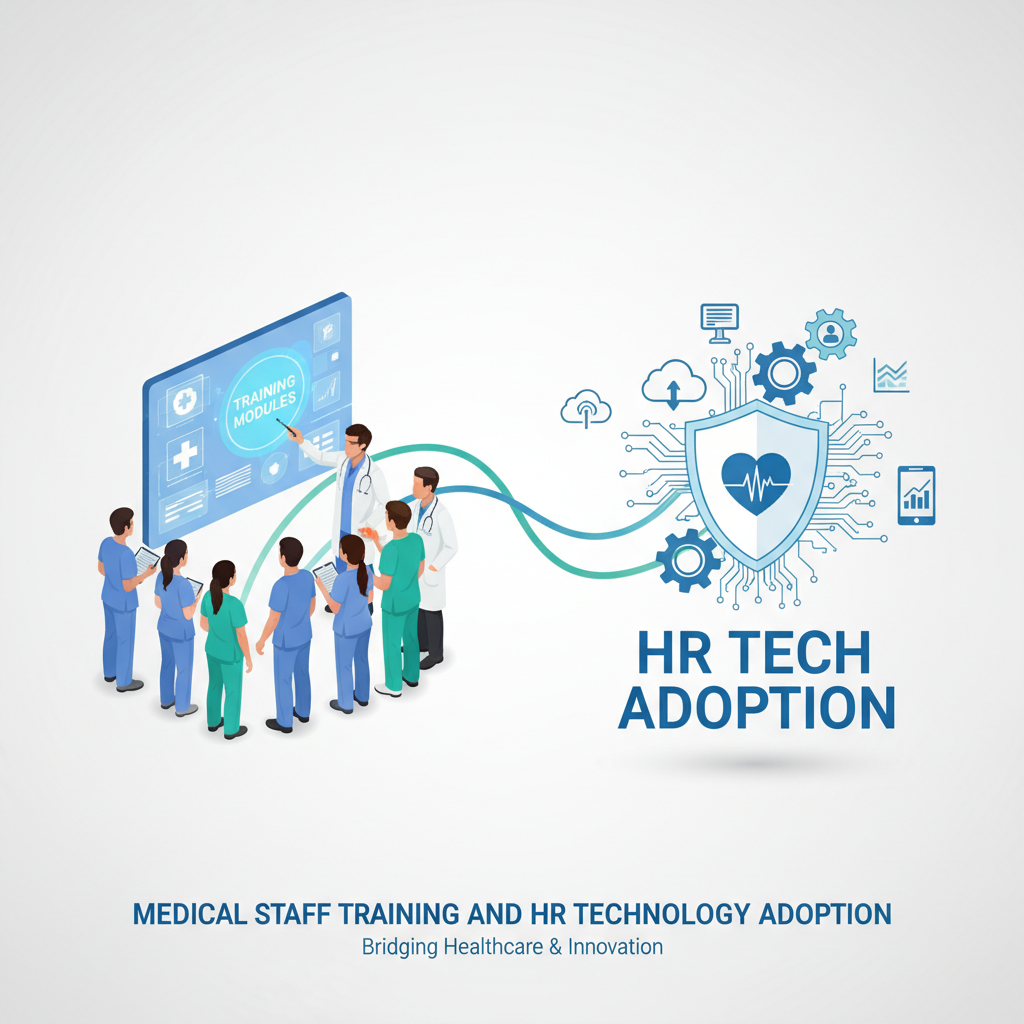
In the evolving healthcare landscape of Malaysia, the management of human capital serves as the backbone of clinical excellence. A critical examination of the differences between the SMEs’ HR Manager and the Corporates’ HR Director in medicine field in malaysia reveals a distinct dichotomy in how training programs are funded and how HR technology is utilized to streamline operations. While the SME HR manager often functions as an operational generalist, the Corporate HR Director acts as a strategic architect, balancing large-scale scalability with meticulous clinical governance.
1. Funding Medical Staff Training Programs
In the SME sector, medical staff training is frequently driven by immediate operational necessity. The HR manager in these environments must often navigate limited budget allocations, prioritizing certifications that ensure compliance with Ministry of Health (MOH) Malaysia mandates. Funding is usually reactive, aimed at filling skill gaps that emerge during daily patient care, which limits the depth of long-term career development programs.
Conversely, Corporate HR Directors operate with substantial, ring-fenced budgets dedicated to continuing medical education (CME). In these expansive hospital chains, training is a strategic tool used to maintain high standards of patient safety and brand reputation. These leaders invest in comprehensive leadership development and specialized clinical modules, viewing training not as an expense, but as an investment in the long-term retention of top-tier medical talent across the country.
2. Driving Advanced HR Technology Adoption
Technology adoption represents a stark divide. SMEs often rely on fragmented, manual, or entry-level HR systems. The HR manager in an SME is usually constrained by the cost of procurement and the technical expertise required to manage sophisticated HR Information Systems (HRIS). Consequently, the integration of data-driven human resources is often lagging.
In contrast, the Corporate HR Director champions the rapid integration of advanced platforms. These leaders oversee the deployment of sophisticated ERP systems that synchronize HR data with clinical outcomes. By leveraging automation for payroll, recruitment, and onboarding, corporate environments effectively scale operations while maintaining transparency. For a deeper analysis of these organizational shifts, explore the Differences between the SMEs’ HR Manager and the Corporates’ HR Director in medicine field in malaysia to understand how infrastructure changes impact organizational agility.
3. Executing Clinical Performance Management
Performance management in SMEs is often personalized and subjective. The HR manager works closely with a small team of practitioners, relying on direct observation and frequent, informal feedback loops. While this builds strong professional relationships, it often lacks the robust data analytics required to benchmark clinical performance against industry standards.
The Corporate HR Director, however, implements structured Key Performance Indicators (KPIs) and Balanced Scorecards that track both clinical efficacy and patient satisfaction scores. This approach necessitates a high degree of technological maturity, as the HR department must aggregate data from electronic health records and HRIS to provide actionable insights. By formalizing performance management, corporate entities ensure that every clinician is aligned with the broader institutional goals, minimizing variability in care delivery and maximizing operational efficiency.
Partner with Shelby Global
You are looking for reliable HR Sevice Suppliers? Contact Shelby Global Now! To connect with verified talents and upgrade your orginization.
—————————————
References
– Ministry of Health Malaysia: https://www.moh.gov.my/
– Malaysian Medical Council: https://mmc.gov.my/
– Malaysian Medical Council: https://mmc.gov.my/
– Malaysian Ministry of Human Resources: https://www.mohr.gov.my/
– Ministry of Health (MOH) Malaysia: https://www.moh.gov.my/