Scope of SME vs Corporate HR Duties
In the vibrant industrial landscape of Vietnam, the human resources function evolves significantly depending on the scale and maturity of the organization. Understanding the differences between the SMEs’ HR Manager and the Corporates’ HR Director in production field in vietnam is essential for professionals aiming to tailor their career paths or organizational structures effectively. While both roles are tasked with managing the most critical asset—people—the operational scope differs drastically, transitioning from tactile, daily problem-solving to high-level strategic oversight.
1. Daily Administrative vs Strategic Planning
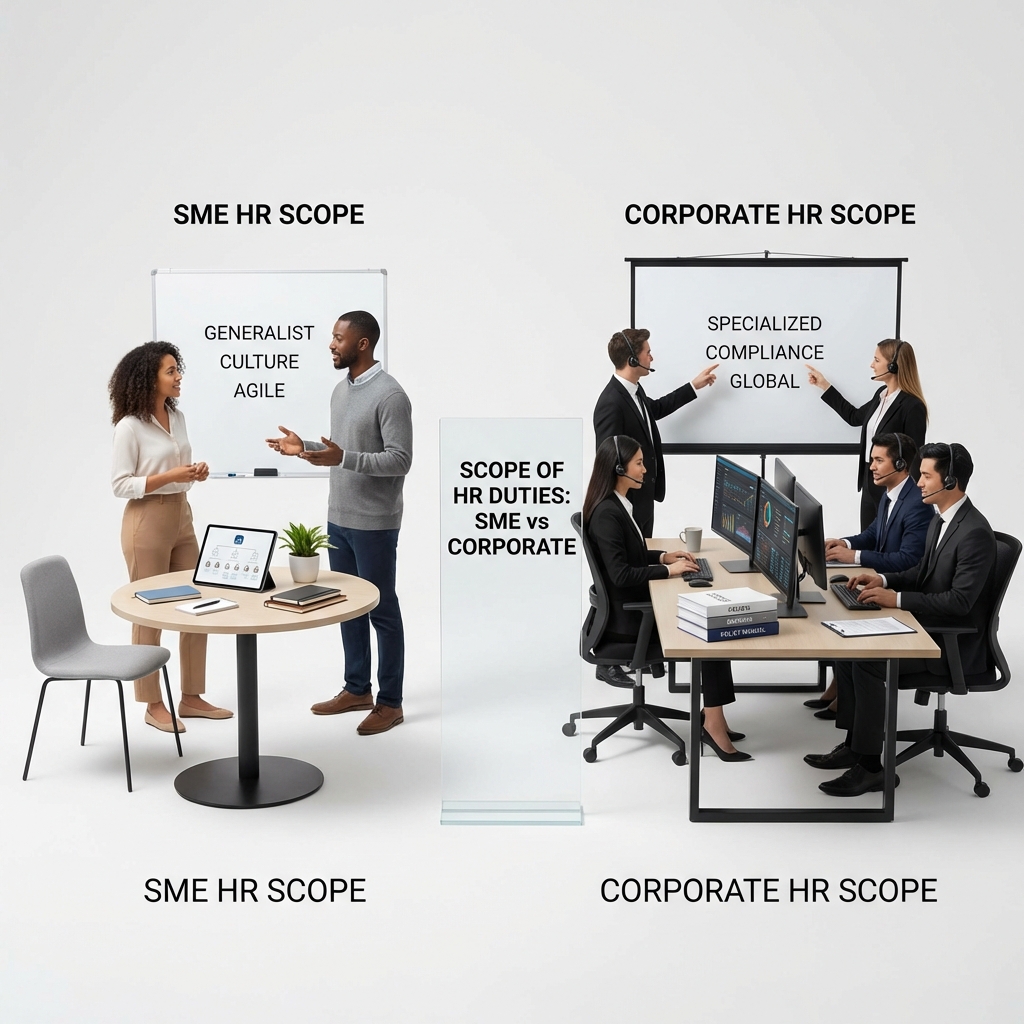
For an SME HR Manager in a Vietnamese manufacturing plant, the day is characterized by high-touch, operational activity. They are often the sole point of contact for payroll, local labor compliance, and floor-level disputes. Their focus is immediate: ensuring daily production targets are supported by adequate staffing and adherence to local Vietnamese labor codes. Conversely, a Corporate HR Director in a large-scale manufacturing environment shifts focus toward long-term organizational health. They engage in workforce planning that spans years rather than weeks, aligning HR initiatives with the company’s strategic human resource management goals to ensure competitive advantage in a global market.
2. Managing Factory Recruitment at Different Scales
Recruitment in a small manufacturing firm is highly personal; the SME HR Manager often conducts initial interviews personally and manages the onboarding process from start to finish. They are hyper-focused on filling immediate vacancies to prevent production downtime. In contrast, a Corporate HR Director manages a systemic machine. They rarely hire for individual floor roles, instead focusing on building automated recruitment funnels, employer branding initiatives, and leadership succession planning programs across multiple factories. For a deeper dive into these nuances, read more at Differences between the SMEs’ HR Manager and the Corporates’ HR Director in production field in vietnam to understand how organizational scale dictates recruitment strategy.
3. Direct Employee Relations vs Systemic Policy Formulation
The SME HR Manager operates on the front lines of employee relations. They resolve personal conflicts, handle grievances, and maintain a culture of engagement through direct, daily interaction with factory workers. Their authority is localized and interpersonal. However, the Corporate HR Director operates through a layer of policy. They draft comprehensive handbooks, design complex compensation and benefits packages, and mandate compliance standards that must be implemented uniformly across the entire corporate structure. They do not manage individual relationships; they manage the ‘system’ that governs those relationships, ensuring that policies are ethical, compliant, and scalable as the corporation expands its footprint within the region.
Manufacturing HR Leadership Variations
In the dynamic landscape of Vietnam’s industrial sector, the operational mandate of human resources professionals shifts dramatically based on the scale of the organization. Exploring the differences between the SMEs’ HR Manager and the Corporates’ HR Director in production field in vietnam reveals a dichotomy between hands-on, generalized management and specialized, strategic oversight. While both roles aim to optimize human capital, their decision-making frameworks and organizational integration differ profoundly.
1. Agile Decision Making in SME Environments
In smaller factories, the HR Manager often acts as a jack-of-all-trades. Decision-making is characterized by speed and direct involvement. Because the organizational structure is lean, an HR Manager can observe floor-level issues directly and implement policy adjustments within hours. This agility is crucial in Vietnam, where labor market fluctuations and sudden shifts in production orders require immediate responses. According to SHRM, this flexibility allows SMEs to maintain high employee morale through personalized interactions. For professionals navigating these transitions, understanding the differences between the SMEs’ HR Manager and the Corporates’ HR Director in production field in vietnam is vital for career development.
2. Navigating Complex Corporate Bureaucracy
Conversely, the HR Director in a large-scale corporate production plant operates within a matrixed environment. Their role involves managing complex labor compliance, cross-site standardization, and massive recruitment cycles. Unlike the SME Manager who might handle payroll and hiring simultaneously, the Corporate HR Director manages a team of specialists. Decision-making here is rarely instantaneous; it requires rigorous data analysis, risk assessment, and alignment with corporate headquarters, often located overseas. This bureaucracy, while slower, ensures consistency and legal protection across multiple production sites, which is essential for large enterprises operating in Vietnam’s competitive export market.
3. Cross-departmental Influence and Board Interaction
The final significant variation lies in the scope of influence. An HR Director in a corporate plant must serve as a bridge between the factory floor and the executive boardroom. They are expected to translate production KPIs into long-term human capital strategies that affect the bottom line. Board interactions are frequent, focusing on ROI, workforce planning, and organizational culture evolution. In contrast, the SME HR Manager focuses on departmental unity and daily operational efficiency, having less exposure to high-level financial reporting but a deeper day-to-day bond with frontline staff. Ultimately, the transition from one role to the other requires a fundamental shift from tactical execution to strategic business partnership.
Formulating Production HR Strategy Vietnam
In Vietnam’s rapidly evolving manufacturing landscape, the strategic approach to human capital management differs significantly depending on the scale of the organization. Understanding the Differences between the SMEs’ HR Manager and the Corporates’ HR Director in production field in vietnam is crucial for businesses aiming to optimize workforce productivity and retention.

1. Aligning HR Initiatives with Production Goals
For an SME HR Manager in Vietnam, alignment is often tactical and immediate. They work closely with production supervisors to solve daily labor shortages or manage overtime shifts. In contrast, a Corporate HR Director focuses on long-term organizational agility. According to the International Labour Organization, aligning talent development with industrial automation is key to staying competitive. While the SME manager focuses on daily worker attendance, the Corporate Director implements comprehensive workforce planning that integrates global manufacturing standards with local labor regulations.
2. Budget Allocation and Measuring ROI
Budgeting in the SME sector is typically reactive, focusing on essential recruitment costs and mandatory benefits to maintain plant operations. The SME HR Manager must justify every expense against immediate production output. Conversely, a Corporate HR Director manages substantial budgets focused on long-term ROI. They invest in employer branding, leadership development programs, and high-retention initiatives designed to reduce turnover costs over several fiscal years. The scale of operation allows for sophisticated cost-benefit analyses that SMEs often lack the resources to perform.
3. Implementing HR Tech in Manufacturing Plants
Technology adoption in Vietnam’s production sector is a critical differentiator. SME HR Managers often rely on manual tracking or basic spreadsheets, focusing on simple payroll automation to manage high turnover rates. However, Corporate HR Directors are spearheading digital transformation. They implement robust Human Resource Information Systems (HRIS) and AI-driven predictive analytics to forecast labor needs and manage complex shift scheduling across multiple regional plants. By centralizing data, corporates ensure consistency in labor standards, a luxury that smaller entities often struggle to achieve due to limited digital infrastructure.
HR Roles in Vietnamese Manufacturing Compliance
In the dynamic landscape of Vietnam’s manufacturing sector, the HR function is the backbone of operational stability. The differences between the SMEs’ HR Manager and the Corporates’ HR Director in production field in vietnam are profound, often defined by the scope of resources and the complexity of regulatory oversight. While an SME HR Manager typically adopts a ‘jack-of-all-trades’ approach, handling everything from payroll to safety enforcement, a Corporate HR Director manages a specialized hierarchy, focusing on strategy, regional compliance, and long-term risk mitigation.
1. Navigating Vietnam’s Labor Law Updates
Vietnam’s legal framework, governed primarily by the Labor Code 2019, is subject to frequent circulars and adjustments. For an SME HR Manager, keeping up with these changes is a high-pressure, manual task, often requiring them to consult local authorities directly. In contrast, a Corporate HR Director leverages dedicated legal departments or external consultants to interpret legislative shifts and implement standardized policies across multiple factory sites. The corporate approach is proactive, utilizing centralized HRIS systems to ensure that policy updates are disseminated instantly, whereas the SME approach relies on the agility and personal attention of the manager to ensure total facility alignment.
2. Trade Union Negotiations and Dispute Resolution
Managing the Vietnam General Confederation of Labor (VGCL) requires a strategic touch. Within a smaller manufacturing firm, the HR Manager often maintains a grassroots relationship with the local trade union, negotiating individual disputes and collective bargaining agreements through direct dialogue and informal conflict resolution. Conversely, the Corporate HR Director operates at a systemic level, overseeing multi-site collective bargaining agreements and ensuring that labor relations strategies align with global CSR standards and international labor conventions. Understanding these operational variations is essential for businesses assessing their organizational structure, as detailed in the analysis of the differences between the SMEs’ HR Manager and the Corporates’ HR Director in production field in vietnam.
3. Enforcing Occupational Safety and Health Regulations
Occupational Safety and Health (OSH) is non-negotiable in Vietnamese factories. The SME HR Manager is usually the primary coordinator for safety training, ensuring that all workers hold valid certificates and that fire drills are conducted regularly. Because their staff is limited, they are often on the factory floor, directly supervising the implementation of OSH mandates. A Corporate HR Director, however, sets the safety culture from the top down. They oversee robust, enterprise-grade safety auditing processes, manage environmental health and safety (EHS) specialists, and ensure that the facility complies with both local Vietnamese law and specific global safety standards required by international buyers. While the SME focuses on immediate tactical compliance, the corporate director focuses on building a sustainable safety ecosystem.
Talent Retention in the Production Field
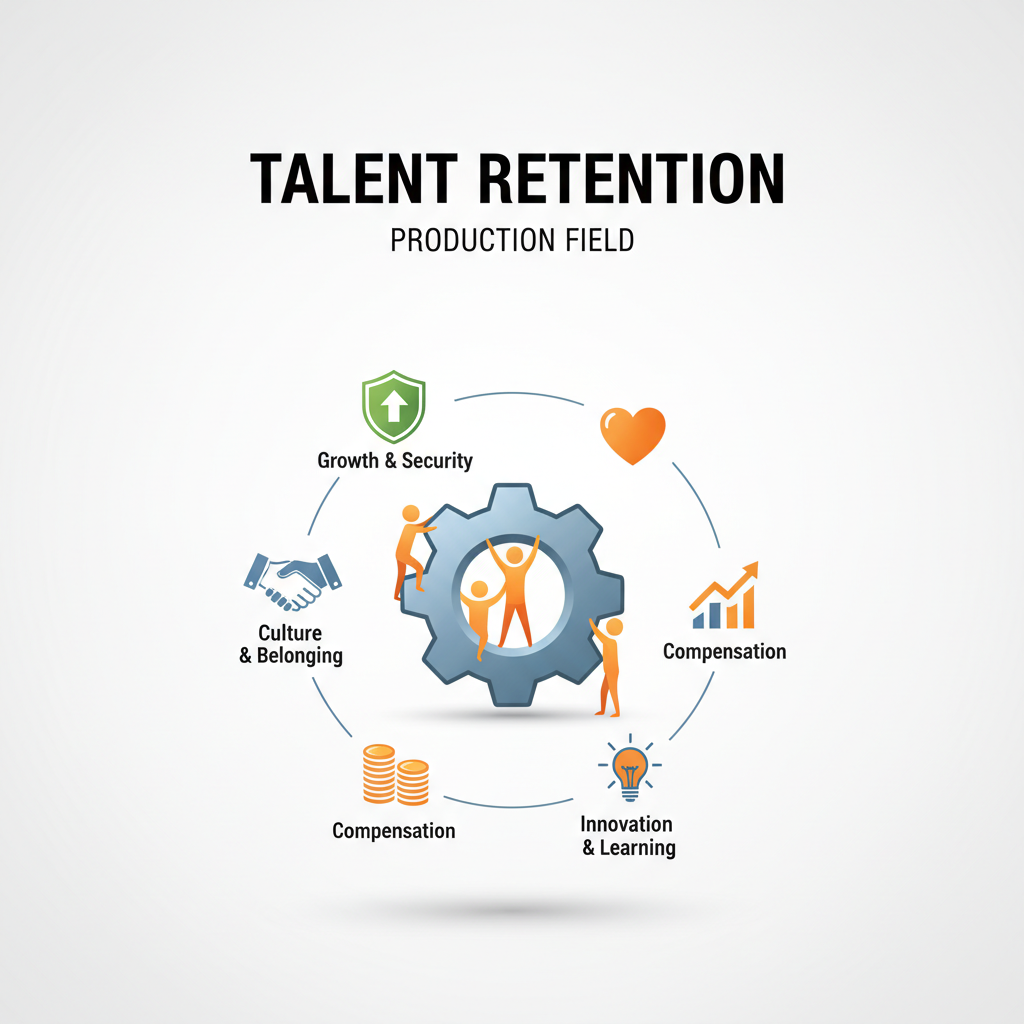
Retaining top-tier talent in Vietnam’s competitive manufacturing sector requires a strategic approach that varies significantly depending on company size. Understanding the Differences between the SMEs’ HR Manager and the Corporates’ HR Director in production field in vietnam is essential for industry stakeholders. While SMEs prioritize personal engagement and agility, Corporate Directors focus on scalable systems and data-driven policies to mitigate turnover.
1. Training and Upskilling Blue-collar Workers
For SME Managers, upskilling is often an informal, on-the-job process aimed at immediate production needs. They rely on close mentorship, which fosters high loyalty through personal relationships. In contrast, Corporate HR Directors implement standardized training frameworks. These global firms often follow guidelines set by the International Labour Organization (ILO) to ensure consistency, safety, and career progression, which appeals to workers seeking structured growth and international certification paths.
2. Developing Long-term Leadership Pipelines
In SMEs, leadership development is frequently about identifying talent within the immediate team to fill gaps organically. The SME Manager acts as a direct mentor. Conversely, a Corporate HR Director utilizes complex succession planning software and high-potential (HiPo) programs to move staff across regional offices. This corporate structure provides a clear ladder for career progression, which is often more attractive to ambitious Vietnamese supervisors who envision a multi-decade path in the manufacturing industry.
3. Scaling Compensation and Benefits Packages
The differences in compensation strategies are stark. SME Managers often rely on discretionary bonuses and flexible, personalized perks that reward loyalty during market fluctuations. They offer a family-like environment that functions as a retention tool. Meanwhile, Corporate HR Directors manage expansive compensation packages based on annual market benchmarking. They offer competitive health insurance, institutional retirement plans, and structured annual reviews. By focusing on total rewards rather than just base salary, corporate entities reduce turnover by providing stability that smaller firms sometimes struggle to guarantee during economic downturns.
Ultimately, both approaches have merit. SMEs win through agility and deep interpersonal connection, whereas corporations excel by offering stability, global mobility, and standardized growth opportunities. Recognizing these distinctions allows HR leaders to better position their talent retention strategies within the unique context of Vietnam’s rapidly evolving industrial landscape.
Partner with Shelby Global
You are looking for reliable HR Sevice Suppliers? Contact Shelby Global Now! To connect with verified talents and upgrade your orginization.
—————————————
References
– Strategic Human Resource Management: https://www.shrm.org/topics-tools/news/organizational-employee-development/strategic-hr-planning
– Society for Human Resource Management: https://www.shrm.org
– International Labour Organization: https://www.ilo.org/
– Vietnam Law and Legal Forum Magazine: https://vietnamlawmagazine.vn/
– International Labour Organization: https://www.ilo.org/