What Are the Core HR Functions in SME vs Corporate?
Navigating the landscape of education in Malaysia requires a deep understanding of human capital management. Whether operating a boutique tuition center or a sprawling international school chain, the operational framework of HR shifts significantly as the entity scales. Recognizing the differences between the SMEs’ HR Structure and the Corporates’ HR Structure in education companies in malaysia is critical for business leaders aiming for sustainable growth.
For a detailed analysis on how these frameworks impact organizational performance, you can review the Differences between the SMEs’ HR Structure and the Corporates’ HR Structure in education companies in malaysia to better align your talent strategy with your company size.
1. Generalist Roles vs Dedicated HR Specialists
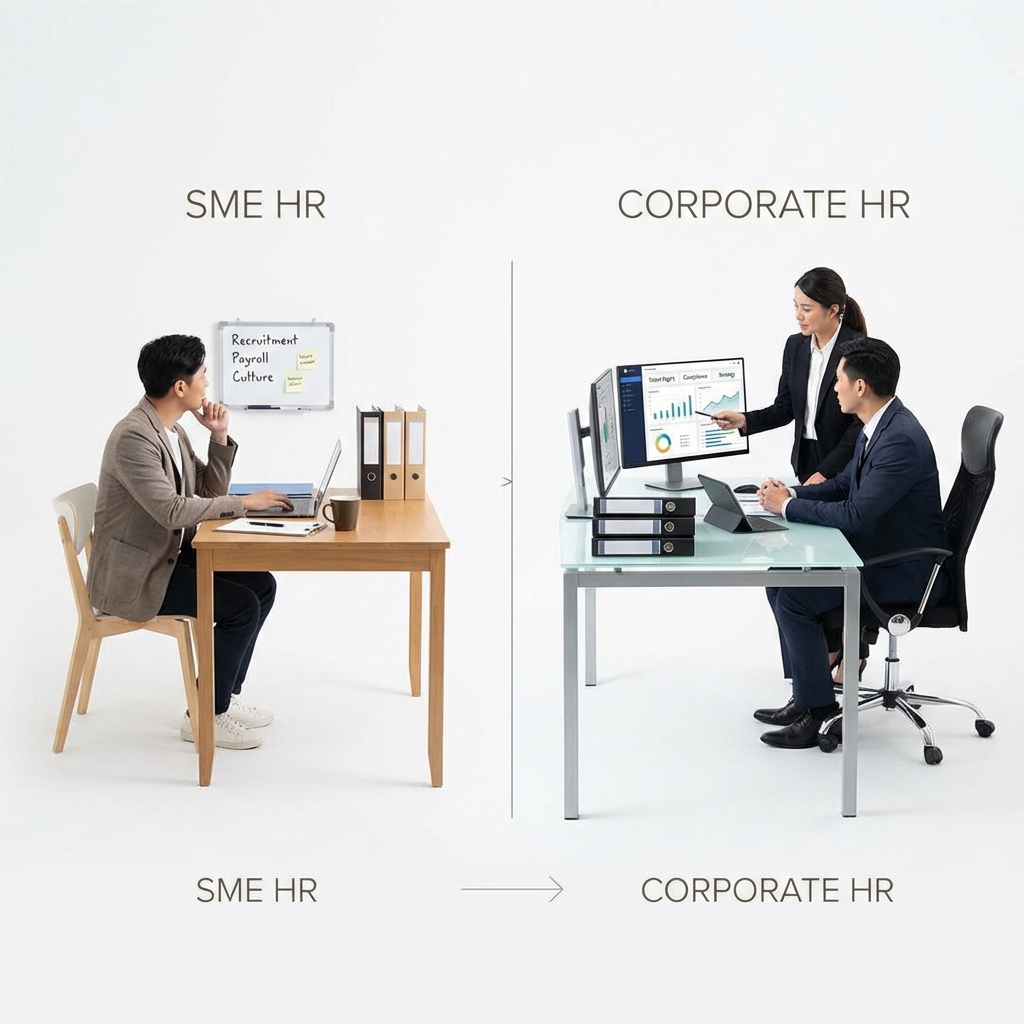
In smaller Malaysian education SMEs, HR is often a jack-of-all-trades role. An HR generalist might handle everything from payroll and teacher recruitment to office administration and regulatory compliance with the Ministry of Human Resources. This agile approach allows for rapid decision-making but often lacks the depth required for complex employee relations. Conversely, corporate education entities utilize specialized roles. You will find dedicated teams for talent acquisition, learning and development, compensation and benefits, and HR analytics. This specialization allows for a more strategic approach to workforce planning, ensuring that large-scale institutions can maintain high standards of teaching excellence across multiple campuses.
2. Organizational Hierarchy Differences
The hierarchy within an SME is typically flat. HR functions are often managed by the business owner or a small administrative team reporting directly to the director. This promotes a close-knit culture where feedback loops are instantaneous. In contrast, corporate structures in the education sector are hierarchical and formalized. Reporting lines are clearly defined, with an HR Director or Chief People Officer overseeing various regional managers. This structure is essential for managing large workforces, implementing standardized policies, and ensuring that the corporate culture is consistently upheld across diverse geographical locations in Malaysia.
3. HR Outsourcing vs In-house Teams
Many SMEs opt for HR outsourcing, particularly for non-core functions like payroll processing, statutory contributions (EPF/SOCSO/EIS), and legal document drafting. Outsourcing allows small education businesses to save on overheads while tapping into expert knowledge without the need for a full-time, expensive in-house HR department. Large corporate entities, however, prefer robust in-house teams. Given their scale, having a dedicated internal team ensures data privacy, tighter control over employee experience, and the ability to conduct real-time performance management. By keeping HR functions in-house, these organizations build institutional memory and develop HR strategies that are deeply integrated with the company’s long-term educational objectives.
How Do Recruitment Strategies Vary by Company Size?
In the competitive Malaysian education sector, recruitment strategies are heavily influenced by organizational scale. Understanding the differences between the SMEs’ HR structure and the Corporates’ HR structure in education companies in Malaysia is essential for optimizing talent acquisition. While SMEs prioritize agility and personal connection, large education conglomerates rely on data-driven, standardized processes to maintain consistency across multiple locations.
1. Cost-Effective Recruitment Strategies for SMEs
Small and medium-sized tuition centers often operate with limited budgets, necessitating highly targeted and cost-effective recruitment methods. Rather than investing in expensive automated systems, SMEs leverage grassroots strategies. These include employee referral programs, social media community engagement, and tapping into local teacher networks. Because SMEs often lack a dedicated HR department, the founder or center manager typically oversees hiring, focusing on cultural fit and passion for teaching. To learn more about navigating these organizational shifts, visit this resource on differences between the SMEs’ HR structure and the Corporates’ HR structure in education companies in Malaysia.
2. Advanced Talent Management in Education Corporates
Large educational conglomerates in Malaysia function differently, utilizing robust, technology-driven HR infrastructures. They often employ Applicant Tracking Systems (ATS) to filter thousands of applications, ensuring that candidates meet strict academic and pedagogical standards. These organizations prioritize long-term talent management, offering structured career pathways, comprehensive training programs, and competitive benefits packages. This systematic approach is vital for maintaining brand reputation and pedagogical quality across various branches. According to SHRM, advanced talent management is a key driver for retention in large-scale enterprises.
3. Scaling HR in Education for Rapid Growth
For education companies undergoing rapid expansion, transitioning from an SME structure to a corporate framework is a critical hurdle. Scaling requires moving away from informal hiring to standardized recruitment protocols. This includes implementing centralized payroll, formalized performance appraisals, and employer branding initiatives that attract high-quality educators at scale. Successful growth in the Malaysian education market depends on balancing the agility of a startup with the operational efficiency of an established corporation. While the SME model fosters deep loyalty through direct management, the corporate model ensures scalability through documented processes and institutionalized support, ensuring that as the organization grows, the quality of education delivered remains consistently high.
What Is the Impact on HR Budget Allocation Malaysia?
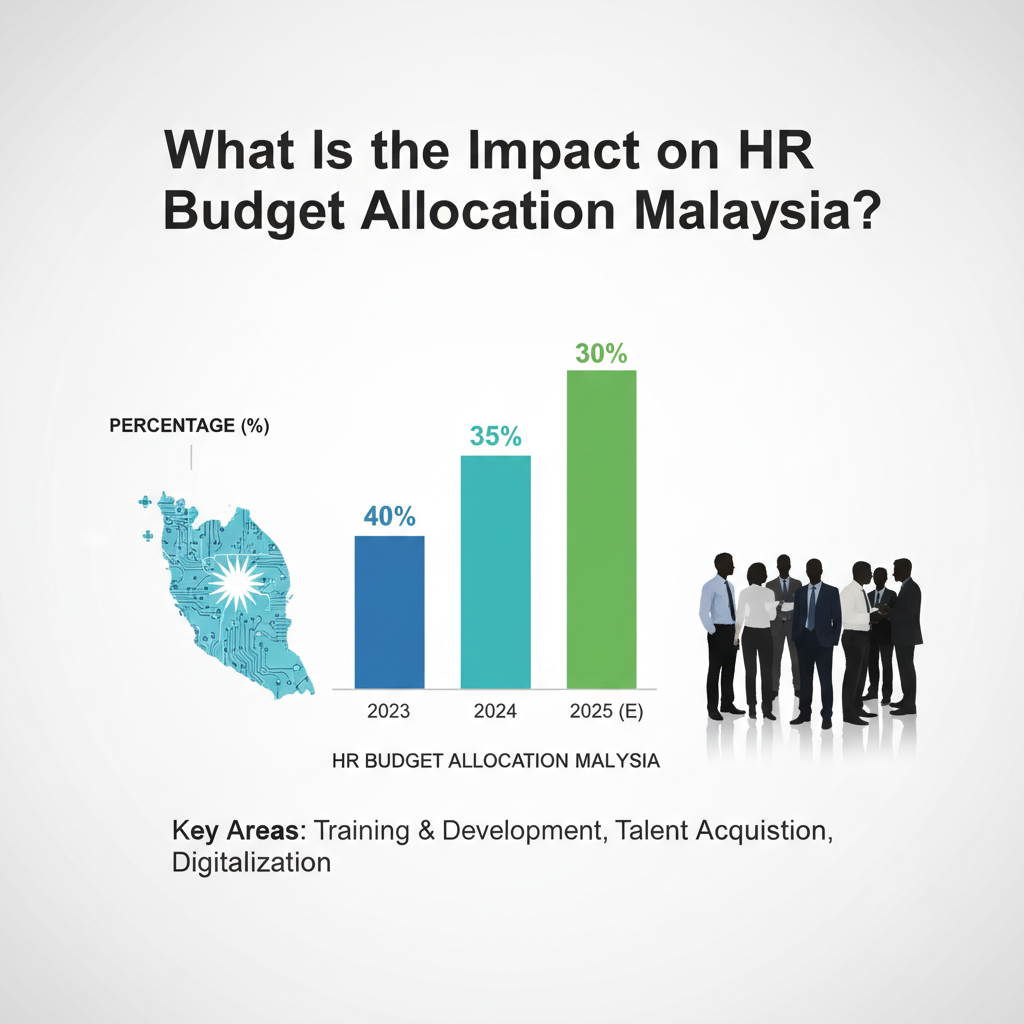
In the evolving landscape of Malaysian education, the financial framework governing Human Resources is significantly influenced by organizational scale. Understanding the Differences between the SMEs’ HR Structure and the Corporates’ HR Structure in education companies in malaysia is essential for stakeholders looking to optimize their operational efficiency. Corporates often benefit from dedicated departments and economies of scale, whereas SMEs must navigate resource scarcity with precision. To better grasp these operational variances, you can review our comprehensive analysis on the differences between the SMEs’ HR Structure and the Corporates’ HR Structure in education companies in malaysia.
1. Managing Lean Budgets in Education SMEs
For SMEs in the Malaysian education sector, HR budgets are often constrained, requiring a “jack-of-all-trades” approach. HR functions are frequently bundled with administrative or finance roles, limiting the scope for specialized talent management. According to the HRD Connect insights on global talent trends, smaller entities must prioritize agility over expansive infrastructure. In this setting, every ringgit allocated must yield a direct return, usually focusing on essential payroll compliance and basic recruitment rather than long-term organizational development or advanced cultural initiatives.
2. Funding the Corporate HR Tech Stack
In contrast, large education corporations in Malaysia typically command significant budget allocations for sophisticated HR technology. These organizations invest heavily in Human Resource Information Systems (HRIS), learning management platforms, and automated payroll systems. By integrating high-end tech stacks, these companies reduce manual errors and gain deep analytics-driven insights into workforce productivity. While the initial capital expenditure is high, the long-term impact on operational efficiency allows these corporates to scale rapidly compared to their smaller counterparts, who may still rely on fragmented spreadsheet-based systems.
3. Investing in Employee Retention Strategies
Budget allocation toward retention also highlights a stark divide. Corporates typically formalize their retention strategies through competitive compensation packages, structured career progression paths, and comprehensive benefit schemes that are difficult for SMEs to replicate. Conversely, education SMEs often rely on intangible perks—such as a closer-knit work culture or flexible scheduling—to mitigate the impact of lower financial investment. However, as the Malaysian talent market becomes more competitive, SMEs are finding it increasingly necessary to carve out specific budget lines for upskilling and professional development to prevent attrition, even if those lines remain significantly leaner than corporate budgets.
How Does Training and Development HR Compare?
When analyzing the differences between the SMEs’ HR Structure and the Corporates’ HR Structure in education companies in Malaysia, one of the most significant areas of divergence lies in how organizations approach staff professional development. The scale and resources of these entities dictate whether talent growth is a grassroots, organic process or a meticulously planned strategic initiative.
1. Informal Mentorship Models in SMEs
In Malaysian small-to-medium enterprises (SMEs) within the education sector, HR structures are often lean. Professional development here is rarely driven by standardized modules. Instead, these companies rely heavily on informal mentorship. New educators are often paired with senior faculty, where knowledge transfer happens through observation, on-the-job coaching, and direct immersion in daily administrative and pedagogical tasks. This agile approach allows for rapid skill acquisition tailored to immediate operational needs, fostering a tight-knit culture where staff learn by doing. While highly effective for building practical experience, the lack of a structured framework can sometimes lead to knowledge gaps if the senior mentor lacks formal pedagogical training or updated industry knowledge.
2. Structured Corporate Training Programs
Conversely, corporate education providers in Malaysia operate with formalized HR departments that implement comprehensive, structured corporate training programs. These large-scale entities invest heavily in proprietary Learning Management Systems (LMS) and standardized certification paths. According to the HRD Corp, organizations that prioritize structured upskilling tend to retain talent more effectively by providing clear career progression pathways. These corporations often mandate certifications for educators, ranging from digital literacy in classroom technology to specialized teaching methodologies, ensuring uniform quality across multiple branches. This systematic approach ensures that human capital investment is measurable, scalable, and aligned with international education standards, providing staff with a documented trajectory for advancement that smaller firms often struggle to replicate.
3. Future Education Sector HR Malaysia Trends
As the landscape of Malaysian education evolves, the differences between the SMEs’ HR Structure and the Corporates’ HR Structure in education companies in Malaysia are becoming increasingly nuanced. Future trends suggest a hybrid model; SMEs are beginning to adopt digital learning tools to bridge their training gaps, while corporates are seeking to retain the agility and personalized nature of mentorship found in smaller firms. For a deeper analysis of these evolving frameworks, you can review our insights on the differences between the SMEs’ HR Structure and the Corporates’ HR Structure in education companies in malaysia. Ultimately, the successful HR structure of the future will be one that balances the deep, hands-on mentorship of the SME with the technological and pedagogical rigor of the corporate giant, ensuring educators remain competitive in a rapidly digitizing global market.
Why Is HR Compliance Malaysia Education Crucial?
In the rapidly evolving landscape of Malaysia’s education sector, HR compliance stands as the bedrock of operational sustainability. Whether an organization is a boutique tutoring center or a multinational educational conglomerate, adhering to legal standards is not merely about avoiding penalties; it is about protecting the integrity of the institution and the safety of its staff and students. Understanding the Differences between the SMEs’ HR Structure and the Corporates’ HR Structure in education companies in malaysia is vital, as these distinct frameworks dictate how legal burdens are managed and how risks are mitigated across different scales of operation.
1. Navigating Basic Local Labor Laws
At the fundamental level, all educational entities must adhere to the Employment Act 1955. For SMEs, compliance often falls on the shoulders of the business owner or a small administrative team. This lack of specialization can lead to oversights regarding minimum wage updates, overtime calculations, and employee benefits. In contrast, corporate education providers employ dedicated legal departments to ensure constant alignment with the latest directives from the Ministry of Education Malaysia. Corporate structures allow for standardized contracts and automated payroll systems that minimize the risk of labor disputes, whereas SMEs must be significantly more proactive to ensure their internal policies do not conflict with federal mandates.
2. Complex HR Compliance Malaysia Education
The education sector is uniquely complex, requiring adherence to both general labor laws and sector-specific pedagogical regulations. Large corporate entities often operate across multiple states, requiring them to manage diverse compliance requirements simultaneously. Their HR structure is built to handle high volumes of documentation, background checks for educators, and specialized licensing renewals. SMEs, while smaller, often struggle with the same complexity but with fewer resources. They must navigate a dense web of compliance that includes occupational safety, anti-sexual harassment policies, and the specific codes of conduct mandated by the government. The ability to manage these nuances effectively determines whether an institution can scale without facing crippling legal obstacles.
3. Building Scalable Legal Frameworks
The divergence in HR architecture becomes most apparent when institutions aim for growth. Large corporates build scalable frameworks—integrated HR Information Systems (HRIS)—that act as a buffer against compliance risks. By automating policy enforcement, they create a reliable audit trail. For SMEs looking to transition into mid-sized or larger players, the challenge lies in professionalizing their HR structure. They must move away from informal, manual processes toward documented legal frameworks that can withstand regulatory scrutiny. Creating these systems early is crucial; it ensures that as the number of employees grows, the administrative burden does not compromise the educational quality. Investing in a robust HR foundation is the defining factor that allows SMEs to compete fairly and operate safely within the stringent regulatory environment of Malaysia’s competitive education market.
Partner with Shelby Global
You are looking for reliable HR Sevice Suppliers? Contact Shelby Global Now! To connect with verified talents and upgrade your orginization.
—————————————
References
– Ministry of Human Resources: https://www.mohr.gov.my/
– Society for Human Resource Management: https://www.shrm.org/
– HRD Connect: https://www.hrdconnect.com/
– HRD Corp: https://www.hrdcorp.gov.my/
– Ministry of Education Malaysia: https://www.moe.gov.my/