Understanding HR Staffing Services in Vietnam
As Vietnam continues its robust economic ascent, becoming a magnet for foreign investment and a hub for manufacturing and technology, the demand for skilled labor and efficient human resource management intensifies. For businesses operating in or expanding to this dynamic Southeast Asian nation, navigating the unique nuances of its labor market can be a significant challenge. This is where HR staffing services in Vietnam become not just beneficial, but often indispensable. These specialized services provide comprehensive solutions designed to help companies attract, manage, and retain talent, ensuring compliance with local regulations and fostering sustainable growth in a competitive environment.

1. What are HR Staffing Services?
At its core, HR staffing services encompass a range of professional support functions aimed at managing an organization’s human capital. In the Vietnamese context, these services extend beyond simple recruitment to include strategic talent acquisition, workforce planning, payroll and benefits administration, compliance with local labor laws, and sometimes even complete outsourced HR departments. The goal is to offload the complexities of HR management from a company’s internal teams, allowing them to focus on core business operations. For foreign enterprises, these services are particularly vital for bridging cultural gaps, understanding local employment practices, and navigating administrative hurdles that might otherwise impede their market entry or expansion efforts.
2. Key Types: Recruitment, Temporary Staffing, PEO
The spectrum of HR staffing services in Vietnam is broad, but three primary categories stand out for their impact on businesses:
- Recruitment Services: This is perhaps the most recognized form of HR staffing. Recruitment firms specialize in identifying, screening, and placing suitable candidates for permanent positions. In Vietnam, where competition for top talent, especially in high-growth sectors like IT, manufacturing, and engineering, is fierce, expert recruiters leverage extensive local networks and market insights to find candidates that align not only with skill requirements but also with company culture. This includes executive search for senior leadership roles and mass recruitment for new factory setups or large-scale operations.
- Temporary Staffing (Contract/Contingent Staffing): Ideal for businesses needing flexibility, temporary staffing services provide personnel for short-term projects, seasonal peaks, maternity leave cover, or specialized tasks without the commitment of a permanent hire. This allows companies to scale their workforce up or down rapidly in response to market demands or specific project needs, minimizing overheads and mitigating the risks associated with long-term employment contracts. It’s a crucial tool for agility in Vietnam’s fast-evolving market.
- Professional Employer Organization (PEO) / Employer of Record (EOR) Services: For companies looking to enter the Vietnamese market without establishing a legal entity, or those seeking to streamline their HR and compliance operations, PEO/EOR services are invaluable. An EOR legally employs staff on behalf of the client company, handling all aspects of payroll, tax withholding, benefits administration, and compliance with Vietnamese labor laws and regulations. This arrangement significantly reduces administrative burdens and legal risks, offering a compliant and cost-effective way to hire and manage employees in Vietnam. It’s particularly attractive for remote teams or initial market explorations.
3. Why Businesses Utilize Them in Vietnam’s Market
The strategic importance of engaging HR staffing services in Vietnam cannot be overstated, especially given the country’s unique business environment:
- Navigating Regulatory Complexity: Vietnam’s labor laws, while generally employee-friendly, can be complex and subject to frequent updates. From nuanced employment contracts and social insurance obligations to foreign worker permits and severance pay rules, non-compliance can lead to significant penalties. Staffing agencies possess deep expertise in these regulations, ensuring businesses remain compliant and mitigate legal risks.
- Accessing Specialized Talent: Despite a large workforce, finding candidates with specific technical skills or international experience can be challenging. HR staffing providers have established networks and advanced search methodologies to tap into passive candidate pools, identifying and attracting top-tier talent that might be otherwise inaccessible to individual companies. This is especially true for roles in emerging industries or highly competitive fields.
- Cost Efficiency and Resource Optimization: Building an in-house HR department, particularly for foreign entities, involves considerable investment in staff, infrastructure, and ongoing training. Outsourcing HR functions, especially recruitment and payroll, can significantly reduce operational costs, free up internal resources, and allow companies to allocate their capital towards core business activities and strategic growth initiatives.
- Flexibility and Scalability: The Vietnamese market is dynamic, with businesses often experiencing rapid growth or needing to pivot quickly. Staffing services provide the agility to scale operations up or down efficiently, whether it’s ramping up for a new project, expanding into new regions, or adjusting workforce size during economic fluctuations. This flexibility is crucial for maintaining competitiveness.
- Mitigating Market Entry Risks: For international businesses, entering a new market like Vietnam involves inherent risks. HR staffing services act as a buffer, offering a low-risk entry strategy by managing employment liabilities and ensuring a smooth transition into the local labor landscape. By leveraging local expertise, businesses can avoid common pitfalls and accelerate their establishment.
In conclusion, as Vietnam solidifies its position as a global economic player, businesses, both domestic and international, will increasingly rely on sophisticated HR solutions. Understanding the intricacies of Vietnam’s labor market and effectively utilizing professional HR staffing services are no longer optional but strategic imperatives for sustained success and competitive advantage.
Benefits of Partnering with a Vietnam HR Staffing Agency
Vietnam has rapidly emerged as a dynamic hub for international businesses, offering a robust economy, strategic location, and a young, eager workforce. However, navigating a new market, particularly its intricate human resources landscape, can present significant challenges for foreign companies. From understanding local labor laws to identifying the right talent, the complexities can be overwhelming. This is where partnering with a specialized HR Staffing Services in Vietnam becomes not just beneficial, but crucial. Outsourcing your HR staffing needs to local experts provides a strategic advantage, ensuring a smoother market entry, operational efficiency, and sustainable growth.
-
Access to Local Talent Pool and Market Insights
One of the primary benefits of collaborating with a Vietnam HR staffing agency is gaining unparalleled access to a deep and diverse local talent pool. These agencies possess extensive databases of pre-vetted candidates across various industries and skill sets, from manufacturing and IT to finance and marketing. Unlike generic recruitment firms, local experts have an intrinsic understanding of the Vietnamese job market, including prevailing salary expectations, educational backgrounds, and crucial cultural nuances that can significantly impact a hire’s success and longevity within a foreign company structure. They understand the aspirations of Vietnamese professionals, the competitive landscape for specific roles, and how to effectively attract and retain top performers.
Furthermore, these agencies offer invaluable market insights that go beyond simple candidate matching. They can advise on industry-specific trends, emerging skill demands, and effective compensation and benefits strategies tailored to the local environment. This local expertise reduces the time and resources companies would otherwise spend on market research, allowing them to make informed hiring decisions more quickly and confidently. By leveraging an agency’s established network and deep understanding of the local professional ecosystem, businesses can find high-quality candidates who not only possess the required technical skills but also demonstrate a strong cultural fit, ensuring smoother integration into the company and greater long-term success.
-
Reduced Recruitment Costs and Time-to-Hire
The recruitment process can be incredibly resource-intensive, consuming significant time and budget. From crafting job descriptions and advertising vacancies to sifting through hundreds of applications, conducting initial screenings, and managing interview schedules, the hidden costs can quickly accumulate. Partnering with a provider of HR Staffing Services in Vietnam dramatically streamlines this process, leading to substantial cost savings and a reduced time-to-hire.
Local staffing agencies handle the entire recruitment lifecycle, from initial candidate sourcing and screening to reference checks and offer negotiation. This frees up internal HR teams to focus on strategic initiatives rather than transactional hiring tasks. Their efficiency stems from specialized tools, established processes, and a pre-existing pool of qualified candidates, allowing them to fill critical roles much faster than an in-house team might. This rapid placement minimizes operational disruptions and allows new projects to commence without undue delay. Moreover, agencies often work on a success-fee basis, meaning you only pay when a suitable candidate is successfully placed. This model converts what would typically be a variable and unpredictable expenditure into a more manageable, performance-based cost, ultimately delivering a higher return on investment for your recruitment efforts and significantly lowering your overall hiring expenses.
-
Ensuring Compliance with Vietnamese Labor Laws
Navigating the complexities of Vietnamese labor law is arguably one of the most critical challenges for foreign businesses. Vietnam’s labor code is dynamic and comprehensive, covering everything from employment contracts and working hours to social insurance contributions, severance pay, and termination procedures. Misinterpreting or failing to comply with these regulations can lead to severe penalties, including hefty fines, legal disputes, and significant reputational damage, all of which can impede business operations and growth.
A reputable HR staffing agency acts as a crucial safeguard, offering expert guidance and ensuring full compliance with all relevant Vietnamese labor laws and regulations. They are intimately familiar with the latest updates to the Labor Code and other statutory requirements. This includes correctly drafting compliant employment contracts, managing payroll in accordance with local tax laws, ensuring proper social and health insurance contributions, and adhering to strict guidelines for employee dismissal or restructuring. Furthermore, they can advise on best practices for workplace policies and employee relations, mitigating risks associated with potential grievances or disputes. By entrusting your compliance needs to local experts, companies can operate with peace of mind, confident that their HR practices are legally sound, ethical, and aligned with Vietnam’s regulatory framework, allowing them to focus entirely on their core business objectives without the constant worry of legal ramifications. For an overview of Vietnam’s labor regulations, resources such as Vietnam Briefing’s insights on the new labor code can be invaluable for foreign investors.
In conclusion, partnering with a Vietnam HR staffing agency offers a multifaceted approach to overcoming the inherent challenges of entering and operating in the Vietnamese market. From unlocking access to a prime talent pool and streamlining recruitment processes to ensuring unwavering legal compliance, these specialized services provide a robust foundation for success. For businesses looking to thrive in Vietnam, leveraging expert HR staffing services is not just a strategic choice, but an essential step towards efficient, compliant, and sustainable growth.
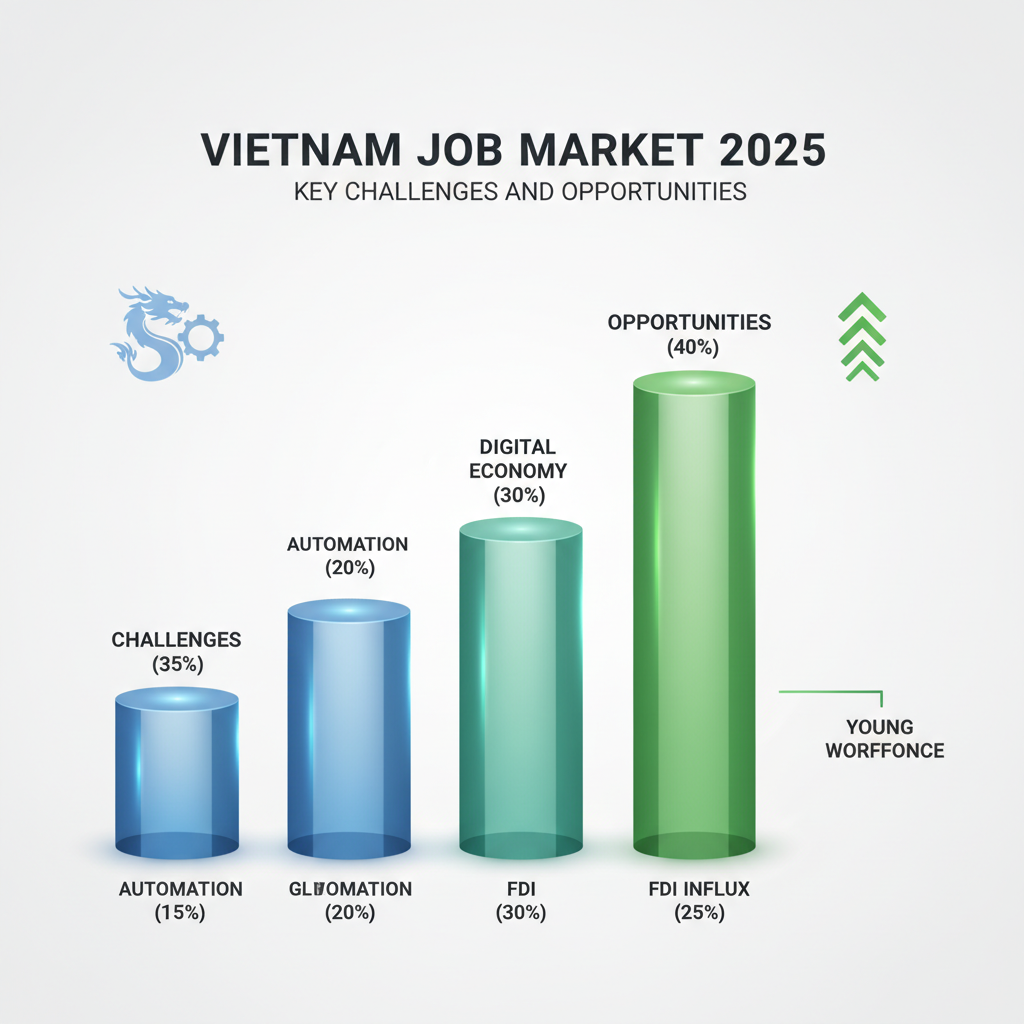
Key Challenges and Opportunities in Vietnam’s Job Market 2025
Vietnam’s job market is undergoing a profound transformation, positioning the nation as a dynamic hub in Southeast Asia. As 2025 approaches, the landscape is characterized by both exciting opportunities and significant challenges. Rapid economic growth, fueled by foreign direct investment and burgeoning domestic industries, has led to a highly competitive environment for talent. Companies operating in Vietnam, from multinational corporations to local enterprises, are grappling with specific talent shortages, the relentless pace of digital transformation, and an evolving regulatory framework. These factors collectively reshape the demands placed on recruitment and staffing, making effective HR Staffing Services in Vietnam more critical than ever before. Understanding these nuances is key for businesses aiming to thrive and for professionals seeking to navigate this vibrant market successfully.
1. Addressing Talent Shortages in Key Sectors
One of the most pressing challenges in Vietnam’s job market is the persistent talent shortage across crucial sectors. While Vietnam boasts a young and increasingly educated workforce, a significant gap exists between the skills demanded by emerging industries and the competencies available. According to insights from the World Bank, Vietnam’s continued economic growth necessitates investment in human capital development to sustain its competitive edge. High-tech manufacturing, IT and software development, renewable energy, and advanced engineering are experiencing acute shortages of qualified professionals. For instance, the demand for skilled IT professionals, particularly in areas like AI, data analytics, and cybersecurity, far outstrips supply. Similarly, the rapid expansion of the manufacturing sector, driven by global supply chain diversification, requires a steady influx of engineers, technicians, and specialized production managers. This scarcity impacts business growth and operational efficiency, often leading to increased recruitment costs and longer hiring cycles. To mitigate this, businesses are increasingly relying on specialized HR Staffing Services in Vietnam to identify, attract, and onboard top talent, often leveraging their extensive networks and recruitment expertise. Strategies also include investing in upskilling and reskilling programs for the existing workforce and exploring international recruitment avenues to fill critical roles.
2. Impact of Digital Transformation on Workforce Needs
The accelerating pace of digital transformation is fundamentally reshaping workforce needs in Vietnam. As businesses automate processes, adopt cloud computing, and integrate artificial intelligence, new job roles are emerging, while traditional ones are evolving or diminishing. This shift demands a workforce equipped with advanced digital literacy, critical thinking, problem-solving skills, and adaptability. Industries like finance, retail, and logistics are heavily investing in digital solutions, creating a surge in demand for specialists in e-commerce, digital marketing, data science, and cybersecurity. Furthermore, the rise of the gig economy and remote work models, exacerbated by recent global events, has added another layer of complexity. Companies must now compete for talent not just locally but on a global scale, requiring flexible hiring strategies and robust digital infrastructure. HR and staffing agencies play a vital role here by helping companies assess their future workforce needs, identify skill gaps, and source candidates who possess both technical prowess and the soft skills necessary to thrive in a digitally-driven environment.
3. Navigating Evolving Labor Regulations and Policies
The regulatory environment in Vietnam is continually evolving, posing both compliance challenges and new opportunities for businesses. The government is committed to improving labor laws to align with international standards, enhance worker protections, and attract foreign investment. Recent amendments and new decrees related to labor contracts, social insurance, minimum wage adjustments, and foreign worker permits require careful attention. For instance, changes in social insurance contributions or stricter guidelines for work permits for expatriates can significantly impact operational costs and HR strategies. Ensuring full compliance with these intricate and often changing regulations is a major concern for companies, particularly those new to the Vietnamese market or those with a large expatriate workforce. Expert HR Staffing Services in Vietnam provide invaluable support in navigating this complex legal landscape, offering guidance on compliance, managing payroll, and ensuring all hiring practices adhere to the latest legislation. This expertise allows businesses to focus on their core operations while mitigating legal and financial risks associated with non-compliance.
In conclusion, Vietnam’s job market in 2025 presents a dynamic interplay of challenges and opportunities. Addressing talent shortages, adapting to digital transformation, and navigating evolving regulations are paramount for sustainable growth. The strategic utilization of specialized HR staffing services is not just an advantage but a necessity for companies looking to secure the right talent, maintain compliance, and remain competitive in this vibrant and rapidly expanding economy. The ability to effectively respond to these shifts will define success for businesses and shape the future of employment in Vietnam.
How to Choose the Right HR Staffing Services Provider in Vietnam
Navigating the dynamic and competitive Vietnamese job market requires a strategic approach, especially when it comes to talent acquisition. For businesses looking to expand or optimize their operations in Vietnam, partnering with the right HR staffing services provider is not just a convenience—it’s a critical success factor. A well-chosen partner can offer invaluable insights, access to top talent, and ensure compliance with local regulations, ultimately saving time and resources. This guide provides actionable advice on evaluating and selecting the best HR staffing partner tailored to specific business goals and industry requirements, ensuring you find a provider that truly understands the intricacies of HR Staffing Services in Vietnam.
1. Assessing Expertise and Industry Specialization
The Vietnamese labor market is unique, characterized by distinct cultural nuances, evolving labor laws, and a diverse talent pool. Therefore, the first and arguably most crucial step in selecting an HR staffing provider is to scrutinize their expertise and industry specialization. A generic staffing agency, while potentially offering broad services, may lack the deep understanding required to source niche talent or navigate sector-specific challenges in Vietnam.
Look for providers with a demonstrable track record in your specific industry. Do they have recruiters who understand the technical requirements, market demand, and compensation benchmarks for roles within your sector (e.g., IT, manufacturing, finance, retail)? Their expertise should extend beyond merely filling vacancies; they should act as strategic consultants, offering insights into market trends, salary expectations, and talent availability within your domain. Furthermore, an ideal partner will possess an intimate knowledge of Vietnamese labor laws, regulations, and common employment practices. This includes understanding statutory benefits, probationary periods, termination procedures, and the nuances of local employment contracts. This local compliance expertise is vital for mitigating risks and ensuring your hiring practices are fully compliant, particularly in a rapidly changing regulatory environment like Vietnam. For a broader context on Vietnam’s economic and labor landscape, understanding the country’s overall economic overview can provide valuable insights into market dynamics affecting talent acquisition.
2. Evaluating Track Record and Client Testimonials
A provider’s past performance is often the best indicator of future success. Before committing, thoroughly evaluate their track record. This involves more than just asking for a client list; it means digging into their actual success stories and client relationships. Request case studies that detail their recruitment challenges, strategies employed, and measurable outcomes. A reputable firm should be able to provide examples of how they successfully placed candidates in roles similar to yours, especially in Vietnam.
Client testimonials and references are invaluable. Don’t hesitate to ask for direct contact information for current or past clients whom you can interview. During these conversations, inquire about the provider’s responsiveness, the quality of candidates presented, their understanding of the client’s culture and needs, and their post-placement support. Pay attention to how long their client relationships last—long-term partnerships often indicate high client satisfaction and consistent value delivery. A strong track record in Vietnam should also highlight their ability to source local talent effectively, demonstrating an extensive network and robust candidate pipeline tailored to the Vietnamese market. Positive feedback regarding their ability to navigate cultural differences and deliver candidates who integrate well into local teams is a significant plus.
3. Understanding Fee Structures and Service Agreements
Transparency in pricing and clear service agreements are non-negotiable. HR staffing services in Vietnam typically operate under various fee structures, including contingency fees (payment upon successful placement), retainer fees (upfront payment for dedicated search services), or fixed project fees. Ensure you fully understand which model the provider uses and how it applies to your specific needs.
Request a detailed breakdown of all costs. Are there any hidden fees for advertising, background checks, or candidate assessments? Clarify the payment terms, refund policies, and any guarantees on candidate placements (e.g., free replacement if a candidate leaves within a certain period). The service agreement should clearly outline the scope of services, including the types of roles they will fill, the recruitment process, expected timelines, and key performance indicators (KPIs) for success. This might include metrics such as time-to-hire, candidate quality scores, and offer acceptance rates. A comprehensive agreement protects both parties and ensures that expectations are aligned from the outset. Don’t be afraid to negotiate terms or seek clarification on any ambiguous clauses. A trustworthy provider will be upfront about their fees and willing to draft an agreement that reflects a mutually beneficial partnership, laying a strong foundation for your talent acquisition strategy in Vietnam.
Future Trends Shaping HR Staffing in Vietnam Beyond 2025
As Vietnam continues its rapid economic growth and integration into the global marketplace, the landscape for HR Staffing Services in Vietnam is poised for significant transformation beyond 2025. This dynamic environment will necessitate innovative approaches to talent acquisition, development, and retention. HR professionals and staffing firms must anticipate and adapt to emerging technological advancements, evolving workforce demands, and shifts in societal values to remain competitive and effective. The future of HR staffing in Vietnam will be characterized by a greater reliance on data-driven insights, a sharper focus on the candidate and employee experience, and an unwavering commitment to building diverse and inclusive workplaces.
Companies operating in Vietnam, from multinational corporations to local enterprises, will increasingly seek strategic partners capable of navigating these complexities. Staffing agencies will evolve from mere recruiters to comprehensive talent advisors, offering specialized expertise in areas like HR technology implementation, workforce planning, and organizational development. Understanding these upcoming trends is crucial for businesses aiming to attract, nurture, and retain the best talent in a rapidly evolving market.

1. Rise of AI and Automation in Recruitment
Beyond 2025, artificial intelligence (AI) and automation will no longer be buzzwords but fundamental tools integrated across the entire recruitment lifecycle within HR Staffing Services in Vietnam. AI-powered applicant tracking systems (ATS) will become more sophisticated, capable of not just filtering resumes but also analyzing candidate profiles for cultural fit, predicting performance, and even identifying passive candidates through advanced algorithms. Automated tools will handle initial candidate screening, interview scheduling, and even provide personalized feedback, freeing up HR professionals to focus on strategic human-centric tasks like relationship building and complex problem-solving.
The implementation of chatbots for initial candidate engagement and FAQ resolution will streamline communication, ensuring a faster and more consistent candidate experience. Predictive analytics will empower HR teams to forecast future talent needs more accurately, identify potential skill gaps, and proactively develop talent pipelines. This shift towards intelligent automation promises to significantly enhance efficiency, reduce time-to-hire, and mitigate unconscious bias in the early stages of recruitment. Vietnamese companies, supported by forward-thinking staffing partners, will leverage these technologies to gain a competitive edge in talent acquisition. As outlined by thought leaders, AI’s transformative power in HR is undeniable, driving a paradigm shift in how talent is sourced and managed globally.
2. Focus on Employee Experience and Retention Strategies
In a talent-scarce market, attracting candidates is only half the battle; retaining them is paramount. Post-2025, HR staffing in Vietnam will place an unprecedented emphasis on creating exceptional employee experiences (EX) as a core retention strategy. This goes beyond traditional benefits, encompassing every touchpoint an employee has with the organization, from onboarding and career development to daily work environment and offboarding. Companies will invest heavily in personalized career pathways, continuous learning and development opportunities, and robust well-being programs that address both physical and mental health.
Flexible work arrangements, including hybrid models and remote options, will become standard expectations rather than perks, reflecting a global shift in work culture. HR departments, often guided by insights from specialized HR Staffing Services in Vietnam, will utilize advanced analytics to monitor employee sentiment, identify potential flight risks, and proactively intervene with tailored engagement strategies. A positive EX directly correlates with higher engagement, productivity, and loyalty, making it a critical differentiator for employers seeking to build sustainable workforces in Vietnam’s competitive landscape.
3. Importance of Diversity, Equity, and Inclusion (DEI)
The conversation around Diversity, Equity, and Inclusion (DEI) will evolve from a compliance checkbox to a strategic imperative for businesses in Vietnam beyond 2025. Organizations will increasingly recognize that diverse teams drive innovation, enhance problem-solving capabilities, and better reflect the diverse customer base they serve. This trend will profoundly impact HR staffing strategies, pushing companies and their recruitment partners to actively build inclusive hiring practices that attract talent from various backgrounds, experiences, and perspectives.
Equity will focus on ensuring fair opportunities and treatment for all employees, addressing systemic biases in promotion and compensation. Inclusion will be about fostering a workplace culture where every individual feels valued, respected, and empowered to contribute their authentic selves. HR Staffing Services in Vietnam will play a pivotal role in advising clients on developing inclusive job descriptions, implementing blind resume reviews, and training hiring managers to mitigate unconscious bias. Moreover, DEI initiatives will extend beyond recruitment to encompass talent development, leadership training, and establishing employee resource groups, all contributing to a more dynamic, ethical, and ultimately more successful business environment in Vietnam.
Partner with Shelby Global
You are looking for reliable HR Sevice Suppliers? Contact Shelby Global Now! To connect with verified talents and upgrade your orginization.
—————————————
References
– Vietnam’s Labor Market Insights and Trends for 2023-2024: https://www.vietnam-briefing.com/news/vietnams-labor-market-insights-trends-2023-2024.html/
– Vietnam’s New Labor Code: Key Changes: https://www.vietnam-briefing.com/news/vietnams-new-labor-code-key-changes-2021.html
– World Bank Vietnam Overview: https://www.worldbank.org/en/country/vietnam/overview
– :
– AI’s transformative power in HR: https://www.ibm.com/blogs/jobs/2023/the-future-of-hr-how-ai-is-transforming-human-resources/