Understanding AI Agents and Their Current Landscape in Vietnam
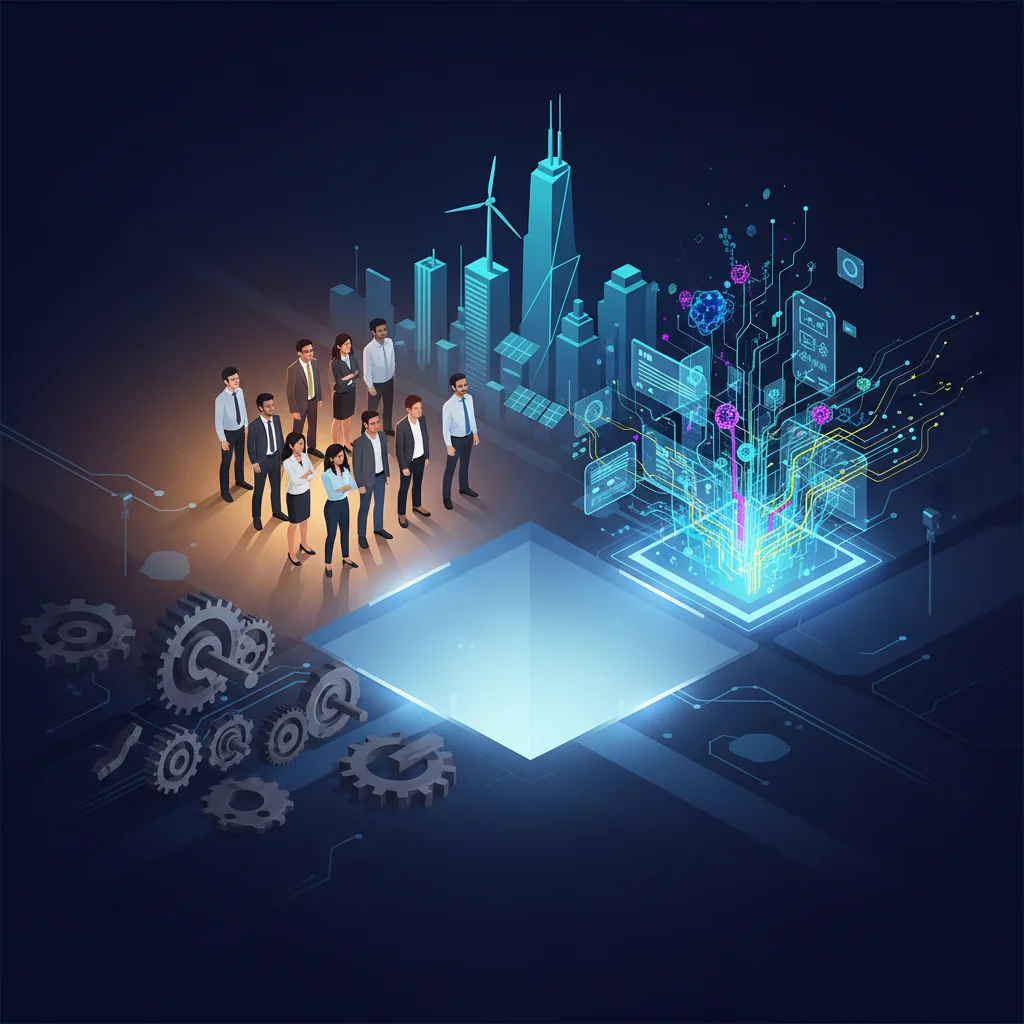
The global technology landscape is undergoing a profound transformation driven by Artificial Intelligence (AI), and at the forefront of this evolution are AI agents. These sophisticated software entities are designed to perceive their environment, make autonomous decisions, and take actions to achieve specific goals, often learning and adapting over time. Their emergence is reshaping industries worldwide, and Vietnam’s burgeoning IT sector is increasingly feeling the impact. This section sets the foundational understanding of what AI agents are, their capabilities, and their nascent adoption within Vietnam’s IT sector, providing context for their future impact and how AI agent effect to IT field in vietnam.

1. Defining Autonomous AI Agents and Their Core Functions
Autonomous AI agents represent a significant leap beyond traditional software programs. Unlike rule-based systems that merely execute predefined commands, AI agents possess a degree of intelligence that allows them to operate with minimal human intervention. They are characterized by their ability to sense their environment through various inputs (data, sensors), process this information, reason about possible actions, and then execute those actions to achieve a desired outcome. This fundamental capability makes them invaluable tools for increasing efficiency and innovation across sectors. The core functions of these agents typically include perception (gathering data), reasoning (interpreting data and making decisions), action (executing tasks), and often, learning (improving performance over time based on experience). From simple chatbots handling customer service queries to complex systems optimizing supply chains or managing financial portfolios, the AI agent impact is becoming increasingly pervasive. Their ability to automate complex processes and learn from vast datasets propels intelligent automation to new levels, fundamentally altering how businesses operate and how services are delivered.
2. Current AI Adoption Rates and Technologies in Vietnamese IT
Vietnam’s IT sector is experiencing rapid growth, positioning the country as a promising hub for digital innovation in Southeast Asia. While still in its early stages compared to more developed nations, AI adoption Vietnam is gaining significant momentum, spurred by government initiatives and increasing private sector investment. The Vietnamese government has outlined a National Strategy on AI Research, Development, and Application until 2030, aiming to make Vietnam a leading country in AI by 2030, highlighting the strategic importance placed on this technology. This top-down push, combined with a young, tech-savvy population, is accelerating the integration of AI technologies across various domains within the Vietnamese IT sector.
Key AI technologies currently being embraced include machine learning (ML) for data analysis and prediction, natural language processing (NLP) for human-computer interaction, and computer vision (CV) for image and video analysis. Companies are leveraging these tools for tasks such as data analytics, automating routine processes, and enhancing user experiences. However, challenges remain, including the need for a more robust data infrastructure and a larger pool of highly skilled AI engineers and researchers. Despite these hurdles, the trajectory of AI development Vietnam is upward, with increasing investment in R&D and a growing number of startups focusing on AI-driven solutions. For a deeper dive into this subject, explore How AI agent effect to IT field in vietnam.
3. Key Industries and Early Use Cases of AI in Vietnam Today
The initial wave of AI adoption in Vietnam is visible across several key industries, laying the groundwork for more advanced AI agent implementations. Financial services, particularly banking, have been early adopters, utilizing AI for fraud detection, risk assessment, and customer service chatbots. These agents help banks manage vast amounts of data, improve security, and offer personalized customer interactions, driving digital transformation Vietnam within the sector. In retail, AI is being deployed for personalized product recommendations, inventory management, and optimizing supply chains, leading to improved customer experiences and operational efficiencies.
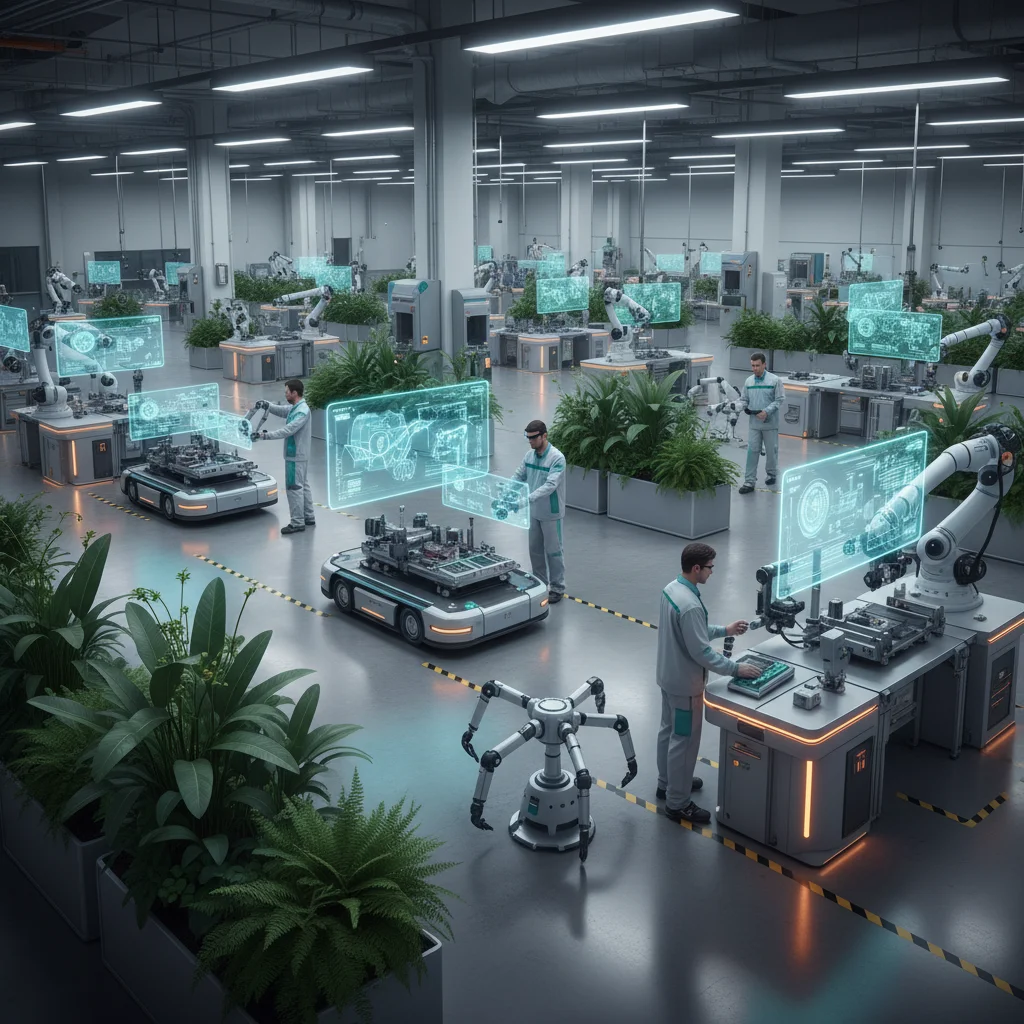
Healthcare is another sector witnessing promising early use cases, with AI assisting in diagnostic support, drug discovery, and streamlining administrative tasks, although broad implementation is still evolving. Manufacturing companies are exploring AI for predictive maintenance, quality control, and optimizing production lines, enhancing precision and reducing downtime. Education technology (EdTech) startups are also incorporating AI agents for adaptive learning platforms and personalized tutoring. These initial deployments, while often focused on specific tasks, demonstrate the potential for AI agents to revolutionize business operations and service delivery. As the technological infrastructure matures and local expertise grows, the future of AI agents Vietnam looks promising, with increasing sophistication and integration into mission-critical systems across an even broader spectrum of industries, ultimately solidifying the significant impact of AI on the nation’s IT landscape.
Transforming Software Development and Operations
The landscape of software development and operations in Vietnam is on the cusp of a revolutionary transformation, driven by Artificial Intelligence (AI) agents. These intelligent entities will reshape every facet of the software lifecycle – from creation and testing to deployment and maintenance. For Vietnam’s dynamic IT field, this presents an unprecedented opportunity to accelerate efficiency, foster innovation, and elevate software quality. Understanding How AI agent effect to IT field in Vietnam is crucial for businesses aiming to stay competitive and harness this technological wave. AI agents promise to automate repetitive tasks, enhance decision-making, and unlock new productivity levels, ultimately propelling Vietnam’s tech industry onto the global stage. This section explores their profound impact, driving unparalleled efficiency and innovation.
1. AI-Powered Code Generation, Refactoring, and Optimization
AI agents are rapidly becoming indispensable co-pilots for developers, fundamentally altering how code is written and managed. Tools like GitHub Copilot generate code snippets and modules from natural language or context. This reduces boilerplate and frees developers for complex problem-solving. Beyond generation, AI agents excel at refactoring, identifying inefficiencies and suggesting cleaner alternatives. They analyze codebases for anti-patterns, recommend improvements, and apply best practices. Furthermore, AI plays a pivotal role in code optimization. By analyzing runtime performance data and code structure, AI agents pinpoint bottlenecks and suggest modifications that significantly improve execution speed and resource utilization. This enhances software performance and reduces operational costs. Integrating these AI capabilities makes software creation faster, more accurate, and efficient, directly impacting How AI agent effect to IT field in Vietnam by empowering developers.
2. Automated Testing, Debugging, and Quality Assurance with AI
Testing and quality assurance, a time-consuming phase, is ripe for AI-driven transformation. AI agents automate test case generation, covering a wider array of scenarios and edge cases. They perform automated UI/UX testing, identifying discrepancies and usability issues. AI-powered predictive analytics anticipate defects by analyzing code changes and historical data, allowing proactive resolution. When bugs occur, AI agents significantly accelerate debugging. They analyze crash logs and application behavior to pinpoint root causes, often suggesting fixes. This reduces manual debugging effort. AI-driven QA extends to continuous monitoring and anomaly detection, ensuring robust and reliable software. By automating repetitive testing and initial bug identification, AI agents free human QA professionals to focus on complex exploratory testing, strategic improvements, and user experience, elevating software quality in Vietnam.
3. Intelligent DevOps, Infrastructure Management, and Cyber Security
AI agents revolutionize DevOps, infrastructure, and cybersecurity defenses. In DevOps, AI facilitates intelligent automation across the entire pipeline, from continuous integration to delivery. AI optimizes build processes, predicts deployment failures, and automates rollback procedures. It analyzes logs and metrics to identify performance bottlenecks for proactive scaling and resource allocation. AI agents monitor cloud and on-premise servers, predicting outages, optimizing utilization, and automating maintenance. This ensures high availability, reduces operational overhead, and makes infrastructure more resilient. AI agents are indispensable in cybersecurity. They analyze vast network traffic and logs to detect anomalous behavior indicative of cyber threats more rapidly and accurately than traditional systems. AI-powered intrusion detection systems identify zero-day exploits, malware, and APTs by recognizing subtle patterns. AI automates incident response, quarantining compromised systems and patching vulnerabilities. This enhanced cyber resilience is vital for protecting Vietnam’s digital infrastructure and data. Integrating AI streamlines operations and creates a more secure, stable, and responsive technological ecosystem. The World Economic Forum highlights the critical role of AI in enhancing global cybersecurity, underscoring its profound implications for nations like Vietnam in safeguarding their digital future. AI’s transformative power in cybersecurity is an undeniable force in protecting digital assets and ensuring operational continuity.
Impact on IT Workforce and Skill Development
The rapid proliferation of AI agents is fundamentally reshaping the global technology landscape, and Vietnam’s IT sector is no exception. This section examines how AI agents effect the IT field in Vietnam, exploring projected shifts in job roles, the demand for new skills, and imperative reskilling and upskilling initiatives for IT professionals. As AI tools become more sophisticated, they will automate tasks and augment human capabilities, leading to dynamic workforce evolution. Understanding these transformative forces is crucial for individuals and organizations aiming to thrive in an AI-driven future.
1. Emerging Roles: AI Trainers, Prompters, and Ethical AI Engineers
The advent of sophisticated AI agents catalyzes new professional domains within Vietnam’s IT landscape. As these intelligent systems become integral, demand grows for specialists to guide, refine, and oversee their development. Prominent are AI Trainers, responsible for curating, labeling, and validating datasets to ensure AI models learn accurately, critical for preventing bias and improving algorithm performance across applications like NLP and computer vision.
Another emerging role is the AI Prompt Engineer. These specialists blend technical understanding and creative communication, crafting precise prompts for generative AI models. Their expertise ensures AI agents produce optimal, relevant, and accurate outputs for content generation, code development, or data analysis, bridging human intent and AI execution.
Furthermore, as AI systems become more autonomous, Ethical AI Engineers are paramount. These professionals design, implement, and monitor AI systems to ensure adherence to ethical guidelines, fairness, transparency, and accountability. Responsibilities include mitigating algorithmic bias, ensuring data privacy, and developing frameworks for responsible AI deployment. This role reflects growing global awareness of AI’s societal implications, positioning Vietnam at the forefront of responsible AI development. These new roles highlight a paradigm shift towards AI collaboration and enhancement.
2. Reskilling the Vietnamese IT Workforce for AI Collaboration
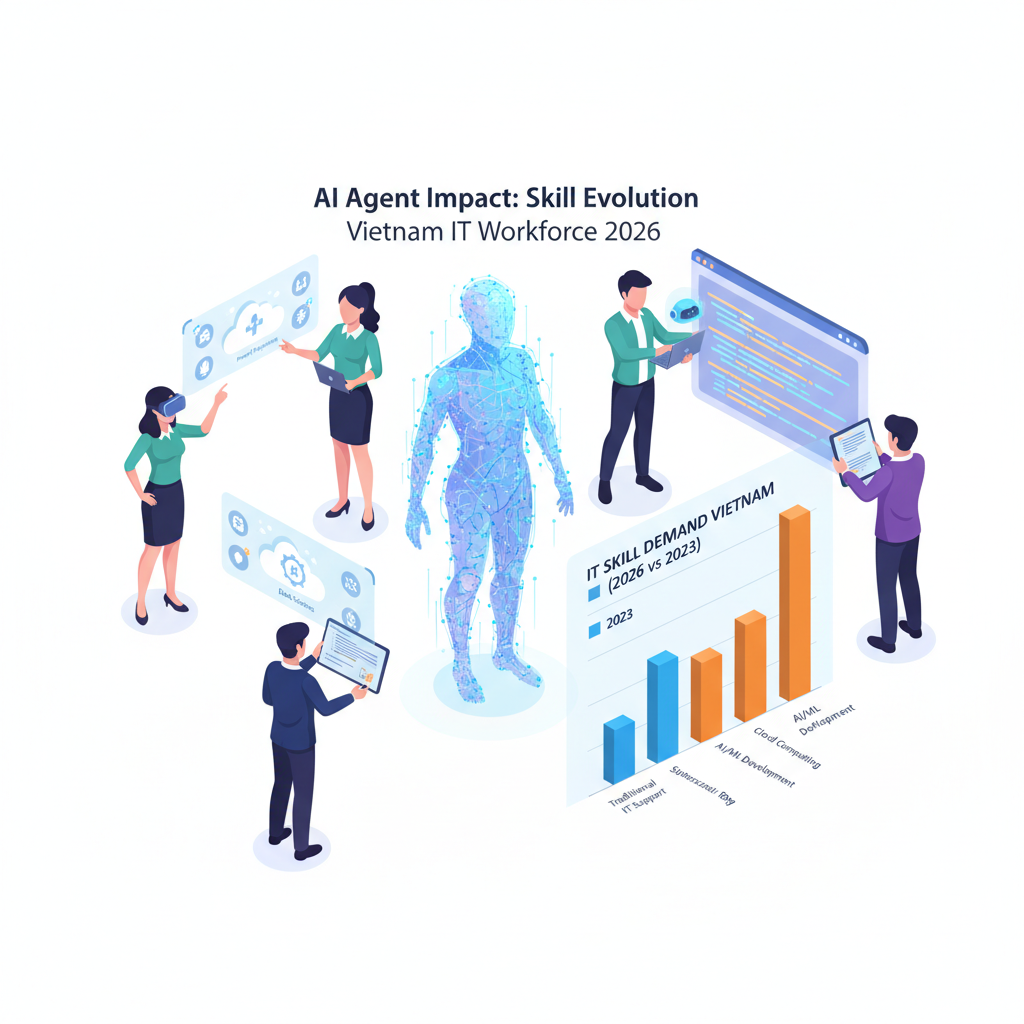
To successfully navigate the AI transformation, Vietnam’s IT workforce must undergo significant reskilling and upskilling. Traditional skills, while foundational, are insufficient for an AI-augmented environment. The focus must shift to mastering AI collaboration – working seamlessly alongside intelligent agents. This requires deep understanding of machine learning principles, data science, and cloud computing architectures.
Key areas for upskilling include proficiency in popular AI/ML frameworks like TensorFlow and PyTorch, advanced data analytics, and expertise in deploying and managing AI models (MLOps). Beyond technical skills, “soft” skills such as critical thinking, problem-solving, adaptability, and creativity will become even more valuable, uniquely complementing AI capabilities. Educational institutions, government initiatives, and private sector training programs must collaborate to develop comprehensive curricula. Companies like Shelby Global are actively exploring how AI agents effect the IT field in Vietnam and consequent skill gaps, advocating for continuous learning platforms and certifications. Proactive investment ensures Vietnam maintains its competitive edge.
3. Job Displacement vs. Job Augmentation: A Balanced Perspective
The narrative surrounding AI’s impact on jobs often oscillates between fear of widespread displacement and optimism. For Vietnam’s IT sector, a balanced perspective is crucial. While routine tasks (basic data entry, simple coding, first-tier customer support) are ripe for automation by AI agents, this doesn’t equate to mass unemployment. Instead, it signals job augmentation, where AI tools enhance human productivity, allowing professionals to focus on higher-value, complex, and creative tasks.
For instance, AI-powered coding assistants accelerate development, enabling software engineers to tackle intricate architectural challenges or innovate faster. AI-driven analytics platforms empower data scientists to derive deeper insights from larger datasets. A study by the World Economic Forum’s Future of Jobs Report 2023 highlights this global trend, projecting both job destruction and creation spurred by AI. The report indicates that while some roles decline, demand for AI specialists, data analysts, and digital transformation specialists surges.
The primary challenge for Vietnam’s IT workforce is not to compete against AI, but to collaborate with it. This requires adapting roles, embracing lifelong learning, and focusing on uniquely human attributes like empathy, strategic thinking, and complex problem-solving. Policies supporting smooth transitions, including social safety nets and retraining programs, will mitigate negative impacts while maximizing augmentation benefits. This forward-looking approach ensures AI contributes to a more productive, innovative, and resilient IT sector in Vietnam.
Opportunities and Innovation for Vietnamese Businesses
The landscape of Vietnam’s IT sector is undergoing a profound transformation, driven by the rapid emergence and adoption of Artificial Intelligence (AI) agents. These sophisticated programs are not merely tools but catalysts, reshaping how businesses operate, innovate, and compete. For IT companies, agile startups, and established enterprises across Vietnam, AI agents present unprecedented avenues for growth, market expansion, and product innovation. Understanding how AI agents effect to the IT field in Vietnam is crucial for strategic planning and capitalizing on this technological wave. From automating complex processes to delivering hyper-personalized customer interactions, AI is poised to unlock new economic value and elevate Vietnam’s position in the global digital economy.
1.
Developing AI-Driven Products, Services, and Business Models
AI agents are empowering Vietnamese IT companies and Vietnamese tech startups to conceptualize and deliver an entirely new generation of products and services. Beyond traditional software development, the focus is shifting towards intelligent applications that can learn, adapt, and make autonomous decisions. This means creating advanced chatbots and virtual assistants for various industries, developing predictive analytics platforms that offer deep business insights, or building intelligent automation tools that streamline operational workflows. The rise of these AI-powered offerings is fostering significant AI innovation in Vietnam, allowing local businesses to carve out niche markets and even challenge global players. Furthermore, AI agents are facilitating the emergence of entirely new business models, such as “AI-as-a-Service” (AIaaS), where companies can subscribe to sophisticated AI capabilities without the need for extensive in-house development. This democratizes access to advanced AI, enabling even smaller firms to leverage powerful analytical and automation tools, driving new revenue streams and fostering a dynamic ecosystem of digital solutions tailored to the unique needs of the Vietnamese market.
2.
Enhancing Customer Experience and Personalization with AI Agents
In today’s competitive market, customer experience (CX) is a primary differentiator. AI agents are revolutionizing how Vietnamese businesses interact with their customers, moving beyond generic support to highly personalized and proactive engagements. Through natural language processing (NLP) and machine learning, AI-powered chatbots and virtual assistants can provide instant 24/7 support, answer complex queries, and guide customers through sales funnels with remarkable accuracy. This not only significantly improves response times but also enhances customer satisfaction by offering relevant and context-aware interactions. Beyond support, AI agents analyze vast amounts of customer data to understand individual preferences, predict needs, and deliver tailored product recommendations or personalized marketing messages. This level of customer experience AI drives stronger customer loyalty and increased sales conversions. For enterprise AI solutions, this translates into comprehensive customer relationship management (CRM) systems augmented with AI that predict churn, identify high-value customers, and optimize outreach strategies, thereby strengthening the bond between brands and consumers across various sectors in Vietnam.
3.
Driving Efficiency, Cost Reduction, and Competitive Advantage
Perhaps one of the most immediate and tangible benefits of AI agents for Vietnamese businesses lies in their capacity to significantly boost operational efficiency and reduce costs. AI-driven automation can take over repetitive, rule-based tasks across various departments, from data entry and supply chain management to HR and accounting. This frees up human employees to focus on more strategic, creative, and value-added activities. For instance, intelligent process automation (IPA) can dramatically reduce the time and resources spent on routine administrative tasks, leading to substantial savings. Moreover, AI agents provide powerful analytical capabilities, enabling businesses to make data-driven decisions that optimize resource allocation, inventory management, and marketing spend. Predictive maintenance in manufacturing, AI-powered fraud detection in finance, and optimized logistics in e-commerce are just a few examples of how AI is translating into direct cost savings and enhanced productivity. This focus on operational efficiency AI is critical for establishing a strong competitive advantage in both local and international markets. As more Vietnamese companies embrace digital transformation in Vietnam with AI at its core, they are not only streamlining operations but also positioning themselves for sustainable growth and a prominent role in the global tech landscape.
Navigating Challenges and Ethical Considerations
As AI agent adoption continues its rapid ascent within Vietnam’s burgeoning IT sector, the profound transformative potential comes hand-in-hand with a complex web of significant hurdles, inherent risks, and intricate ethical dilemmas. For Vietnam to truly harness the power of AI agents and solidify its position as a digital leader, proactively addressing these challenges is paramount. The fundamental question of how AI agent effect to IT field in vietnam extends beyond mere technological integration to encompass societal, legal, and ethical dimensions that demand careful navigation and strategic foresight. This concluding section delves into the critical areas that require immediate attention as AI agents become more widespread and deeply integrated into the nation’s digital infrastructure.
1. Data Privacy, Security Concerns, and Algorithmic Bias
The proliferation of AI agents in Vietnam’s IT field necessitates the handling and processing of vast quantities of data, from personal user information to sensitive corporate assets. This raises immediate and pressing concerns regarding data privacy and cybersecurity. Protecting this data from breaches, unauthorized access, and misuse becomes a top priority, requiring robust encryption, secure infrastructure, and stringent data governance policies. The potential for catastrophic data leaks, especially with critical infrastructure managed by AI, underscores the urgency of fortifying digital defenses. Furthermore, a significant ethical challenge lies in algorithmic bias. AI agents learn from the data they are trained on, and if this data reflects existing societal biases or lacks diversity, the AI itself can perpetuate and even amplify these prejudices. For instance, biases in hiring algorithms could disproportionately affect certain demographics, or facial recognition systems might exhibit inaccuracies across different ethnic groups. Ensuring fairness, equity, and non-discrimination requires meticulous data curation, ongoing auditing of AI models, and a commitment to developing bias-detection and mitigation strategies. Vietnam’s IT sector must invest heavily in both the technological safeguards and the human expertise to identify and rectify these embedded biases, ensuring that AI solutions serve all segments of society equitably.
2. Ethical AI Development, Transparency, and Accountability
Beyond data and bias, the broader framework for ethical AI development, transparency, and accountability is crucial for sustainable growth. As AI agents increasingly make autonomous decisions that impact individuals and businesses, the “black box” problem – where the inner workings of an AI are opaque – becomes a significant hurdle. Stakeholders, users, and regulators need to understand how AI agents arrive at their conclusions, especially in critical applications like healthcare, finance, or legal services. Promoting explainable AI (XAI) is vital for building trust and allowing for human oversight and intervention when necessary. The lack of transparency can erode public confidence and hinder the widespread adoption of AI technologies. Moreover, establishing clear lines of accountability for the actions of AI agents is complex. When an AI system causes harm or makes an erroneous decision, who is responsible: the developer, the deployer, the data provider, or the user? Vietnam’s legal and ethical frameworks must evolve to address these questions, defining responsibilities and liabilities. Adhering to principles of responsible AI development, which emphasize human control, fairness, safety, and privacy, will be fundamental in steering the IT sector towards a future where innovation is coupled with integrity and public good.
3. Regulatory Frameworks, Government Policies, and International Standards
To effectively manage the complexities introduced by widespread AI agent adoption, Vietnam needs robust regulatory frameworks and proactive government policies. The absence of clear guidelines can lead to fragmented development, inconsistent ethical practices, and potential exploitation. Governments worldwide are grappling with how to regulate AI without stifling innovation, and Vietnam is no exception. Developing comprehensive national strategies that address data governance, cybersecurity, ethical guidelines, and legal liabilities specific to AI agents is essential. These policies should foster an environment where innovation thrives responsibly, protecting citizens while enabling technological advancement. Furthermore, aligning with international standards and best practices is crucial for Vietnam’s IT sector, particularly given its strong export orientation and integration into the global digital economy. Adopting frameworks such as the EU AI Act’s principles, or collaborating with international bodies on AI governance, can enhance the credibility of Vietnam’s AI offerings and ensure interoperability. This harmonization is not just about compliance; it’s about positioning Vietnam as a trustworthy and responsible player on the global AI stage. Striking the right balance between robust regulation and agile innovation will determine the long-term success and ethical standing of AI agent adoption in Vietnam’s IT landscape, ensuring that the benefits of this transformative technology are realized sustainably and equitably for all.
Partner with Shelby Global
You are looking for reliable HR Sevice Suppliers? Contact Shelby Global Now! To connect with verified talents and upgrade your orginization.
—————————————
References
– Vietnam aims to become leading country in AI by 2030 – VietnamNet Global: https://vietnamnet.vn/en/vietnam-aims-to-become-leading-country-in-ai-by-2030-vna-704975.html
– AI’s transformative power in cybersecurity: https://www.weforum.org/agenda/2023/02/ai-cybersecurity-future-risks-rewards/
– World Economic Forum’s Future of Jobs Report 2023: https://www.weforum.org/reports/the-future-of-jobs-report-2023/
– Worldwide Artificial Intelligence (AI) market size 2021-2030: https://www.statista.com/statistics/1367375/worldwide-artificial-intelligence-market-size/
– NIST AI Risk Management Framework: https://nvlpubs.nist.gov/nistpubs/ai/nist.ir.8269r2.pdf