Introduction to Vietnam’s Labor Landscape
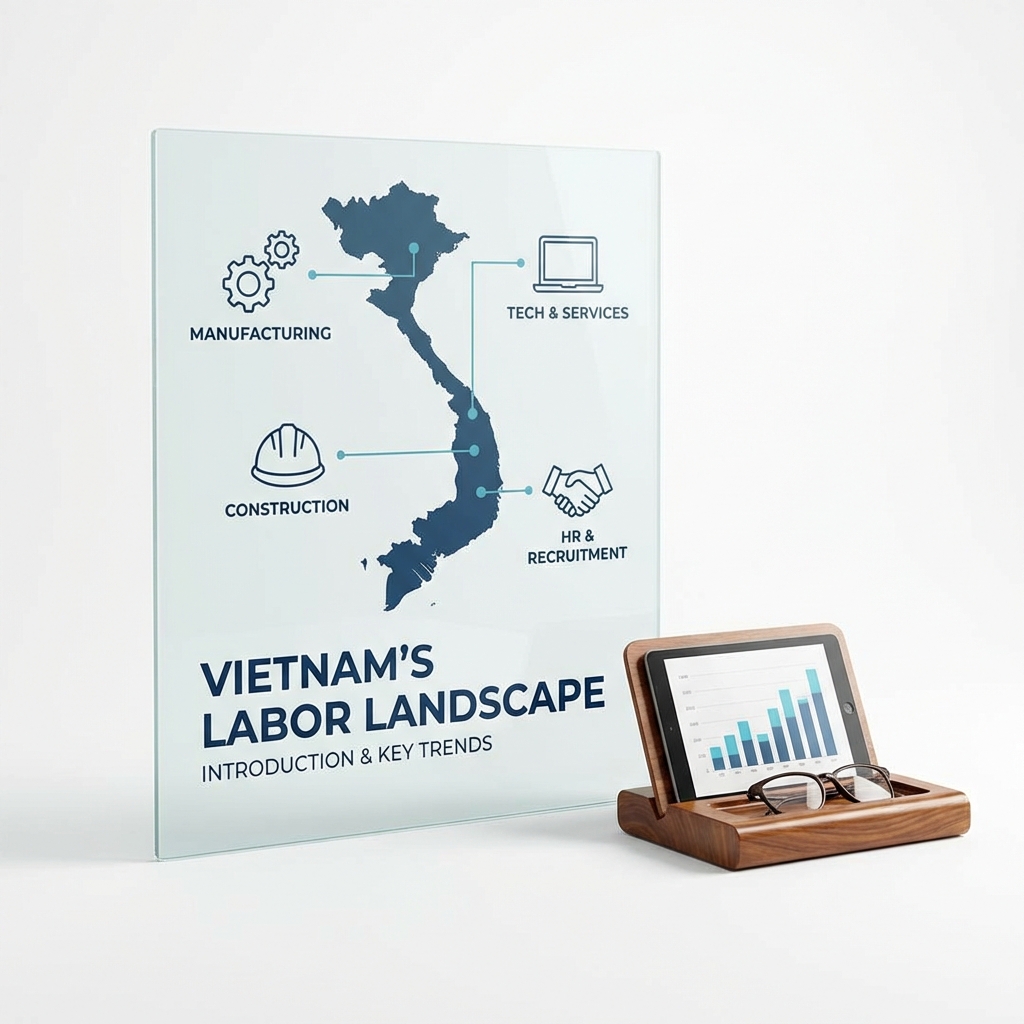
Vietnam’s economic ascent has made it a major hub for manufacturing and production. For businesses in this sector, understanding Vietnam’s legal labor framework is indispensable for sustainable operations and compliance. This section provides a foundational overview of the legal HR terms & conditions for production field in vietnam, setting the stage for specific regulatory aspects vital for HR management in this dynamic market. Navigating Vietnam’s evolving labor landscape requires continuous vigilance and a well-informed, proactive approach.
1. Key Labor Laws and Decrees
The bedrock of Vietnam’s labor legal framework is the Labor Code 2019, effective January 1, 2021. This comprehensive legislation governs all aspects of the employment relationship, from contracts to termination. It covers critical areas like working hours, wages, social insurance, trade unions, occupational safety and health (OSH), labor dispute resolution, and regulations for foreign workers.
For the production sector, the Labor Code’s provisions are particularly impactful. Manufacturers must adhere to regulations on shift work, overtime, minimum wage, and industrial safety protocols. The code mandates internal labor rules, collective agreements, and employee representation, crucial for harmonious industrial relations and operational continuity. Understanding these decrees ensures compliance and fosters a productive workforce.
2. Role of the Ministry of Labor, Invalids and Social Affairs (MOLISA)
The Ministry of Labor, Invalids and Social Affairs (MOLISA) is the principal governmental body managing labor, employment, social insurance, and occupational safety in Vietnam. MOLISA shapes the labor landscape by drafting laws and policies, issuing guiding decrees (Nghị định) and circulars (Thông tư) that elaborate on the Labor Code. These subsidiary legislations offer indispensable practical instructions for HR professionals.
Beyond policy formulation, MOLISA implements, supervises, and enforces labor laws via its departments and local authorities. This includes inspections, foreign worker permits, social insurance oversight, and dispute mediation. For production sector HR, staying abreast of MOLISA’s interpretations and guidelines is critical. Non-compliance can lead to penalties and reputational damage. Regular consultation of MOLISA pronouncements is essential for effective HR management.
3. Recent Amendments and Upcoming Changes Affecting 2026
Vietnam’s labor legal framework continuously evolves. The Legal HR terms & conditions for production field in vietnam saw significant updates with the Labor Code 2019. Key changes included a phased increase in retirement age, enhanced anti-discrimination protections, and clearer sexual harassment regulations. The code also strengthened employee rights to form representative organizations and clarified severance rules.
Looking to 2026, production businesses should anticipate further adjustments. Discussions often involve social insurance revisions, minimum wage recalibrations, and implications of new trade agreements on labor standards. Vietnam’s government is also committed to aligning labor laws with international standards. Proactive HR management thus requires continuous monitoring of legislative developments. By preparing for these changes, facilities can ensure seamless adaptation, maintain compliance, and strategically plan workforce management, mitigating risks and leveraging growth opportunities.
Mastering Vietnam’s labor laws is crucial for production sector success. A proactive approach, understanding the Labor Code, MOLISA’s guidance, and anticipating amendments, is paramount for HR management. This foundational knowledge empowers companies to navigate complexities, foster a fair and productive work environment, and ensure sustained growth in Southeast Asia’s dynamic economy.
Core Employment Contracts & Documentation
Navigating the intricate landscape of employment law in Vietnam is paramount for any business, particularly those operating within the dynamic production sector. Establishing legally compliant employment agreements and robust documentation is not merely a bureaucratic exercise; it is a fundamental strategy for mitigating risks, fostering a stable workforce, and ensuring operational continuity. This section details the essential legal requirements for employment agreements, probationary periods, and critical documentation specifically tailored for production workers, ensuring adherence to Vietnam’s comprehensive legal HR terms & conditions for production field in Vietnam.
1. Types of Employment Contracts (Indefinite, Fixed-Term, Seasonal)
Under Vietnam’s Labor Code (Law No. 45/2019/QH14), employers must clearly define the type of employment contract issued to their production workers. The choice of contract has significant implications for both employer and employee rights and obligations:
- Indefinite-Term Contracts: These contracts are used when the duration of employment is not specified. They offer the highest level of job security for employees and are generally preferred by the Labor Code. Once a production worker is hired under an indefinite-term contract, termination requires specific legal grounds and procedures, including notice periods and severance pay, unless the employee commits a serious breach.
- Fixed-Term Contracts: These contracts specify a definite term, which cannot exceed 36 months. They are commonly used for initial hires or for projects with a clear end date. A key provision in Vietnamese law is that if an employee continues to work after a fixed-term contract expires, it automatically converts into an indefinite-term contract after a second renewal (or after one renewal if the initial contract was for a specific duration and the employee continues to work for 30 days after its expiry). Employers in the production sector often utilize fixed-term contracts to manage workforce fluctuations or new project phases, but must be mindful of the conversion rules to avoid unintended indefinite obligations.
- Seasonal or Specific Job Contracts: For jobs with a duration of less than 12 months, employers can issue seasonal or specific job contracts. While less common for core, full-time production roles, these can be applicable for short-term projects, seasonal peaks in demand (e.g., specific manufacturing cycles), or temporary tasks within a production facility. These contracts also have specific rules regarding their application and renewal.
2. Mandatory Clauses and Employer Responsibilities
Every employment contract, regardless of its type, must contain specific mandatory clauses as stipulated by Vietnamese law. These clauses ensure clarity on the terms of employment and protect the rights of both parties. For production workers, particular attention must be paid to details that directly impact their work environment and compensation:
- Mandatory Clauses: Key elements include the names and addresses of the employer and employee, job description and work location (crucial for production lines or specific factory areas), contract term, wage, allowances, and other payments (e.g., overtime rates, shift differentials), working hours and rest periods, social insurance, health insurance, and unemployment insurance contributions, and occupational safety and health requirements. For production roles, clear descriptions of work duties, machinery operation, and safety protocols are essential.
- Employer Responsibilities: Beyond the contractual clauses, employers in the production field bear significant responsibilities. This includes providing a safe and healthy working environment, supplying necessary personal protective equipment (PPE), ensuring regular occupational health checks, and complying with all relevant safety regulations. Employers must pay wages fully and on time, contribute to mandatory social insurance schemes, and issue internal labor regulations that align with the Labor Code. Understanding and fulfilling these responsibilities are critical for maintaining compliance and a productive workforce. For detailed guidance on compliance, resources like legal analyses of the Vietnam Labour Code are invaluable.
3. Probationary Periods, Training, and Apprenticeships
The initial phase of employment for production workers often involves a probationary period, followed by ongoing training and, in some cases, formal apprenticeships, all governed by specific legal frameworks:
- Probationary Periods: Vietnam’s Labor Code permits probationary periods to assess a new employee’s suitability for a role. The maximum duration varies by job type: 60 days for highly skilled roles (e.g., engineers, senior technicians), 30 days for general production workers, and 6 days for seasonal or temporary work. During probation, the employee must receive at least 85% of the official wage for the position. Importantly, either party can terminate the probationary agreement without prior notice or compensation if the assessment indicates unsuitability, provided the termination is within the probationary period. No probation is allowed for contracts lasting less than one month.
- Training: Employers have an obligation to provide necessary training to their employees, particularly for production roles where specific skills, machinery operation, and safety knowledge are critical. This ensures workers are competent and safe in their duties. For significant training investments, employers can enter into training agreements with employees, stipulating a commitment period after training to recover costs if the employee resigns prematurely.
- Apprenticeships: Distinct from probation, apprenticeships are structured programs designed to impart specific vocational skills to individuals entering a trade or specialized production role. These agreements typically outline the training duration, the skills to be acquired, and any compensation or post-apprenticeship employment commitments. Apprenticeships are vital for developing a skilled workforce in the Vietnamese manufacturing sector, ensuring a pipeline of talent for complex production processes and contributing to the overall enhancement of legal HR terms & conditions for production field in Vietnam for long-term growth.
By meticulously addressing these core aspects of employment contracts and documentation, businesses in Vietnam’s production sector can build a resilient, compliant, and motivated workforce, laying a strong foundation for sustainable growth and operational excellence.
Wages, Working Hours, and Overtime Regulations
Navigating the intricacies of labor laws is paramount for any business operating in Vietnam, especially within the dynamic production field. Adhering to the legal stipulations surrounding remuneration, standard working hours, rest breaks, and overtime compensation is not just a matter of compliance but a cornerstone of sustainable HR practices and maintaining a positive work environment. Understanding these regulations is crucial for ensuring fair treatment of employees and avoiding potential legal disputes or penalties. This section delves into the specific Vietnamese legal framework governing wages, working hours, and overtime, providing a clear overview for employers and HR professionals.

1. Minimum Wage Standards and Regional Variations
Vietnam’s labor law establishes a minimum wage system designed to ensure a basic living standard for employees, with specific adjustments made to reflect the varying economic conditions across different regions. The government regularly revises these minimum wage levels, typically announced through decrees, which employers must meticulously follow. These wages are categorized into four regions (Region I, II, III, and IV), with Region I encompassing major cities and industrial hubs like Hanoi and Ho Chi Minh City, consequently having the highest minimum wage. Regions II, III, and IV cover less developed urban areas and rural localities, with progressively lower minimum wage requirements.
For businesses operating in the production field, understanding and correctly applying these regional minimum wage standards is critical. Failure to do so can result in significant legal ramifications, including fines and retroactive wage payments. Employers must identify the correct region for each of their production facilities and ensure that all employees, regardless of their position, receive at least the stipulated minimum wage. This compliance is a fundamental aspect of the broader Legal HR terms & conditions for production field in vietnam, impacting everything from payroll management to labor cost planning.
2. Maximum Working Hours and Rest Periods
The Vietnamese Labor Code strictly regulates working hours and mandates sufficient rest periods to safeguard employee well-being and productivity. The standard working week is generally capped at 48 hours, with a maximum of 8 hours per day. However, for employees engaged in particularly arduous, hazardous, or toxic occupations, the law mandates a reduced working day, often 6 hours, to mitigate health risks. Employers in the production sector, where such conditions are common, must pay close attention to these specific provisions.
Beyond daily and weekly limits, the law also stipulates compulsory rest breaks. Employees are entitled to at least 30 minutes of rest if working continuously for 6 hours (or 45 minutes for night shifts). Weekly, employees must receive at least 24 consecutive hours of rest. Furthermore, annual leave entitlements are also defined, typically starting at 12 working days per year for standard conditions, with additional days for specific employee categories or prolonged service. Adherence to these regulations is not only a legal obligation but also plays a vital role in preventing burnout, improving employee morale, and ultimately enhancing operational efficiency within the production environment.
3. Overtime Calculation and Premium Rates for Holidays/Night Shifts
While the Vietnamese Labor Code permits overtime work, it imposes stringent limits and mandates premium pay rates. Employers must ensure that overtime hours do not exceed 50% of the normal working hours in a day, 40 hours a month, and generally not more than 200 hours per year. However, in specific production sectors critical for national defense, security, or handling seasonal/urgent production orders, the annual overtime limit can be extended up to 300 hours, subject to government approval and strict conditions.
Overtime compensation rates are clearly defined:
- Weekdays: At least 150% of the normal wage.
- Weekends: At least 200% of the normal wage.
- Public Holidays and Paid Annual Leave: At least 300% of the normal wage (excluding the day’s paid wage).
For night shifts, employees are entitled to an additional payment of at least 30% of their normal wage for the night work, on top of any applicable overtime rates. If an employee works overtime during a night shift, the overtime rate is calculated based on the increased night shift wage. Precise record-keeping of all working hours, including overtime and night shifts, is essential for accurate payroll processing and demonstrating compliance. For a comprehensive understanding of the legal framework, refer to the detailed provisions of the Vietnamese Labor Code. Strict adherence to these rules is fundamental for employers in Vietnam’s production sector to avoid penalties and foster a fair and legally sound workplace.
Social Insurance, Health Insurance, and Unemployment Benefits
Navigating Vietnam’s comprehensive social welfare system is a critical aspect of human resource management, particularly for businesses operating in the production field. Understanding the nuances of employer and employee contributions to social insurance, health insurance, and unemployment benefits is essential for compliance, employee satisfaction, and effective workforce planning. This section provides a detailed guide to these mandatory contributions and the corresponding benefits, ensuring HR professionals in Vietnam are well-equipped to manage their obligations and support their employees under the current Legal HR terms & conditions for production field in vietnam.
1. Mandatory Social, Health, and Unemployment Insurance Contributions
Employers in Vietnam are legally required to contribute to three main social welfare funds: Social Insurance (SI), Health Insurance (HI), and Unemployment Insurance (UI). These contributions are based on an employee’s monthly salary, subject to caps (currently 20 times the regional minimum wage for UI, and 20 times the common minimum wage for SI and HI).
-
Social Insurance (SI): Covers sickness, maternity, occupational accidents/diseases, retirement, and death benefits. Employers typically contribute 17.5% and employees 8% of the monthly salary. This includes a 0.5% contribution from the employer for Occupational Accident and Disease Insurance (OADI).
-
Health Insurance (HI): Provides coverage for medical examinations and treatment. Employers contribute 3% and employees 1.5%.
-
Unemployment Insurance (UI): Offers financial support to employees who lose their jobs. Both employers and employees typically contribute 1% each, with the state also contributing 1%.
The employer bears the primary responsibility for registering employees, calculating, deducting, and remitting these contributions to the social insurance agency. Adhering to these mandatory contributions is not merely a legal obligation but a fundamental aspect of providing a secure and compliant working environment for all staff in the production sector.
2. Benefits for Employees (Sickness, Maternity, Occupational Accidents)
Vietnam’s social welfare system provides a crucial safety net for employees, covering various life events and ensuring their well-being.
-
Sickness Benefits: Employees unable to work due to non-work-related illness or injury are entitled to sickness benefits. The benefit amount is generally 75% of the monthly salary used for social insurance contributions, paid for a specified number of days per year (e.g., 30, 40, or 70 days depending on working conditions and tenure), upon presentation of a certified medical leave.
-
Maternity Benefits: This is a robust area of employee protection. Female employees are entitled to a six-month maternity leave before and after childbirth, with 100% of their average monthly salary (based on social insurance contributions) paid by the social insurance fund. Fathers are also entitled to short paternity leave benefits (5-14 working days). Adoptive mothers are similarly covered.
-
Occupational Accidents and Diseases (OADI) Benefits: Employees suffering from work-related accidents or occupational diseases are eligible for comprehensive benefits. These include payment for medical treatment, compensation for temporary or permanent disability (based on impairment degree), and support for rehabilitation. These benefits underscore the commitment to protecting workers in the often demanding environment of the production field, ensuring financial security during challenging times.
3. Compliance and Reporting Requirements for Employers
For employers in Vietnam, strict adherence to social insurance, health insurance, and unemployment insurance regulations is paramount. Non-compliance can lead to substantial fines, retroactive payments, and reputational damage.
-
Registration and Updates: Employers must register with the provincial social insurance agency within 30 days of establishing their business or hiring their first employee. Regular updates on workforce changes (new hires, terminations, salary adjustments) are also mandatory.
-
Monthly Contributions and Declarations: Companies are required to submit monthly declarations and pay the corresponding contributions by the prescribed deadline (usually the end of the month following the contribution month).
-
Record Keeping: Meticulous maintenance of all relevant documents, including labor contracts, payroll records, social insurance books, and medical certificates, is crucial for audits and dispute resolution. Employers are responsible for managing and issuing social insurance books to employees, which record their contribution history and are essential for claiming benefits.
-
Penalties for Non-Compliance: The Vietnamese government imposes significant penalties for late payments, under-declarations, or evasion of social insurance contributions, including administrative fines, interest on overdue amounts, and potentially criminal charges in severe cases.
Understanding and consistently meeting these obligations is vital for any business, particularly those in the production sector, to foster a stable and legally sound working environment. For a deeper understanding of the specific decrees and contribution rates, employers are advised to consult official government sources or legal experts in Vietnamese labor law. Keeping abreast of Vietnam’s dynamic labor laws ensures operational continuity and robust HR management.
Termination, Severance, and Dispute Resolution
Navigating the complexities of employment termination, calculating severance, and resolving labor disputes is a critical aspect of human resources management, particularly within Vietnam’s dynamic production environment. Understanding the Legal HR terms & conditions for production field in Vietnam is paramount for both employers and employees to ensure compliance, fairness, and minimize potential legal challenges. This section outlines the essential legal frameworks and procedural requirements governing the end of employment relationships in the Vietnamese context.
-
Valid Grounds for Termination (Employer & Employee Initiated)
In Vietnam, the Labor Code meticulously defines valid grounds for terminating employment, aiming to protect both parties. For employers, justifiable reasons for dismissal include the employee’s repeated failure to perform assigned tasks despite warnings, serious disciplinary misconduct (e.g., theft, fraud, disclosure of business secrets), extended illness or injury preventing work, force majeure events, or economic restructuring and technological changes leading to redundancy. Strict adherence to legal procedures, including providing proof and following disciplinary processes, is crucial to prevent wrongful termination claims. Conversely, employees also have rights to terminate their contracts. They can resign with due notice for any reason, or immediately without notice under specific circumstances, such as if the employer breaches the labor contract (e.g., non-payment of wages, abusive treatment, or harassment) or is involved in a merger/acquisition that significantly impacts their employment conditions. Understanding these nuances is vital for HR professionals managing the workforce in Vietnam’s production sector.
-
Notice Periods and Severance Pay Calculations
The Vietnamese Labor Code stipulates specific notice periods for contract termination, which vary depending on the type of contract and the reason for termination. For indefinite-term contracts, a notice period of at least 45 days is generally required for both employer and employee. For definite-term contracts, the notice period is typically 30 days, while seasonal or specific task contracts of less than 12 months require 3 working days’ notice. Failure to observe these periods can lead to penalties. Regarding severance, an employee whose labor contract is terminated (except in cases of gross misconduct, unilateral termination by the employee, or eligibility for retirement) is entitled to a severance allowance. This allowance is calculated as half a month’s salary for each year of service. The base salary for this calculation is the average salary of the last six months prior to termination. It is important to distinguish this from the job loss allowance, which applies to employees made redundant due to economic reasons, restructuring, or technological changes, entitling them to one month’s salary for each year of service, with a minimum of two months’ salary. Staying updated on the latest changes in Vietnam’s Labor Code 2019 is essential for accurate calculations and compliance.
-
Labor Dispute Resolution Mechanisms and Arbitration
Labor disputes in Vietnam’s production environment can arise from various issues, including wages, working conditions, termination, or collective agreements. The Vietnamese legal system provides a multi-tiered approach to dispute resolution, starting with internal workplace dialogue and negotiation between the parties. If an individual labor dispute cannot be resolved internally, it progresses to conciliation, typically facilitated by a labor conciliator from the local Department of Labor, Invalids and Social Affairs (DOLISA). For collective labor disputes, or if individual disputes remain unresolved after conciliation, the next step often involves the Labor Arbitration Council. This council, composed of representatives from employers, employees, and state agencies, aims to mediate and issue binding decisions for collective disputes. For individual disputes, if conciliation fails, either party can typically initiate legal proceedings in court. Recourse to the People’s Court is the final step, available if conciliation or arbitration fails, or if a party disagrees with an arbitration decision. Proper documentation, clear internal policies, and timely action are crucial for effectively navigating these mechanisms and achieving favorable outcomes, highlighting the importance of robust Legal HR terms & conditions for production field in Vietnam.
Navigating employment termination, severance, and dispute resolution in Vietnam requires a comprehensive understanding of its intricate labor laws. Companies operating in the production sector must proactively manage HR policies and procedures to ensure full compliance, foster fair practices, and mitigate legal risks. Seeking expert guidance can significantly streamline these processes and protect the interests of all stakeholders in the Vietnamese labor market.
Partner with Shelby Global
You are looking for reliable HR Sevice Suppliers? Contact Shelby Global Now! To connect with verified talents and upgrade your orginization.
—————————————
References
– Labor Code 2019 Overview by DFDL: https://www.dfdl.com/resources/legal-and-tax-updates/vietnams-new-labor-code-2019/
– legal analyses of the Vietnam Labour Code: https://vilaf.com.vn/vietnam-labour-code-2019/
– Vietnamese Labor Code: https://insightplus.bakermckenzie.com/bm/asia-pacific/vietnam-new-labour-code-effective-january-2021
– Vietnam Social Insurance Contributions for 2024 – Dezan Shira & Associates: https://www.dezshira.com/library/vietnam-social-insurance-contributions-for-2024/
– :