Understanding the Unique Landscape of Malaysian Beauty SMEs
Malaysia’s beauty industry is a dynamic and burgeoning sector, characterized by a vibrant mix of international brands and increasingly prominent local small and medium-sized enterprises (SMEs). While this landscape offers immense opportunities, Malaysian beauty SMEs navigate a complex environment fraught with specific economic and industry-specific challenges. Successfully competing and growing in this market hinges not only on product innovation and marketing prowess but critically, on strategic financial management, particularly concerning talent acquisition and retention. Developing Optimized Salary Budget Structures for SMEs in beauty field in malaysia is paramount to sustainable growth and competitive advantage.

1. Current State of the Beauty SME Market in Malaysia
The Malaysian beauty market has witnessed robust growth, driven by rising disposable incomes, increasing urbanization, and a strong digital adoption rate among consumers. E-commerce platforms and social media have democratized access for local brands, allowing them to carve out niches alongside established international players. This vibrant ecosystem, however, also breeds intense competition. SMEs often face significant hurdles, including market saturation, the need for continuous product innovation, and the logistical complexities of supply chain management. Moreover, adapting to rapid digital transformation and meeting evolving consumer demands for ethical, sustainable, and personalized products require substantial investment and agile operations. According to a report by MATRADE, the Malaysian beauty and personal care market is projected to continue its upward trajectory, presenting both immense potential and demanding a strategic approach to resource allocation, especially in human capital.
2. Common Salary Budgeting Pitfalls for Beauty Businesses
Despite the growth, many Malaysian beauty SMEs fall into common budgeting traps that hinder their long-term viability, particularly concerning staff compensation. A significant pitfall is the lack of a structured, data-driven approach to salary budgeting. Businesses often rely on informal practices, leading to inconsistent pay scales, underestimation of total compensation costs (which include benefits, training, and statutory contributions), and a failure to align salaries with market rates or performance. This can result in high employee turnover, difficulty attracting skilled professionals (e.g., experienced beauticians, specialized formulators, digital marketing experts), and diminished employee morale. Without clear performance incentives or career progression paths linked to compensation, motivation wanes. Overcoming these challenges requires a commitment to developing comprehensive Optimized Salary Budget Structures for SMEs in beauty field in malaysia that are transparent, equitable, and competitive, ensuring that valuable talent is retained and productivity remains high.
3. Impact of Local Economic & Consumer Trends on Compensation
Local economic conditions and shifting consumer trends profoundly influence how beauty SMEs structure their compensation packages. Factors such as inflation directly impact the cost of living, necessitating adjustments in base salaries to maintain employee purchasing power and satisfaction. Exchange rate fluctuations can affect the cost of imported ingredients or equipment, indirectly pressuring operational budgets and, subsequently, salary allocations. Furthermore, evolving Malaysian consumer preferences — for instance, a growing demand for halal-certified products, personalized beauty routines, or eco-friendly formulations — dictate the specialized skills required within the workforce. This often translates into higher salary expectations for employees with niche expertise in areas like organic chemistry, regulatory compliance, or advanced digital marketing. Balancing the need to offer competitive remuneration to attract and retain these skilled individuals against the backdrop of a price-sensitive market and broader economic pressures is a delicate act. Therefore, beauty SMEs must adopt flexible and forward-thinking salary structures that can adapt to both micro-industry demands and macro-economic shifts, ensuring both financial stability for the business and fair compensation for its invaluable human resources.
Core Principles for Strategic Salary Budgeting
Dive into the fundamental strategies and considerations for designing a salary budget that is both competitive and sustainable for your beauty SME.
In Malaysia’s vibrant beauty industry, attracting and retaining top talent is crucial for an SME’s success. An optimized salary budget structure is essential, ensuring a motivated workforce and sustainable growth. For beauty businesses—salons, spas, or aesthetic clinics—a strategic approach to compensation balances market awareness, legal adherence, and alignment with business objectives, vital for profitability in the Malaysian beauty field.
1. Balancing Market Competitiveness with Cost-Effectiveness
Understanding the competitive landscape is key. Beauty professionals are in high demand, so your SME’s compensation must be competitive within the Malaysian market. This doesn’t always mean the highest salaries, but a compelling total rewards package. Start with thorough market research: identify typical salary ranges for various roles in the beauty sector in your region. Utilise industry benchmarks, local salary surveys, and recruitment agencies.
The challenge lies in balancing competitiveness with financial constraints. Strategies include a solid base salary complemented by performance-based incentives. Commissions tied to service sales, product upsells, or client retention can motivate your team without inflating fixed costs. Beyond monetary compensation, consider non-cash benefits like professional development, training, a positive work environment, and recognition programs. These add significant value, differentiating smaller businesses. The goal is an attractive compensation strategy that secures top talent without overstretching your budget, ensuring the long-term sustainability of your beauty SME.
2. Ensuring Compliance with Malaysian Labor Laws & Regulations
Compliance is non-negotiable for any Malaysian business. Adherence to labor laws is crucial for avoiding penalties and fostering an ethical workplace. Key legislation includes the Employment Act 1955 (as amended, particularly the 2022 amendments), which governs working hours, leave, and termination. Your salary budget must also account for the Minimum Wage Order. Non-compliance can lead to significant fines and reputational damage.
Employers must also factor in statutory contributions: Employees Provident Fund (EPF) for retirement, Social Security Organisation (SOCSO) for injury and invalidity, and the Employment Insurance System (EIS) for retrenched workers. These are mandatory and a significant part of your salary expenditure. Regularly review compensation policies against the latest legal updates, as Malaysian labor laws are periodically revised. Maintaining good records of payroll, employment contracts, and statutory remittances is vital for audits. For beauty SMEs, meticulously following these regulations forms the bedrock of a responsible and legally sound salary budgeting strategy.
3. Aligning Compensation Structures with Business Growth Goals
A truly strategic salary budget actively supports your business towards its growth objectives. For beauty SMEs looking to expand, increase market share, or launch new high-margin services, your compensation structure should be a powerful tool. Design compensation that directly incentivizes behaviors and outcomes critical to your strategic vision.
Link variable pay (bonuses, commissions) to specific Key Performance Indicators (KPIs) that align with growth. For example, to increase new client acquisition, implement a tiered commission structure. If the focus is on improving customer retention, tie bonuses to client rebooking rates or positive feedback. If introducing a premium service, integrate a higher commission or specific training allowance for proficient staff. A well-defined career progression path with associated salary increments also motivates long-term commitment. This proactive approach ensures every dollar spent on compensation is an investment in your beauty SME’s future growth and profitability, creating a virtuous cycle of performance and reward.
Practical Steps to Structure Salaries for Beauty Roles
Establishing an effective and equitable salary structure is paramount for the success and sustainability of Small and Medium Enterprises (SMEs) in Malaysia’s vibrant beauty industry. With a diverse range of roles, from skilled aestheticians and creative hairstylists to meticulous nail technicians and dedicated spa managers, a well-thought-out compensation system not only attracts top talent but also boosts employee morale, reduces turnover, and ensures financial stability. This step-by-step guide will walk you through implementing optimized salary budget structures for SMEs in the beauty field in Malaysia, tailored to meet the unique demands of beauty professionals.
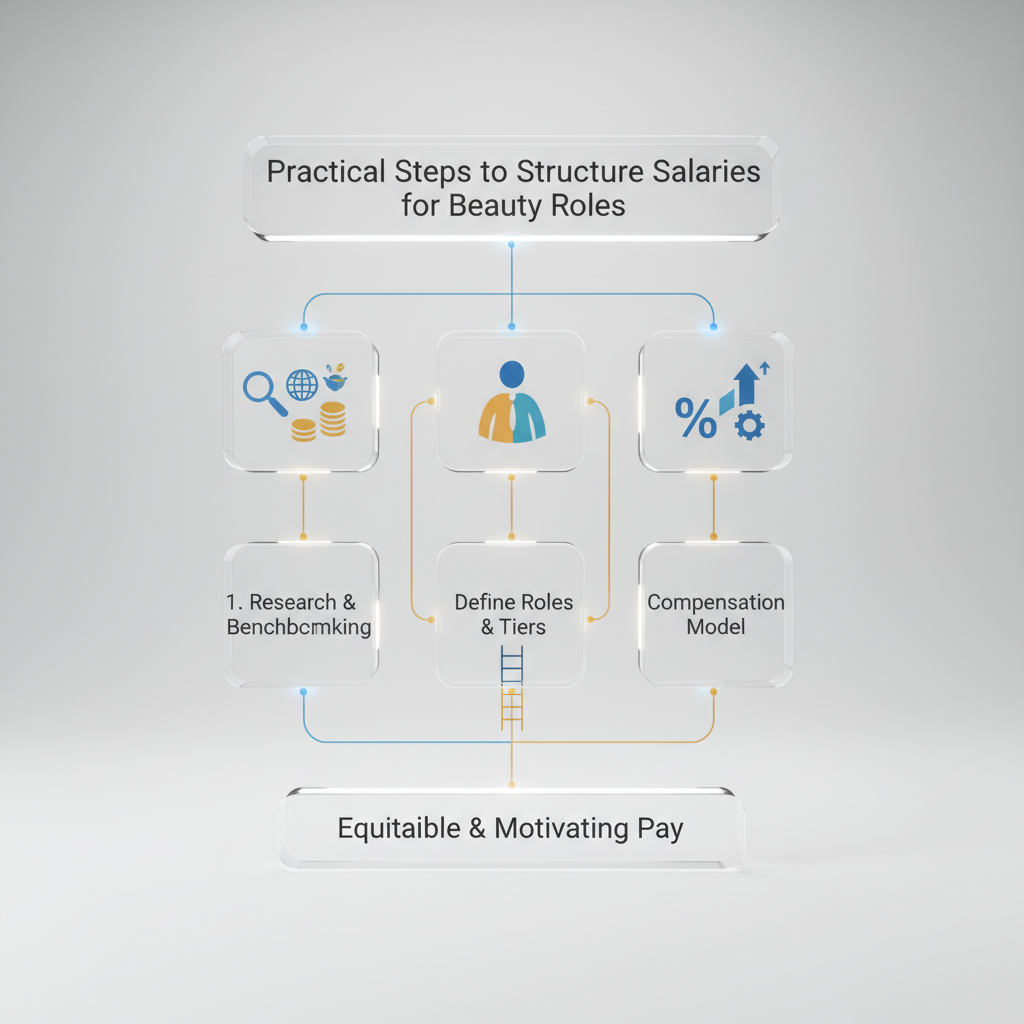
1. Job Evaluation & Grading Systems for Beauty Professionals
The first crucial step in structuring salaries is to thoroughly understand and evaluate each role within your beauty establishment. Job evaluation systematically assesses the relative worth of each position based on factors like skill requirements, responsibilities, effort, and working conditions. For beauty professionals, this means differentiating between the expertise needed for advanced aesthetic procedures versus basic salon services, or the management responsibilities of a spa manager versus a junior stylist.
To implement this, conduct a detailed job analysis for every role. Document key tasks, required qualifications, experience levels, and the degree of decision-making authority. Based on this analysis, you can assign points or rank jobs into grades. For instance, ‘Grade 1’ might include entry-level salon assistants, while ‘Grade 3’ could encompass senior aestheticians or master hairstylists, and ‘Grade 5’ a clinic manager. This grading system provides a logical and defensible framework for setting pay. It ensures that roles requiring higher skills or greater responsibility are compensated appropriately, fostering a sense of fairness among your team. For a deeper understanding of the principles behind job evaluation, resources like SHRM provide excellent guides on developing robust systems.
2. Developing Fair and Transparent Pay Scales & Salary Ranges
Once jobs are graded, the next step is to assign specific pay scales and salary ranges to each grade. This involves a careful balance of internal equity (fairness within your organization) and external competitiveness (attracting talent in the Malaysian market). Begin by conducting market research to understand average salaries for similar beauty roles in Malaysia, particularly within your geographical area. Utilize industry surveys, online job portals, and networking with other beauty business owners to gather relevant data.
For each grade, establish a salary range with a minimum, midpoint, and maximum. The minimum should be competitive enough to attract candidates, while the maximum allows for rewarding experience and high performance. The midpoint typically reflects the market average for a fully proficient employee in that role. Transparency in these pay scales is vital. While individual salaries may remain confidential, employees should understand how the system works, what factors influence their pay, and what opportunities exist for advancement to higher pay grades. This clarity builds trust and motivates employees to develop their skills and take on more responsibility, knowing there’s a clear path for growth in their optimized salary budget structures for SMEs in the beauty field in Malaysia.
3. Integrating Performance-Based Incentives & Commissions
Beyond base salaries, integrating performance-based incentives and commission structures is a powerful way to motivate beauty professionals and align their efforts with your business goals. Given the service-oriented and sales-driven nature of the beauty industry, a well-designed incentive program can significantly boost productivity and revenue.
Consider various models: a percentage commission on services performed or products sold, tiered commissions (where the percentage increases after a certain sales threshold), or bonuses for achieving specific Key Performance Indicators (KPIs) such as client retention rates, upselling targets, or positive customer reviews. For roles like spa managers, incentives might be tied to overall clinic profitability or team performance. Ensure these incentive structures are clear, measurable, and achievable. Regularly communicate performance targets and provide constructive feedback. When designed effectively, performance-based pay not only rewards high achievers but also fosters a culture of excellence and customer satisfaction, directly contributing to the growth of your beauty SME in Malaysia.
Leveraging Non-Monetary Benefits to Attract and Retain Talent
In the competitive landscape of the beauty industry, especially for Small and Medium-sized Enterprises (SMEs) in Malaysia, attracting and retaining top talent goes beyond simply offering competitive salaries. A holistic “total rewards” approach, which strategically incorporates non-cash benefits, is increasingly vital for enhancing employee satisfaction, fostering loyalty, and building a strong employer brand. While competitive compensation remains foundational, understanding how to utilize Optimized Salary Budget Structures for SMEs in beauty field in Malaysia frees up resources for crucial non-monetary perks. These benefits address evolving employee needs, differentiate SMEs, and foster a culture where staff feel valued and motivated.
1. The Impact of Employee Development & Training Programs
For beauty professionals, continuous learning and skill enhancement are paramount. The beauty industry is dynamic, with new techniques, products, and trends emerging constantly. Therefore, investing in robust employee development and training programs is a powerful non-monetary benefit. Such programs demonstrate an employer’s commitment to their staff’s professional growth, offering opportunities for beauticians, stylists, and therapists to hone their craft, learn advanced procedures (e.g., specific facials, intricate nail art, advanced hair colouring), and stay ahead of industry curves. This boosts individual confidence, elevates service quality, and enhances business reputation. A clear career progression path, supported by training, significantly improves retention. Employees are more likely to stay with organizations that invest in their future, viewing them as partners in their long-term career. According to SHRM, employee development is crucial for retaining top talent, fostering engagement, and improving overall organizational performance, making it an indispensable component of an attractive total rewards package for any beauty SME.
2. Implementing Flexible Work Arrangements & Work-Life Balance Perks
The modern workforce, particularly in service-oriented industries like beauty, places a high premium on work-life balance. Long, rigid hours can lead to burnout and high turnover. Implementing flexible work arrangements can be a game-changer for beauty SMEs in Malaysia. This doesn’t necessarily mean remote work for client-facing roles, but rather creative scheduling options such as compressed workweeks, staggered shifts, or part-time roles that allow staff to better manage personal commitments. For administrative or marketing roles, hybrid or remote work models can be attractive. Beyond scheduling, perks might include generous paid time off, mental health days, or employer-sponsored family events. By acknowledging and supporting employees’ lives outside of work, SMEs can cultivate a culture of trust and respect. This flexibility empowers employees, reduces stress, and often leads to increased job satisfaction, productivity, and loyalty. It signals that the employer views their staff as holistic individuals, not just workers, which is a powerful differentiator in attracting and retaining talent in a demanding industry.
3. Health, Wellness Programs, and Staff Product Discounts
An employee’s well-being is intrinsically linked to their productivity and satisfaction. Forward-thinking beauty SMEs can offer a range of health and wellness programs that demonstrate genuine care. These might include access to mental health resources, discounted gym memberships, stress management workshops, or even healthy snack options in the staff room. Given the physical demands of many beauty roles (standing for long periods, repetitive motions), ergonomic advice or access to physiotherapy could also be highly valued. Furthermore, in the beauty industry, staff product discounts are an incredibly appealing non-monetary benefit. Employees, who are often passionate about beauty themselves, gain access to high-quality products and services at reduced prices, allowing them to personally experience and endorse what they sell. This acts as a personal perk and enhances product knowledge and enthusiasm, leading to more authentic sales interactions. Combined, these wellness initiatives and tangible discounts contribute significantly to an employee’s overall quality of life and sense of belonging, reinforcing their value to the organization beyond their hourly wage or commission structure.
In conclusion, for beauty SMEs in Malaysia navigating competitive talent markets, a strategic focus on non-monetary benefits is no longer a luxury but a necessity. By thoughtfully integrating employee development, flexible work arrangements, comprehensive wellness programs, and industry-specific perks like product discounts, businesses can construct a compelling employee value proposition. This comprehensive approach not only attracts the best talent but also fosters a loyal, engaged, and productive workforce, ultimately driving long-term success and sustainability in the vibrant Malaysian beauty sector.
Monitoring, Reviewing, and Adapting Your Salary Budget for 2026
In the fast-evolving landscape of Malaysia’s beauty industry, particularly for Small and Medium-sized Enterprises (SMEs), a static salary budget is a recipe for stagnation. To ensure your business thrives, attracting and retaining top talent, continuous evaluation and adjustment of your compensation strategy are not merely beneficial but absolutely crucial. This dynamic approach ensures your budget remains relevant, effective, and sustainable in the long term, ultimately leading to Optimized Salary Budget Structures for SMEs in beauty field in malaysia. The market, employee expectations, and economic conditions are constantly shifting, demanding an agile response from businesses committed to growth and operational excellence.
1. Key Performance Indicators (KPIs) for Salary Budget Efficacy
To effectively monitor your salary budget, you must first define what success looks like. Establishing clear Key Performance Indicators (KPIs) provides measurable benchmarks against which the efficacy of your compensation strategy can be evaluated. For SMEs in the beauty sector, relevant KPIs might include:
- Salary-to-Revenue Ratio: This KPI indicates the proportion of your total revenue spent on salaries. While industry benchmarks vary, monitoring this ratio helps ensure your labor costs are aligned with your income generation, allowing for sustainable growth and profitability.
- Employee Turnover Rate (especially for high performers): High turnover, particularly among your most skilled aestheticians, stylists, or product specialists, can signal dissatisfaction with compensation, workload, or career progression. Tracking this helps identify areas where your budget might need adjustments to improve retention.
- Compensation Competitiveness: Regularly benchmarking your salary ranges against industry averages and competitors in the Malaysian beauty market is vital. KPIs related to market competitiveness, often derived from salary surveys, indicate whether your pay scales are attractive enough to secure and retain talent.
- Return on Investment (ROI) of Training & Development: If your budget allocates funds for upskilling staff, measure the direct impact on service quality, client satisfaction, or sales. An effective salary budget doesn’t just pay for existing skills but invests in future capabilities.
- Employee Satisfaction & Engagement Scores (Compensation-related): Surveys or feedback mechanisms specifically gauging employee sentiment about their pay, benefits, and overall compensation package can provide invaluable qualitative data, highlighting areas for improvement or reinforcement.
These KPIs offer a holistic view, moving beyond mere expenditure to gauge the strategic impact of your salary budget on business performance and talent management.
2. Establishing an Annual Review and Adjustment Process
A structured, systematic approach to reviewing your salary budget is paramount. While unforeseen circumstances may necessitate ad-hoc adjustments, an annual process ensures comprehensive analysis and strategic foresight. This process typically involves:
- Data Collection & Analysis: Gather internal data (payroll, performance reviews, turnover rates) and external market data (salary guides, economic forecasts, competitor analysis). Leverage resources such as the Aon Salary Increase Survey Malaysia for authoritative insights into market remuneration trends and projections.
- Performance & Business Goal Alignment: Assess how the current budget supports or hinders the achievement of your company’s strategic objectives for the upcoming year. Does it facilitate expansion, new service lines, or market penetration goals?
- Stakeholder Consultation: Engage key personnel – HR, finance, operations managers, and senior leadership – in discussions. Their insights from different vantage points are crucial for a well-rounded perspective on budget needs and constraints.
- Decision-Making & Proposal Development: Based on the data and discussions, propose specific adjustments. This might involve reallocating funds, increasing overall budget, introducing new benefits, or adjusting pay scales for specific roles or performance tiers.
- Implementation & Communication: Once decisions are finalized, implement the changes systematically. Clear and transparent communication with employees regarding any adjustments to compensation structures is vital for maintaining trust and morale.
- Continuous Monitoring: The annual review is not the end but a cycle. Continuous monitoring of the KPIs established in the previous section ensures that the adjustments made are having the desired effect and that new issues are identified promptly.
3. Future-Proofing Your Compensation Strategy Against Market Shifts
The business environment is inherently dynamic, especially for beauty SMEs in Malaysia, which are susceptible to global economic trends, local regulatory changes, and evolving consumer preferences. Future-proofing your compensation strategy means building resilience and adaptability into your Optimized Salary Budget Structures for SMEs in beauty field in malaysia. Consider the following:
- Scenario Planning: Develop multiple budget scenarios based on potential economic fluctuations (e.g., high inflation, economic slowdown) or market changes (e.g., increased competition, talent shortages). This allows for pre-emptive strategies rather than reactive panic.
- Flexible Compensation Models: Explore options beyond fixed salaries, such as performance-based bonuses, commissions tied to sales or client retention, profit-sharing, or flexible benefits packages. These models can adjust more easily to revenue fluctuations and incentivize desired behaviors.
- Continuous Market Intelligence: Stay abreast of industry trends, talent availability, and competitor compensation practices. Subscribing to HR and industry reports, attending relevant seminars, and networking can provide early warnings of impending shifts.
- Investment in Skill Development & Internal Mobility: Future-proof your talent pool by investing in training and development programs. This not only upskills your workforce but also provides internal growth opportunities, making your company more attractive and less reliant on external hiring in tight labor markets.
- Building a Strong Employer Brand: Compensation is only one part of the attraction and retention equation. Cultivating a positive workplace culture, offering career development paths, and fostering a supportive environment can significantly enhance your employer brand, allowing you to compete effectively for talent even if your salaries aren’t always the highest.
By integrating these proactive measures, your salary budget transforms from a mere cost center into a strategic asset, capable of adapting to future challenges and seizing new opportunities, ensuring your beauty SME remains competitive and sustainable in Malaysia’s vibrant market.
Partner with Shelby Global
You are looking for reliable HR Sevice Suppliers? Contact Shelby Global Now! To connect with verified talents and upgrade your orginization.
—————————————
References
– Malaysia’s Cosmetic & Personal Care Market Set for Sustained Growth: https://www.matrade.gov.my/en/about-matrade/media-centre/news-releases/news-releases-2023/15478-malaysia-s-cosmetic-personal-care-market-set-for-sustained-growth
– Ministry of Human Resources, Malaysia: https://www.mohr.gov.my/
– What is job evaluation and why is it important?: https://www.shrm.org/resourcesandtools/tools-and-samples/hr-qa/pages/jobevaluation.aspx
– Why Employee Development Is Important: https://www.shrm.org/resources–tools/hr-topics/employee-relations/pages/why-employee-development-is-important.aspx
– Aon Salary Increase Survey Malaysia: https://www.aon.com/en/capabilities/human-capital-solutions/aon-salary-increase-survey-malaysia