Core Responsibilities & Daily Operations
The human resources landscape in Singapore is as dynamic as its economy, particularly when comparing the distinct spheres of Small and Medium-sized Enterprises (SMEs) and large corporate IT environments. While both require skilled HR professionals, the differences between the SMEs’ HR Manager and the Corporates’ HR Director in IT field in Singapore are profound, shaping their day-to-day tasks and strategic impact. This disparity stems from varying organizational structures, resource availability, and business objectives, leading to fundamentally different approaches to HR.
An SME’s HR Manager often wears multiple hats, acting as a true HR generalist, directly involved in the full spectrum of employee lifecycles within a smaller, more intimate setting. In contrast, a Corporate IT HR Director operates at a much higher, more strategic altitude, guiding specialized teams across diverse geographical locations and complex organizational matrices, focusing on long-term talent strategy for high-tech workforces. Understanding these distinctions is crucial for anyone navigating HR roles in Singapore IT.

1. Operational vs. Strategic Focus
For an HR Manager in a Singaporean SME, the role is predominantly operational. Daily tasks revolve around immediate, hands-on administration: processing payroll, managing leave requests, ensuring compliance with local labor laws like the Employment Act and CPF contributions, and handling basic employee queries. This role demands agility and a deep understanding of practical, day-to-day HR functions. The focus is often reactive, addressing immediate needs and maintaining smooth business operations with limited resources. SME HR challenges often include tight budgets for HR technology and a reliance on manual processes, making efficiency paramount. The HR Manager is typically the sole HR contact, requiring a broad skill set over specialized expertise, embodying the essence of an HR generalist vs. specialist debate where the generalist thrives.
Conversely, a Corporate IT HR Director in Singapore operates with a distinct strategic imperative. Their daily activities involve high-level planning, aligning global HR policies with regional nuances, and advising senior leadership on talent implications for business strategy. This involves long-term workforce planning, organizational design, and cultivating a competitive corporate HR strategy that supports the IT sector’s rapid evolution. They work closely with business unit leaders to foresee future talent needs, develop succession plans, and drive initiatives that enhance organizational capability. Their focus is less on transactional duties and more on shaping the future workforce, leveraging data analytics to inform decisions and drive large-scale HR transformations. They often lead teams of HR specialists in areas like compensation, benefits, and talent development.
2. Recruitment & Talent Acquisition Approaches
Recruitment for an SME HR Manager is typically a direct and personal affair. Given smaller hiring volumes and often tighter budgets, they are directly involved in every step of the recruitment process—from drafting job descriptions and posting ads to conducting initial interviews and negotiating offers. The emphasis is heavily on finding individuals who are not only skilled but also a strong cultural fit for the close-knit team. Sourcing often relies on local job portals, direct referrals, and networking within the Singapore market. The entire process is streamlined and highly responsive to immediate hiring needs, reflecting the resource constraints and agility of an SME.
In a corporate IT environment, the HR Director oversees a sophisticated and often global talent acquisition function. This involves setting strategic recruitment objectives, leveraging advanced employer branding initiatives, and deploying cutting-edge applicant tracking systems (ATS) and AI-driven sourcing tools. Their focus is on building robust talent pipelines, particularly for specialized tech roles such as AI engineers, cybersecurity experts, and cloud architects, which are critical for talent management in tech Singapore. They strategize on attracting top-tier global talent, developing university partnerships, and managing relationships with recruitment agencies. The director’s role is to ensure the recruitment strategy aligns with the company’s long-term business goals, focusing on scalability, diversity, and future-proofing the workforce rather than individual hires. This approach is highly data-driven, analyzing metrics like time-to-hire, cost-per-hire, and quality of hire to optimize the talent acquisition funnel.
3. Employee Relations & Engagement
Employee relations for an SME HR Manager are often characterized by direct, personal interactions. They are typically the first point of contact for all employee concerns, from minor conflicts to performance issues. Building strong relationships and fostering a positive, inclusive culture within the smaller team is paramount. Engagement initiatives are usually grassroots, involving team lunches, informal gatherings, or simple recognition programs. Problem-solving is often more nuanced and informal, adapting solutions to individual situations while ensuring fairness and compliance. The ability to empathize and mediate effectively is key in maintaining harmony in a close-knit work environment.
A Corporate IT HR Director, managing a larger and more diverse workforce, approaches employee relations and engagement through formalized policies, structured programs, and scalable initiatives. This includes developing comprehensive performance management frameworks, implementing diversity, equity, and inclusion (DEI) strategies, and establishing formal grievance procedures. Engagement strategies are often large-scale, incorporating global employee surveys, leadership development programs, and well-being initiatives designed to cater to a diverse employee base across multiple geographies. The focus is on creating a consistent employee experience, ensuring compliance with complex multi-jurisdictional labor laws, and managing sophisticated industrial relations, if applicable. The director’s role is to craft an overarching strategy that promotes a high-performance culture, addresses systemic issues, and fosters a sense of belonging among thousands of employees. They also play a crucial role in ensuring the organization remains an attractive employer in a competitive tech market, requiring a strategic understanding of global HR trends and best practices. For deeper insights into strategic HR, one might consult resources like Becoming a Strategic HR Business Partner.
In conclusion, while both roles are vital for organizational success, the HR Manager in a Singaporean SME handles the breadth of daily HR operations with a personal touch, driven by immediate needs and limited resources. The Corporate IT HR Director, conversely, orchestrates large-scale talent strategies, focusing on long-term growth and global organizational effectiveness. Each role, in its distinct context, plays an indispensable part in shaping the human capital that drives Singapore’s diverse economic landscape.
Strategic Influence & Decision-Making Power
The landscape of Human Resources in the Information Technology (IT) sector, particularly in a vibrant hub like Singapore, presents a stark contrast between Small and Medium-sized Enterprises (SMEs) and large corporations. This disparity is perhaps most pronounced in the level of strategic input and decision-making authority held by HR professionals, directly impacting their ability to influence organizational goals. Understanding these nuanced differences between the SMEs’ HR Manager and the Corporates’ HR Director in IT field in Singapore is crucial for appreciating the diverse contributions of HR in the modern business world. While an HR Manager in an SME IT firm often wears multiple hats, focusing on immediate operational needs, a Corporate HR Director in a multinational IT giant typically operates as a strategic business partner, deeply embedded in high-level organizational planning and execution. The strategic HR role is evolving globally, making this comparison even more pertinent.
1. Alignment with Business Objectives
In SME IT companies, the HR Manager’s alignment with business objectives is often direct but reactive. Their primary focus tends to be on ensuring adequate staffing to meet immediate project demands and managing day-to-day employee relations. For an SME, rapid growth or sudden project wins can mean an urgent need for specific IT talent acquisition in Singapore, and the HR Manager is typically hands-on in sourcing and onboarding. While they contribute to the business by ensuring operational continuity, their strategic input into the long-term direction of the company, workforce planning beyond the immediate quarter, or talent development initiatives that span years, might be limited due to resource constraints and the lean nature of the organization. The HR strategic role IT in SMEs is often tactical, ensuring the right people are in the right places for current tasks.
Conversely, a Corporate HR Director in a large IT firm is fundamentally a strategic partner, deeply integrated into the executive leadership team. Their function extends far beyond mere staffing; they are instrumental in translating overarching corporate strategy into actionable HR initiatives. This includes long-term workforce planning, succession planning for critical tech leadership roles, developing comprehensive talent pipelines, and fostering a culture that supports innovation and retention. Their influence is proactive, shaping the organizational structure, talent capabilities, and employee engagement strategies to meet future business objectives. The corporate HR decision-making process for talent and organizational development is often directly linked to the company’s market position, competitive advantage, and global expansion plans.
2. Budgetary Control & Resource Allocation
The budgetary control and resource allocation capabilities also highlight a significant difference. An SME HR Manager typically operates with a limited budget, often allocated for essential recruitment, basic training, and perhaps minor employee engagement activities. Their influence over financial decisions affecting other departments is minimal, and resource allocation is usually confined to their direct HR operational needs. This often leads to SME HR management challenges, where creative solutions are needed to attract and retain IT talent without the financial muscle of larger competitors. Investment in advanced HR technology, comprehensive employee benefits, or extensive professional development programs is often constrained, requiring the HR Manager to be resourceful and prioritize immediate, cost-effective solutions.
In the corporate sphere, an HR Director commands substantial influence over significant budgets allocated to talent acquisition, learning and development, compensation and benefits, HR technology, and organizational development. They play a critical role in advocating for and securing resources for strategic initiatives that directly impact thousands of employees and the company’s bottom line. Their decisions regarding resource allocation are often driven by data analytics, ROI projections, and alignment with enterprise-wide strategic priorities. This level of budgetary control allows the corporate HR business partner IT sector to invest in cutting-edge recruitment tools, robust employee wellness programs, and specialized training pathways for high-value IT professionals, thereby directly influencing the company’s competitive edge and long-term success.
3. Policy Formulation & Implementation
For HR Managers in SME IT firms, policy formulation is often a practical response to immediate needs or a adaptation of industry best practices to fit a smaller scale. They might draft policies concerning leave, performance reviews, or basic codes of conduct, often with limited legal expertise and relying on readily available templates. The implementation of these policies is typically hands-on, with direct communication to a smaller employee base. While crucial for maintaining order and compliance, the policies are generally less complex and may lack the multi-layered legal and ethical considerations that larger corporations must navigate. The focus is usually on simplicity, clarity, and ease of application within a tight-knit environment.
A Corporate HR Director, conversely, is at the forefront of formulating comprehensive, legally robust, and strategically aligned HR policies. These policies, spanning areas like global mobility, data privacy, diversity & inclusion, ethics, and intellectual property, are designed to govern a diverse workforce across multiple jurisdictions, including Singapore’s stringent employment regulations. The policy formulation process involves extensive collaboration with legal teams, compliance officers, and executive leadership, ensuring adherence to international standards and corporate values. Implementation involves sophisticated communication strategies, extensive training programs, and often the use of advanced HRIS (Human Resources Information Systems) to ensure consistent application across the entire organization. Their role here is not just about compliance but also about shaping the organizational culture and managing significant enterprise-wide risks, reflecting a high degree of strategic influence and decision-making power.
Team Structure & Available Resources
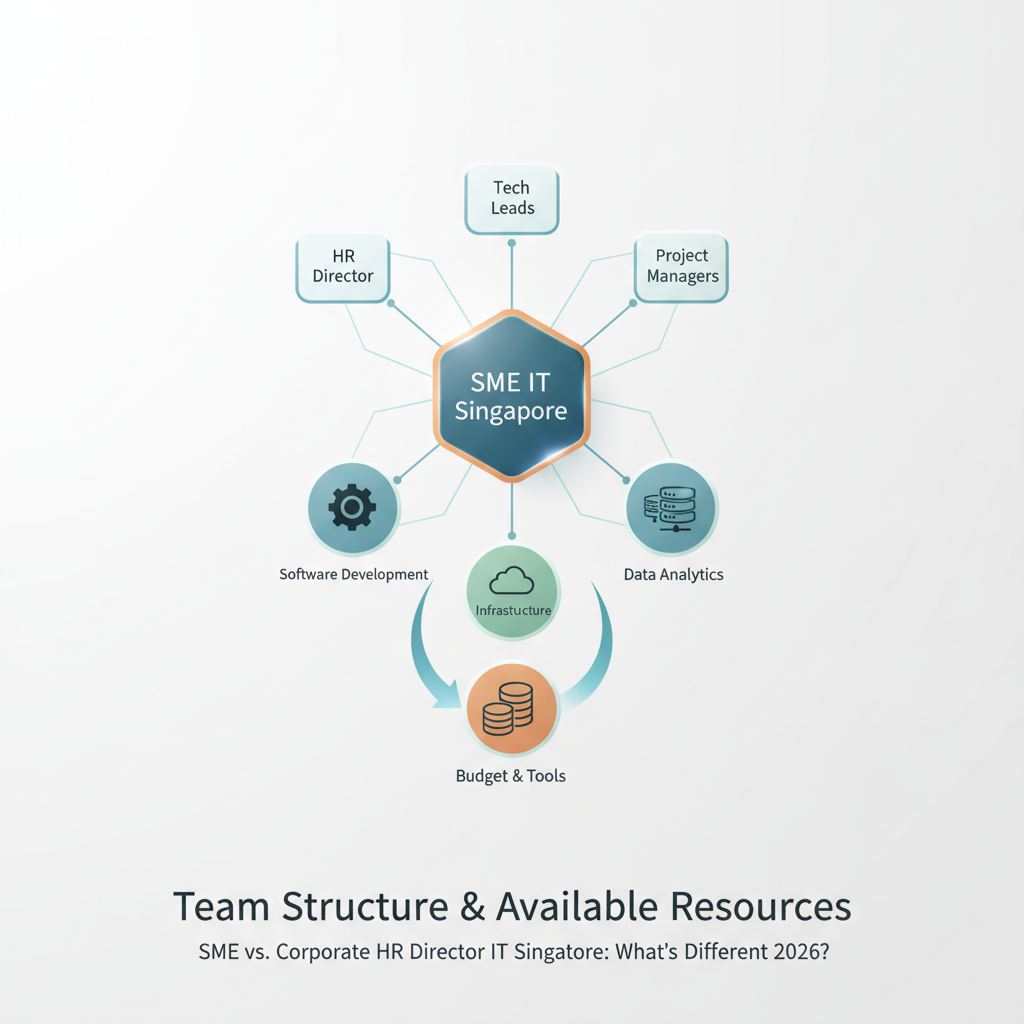
In Singapore’s dynamic IT landscape, the roles of an HR Manager in a Small and Medium-sized Enterprise (SME) and an HR Director in a larger corporate IT firm present a stark contrast in responsibilities, influence, and the resources at their disposal. This section delves into the fundamental Differences between the SMEs’ HR Manager and the Corporates’ HR Director in IT field in singapore, highlighting how variations in team size, support staff, and technological and financial backing shape their strategic impact and operational capabilities. Understanding these disparities is crucial for aspiring HR professionals and business leaders alike, shedding light on the unique HR challenges Singapore SMEs often navigate compared to their larger counterparts.
1. HR Department Size & Reporting Lines
For an HR Manager in an SME within Singapore’s IT sector, the HR department is frequently a lean operation, often consisting of a single HR generalist or a small team of two. This individual is typically a jack-of-all-trades, directly responsible for the entire spectrum of HR functions, from recruitment and onboarding to payroll, employee relations, policy development, and even basic administrative tasks. Their reporting line usually goes directly to the CEO or founder, giving them a broad, albeit hands-on, view of the business but also requiring them to be highly adaptable and resourceful. The absence of extensive HR support staff differences means the SME HR Manager must excel at multitasking and prioritizing, often without specialized support for areas like talent acquisition or compensation.
Conversely, an HR Director in a large corporate IT firm commands a significantly larger and more specialized HR department. This team might include dedicated HR Business Partners (HRBPs) aligned with specific business units, talent acquisition specialists, compensation and benefits analysts, learning and development experts, and HRIS administrators. The HR Director’s role is predominantly strategic, overseeing these teams and reporting to a C-suite executive like the Chief Human Resources Officer (CHRO) or directly to the Managing Director. This structure allows for deep specialization, strategic workforce planning, and a more sophisticated approach to talent management, reflecting the robust HR budget large corporations can allocate to human capital development.
2. Technology & HRIS Utilization
The technological infrastructure supporting HR operations also varies dramatically. An SME HR Manager in Singapore often operates with limited access to advanced HR technology. Their systems might comprise a combination of basic accounting software for payroll, spreadsheets for employee data, and simple online tools for recruitment. The financial constraints faced by SMEs mean that investment in sophisticated Human Resources Information Systems (HRIS) is often deferred, leading to manual processes, potential data inconsistencies, and challenges in generating comprehensive HR analytics. While embracing digital solutions is a growing trend, the path to full corporate HR tech adoption remains distant for many smaller firms due to cost and implementation complexities.
In stark contrast, an HR Director in a large corporate IT firm benefits from substantial investments in cutting-edge HRIS platforms. These integrated systems, such as Workday, SAP SuccessFactors, or Oracle HCM, provide comprehensive functionalities spanning recruitment, performance management, payroll, talent management, and analytics. Large corporations often have dedicated HRIS teams to manage, optimize, and leverage these platforms, enabling employee self-service, automating routine tasks, and providing real-time data for strategic decision-making. The advanced capabilities facilitate predictive analytics, improve efficiency, and support a more data-driven approach to human capital management, ensuring compliance and enhancing the overall employee experience across a global or regional workforce.
3. Training & Development Budgets
Training and development (T&D) represents another critical area of divergence. An SME HR Manager typically operates with a modest, often restricted, T&D budget. Learning opportunities might be limited to essential compliance training, on-the-job coaching, or utilizing government grants and subsidies available in Singapore, such as SkillsFuture. Professional development for employees might largely rely on free online resources or internal mentoring. The focus is often on immediate skill gaps and operational effectiveness rather than extensive career progression pathways. This constraint can be a significant factor in attracting and retaining talent, especially in the competitive IT sector.
Conversely, an HR Director in a large corporate IT firm manages a substantial T&D budget, reflecting the organization’s commitment to continuous learning and employee growth. These budgets support a wide array of programs, including leadership development, specialized technical training, external certifications, and comprehensive learning management systems (LMS). There’s a strong emphasis on fostering a culture of continuous learning, building talent pipelines, and ensuring employees have clear career progression opportunities. This robust investment in talent development IT Singapore professionals seek not only enhances employee engagement and retention but also aligns with the strategic goals of maintaining a competitive edge through a highly skilled and adaptive workforce, underscoring the benefits of a well-resourced HR budget large corporations can dedicate.
Unique Challenges & Problem-Solving
The dynamic landscape of Singapore’s IT sector presents a fascinating dichotomy for human resources professionals. While both the HR Manager in a Small and Medium-sized Enterprise (SME) and the HR Director in a large corporation are tasked with nurturing an effective workforce, their strategic priorities and problem-solving approaches are vastly different. Understanding these distinctions is crucial for anyone navigating HR within this competitive industry. The core Differences between the SMEs’ HR Manager and the Corporates’ HR Director in IT field in singapore stem from organizational scale, resources, and maturity.
1. Managing Growth & Scalability (SME)
For an HR Manager in an IT SME, the primary challenge often revolves around managing rapid growth with limited resources. These organizations are typically agile and focused on quick market penetration. The HR function is often lean, requiring the manager to wear multiple hats—from recruitment and onboarding to policy development, compensation, and employee relations. There’s little room for specialized teams; instead, a broad, hands-on approach is mandatory.
A significant hurdle is establishing robust HR infrastructure from scratch. Unlike corporates with established systems, an SME HR Manager must build processes, define policies, and implement HR technologies with minimal budget. This demands creativity and resourcefulness to develop an effective HR strategy for startups that can scale as the company expands. Decisions are often made swiftly, requiring a highly adaptable and proactive individual. Lean HR practices are not just a preference but a necessity, focusing on high-impact initiatives that directly support business objectives without excessive overhead. The challenge isn’t just about hiring; it’s about building a sustainable talent pipeline and a strong company culture under constant pressure to innovate and grow.
2. Navigating Bureaucracy & Global Standards (Corporate)
In stark contrast, the HR Director in a large IT corporation faces a different set of complexities. Here, the challenge shifts from building infrastructure to navigating established, often global, frameworks and a multi-layered organizational structure. Decisions typically involve numerous stakeholders, including regional and global leadership, legal departments, and various business units. The HR Director’s role often involves overseeing specialized teams (e.g., talent acquisition, compensation & benefits, learning & development), ensuring alignment with global HR directives while adapting them to local Singaporean contexts.
A significant aspect of their role is ensuring corporate HR governance and compliance with international standards, alongside Singaporean labor laws. This involves meticulous policy implementation, managing complex compensation structures, and driving large-scale change management initiatives. The ability to influence, negotiate, and communicate effectively across a large enterprise is paramount. They are responsible for implementing global HR policies, ensuring consistency, and maintaining robust reporting structures. For instance, understanding and applying fair employment practices is critical, especially in a diverse global workforce. Singapore’s Fair Consideration Framework from the Ministry of Manpower provides clear guidelines that corporate HR directors meticulously integrate into their global frameworks to ensure compliance and ethical operations.
3. Talent Retention in a Competitive IT Market
While operational challenges differ, both HR professionals converge on one critical issue: attracting and retaining top-tier IT talent in Singapore’s highly competitive market. The demand for skilled tech professionals often outstrips supply, leading to intense competition.
For SMEs, the struggle to retain talent is often exacerbated by limited budgets for salaries and benefits compared to larger players. The HR Manager must leverage other draws: a strong, unique company culture, rapid career progression, greater impact on product development, and a sense of ownership. Crafting compelling employee value propositions that go beyond monetary incentives is crucial. Their IT talent acquisition Singapore strategy relies heavily on networking, employer branding, and highlighting the exciting, fast-paced nature of working for a growing startup.
Corporates, while capable of offering competitive compensation and comprehensive benefits, face challenges in maintaining employee engagement and preventing attrition in a vast structure. The HR Director must focus on creating clear career pathways, robust learning and development programs, and fostering a sense of belonging in a potentially depersonalized environment. Strategic employee engagement strategies, including internal mobility programs, mentorship, and a focus on work-life balance, become vital tools. They also grapple with global talent mobility and ensuring that compensation remains competitive not just locally, but globally.
In essence, the HR Manager in an IT SME is a generalist builder, architecting HR from the ground up with agility and resourcefulness. The HR Director in an IT corporate is a specialist strategist and navigator, orchestrating complex global frameworks and stakeholder expectations. Both roles demand exceptional problem-solving skills, but the nature of the problems—and the tools available to solve them—are profoundly distinct, reflecting the unique demands of Singapore’s vibrant IT ecosystem.
Career Progression & Skill Development Paths
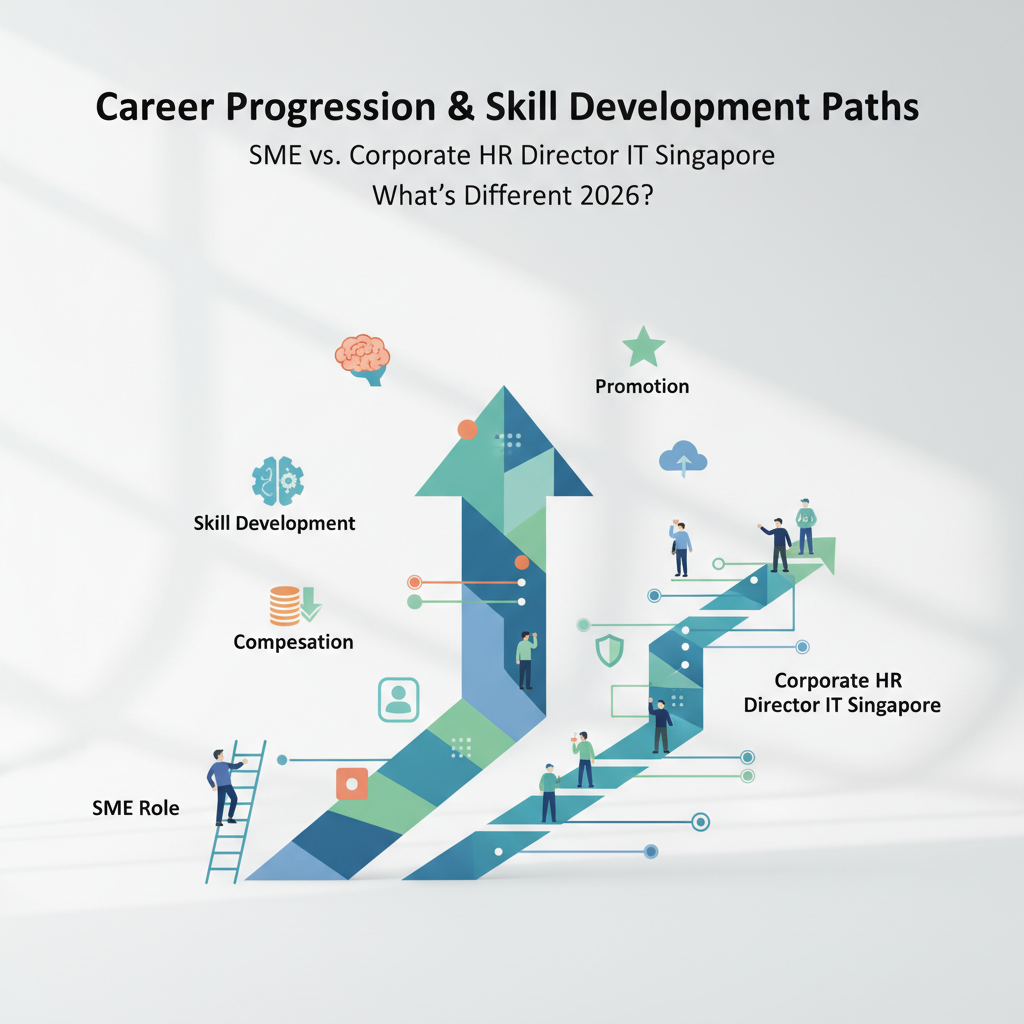
This section delves into the distinct trajectories for career growth, the essential skills valued, and the robust opportunities for professional development available to HR Managers within Small and Medium-sized Enterprises (SMEs) and HR Directors in large corporations, specifically focusing on the dynamic IT field in Singapore. Understanding the Differences between the SMEs’ HR Manager and the Corporates’ HR Director in IT field in singapore is crucial for aspiring and current HR professionals navigating their career journeys in this vibrant economic landscape. The contrasting environments necessitate different skill sets and offer varied pathways for advancement, shaping future leaders in the HR domain.
-
Specialization vs. Generalization of Skills
SME HR Manager (IT Field, Singapore): Often a generalist, the HR Manager in an SME handles a broad spectrum of HR functions, from recruitment and onboarding to compensation, benefits, employee relations, and even basic HR tech implementation. The lean structure of SMEs means the HR Manager needs to be agile and versatile, frequently acting as a “one-person HR department” or leading a small, dedicated team. Skills such as adaptability, problem-solving across various HR domains, and a deep understanding of local labor laws (e.g., MOM guidelines in Singapore) are paramount. They might develop strong tactical execution skills and a hands-on approach to all aspects of the employee lifecycle, often facing significant resource constraints which define common SME HR manager challenges. Their career progression often involves growing with the company, potentially leading a small HR team, or transitioning to a larger SME or mid-sized company with a broader scope. Developing strong project management and change management skills is also critical as they often drive HR initiatives from inception to completion.
Corporate HR Director (IT Field, Singapore): Typically a specialist or leads highly specialized teams. Operating at a strategic level, they focus on specific HR pillars like talent acquisition, talent management, organizational development, total rewards, or HR business partnering for a particular IT division. Their role involves formulating global or regional HR strategies, aligning them with business objectives, and managing large, complex projects. Key skills include strategic thinking, data analytics, global HR policy development, sophisticated stakeholder management, and advanced HR technology adoption. Career progression usually involves moving to more senior HR leadership roles, regional or global HR head positions, or even transitioning into broader business leadership roles, leveraging their deep understanding of people and organizational dynamics. The emphasis here is less on daily operational tasks and more on long-term vision, governance, and driving large-scale change. The scope for HR skill development IT sector in corporates often involves advanced certifications in specific HR domains or executive leadership programs.
-
Leadership & Mentorship Opportunities
SME HR Manager: Leadership in an SME often involves direct, hands-on team leadership and significant influence on company culture. They might mentor junior HR staff or even guide business leaders on HR best practices. The impact of their leadership is immediately visible, directly shaping the employee experience. Opportunities for professional development might include attending industry workshops, online courses, or peer networking events to build expertise. Mentorship can be informal, driven by necessity, and often involves guiding junior staff or business owners on HR matters. This environment fosters a strong sense of ownership and direct contribution.
Corporate HR Director: Leadership here is frequently multi-faceted, involving leading diverse HR teams, influencing senior business leaders, and potentially shaping HR policy across multiple regions. Mentorship is often a formalized process, with directors guiding upcoming HR talent, participating in formal leadership development programs, and driving succession planning initiatives. Professional development for corporate HR director roles frequently includes executive education, global leadership summits, and active involvement in strategic HR committees. Their leadership impact is more systemic, influencing organizational strategy and talent pipelines across the entire enterprise. They also frequently engage with external consultants and thought leaders, further enriching their professional growth.
-
Future Outlook & Industry Trends (2026 perspective)
By 2026, the HR landscape in Singapore’s IT sector will be profoundly shaped by ongoing digital transformation, the rise of AI and automation, and an increasing focus on employee well-being and experience. For HR Managers in SMEs, the future demands even greater agility. They will need to master digital HR tools, leverage analytics for quick decision-making, and prioritize robust talent retention strategies in a competitive market. Upskilling in areas like people analytics, remote work management, and AI-driven recruitment tools will be essential. Their role will evolve to be a true business partner, advising on critical talent challenges with limited resources.
For Corporate HR Directors, the future points towards strategic foresight and technological mastery. They will be at the forefront of implementing advanced HR tech, developing ethical AI policies for HR, and creating highly personalized employee experiences at scale. Strategic workforce planning, diversity, equity, and inclusion (DEI) initiatives, and fostering a culture of continuous learning will be paramount. Their career trajectory will increasingly involve collaborating with C-suite executives on organizational resilience, talent architecture, and shaping the future of work. Understanding the nuances of global talent mobility and compliance will also become more critical. Both roles will need to stay abreast of the latest future HR trends Singapore has to offer, adapting to evolving labor market demands and technological advancements. According to insights from leading HR research, adaptability and technological fluency are top priorities for the future HR professional. For more on the evolving skill sets required, explore recent Gartner HR Trends and Research. These differences highlight the significant Differences between the SMEs’ HR Manager and the Corporates’ HR Director in IT field in singapore. The IT sector will continue to demand specific HR expertise, ensuring a robust future for specialized HR career paths Singapore IT.
Partner with Shelby Global
You are looking for reliable HR Sevice Suppliers? Contact Shelby Global Now! To connect with verified talents and upgrade your orginization.
—————————————
References
– Becoming a Strategic HR Business Partner: https://www.shrm.org/resources-and-tools/hr-topics/human-resource-discipline/strategic-hr/pages/becoming-a-strategic-hr-business-partner.aspx
– Why Strategic HR Is More Critical Than Ever – Forbes: https://www.forbes.com/sites/forbeshumanresourcescouncil/2023/10/05/why-strategic-hr-is-more-critical-than-ever/?sh=4b706c64606f
– Singapore SME HR challenges: recruitment, retention, and more: https://www.humanresourcesonline.net/singapore-sme-hr-challenges-recruitment-retention-and-more
– Fair Consideration Framework from the Ministry of Manpower: https://www.mom.gov.sg/employment-practices/fair-consideration-framework
– Gartner HR Trends and Research: https://www.gartner.com/en/human-resources/trends