
Foundations of Employment Contracts in F&B
In Singapore’s dynamic and rapidly evolving Food & Beverage (F&B) industry, establishing robust and compliant employment contracts is not merely a formality but a critical foundation for operational success and legal compliance. These contracts serve as a binding agreement, outlining the rights and responsibilities of both employers and employees, thereby ensuring clarity, preventing disputes, and fostering a stable working environment. Understanding the essential elements and Legal HR terms & conditions for Food & Beverage field in singapore is paramount for F&B businesses to navigate the complexities of local labor laws effectively.
A well-drafted contract tailored to the specific nuances of the F&B sector can significantly mitigate risks, from managing shift work and service charges to protecting proprietary recipes and customer data. It provides a clear framework that supports fair employment practices, crucial for attracting and retaining talent in a competitive market.
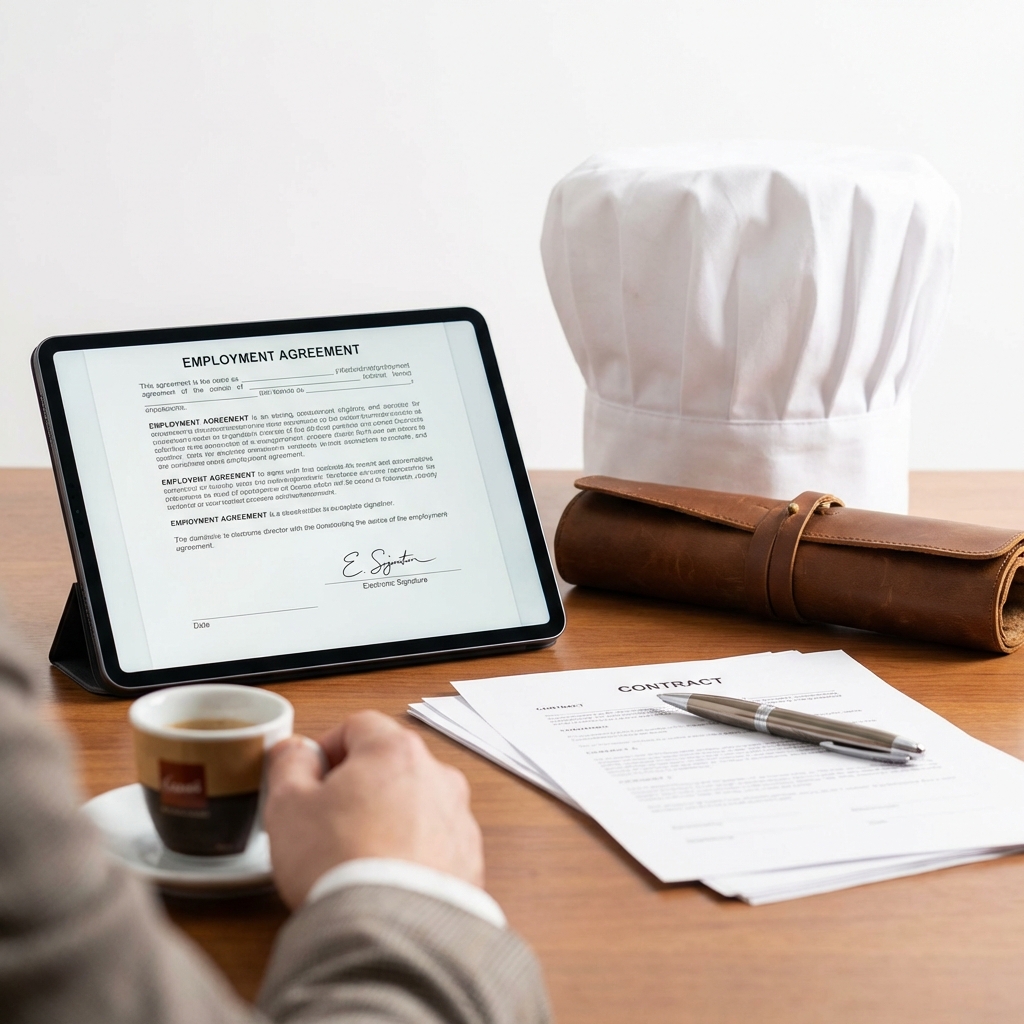
1. Types of Employment (Full-time, Part-time, Casual)
The F&B industry in Singapore commonly utilises various employment types, each with distinct legal implications that must be clearly articulated in employment contracts. Properly classifying employees from the outset is vital for compliance with statutory benefits and obligations.
- Full-time Employment: This is the most common form, typically involving a fixed number of working hours per week (e.g., 44 hours). Full-time employees generally receive comprehensive benefits, including Central Provident Fund (CPF) contributions, annual leave, sick leave, and other entitlements as stipulated by the Employment Act (EA). Their contracts should detail salary, working hours, benefits, and notice periods for termination.
- Part-time Employment: Part-time employees typically work fewer hours than full-time counterparts but are still covered by specific provisions of the EA, particularly regarding pro-rated benefits. Their contracts must clearly define their working hours, remuneration (often hourly), and pro-rated entitlements such as annual leave, sick leave, and public holiday pay. Employers must ensure fair treatment and non-discrimination compared to full-time employees, especially concerning terms and conditions.
- Casual/Temporary Employment: Often employed for specific events, peak seasons, or short-term projects, casual or temporary employees are engaged for a defined period or task. While some aspects of the EA may apply, their contracts must explicitly state the duration of employment, hourly rates, and any specific terms regarding benefits or termination. Clarity on the temporary nature of their role is essential to avoid misunderstandings about long-term employment status.
Each employment type requires a contract that accurately reflects the working arrangement, ensuring that both employer and employee are fully aware of their respective commitments and entitlements under Singapore law.
2. Key Clauses: Job Scope, Remuneration, Confidentiality
Beyond defining the employment type, a robust F&B employment contract must contain several critical clauses to safeguard the interests of both parties. These clauses provide the backbone of the employment relationship.
- Job Scope and Responsibilities: This clause details the employee’s specific role, duties, responsibilities, reporting lines, and expected performance standards. For F&B, this might include specific roles like Head Chef, Service Crew, Bartender, or Kitchen Assistant, with precise descriptions of tasks, hygiene standards, and customer service expectations. A clear job scope minimises ambiguity and helps in performance management.
- Remuneration and Benefits: This outlines the employee’s salary structure, including basic pay, allowances (e.g., transport, meal), service charge distribution policies, and any potential bonuses or incentives. It must also specify CPF contributions and any other benefits like medical insurance, staff meals, or tips policy. Transparency in remuneration is vital, especially given the variable components common in the F&B sector.
- Confidentiality and Intellectual Property: This is a particularly crucial clause for the F&B industry. It protects sensitive information such as proprietary recipes, cooking methods, supplier lists, customer databases, marketing strategies, and operational secrets. Employees must agree not to disclose this information during or after their employment. Intellectual property rights relating to any new recipes or innovations developed during employment should also be clearly assigned to the company. Non-compete or non-solicitation clauses may also be included, though their enforceability in Singapore is subject to strict legal scrutiny regarding reasonableness.
Other essential clauses include probation periods, working hours, leave entitlements (annual, sick, maternity/paternity), grievance procedures, and termination provisions (notice periods, grounds for dismissal).
3. Compliance with Employment Act (EA) Provisions
The Employment Act (EA) is Singapore’s primary labor legislation, setting out the basic terms and conditions of employment for most employees. Ensuring contracts comply with EA provisions is non-negotiable for F&B businesses.
The EA covers fundamental aspects such as:
- Working Hours and Overtime: The EA limits working hours and specifies conditions for overtime pay, which are particularly relevant for F&B establishments with varying shift patterns and long operational hours.
- Rest Days and Public Holidays: Employees are entitled to one rest day per week and paid public holidays. The EA outlines how work on these days should be compensated.
- Annual Leave and Sick Leave: Minimum entitlements for paid annual leave and sick leave are prescribed, increasing with years of service.
- Maternity and Paternity Leave: The EA guarantees paid leave entitlements for new parents, crucial for supporting work-life balance in the F&B sector.
- Notice Periods: Minimum notice periods for termination of employment are stipulated, based on the length of service, ensuring fairness for both employers and employees.
- Payment of Salary: The EA mandates timely payment of wages and provides guidelines for deductions.
While certain provisions of the EA may not apply to all employees (e.g., managers and executives earning above a certain threshold might be excluded from specific overtime provisions), it is imperative for F&B employers to be aware of these distinctions and ensure their contracts reflect the applicable statutory requirements. Employers who fail to comply with the EA face potential penalties, fines, and legal action. The Ministry of Manpower (MOM) provides comprehensive guidance on these regulations.
In conclusion, well-structured, comprehensive, and EA-compliant employment contracts are indispensable for F&B businesses in Singapore. They provide legal certainty, protect business interests, and foster a fair and transparent working environment, ultimately contributing to a successful and harmonious workforce.
Navigating Working Hours, Wages & Overtime
The F&B industry in Singapore operates under a specific legal framework concerning working hours, wage structures, and overtime. Adhering to these legal HR terms & conditions for the Food & Beverage field in Singapore is crucial for compliance and fostering a fair work environment.
1. Statutory Working Hours & Rest Days Requirements
Singapore’s Employment Act (EA) dictates standard working hours for employees covered under Part IV (non-managerial, non-executive up to $4,500, and all workmen). This is generally 8 hours a day or 44 hours a week. For a 6-day work week, it’s 9 hours a day or 44 hours a week. Shift workers can have hours averaged over three weeks, not exceeding 12 hours daily. The Act mandates one uninterrupted rest day (at least 30 consecutive hours) per week, which can be mutually agreed upon. Meticulous shift planning is essential for F&B employers to ensure compliance with Singapore employment law F&B sector regulations and avoid penalties.
2. Overtime Calculation & Payment Rules for Non-Workmen
Overtime is common in F&B. For employees covered by Part IV of the EA, work beyond statutory hours is overtime, capped at 72 hours per month. For non-workmen earning up to $2,600 per month, overtime pay is legally mandated at 1.5 times the hourly basic rate. For executives and managers earning above $2,600, the EA does not mandate statutory overtime payment; compensation is typically governed by their employment contract (e.g., time-off in lieu or an inclusive salary). Transparent record-keeping of all hours is paramount. The Ministry of Manpower (MOM) provides detailed guidelines for accurate overtime calculation, crucial for compliance with F&B overtime rules Singapore.
3. Public Holiday Pay & Leave Entitlements
Singapore observes 11 gazetted public holidays. If an F&B employee works on a public holiday, they are entitled to an extra day’s salary at the basic rate, or a day off in lieu. If a holiday falls on a rest day, the next working day becomes the paid holiday. The EA also outlines minimum annual leave: 7 days for the first year of service, increasing by one day annually up to a maximum of 14 days. These entitlements must be properly managed. Statutory sick leave and hospitalization leave are also provided: 14 days of paid sick leave and up to 60 days of paid hospitalization leave annually, subject to medical certification and 3 months of service. Transparent communication of these policies is vital for employee morale and regulatory compliance within the F&B sector.
Meticulously managing working hours, wages, and overtime is a strategic imperative for F&B businesses. By ensuring all legal HR terms & conditions for the Food & Beverage field in Singapore are met, companies foster a positive work environment, avoid disputes, and uphold their reputation as responsible employers.
Leave Policies & Employee Benefits
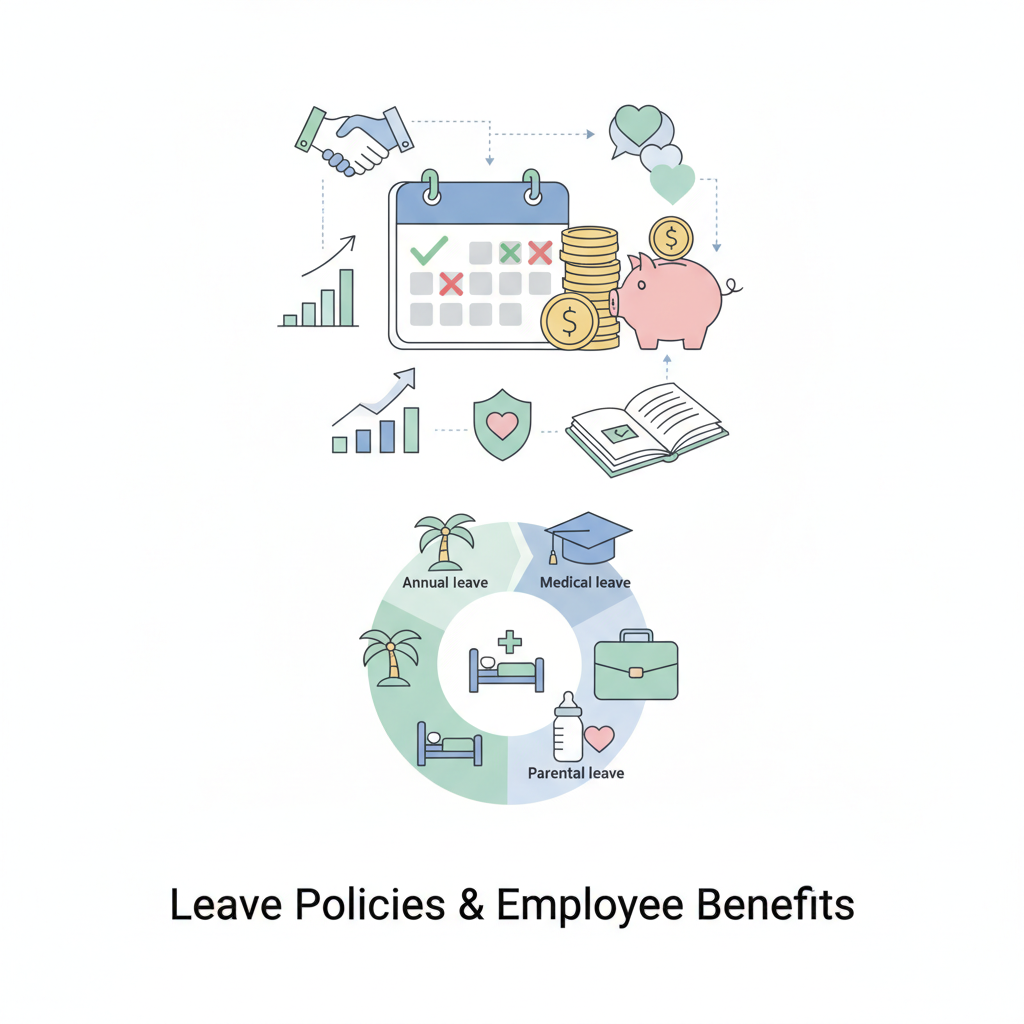
In Singapore’s dynamic Food & Beverage (F&B) sector, fostering a supportive work environment is paramount not just for employee morale but also for business sustainability. Beyond competitive salaries, comprehensive leave policies and robust employee benefits are crucial for attracting and retaining talent. This section details the mandatory leave types and other common benefits that F&B employers must provide or consider, ensuring adherence to Legal HR terms & conditions for Food & Beverage field in singapore and promoting ethical Singapore F&B HR practices.
1. Annual Leave & Sick Leave Entitlements
Under Singapore’s Employment Act, all employees, including those in the F&B sector, are entitled to annual leave. The number of annual leave days increases with an employee’s length of service, starting from 7 days for the first year and progressively increasing to a maximum of 14 days after eight years or more with the same employer. Employers should have clear processes for leave application and approval, especially in the F&B industry where staffing levels are critical for smooth operations, impacting service quality and customer satisfaction.
Similarly, sick leave entitlements are a fundamental aspect of employee benefits in Singapore. Employees who have served at least three months are eligible for paid sick leave, provided they obtain a medical certificate (MC) from a registered doctor. The entitlement includes up to 14 days of outpatient sick leave and up to 60 days of hospitalisation leave per year, inclusive of the 14 days outpatient sick leave. F&B employers must ensure these entitlements are clearly communicated and managed efficiently, understanding that staff well-being directly affects productivity and hygiene standards. For detailed information on specific entitlements and conditions, employers can refer to the Ministry of Manpower’s guidelines on leave.
2. Maternity, Paternity & Childcare Leave Provisions
Singapore’s government provides extensive support for working parents, and F&B employers must be fully aware of and comply with these provisions. Eligible mothers are entitled to 16 weeks of paid maternity leave, which can be taken flexibly before and after childbirth, subject to employer agreement. This provision is vital for supporting female employees in an industry where women form a significant part of the workforce. For fathers, paid paternity leave of up to 2 weeks is available, allowing them to support their spouses and bond with their newborns. Additionally, eligible parents can share up to 4 weeks of their wife’s 16 weeks of maternity leave through the Shared Parental Leave scheme, promoting greater gender equality in parenting responsibilities.
Beyond newborn care, childcare leave is a crucial benefit for parents with Singaporean children under the age of 7. Each parent is entitled to 6 days of paid childcare leave per year. For children aged 7 to 12, parents can take 2 days of paid extended childcare leave per year. These provisions underscore a commitment to work-life balance and are instrumental in creating a family-friendly environment within the F&B sector, enhancing Employee benefits Singapore and fostering long-term employee loyalty.
3. Compassionate & Unpaid Leave Policies
While not mandated by the Employment Act, compassionate leave is a widely adopted practice and a significant aspect of creating a truly supportive work environment in the F&B industry. This leave is typically granted to employees experiencing the bereavement of an immediate family member. Implementing a compassionate leave policy demonstrates empathy and care for employees during difficult times, which can significantly boost morale and loyalty. The duration and terms of compassionate leave are usually at the employer’s discretion but commonly range from 1 to 5 days, depending on the relationship to the deceased.
Unpaid leave, or leave without pay, is another discretionary policy that F&B employers may offer. This can be beneficial for employees who require extended time off for personal reasons not covered by other leave types, such as accompanying a spouse overseas, managing personal emergencies, or pursuing further education. While employers are not obliged to provide unpaid leave, having a clear policy, even if discretionary, can offer flexibility and be a valuable component of an attractive benefits package, particularly in an industry known for its demanding hours. Clear communication regarding the terms, duration, and impact on benefits during unpaid leave is essential to avoid misunderstandings and maintain good Legal HR terms & conditions for Food & Beverage field in singapore practices.
Adhering to these leave policies and considering additional benefits not only ensures compliance with Singaporean labour laws but also positions F&B establishments as employers of choice, contributing to a stable and motivated workforce. Proactive management of these aspects is key to operational success and employee retention in a competitive market.
Workplace Safety & Health Regulations for F&B
The dynamic and fast-paced environment of the Food & Beverage (F&B) industry presents unique challenges when it comes to ensuring a safe and healthy working environment. From hot kitchens and sharp implements to slippery floors and heavy lifting, F&B establishments in Singapore bear significant legal obligations to protect their staff. Understanding and adhering to these regulations is not just about compliance; it’s fundamental to business sustainability, staff retention, and overall operational excellence, forming a crucial part of the comprehensive legal HR terms & conditions for the Food & Beverage field in Singapore.
1. Workplace Safety & Health Act (WSH Act) Compliance
At the core of F&B workplace safety in Singapore lies the Workplace Safety & Health Act (WSH Act). This comprehensive legislation mandates that employers take all reasonably practicable measures to ensure the safety and health of their employees and persons who may be affected by their work activities. For F&B businesses, this translates into a proactive approach to risk management. Employers are required to conduct thorough risk assessments to identify potential hazards specific to kitchens, dining areas, and food preparation zones. Common hazards include slips, trips, and falls due to spills or wet floors; cuts from knives and slicers; burns from hot surfaces, oil, or steam; musculoskeletal injuries from manual handling of heavy items; and exposure to hazardous chemicals during cleaning. Effective compliance involves implementing robust safe work procedures, providing appropriate Personal Protective Equipment (PPE) such as cut-resistant gloves, non-slip footwear, and heat-resistant mitts, and ensuring regular maintenance of equipment. Furthermore, adequate training for staff on safe operating procedures, emergency protocols, and the proper use of machinery is non-negotiable. Adhering to the WSH Act is crucial for creating a secure environment and avoiding penalties. For a detailed understanding of employer duties, refer to the Ministry of Manpower’s overview of the WSH Act.
2. Hygiene Standards & Food Safety Practices for Employees
Beyond traditional safety concerns, F&B workplaces have a heightened responsibility for hygiene and food safety practices, directly impacting both employees and consumers. Employees, as food handlers, are the first line of defense against foodborne illnesses. Regulations stipulate strict personal hygiene standards, including frequent and proper handwashing techniques, wearing clean uniforms, hairnets, and appropriate footwear. Staff must be educated on cross-contamination prevention, which involves separating raw and cooked foods, using dedicated cutting boards, and sanitizing workstations regularly. Training on safe food handling, storage temperatures, and waste management is also vital. In Singapore, all food handlers must complete a basic food hygiene course and obtain a Food Handler’s Certificate, which often requires refresher training. Businesses must also implement robust health screening protocols to ensure that employees who are unwell, especially with communicable diseases, do not handle food, thereby protecting both their colleagues and the public. These rigorous hygiene and food safety practices are integral to maintaining public health and the reputation of any F&B establishment.
3. Accident Reporting & Investigation Procedures
Even with the most stringent safety measures, accidents can still occur. Therefore, clear and efficient accident reporting and investigation procedures are indispensable for any F&B business. Under the WSH Act, certain workplace accidents, dangerous occurrences, and occupational diseases must be reported to the Ministry of Manpower (MOM) within specified timeframes. Employers are required to establish an internal system for all types of incidents, no matter how minor. This system should encourage prompt reporting by employees without fear of reprimand. Each reported incident, from a minor cut to a slip and fall, should trigger an investigation to determine its root cause. The investigation process typically involves gathering facts, interviewing witnesses, documenting the scene, and identifying contributing factors. The ultimate goal is not just to assign blame but to implement corrective and preventive actions to avoid recurrence. This might include modifying work procedures, updating equipment, providing additional training, or improving workplace layout. A transparent and proactive approach to accident reporting and investigation fosters a culture of safety, continually identifying and mitigating risks to improve overall F&B workplace safety in Singapore.
Termination, Dismissal & Dispute Resolution
Navigating employee termination and dismissal within Singapore’s dynamic Food & Beverage (F&B) sector requires a robust understanding of local labour laws. Employers must adhere strictly to fair practices to avoid costly disputes and uphold their reputation. This section outlines the critical legal HR terms & conditions for the Food & Beverage field in Singapore, ensuring compliance and fostering a respectful workplace environment, even during challenging separations. Understanding these guidelines is paramount for any F&B business aiming for sustainable and ethical operations in Singapore.
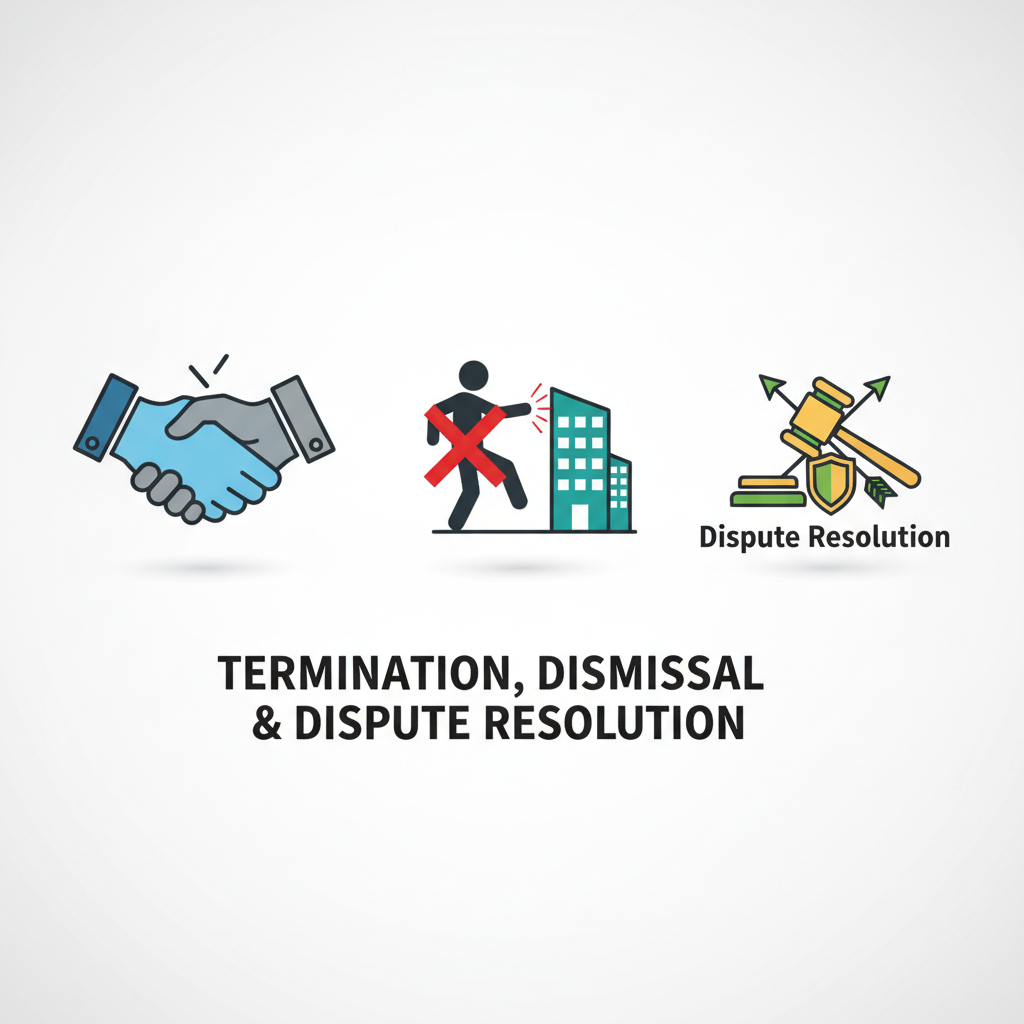
1. Grounds for Termination (Misconduct, Redundancy, Incapacity)
Terminating an employee in the F&B sector must be based on legitimate and justifiable grounds, in line with Singapore’s Employment Act. Employers must demonstrate fairness and transparency throughout the process. The primary accepted grounds include:
- Misconduct: This covers serious breaches of employment contracts or company policies. Examples in F&B might include theft, serious insubordination, harassment of colleagues or customers, repeated failure to follow hygiene standards, or gross negligence impacting food safety. Before dismissal, a thorough investigation must be conducted, giving the employee a chance to explain their actions. For less severe misconduct, warnings and disciplinary actions should precede termination.
- Redundancy: When an employee’s role ceases to exist due to genuine business restructuring, technological advancements, or economic downturns impacting the F&B establishment. It is crucial that redundancy is not used as a pretext for dismissing an underperforming employee. The selection criteria for redundancy must be objective and non-discriminatory, often considering factors like skills, experience, and length of service. Employers should also explore redeployment opportunities where possible.
- Incapacity: This refers to an employee’s inability to perform their job duties satisfactorily, either due to poor performance or medical reasons. For poor performance, employers must provide adequate training, support, clear performance targets, and reasonable time for improvement, documenting all efforts. For medical incapacity, employers should consider reasonable accommodations and review medical reports, ensuring the employee’s condition genuinely prevents them from fulfilling their role.
Adherence to due process, including proper investigations and communication, is critical to prevent claims of wrongful dismissal.
2. Notice Periods & Severance Pay Guidelines
Once a valid ground for termination is established, employers must follow specific procedures regarding notice periods and, where applicable, severance pay. These guidelines ensure fair dismissal practices in Singapore and provide employees with a reasonable transition period.
- Notice Periods: The required notice period for termination is typically stipulated in the employment contract. If not specified, the Employment Act dictates minimum notice periods based on the employee’s length of service:
- Less than 26 weeks of service: 1 day’s notice
- 26 weeks to less than 2 years of service: 1 week’s notice
- 2 years to less than 5 years of service: 2 weeks’ notice
- 5 years or more of service: 4 weeks’ notice
Either party may choose to pay salary in lieu of notice. For instances of gross misconduct, an employer may terminate employment without notice or payment in lieu of notice.
- Severance Pay: Unlike notice periods, severance pay is not legally mandated for all terminations in Singapore, except in specific situations outlined in collective agreements or where it’s an established practice. However, it is generally expected and recommended for employees terminated due to redundancy, especially for those with long service. The quantum of severance pay is often determined by company policy or negotiation, commonly ranging from half a month to one month’s salary per year of service. Providing severance packages, even when not legally required, can help maintain good employer-employee relations and reduce the likelihood of disputes.
Transparency and clear communication about these entitlements are crucial during the termination process.
3. Grievance Procedures & Mediation Services (TADM)
Even with careful adherence to termination procedures, disputes can arise. Singapore provides structured avenues for resolving workplace conflicts, fostering a climate of trust and fairness in F&B workplaces.
- Internal Grievance Procedures: Every F&B establishment should have a clear, accessible internal grievance procedure. This allows employees to raise concerns regarding unfair treatment, wrongful dismissal, or other workplace issues directly with their employer. Prompt and fair handling of internal grievances can often resolve issues before they escalate, benefiting both parties. Documenting all steps taken during a grievance process is vital.
- Mediation Services (TADM): If an internal resolution isn’t possible, the Tripartite Alliance for Dispute Management (TADM) offers an invaluable resource. TADM provides mediation services for various employment disputes, including salary claims and wrongful dismissal. Mediation is a voluntary process where a neutral third party (the mediator) facilitates communication between employer and employee, helping them reach a mutually acceptable solution. It is often a quicker, less adversarial, and more cost-effective alternative to legal proceedings. For eligible employees, TADM mediation is a mandatory step before filing a claim at the Employment Claims Tribunals (ECT).
- Employment Claims Tribunals (ECT): For disputes that remain unresolved after TADM mediation, claims can be referred to the ECT. The ECT handles salary-related claims (up to S$30,000 for mediated cases) and wrongful dismissal claims for employees covered by the Employment Act or the Industrial Relations Act.
By effectively managing internal grievances and utilising external mediation services like TADM, F&B businesses can resolve workplace disputes efficiently, upholding ethical HR practices and ensuring compliance with Singapore’s employment framework.
Partner with Shelby Global
You are looking for reliable HR Sevice Suppliers? Contact Shelby Global Now! To connect with verified talents and upgrade your orginization.
—————————————
References
– Employment Act – Ministry of Manpower Singapore: https://www.mom.gov.sg/employment-practices/employment-act
– Ministry of Manpower (MOM) detailed guidelines on overtime pay: https://www.mom.gov.sg/employment-practices/salary/calculation-of-overtime-pay
– Ministry of Manpower’s guidelines on leave: https://www.mom.gov.sg/employment-practices/leave
– Ministry of Manpower’s overview of the WSH Act: https://www.mom.gov.sg/workplace-safety-and-health/overview
– Termination of Employment Contract: https://www.mom.gov.sg/employment-practices/termination-of-employment-contract



































































































