Understanding HR Structures in Malaysia’s Transport Sector
Malaysia’s transportation industry is a vital artery of its economy, encompassing a diverse range of operations from intricate logistics and robust port management to extensive road, rail, and air networks. In such a dynamic and often challenging environment, the design and execution of Human Resources (HR) structures are not merely administrative functions; they are critical strategic imperatives. This section delves into what constitutes an HR structure and elucidates why its design is paramount for businesses navigating the complexities of Malaysia’s transport sector, setting the stage for a comprehensive comparison of the differences between the SMEs’ HR Structure and the Corporates’ HR Structure in transportation field in malaysia.
1.
Defining Human Resources Structure
An HR structure refers to the formal framework that dictates how an organization manages its human capital. It encompasses the roles, responsibilities, reporting lines, HR policies, processes, and systems that govern all aspects of employee management, from recruitment and onboarding to performance management, compensation, benefits, training, and talent development. Fundamentally, it defines who does what in HR and how those functions support the broader business objectives. A well-designed HR structure ensures that an organization can effectively attract, develop, engage, and retain the right talent, fostering a productive and compliant work environment. For transportation companies, this structure is particularly vital in addressing unique challenges such as driver shortages, adherence to stringent safety regulations, and managing a workforce that often operates in varied and sometimes remote locations.
2.
Importance of HR in the Transportation Industry
The transportation industry presents a unique set of challenges that elevate the importance of a robust HR function. Issues like high employee turnover, the scarcity of skilled drivers and specialized technical personnel, strict regulatory compliance (e.g., safety, working hours), and the continuous need for workforce planning in an ever-fluctuating market demand sophisticated HR strategies. HR departments in this sector are responsible for developing effective recruitment strategies to combat talent shortages, implementing comprehensive training and development programs to ensure safety and competency, and crafting employee engagement initiatives to improve retention and productivity. Moreover, they play a crucial role in managing industrial relations, ensuring compliance with Malaysian labour laws, and navigating the complexities of a workforce that often includes both full-time employees and contract staff. Effective HR is directly linked to operational efficiency, safety records, and ultimately, the profitability and sustainability of transport businesses.
3.
Overview of Malaysia’s Transportation Landscape
Malaysia’s transportation landscape is a bustling ecosystem, pivotal for domestic connectivity and international trade. It comprises a sophisticated network of seaports, airports, an expanding railway system, and extensive road infrastructure. This sector is a significant employer and contributor to the national GDP, reflecting the country’s strategic position in Southeast Asia. From small, family-owned logistics companies and trucking enterprises (SMEs) to large multinational shipping lines, airlines, and public transportation operators (Corporates), the industry is incredibly diverse. This diversity inherently leads to variations in organizational scale, complexity, and ultimately, their approach to HR management. As the sector continues to evolve with technological advancements and increasing global competition, understanding these structural variations becomes paramount for optimizing human capital strategies. According to recent labour force statistics from the Department of Statistics Malaysia, the workforce dynamics continue to shift, emphasizing the need for adaptable HR structures to meet current and future demands. This critical insight underscores the varying differences between the SMEs’ HR Structure and the Corporates’ HR Structure in transportation field in malaysia, which will be explored in subsequent discussions.
HR Dynamics in Malaysian Transport SMEs
The Malaysian transportation sector is a critical backbone of the nation’s economy, driven significantly by a vast network of Small and Medium-sized Enterprises (SMEs). While these SMEs are agile and responsive to market demands, their Human Resources (HR) structures differ markedly from their larger corporate counterparts, presenting a unique set of challenges and opportunities. Understanding these differences between the SMEs’ HR structure and the corporates’ HR structure in the transportation field in Malaysia is crucial for sustainable growth. Typically, HR functions within these transport SMEs are characterised by their lean nature, often operating without a dedicated HR department and relying heavily on multi-functional roles and owner-led initiatives. This unique operational context significantly impacts talent acquisition, retention, compliance, and overall employee development, making the management of human capital a perpetual balancing act between immediate operational needs and long-term strategic growth.
-
Limited Resources and Multi-functional Roles
One of the most defining characteristics of HR structures in Malaysian transport SMEs is the scarcity of dedicated resources. Unlike large corporations that boast specialised HR departments with teams focusing on recruitment, compensation and benefits, talent development, and industrial relations, SMEs often consolidate these responsibilities. A single individual, perhaps an operations manager or an administrative assistant, might juggle recruitment drives for drivers or mechanics, process payroll, manage employee leave, and handle basic compliance requirements. This multi-functional role approach, while cost-effective in the short term, can lead to several challenges. Strategic HR initiatives, such as comprehensive training programs for continuous professional development, robust performance management systems, or proactive employee engagement strategies, often take a backseat due to time and expertise constraints. Consequently, attracting and retaining skilled labour – a critical concern in the transport sector – becomes an uphill battle when competing against larger players offering more structured career paths and comprehensive benefits packages. The lack of specialised HR attention can also leave gaps in addressing complex workplace issues or implementing best practices in modern human capital management, impacting overall productivity and employee satisfaction.
-
Owner/Manager-Led HR Functions
In many Malaysian transport SMEs, HR functions are predominantly overseen and executed by the business owner or a senior manager. This hands-on approach reflects the entrepreneurial spirit prevalent in smaller businesses, where the owner maintains direct oversight of most operational aspects. While this can foster a strong sense of company culture and direct communication, it also means that HR decisions are often driven by immediate business needs and personal judgment rather than established HR policies or professional expertise. The owner’s deep understanding of the business operations and personal connection with employees can be an advantage, allowing for quick decision-making and a more flexible response to individual employee needs. However, this model also presents significant drawbacks. The owner’s time is often stretched thin across various business functions, limiting their capacity to stay updated on the latest labour laws, best HR practices, or to dedicate time to strategic workforce planning. Furthermore, the absence of an impartial HR professional can sometimes lead to perceived biases or inconsistencies in employee treatment, potentially affecting morale and increasing the risk of labour disputes. This reliance on an owner-led HR function underscores the need for clear guidelines and, perhaps, external HR advisory support to ensure professionalism and compliance.
-
Focus on Basic Compliance and Operational HR
The primary focus of HR activities within Malaysian transport SMEs often revolves around ensuring basic compliance with local labour laws and managing essential operational HR tasks. This includes diligent adherence to regulations regarding minimum wage, EPF (Employees Provident Fund), SOCSO (Social Security Organization), and income tax contributions, alongside routine tasks like payroll processing, leave management, and record-keeping. While these foundational aspects are crucial for legal operation, the emphasis on transactional HR often overshadows more strategic elements of human capital development. Less attention is typically given to advanced talent acquisition strategies, comprehensive onboarding processes, performance appraisals linked to career progression, or sophisticated compensation and benefits structures designed for long-term employee retention. This operational-heavy approach can lead to a reactive rather than proactive HR environment. For instance, training might be mandated by regulation rather than identified through skills gap analysis, and recruitment might only occur when a vacancy arises, rather than through strategic workforce planning. The challenges faced by these SMEs in areas like employee turnover and skill shortages are often exacerbated by this limited scope of HR activities. Addressing HR challenges faced by SMEs requires moving beyond mere compliance, integrating practices that enhance employee engagement, foster professional growth, and build a sustainable workforce for the demanding transportation industry.
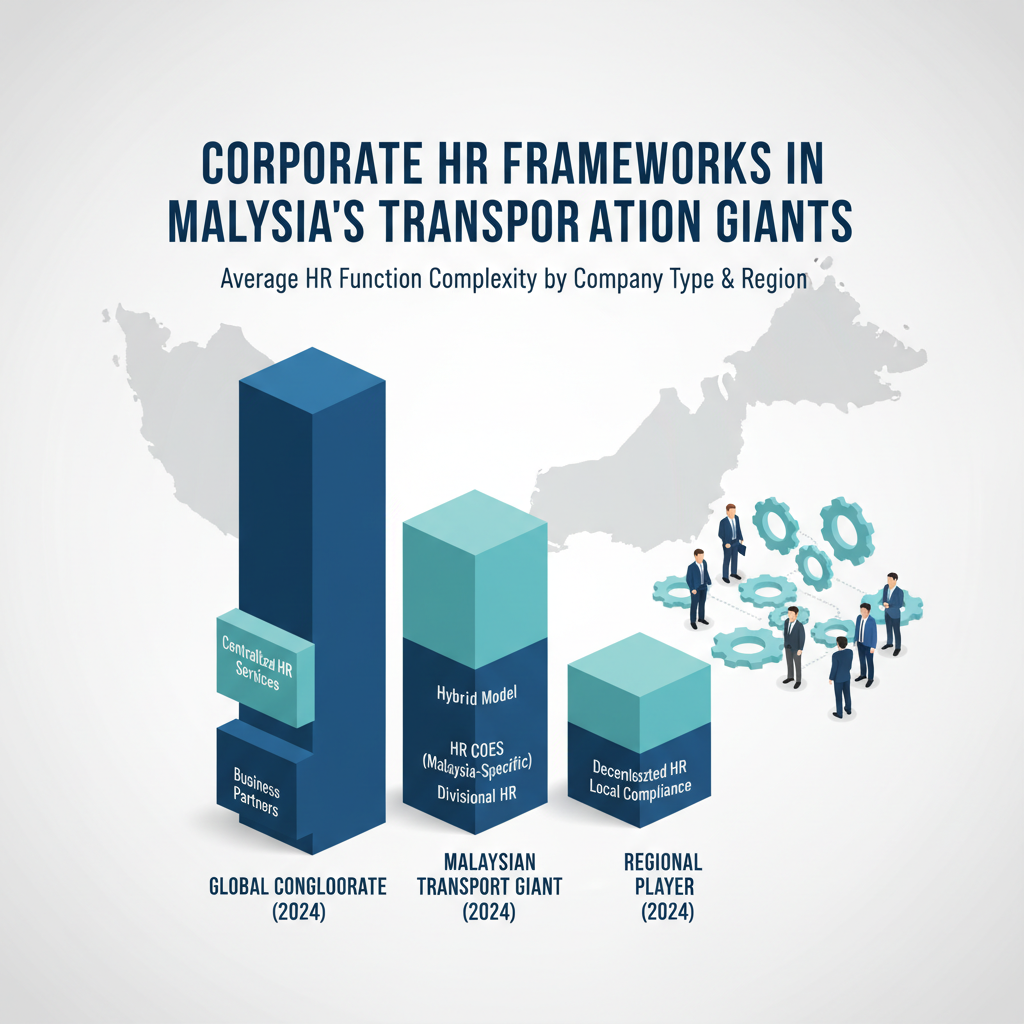
Corporate HR Frameworks in Malaysia’s Transportation Giants
Here, we examine the more complex and specialized HR structures prevalent in large corporations within Malaysia’s transportation sector, focusing on strategic functions and comprehensive frameworks.
1. Dedicated HR Departments with Specializations
Unlike the often generalist or even ad-hoc HR functions found in small and medium-sized enterprises (SMEs), Malaysia’s transportation giants boast dedicated HR departments, often segmented into various specializations. This represents a fundamental aspect of the differences between the SMEs’ HR Structure and the Corporates’ HR Structure in transportation field in malaysia. These specialized units might include talent acquisition, compensation and benefits, learning and development, employee relations, and HR information systems (HRIS).
For instance, a major airline or a national rail operator will have a dedicated team for pilot recruitment and training, another for ground staff benefits, and a separate one for managing industrial relations across various employee groups. This departmentalization ensures expert handling of complex HR challenges specific to the transportation industry, such as adherence to strict regulatory standards, managing shift patterns for operational staff, and implementing specialized training for safety and compliance. The sheer volume of employees and the diversity of roles – from drivers and mechanics to administrative staff and senior management – necessitate this level of organizational complexity, allowing for greater efficiency, deeper expertise, and strategic alignment with corporate objectives.
2. Strategic Workforce Planning and Talent Management
One of the most striking differences between the SMEs’ HR structure and the corporates’ HR structure in the transportation field in Malaysia lies in their proactive approach to workforce planning and comprehensive talent management. While SMEs might reactively fill vacancies, large transportation corporations engage in sophisticated strategic workforce planning, forecasting future talent needs based on business expansion, technological advancements (e.g., automation in logistics, electric vehicle maintenance), and anticipated attrition rates.
Talent management in these giants is a multi-faceted strategy encompassing attraction, development, engagement, and retention. This includes robust succession planning for critical roles like operations managers, engineers, and specialized technical staff, ensuring continuity and leadership pipelines. They invest significantly in learning and development programs, often establishing internal academies or partnering with educational institutions to cultivate industry-specific skills. Performance management systems are typically elaborate, linking individual goals to organizational objectives and informing career progression paths. The focus shifts from merely filling positions to strategically building a skilled, resilient, and future-ready workforce capable of navigating the dynamic challenges of the transportation sector, from fluctuating fuel prices to evolving global trade routes.
3. Robust Policies, Procedures, and Employee Relations
The scale and complexity of corporate HR frameworks in Malaysia’s transportation giants demand a meticulously structured approach to policies, procedures, and employee relations. These organizations operate under comprehensive HR policies that are meticulously documented, consistently applied across multiple locations (e.g., bus depots, airports, ports), and regularly updated to ensure full compliance with Malaysian labour laws, including the Employment Act 1955 and the Industrial Relations Act 1967. This adherence is critical given the highly regulated nature of the transportation sector.
Furthermore, these companies typically have well-established formal grievance procedures, disciplinary frameworks, and performance appraisal systems that promote fairness and transparency. Employee relations take on a significant role, often involving collective bargaining agreements with trade unions, which are common within large transportation entities in Malaysia. HR departments are equipped to handle complex industrial relations matters, mediate disputes, and foster a harmonious work environment. The implementation of advanced HR Information Systems (HRIS) streamlines administrative tasks, centralizes employee data, and supports data-driven decision-making in areas like payroll, leave management, and benefits administration, further enhancing the efficiency and effectiveness of their comprehensive HR operations. For more on relevant legal frameworks, refer to insights on the Employment Act 1955.
Key Differentiators and Their Impact on Operations
Understanding the fundamental differences between the SMEs’ HR Structure and the Corporates’ HR Structure in transportation field in malaysia is crucial for dissecting their operational effectiveness, employee satisfaction, and capacity for business expansion. The Malaysian transportation sector, a vital economic artery, presents a unique backdrop where the agility of smaller enterprises clashes with the robust frameworks of larger corporations. This section directly compares and contrasts their HR approaches, analyzing the practical implications of these disparities on operational efficiency, employee experience, and sustainable business growth.
1. Scale and Scope of HR Functions
The most immediate differentiator lies in the sheer scale and scope of HR functions. In small and medium-sized enterprises (SMEs) within the Malaysian transportation field, HR responsibilities are often consolidated, with a single HR generalist or even the business owner managing a wide array of tasks. This lean structure means HR is typically reactive, focusing predominantly on essential administrative duties such as payroll management logistics, basic compliance with labor laws (HR compliance transport industry), and ad-hoc recruitment in Malaysian transport. While this can offer SME HR structure advantages like agility and direct personal oversight, it often lacks specialized expertise, potentially leading to challenges in transportation Malaysia concerning advanced HR strategies. For instance, sophisticated workforce management transport sector strategies or proactive employee retention in logistics initiatives might be overlooked due to resource constraints.
Conversely, corporate HR structures boast dedicated departments for specific functions. Large transportation companies typically have specialized teams for talent acquisition transportation, compensation and benefits, learning and development, HR information systems, and HR legal compliance. This allows for a proactive and strategic approach to HR, leveraging corporate HR structure benefits such as economies of scale and deep expertise. Their comprehensive HR technology adoption in transportation ensures efficient processing and strategic data analysis. The impact on operational efficiency is significant: corporates can implement standardized, scalable HR processes that support complex operations, whereas SMEs might struggle with inconsistent practices as they grow. Employee experience in corporates benefits from structured support and clear policies, while SMEs often rely on a more personal, albeit less formalized, touch.
2. Talent Management & Employee Development Approaches
Approaches to talent management and employee development vary starkly between SMEs and corporates in the transportation sector. SMEs often employ informal recruitment methods, relying on word-of-mouth or local networks, which can be effective for immediate staffing but may limit access to a diverse talent pool. Training and development logistics Malaysia in SMEs are typically on-the-job, practical, and geared towards immediate operational needs, such as driver management HR for new recruits. Formal career progression paths are rare, and employee development might be seen as an expense rather than an investment, potentially leading to higher employee turnover rates due to a lack of perceived growth opportunities.
Corporates, on the other hand, prioritize structured talent acquisition transportation strategies, utilizing professional recruitment agencies, online platforms, and employer branding initiatives to attract top talent. Their extensive training and development logistics Malaysia programs often include formal classroom training, e-learning modules, leadership development, and mentorship programs, aiming to cultivate a skilled and adaptable workforce. Clear career ladders and succession planning are integral to their HR strategies for logistics companies, fostering employee engagement transport Malaysia. This systematic investment in human capital has a direct bearing on business growth and operational efficiency. Corporates build robust talent pipelines capable of supporting expansion into new markets or technologies, while SMEs often face skill gaps that can hinder their growth trajectory. Employees in corporates often experience greater opportunities for professional development and career advancement, contributing to higher retention and overall job satisfaction.
3. Compensation, Benefits, and Performance Management
The design and implementation of compensation, benefits, and performance management systems present another key divergence. SMEs in Malaysian transportation typically offer statutory benefits (EPF, SOCSO, EIS) and a basic salary structure. Performance appraisal logistics tends to be informal, often based on direct observation by the owner or manager, lacking structured feedback mechanisms or clear performance metrics. While SMEs might offer a close-knit culture and flexibility, their benefits packages transport are generally less comprehensive compared to larger counterparts, which can make attracting and retaining highly skilled professionals challenging.
Corporates, in contrast, deploy sophisticated compensation and benefits strategies designed to attract and motivate top talent. These often include competitive salaries, comprehensive health insurance, performance-based bonuses, provident funds, and other non-monetary benefits. Their performance appraisal logistics systems are typically formalized, utilizing Key Performance Indicators (KPIs), regular performance reviews, and 360-degree feedback mechanisms to objectively assess and develop employees. These systems are strategically linked to rewards and career progression, driving employee motivation and contributing significantly to operational efficiency HR transport. The transparent and structured approach of corporates in managing payroll management logistics, compensation, and performance fosters a sense of fairness and opportunity among employees. This robust framework is a powerful enabler for business growth strategies, allowing corporates to compete for and retain the best talent in a competitive Malaysian labor market. According to recent insights into Malaysian labor market dynamics, comprehensive benefits and structured career paths are increasingly vital for workforce retention across industries, highlighting the strategic advantage of corporate HR structures.
Navigating the Future: Challenges, Opportunities & Trends
Concluding our comparison, this section delves into the common challenges faced by both small and medium-sized enterprises (SMEs) and corporate giants within Malaysia’s dynamic transportation industry. We will identify significant opportunities for HR growth and discuss emerging trends that are poised to shape the future of human resources in this crucial sector, recognizing the inherent differences between the SMEs’ HR structure and the corporates’ HR structure in transportation field in malaysia.
1. Addressing Skill Gaps and Workforce Shortages
One of the most pressing HR challenges across both SMEs and corporates in Malaysia’s transportation industry is the persistent skill gap and an acute shortage of skilled labor. The rapid evolution of logistics HR, fleet management HR, and the broader transport sector HR demands new competencies, particularly in areas like digital logistics, data analytics, green technology for sustainable transport, and sophisticated supply chain management. While corporates often possess dedicated budgets for extensive training and development programs, SMEs frequently struggle to allocate resources for comprehensive upskilling programs and reskilling initiatives, relying more on on-the-job training or external short courses.
The Malaysia Economic Monitor – Navigating the Future of Work (World Bank) highlights the broader national challenge of preparing the workforce for future demands, a sentiment acutely felt within the transportation sector. Effective workforce planning strategies are crucial for both types of organizations. Corporates might invest in leadership pipelines and specialized technical training academies, while SMEs can leverage industry associations, government grants, and apprenticeships to nurture talent. Both must focus on talent acquisition strategies that not only attract but also develop a pipeline of skilled professionals to mitigate future HR challenges and ensure sustainable growth in a competitive market.
2. Opportunities for HR Digital Transformation
The digital revolution presents immense opportunities for HR growth, offering solutions that can bridge many of the differences between the SMEs’ HR structure and the corporates’ HR structure in transportation field in malaysia. Digital HR solutions, including cloud-based Human Resources Information Systems (HRIS), automated payroll, and e-recruitment platforms, can significantly enhance efficiency and effectiveness. For SMEs with leaner HR teams, adopting HR technology can automate administrative tasks, freeing up valuable time for strategic initiatives like employee retention and skill development. This can level the playing field, allowing smaller firms to manage compensation and benefits, track performance, and comply with labor laws Malaysia with greater ease and accuracy.
Corporates, with their larger resources, can push the boundaries further by implementing advanced HR analytics, artificial intelligence (AI) in recruitment, and sophisticated talent management systems. The trend towards digital HR solutions is not merely about efficiency; it’s about leveraging data for better decision-making, improving the employee experience, and fostering a more agile and responsive HR department. HR technology adoption is becoming a strategic imperative, transforming how talent is managed from acquisition to retirement, and ensuring that HR policies are data-driven and forward-looking.
3. The Rise of Employee Engagement and Wellness Initiatives
In an increasingly competitive talent landscape, employee engagement and wellbeing initiatives are no longer just ‘nice-to-haves’ but essential components of a robust HR strategy. The future of HR in Malaysia’s transportation industry will place a greater emphasis on the holistic well-being of employees, recognizing that engaged and healthy staff are more productive, resilient, and less likely to seek opportunities elsewhere. While the differences between the SMEs’ HR structure and the corporates’ HR structure in transportation field in malaysia might dictate the scale and scope of such initiatives, the underlying principle remains the same.
Corporates might implement comprehensive wellness programs, mental health support services, and elaborate recognition schemes. SMEs, on the other hand, can foster engagement through personalized communication, flexible work arrangements (where practical in operational roles), team-building activities, and open-door policies that build a strong sense of community and belonging. The emphasis is shifting from merely offering compensation and benefits to creating an inclusive and supportive work environment. Promoting a positive workplace culture, addressing work-life balance, and investing in employee wellbeing initiatives will be critical for talent acquisition and reducing employee turnover, ensuring that the transportation sector remains an attractive and sustainable career path for future generations.
Partner with Shelby Global
You are looking for reliable HR Sevice Suppliers? Contact Shelby Global Now! To connect with verified talents and upgrade your orginization.
—————————————
References
– Key Statistics of Labour Force, Malaysia – Department of Statistics Malaysia: https://www.dosm.gov.my/portal-main/release-content/key-statistics-of-labour-force-malaysia-january-2024
– HR Challenges Faced by SMEs: https://www.smeinfo.com.my/articles/hr-challenges-faced-by-smes
– Changes to the Employment Act 1955: https://www.skrine.com/insights/alerts/september-2022/changes-to-the-employment-act-1955
– Malaysian labor market dynamics: https://www.dosm.gov.my/portal/index.php?r=column/ctwoLink&menu_id=dkJydzJLMFFjNWlEaU1jMVNreXN1UT09
– Malaysia Economic Monitor – Navigating the Future of Work (World Bank): https://www.worldbank.org/en/country/malaysia/publication/malaysia-economic-monitor-november-2020-navigating-the-future-of-work