Fundamental Differences in HR Team Size and Scope
The vibrant and diverse retail sector in Singapore presents a fascinating dichotomy when examining human resources (HR) functions. From bustling neighbourhood hawker centres to sprawling luxury malls, the operational scale directly influences the structure, size, and strategic impact of HR departments. Understanding the fundamental Differences between the SMEs’ HR Structure and the Corporates’ HR Structure in retail companies in singapore is crucial for navigating talent management, ensuring compliance, and fostering growth within this competitive landscape.
While both small and large retail entities share the common goal of attracting and retaining staff, their approaches to achieving this are often worlds apart due to varying resources, employee numbers, and business objectives. These disparities dictate everything from daily HR administrative tasks to long-term strategic workforce planning, ultimately shaping the employee experience and business resilience.
-
Lean vs. Specialized HR Teams
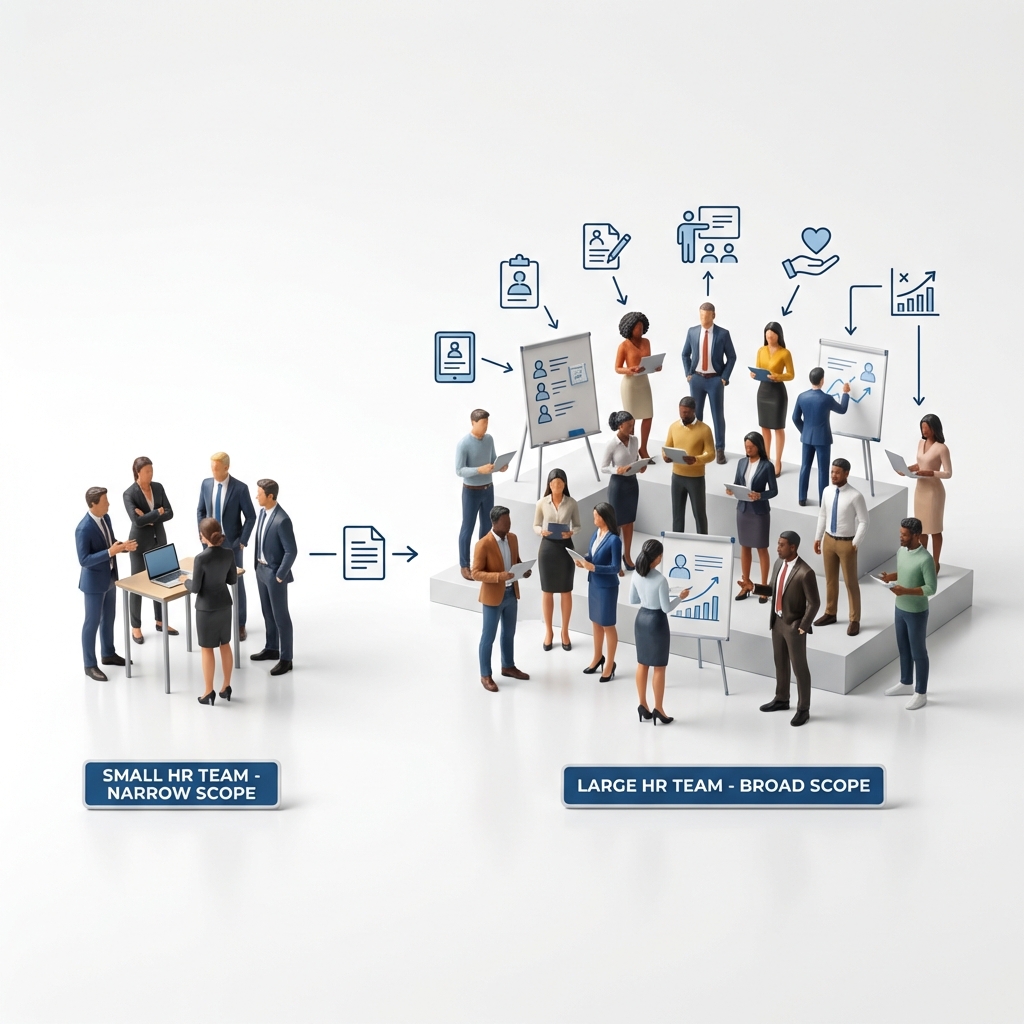
In small and medium-sized retail enterprises (SMEs) across Singapore, HR teams are typically lean, often comprising one or two individuals, or even a business owner or office manager who shoulders HR responsibilities alongside other duties. This limited staffing means that HR professionals in SMEs often operate as generalists, handling the full spectrum of HR functions out of necessity. Their focus is primarily on immediate, critical tasks such as payroll processing, basic recruitment, onboarding, and ensuring fundamental compliance with local labour laws. The constrained budget in SMEs often limits investment in sophisticated HR technology, requiring manual processes and highly adaptable individuals.
Conversely, large corporate retail entities boast highly specialized HR teams. These organizations have the financial muscle and employee volume to justify dedicated departments for various HR disciplines. One might find distinct teams for talent acquisition, compensation and benefits, employee relations, learning and development, HR operations, and even HR information systems (HRIS). Each team is staffed by experts in their respective fields, allowing for deep specialization and robust program development. This structure supports comprehensive talent management retail Singapore strategies, addressing diverse employee needs and complex organizational structures.
-
Generalist vs. Specialist Roles
The distinction between generalist and specialist roles is a direct consequence of team size. In Singaporean retail SMEs, the HR professional is typically an HR generalist. This individual is responsible for a wide array of tasks: drafting job descriptions, conducting interviews, managing employee records, administering benefits, handling grievances, and sometimes even orchestrating employee engagement initiatives. This breadth of responsibility demands a versatile skill set and a strong understanding of all HR facets, though it may preclude deep expertise in any single area. The generalist acts as the first point of contact for nearly all employee-related matters.
In larger retail corporations, HR roles are distinctly specialized. A talent acquisition specialist will focus solely on sourcing, screening, and hiring candidates. A compensation and benefits manager will design salary structures, incentive schemes, and employee welfare programs. HR Business Partners (HRBPs) work closely with specific business units, aligning HR strategies with operational goals, while learning and development specialists focus on employee training and career progression. This specialization allows for greater efficiency, deeper expertise, and the implementation of best practices within each HR domain. This also facilitates more structured HR technology implementation and the development of sophisticated HR operational scope processes.
-
Strategic vs. Operational Focus
The operational scope of HR also varies significantly. For SMEs in the Singaporean retail sector, HR’s focus is predominantly operational and administrative. The immediate priorities revolve around maintaining day-to-day functions, ensuring employees are paid accurately and on time, and adhering to essential employment practices and regulations set by the Ministry of Manpower. Strategic HR planning, such as long-term workforce development or succession planning, often takes a back seat to more pressing, immediate concerns. While owners may have a vision for growth, a formalized HR strategy might not be a distinct function of the lean HR team.
Conversely, HR in large retail corporations often operates as a strategic partner to the business. While operational tasks are still managed, they are typically streamlined through advanced HRIS or delegated, allowing HR leaders to focus on higher-level strategic initiatives. This includes developing robust workforce planning retail strategies, fostering organizational culture, managing change, driving talent development pipelines, and leveraging HR analytics to inform business decisions. HR leaders in these organizations actively participate in executive discussions, aligning people strategies with overall business objectives and market trends. Their input is crucial for driving employee engagement retail-wide initiatives and ensuring that the human capital strategy supports the company’s competitive advantage.
In conclusion, the Differences between the SMEs’ HR Structure and the Corporates’ HR Structure in retail companies in singapore are profound, shaped by resources, scale, and strategic priorities. While SMEs rely on agile, generalist HR functions, larger corporations benefit from specialized teams that drive strategic value. Both models are critical for the retail ecosystem, each adapting its HR operational scope to best serve its unique business environment and employee base.
Talent Acquisition and Management Strategies
Singapore’s retail landscape is fiercely competitive, demanding robust strategies for attracting, recruiting, and retaining top talent. The approaches adopted by Small and Medium-sized Enterprises (SMEs) and large corporates in this domain differ significantly, primarily due to their distinct HR structures, resource availability, and strategic scale. Understanding these Differences between the SMEs’ HR Structure and the Corporates’ HR Structure in retail companies in singapore is vital for businesses seeking to thrive in this dynamic market, impacting everything from frontline staff to senior management. These distinctions shape recruitment, onboarding, training, and retention efforts across the sector.
1. Recruitment Channels & Employer Branding
For SMEs in Singapore’s retail sector, talent acquisition often relies on lean HR functions, sometimes managed by owners or generalists. Recruitment channels are typically informal and cost-effective, utilizing local job boards, word-of-mouth referrals, and direct community outreach. Employer branding is often organic, built on the owner’s reputation, a unique store culture, or personal relationships. While agile and allowing for quick hiring decisions, this approach may limit reach, primarily focusing on immediate needs for frontline and support staff.
In contrast, large retail corporates boast specialized HR departments with dedicated talent acquisition and employer branding teams. They leverage sophisticated Applicant Tracking Systems (ATS), global job portals, professional recruitment agencies, and university partnerships. Corporate employer branding is a strategic, ongoing investment, supported by significant marketing budgets to craft compelling narratives about career progression and comprehensive benefits. Their strong brand recognition and extensive social media presence allow them to attract a diverse and larger pool of candidates, crucial for filling a wide array of roles from operational to highly specialized corporate positions.
2. Onboarding and Training Programs
SMEs generally provide a less formal onboarding experience. New hires often receive direct, on-the-job training from experienced colleagues or managers. Mentorship is usually informal and ad-hoc, responding to immediate operational requirements. Due to resource constraints and smaller team sizes, formal training programs might be limited, focusing on essential operational skills and immediate productivity. Upskilling is often reactive, driven by specific business needs rather than proactive career development plans, which can sometimes impact long-term employee engagement.
Conversely, large corporates invest substantially in comprehensive, structured onboarding and extensive training programs. New employees undergo multi-day or multi-week inductions covering company culture, policies, brand values, and in-depth product knowledge, often incorporating e-learning modules and classroom sessions. Dedicated learning and development departments design and deliver a wide array of initiatives, from foundational retail skills to leadership development. Clear career progression frameworks and continuous learning opportunities are integral, ensuring consistency, building a strong internal talent pipeline, and enhancing long-term employee loyalty across numerous outlets.
3. Performance Management & Employee Retention
Performance management in SMEs frequently involves direct, regular, and informal feedback from managers or owners. Formal reviews, if implemented, tend to be less frequent or detailed. Retention strategies often prioritize creating a close-knit, ‘family-like’ atmosphere, offering flexibility, and recognizing individual contributions personally. Compensation and benefits might be less structured but can be tailored. While fostering a strong sense of belonging, limited opportunities for structured career progression or highly competitive benefits packages can challenge the retention of ambitious individuals.
For large corporates, performance management systems are highly structured, featuring annual or biannual reviews, Key Performance Indicators (KPIs), Objectives and Key Results (OKRs), and 360-degree feedback, often integrated with HRIS. Retention strategies are multi-faceted, including competitive salary packages, comprehensive health and wellness benefits, structured career development plans, and robust recognition programs. Understanding what drives employee engagement and actively managing it through systematic processes is a cornerstone of their retention efforts. This systematic approach provides clear expectations, fair evaluation, and diverse growth opportunities, appealing to career-driven professionals seeking stability and advancement in Singapore’s competitive retail talent market.
Compensation, Benefits, and Employee Welfare
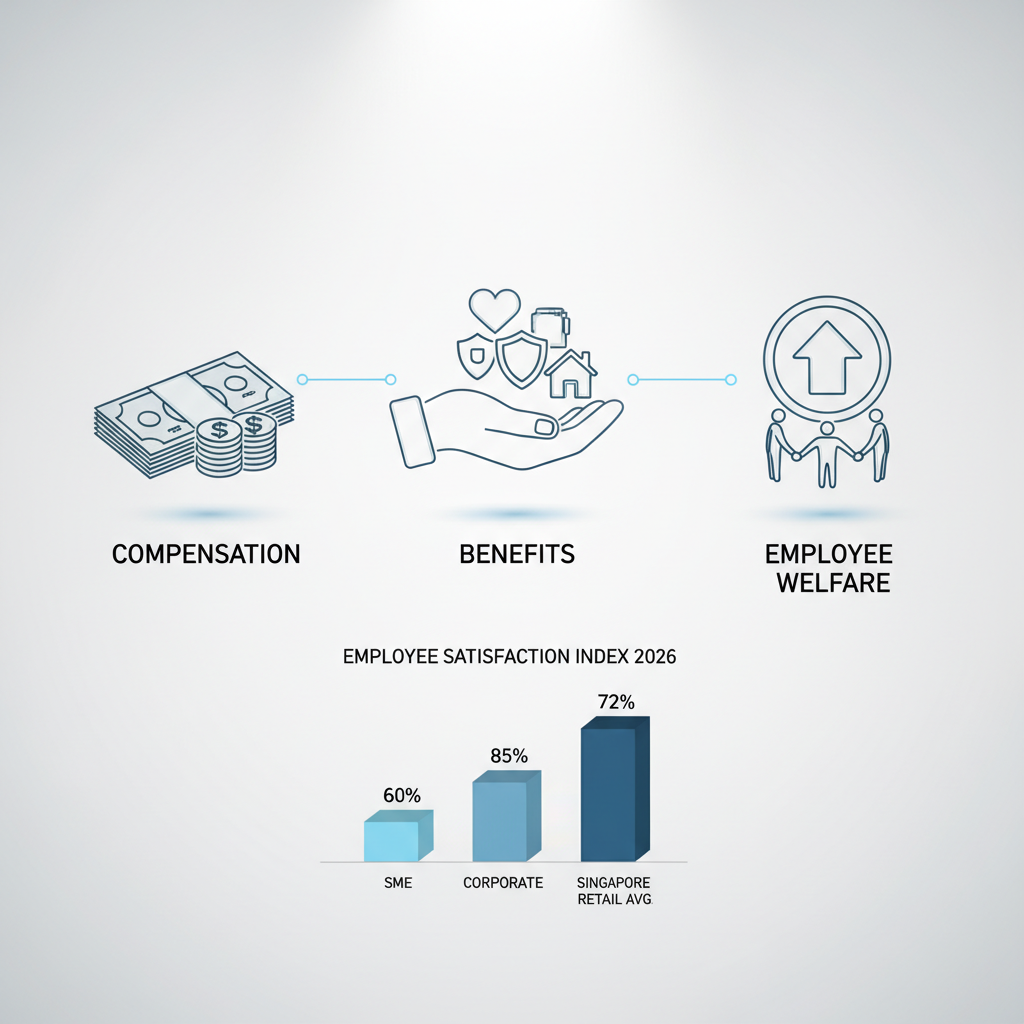
In the vibrant Singapore retail sector, the approach to compensation, benefits, and employee welfare differs significantly between Small and Medium-sized Enterprises (SMEs) and large corporations. These variations stem primarily from differing operational scales, financial resources, and strategic HR priorities. Understanding these Differences between the SMEs’ HR Structure and the Corporates’ HR Structure in retail companies in singapore is crucial for both employers attracting talent and employees seeking the right fit. While large corporations often boast standardized, comprehensive packages, SMEs typically offer more flexible, albeit sometimes less extensive, reward systems tailored to individual needs and budget constraints. This section details these variations across key areas, highlighting how each model addresses employee welfare.
1. Salary Structures & Bonus Schemes
Large retail corporations in Singapore typically operate with highly structured salary bands and clear progression paths, often informed by extensive market research and global benchmarks. Their compensation strategies are designed for scalability and consistency across multiple outlets or departments. Base salaries tend to be competitive, often supplemented by performance-based bonuses tied to individual, team, and company targets. These bonuses can be substantial, reflecting the company’s overall profitability and an employee’s contribution to sales or operational efficiency. Furthermore, large firms might offer long-term incentives, such as share options, to senior management, fostering long-term commitment. For insights into general wage trends, the Ministry of Manpower provides valuable wage data and employment practices in Singapore.
In contrast, Singaporean retail SMEs often adopt more agile and less formalized salary structures. While they strive for competitive base pay to attract talent, their budgets are typically more constrained. Bonuses in SMEs are frequently discretionary, based on the owner’s assessment of individual performance and the company’s immediate financial health. Instead of complex bonus schemes, some SMEs might offer smaller, more frequent incentives or commissions directly tied to sales targets. The emphasis is often on immediate results and direct contribution. While lacking the extensive market benchmarking of larger players, SMEs can offer greater flexibility in negotiating salaries and benefits, sometimes adjusting quickly to individual needs or market shifts, making their reward systems more personalized.
2. Health & Wellness Benefits
The scope and depth of health and wellness benefits also present a stark contrast. Large retail corporations typically offer comprehensive group medical insurance packages, often extending beyond basic hospitalization to include dental, optical, and specialist care. Many also invest in extensive wellness programs, such as gym memberships, mental health support via Employee Assistance Programs (EAPs), health screenings, and on-site clinics or health talks. These initiatives are part of a broader strategy to enhance employee well-being, reduce absenteeism, and attract top talent by demonstrating a strong commitment to holistic health. Their size allows them to negotiate favorable terms with insurance providers and implement scalable programs.
SMEs, due to tighter budgets and smaller employee pools, usually provide more fundamental health benefits. Basic group hospitalization and surgical (GHS) insurance is common, meeting the minimum statutory requirements, but comprehensive dental or optical coverage might be rare. Wellness initiatives are often simpler, perhaps involving company-sponsored team sports, healthy snack provisions, or informal mental health check-ins by management. While they might lack the resources for full-fledged EAPs or corporate gym tie-ups, many SMEs foster a close-knit, supportive environment where employees feel comfortable approaching management with personal well-being concerns. The key differences in HR structure here often dictate the feasibility and breadth of these offerings.
3. Work-Life Balance Initiatives
Work-life balance initiatives highlight another divergence. Large retail corporations are increasingly embracing flexible work arrangements, including hybrid models, compressed workweeks, and staggered hours, especially for corporate or back-office roles, even if frontline retail demands a more fixed presence. They often have dedicated HR policies for parental leave beyond statutory minimums, childcare support programs, and robust leave policies, including sabbaticals or career breaks for long-serving employees. These initiatives are driven by a recognition of evolving workforce demands and a desire to retain talent in a competitive market, projecting an image as a progressive employer.
For SMEs, work-life balance is often approached with greater pragmatism and less formalization. While formal flexi-work policies might be less common due to smaller teams and direct operational needs, SMEs can offer informal flexibility on a case-by-case basis. An employee might be able to adjust shifts or take time off more readily with direct manager approval, without navigating extensive bureaucratic processes. Parental leave and statutory entitlements are always provided, but extended benefits or childcare support beyond the legal requirements are less common. The strength of SMEs often lies in their ability to be responsive and understanding to individual employee needs, fostering a family-like atmosphere where personal circumstances can be accommodated more directly, albeit sometimes informally. This individual-focused flexibility, while not always codified, can be a significant draw for certain employees valuing autonomy.
HR Technology Adoption and Data Utilization
The modern HR landscape, particularly within Singapore’s vibrant retail sector, is undergoing a profound transformation driven by HR technology adoption and sophisticated data analytics. Both Small and Medium-sized Enterprises (SMEs) and large corporates are increasingly leveraging these tools to streamline operations, enhance decision-making, and significantly boost HR efficiency. However, the approach and scale of this adoption differ markedly, largely reflecting the fundamental Differences between the SMEs’ HR Structure and the Corporates’ HR Structure in retail companies in singapore.
While SMEs often seek agile, cost-effective solutions for basic HR automation and compliance management, corporates demand robust, scalable HR solutions capable of supporting complex talent management strategies and providing deep analytical insights. Understanding these varying needs is crucial for optimizing HR technology investments and maximizing their impact on organizational performance and employee engagement.
-
HRIS (Human Resources Information Systems) Implementation
For SMEs in Singapore’s retail sector, HRIS implementation typically marks a significant leap from manual processes to initial HR automation. These businesses often gravitate towards cloud-based, all-in-one HRIS platforms that offer core functionalities like employee data management, onboarding, and basic reporting. Their focus is on ease of use, affordability, and the ability to manage essential HR tasks without requiring dedicated IT support. Such systems are instrumental in improving HR efficiency by reducing administrative burden and ensuring foundational data accuracy, enabling leaner HR teams to focus on immediate operational needs. The aim is often to consolidate scattered information and provide a single source of truth for employee data, a vital step towards more data-driven HR.
In contrast, large retail corporates implement highly integrated and modular HRIS solutions. These systems extend far beyond basic administration to encompass sophisticated talent acquisition, performance management, learning & development, and succession planning. Corporations require scalable HR solutions that can handle thousands of employees across multiple outlets and potentially integrate with other enterprise resource planning (ERP) systems. Customization, advanced security features, and robust integration capabilities are paramount, supporting complex organizational structures and strategic HR initiatives like comprehensive talent management and workforce planning. The investment is substantial, reflecting the need for a system that can evolve with the company’s long-term strategic goals.
-
Payroll & Leave Management Solutions
Payroll and leave management are critical areas where HR technology profoundly impacts both SMEs and corporates. For SMEs, adopting dedicated payroll and leave management solutions (often integrated within their HRIS) ensures compliance management with Singapore’s labor laws and tax regulations. These systems simplify the calculation of wages, CPF contributions, and leave entitlements, significantly reducing errors and freeing up HR personnel. The emphasis is on accuracy, ease of processing, and generating straightforward reports for internal use and regulatory filings, directly contributing to HR efficiency.
Corporates, due to their sheer volume of employees and often complex compensation structures (e.g., commissions, bonuses, varied shifts), require highly advanced payroll and leave management systems. These solutions are typically integrated with time & attendance systems, benefit administration, and the core HRIS. They offer sophisticated features like multi-currency processing, complex rules engines for various employee groups, and extensive audit trails. The focus extends beyond mere accuracy to include robust reporting for financial reconciliation, forecasting, and detailed analysis of labor costs, supporting strategic HR and operational planning across the vast retail network.
-
HR Analytics & Reporting
The utilization of HR analytics and reporting capabilities showcases perhaps the starkest Differences between the SMEs’ HR Structure and the Corporates’ HR Structure in retail companies in singapore. SMEs generally begin with foundational reporting, pulling basic data on headcount, leave utilization, and payroll costs directly from their HRIS. Their initial steps into data-driven HR are typically geared towards understanding operational metrics and identifying immediate areas for improvement in HR efficiency. While they may not have dedicated HR analysts, the insights gained from simple reports can inform decisions on staffing levels or overtime management, enhancing employee engagement through better resource allocation.
Corporates, on the other hand, leverage sophisticated HR analytics tools and business intelligence platforms to derive deep, actionable insights. They move beyond descriptive reporting to predictive and prescriptive analytics, analyzing data on employee turnover, performance trends, learning effectiveness, and engagement scores. Tools that enable advanced visualization and scenario planning help strategic HR teams forecast workforce needs, identify high-risk employees for retention initiatives, and measure the ROI of HR programs. This sophisticated use of data supports continuous improvement and empowers leadership with evidence-based insights to make critical decisions, shaping future talent management strategies and fostering a data-driven culture. For a deeper dive into the power of HR analytics, exploring resources like Tableau’s Guide to HR Analytics can illustrate the potential for transforming HR functions through data.
Compliance, Policy, and Scalability Challenges
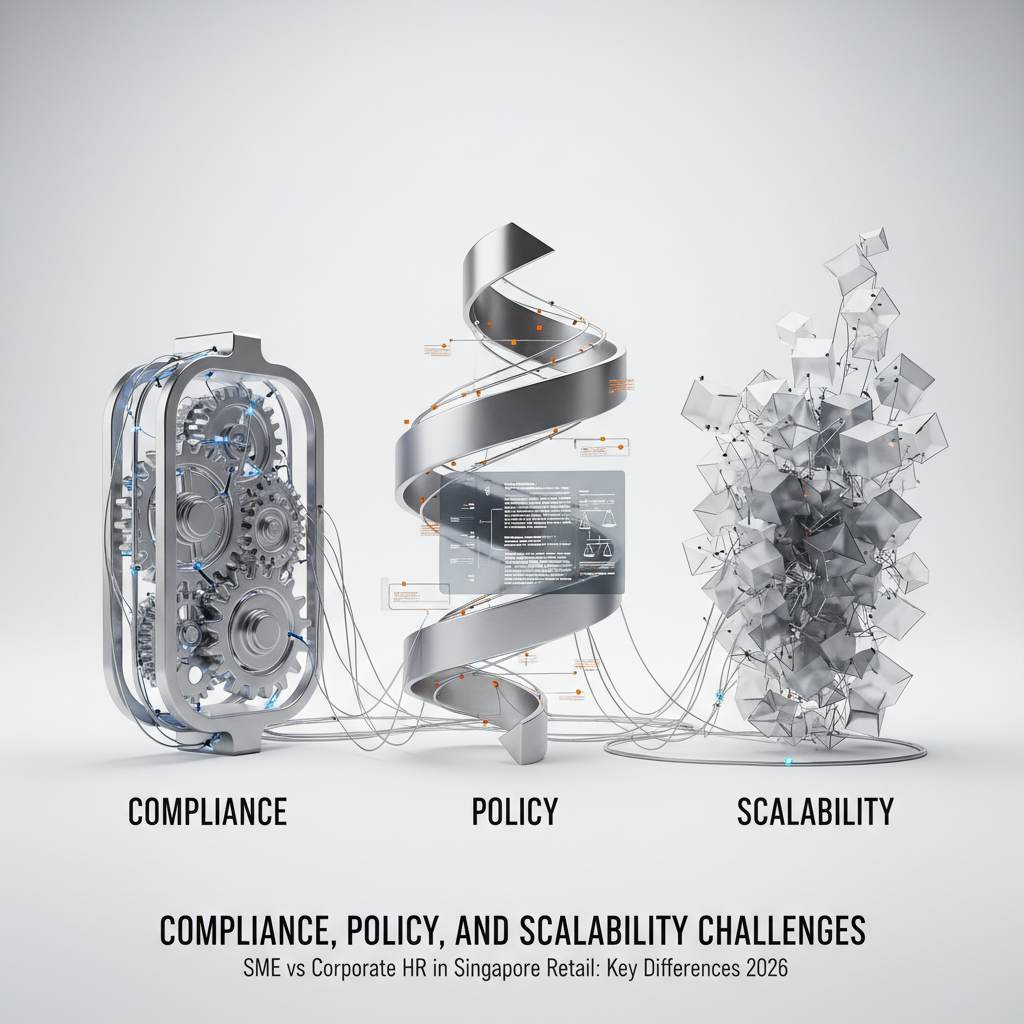
Navigating the intricate landscape of human resources in Singapore’s vibrant retail sector presents unique challenges for businesses of all sizes. The differences between the SMEs’ HR structure and the corporates’ HR structure in retail companies in Singapore are particularly pronounced when it comes to regulatory compliance, the development and implementation of robust HR policies, and the ability to scale HR operations efficiently. This section highlights the varying complexities faced by Small and Medium-sized Enterprises (SMEs) and larger corporations in managing their workforce amidst a dynamic market, focusing on how resource allocation, expertise, and strategic foresight diverge between these two business archetypes.
1. Regulatory Adherence & Local Laws
Singapore’s reputation for a clear yet rigorous regulatory environment means that HR compliance in Singapore retail is non-negotiable. For SMEs, compliance often emerges as a significant hurdle. Lacking dedicated legal or compliance departments, many SMEs rely on HR generalists, external consultants, or even owner-managers to interpret and apply complex labour laws. Keeping abreast of amendments to Singapore’s Employment Act, Central Provident Fund (CPF) contributions, and work pass regulations for foreign talent can stretch limited resources, increasing the risk of inadvertent non-compliance. These SME HR challenges in Singapore can lead to penalties, reputational damage, and operational disruptions.
In stark contrast, corporations typically boast specialized teams or entire departments dedicated to HR compliance. These teams proactively monitor legislative changes, conduct internal audits, and ensure all employment practices align with statutory requirements. Their deep expertise in labour laws in Singapore HR allows them to not only react to but also anticipate regulatory shifts, implementing robust frameworks that minimize risk. This proactive approach is a hallmark of corporate HR strategies in Singapore, allowing them to maintain high standards of ethical and legal practice across their often extensive retail networks.
2. Policy Development & Standardization
The approach to HR policy development in retail organizations also highlights fundamental differences. For many SMEs, policies might evolve organically, often in response to specific incidents or immediate needs. This can lead to a less formalized, sometimes inconsistent application of rules across different employees or situations, particularly if the SME has multiple outlets. While this agility can sometimes allow for quicker adaptation, the absence of a standardized HR handbook or clear operational procedures can create ambiguity, leading to employee grievances or inconsistent decision-making. The focus tends to be on practical, immediate solutions rather than comprehensive, long-term policy infrastructure.
Conversely, larger corporations prioritize meticulous HR policy development in retail. They invest significant resources in crafting comprehensive employee handbooks, codes of conduct, and detailed operational procedures covering everything from leave policies and performance management to workplace harassment and data privacy. Standardization is key, ensuring that policies are uniformly applied across all retail branches and brands. This not only fosters fairness and transparency but also reinforces the corporate culture and brand identity. Regular reviews and updates are standard practice, ensuring policies remain relevant and compliant within the dynamic retail HR environment.
3. Adapting HR for Growth & Expansion
The ability to adapt and scale HR operations in Singapore is critical for any retail business aspiring for growth. For SMEs, scaling HR can be a reactive process, often triggered by rapid expansion that outpaces their existing HR infrastructure. A sudden need to hire a large volume of staff for new outlets, manage increased payroll complexities, or maintain a consistent company culture across a growing workforce can quickly overwhelm an already lean HR function. The initial HR systems and processes, suitable for a smaller setup, might not be designed to support significant growth, creating bottlenecks in recruitment, onboarding, and employee engagement. This highlights a core retail HR scalability challenge.
Corporations, on the other hand, typically integrate scalability into their HR strategy from the outset. Their advanced Human Resource Information Systems (HRIS) are designed to manage large employee volumes, automate routine tasks, and provide data analytics for strategic decision-making. Recruitment pipelines are robust and often centralized, capable of sourcing talent efficiently for multiple locations or new market entries. Onboarding programs are standardized to ensure new hires quickly integrate into the company culture, regardless of their retail branch. While corporations face their own challenges in maintaining local flexibility within global frameworks, their established HR infrastructure and strategic planning make them far better equipped for sustainable growth and expansion in the competitive Singaporean retail landscape, showcasing well-developed corporate HR strategies in Singapore.
Partner with Shelby Global
You are looking for reliable HR Sevice Suppliers? Contact Shelby Global Now! To connect with verified talents and upgrade your orginization.
—————————————
References
– Employment Standards in Singapore – Ministry of Manpower: https://www.mom.gov.sg/employment-practices/employment-standards
– What Drives Employee Engagement: https://www.gallup.com/workplace/236058/what-employee-engagement.aspx
– Ministry of Manpower – Wage Data and Wage Share: https://www.mom.gov.sg/employment-practices/salary-and-wages/wage-data-and-wage-share
– Tableau’s Guide to HR Analytics: https://www.tableau.com/learn/articles/hr-analytics-guide
– Singapore’s Employment Act: https://www.mom.gov.sg/employment-practices/employment-act