The Foundation: Malaysian Employment Law for Tech Companies
The rapid growth of Malaysia’s technology sector has positioned the nation as a vibrant hub for innovation, attracting both local startups and multinational corporations. While the allure of a dynamic market is strong, navigating the intricate landscape of Malaysian employment law is paramount for any tech company seeking sustainable success. Understanding the core legislative frameworks, particularly the Employment Act 1955 and the Industrial Relations Act 1967, is not merely a compliance exercise but a strategic imperative for managing talent and mitigating risks. Adhering to the specific Legal HR terms & conditions for technology field in malaysia ensures fair employment practices, fosters positive employee relations, and protects the company from potential disputes. This overview delves into these foundational laws, highlighting their application and recent amendments relevant to the fast-evolving technology industry.
1. Understanding the Employment Act 1955 Amendments
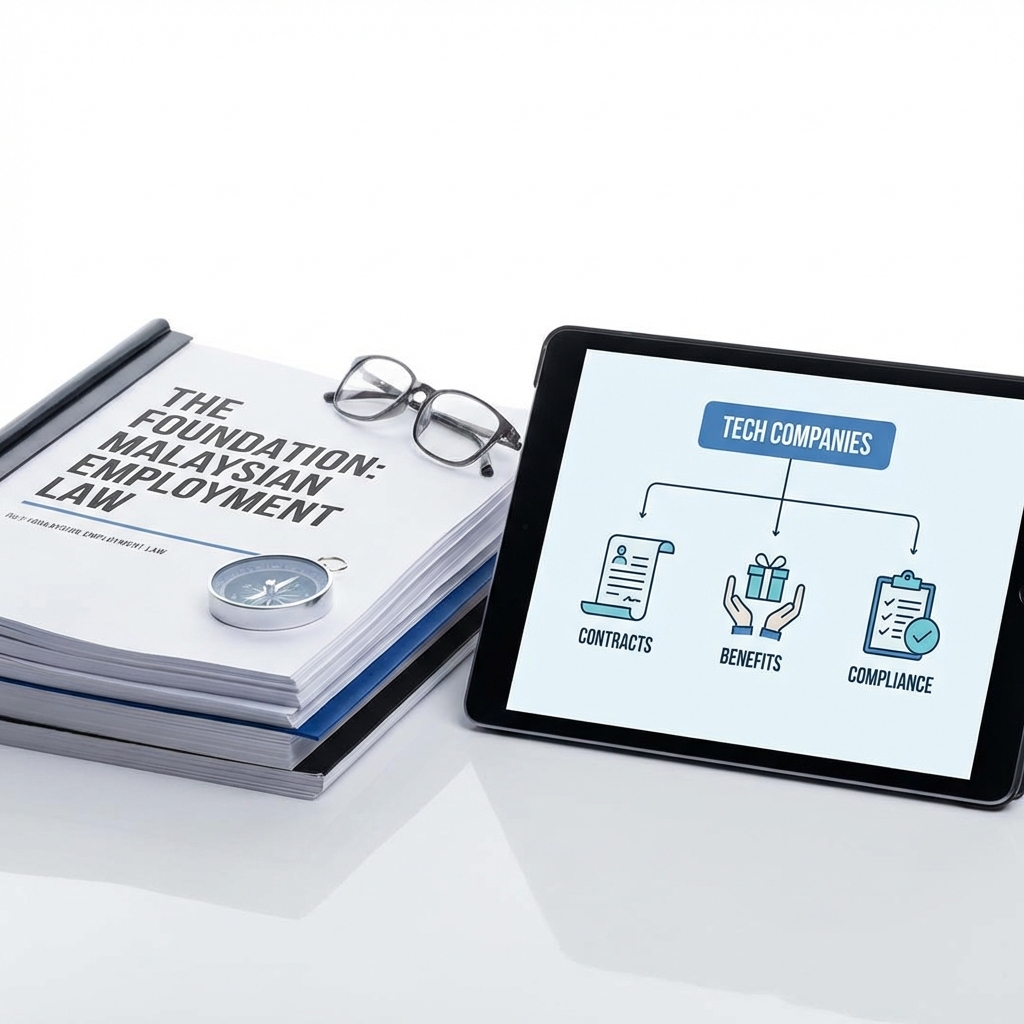
The Employment Act 1955 (EA 1955) serves as the cornerstone of labor protection in Peninsular Malaysia. While traditionally covering employees earning below a certain salary threshold, significant amendments, notably the Employment (Amendment) Act 2022 which came into force on January 1, 2023, have broadened its scope. These recent amendments to the Employment Act 1955 have far-reaching implications for tech companies, impacting HR policies, employee benefits, and work arrangements.
Key changes include:
- Expanded Scope: Crucially, many core provisions of the EA 1955 now apply to all employees, regardless of salary, meaning even high-earning tech professionals are now covered by provisions relating to maternity leave, paternity leave, working hours, and termination benefits.
- Reduced Working Hours: The standard maximum weekly working hours have been reduced from 48 to 45 hours, necessitating adjustments to work schedules and overtime calculations in tech roles where flexibility is common.
- Enhanced Parental Leave: Maternity leave has been extended from 60 to 98 days, aligning Malaysia with international standards. A new entitlement of 7 days of paid paternity leave has also been introduced.
- Flexible Working Arrangements (FWAs): The amendments formalize the right for employees to request FWAs, which is particularly relevant for the tech sector’s embrace of remote work and hybrid models. Employers are now required to consider and respond to such requests, providing written reasons if rejected.
- Presumption of Employment: New provisions clarify the employer-employee relationship, helping to reduce misclassification of workers as independent contractors, a vital consideration for tech companies frequently engaging freelancers or project-based talent.
These changes demand that tech companies review and update their employment contracts, HR handbooks, and internal policies to ensure full compliance and avoid potential legal ramifications.
2. Industrial Relations & Dispute Resolution in Tech
Beyond individual employment terms, the Industrial Relations Act 1967 (IRA 1967) governs the collective relationship between employers and employees, specifically concerning trade disputes, dismissals, and unfair labor practices. While unionization is less prevalent in the Malaysian tech sector, understanding the IRA 1967 is critical for managing potential conflicts and ensuring fair treatment.
The Act outlines mechanisms for resolving industrial disputes, primarily through conciliation by the Industrial Relations Department and, if unsuccessful, adjudication by the Industrial Court. For tech companies, the most common application of the IRA 1967 is in cases of unfair dismissal. Employees who believe they have been dismissed without just cause or excuse can file a claim with the Director General of Industrial Relations. The burden of proof lies with the employer to demonstrate that the dismissal was fair and reasonable. This underscores the importance of:
- Clear Performance Management: Documenting performance issues, providing warnings, and offering opportunities for improvement.
- Robust Disciplinary Procedures: Establishing transparent and fair disciplinary processes in line with the principles of natural justice.
- Sound Termination Practices: Ensuring all terminations, whether for misconduct, poor performance, or redundancy, adhere strictly to legal requirements and contractual terms.
Proactive HR management, transparent communication, and adherence to due process are key to minimizing industrial relations disputes within the tech workplace.
3. Key Statutory Benefits & Employee Entitlements
Compliance with mandatory benefits and entitlements is a fundamental aspect of operating in Malaysia. Tech companies must ensure they correctly administer and contribute to various statutory funds and provide standard leave entitlements as dictated by law. These Legal HR terms & conditions for technology field in malaysia are non-negotiable.
Core statutory contributions include:
- Employees Provident Fund (EPF): A compulsory savings scheme for retirement, with both employer and employee contributing a percentage of the employee’s monthly wages.
- Social Security Organization (SOCSO): Provides social protection benefits to employees and their dependents against employment injuries and invalidity.
- Employment Insurance System (EIS): Managed by SOCSO, EIS provides financial assistance to retrenched workers and helps them re-enter the workforce.
In addition to these contributions, employees are entitled to various forms of leave:
- Annual Leave: Minimum days depend on years of service (e.g., 8 days for less than 2 years, 12 days for 2-5 years, 16 days for over 5 years).
- Sick Leave: Minimum days also depend on years of service (e.g., 14 days for less than 2 years, 18 days for 2-5 years, 22 days for over 5 years), plus up to 60 days of hospitalization leave.
- Public Holidays: Employees are entitled to 11 gazetted public holidays, with 5 mandatory choices by the employer.
While tech companies often offer competitive benefits packages that exceed statutory minimums to attract top talent, understanding and fulfilling these basic legal requirements is the absolute baseline for all employers in Malaysia. For further insights into ensuring full compliance and optimizing your HR strategies, explore resources on Legal HR terms & conditions for technology field in malaysia.
Critical Contractual Terms for Technology Employees
Delving into essential clauses within employment contracts for tech professionals, with a focus on intellectual property, data security, and confidentiality agreements vital for innovation-driven companies.
In Malaysia’s dynamic technology sector, safeguarding a company’s innovations and operational integrity is paramount. Meticulously drafted employment contracts are strategic tools protecting trade secrets, proprietary technology, and competitive advantages. This section explores critical Legal HR terms & conditions for technology field in Malaysia, focusing on indispensable provisions when hiring tech talent. Understanding these contractual nuances is crucial for a secure and productive work environment.
-
Intellectual Property (IP) Ownership & Assignment Clauses
The core value of any technology company often lies in its Intellectual Property (IP). Robust IP ownership and assignment clauses are non-negotiable in employment contracts for tech professionals in Malaysia. These clauses unequivocally state that any IP—including software, algorithms, designs, inventions, and data structures—created by an employee within the scope of their employment, or using company resources, belongs exclusively to the employer. This “work-for-hire” principle ensures the company retains full rights to its innovations.
An effective IP clause typically includes:
- Assignment of Rights: Clear statement that the employee assigns all present and future rights to such IP to the company.
- Cooperation Clause: Agreement for employees to assist the company, even post-employment, in securing and enforcing IP rights.
- Disclosure Obligation: Requirement for employees to promptly disclose all inventions and creative works to the employer.
Without precise IP assignment, companies risk costly disputes and undermine foundational assets. Clarity on employee intellectual property is vital for valuation, investment, and long-term sustainability.
-
Confidentiality & Non-Disclosure Agreements (NDAs)
In an industry where information is a critical asset, Confidentiality and Non-Disclosure Agreements (NDAs) are essential for protecting sensitive business information. These contractual clauses legally bind tech employees not to disclose or misuse confidential information acquired during their tenure. This includes trade secrets, proprietary algorithms, client lists, business strategies, and unreleased product specifications.
Key components of strong NDAs and confidentiality clauses typically cover:
- Definition of Confidential Information: A clear outline of what constitutes “confidential information.”
- Obligations of Non-Use and Non-Disclosure: Prohibitions against using information for personal gain or disclosing it to unauthorised third parties, during and after employment.
- Duration: Specifying how long these obligations last (often indefinitely for trade secrets).
- Return of Information: Requirement for employees to return all confidential materials upon employment termination.
Given the focus on data protection, especially with Malaysia’s Personal Data Protection Act (PDPA) 2010, robust confidentiality agreements not only protect trade secrets but also ensure compliance. Breaching these agreements can lead to significant legal and financial repercussions. For more insights, refer to resources on Malaysia’s Personal Data Protection Act.
-
Non-Compete and Non-Solicitation Covenants
To protect competitive advantage, many tech companies include non-compete and non-solicitation clauses in their employment contracts. These restrictive covenants prevent former employees from leveraging company knowledge to directly compete or poach talent and clients.
- Non-Compete Clauses: These restrict an employee from working for a direct competitor or launching a competing business within a specified area and for a defined period post-employment. In Malaysia, non-compete clauses are heavily scrutinised by courts. They are generally deemed void as restraints of trade unless proven reasonable and necessary to protect legitimate business interests (e.g., trade secrets). Courts assess factors like duration, geographical scope, and nature of restricted activity; overly broad clauses are likely unenforceable.
- Non-Solicitation Clauses: These prohibit former employees from soliciting the company’s clients, customers, or employees for a specific period after their departure. They are generally more enforceable in Malaysia than non-competes, provided they are reasonable in scope and duration and protect a legitimate proprietary interest.
When drafting these covenants, it is crucial for Malaysian tech companies to ensure they are narrowly tailored and justifiable. Unreasonable restrictions can lead to a court deeming the entire clause unenforceable. Expert legal advice is paramount to ensure these clauses are robust yet compliant with Malaysian labor law.
For technology firms in Malaysia, a meticulously drafted employment contract is a critical defense against the loss of vital intellectual property, sensitive data, and valuable talent. By clearly defining terms related to IP ownership, enforcing strict confidentiality, and prudently implementing non-compete and non-solicitation clauses, companies can establish a secure framework that protects innovation, sustains growth, and maintains their competitive edge. Investing in sound Legal HR terms & conditions for technology field in Malaysia is an investment in the company’s future.
Navigating Digital Workplace & Remote Work Regulations
Addressing the legal implications of flexible work arrangements, cybersecurity policies, and employee monitoring practices common in the technology industry, ensuring compliance with evolving regulations.
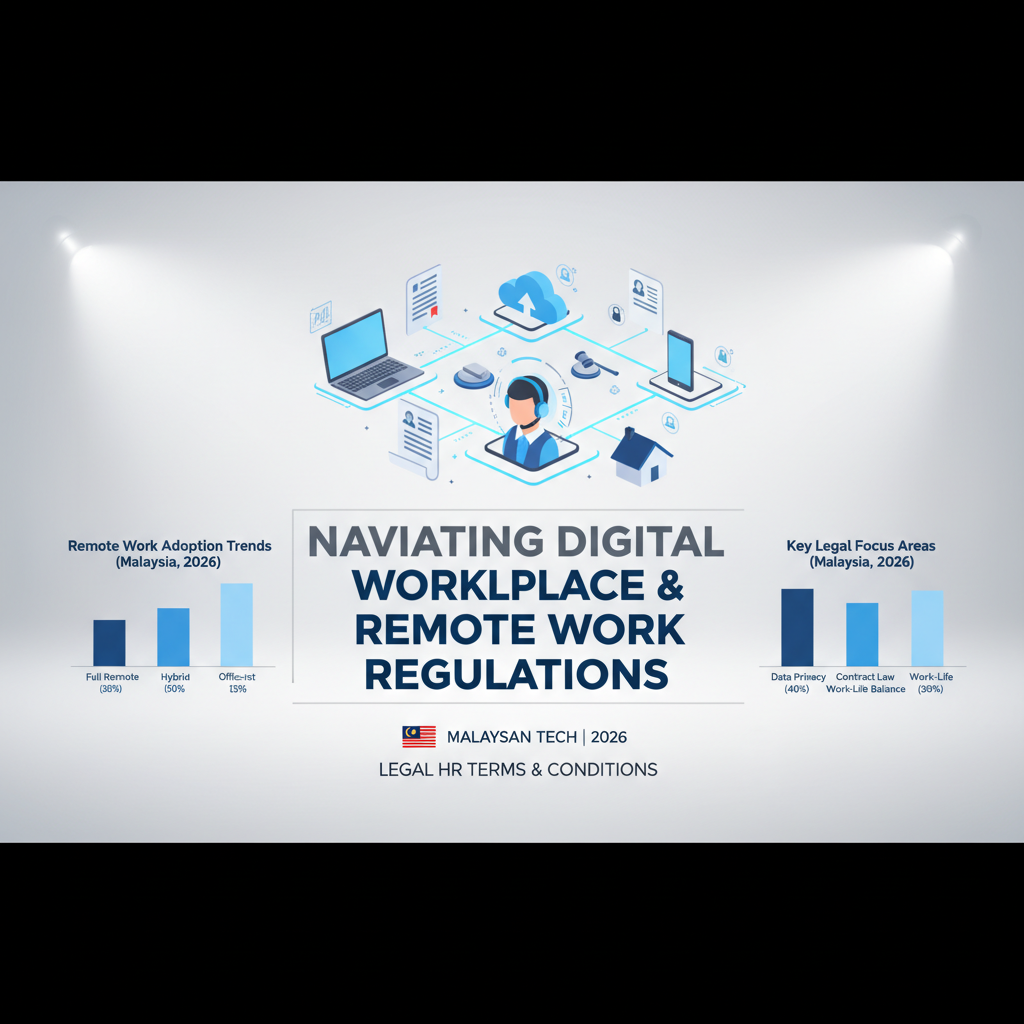
The rapid evolution of the digital workplace, amplified by the rise of remote and hybrid work models, presents unique legal and HR challenges, particularly within Malaysia’s dynamic technology sector. Companies must carefully navigate complex regulatory landscapes to ensure robust Legal HR terms & conditions for technology field in Malaysia. From establishing clear boundaries for flexible work arrangements to safeguarding sensitive data and respecting employee privacy, compliance is not merely an option but a critical imperative for business continuity and reputation management.
1. Legal Frameworks for Remote & Hybrid Work Models
The shift towards remote and hybrid work has necessitated significant updates to employment laws globally, and Malaysia is no exception. Recent amendments to the Employment Act 1955, particularly the Employment (Amendment) Act 2022, have introduced provisions for flexible work arrangements, impacting how technology companies manage their workforce. Employers must now consider statutory requirements for processing requests for flexible work arrangements Malaysia legal, covering variations in working hours, days, or locations. Developing comprehensive Malaysian employment law remote work policies is crucial, detailing aspects such as work-from-home allowances, equipment provision, health and safety obligations for home offices, and clear communication protocols. Ensuring that contracts and employee handbooks reflect these new realities is vital to avoid disputes and ensure legal compliance. The Employment (Amendment) Act 2022 represents a significant step towards formalizing work-from-home regulations Malaysia tech companies must adhere to, laying the groundwork for more adaptable and legally sound digital workplace legal compliance Malaysia.
2. Cybersecurity Policies & Employee Device Usage
In the technology sector, the nexus of remote work and sensitive data magnifies the importance of robust cybersecurity measures. With employees often accessing company networks and data from personal devices, comprehensive cybersecurity policies technology Malaysia are paramount. A well-defined Bring Your Own Device (BYOD policy Malaysia legal) is essential, outlining acceptable use, security requirements (e.g., mandatory anti-virus software, multi-factor authentication), data wipe capabilities, and the company’s right to access data on personal devices used for work. These policies must safeguard intellectual property rights and protect against data breaches, which can have severe financial and reputational consequences. Training on data protection and secure remote working practices is indispensable. Furthermore, clear guidelines on data storage, cross-border data transfer Malaysia implications, and the handling of confidential information are critical components of tech industry HR policies Malaysia, ensuring that employee intellectual property rights Malaysia are protected while maintaining corporate data integrity.
3. Employee Monitoring & Data Surveillance Laws
The capability to monitor employee activity in a digital environment raises significant privacy concerns and legal questions. In Malaysia, the Personal Data Protection Act (PDPA) 2010 forms the cornerstone of data privacy regulations, influencing how companies can implement employee monitoring laws Malaysia. Employers must ensure that any surveillance activities are justified, proportionate, and transparent. Employees must be informed about the extent and purpose of monitoring, particularly concerning communications, internet usage, and location tracking. Blanket surveillance without legitimate grounds or explicit consent can lead to legal challenges. Navigating the delicate balance between legitimate business interests (e.g., productivity, data security, compliance with data protection Act Malaysia) and individual privacy in the workplace Malaysia requires a clear and communicated policy. Understanding the nuances of PDPA Malaysia HR obligations is vital for technology firms, ensuring that practices adhere to privacy principles and protect against potential misuse of personal data. This also extends to the engagement of independent contractor agreements Malaysia and those in the gig economy laws Malaysia tech, where monitoring terms must be explicitly defined.
Ultimately, success in the modern digital workplace hinges on a proactive approach to legal and HR compliance. Technology companies in Malaysia must continually review and update their Legal HR terms & conditions for technology field in Malaysia to reflect current legislation, technological advancements, and evolving work models. By prioritizing transparent policies, comprehensive training, and adherence to local regulations, businesses can foster a secure, compliant, and productive environment for their workforce.
Data Privacy (PDPA) & HR Information Management
Examining the Personal Data Protection Act (PDPA) 2010 and its profound impact on handling employee data, recruitment processes, and HR systems within the technology sector.
The rapid evolution of the technology sector in Malaysia has brought unprecedented challenges and opportunities, particularly in how human resources departments manage sensitive employee information. With the increasing reliance on digital platforms for everything from recruitment to performance management, understanding and adhering to data privacy regulations is not just a best practice but a legal imperative. The Personal Data Protection Act (PDPA) 2010 stands as the cornerstone of data privacy legislation in Malaysia, profoundly influencing how organizations, especially those in the data-intensive tech industry, handle personal data. HR professionals in this dynamic field must navigate a complex landscape of compliance, security, and global data flows to protect their workforce’s information.
1. PDPA 2010 Compliance for Employee Data
The Personal Data Protection Act 2010 mandates strict guidelines for the processing of personal data in commercial transactions, directly impacting every stage of the employee lifecycle within the technology sector. For HR departments, this means a rigorous approach to data collection, usage, disclosure, and retention. Core principles such as consent, notice, and disclosure are paramount. Before collecting any employee data, HR must obtain explicit consent, clearly informing individuals about the purpose and extent of data usage. This includes everything from application forms and background checks during recruitment to performance reviews and payroll information during employment.
Accuracy and security are equally critical. Technology companies often deal with vast amounts of employee data, from biometric information for access control to sensitive personal details for benefits administration. Ensuring the data collected is accurate, complete, and up-to-date is a continuous responsibility. Furthermore, HR systems must be robustly secured against unauthorized access, alteration, or disclosure. Failure to comply can lead to significant penalties, reputational damage, and a loss of trust among employees. Understanding the specific nuances of Legal HR terms & conditions for technology field in Malaysia is crucial for maintaining compliance and mitigating risks associated with data handling.
2. Data Security & Breach Notification Protocols
In the technology sector, where innovation often goes hand-in-hand with sophisticated cyber threats, data security is paramount. The PDPA 2010 imposes a duty on data users to take practical steps to protect personal data from any loss, misuse, modification, unauthorized or accidental access or disclosure, alteration, or destruction. This obligation extends beyond just IT infrastructure to encompass all HR systems and processes where employee data resides. Implementing strong encryption, multi-factor authentication, stringent access controls based on the principle of least privilege, and regular security audits are non-negotiable. Employee training on data privacy best practices is also vital, as human error remains a significant vulnerability.
Beyond prevention, tech companies must establish clear and efficient data breach notification protocols. While the PDPA 2010 doesn’t explicitly mandate direct notification to affected data subjects, it strongly implies the need to report breaches to the Personal Data Protection Commissioner (PDPC) if the breach is likely to cause significant harm or risk. A well-defined incident response plan is essential, outlining steps for identifying, containing, assessing, and remediating a breach. Prompt investigation and transparent communication, where appropriate, can mitigate legal and reputational fallout. Adhering to the principles laid out in the Personal Data Protection Act 2010 is a fundamental aspect of responsible HR information management, especially given the sensitive nature of employee data in tech environments.
3. International Data Transfers & Cloud HR Systems
The global nature of many technology companies means that employee data frequently transcends national borders. The PDPA 2010 introduces specific restrictions on the transfer of personal data outside Malaysia, generally prohibiting such transfers unless the destination country has comparable data protection laws or adequate contractual safeguards are in place. This poses a significant challenge for multinational tech firms that often rely on centralized HR systems or shared services located internationally. HR departments must meticulously assess the data protection frameworks of recipient countries and implement appropriate transfer mechanisms, such as binding corporate rules or standard contractual clauses, to ensure continuous protection.
Furthermore, the widespread adoption of cloud-based HR systems (Human Resources Information Systems – HRIS) introduces another layer of complexity. While cloud solutions offer scalability and efficiency, they also necessitate careful due diligence regarding data residency, vendor compliance, and data processing agreements. HR professionals must ensure that their cloud service providers (CSPs) adhere to PDPA requirements, including robust security measures, clear data handling policies, and commitments to notify of any breaches. Comprehensive contracts with CSPs must clearly define roles, responsibilities, and liabilities concerning data protection, ensuring that employee data remains protected regardless of where it is stored or processed. This proactive approach is vital for safeguarding employee privacy and maintaining legal compliance in a digitally interconnected world.
Future-Proofing: Emerging HR & Legal Trends for Malaysian Tech (2026)
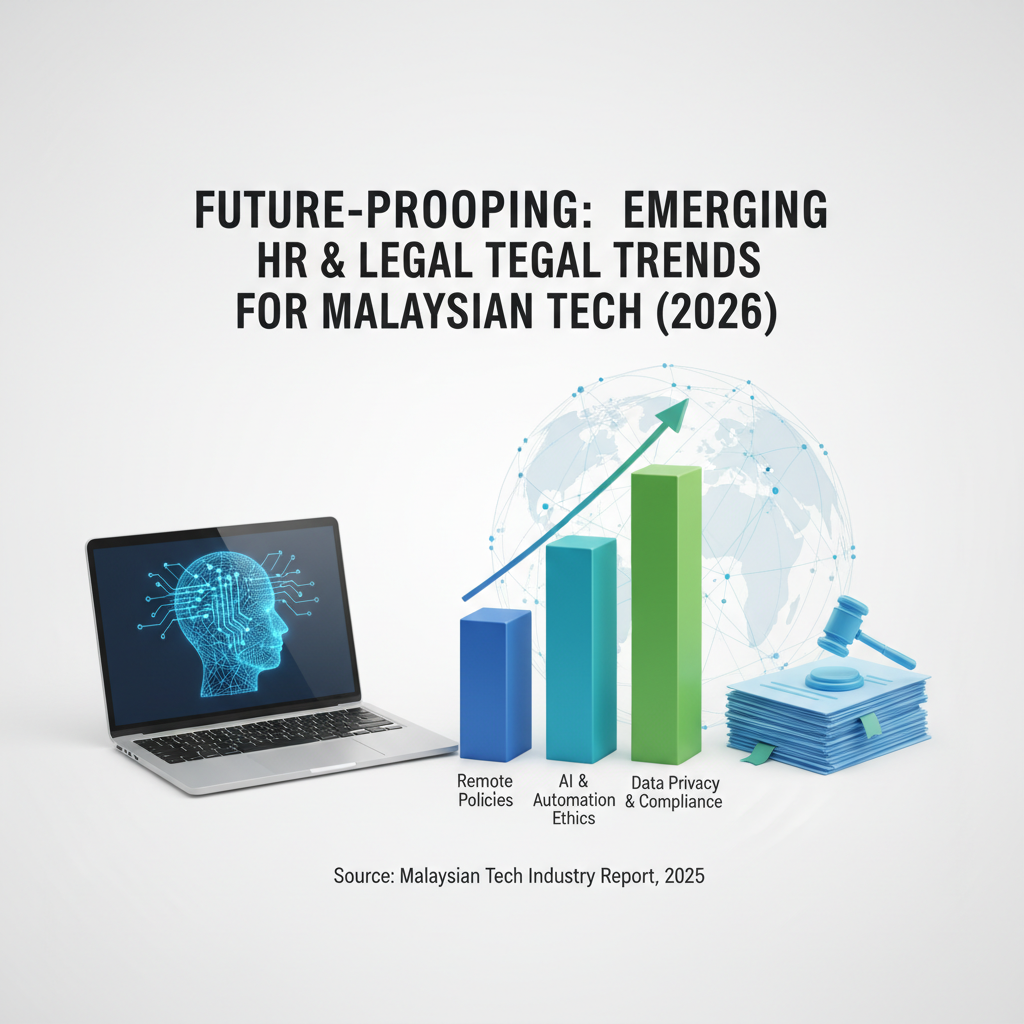
Malaysia’s technology sector is a dynamic crucible of innovation, attracting global investment and a vibrant talent pool. As 2026 approaches, HR professionals and legal advisors within Malaysian tech firms must navigate a complex interplay of evolving Legal HR terms & conditions for technology field in Malaysia, global influences, and progressive legislative changes. This section delves into upcoming legislative shifts, best practices, and foresight crucial for ensuring continuous compliance, fostering adaptability, and maintaining a competitive edge in Malaysia’s rapidly evolving digital landscape.
The imperative for future-proofing goes beyond mere compliance; it’s about embedding resilience and strategic foresight into the very fabric of an organization’s people operations. From environmental, social, and governance (ESG) factors shaping talent acquisition to the intricate dance with the burgeoning gig economy and the ethical minefield of AI in human resources, understanding these trends is paramount for any tech enterprise aspiring for sustainable growth in Malaysia.
-
ESG Factors & Sustainable HR Practices
The global emphasis on Environmental, Social, and Governance (ESG) principles is rapidly permeating corporate strategies, and Malaysia’s tech sector is no exception. By 2026, ESG will evolve from a ‘nice-to-have’ to a fundamental component of HR strategy, profoundly impacting recruitment, employee engagement, and brand reputation. Environmentally, tech companies will face increased scrutiny over their carbon footprint, encouraging remote work policies and sustainable office practices. Socially, the focus will sharpen on diversity, equity, and inclusion (DEI), fair labor practices, employee well-being, and community engagement. Companies will need robust policies ensuring equal opportunities, fostering psychological safety, and providing comprehensive mental health support. Governance will dictate transparency in reporting, ethical leadership, and adherence to anti-corruption standards, all critical roles for HR. Malaysian tech firms adopting proactive sustainable HR practices will not only attract top talent but also mitigate risks, enhance brand loyalty, and unlock new investment opportunities. Integrating clear ESG metrics into HR and corporate reporting will become standard.
-
Gig Economy & Contractor Engagements
Malaysia’s gig economy continues its exponential growth, especially within the tech sector, offering unparalleled flexibility. By 2026, the regulatory landscape surrounding independent contractors and freelancers is expected to mature significantly. The distinction between ’employee’ and ‘independent contractor’ will face greater legal scrutiny, driven by concerns over worker welfare and social protection. Malaysian tech companies leveraging this flexible workforce must meticulously review their engagement models to ensure compliance, avoiding potential misclassification claims. This includes re-evaluating contractual terms, payment structures, and the level of control exerted over gig workers. Legislative efforts may introduce frameworks providing baseline protections without stifling flexibility. Employers should proactively develop clear, comprehensive agreements that delineate responsibilities, intellectual property rights, and dispute resolution. Furthermore, considering “portable benefits” for contractors could become a best practice. Staying abreast of these developments is crucial; a recent ILO report on the platform economy offers valuable global context.
-
AI in HR: Legal & Ethical Considerations
The integration of Artificial Intelligence (AI) into HR functions promises efficiency and data-driven insights, from automated recruitment to performance management. However, by 2026, this integration will bring a heightened focus on legal and ethical considerations in Malaysia. Primary concerns revolve around algorithmic bias, data privacy, and transparency. AI systems, if not carefully designed, can inadvertently perpetuate biases, leading to discriminatory hiring or unfair evaluations. Malaysian privacy laws, specifically the Personal Data Protection Act 2010 (PDPA), will govern how employee data is collected, processed, and used by AI tools. Companies must ensure explicit consent, data minimization, and robust security. There will also be a growing demand for transparency and explainability in AI decision-making. Tech firms must develop clear AI ethics guidelines, conduct regular audits for bias, and train HR professionals on responsible AI use. Establishing a human-centric approach to AI in HR will not only ensure compliance but also build trust and a positive employee experience, mitigating risks associated with over-reliance on automated systems. Safeguarding against these pitfalls is essential for any tech company navigating the complex Legal HR terms & conditions for technology field in Malaysia.
As Malaysia’s tech sector accelerates into 2026 and beyond, the HR and legal landscapes will continue to evolve rapidly. Embracing ESG principles, adapting to the nuances of the gig economy, and responsibly integrating AI are not just about compliance but about strategic positioning. Tech companies that proactively anticipate and adapt to these emerging trends will not only future-proof their operations but also cultivate resilient, ethical, and thriving work environments, securing their leadership in the digital age.
Partner with Shelby Global
You are looking for reliable HR Sevice Suppliers? Contact Shelby Global Now! To connect with verified talents and upgrade your orginization.
—————————————
References
– PwC Malaysia: Amendments to Employment Act 1955: https://www.pwc.com/my/en/services/tax/tax-alerts/tax-alert-2023/amendments-to-employment-act-1955.html
– Malaysia’s Personal Data Protection Act: https://www.pdpc.gov.my/index.php/en/
– Malaysian Employment (Amendment) Act 2022: Key Highlights: https://www.zicolaw.com/news/malaysian-employment-amendment-act-2022-key-highlights/
– Department of Personal Data Protection Malaysia: https://www.jpdp.gov.my/
– ILO report on the platform economy: https://www.ilo.org/global/publications/magazines/world-of-work-magazine/articles/WCMS_872767/lang–en/index.htm