
The Rise of AI Agents in Vietnamese Media
Vietnam’s digital landscape is undergoing a seismic shift as artificial intelligence moves from backend automation to the forefront of content creation. As the country boasts one of the fastest-growing digital economies in Southeast Asia, the integration of intelligent systems is no longer a luxury but a competitive necessity. Understanding how AI agent effect to Entertainment field in vietnam is essential for stakeholders looking to navigate this high-growth sector. From hyper-personalized content delivery to the automation of complex production workflows, AI agents are reshaping audience engagement strategies across the nation.
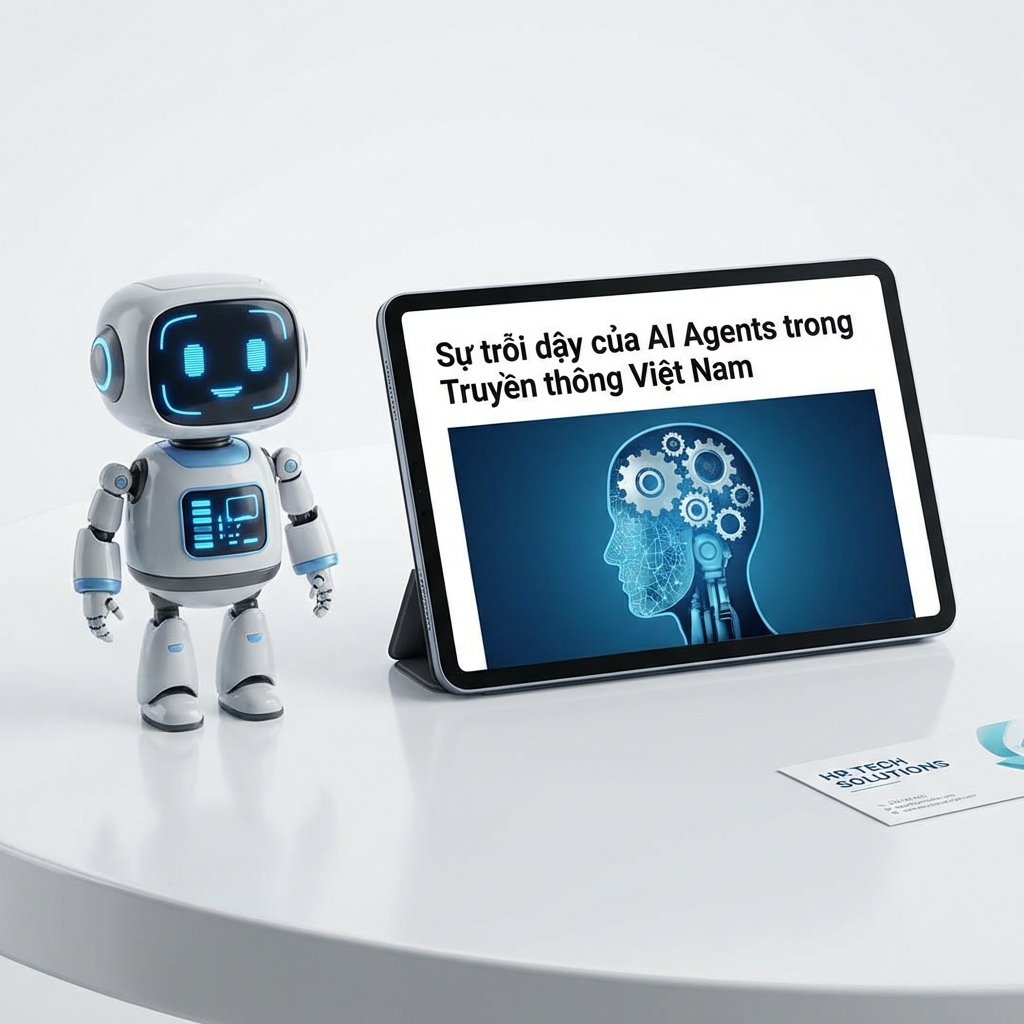
The convergence of high smartphone penetration and a tech-savvy youth demographic has created a fertile ground for these innovations. As noted by McKinsey & Company, generative AI is poised to fundamentally alter creative industries, a trend clearly mirrored in Vietnam’s bustling creative hubs. Businesses are increasingly turning to AI-driven solutions to maintain relevance in an oversaturated attention economy.
1. Emergence of virtual KOLs and AI influencers
The Vietnamese digital sphere has seen a surge in virtual Key Opinion Leaders (KOLs) who operate 24/7 without the fatigue or logistical constraints of human celebrities. These AI agents, powered by sophisticated machine learning algorithms, can engage with audiences in real-time, offer personalized product recommendations, and represent brands with consistent tonal precision. By leveraging deep learning, these virtual influencers can speak multiple languages and adapt their appearance to match diverse cultural aesthetics, significantly reducing production costs for campaigns while maximizing audience reach across platforms like TikTok and Facebook.
2. Growth of local AI startups in entertainment
Innovation in Vietnam is not purely dependent on international technology; a burgeoning ecosystem of local AI startups is currently prototyping and deploying tools specifically tailored for the domestic market. These companies are focusing on localized natural language processing (NLP) to create chatbots that understand regional dialects and cultural nuances, which is crucial for building trust with Vietnamese consumers. By automating video editing, music composition, and scriptwriting, these local ventures are enabling small production houses to compete with major studios, democratizing high-quality entertainment production across the country.
3. Adoption rates among Vietnamese media agencies
Major media agencies in cities like Ho Chi Minh City and Hanoi are rapidly integrating AI agents to streamline their operations. The adoption rate has spiked as agencies seek to minimize human error in repetitive tasks such as ad optimization, audience sentiment analysis, and social listening. By implementing these agents, agencies are finding that they can offer more data-driven creative strategies to their clients. This shift is redefining the agency model, moving away from labor-intensive traditional media management toward a lean, technology-first approach that prioritizes data-backed insights over speculative creative choices. As AI maturity continues to rise, the professional landscape of Vietnam’s media industry will continue to evolve, making the strategic application of these tools a key determinant of long-term success.
Impact on Music and Film Production
The integration of artificial intelligence is fundamentally reshaping the entertainment landscape in Southeast Asia. Specifically, when analyzing how AI agent effect to Entertainment field in vietnam, we observe a paradigm shift where repetitive creative tasks are being automated, allowing artists to focus on complex emotional narratives. From high-octane visual effects to the rhythmic precision of V-Pop production, these technologies are becoming essential tools for local studios aiming to compete on a global scale.
1. AI in Vietnamese cinema: Scripting and VFX
The Vietnamese film industry is experiencing a surge in technical sophistication. AI-driven agents are now employed to streamline pre-production, specifically in narrative structuring. By analyzing audience data from successful box office trends, AI tools help screenwriters identify engaging plot arcs and dialogue patterns that resonate with domestic viewers. Furthermore, the use of AI in post-production has democratized visual effects (VFX). Small-scale independent studios can now perform complex tasks like rotoscoping, color grading, and environmental generation in a fraction of the time, drastically reducing production costs while maintaining high aesthetic quality.
2. Music production AI: Crafting new V-Pop hits
V-Pop has gained international recognition for its unique blend of traditional melodies and modern production techniques. Today, producers are utilizing intelligent algorithms to experiment with vocal processing and sound design. These agents act as virtual collaborators, suggesting chord progressions, beat patterns, and even vocal harmonies that align with trending genre shifts. By leveraging automated mastering tools, V-Pop producers can ensure their tracks meet international streaming standards, ensuring a more polished final product. For deeper insights on regional adoption, you can explore more about how AI agent effect to Entertainment field in vietnam within our specialized industry reports. This evolution allows creators to push the boundaries of pop music, creating a signature sound that is both authentic and technologically refined.
3. Content localization and automated dubbing
As Vietnamese media seeks to expand into broader international markets, overcoming linguistic barriers is critical. AI agents specialized in natural language processing (NLP) are revolutionizing content localization. Unlike traditional manual dubbing, which can be expensive and time-consuming, AI-powered systems can now clone voices and match lip-sync movements with high accuracy. This technology enables local production houses to dub their films into multiple languages, facilitating seamless distribution across global platforms. By automating the localization pipeline, Vietnamese content creators can reach wider audiences without the constraints of traditional translation hurdles, effectively putting the Vietnamese entertainment industry on the global map.
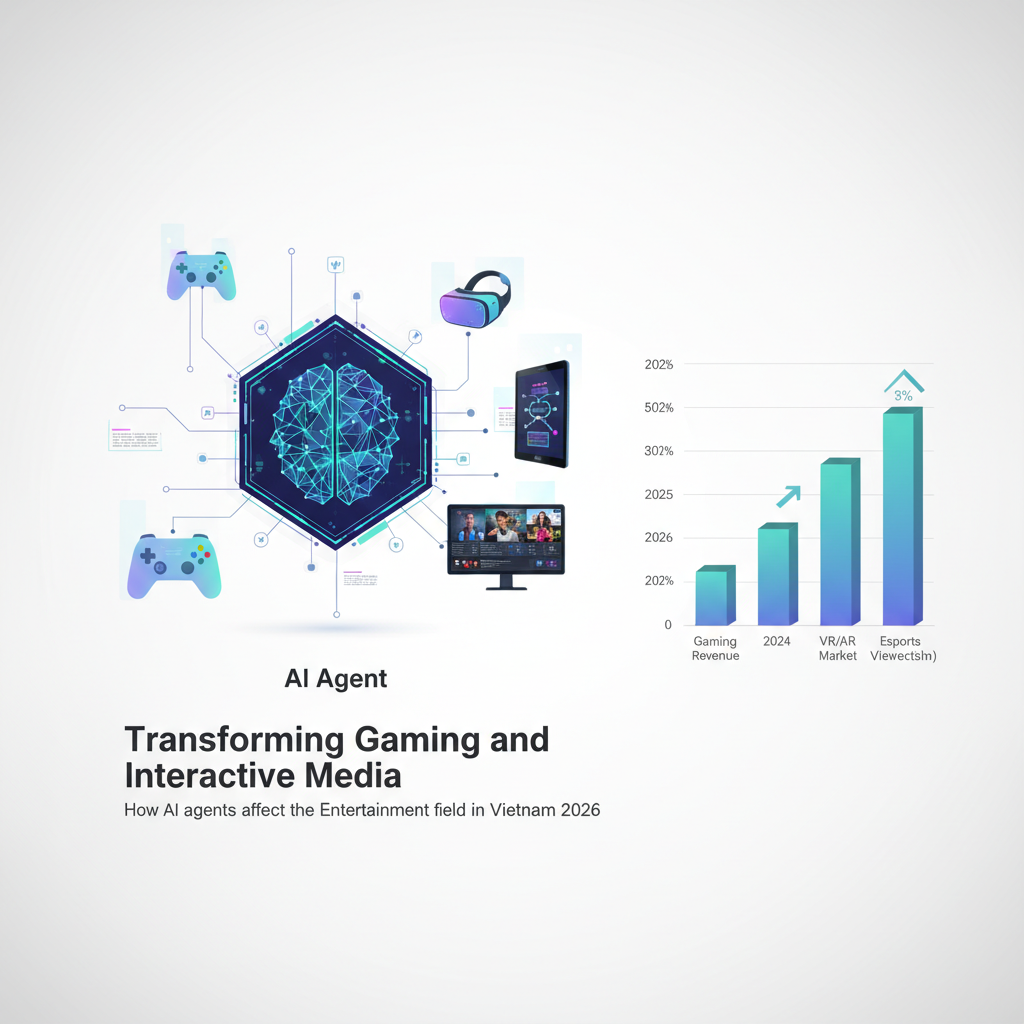
Transforming Gaming and Interactive Media
The digital landscape in Southeast Asia is witnessing a radical shift, with Vietnam emerging as a pivotal hub for technological innovation. As the local industry matures, the integration of intelligent systems has become a catalyst for growth. Specifically, understanding How AI agent effect to Entertainment field in vietnam reveals a trajectory where developers are moving beyond traditional scripts toward dynamic, responsive environments. By leveraging autonomous agents, Vietnamese studios are elevating their output to compete on a global stage.
1. Gaming AI trends Vietnam: Smarter NPCs
In the past, non-player characters (NPCs) in Vietnamese-developed games were restricted by pre-programmed logic loops. Today, the shift toward machine learning-based agents has allowed NPCs to react in real-time to player behavior. These autonomous entities can now adjust their tactical responses, dialogue, and emotional states based on how a player approaches a challenge. This evolution is vital for local developers aiming to enhance the replayability of their titles and improve the overall depth of game design in accordance with global benchmarks identified by industry authorities on game design.
2. Personalized entertainment and storytelling
AI agents are redefining the narrative arc in interactive media. By analyzing user choices, these systems tailor the storyline to fit individual preferences, ensuring that no two players experience the same journey. In the Vietnamese market, where mobile gaming dominates, this level of personalization helps developers maintain user interest. By generating unique quest lines and procedural events, AI agents provide a custom-tailored entertainment experience that keeps users deeply immersed, effectively transforming passive players into active co-creators of the game world.
3. Interactive media and automated player retention
Retention remains a critical metric for any entertainment platform. AI agents play a decisive role here by identifying player frustration points or boredom in real-time. Instead of static difficulty settings, intelligent systems can dynamically adjust game balance or offer targeted incentives to encourage continued engagement. This automation is a game-changer for Vietnamese startups, as it allows them to maximize their monetization strategies while providing a seamless user experience. By deploying predictive analytics alongside interactive agents, developers can anticipate what a player needs before they even realize it, cementing the bond between the user and the platform.
As Vietnam continues to foster its technical talent, the application of sophisticated AI will only broaden. The convergence of smarter NPCs, personalized narratives, and automated retention systems marks the next chapter of the entertainment sector, positioning the nation as a leader in immersive digital experiences.
Challenges: Copyright and Cultural Heritage
The integration of autonomous AI agents within Vietnam’s creative landscape brings forth a complex web of legal, ethical, and cultural challenges. As developers explore how AI agent effect to Entertainment field in vietnam, stakeholders must grapple with how these technologies interact with existing intellectual property frameworks and the sanctity of Vietnamese cultural traditions.
1. Navigating AI copyright Vietnam regulations
Vietnam’s current intellectual property laws, governed primarily by the Law on Intellectual Property, are centered on human authorship. The rapid emergence of generative AI creates a significant “authorship gap.” When an AI agent composes music based on V-pop trends or generates scripts for local film production, determining legal ownership becomes murky. Current regulations do not explicitly grant copyright to machine-generated outputs, leaving creators vulnerable. As the government works to modernize these frameworks, industry players must stay informed on the latest World Intellectual Property Organization (WIPO) guidelines regarding AI-assisted works. The challenge lies in creating a legal environment that encourages innovation while protecting the rights of Vietnamese artists whose intellectual labor serves as the training data for these autonomous systems.
2. Cultural preservation AI: Protecting heritage
Vietnam boasts a rich tapestry of intangible cultural heritage, from Ca trù singing to water puppetry. There is a profound concern that AI agents, if left unchecked, may engage in “cultural appropriation by algorithm.” By streamlining content production, AI might inadvertently strip traditional art forms of their nuanced meanings, flattening them into repetitive, mass-marketable content. To address this, the preservation of heritage must be integrated into the AI development process. Developers need to ensure that datasets are curated with ethical oversight, consulting with cultural experts and practitioners to ensure that the use of traditional motifs or melodies is respectful and accurate. Protecting Vietnamese identity in the digital age requires a symbiotic relationship where technology serves as a tool for revival rather than a mechanism for dilution.
3. Ethical concerns in content creation automation
The automation of creative labor raises significant ethical questions regarding workforce displacement and quality control. As production houses adopt AI for faster scriptwriting and editing, local writers, translators, and editors face job instability. Furthermore, there is the risk of AI-driven content falling into biases that do not align with Vietnamese societal values. Automated content generation must be tempered by human-in-the-loop systems. This ensures that the final output is not only technically proficient but also socially and ethically resonant with the local audience. Maintaining this balance is critical to ensuring that AI integration remains a constructive force in the entertainment industry, fostering a digital environment that prizes human ingenuity alongside technological advancement.
The Future of Media in Vietnam by 2026
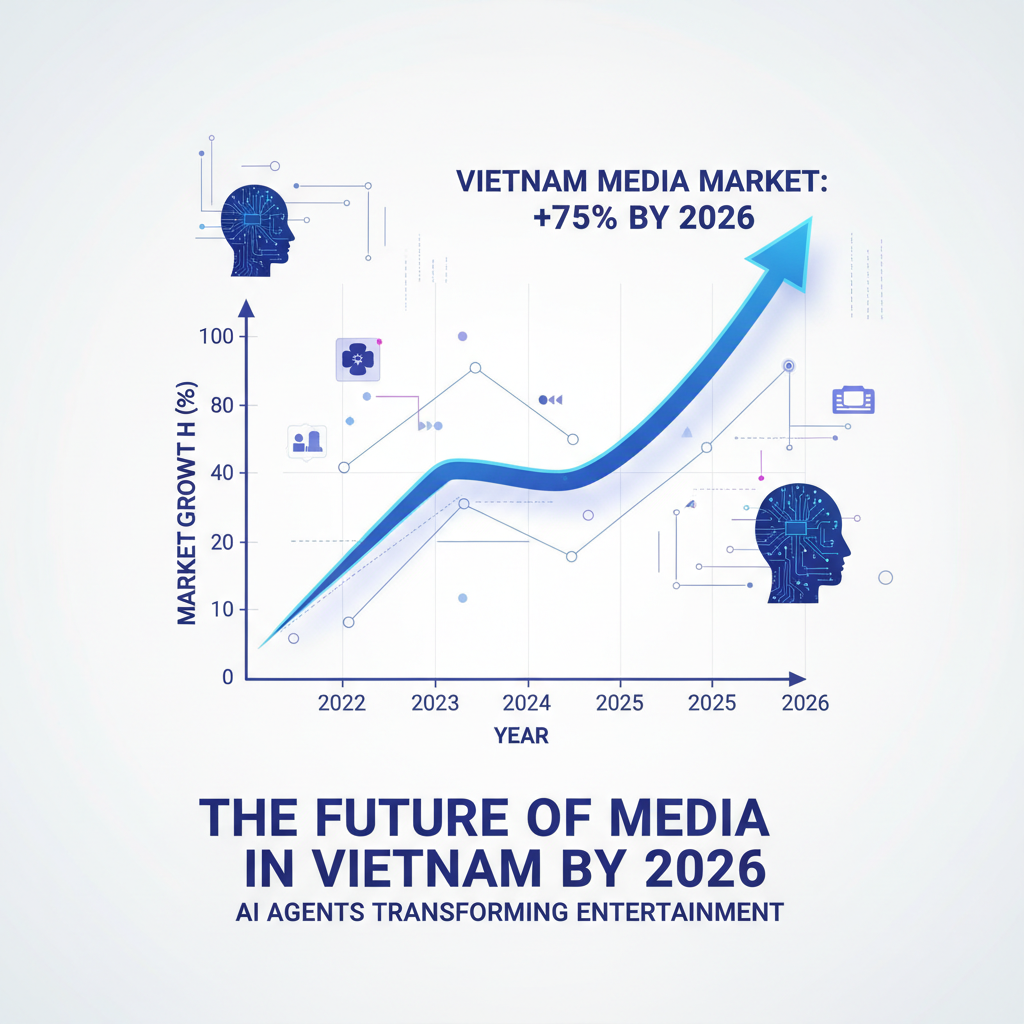
By 2026, the landscape of digital media in Vietnam is set to undergo a radical transformation. As the nation accelerates its digital transformation, the way how AI agent effect to entertainment field in vietnam is moving from experimental use cases to full-scale operational integration. These autonomous agents are no longer just chatbots; they are sophisticated entities capable of content curation, real-time audience interaction, and hyper-personalized storytelling that reshapes industry benchmarks.
1. Evolution of local streaming algorithms
Vietnamese streaming platforms are moving beyond traditional collaborative filtering. By 2026, localized AI agents will analyze nuanced cultural preferences, dialects, and regional trends to deliver content that feels deeply personal to every subscriber. This shift ensures that local creators receive better visibility, as these algorithms prioritize engagement metrics that align with Vietnamese viewing habits. For businesses aiming to stay competitive, understanding how AI agent effect to entertainment field in vietnam is crucial for optimizing content delivery pipelines and maximizing retention rates in an increasingly crowded market.
2. The next generation of AI-driven live events
Live entertainment, from music festivals to esports tournaments, will be revolutionized by AI agents. These systems will handle real-time logistical coordination, manage virtual ticket sales, and even generate personalized highlight reels for fans as events unfold. By utilizing advanced analytics, event organizers can predict audience reactions, adjust staging or lighting in real-time, and enhance fan participation through interactive avatars. According to recent industry reports, the future of the entertainment industry will be fundamentally driven by these real-time generative capabilities, allowing for seamless blending of physical and digital experiences.
3. Future of media Vietnam: What to expect next
The trajectory for 2026 indicates that AI agents will become the primary bridge between content producers and consumers. Beyond simple consumption, we expect to see autonomous agents acting as talent scouts, producers, and even digital influencers, blurring the lines between human and synthetic creation. Challenges regarding data privacy and intellectual property will necessitate stronger regulatory frameworks in Vietnam. However, for those who adapt quickly, the potential to scale operations and engage younger, tech-savvy demographics is unprecedented. As we look ahead, media companies must double down on AI-native architectures to maintain relevance in this fast-evolving digital economy.
Partner with Shelby Global
You are looking for reliable HR Sevice Suppliers? Contact Shelby Global Now! To connect with verified talents and upgrade your orginization.
—————————————
References
– McKinsey & Company: What is generative AI?: https://www.mckinsey.com/featured-insights/mckinsey-explainers/what-is-generative-ai
– Variety: https://variety.com/
– Gamasutra Industry Insights: https://www.gamasutra.com
– WIPO Copyright: https://www.wipo.int/copyright/en/
– The future of the entertainment industry is AI-enabled: https://www.mckinsey.com/industries/technology-media-and-telecommunications/our-insights/the-future-of-the-entertainment-industry-is-ai-enabled



































































































