
Current Talent Trends in Singapore’s Entertainment Industry
Singapore’s entertainment and media landscape is undergoing a profound transformation. Driven by rapid technological integration and changing consumption habits, the sector is redefining how it attracts, retains, and develops talent. According to the latest HR report of Entertainment field in singapore, organizations are moving away from traditional headcount models toward more agile, skill-centric frameworks to stay competitive in a hyper-connected market.

1. Rise of Digital Content Creators and Influencers
The traditional broadcast-first model is fading. Talent acquisition teams are increasingly pivoting their focus toward digital-native creators. These professionals bring not just creative flair, but also built-in audiences and community engagement skills. As noted by the Infocomm Media Development Authority, the integration of digital creators into mainstream media productions is essential for reaching younger demographics, leading to a surge in demand for short-form video editors, social media strategists, and multi-platform content producers.
2. The Structural Shift Towards Freelance and Gig Workers
To navigate the volatility of media production schedules, many Singaporean entertainment firms are adopting a “core-periphery” staffing model. By maintaining a small permanent leadership team supported by a robust network of freelance specialists, companies are increasing their operational flexibility. This shift necessitates new HR competencies in managing contractor relationships, onboarding agile talent, and maintaining consistent brand quality across decentralized teams.
3. Tracking Diversity and Inclusion Metrics in Media
Diversity, Equity, and Inclusion (DEI) have moved from being internal HR initiatives to central pillars of narrative strategy. Talent acquisition teams are now tasked with ensuring that on-screen and off-screen talent reflects Singapore’s multicultural fabric. Data-driven DEI tracking is becoming standard practice, with firms focusing on transparent hiring metrics to ensure equitable career progression for underrepresented groups, ultimately driving more authentic and commercially successful content.
As the industry continues to evolve, the ability to harmonize legacy media expertise with emerging digital skill sets will define the market leaders. Organizations that prioritize upskilling and invest in adaptive talent ecosystems will be best positioned to thrive in this vibrant, fast-paced environment.
Salary Benchmarks and Compensation Packages
The landscape for creative talent in the Lion City is undergoing a transformative shift. As the industry matures, organizations are increasingly turning to a comprehensive HR report of Entertainment field in singapore to recalibrate their talent acquisition strategies and retention programs. Understanding the nuanced layers of total rewards is essential for stakeholders navigating this competitive market.
1. Average Salaries Across Different Experience Levels
Entry-level creative professionals, such as junior editors or graphic designers, typically command base salaries ranging from SGD 3,500 to SGD 4,500 per month. Mid-level specialists with 3 to 7 years of experience often see a significant jump, with pay bands spanning SGD 6,000 to SGD 9,500, reflecting their expanded technical portfolios and project management capabilities. For senior roles—including Creative Directors and Head of Production—compensation packages frequently exceed SGD 12,000 monthly, excluding executive profit-sharing schemes. According to data from the Ministry of Manpower, salary transparency remains a critical driver for talent acquisition, as professionals demand clearer benchmarking against regional peers.
2. Unique Incentive Structures for Creative Roles
Unlike traditional corporate roles, compensation in the entertainment sector is heavily weighted toward performance-based incentives. Because creative output is subjective and project-driven, firms are shifting away from flat-rate bonuses toward milestone-linked incentives. Common structures include ‘completion bonuses’ awarded upon the successful delivery of a campaign or film, and ‘royalty-based’ payouts for key IP contributors. Furthermore, non-monetary benefits are becoming a key differentiator. Singapore-based firms are increasingly integrating flexible working arrangements, professional development grants, and unlimited creative sabbaticals into their packages to foster loyalty in an industry notorious for burnout.
3. The Impact of Inflation on Wage Expectations
The recent economic climate has placed immense pressure on HR departments to align salary expectations with the rising cost of living. Inflation in Singapore has forced a re-evaluation of base pay structures; creative professionals are now negotiating higher starting salaries to account for housing and transport premiums. This has led to a trend where annual salary reviews are occurring more frequently—often on a biannual basis rather than an annual one. Firms that fail to adjust their compensation models to combat inflationary pressures are finding themselves at a disadvantage, often losing top-tier creative talent to multinational competitors or regional hubs that offer more aggressive cost-of-living adjustments.
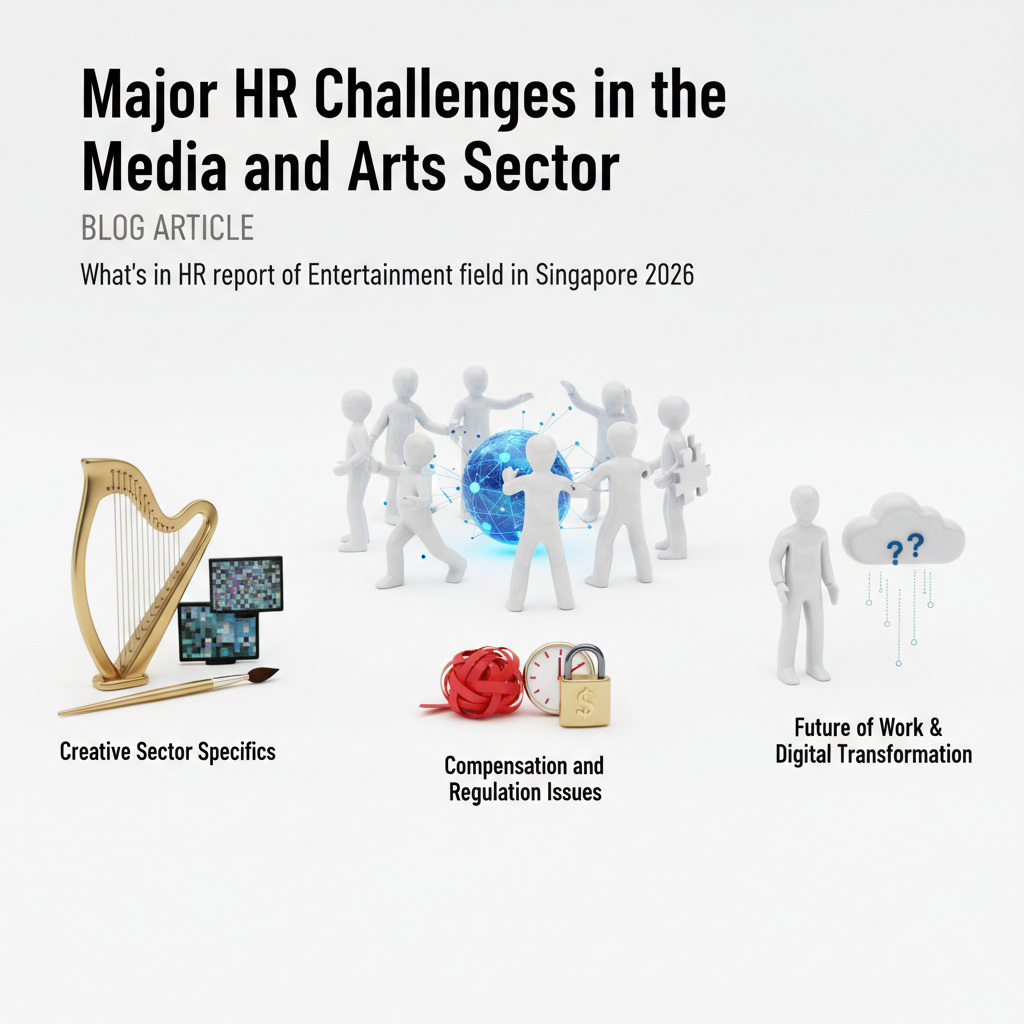
Major HR Challenges in the Media and Arts Sector
The landscape of the creative economy in Singapore is evolving at a rapid pace, presenting unique obstacles for human resource departments. According to the latest HR report of Entertainment field in singapore, organizations are grappling with how to balance traditional operational structures with the agile, high-pressure demands of the media and arts industry. As the sector matures, HR professionals must modernize their strategies to secure and retain top-tier talent in a competitive local and regional market.
1. Combating High Turnover Rates in Production
Production environments are notoriously fast-paced, often leading to a ‘churn and burn’ culture. For HR departments, the constant need for recruitment places an immense strain on resources. Because project-based work is the standard, many professionals feel disconnected from the long-term vision of their employers. Companies that successfully retain their best crew members are those that invest in consistent professional development and project continuity. Organizations looking to stabilize their workforce must look at benchmarking their retention practices against the latest industry standards as defined by the Ministry of Manpower Singapore, ensuring their benefits packages are competitive enough to deter staff from moving to the next production house for marginal gains.
2. Managing Burnout in High-Stress Entertainment Roles
The glitz and glamour of the entertainment industry often mask the reality of grueling hours, tight deadlines, and emotionally taxing content production. HR professionals are now tasked with implementing structured wellness programs to mitigate the risks of burnout. This goes beyond basic health insurance; it requires a cultural shift that prioritizes mental health days, psychological safety, and realistic project scoping. In the Singaporean context, where high performance is the norm, HR leaders must champion work-life integration to ensure long-term talent sustainability. Leaders who fail to address the systemic causes of burnout will inevitably see their top performers migrate to less stressful industries.
3. Navigating Complex Freelancer Labor Regulations
The reliance on the gig economy is a hallmark of the media and arts sector. However, the regulatory environment in Singapore regarding independent contractors, tax obligations, and CPF contributions has become increasingly complex. HR departments must act as compliance experts, ensuring that the classification of talent—whether as a full-time employee or a freelancer—is legally sound to avoid penalties. Mismanagement of these labor regulations can lead to significant legal exposure. Consequently, HR teams are spending more time auditing contracts and onboarding processes to provide clarity for both the talent and the business, ensuring that the flexibility of the gig economy does not translate into operational risk.
Workforce Analytics and Retention Strategies
In the highly competitive landscape of the Singaporean entertainment sector, human capital is the primary engine of innovation and success. As outlined in the latest HR report of Entertainment field in singapore, organizations that leverage data-driven insights are significantly better positioned to navigate talent volatility and shifting industry demands. By shifting from reactive personnel management to proactive workforce analytics, firms can anticipate turnover risks and implement targeted retention strategies that resonate with both creative and operational talent.
1. Measuring Key Performance Indicators for Creatives
Measuring performance in a creative industry requires a departure from traditional, rigid metrics. For Singaporean entertainment companies, the focus must be on balancing qualitative output with quantitative efficiency. Managers should track indicators such as project lifecycle velocity, creative concept adoption rates, and peer-review satisfaction scores. Utilizing data analytics platforms allows leadership to identify bottlenecks in the production pipeline, ensuring that creatives feel supported rather than constrained by administrative burdens. By integrating these metrics, firms can foster a culture of transparent evaluation that emphasizes growth over mere production quotas.
2. Effective Upskilling and Reskilling Initiatives
With technological advancements like AI and virtual production reshaping the industry, upskilling has become a cornerstone of long-term retention. Singapore’s commitment to lifelong learning, supported by frameworks like SkillsFuture, provides an excellent foundation for entertainment companies to invest in their talent. Organizations should analyze individual performance data to identify specific skill gaps and curate personalized development paths. Whether it is mastering new animation software or evolving storytelling techniques for digital platforms, providing structured growth opportunities demonstrates a commitment to the employee’s career longevity, which is a major driver in reducing attrition.
3. Fostering a Positive and Collaborative Workplace Culture
In the entertainment field, burnout is a pervasive risk due to intense project-based deadlines and high-pressure environments. Analytics can play a crucial role in preventing this by monitoring sentiment through regular pulse surveys and tracking engagement metrics. Companies that correlate these findings with operational performance data are better able to identify teams at risk of exhaustion. Retention is ultimately bolstered by creating a collaborative environment where creative voices are heard, work-life boundaries are respected, and mental health resources are readily accessible. A data-backed approach to cultural health ensures that initiatives for improvement are not merely anecdotal but are grounded in the actual lived experiences of the workforce.
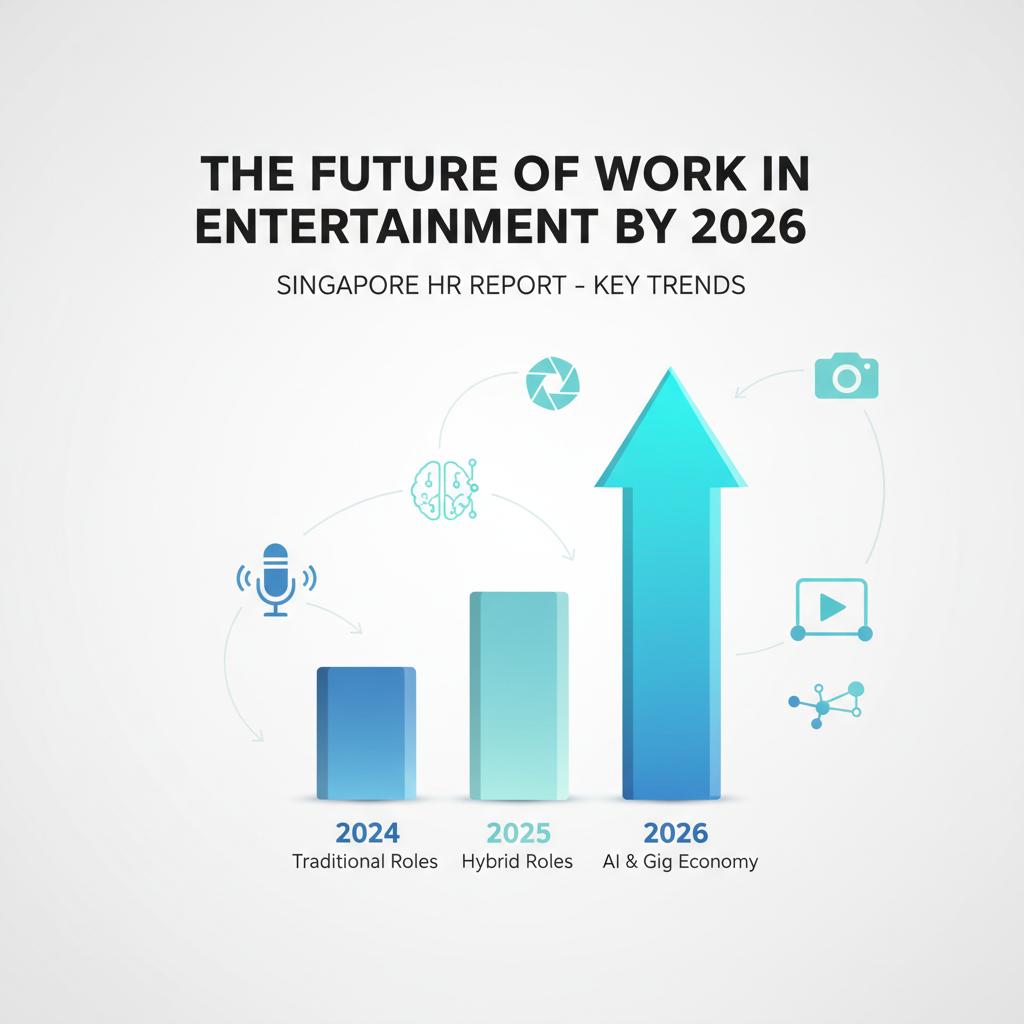
The Future of Work in Entertainment by 2026
As Singapore cements its position as a global media hub, the entertainment sector is undergoing a rapid metamorphosis. By 2026, the convergence of high-speed infrastructure and advanced technology will redefine how content is conceptualized, produced, and distributed. Industry leaders are now leveraging comprehensive data to forecast labor requirements, with the latest HR report of Entertainment field in singapore highlighting a pivot toward highly specialized, tech-literate talent. As the nation pushes toward its Smart Nation goals, the synergy between creative expertise and digital automation will become the primary competitive advantage for local production houses.
1.
AI Integration in Creative Processes and Production
By 2026, Artificial Intelligence will no longer be an experimental tool but a core pillar of the Singaporean entertainment workflow. From generative AI assisting in early-stage screenwriting and pre-visualization to automated post-production suites that reduce rendering times by 60%, the impact is profound. This transition necessitates a workforce skilled in prompt engineering and AI ethics. According to the World Economic Forum, the integration of automation is expected to shift job roles rather than eliminate them, demanding a culture of continuous upskilling where creative directors partner with AI to achieve unprecedented visual fidelity.
2.
The Evolution of Hybrid and Remote Production Teams
The post-pandemic “work-from-anywhere” model has matured into a sophisticated hybrid framework. In the Singaporean context, global collaboration is now the standard. Production teams are becoming increasingly decentralized, with VFX artists in regional hubs collaborating in real-time with on-ground production crews in local studios via cloud-based infrastructure. This shift provides Singaporean firms access to a broader talent pool while reducing overhead costs. However, it requires a robust cybersecurity framework and digital communication protocols to maintain creative cohesion across time zones.
3.
Strategic HR Planning and Talent Mapping for 2026
Effective talent management has become the backbone of the entertainment industry’s success in Singapore. HR departments are moving beyond traditional recruitment metrics, adopting predictive talent mapping to identify skill gaps before they affect production pipelines. By 2026, organizations are expected to prioritize ‘soft skills’ such as adaptive leadership and cross-cultural communication, balancing the influx of technical automation with the human touch required for storytelling. Developing a pipeline of local talent that balances traditional filmmaking prowess with software proficiency remains the key strategic priority for firms looking to sustain long-term growth in an increasingly volatile global landscape.
Partner with Shelby Global
You are looking for reliable HR Sevice Suppliers? Contact Shelby Global Now! To connect with verified talents and upgrade your orginization.
—————————————
References
– Infocomm Media Development Authority: https://www.imda.gov.sg/
– Ministry of Manpower: https://www.mom.gov.sg/
– Ministry of Manpower Singapore: https://www.mom.gov.sg/
– SkillsFuture: https://www.skillsfuture.gov.sg/
– World Economic Forum: https://www.weforum.org/



































































































