
Introduction to E-commerce HR in Malaysia
The Malaysian digital economy is currently undergoing a seismic shift, transitioning from a localized retail model to a sophisticated, tech-driven powerhouse. As businesses scale to meet the demands of an increasingly tech-savvy population, the underlying organizational structure becomes the primary determinant of long-term survival. At the heart of this transformation lies the human element, where the Differences between the SMEs’ HR Structure and the Corporates’ HR Structure in Ecommerce field in malaysia dictate how quickly a brand can pivot, innovate, and capture market share.

For those navigating these complexities, understanding the divergence in operational models is essential. You can explore a detailed comparative analysis here: Differences between the SMEs’ HR Structure and the Corporates’ HR Structure in Ecommerce field in malaysia.
1. The Rapid Growth of Malaysian E-commerce
Malaysia stands at the forefront of Southeast Asia’s digital revolution. According to recent data from the Malaysia Digital Economy Corporation (MDEC), the e-commerce sector has consistently outpaced traditional retail growth rates, fueled by high internet penetration and a burgeoning middle class. As consumer expectations shift toward instant gratification—same-day delivery and seamless omnichannel experiences—e-commerce firms are forced to scale their talent acquisition and workforce management systems at breakneck speed. This rapid expansion creates a paradox: businesses need to be lean enough to adapt to algorithm changes and market trends while being robust enough to manage complex logistics, customer service, and digital marketing teams.
2. Defining SMEs vs. Corporate Enterprises
In the Malaysian e-commerce ecosystem, the HR structure is largely defined by the organizational lifecycle stage. Small and Medium Enterprises (SMEs) often utilize a “generalist” HR model. In these environments, the founders or a single HR coordinator handle everything from payroll and talent scouting to culture-building and performance reviews. This lack of specialization allows for agility, as decision-making is centralized and bureaucratic hurdles are minimal. Conversely, corporate e-commerce entities in Malaysia employ a “specialist” HR structure. These organizations feature dedicated divisions for Learning and Development (L&D), Total Rewards, HR Business Partners (HRBPs), and specialized talent acquisition teams focused on technical roles like data analysts and full-stack developers. While this corporate structure ensures compliance and systematic talent management, it often risks slower turnaround times compared to the more fluid SME approach.
3. Why HR Strategy is Critical for 2026
As we approach 2026, the battle for digital talent in Malaysia will intensify. The shift toward AI-integrated e-commerce platforms requires a workforce that is not only skilled in traditional sales but also proficient in machine learning and predictive analytics. For SMEs, the challenge is retention; they must offer unique value propositions to prevent their top talent from migrating to larger, well-funded corporate giants. For corporates, the challenge is maintaining an innovative, start-up-like agility within a structured HR framework. A well-defined HR strategy by 2026 will no longer be an administrative necessity but a strategic weapon. Organizations that fail to align their HR architecture with their growth objectives will face stagnation, regardless of their technological prowess. Whether adopting an agile SME approach or a scalable corporate hierarchy, the primary goal remains the same: building a resilient human-capital framework capable of sustaining growth in a hyper-competitive digital landscape.
Core HR Structure in Malaysian SMEs
In the burgeoning landscape of Malaysia’s e-commerce sector, the structural design of Human Resources plays a pivotal role in determining a firm’s growth trajectory. While multinational corporations and large-scale enterprises often rely on rigid, departmentalized frameworks, the differences between the SMEs’ HR Structure and the Corporates’ HR Structure in Ecommerce field in Malaysia are profound. Small and Medium Enterprises (SMEs) typically operate with a lean, agile, and highly adaptable HR ecosystem, allowing them to pivot quickly in response to volatile market trends.
Understanding these distinct operational models is essential for stakeholders. For a deeper comparative analysis, you can review the Differences between the SMEs’ HR Structure and the Corporates’ HR Structure in Ecommerce field in Malaysia to see how resource allocation impacts long-term organizational health.
1. Flat Organizational Hierarchies
Unlike the traditional, top-down bureaucratic models favored by large corporations, Malaysian e-commerce SMEs generally embrace flat organizational hierarchies. In a startup environment, the distance between entry-level staff and senior management is intentionally minimized. This structure facilitates rapid decision-making, which is critical in an industry where product trends and digital consumer behavior change overnight. By eliminating multiple layers of middle management, SMEs foster a culture of transparency and direct communication. Employees feel a greater sense of ownership over their projects, as they often report directly to founders or department heads, ensuring that the company’s vision is executed without the dilution of information that often plagues larger, siloed organizations.
2. The Jack of All Trades HR Role
A defining characteristic of HR in the Malaysian SME e-commerce sector is the absence of a specialized, multi-tiered HR department. In many cases, a single HR generalist—or even a business founder—handles the entirety of the employee lifecycle. According to the HRD Corp (Human Resource Development Corporation), workforce adaptability is crucial for SMEs in the region. Because SMEs operate with tighter budgets, their HR personnel must balance recruitment, payroll, performance management, and organizational culture simultaneously. This “Jack of All Trades” approach requires individuals to be technologically proficient with HRIS platforms while maintaining a human-centric approach to office dynamics. While this might lack the depth of a specialized corporate HR team, it provides a unified employee experience that is often more personal and immediate than what is found in larger firms.
3. Reliance on Outsourcing and Freelancers
To remain competitive without the burden of excessive overhead costs, Malaysian e-commerce SMEs frequently adopt a hybrid workforce model. Rather than employing large, full-time administrative and support staffs, these firms strategically rely on outsourcing and freelance talent. This flexible approach allows companies to scale their human capital based on seasonal spikes, such as the 11.11 or 12.12 mega sales events. By outsourcing non-core functions like payroll processing, recruitment screening, and legal compliance to specialized service providers, SMEs can focus their internal resources on core e-commerce activities such as logistics management, digital marketing, and customer experience. This reliance on the gig economy not only optimizes the cost structure but also provides the startup with access to specialized skills on an as-needed basis, a level of agility that is often difficult for large corporations to achieve due to institutional inertia.
Ultimately, the HR structure in Malaysian SMEs is defined by its necessity to survive and thrive through efficiency. By eschewing the heavy, centralized structures of corporates, SMEs create a dynamic environment where versatility is prioritized, providing them a unique edge in the digital economy.
The Corporate HR Machine in E-commerce
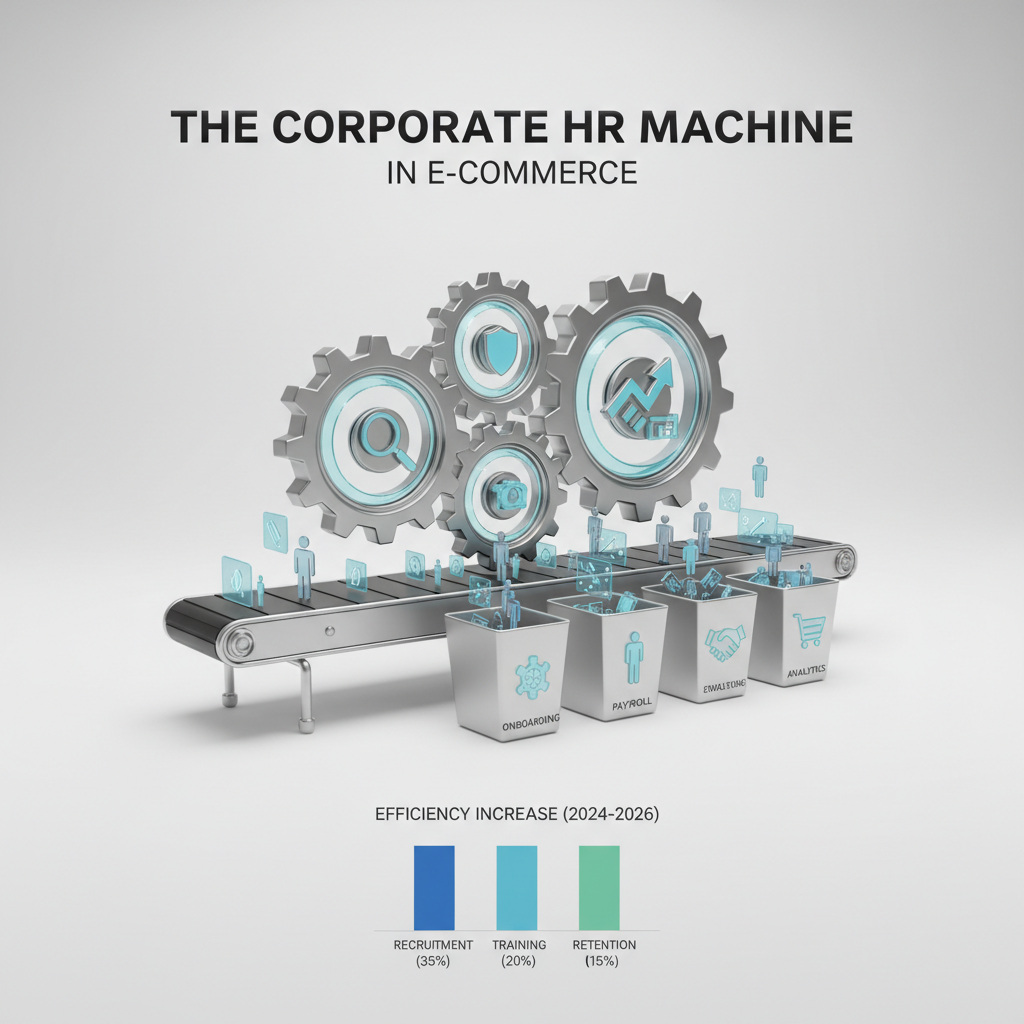
In the rapidly evolving digital landscape of Malaysia, e-commerce giants operate with a level of operational complexity that necessitates a highly structured and specialized human resources apparatus. Understanding the Differences between the SMEs’ HR Structure and the Corporates’ HR Structure in Ecommerce field in malaysia reveals a fundamental divergence in organizational philosophy: while SMEs often rely on a generalist approach to manage personnel, large-scale e-commerce corporations leverage a multi-tiered, bureaucratic, yet highly efficient HR machine designed to scale at lightning speed. To explore the nuances of this transition, you can review our detailed analysis on HR structure disparities.
1. Specialized HR Sub-Departments
In the corporate e-commerce realm, the HR department is rarely a single, monolithic entity. Instead, it is broken down into highly specialized sub-departments, each catering to a specific facet of the employee lifecycle. Unlike the SME model, where one HR manager might handle payroll, recruitment, and conflict resolution simultaneously, corporate HR in Malaysia is departmentalized into Centers of Excellence (CoEs). These include dedicated units for Compensation & Benefits, Employee Relations, Organizational Development, and Diversity & Inclusion. This fragmentation ensures that every process is optimized by experts, allowing the company to handle thousands of employees across diverse operational hubs—from warehouse logistics personnel to high-level software engineers.
2. Advanced Talent Acquisition Teams
The scale of hiring required by e-commerce giants demands an industrialized recruitment process. Advanced Talent Acquisition (TA) teams function like internal search firms. These teams are tiered, with specific recruiters assigned to high-volume hiring (such as warehouse staff or customer service reps) and others focused on ‘headhunting’ niche talent (such as data scientists and cloud architects). They utilize sophisticated Applicant Tracking Systems (ATS) to filter thousands of resumes daily, ensuring that talent pipelines are always primed. This level of technical sophistication allows corporate entities to maintain a constant influx of human capital, a feat that is often impossible for SMEs with limited administrative bandwidth.
3. Data-Driven HR Analytics Integration
Perhaps the most significant differentiator is the reliance on People Analytics. While SMEs often rely on intuition or basic spreadsheets to track performance, large e-commerce corporations utilize enterprise-level HRIS (Human Resource Information Systems) to visualize real-time employee data. This integration allows leadership to forecast turnover, measure productivity metrics per department, and conduct predictive analysis on labor market trends. By treating HR as a data-driven science rather than a supportive administrative function, these companies can optimize their workforce costs and improve retention rates with precision. This shift from reactive personnel management to proactive, data-informed strategy defines the modern corporate HR machine, creating a massive competitive advantage in the Malaysian e-commerce sector.
Key Differences in Talent Management
In the rapidly evolving Malaysian e-commerce landscape, the approach to human capital management serves as a critical differentiator between Small and Medium Enterprises (SMEs) and large-scale corporations. Understanding the Differences between the SMEs’ HR Structure and the Corporates’ HR Structure in Ecommerce field in malaysia requires a deep dive into how these entities prioritize recruiting, skill development, and employee retention. While corporations rely on institutional stability and comprehensive frameworks, SMEs thrive on high-speed adaptation and personal accountability.
1. Agility vs. Standardized Processes
The fundamental divide lies in operational philosophy. Corporations often utilize centralized HR management systems that mandate standardized recruitment workflows, rigorous background checks, and multi-tier interview processes. These structures ensure compliance and consistency but can inadvertently slow down hiring during critical e-commerce peak periods, such as 11.11 or 12.12 sales. In contrast, SMEs often operate with a flatter hierarchy where decision-making is decentralized. This allows for hyper-agile hiring practices, where a candidate might interview with the founder and start the following day. This agility is a significant competitive advantage for smaller businesses in Malaysia that need to pivot quickly in response to shifting consumer trends or platform algorithm changes. However, this lack of formal structure can sometimes lead to inconsistent onboarding experiences compared to the highly regimented, documented processes found in established multinational corporations.
2. Budget Allocations for Upskilling
When it comes to professional development, the contrast is stark. Large corporations have dedicated Learning and Development (L&D) budgets, often partnering with global institutions to provide certification programs in digital marketing, data analytics, or supply chain logistics. These companies view training as a strategic investment to maintain market dominance. According to research by Talent Management Trends, organizations with robust upskilling frameworks experience 30% higher retention rates. Conversely, SMEs in the Malaysian e-commerce sector frequently view training as an operational expense rather than an investment. Development is often ‘on-the-job,’ where employees learn by doing. While this encourages a ‘wear-many-hats’ mentality, it can lead to skill gaps if the business does not incentivize continuous learning. For a deeper analysis of how these resource disparities affect long-term growth, readers can review our detailed report on Differences between the SMEs’ HR Structure and the Corporates’ HR Structure in Ecommerce field in malaysia.
3. Employee Benefits and Retention Strategies
Retention strategies illustrate a major cultural divergence. Corporates typically offer ‘golden handcuffs’—a combination of competitive base salaries, comprehensive health insurance, stock options, and defined career progression paths that appeal to risk-averse professionals seeking long-term stability. Their retention strategy is rooted in the promise of institutional security. SMEs, conversely, often struggle to compete on base salary alone. Instead, they pivot toward cultural benefits: remote work flexibility, a direct impact on business growth, and a close-knit, mentorship-heavy environment. In the Malaysian market, where the younger workforce is increasingly looking for purpose and flexibility, many SMEs are successfully poaching talent from corporations by offering a more personalized work-life integration. However, the lack of a formal HR department in many SMEs can lead to perceived instability, making it difficult to retain high-performers once they reach a senior level and seek the administrative support and infrastructure that only a larger corporate entity can provide.
Ultimately, the choice between these two structures depends on the candidate’s professional goals. While corporations offer the safety net and specialized training required for long-term career scaling, SMEs offer a crash course in entrepreneurship and operational versatility that is invaluable in the high-stakes world of digital retail.
Future HR Trends for 2026 and Beyond
As the Malaysian digital landscape matures, the divergence in operational strategies between small-to-medium enterprises (SMEs) and multinational corporations (MNCs) continues to define the local ecommerce sector. Understanding the Differences between the SMEs’ HR Structure and the Corporates’ HR Structure in Ecommerce field in malaysia is no longer just an academic exercise; it is a prerequisite for survival in a competitive, talent-scarce market. Looking toward 2026, we anticipate a landscape defined by hyper-personalization, data-driven decision-making, and the narrowing of operational complexities between these two tiers.

1. AI Automation in Recruitment
By 2026, the reliance on manual CV screening will be entirely obsolete. For large corporations in Malaysia, AI-driven platforms are already processing thousands of applications to ensure compliance and diversity standards. However, the true disruption will occur in the SME space. Where smaller ecommerce players previously relied on gut instinct and basic job portals, affordable AI recruitment tools will democratize high-quality hiring. These platforms use predictive analytics to identify candidates who possess the specific agility required for fast-paced ecommerce environments. As noted by the HRD Corp, the emphasis is shifting toward skills-based hiring, and AI automation is the primary engine facilitating this transition by matching candidates based on verifiable competencies rather than outdated degree requirements.
2. Evolution of Remote Work Policies
The Malaysian ecommerce sector has faced significant pressure to define ‘the new normal.’ Corporations have largely settled into a hybrid model, balancing office collaboration with the flexibility staff demand. Conversely, SMEs have often been more flexible out of necessity, offering remote roles as a trade-off for lower competitive salaries. Looking forward, we expect these policies to stabilize around outcome-based performance management. HR departments will stop tracking ‘hours logged’ and start measuring ‘deliverables achieved.’ This shift benefits SMEs, as it removes the overhead cost of physical office space while allowing them to compete for talent against larger entities that are mandating return-to-office (RTO) policies.
3. Bridging the SME and Corporate Gap
The most significant shift in the coming years will be the convergence of HR standards. Previously, the structural divide meant that corporates had robust HRIS (Human Resource Information Systems) while SMEs struggled with spreadsheet-based tracking. By 2026, the ‘gap’ will shrink significantly. Cloud-based HR platforms designed specifically for the Malaysian market allow SMEs to implement enterprise-level talent management, performance reviews, and employee engagement strategies without the prohibitive costs of legacy enterprise software. This leveling of the playing field means that the ‘talent war’ will no longer be fought on size alone, but on culture and technological integration. For ecommerce businesses, this means that HR is evolving from a transactional administrative function into a strategic growth partner capable of scaling operations alongside rapid digital growth.
Partner with Shelby Global
You are looking for reliable HR Sevice Suppliers? Contact Shelby Global Now! To connect with verified talents and upgrade your orginization.
—————————————
References
– Malaysia Digital Economy Corporation (MDEC): https://www.mdec.my/
– HRD Corp (Human Resource Development Corporation): https://www.hrdcorporation.gov.my/
– Society for Human Resource Management: https://www.shrm.org
– Talent Management Trends: https://www.talent-esg.com/
– HRD Corp Malaysia: https://www.hrdcorporation.gov.my/



































































































