Defining HR Structures: SMEs vs. Corporates in Singapore Medicine
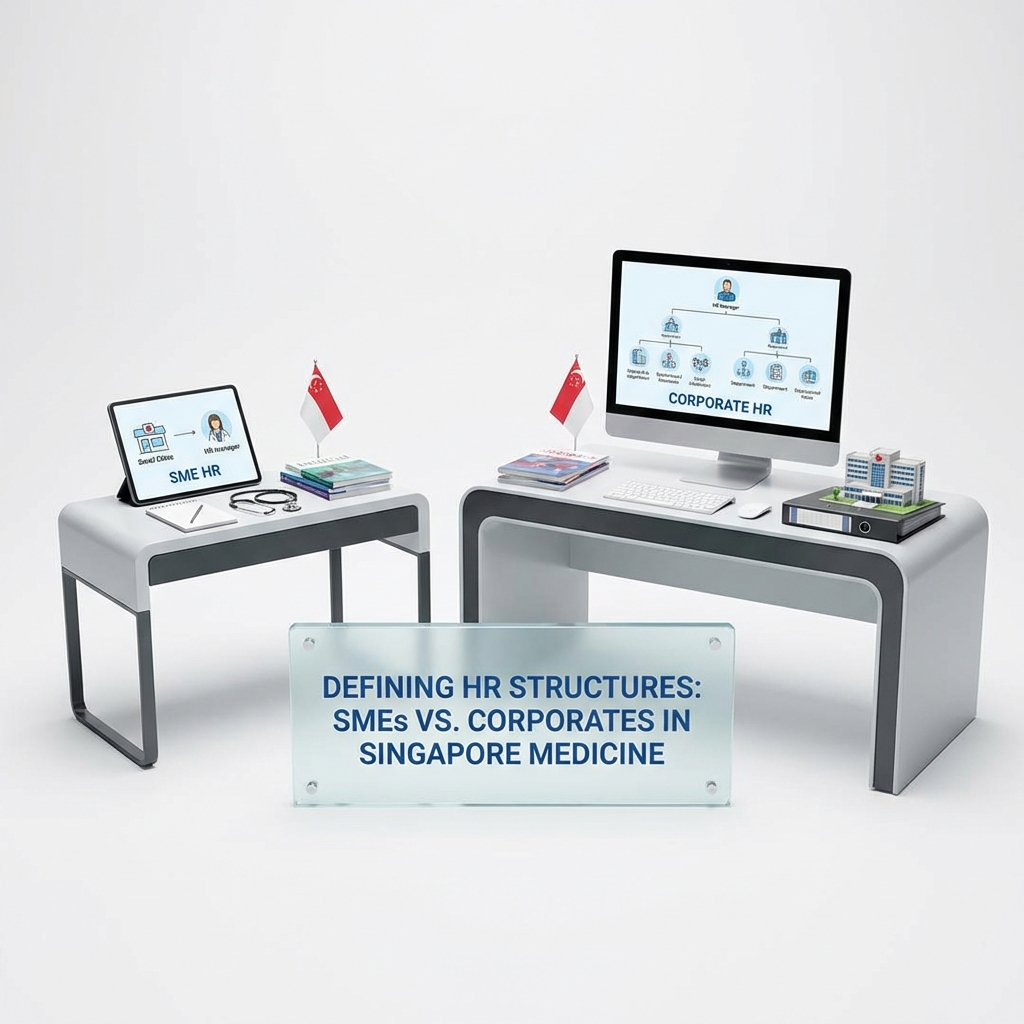
This section sets the foundation by outlining what distinguishes SMEs from corporate medical entities in Singapore, focusing on their general HR frameworks and operational philosophies. Understanding the differences between the SMEs’ HR structure and the corporates’ HR structure in the medicine field in Singapore is crucial for effective talent management and operational efficiency in the nation’s dynamic healthcare sector.
1. What defines a medical SME’s HR function in Singapore?
In Singapore’s vibrant medical landscape, Small and Medium Enterprises (SMEs) typically refer to clinics, specialist practices, or smaller healthcare providers employing fewer than 200 staff and with an annual turnover of less than S$100 million, as per the Enterprise Singapore definition. For these entities, the HR function is often characterized by its lean, agile, and often informal nature. Instead of a dedicated HR department, HR responsibilities are frequently absorbed by clinic managers, administrative staff, or even the medical practitioners themselves. This multi-hat approach means HR tasks like recruitment, payroll processing, leave management, and basic compliance are handled by individuals with diverse primary duties. Given the smaller team sizes, HR functions are highly personalized, emphasizing direct communication and immediate problem-solving. Recruitment often relies on word-of-mouth, professional networks, or basic online job portals. Training and development are typically ad-hoc, focusing on essential clinical skills or immediate operational needs. While cost-effective, this model can face challenges in navigating complex employment laws, ensuring consistent talent development, and scaling effectively. Many medical SMEs in Singapore also leverage external HR consultants or cloud-based HR platforms to manage more specialized functions or ensure compliance without incurring the overhead of a full-time HR team.
2. Characteristics of a corporate medical entity’s HR department.
Conversely, corporate medical entities in Singapore – think large hospital groups, multi-specialty polyclinic chains, or regional healthcare providers – boast sophisticated, multi-tiered HR departments. These organizations have the scale and resources to implement a comprehensive HR framework that aligns with strategic business objectives. Their HR departments are typically segmented into specialized functions: talent acquisition, compensation and benefits, learning and development, HR operations, employee relations, and HR business partnering. Each segment is staffed by professionals with specific expertise, driving a more strategic approach to human capital. Talent acquisition involves structured recruitment processes, employer branding initiatives, and pipeline development to attract top medical professionals. Compensation and benefits strategies are meticulously designed to remain competitive, often incorporating performance-based incentives and comprehensive wellness programs. Learning and development departments offer structured career progression paths, continuous medical education, and leadership training. HR Information Systems (HRIS) are extensively used to streamline processes, enhance data analytics, and provide a seamless employee experience. Compliance with Singapore’s robust labour laws and healthcare regulations is paramount and managed proactively. The HR department acts as a strategic partner to the business, influencing organizational culture, driving productivity, and ensuring long-term workforce sustainability.
3. General HR goals and priorities for both organizational types.
While the operational execution of HR varies significantly, both medical SMEs and corporate entities in Singapore share fundamental HR goals, albeit with different priorities and scales of ambition. For SMEs, the primary HR goals revolve around operational survival, cost-efficiency, and critical talent retention. Their priorities include attracting reliable staff, managing basic payroll accurately, ensuring compliance with minimum employment standards, and fostering a cohesive team environment through direct interaction. Retention efforts are often personalized, relying on strong working relationships and a positive, familial culture. Growth for SMEs is typically organic and HR supports this by ensuring sufficient staffing for immediate needs and maintaining employee satisfaction to prevent high turnover. Corporates, on the other hand, prioritize strategic talent management, fostering a strong employer brand, and ensuring long-term organizational resilience. Their goals extend to succession planning, large-scale recruitment across diverse medical specialities, developing robust performance management systems, cultivating an innovative work environment, and promoting employee well-being on a broader scale. They aim to be employers of choice, attracting not just local talent but also international expertise. While both strive for a skilled and motivated workforce, medical SMEs focus on tactical, day-to-day HR needs to maintain operations, whereas corporate medical entities leverage HR as a strategic pillar to drive innovation, market leadership, and sustainable growth within Singapore’s competitive healthcare ecosystem. Understanding these fundamental differences is key to appreciating the unique challenges and opportunities faced by HR professionals in each setting, and how they contribute to the nation’s healthcare service delivery. SMEs contribute significantly to Singapore’s economy, making up 99% of all enterprises and employing 70% of the workforce, highlighting their vital role even with leaner HR structures.
Strategic Focus & Resource Allocation in HR Departments
The landscape of Human Resources in Singapore’s medicine field presents a compelling study in contrast, particularly concerning strategic focus and resource allocation. The differences between the SMEs’ HR structure and the Corporates’ HR structure in the medicine field in Singapore are profound, shaped primarily by scale, budget, and business objectives. While both aim to attract and retain talent in a competitive healthcare sector, their approaches to HR planning, budget allocation, and technology adoption diverge significantly, influencing their operational efficiency and long-term strategic capabilities.
1. Budgetary constraints and HR technology adoption strategies
For Small and Medium-sized Enterprises (SMEs) in the medical sector, budgetary constraints are a defining factor in their HR technology adoption strategies. Limited capital often means a reliance on manual processes, basic spreadsheet management, or free/low-cost software solutions for core HR functions like payroll and leave management. Investment in comprehensive Human Resource Information Systems (HRIS) or cutting-edge tools for talent analytics, performance management, or sophisticated recruitment platforms is often out of reach. This necessitates creative solutions, such as leveraging government grants for digitalization where available, or opting for modular, cloud-based HR solutions that can be scaled gradually. The focus remains on essential operational efficiency rather than advanced strategic insights. In stark contrast, large corporations possess the financial muscle to invest heavily in integrated, enterprise-level HR technologies. These may include advanced HRIS platforms, Artificial Intelligence (AI) for recruitment and employee engagement, predictive analytics for workforce planning, and specialized learning management systems. These investments are strategic, designed to enhance employee experience, automate complex processes, and provide data-driven insights to inform long-term business goals. Staying abreast of Gartner’s latest HR technology trends is often a priority for these larger entities, ensuring they remain at the forefront of HR innovation.
2. Strategic HR planning vs. operational HR in SMEs
The fundamental differences between the SMEs’ HR structure and the Corporates’ HR structure in medicine field in Singapore are particularly evident in their approach to strategic HR planning. In SMEs, HR often operates predominantly as an operational function. The small HR team, or even a single HR manager, is typically engrossed in day-to-day tasks: managing payroll, administering benefits, handling employee queries, and ensuring compliance with local labor laws. While they understand the need for talent, long-term strategic initiatives such as succession planning, comprehensive talent development frameworks, or detailed workforce analytics often take a backseat due to immediate operational demands and lack of dedicated resources. The focus is on keeping the business running smoothly. Large corporations, however, boast dedicated teams, or even entire departments, focused solely on strategic HR planning. These teams work closely with executive leadership to align HR strategies with overarching business objectives. They develop intricate talent acquisition strategies, design robust leadership development programs, implement performance management systems tied to organizational goals, and engage in proactive workforce planning to anticipate future talent needs in the rapidly evolving medical sector. Their HR initiatives are designed to be forward-looking, driving organizational growth and competitive advantage.
3. Specialized HR functions and centers of excellence in large corporations
Another distinguishing feature lies in the specialization of HR functions. In SMEs, HR roles are typically generalist; one HR professional might oversee recruitment, training, compensation, and employee relations simultaneously. While this fosters a broad skill set, it often limits the depth of expertise available for complex HR challenges. The structure is lean, prioritizing versatility over deep specialization. For large corporations in the medicine field, HR departments are often highly specialized and sometimes incorporate Centers of Excellence (CoEs). Instead of generalists, there are dedicated teams for specific HR domains: a talent acquisition team focused on attracting medical professionals, a compensation and benefits department designing competitive packages, a robust learning and development (L&D) unit fostering continuous professional growth, and HR analytics teams providing data-driven insights. Some larger entities might even establish CoEs for areas like leadership development, diversity & inclusion, or employee well-being, bringing together experts to develop best practices and innovative solutions that can be deployed across the organization. This level of specialization allows for deeper expertise, more sophisticated program design, and a more strategic impact on the organization’s human capital, a luxury that SMEs, by their nature and resource limitations, simply cannot afford.
Talent Acquisition & Development Discrepancies
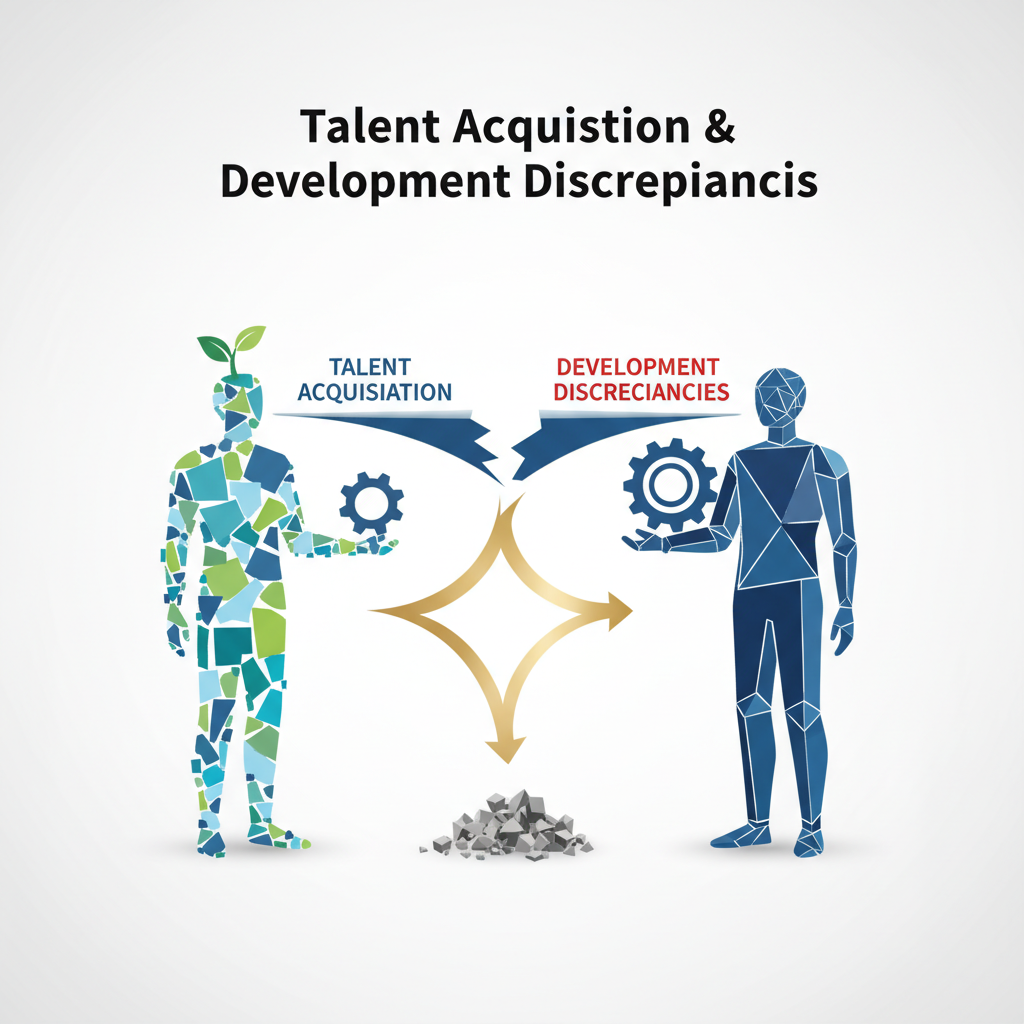
Singapore’s healthcare landscape is fiercely competitive, demanding a strategic and nuanced approach to attracting, onboarding, developing, and retaining medical professionals. This environment highlights significant Differences between the SMEs’ HR Structure and the Corporates’ HR Structure in medicine field in singapore. While both strive to secure top talent, their resources, methodologies, and philosophies often diverge dramatically, impacting everything from initial recruitment to long-term career progression and retention strategies. Understanding these disparities is crucial for both job seekers navigating the market and employers seeking to optimize their talent management.
1. Recruitment channels, employer branding, and candidate experience
The initial touchpoint for medical professionals seeking roles in Singapore often reveals the stark contrast between small and large healthcare providers. Small and Medium Enterprises (SMEs), such as private clinics or specialized boutique practices, typically rely on more organic and localized recruitment channels. These may include word-of-mouth referrals, local job portals, or direct applications via their websites. Their employer branding tends to be less formalized, often driven by the reputation of the lead practitioner or the close-knit culture of the team. The candidate experience in an SME might be more personal, with direct interaction with clinic managers or senior doctors from the outset, leading to a quicker and less bureaucratic hiring process.
In contrast, corporate healthcare entities – think large hospital groups, polyclinic chains, or multi-specialty medical centers – boast sophisticated HR departments and substantial budgets for talent acquisition. They leverage a diverse array of recruitment channels, including international recruitment agencies, major professional networking platforms like LinkedIn, and extensive careers pages on their corporate websites. Employer branding is a meticulously crafted exercise, involving strategic digital marketing, participation in career fairs, and showcasing comprehensive employee value propositions. The candidate experience, while highly structured and often standardized, may involve multiple interview rounds, psychometric assessments, and a more prolonged onboarding journey managed by dedicated HR specialists. These Differences between the SMEs’ HR Structure and the Corporates’ HR Structure in medicine field in singapore are paramount in how medical professionals first encounter and engage with potential employers.
2. Career progression paths and professional development opportunities
Once onboard, the trajectory for career progression and access to professional development also diverges significantly. SMEs typically offer a flatter organizational structure, where formal career ladders might be less defined. Progression often means taking on broader responsibilities, gaining experience across different specializations, or potentially moving into a partnership role within the practice. Professional development in SMEs might be more informal, relying on mentorship from senior colleagues, self-directed learning, and participation in smaller, localized workshops or conferences. While budgets for extensive external training might be limited, the intimate setting can provide hands-on experience and a direct impact on patient care that is highly valued.
Corporates, conversely, are characterized by structured career progression paths, often with clear hierarchies from junior doctor to specialist, consultant, and leadership roles. They invest heavily in continuous professional development (CPD), offering a plethora of formal training programs, specialist certifications, leadership development academies, and opportunities for research and academic pursuits. Many corporate healthcare providers have dedicated learning and development departments that facilitate access to cutting-edge medical education and technology. Institutions like Singapore General Hospital, for instance, champion robust education and research initiatives, ensuring their medical professionals have access to continuous learning and growth opportunities crucial for advancing healthcare. Such organizations also frequently support participation in international conferences and provide pathways for specialization and sub-specialization, aligning with long-term career planning.
3. Compensation, benefits packages, and employee retention strategies
The financial and non-financial rewards, alongside strategies for retaining talent, present yet another clear distinction. SMEs, with their smaller operational scale, may offer more flexible compensation structures, potentially allowing for individualized negotiations or performance-based bonuses tied directly to practice revenue. While their benefits packages might be less comprehensive than corporates – perhaps offering basic health insurance and annual leave – they often compensate with a strong sense of community, direct impact on the business, and a more flexible work-life balance. Retention strategies often revolve around fostering a supportive work environment, personal recognition, and a sense of belonging, leveraging the closer relationships within the team.
Corporate healthcare providers typically offer highly structured compensation frameworks, including competitive base salaries, comprehensive benefits packages (e.g., extensive health, dental, and life insurance, retirement plans, wellness programs, and sometimes stock options), and performance-linked bonuses. They often provide additional perks like subsidized meals, transport, or professional indemnity insurance. Retention strategies are multi-faceted, encompassing not just attractive remuneration but also robust performance management systems, clear pathways for advancement, opportunities for international placements or rotations, and comprehensive employee well-being initiatives. They understand that the Differences between the SMEs’ HR Structure and the Corporates’ HR Structure in medicine field in singapore dictates a more formalized approach to long-term talent retention, leveraging their scale to provide stability and a broad spectrum of career opportunities. Both models have their unique advantages, and medical professionals often weigh these factors carefully when deciding where to build their careers in Singapore’s dynamic healthcare sector.
Compliance, Policies & HR Operational Differences
This section highlights how compliance with regulations, policy development, and the day-to-day execution of HR operations vary between smaller clinics and larger hospital groups in Singapore.
In Singapore’s dynamic healthcare landscape, the intricacies of Human Resources (HR) management are profoundly shaped by an organisation’s size and structure. The differences between the SMEs’ HR structure and the corporates’ HR structure in the medicine field are particularly evident in critical areas such as regulatory compliance, policy frameworks, and the practical execution of HR operations. While both strive for operational excellence and employee well-being, their approaches diverge significantly due to varying resources, scale, and strategic priorities. Understanding these distinctions is crucial for effective HR management across the spectrum of healthcare providers, from independent general practitioner clinics to multi-specialty hospital conglomerates.
1. Navigating Singapore’s healthcare regulations and labor laws.
For smaller clinics, navigating Singapore’s robust healthcare regulations and labor laws often presents a unique challenge. These establishments typically operate with lean administrative teams, where HR compliance responsibilities might fall upon clinic managers, administrators, or even the practice owner themselves. Their approach tends to be reactive, addressing compliance issues as they arise, and relying heavily on general knowledge or external consultants for complex matters. Staying abreast of the latest amendments to the Employment Act, Workplace Safety and Health Act, and sector-specific guidelines from the Ministry of Health (MOH) can be a significant drain on limited resources.
Conversely, larger hospital groups possess dedicated resources to ensure meticulous adherence to the legal and regulatory framework. They often employ specialised HR compliance officers, legal departments, or even dedicated teams whose sole focus is to monitor, interpret, and implement regulatory changes. This proactive stance ensures that all HR practices, from recruitment to termination, are aligned with the letter and spirit of the law. For instance, understanding the nuances of the Employment Act in Singapore is paramount for all employers, but larger entities have the infrastructure to conduct regular audits, training, and policy reviews to mitigate risks effectively. This specialisation minimises the likelihood of costly penalties or reputational damage, ensuring a more stable and compliant operational environment.
2. Policy development, implementation, and enforcement mechanisms.
The lifecycle of HR policies – from their inception to their enforcement – showcases stark contrasts between small and large healthcare organisations. In smaller clinics, policies might be less formalised, often existing as unwritten rules or evolving practices based on immediate needs. A new policy could be decided in an ad-hoc meeting and communicated verbally, leading to potential inconsistencies or misunderstandings. Documentation may be minimal, making it challenging to maintain uniform application across all employees or over extended periods. Policy implementation often relies on direct communication and the personal oversight of the clinic head.
Larger hospital groups, in contrast, adopt a highly structured and systematic approach. Policy development is typically a collaborative process involving HR specialists, legal counsel, departmental heads, and sometimes employee representatives. Policies are meticulously drafted, subjected to rigorous review, and clearly documented in employee handbooks or dedicated HR portals. Implementation involves comprehensive communication strategies, including mandatory training sessions, internal announcements, and easily accessible digital resources. Enforcement mechanisms are equally robust, featuring clear disciplinary matrices, grievance procedures, and performance management frameworks, ensuring fair and consistent application. This formalisation is crucial for maintaining order, protecting both the organisation and its employees, and fostering a professional work environment across a vast and diverse workforce.
3. HR administration, payroll management, and benefits processing.
Operational HR tasks, such as administration, payroll, and benefits processing, also reveal significant disparities. In smaller clinics, these functions are often consolidated and managed by a single HR generalist or even administrative staff who juggle multiple responsibilities. Payroll might be processed using basic accounting software or even manual spreadsheets, leading to a higher risk of errors and requiring substantial manual effort. Benefits, if offered beyond statutory requirements, tend to be straightforward and managed directly without complex systems.
Larger hospital groups, however, leverage sophisticated Human Resources Information Systems (HRIS) that integrate various HR functions, from applicant tracking and employee data management to payroll and benefits administration. These systems automate routine tasks, enhance data accuracy, and provide comprehensive reporting capabilities, allowing HR professionals to focus on strategic initiatives rather than transactional duties. Payroll management is typically handled by dedicated payroll specialists or outsourced to professional payroll providers, ensuring precision and compliance with tax laws and social security contributions like CPF. Benefits processing is also highly structured, with comprehensive packages often including health insurance, retirement plans, professional development funds, and wellness programs, all managed through integrated platforms. This not only streamlines operations but also significantly improves the employee experience by ensuring timely and accurate administration of their entitlements, thereby enhancing talent attraction and retention in a competitive healthcare market.
Impact on Employee Experience & Future HR Trends
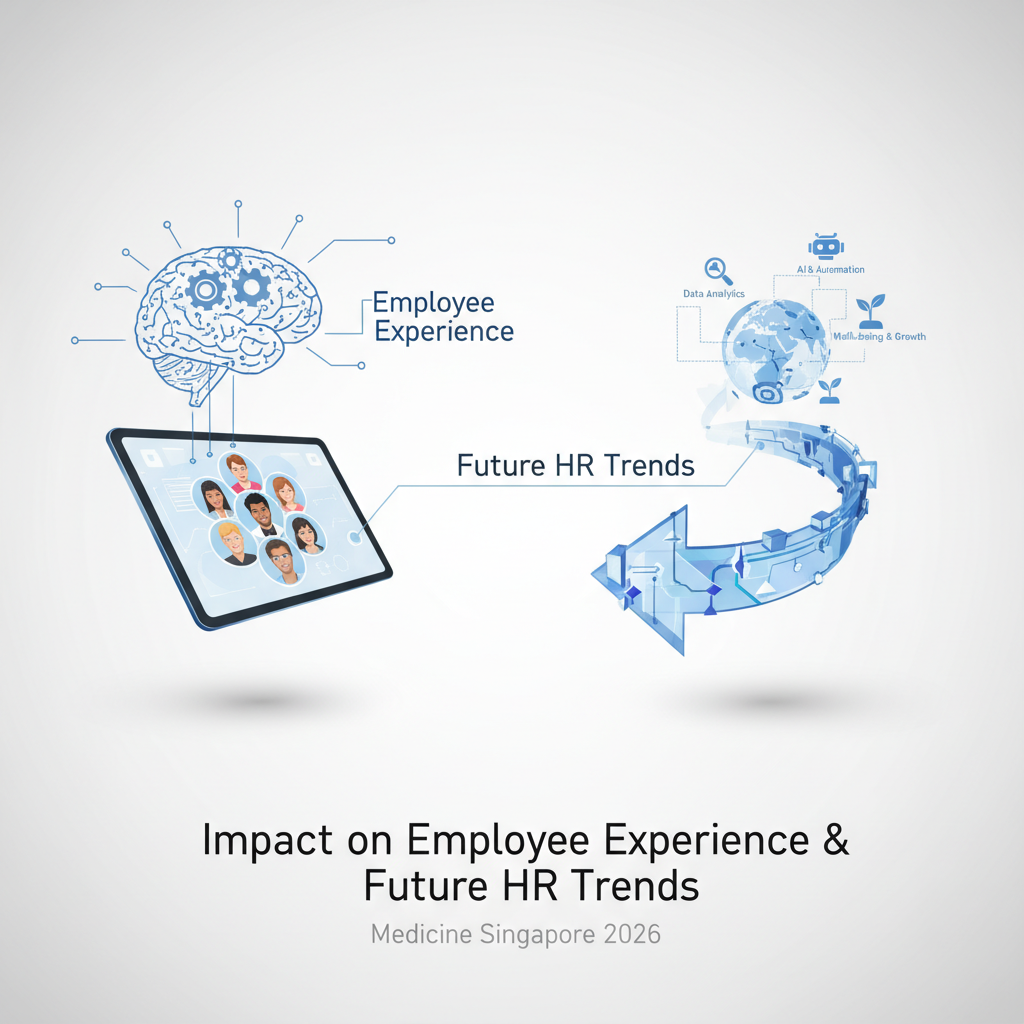
The healthcare sector in Singapore is a dynamic ecosystem, characterized by a stark contrast between agile Small and Medium-sized Enterprises (SMEs) and large, established corporate medical institutions. These Differences between the SMEs’ HR Structure and the Corporates’ HR Structure in medicine field in singapore fundamentally influence everything from daily operations to long-term strategic planning, with a profound impact on employee satisfaction, workplace culture, and the future trajectory of Human Resources (HR) practices. Understanding these nuances is crucial for both attracting and retaining top talent in a competitive medical landscape.
1. Workplace culture, employee engagement, and communication.
The HR structure significantly molds the workplace culture within medical establishments. In SMEs, the flatter hierarchy and often leaner HR teams foster a more intimate, family-like environment. Communication tends to be direct and informal, with decision-making processes often quicker. Employees in SMEs frequently wear multiple hats, leading to a strong sense of ownership and camaraderie, but also potential for role ambiguity and burnout. Engagement often stems from a personal connection to the practice’s mission and direct interaction with leadership.
Conversely, corporate medical groups typically feature a more hierarchical structure with specialized HR departments. Communication is often formalized through official channels, ensuring consistency but potentially lacking the personal touch of an SME. While this structure offers clear career pathways, defined roles, and extensive resources for professional development, it can sometimes lead to a more impersonal employee experience. Engagement in corporates often relies on structured recognition programs, competitive benefits, and opportunities for advancement, driven by well-defined HR policies and procedures.
2. Adaptability to change and innovation within HR practices.
The ability to adapt to rapid changes in healthcare regulations, technology, and patient demands varies considerably between these two organizational types. SMEs, with their smaller scale and less bureaucratic structures, can often pivot quickly. HR practices in SMEs, while perhaps less formalized, can be more responsive to immediate staff needs or sudden operational shifts. However, their limited resources often mean slower adoption of cutting-edge HR technologies or comprehensive data analytics, relying more on generalist HR practitioners.
Large corporate medical institutions, while possessing significant financial and technological resources, may experience slower implementation cycles due to multiple layers of approval and complex integration processes. However, once adopted, their innovations can be comprehensive and scalable, from advanced HR Information Systems (HRIS) to sophisticated talent management platforms. Their specialized HR teams can drive innovation through dedicated research and development in areas like predictive analytics for workforce planning or AI-driven recruitment tools, positioning them as leaders in HR transformation within the medical field.
3. Future HR trends and best practices for both SMEs and corporates in medicine.
The future of HR in Singapore’s medical landscape demands continuous adaptation and the embrace of emerging trends for both SMEs and corporates. Key trends include the personalization of the employee experience, a heightened focus on mental well-being, the integration of artificial intelligence (AI) in HR operations, and data-driven decision-making. Both types of organizations must invest in continuous upskilling of their HR personnel to navigate these complexities.
For SMEs, best practices involve leveraging affordable, cloud-based HR solutions to streamline administrative tasks, fostering a strong, supportive culture that prioritizes work-life balance, and creating clear growth opportunities despite a flatter structure. Building a sense of community and providing flexible work arrangements will be paramount. For corporates, the focus should be on optimizing advanced HRIS for predictive insights, developing robust talent mobility programs, and integrating Environmental, Social, and Governance (ESG) principles into HR strategies. Reflecting global shifts highlighted in reports like the Deloitte Global Human Capital Trends, both segments must prioritize a human-centric approach, ensuring that technology enhances rather than replaces the human element in healthcare HR. The overarching goal is to cultivate an engaging, supportive, and efficient work environment that ultimately benefits patient care in Singapore.
Partner with Shelby Global
You are looking for reliable HR Sevice Suppliers? Contact Shelby Global Now! To connect with verified talents and upgrade your orginization.
—————————————
References
– Enterprise Singapore SME Centre: https://www.enterprisesg.gov.sg/about-us/sme-centre
– :
– :
– Employment Act in Singapore: https://www.mom.gov.sg/employment-practices/employment-act
– Deloitte Global Human Capital Trends: https://www2.deloitte.com/us/en/insights/focus/human-capital-trends.html