- Why Modern HR Tools are Vital for Singapore’s Education Sector
- 1. Addressing Unique Challenges in Education HR (e.g., fluctuating staff, specialized roles)
- 2. The Digital Transformation Mandate for Singaporean Educators
- 3. Benefits of Streamlined HR Operations for Growth & Compliance
- Essential HR Tools for Core Operations & Compliance in Singapore
- 1. Integrated HR Information Systems (HRIS) for Centralized Data
- 2. Automating Payroll and Benefits Administration
- 3. Ensuring Compliance with Singapore Labor Laws and MOE Guidelines
- Optimizing Talent Acquisition & Onboarding for Education Companies
- 1. Leveraging Applicant Tracking Systems (ATS) for Efficient Recruitment Software
- 2. Crafting Seamless Onboarding Experiences for New Educators
- 3. Strategies for Attracting & Retaining Top Teaching Talent
- Boosting Performance, L&D, and Employee Engagement
- 1. Performance Management Systems for Educator Growth
- 2. Learning & Development (L&D) Platforms for Professional Up-skilling
- 3. Tools to Enhance Employee Engagement and Retention
- Future-Proofing HR: Analytics, AI, and Strategic Planning for 2026
- 1. Harnessing HR Analytics for Data-Driven Decision Making
- 2. The Role of AI and Automation in Future Education HR
- 3. Strategic HR Planning for Scalability and Innovation in Singapore
- Partner with Shelby Global
- References
Why Modern HR Tools are Vital for Singapore’s Education Sector
Singapore’s education sector, renowned for its excellence and dynamism, faces unique human resource challenges that necessitate a strategic shift towards modern HR tools. Education companies in Singapore operate in an environment characterized by rapid technological advancements, evolving pedagogical approaches, and stringent regulatory frameworks. From managing fluctuating staff numbers – including adjunct lecturers, part-time tutors, and project-based curriculum developers – to recruiting and retaining highly specialized talent, traditional HR practices often fall short. Integrated HR tools – applications for education companies in Singapore offer comprehensive solutions, driving efficiency, supporting growth, and ensuring compliance in this competitive and dynamic market.
1. Addressing Unique Challenges in Education HR (e.g., fluctuating staff, specialized roles)
The education landscape in Singapore demands agile and responsive HR systems. Unlike conventional businesses, educational institutions frequently deal with seasonal peaks in hiring (e.g., admissions periods, exam preparation courses) and troughs, leading to fluctuating staff requirements. This makes talent acquisition, onboarding, and offboarding complex and time-consuming. Furthermore, the sector requires a diverse range of specialized roles, from academic leadership and subject matter experts to pastoral care providers and administrative support. Each role often comes with distinct skill sets, performance metrics, and professional development needs.
Modern HR tools provide the agility to manage this complexity. They automate the onboarding process for new hires, streamline leave and attendance management for a varied workforce, and facilitate robust performance management systems tailored to different educational roles. Recruitment modules within these HR tools can help identify, track, and engage specialized talent more effectively, ensuring that education companies can swiftly adapt to changing demands while maintaining high standards of teaching and administration. Without such applications, HR departments risk being overwhelmed by manual tasks, diverting critical resources from strategic talent development.
2. The Digital Transformation Mandate for Singaporean Educators
Singapore’s ‘Smart Nation’ initiative has permeated all sectors, including education. The government strongly advocates for digital transformation across industries to enhance productivity, foster innovation, and build a future-ready workforce. For education companies, embracing digital HR is not merely an option but a strategic imperative. This mandate extends beyond digital learning platforms to the very operational backbone of institutions – their human resources.
Implementing advanced HR tools – applications for education companies in Singapore allows institutions to align with this national agenda. By digitizing HR processes like payroll, benefits administration, employee data management, and training, education providers can improve operational efficiency and free up HR personnel to focus on strategic initiatives such as talent development, employee engagement, and succession planning. The Infocomm Media Development Authority (IMDA), for instance, actively supports businesses in their digitalization journeys, highlighting the government’s commitment to equipping all enterprises, including those in education, with essential digital capabilities.
3. Benefits of Streamlined HR Operations for Growth & Compliance
The ultimate goal of adopting modern HR tools is to foster sustainable growth and ensure seamless compliance within Singapore’s stringent regulatory landscape. Streamlined HR operations powered by integrated software lead to significant time and cost savings. Automation reduces errors in payroll processing, ensures accurate leave tracking, and simplifies performance reviews, allowing HR teams to operate with unprecedented efficiency.
From a growth perspective, these HR tools – applications for education companies in Singapore provide valuable data analytics. Leaders can gain insights into workforce trends, talent gaps, employee retention rates, and training effectiveness, enabling informed decision-making for strategic expansion and program development. Moreover, adhering to Singapore’s comprehensive labor laws, such as those governed by the Ministry of Manpower (MOM), and data protection regulations like the Personal Data Protection Act (PDPA), is critical. Modern HR systems are built with compliance in mind, offering features that ensure proper documentation, timely statutory contributions, and secure handling of sensitive employee data. This mitigates legal risks and strengthens an institution’s reputation as a responsible employer, attracting and retaining top talent. By embracing a comprehensive HR solution, education companies can navigate their unique challenges, embrace digital transformation, and establish a robust foundation for long-term success and regulatory adherence.
Essential HR Tools for Core Operations & Compliance in Singapore
Delve into fundamental HR systems like HRIS, payroll processing, and compliance management, crucial for any education company operating under Singapore’s regulatory framework.
Operating an education company in Singapore presents a unique set of challenges, particularly concerning human resources. Beyond the universal demands of talent acquisition and management, educational institutions must navigate specific regulatory frameworks, including the Employment Act, CPF regulations, and intricate Ministry of Education (MOE) guidelines. Efficient HR operations are not just about managing people; they are about safeguarding the institution’s reputation, ensuring operational continuity, and fostering a productive learning environment. This necessitates the adoption of robust HR tools applications for education companies in Singapore that centralize data, automate critical processes, and ensure unwavering compliance.
1. Integrated HR Information Systems (HRIS) for Centralized Data
At the heart of modern HR operations lies the Integrated HR Information System (HRIS). An HRIS serves as a single source of truth for all employee-related data, transforming disparate spreadsheets and paper files into a cohesive, searchable, and secure database. For education companies, this means centralizing vital information for diverse employee types, from full-time teaching staff and administrative personnel to part-time tutors and contract workers. An effective HRIS allows for seamless management of employee profiles, contracts, attendance records, leave applications, performance reviews, and professional development trajectories. It is particularly invaluable for tracking teacher certifications, qualifications, and mandatory training – data points critical for MOE compliance and maintaining educational standards. By reducing manual data entry and minimizing the risk of errors, an HRIS frees up HR professionals to focus on strategic initiatives like talent development and employee engagement, rather than administrative bottlenecks. This strategic approach to employee data management is a cornerstone of efficient education sector HR.
2. Automating Payroll and Benefits Administration
Payroll processing in Singapore is inherently complex, involving not just basic salaries but also Mandatory Provident Fund (CPF) contributions, income tax deductions, various leave entitlements (annual, sick, childcare, maternity), and potentially variable pay structures tied to teaching loads or project milestones. Manual payroll calculation is not only time-consuming but highly susceptible to errors, which can lead to compliance issues, financial penalties, and significant employee dissatisfaction. Automated payroll systems streamline this intricate process, accurately calculating all statutory deductions and contributions, generating payslips, and facilitating timely bank transfers. This significantly enhances accuracy and efficiency. Beyond basic pay, these systems also manage benefits administration, including tracking leave balances, processing claims, and overseeing health insurance or other employee perks relevant to the education sector. Robust HR software for payroll ensures that your education company adheres strictly to Singapore’s labor laws while providing transparent and reliable compensation to your valued employees. For detailed guidance on employment practices, especially the fundamental rights and obligations, education companies should consult sources like Singapore’s Employment Act from the Ministry of Manpower (MOM).
3. Ensuring Compliance with Singapore Labor Laws and MOE Guidelines
Compliance is paramount for any business in Singapore, and education companies face a dual layer of regulatory scrutiny: general labor laws and sector-specific MOE guidelines. HR tools are instrumental in building a robust compliance management framework. They help ensure adherence to the Employment Act, Workplace Safety and Health Act, CPF Act, and other relevant statutes by automating the tracking of working hours, overtime, leave policies, and mandatory training. Furthermore, for the education sector, these systems are crucial for managing MOE-specific requirements. This includes verifying teacher qualifications and background checks, maintaining records of professional development hours, ensuring appropriate student-teacher ratios, and adhering to safeguarding policies. HR systems can prompt renewals for licenses, track policy acknowledgements, and provide audit trails for regulatory inspections. By leveraging these tools, education companies can mitigate legal risks, avoid penalties, and demonstrate a steadfast commitment to ethical practices and high educational standards, strengthening their regulatory framework Singapore.
In conclusion, the strategic adoption of integrated HRIS, automated payroll systems, and comprehensive compliance management tools is non-negotiable for education companies in Singapore. These HR tools not only streamline core operations but also fortify the institution against regulatory pitfalls, empower better talent management, and ultimately contribute to a more stable and effective learning environment. Investing in the right HR software is an investment in the future and stability of your educational enterprise.
Optimizing Talent Acquisition & Onboarding for Education Companies
In Singapore’s vibrant education sector, attracting and retaining top-tier educators and administrative staff is paramount to institutional success and student achievement. The landscape of talent acquisition has evolved significantly, demanding that education companies move beyond traditional recruitment methods to embrace sophisticated HR tools – applications for education companies in Singapore. This section will delve into how modern recruitment software and robust onboarding solutions can revolutionize the way educational institutions identify, secure, and integrate qualified professionals, ultimately enhancing their human capital and operational efficiency.

1. Leveraging Applicant Tracking Systems (ATS) for Efficient Recruitment Software
The journey to hiring exceptional educators often begins with a deluge of applications. Without the right recruitment software, sorting through these can be a daunting and time-consuming task, leading to missed opportunities and a poor candidate experience. This is where Applicant Tracking Systems (ATS) become indispensable. An ATS automates and streamlines every stage of the hiring process, from job posting and resume parsing to candidate screening and interview scheduling.
For education companies, an ATS offers unparalleled benefits. It helps in efficiently managing the high volume of applications for teaching and administrative roles, ensuring that no qualified candidate is overlooked. Features like keyword searching and automated ranking help in effective applicant screening, identifying candidates whose skills and experience align perfectly with the institution’s needs. Furthermore, an ATS improves communication with candidates, providing timely updates and feedback, which is crucial for maintaining a positive employer brand. By integrating advanced HR automation, these systems reduce administrative burden, allowing HR teams to focus on strategic initiatives rather than manual data entry. According to Forbes Advisor, ATS systems significantly enhance recruiter efficiency and candidate experience, making them a critical component of modern talent acquisition strategies in any sector, including education.
2. Crafting Seamless Onboarding Experiences for New Educators
Securing top talent is only half the battle; successfully integrating them into the organization is equally vital. A well-structured onboarding program is crucial for improving teacher retention and ensuring new hires quickly become productive members of the team. For new educators, a positive onboarding experience can significantly impact their job satisfaction and long-term commitment to the institution.
Effective onboarding solutions go beyond simply completing paperwork. They involve a comprehensive process that introduces new staff to the school culture, values, policies, and their specific roles and responsibilities. Modern digital onboarding platforms can automate much of this process, providing new hires with access to essential documents, training modules, and introductory videos even before their first day. This proactive approach fosters a strong sense of belonging and confidence. Moreover, robust onboarding programs should incorporate mentorship opportunities, clear pathways for professional development, and regular check-ins to address any concerns. A seamless onboarding experience is a cornerstone of a positive employee experience, setting the stage for long-term engagement and success for both the educator and the institution.
3. Strategies for Attracting & Retaining Top Teaching Talent
In a competitive market like Singapore, education companies must employ multifaceted strategies to not only attract but also retain highly skilled educators. A strong employer brand, built on a reputation for supportive work environments and opportunities for growth, is foundational. Leveraging HR tech for schools, including advanced ATS and comprehensive onboarding systems, provides a distinct advantage in this endeavor.
Beyond technology, institutions should focus on creating a culture that values continuous learning, recognizes achievements, and provides competitive compensation and benefits. Regular feedback mechanisms and clear career progression paths are essential for effective talent management. Investing in continuous professional development ensures educators stay at the forefront of pedagogical practices, which is beneficial for both the individual and the students. For education companies in Singapore, understanding the unique cultural and market dynamics is key to tailoring these strategies effectively. By combining innovative HR tools – applications for education companies in Singapore with a people-centric approach, institutions can create an environment where the best teaching talent not only joins but thrives. Focusing on these areas ensures efficient educator hiring and builds a resilient, high-performing workforce dedicated to educational excellence.
Boosting Performance, L&D, and Employee Engagement
In Singapore’s dynamic education landscape, fostering a high-performing, continuously learning, and engaged workforce is paramount for long-term success. Education organizations, from private schools to training institutes, increasingly recognize the critical role of sophisticated HR tools – applications for education companies in singapore. These advanced solutions extend beyond basic payroll, transforming how institutions manage talent, drive educator professional growth Singapore, and cultivate a positive work culture. By strategically implementing the right HR tech for educational institutions, organizations can streamline operations, enhance employee satisfaction, and ultimately improve educational outcomes. This section delves into essential applications that empower education companies to optimize performance management, facilitate continuous learning, and significantly boost staff engagement and staff retention in education.
1. Performance Management Systems for Educator Growth
Effective performance management is not merely about annual reviews; it’s a continuous process designed to support and develop educators. For education companies in Singapore, specialized teacher performance review tools are indispensable. These systems provide a structured framework for setting clear goals, offering regular feedback, and tracking professional development progress. Modern performance management platforms allow for 360-degree feedback, peer evaluations, and self-assessments, providing a holistic view of an educator’s strengths and areas for improvement. This data-driven approach helps administrators identify high-potential staff, address performance gaps proactively, and tailor development plans. Key features often include customizable appraisal forms, goal-setting functionalities aligned with institutional objectives, and real-time feedback mechanisms. By leveraging these education HR software Singapore solutions, institutions can foster a culture of accountability and continuous improvement, ensuring that educators are consistently growing and delivering their best. Such systems are crucial for demonstrating commitment to staff development and maintaining high standards in teaching and learning.
2. Learning & Development (L&D) Platforms for Professional Up-skilling
The education sector demands constant evolution, making continuous professional development non-negotiable for educators. Learning & Development (L&D) Platforms are therefore vital for education companies aiming to up-skill their workforce. These professional development platforms for educators provide accessible, flexible, and often personalized learning experiences. From online courses and certifications to workshops and webinars, these platforms host a wealth of resources tailored to educational needs. Features typically include course creation tools, progress tracking, certification management, and collaborative learning functionalities. For instance, a learning management system (LMS) for staff training can offer modules on new pedagogical approaches, digital literacy, or curriculum development, ensuring that educators remain at the forefront of their fields. The benefits extend beyond individual skill enhancement, fostering a culture of continuous learning in education across the entire organization. By investing in robust L&D platforms, education companies in Singapore can ensure their teaching staff are equipped with the latest knowledge and skills, directly impacting the quality of education provided. The importance of continuous learning in the workplace, particularly in knowledge-intensive sectors like education, cannot be overstated as it directly correlates with innovation and adaptability. For more insights on this, refer to Deloitte’s analysis on The Importance of Upskilling and Reskilling Employees.
3. Tools to Enhance Employee Engagement and Retention
In a competitive talent market, attracting and retaining top educators is a significant challenge for education companies. Employee engagement strategies education sector focused are essential, and dedicated tools can significantly enhance these efforts. These solutions often encompass a range of functionalities, including sentiment analysis, anonymous feedback channels, pulse surveys, recognition programs, and internal communication platforms. By providing avenues for employees to voice concerns, celebrate successes, and feel heard, these tools contribute to a more positive and inclusive work environment. For example, a platform offering real-time feedback can help identify issues before they escalate, while a robust recognition system can boost morale and acknowledge hard work. Furthermore, talent management solutions for schools often integrate engagement features, allowing HR to track satisfaction levels and proactively implement initiatives to improve well-being. Focusing on engagement is directly linked to staff retention in education, as employees who feel valued and connected are far less likely to seek opportunities elsewhere. For HR solutions for private schools and other educational institutions, these engagement tools are not just about collecting data; they are about building a thriving community where educators feel supported, motivated, and committed to the organization’s mission. Exploring comprehensive HR tools – applications for education companies in singapore can provide deeper insights into holistic solutions that address talent management and engagement effectively.
The strategic adoption of advanced HR tools represents a transformative opportunity for education companies in Singapore. By investing in integrated systems that support performance management, continuous learning, and robust employee engagement, institutions can cultivate a highly skilled, motivated, and loyal workforce. These applications are not merely administrative conveniences; they are strategic enablers that drive educator growth, enhance organizational capabilities, and ultimately secure long-term success in a competitive and evolving educational landscape.
Future-Proofing HR: Analytics, AI, and Strategic Planning for 2026
As the education sector in Singapore undergoes rapid transformation, HR departments face the critical challenge of adapting to evolving workforce demands and technological advancements. This section delves into emerging trends like HR analytics, AI in HR, and how education companies can strategically leverage these powerful HR tools – applications for education companies in Singapore for robust workforce planning and fostering innovation by 2026. By embracing these advancements, institutions can build resilient, agile, and future-ready HR functions.

1. Harnessing HR Analytics for Data-Driven Decision Making
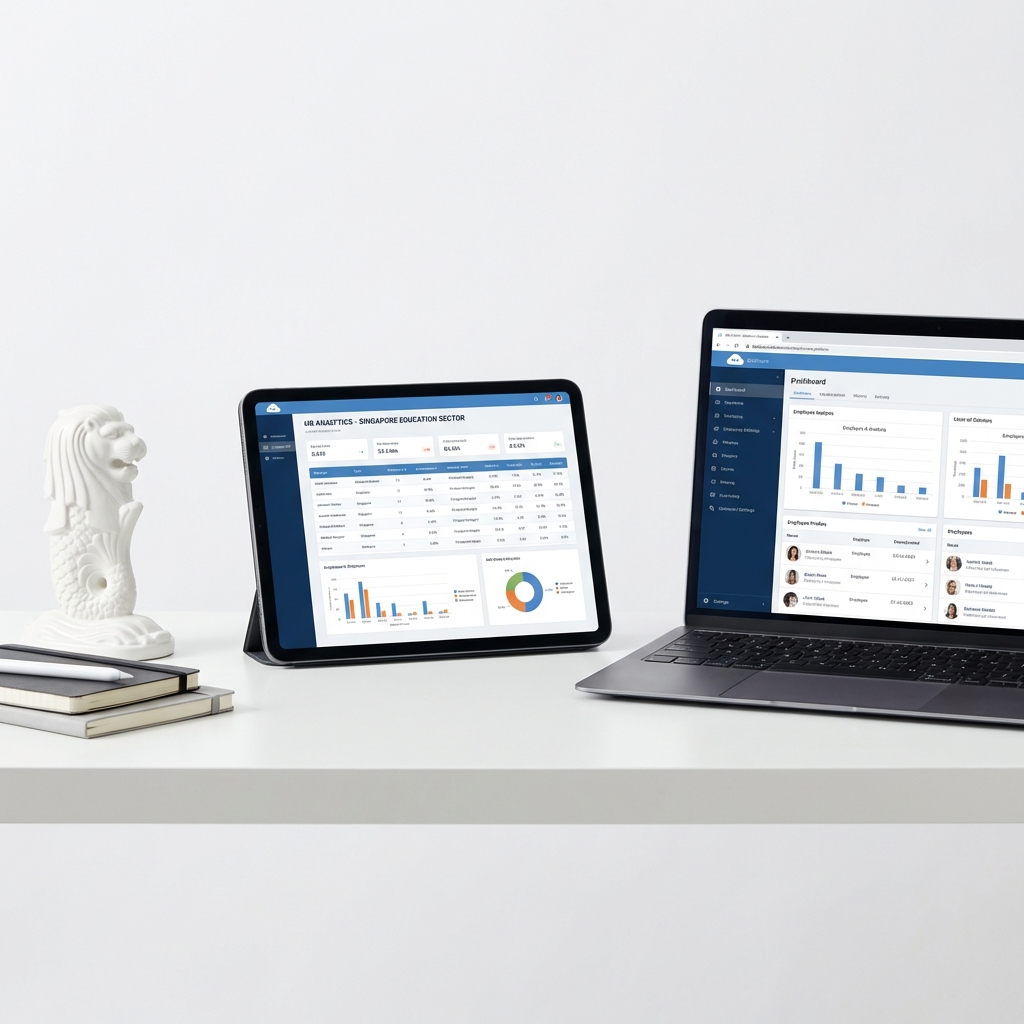
The days of relying solely on intuition for HR decisions are rapidly fading. For education companies in Singapore, HR analytics offers an unparalleled opportunity to transform raw data into actionable insights, driving more effective and equitable outcomes. By collecting and analyzing data related to talent acquisition, employee retention, performance management, and learning & development, HR departments can identify patterns, predict future trends, and proactively address challenges.
For instance, analytics can pinpoint critical skill gaps within faculty or administrative staff, enabling targeted training programs or strategic recruitment drives. It can also help understand the factors contributing to employee turnover, allowing institutions to implement effective retention strategies tailored to the unique needs of the education sector Singapore. Beyond mere reporting, HR analytics facilitates strategic workforce planning, ensuring that the right talent is in the right place at the right time to support institutional goals and student success. Leveraging sophisticated HR tools – applications for education companies in Singapore, organizations can move beyond basic metrics to predictive modeling, anticipating future talent needs and challenges. According to leading research on global human capital trends, data-driven HR is crucial for navigating modern workforce complexities.
2. The Role of AI and Automation in Future Education HR
Artificial Intelligence (AI) and automation are set to revolutionize HR functions, particularly within the education landscape. For Singaporean education companies, AI isn’t just a futuristic concept; it’s a practical solution for enhancing efficiency and refining the employee experience. AI-powered HR tools – applications for education companies in Singapore can automate routine, time-consuming tasks such as resume screening in talent acquisition, scheduling interviews, and answering common HR queries through chatbots. This frees up HR professionals to focus on more strategic initiatives like employee engagement, culture building, and complex problem-solving.
AI in HR also offers immense potential in personalized learning & development. AI algorithms can analyze an employee’s performance data, learning styles, and career aspirations to recommend highly relevant training courses, fostering continuous skill development. Furthermore, predictive analytics, powered by AI, can forecast potential issues like burnout or skill obsolescence, allowing HR to intervene proactively. From intelligent onboarding systems to sophisticated recruitment automation that matches candidates with institutional needs, AI is transforming how educational institutions manage their most valuable asset: their people.
3. Strategic HR Planning for Scalability and Innovation in Singapore
The convergence of HR analytics and AI in HR lays a powerful foundation for truly strategic workforce planning. For education companies in Singapore aiming for scalability and innovation, HR must evolve from a support function to a central strategic partner. This involves not just reacting to immediate needs but proactively shaping the workforce for the challenges and opportunities of 2026 and beyond.
Strategic planning entails leveraging analytics to forecast long-term talent demands, identify future skill requirements, and design agile organizational structures. It also means utilizing AI to personalize employee journeys, enhance employee retention through proactive support, and streamline operations. In Singapore’s competitive education market, attracting and retaining top talent requires a sophisticated approach, where HR tools – applications for education companies in Singapore become indispensable. By integrating these technologies, HR can foster a culture of continuous learning and innovation, ensuring that institutions remain competitive, adapt quickly to technological shifts and pedagogical advancements, and ultimately provide high-quality education. The goal is to build a resilient workforce capable of driving growth and embracing the future with confidence.
Partner with Shelby Global
You are looking for reliable HR Sevice Suppliers? Contact Shelby Global Now! To connect with verified talents and upgrade your orginization.
—————————————
References
– IMDA SMEs Go Digital Programme: https://www.imda.gov.sg/programme/smes-go-digital
– Singapore’s Employment Act: https://www.mom.gov.sg/employment-practices/employment-act
– Benefits of Applicant Tracking Systems: https://www.forbes.com/advisor/business/applicant-tracking-systems/#:~:text=ATS%20systems%20help%20recruiters%20sort%20through%20applications%2C%20schedule%20interviews%20and%20improve%20the%20candidate%20experience.
– The Importance of Upskilling and Reskilling Employees: https://www2.deloitte.com/us/en/insights/topics/talent/the-importance-of-upskilling-and-reskilling-employees.html
– global human capital trends: https://www2.deloitte.com/us/en/insights/focus/human-capital-trends/2023/human-capital-trends-overview.html