
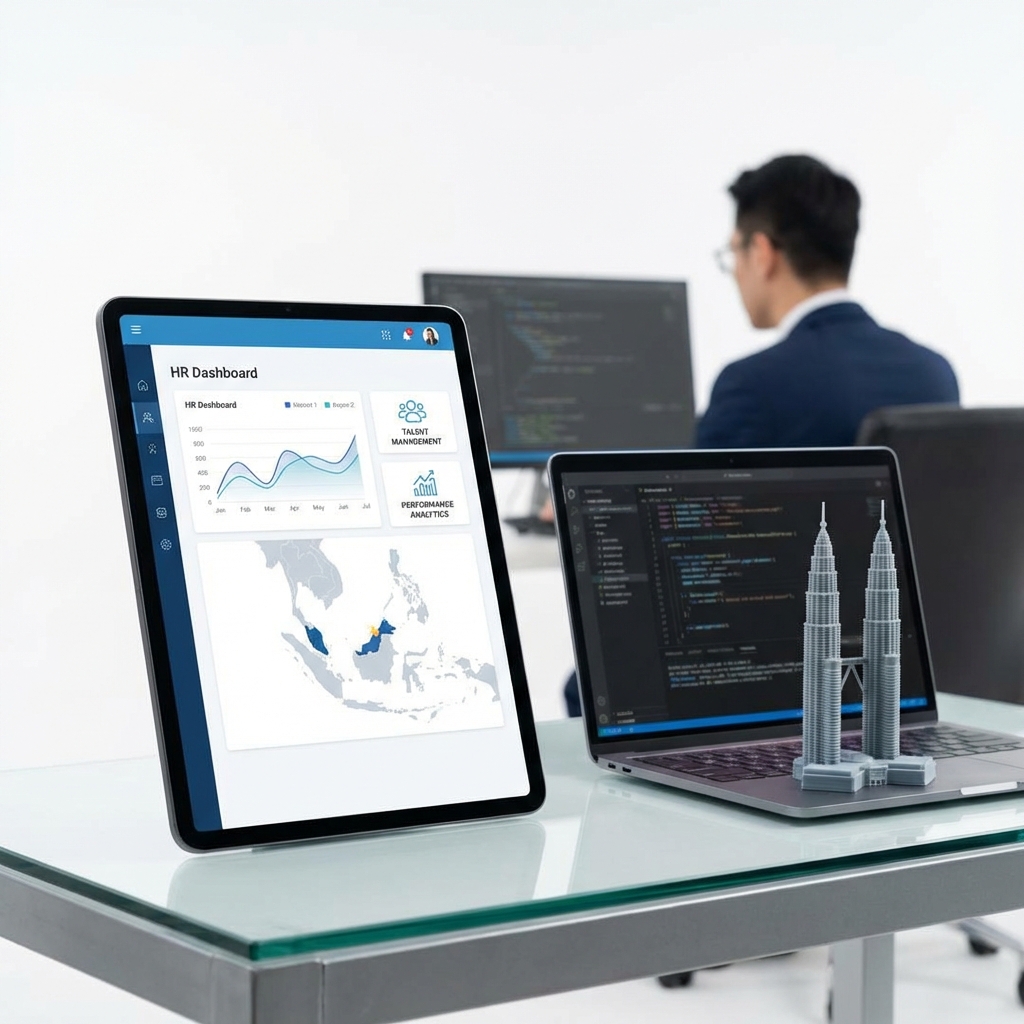
- The Evolving Landscape: Why IT Firms in Malaysia Need Modern HR Tools
- Meeting Talent Shortages in Malaysia’s IT Sector
- Navigating Digital Transformation and Remote Work Challenges
- Ensuring Compliance with Local Labor Laws and Regulations
- Essential HR Software for Streamlining Core Operations in Malaysian IT
- Human Resource Information Systems (HRIS) for Unified Data Management
- Automating Leave, Attendance, and Time Tracking
- Benefits of Employee Self-Service Portals for IT Staff
- Leveraging Talent Acquisition Tools for IT Growth in Malaysia
- 1. Applicant Tracking Systems (ATS) for Tech Recruitment
- 2. Effective Onboarding Platforms for New IT Professionals
- 3. Performance Management and Employee Engagement Software
- Navigating Payroll Solutions and Compliance for Malaysian IT Companies
- Integrated Payroll Software Features and Benefits
- Understanding Malaysian Labor Laws, EPF, SOCSO, and EIS
- Managing Benefits Administration and Compensation Packages
- Future-Proofing Your HR: Emerging Trends and Selecting the Best HR Tools
- The Rise of AI and Machine Learning in HR for Predictive Analytics
- Cloud-Based vs. On-Premise HR Solutions for IT
- Key Considerations for Implementation, Integration, and ROI
- Partner with Shelby Global
- References
Malaysia’s thriving IT sector faces significant HR challenges. Intense competition for skilled professionals and managing remote workforces demand a shift from traditional HR. IT firms in Malaysia urgently need to modernize their HR functions. Embracing advanced HR tools – applications for IT field in Malaysia is now a strategic imperative for survival and growth. These platforms offer the agility and analytical power to navigate the modern tech industry, ensuring companies remain competitive, compliant, and attractive to top talent.
The Evolving Landscape: Why IT Firms in Malaysia Need Modern HR Tools
The Malaysian IT sector, while growing, faces unique demands necessitating advanced HR solutions. Addressing critical talent shortages, adapting to hybrid work, and ensuring compliance with local labor laws requires evolving HR strategies. Modern HR tools – applications for IT field in Malaysia provide the robust infrastructure to streamline operations, enhance employee experience, and foster a productive work environment, enabling IT firms to remain competitive and drive innovation.
-
Meeting Talent Shortages in Malaysia’s IT Sector
One pressing issue for IT firms in Malaysia is the perennial talent shortage. Demand for skilled tech professionals far outstrips supply, leading to fierce competition, high turnover, and escalating recruitment costs. Traditional manual HR processes are too slow to compete effectively. Modern HR tools offer comprehensive IT talent management Malaysia solutions, automating recruitment from applicant tracking to offer management. These platforms are vital for talent development, identifying skill gaps, and recommending personalized training. HR analytics provide insights into employee engagement and turnover risks, enabling proactive retention. MDEC consistently highlights the critical need for a robust digital talent pipeline. Therefore, firms must leverage technology to attract, nurture, and retain talent, bridging the digital talent gap and securing their future in Malaysia’s competitive tech landscape.
-
Navigating Digital Transformation and Remote Work Challenges
Digital transformation has fundamentally reshaped how IT firms operate. Remote and hybrid work models are the norm, creating challenges in employee engagement, productivity, and company culture across distributed teams. Managing time off, performance reviews, and payroll for a geographically dispersed workforce with outdated methods is cumbersome. This is where advanced HR tech for remote work becomes indispensable. Cloud-based HR tools provide a centralized platform for employees to access services, submit requests, and collaborate seamlessly. They facilitate robust performance management, continuous feedback, and streamlined communication, ensuring remote teams remain connected and productive. These HR tools – applications for IT field in Malaysia also enable managers to monitor KPIs and workforce trends remotely, allowing data-driven decisions. For integrated solutions that empower remote workforces and streamline operations, learn more about HR tools – applications for IT field in Malaysia designed for modern environments.
-
Ensuring Compliance with Local Labor Laws and Regulations
Operating in Malaysia requires strict adherence to complex and evolving labor laws, including the Employment Act 1955 and various social security contributions. Non-compliance leads to severe penalties and reputational damage. For IT firms, manually tracking legislative changes, updating policies, and ensuring accurate payroll and leave calculations is an administrative nightmare. Modern HR tools are engineered to support Malaysian labor law compliance HR. They automate critical processes like payroll computation, leave management, and statutory contributions, significantly reducing errors. These systems provide a secure repository for employee records, generate compliance reports, and easily update to reflect legal amendments. This automation frees up HR personnel for strategic initiatives and ensures the company operates within the legal framework.
In conclusion, the unique challenges facing IT firms in Malaysia – from talent shortages and dynamic work environments to complex regulations – underscore the critical need for modern HR tools. These advanced HR tools – applications for IT field in Malaysia are not just administrative aids; they are strategic assets. By investing in integrated HR solutions, Malaysian IT firms can optimize human capital, foster a thriving workplace culture, and maintain a competitive edge, ensuring sustained success in the nation’s burgeoning digital economy.
Essential HR Software for Streamlining Core Operations in Malaysian IT
The dynamic and fast-paced nature of Malaysia’s IT industry demands efficiency at every level, especially within human resources. Managing a tech-savvy workforce, often accustomed to innovative solutions, requires equally advanced HR capabilities. This section focuses on fundamental HR software Malaysia IT companies need for daily administrative tasks, improving efficiency, data accuracy, and ultimately, boosting productivity and employee satisfaction. Adopting the right HR tools – applications for IT field in malaysia is no longer a luxury but a strategic imperative for competitive growth.
-
Human Resource Information Systems (HRIS) for Unified Data Management
At the core of modern HR operations lies the Human Resource Information System (HRIS). For Malaysian IT firms, an HRIS acts as a centralized repository for all employee data, moving beyond disparate spreadsheets and paper files. This includes everything from personal details, contact information, employment history, compensation, benefits enrolment, and performance reviews. A robust unified HRIS platform eliminates data silos, ensuring that all HR functions operate from a single source of truth. This not only enhances data accuracy but also significantly reduces administrative overheads associated with manual data entry and retrieval. For IT companies specifically, an HRIS Malaysia-compliant system often includes features like skill tracking, certification management, and project allocation support, which are crucial for managing specialized tech talent. By integrating various HR functions, HRIS streamlines workflows, improves compliance, and provides powerful analytics for strategic decision-making, allowing HR teams to shift focus from transactional tasks to more strategic initiatives.
-
Automating Leave, Attendance, and Time Tracking
Managing employee leave, attendance, and time tracking manually can be an incredibly time-consuming and error-prone process, particularly for growing IT companies with flexible work arrangements or project-based schedules. Automated leave and attendance software Malaysia-based companies utilize centralizes the entire process. Employees can request leave online, managers can approve or reject with a few clicks, and the system automatically updates leave balances according to company policies and local regulations. Similarly, time tracking modules accurately record work hours, overtime, and project-specific time, which is invaluable for billing clients and ensuring fair compensation. This automation drastically cuts down on administrative effort, minimizes payroll errors, and provides real-time insights into workforce availability. For IT teams often working remotely or on staggered shifts, accurate time and attendance data are critical for project planning, resource allocation, and maintaining productivity, ensuring that the company adheres to labor laws and optimizes workforce management.
-
Benefits of Employee Self-Service Portals for IT Staff
In the digital age, expecting tech-savvy IT professionals to rely on HR for every minor inquiry is inefficient and outdated. Employee self-service (ESS) portals empower staff to manage various aspects of their HR information independently. These portals, often integrated within an HRIS, allow employees to view and update personal details, access payslips, check leave balances, apply for leave, submit expense claims, and even update training records or performance goals. The benefits of employee self-service portals IT companies gain are multi-fold. Firstly, it significantly reduces the workload on HR departments, freeing them from routine administrative queries. Secondly, it enhances employee engagement and satisfaction by providing them with convenient, 24/7 access to their information, fostering a sense of ownership and transparency. For IT professionals who are accustomed to digital solutions, an intuitive ESS portal aligns with their expectations for efficiency and accessibility, contributing to a modern and progressive workplace culture in Malaysian IT firms. This digital empowerment improves data accuracy as employees directly verify their own information, minimizes back-and-forth communication, and allows HR to focus on higher-value strategic tasks.
Leveraging Talent Acquisition Tools for IT Growth in Malaysia
Malaysia’s IT sector is experiencing robust growth, fueled by digitalization initiatives and a burgeoning tech startup ecosystem. However, this growth also intensifies the competition for skilled tech talent. To thrive in this dynamic environment, Malaysian businesses must adopt sophisticated HR tools – applications for IT field in malaysia specifically designed to attract, recruit, and onboard top tech talent efficiently. These platforms are not just administrative aids; they are strategic assets that empower companies to build high-performing IT teams, reduce turnover, and ensure sustained innovation.
Investing in the right talent acquisition and management software is crucial for staying competitive. From initial candidate outreach to long-term employee engagement, these tools streamline processes, enhance candidate and employee experiences, and provide data-driven insights essential for strategic workforce planning. By integrating these solutions, companies can overcome common recruitment challenges, such as lengthy hiring cycles, skill shortages, and maintaining employee motivation in a demanding industry.

1. Applicant Tracking Systems (ATS) for Tech Recruitment
Applicant Tracking Systems (ATS) are indispensable for modern tech recruitment. In Malaysia’s competitive IT job market, an ATS automates and streamlines the entire hiring process, from job posting to offer generation. For IT roles, specialized ATS features are critical: they can parse and rank resumes based on specific technical skills (e.g., Python, Java, AWS, cybersecurity certifications), integrate with coding challenge platforms, and facilitate video interviews, making the screening of hundreds of applications manageable and efficient. This focus on technical competency ensures that recruiters can quickly identify candidates with the precise skill sets required for complex IT projects.
Beyond efficiency, an ATS significantly enhances the candidate experience. A smooth, transparent application process, coupled with timely communication, is vital for attracting top tech talent, who often have multiple offers on the table. Many systems also offer robust analytics, providing insights into sourcing channels, time-to-hire, and candidate conversion rates, allowing Malaysian companies to continuously optimize their tech recruitment strategies. These advanced HR tools are essential for managing the high volume of applications for popular tech roles and ensuring that no qualified candidate is overlooked due to manual processing.
2. Effective Onboarding Platforms for New IT Professionals
Bringing new IT professionals into a team requires more than just paperwork; it demands a structured, engaging, and efficient onboarding process. Dedicated onboarding platforms address this by automating administrative tasks and providing new hires with immediate access to essential resources, training modules, and company policies. For tech roles, this often includes setting up development environments, access to specific code repositories, and introductions to project teams and tools from day one. This significantly reduces the ramp-up time, allowing new IT professionals to become productive members of the team faster.
Beyond practicalities, these platforms play a crucial role in cultural integration and retention. Features like personalized onboarding journeys, mentor assignment functionalities, and digital introductions help new employees feel connected and valued. In a market where IT talent is scarce, reducing early turnover is paramount. An engaging onboarding experience powered by smart HR applications for IT field in Malaysia demonstrates a company’s commitment to its employees’ success, fostering a sense of belonging and reducing the likelihood of early departures.
3. Performance Management and Employee Engagement Software
Retaining IT talent in Malaysia is just as critical as acquiring it. Performance management and employee engagement software are key HR tools – applications for IT field in malaysia for fostering a positive and productive work environment for tech professionals. These platforms move beyond traditional annual reviews, offering continuous feedback loops, goal-setting capabilities (like OKRs), and 360-degree performance evaluations that are highly valued in agile IT teams.
For IT professionals, often driven by innovation and professional growth, tools that facilitate skill development, career pathing, and transparent recognition are invaluable. Engagement modules, including pulse surveys, social recognition features, and internal communication tools, help identify potential issues early and keep employees connected to the company’s mission. By providing IT teams with clear performance expectations, regular feedback, and opportunities for growth and recognition, these software solutions are instrumental in boosting morale, fostering a culture of continuous improvement, and ultimately, ensuring the long-term retention of critical tech talent, contributing significantly to a company’s sustained IT growth in Malaysia.
Navigating Payroll Solutions and Compliance for Malaysian IT Companies
In the dynamic and rapidly evolving technology landscape of Malaysia, IT companies face unique challenges, particularly when it comes to managing their human resources. Beyond recruiting top talent and fostering innovation, a critical, often underestimated, aspect is ensuring accurate and compliant payroll solutions. For any IT business operating in Malaysia, mastering payroll is not just about paying employees; it’s about strategic financial management, legal adherence, and maintaining employee trust and morale. Implementing robust HR tools – applications for IT field in Malaysia that streamline these processes is paramount for sustainable growth and avoiding costly penalties.
-
Integrated Payroll Software Features and Benefits
Modern IT companies in Malaysia require payroll solutions that go beyond simple salary calculations. Integrated payroll software offers a suite of features designed to enhance efficiency and accuracy, serving as essential HR tools for any forward-thinking business. Key functionalities often include automated salary processing, tax calculations, statutory contribution deductions (like EPF, SOCSO, and EIS), leave management integration, and robust reporting capabilities. The benefits are multifold: automation drastically reduces manual errors, saving valuable time and resources that can be redirected towards core IT projects. Real-time data access provides greater transparency and facilitates quicker decision-making for financial planning and workforce management. Furthermore, cloud-based solutions offer scalability, allowing software to grow with the company, and enhanced data security, which is critical for protecting sensitive employee information. Choosing the right payroll processing automation software can significantly impact an IT company’s operational efficiency and compliance posture.
-
Understanding Malaysian Labor Laws, EPF, SOCSO, and EIS
Compliance with Malaysian labor laws and statutory contributions is non-negotiable for all employers, including IT firms. The Employment Act 1955, along with other related legislations, dictates minimum wages, working hours, leave entitlements, and termination procedures. Beyond the basic salary, employers are mandated to contribute to the Employees Provident Fund (EPF), Social Security Organization (SOCSO), and Employment Insurance System (EIS). EPF is a compulsory savings scheme for retirement, while SOCSO provides social protection benefits for employees in case of workplace injuries or occupational diseases. EIS offers financial assistance to retrenched workers and helps them secure new employment. Misunderstanding or non-compliance with these regulations can lead to severe fines, legal action, and reputational damage. Therefore, a deep understanding of Malaysian labor compliance is crucial, and utilizing payroll systems that are regularly updated to reflect the latest legal changes is vital for ensuring your business operates within the legal framework. For detailed information on specific labor laws and regulations in Malaysia, employers can refer to authoritative sources such as the Department of Labour Peninsular Malaysia (JTKSM).
-
Managing Benefits Administration and Compensation Packages
Attracting and retaining top IT talent in Malaysia requires more than just a competitive salary; a comprehensive benefits package is often a deciding factor. Effective benefits administration involves managing health insurance, medical benefits, performance bonuses, professional development allowances, and various leave types (annual, sick, maternity, paternity). IT companies often need to be creative and flexible with their compensation packages to stand out in a competitive talent market. This might include offering flexible work arrangements, remote work options, or specific technology-related perks. Robust HR tools can simplify the administration of these diverse benefits, ensuring that entitlements are accurately calculated and managed, and that employees are clearly informed of their benefits. A well-structured compensation and employee benefits administration strategy not only improves employee satisfaction and retention but also strengthens the company’s employer brand, making it a more attractive workplace for highly sought-after IT professionals. Regularly reviewing and benchmarking compensation against industry standards is key to remaining competitive and fair.
In conclusion, for Malaysian IT companies, navigating the complexities of payroll and compliance is a cornerstone of operational excellence. By investing in integrated payroll software, staying abreast of evolving labor laws, and strategically managing benefits administration, businesses can ensure accuracy, foster employee trust, and mitigate legal risks. These efforts collectively contribute to a more stable, compliant, and attractive workplace, ultimately supporting the sustained growth and success of the IT sector in Malaysia.
Future-Proofing Your HR: Emerging Trends and Selecting the Best HR Tools
In the dynamic and hyper-competitive landscape of Malaysia’s IT sector, human resources (HR) functions are no longer just administrative; they are strategic imperatives. As we approach 2026, IT firms in Malaysia face the dual challenge of attracting and retaining top tech talent while navigating rapid technological advancements. The key to success lies in intelligently leveraging advanced HR tools – applications for IT field in malaysia that can streamline operations, enhance employee experience, and provide actionable insights. Future-proofing your HR involves understanding emerging trends and making informed decisions about the best HR tools for your specific needs.
-
The Rise of AI and Machine Learning in HR for Predictive Analytics
Artificial Intelligence (AI) and Machine Learning (ML) are no longer futuristic concepts but integral components transforming HR. For IT firms, these technologies are revolutionizing how talent is identified, nurtured, and retained. Predictive analytics, powered by AI and ML, can analyze vast datasets to forecast future HR trends, such as potential employee turnover, skill gaps, and recruitment needs. Imagine identifying employees at risk of leaving even before they start looking, allowing proactive intervention through personalized development plans or improved compensation strategies. This capability is invaluable in Malaysia’s competitive IT talent market, where skilled professionals are highly sought after.
AI-driven tools can automate resume screening, identify best-fit candidates based on job requirements and cultural alignment, and even personalize learning and development paths. For instance, ML algorithms can analyze performance data and recommend specific training modules to upskill employees, ensuring your IT workforce remains at the cutting edge. According to Forbes, AI is fundamentally reshaping the HR landscape, driving efficiencies and enabling more strategic decision-making. Embracing these advanced HR tools allows Malaysian IT firms to move beyond reactive HR to a proactive, data-driven approach that anticipates future needs and optimizes human capital.
-
Cloud-Based vs. On-Premise HR Solutions for IT
When selecting new HR tools – applications for IT field in malaysia, a critical decision for IT firms revolves around deployment models: cloud-based or on-premise. Each option presents distinct advantages and considerations, particularly for tech-savvy organizations.
Cloud-Based HR Solutions: These offer unparalleled flexibility, scalability, and accessibility. Hosted by a third-party provider, cloud solutions reduce the need for significant upfront infrastructure investment and ongoing maintenance, making them highly attractive to agile IT firms. They facilitate remote work, crucial for today’s hybrid models, and typically receive automatic updates and security patches, ensuring your HR tech stack remains current and secure. For an industry that thrives on rapid innovation, the agility and ease of integration offered by cloud platforms often make them the preferred choice.
On-Premise HR Solutions: While cloud solutions dominate, some larger or highly regulated IT firms might still consider on-premise options. These systems are installed and managed internally on the company’s own servers, offering maximum control over data security and customization. However, they demand substantial capital expenditure, dedicated IT resources for maintenance and updates, and can be less flexible for remote access or scaling. The choice often boils down to a balance between control, cost, and the specific security and compliance requirements of the IT firm.

-
Key Considerations for Implementation, Integration, and ROI
Implementing new HR tools is a significant undertaking that extends beyond mere software purchase. For IT firms in Malaysia, successful deployment hinges on thoughtful planning, seamless integration, and a clear understanding of the return on investment (ROI).
Implementation: A phased implementation approach, clear communication, and comprehensive training are vital. Involve key stakeholders, including HR, IT, and employee representatives, from the outset to ensure user adoption and address potential resistance to change. Define clear objectives and success metrics for the rollout.
Integration: This is paramount for IT firms. New HR systems must seamlessly integrate with existing enterprise resource planning (ERP) systems, payroll software, project management tools, and other internal platforms. Poor integration leads to data silos, manual double-entry, and inefficiencies – negating the benefits of new technology. Prioritize tools with robust APIs and a track record of successful integrations within complex IT environments.
ROI: Beyond immediate cost savings, the true ROI of advanced HR tools – applications for IT field in malaysia for IT firms lies in strategic benefits. These include improved talent acquisition and retention rates, increased employee engagement and productivity, enhanced data-driven decision-making, and greater compliance. Measuring ROI should involve tracking metrics like time-to-hire, employee turnover rates, training effectiveness, and HR operational costs. A well-chosen and implemented HR tool can directly contribute to business growth, innovation, and a stronger competitive edge in the rapidly evolving Malaysian IT sector.
By carefully evaluating emerging trends like AI and ML, making informed decisions on deployment models, and focusing on seamless implementation and integration, IT firms in Malaysia can select HR tools that not only meet current needs but also drive strategic success by 2026 and beyond.
Partner with Shelby Global
You are looking for reliable HR Sevice Suppliers? Contact Shelby Global Now! To connect with verified talents and upgrade your orginization.
—————————————
References
– MDEC pushes for more digital talents to boost Malaysia’s digital economy: https://www.thestar.com.my/tech/tech-news/2021/04/05/mdec-pushes-for-more-digital-talents-to-boost-malaysias-digital-economy
– Why Your Business Needs HR Software | SHRM: https://www.shrm.org/resources-and-tools/hr-topics/technology/pages/why-your-business-needs-hr-software.aspx
– Future of ATS Is Bright, Report Finds: https://www.shrm.org/resources-and-tools/hr-topics/technology/pages/future-of-ats-is-bright-report.aspx
– Department of Labour Peninsular Malaysia (JTKSM): https://jtk.mohr.gov.my/en/
– How AI Is Reshaping The HR Landscape: https://www.forbes.com/sites/forbeshumanresourcescouncil/2023/10/26/how-ai-is-reshaping-the-hr-landscape/