- Why Do Production Fields Need Specialized HR Tools?
- 1. Managing Complex Shift Schedules Effectively
- 2. Ensuring Workplace Safety Compliance
- 3. Tracking Blue-Collar Workforce Productivity
- Key Features of Production HR Applications
- 1. Biometric Time and Attendance Tracking
- 2. Mobile-First Leave and Claim Management
- 3. Seamless Payroll Integration for Hourly Wages
- Top HR Tools for Singapore Manufacturers
- 1. Local Platforms with Strict MOM Compliance
- 2. Cloud-Based Global HR Management Systems
- 3. Specialized Roster and Shift Management Apps
- Implementing HR Tech on the Factory Floor
- Future Trends for Production HR Applications
- 1. AI-Driven Shift Predictions and Optimization
- 2. Wearable Tech for Health and Safety Tracking
- 3. Automated Real-Time Compliance Audits
- Partner with Shelby Global
- References
Why Do Production Fields Need Specialized HR Tools?
In the heart of Singapore’s industrial landscape, manufacturing and production firms operate under a unique set of pressures. From the high costs of labor to strict regulatory frameworks established by the Ministry of Manpower (MOM), the operational environment is demanding. Traditional administrative approaches often fall short when applied to a shop floor where precision, timing, and safety are non-negotiable. This is where specialized HR tools – applications for production field in singapore become indispensable.
Unlike service-oriented industries that may rely on flexible remote work, production environments are location-dependent and process-driven. The reliance on shift work, the necessity for stringent safety protocols, and the need for granular productivity tracking create a complex ecosystem that requires dedicated digital architecture. Without specialized systems, businesses face significant risks, including payroll errors, compliance breaches, and stalled production output.
1. Managing Complex Shift Schedules Effectively
In Singaporean factories, round-the-clock operations are the norm, often involving rotating shifts, weekend work, and overtime mandates. Manually calculating these shifts in Excel is a recipe for disaster. It leads to human error, worker fatigue, and frequent grievances regarding unfair scheduling. Specialized HR tools designed for production fields incorporate automated shift management engines that align with local labor laws. These platforms allow managers to visualize shift coverage, automatically handle shift swaps, and ensure that fatigue management guidelines are respected. By digitizing scheduling, companies reduce the administrative burden on supervisors and ensure that every production line is staffed by the right personnel at the right time.
2. Ensuring Workplace Safety Compliance
Safety is the top priority in any industrial setting. Singapore’s Workplace Safety and Health Council emphasizes the critical nature of risk management, training certifications, and incident reporting. Specialized HR platforms integrate these safety requirements directly into the employee’s profile. For instance, the system can automatically block an employee from clocking into a high-risk area if their certification has expired or if they have not completed the required safety refresher courses. This proactive approach to compliance not only protects the workforce but also shields the company from the devastating legal and financial consequences of workplace accidents.
3. Tracking Blue-Collar Workforce Productivity
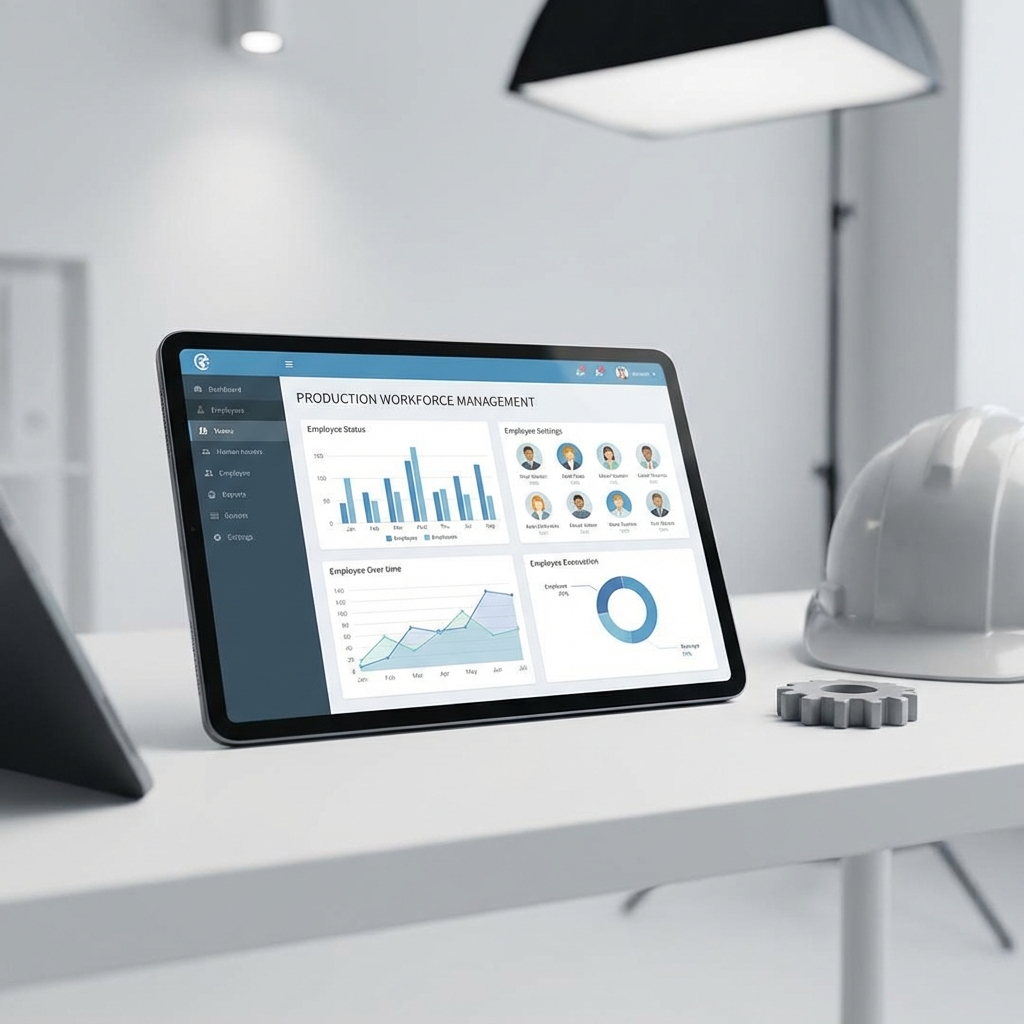
Measuring output in a production environment requires more than just time-and-attendance tracking. It involves understanding the correlation between hours worked and units produced. Advanced HR tools designed for manufacturing offer features like integrated time-tracking, skill-based labor allocation, and real-time performance analytics. By capturing data directly from the floor, these tools help management identify bottlenecks, assess the efficiency of different shifts, and provide actionable insights for workforce optimization. This data-driven approach allows for more accurate labor costing and informed decision-making regarding staffing levels and performance-based incentives, ultimately driving a more profitable and agile production operation.
In summary, the transition toward specialized HR software is not merely a convenience but a strategic imperative. By addressing the specific complexities of the shop floor—shifting, safety, and productivity—Singaporean manufacturing firms can maintain a competitive edge while fostering a safer, more transparent, and highly productive work environment.
Key Features of Production HR Applications
In the fast-paced landscape of industrial manufacturing, selecting the right technology is critical for operational efficiency. When evaluating HR tools – applications for production field in Singapore, organizations must look beyond standard office-based HR software. Factory environments demand systems that account for shift-based scheduling, high turnover rates, and the physical nature of blue-collar work. An effective solution balances compliance with the Employment Act of Singapore while streamlining complex administrative tasks for non-desk employees.
1. Biometric Time and Attendance Tracking
Traditional punch cards or manual logs are prone to errors and buddy-punching, which can lead to significant payroll inaccuracies. For production environments, robust biometric integration is non-negotiable. Modern systems utilize facial recognition, fingerprint scanning, or geofenced mobile check-ins to ensure that time-stamped data is indisputable. By implementing advanced HR tools – applications for production field in Singapore, plant managers can gain real-time visibility into workforce attendance. This ensures that production lines are adequately staffed at all times and provides an immutable audit trail for labor compliance reporting.
2. Mobile-First Leave and Claim Management
The majority of production staff do not have access to desktop computers during their shifts. To drive engagement and reduce administrative burden, HR systems must be mobile-first. A self-service portal allows workers to request leave, view rosters, and submit medical claims directly from their smartphones. This decentralization of data entry empowers employees while reducing the volume of paper-based requests that HR departments often struggle to process. When companies invest in HR tools – applications for production field in Singapore, they effectively bridge the digital divide between management and floor staff, fostering a culture of transparency and ease of access.
3. Seamless Payroll Integration for Hourly Wages
Manufacturing payroll is inherently complex due to varying shift patterns, overtime calculations, night-shift allowances, and public holiday premiums. A siloed payroll process often leads to delayed payments and workforce dissatisfaction. The ideal production-grade application must feature seamless integration, where attendance data flows directly into the payroll engine. This automation eliminates manual data entry, significantly reducing human error. In the Singaporean context, where regulatory scrutiny is high, automated payroll engines ensure that CPF (Central Provident Fund) contributions and tax filings are calculated precisely based on actual hours worked. By prioritizing systems that offer this level of integration, manufacturers can ensure timely disbursement of wages, which is a key driver for retention in a competitive labor market.
Ultimately, choosing the right digital infrastructure for your plant is an investment in human capital. By focusing on biometric accuracy, mobile accessibility, and automated payroll logic, companies can streamline their HR operations, allowing leaders to focus on core production goals rather than administrative bottlenecks.
Top HR Tools for Singapore Manufacturers
The manufacturing sector in Singapore is currently undergoing a significant digital transformation. As production facilities balance high labor costs with the need for peak operational efficiency, adopting the right HR tools – applications for production field in singapore has become a strategic necessity. Managing a diverse workforce that includes shift workers, foreign talent, and administrative staff requires precision, compliance, and real-time visibility.

For manufacturers looking to streamline their workforce operations, exploring a range of HR tools – applications for production field in singapore is the first step toward reducing administrative overhead and human error.
1. Local Platforms with Strict MOM Compliance
Singapore’s Ministry of Manpower (MOM) enforces rigorous regulations regarding foreign worker levies, overtime pay, and Employment Act requirements. For manufacturers, non-compliance can lead to hefty fines or the loss of work permits. Local HR platforms such as HReasily or JustLogin are engineered with these specific legislative guardrails in mind. These platforms automatically calculate CPF contributions, generate IR8A forms, and ensure that shift-based salary calculations align perfectly with local labor laws. By using these localized systems, production managers can focus on output targets rather than worrying about regulatory updates, as these providers typically update their software automatically whenever MOM policies shift.
2. Cloud-Based Global HR Management Systems
As many Singaporean manufacturers expand their footprint across Southeast Asia, they require robust systems that can handle multi-country payroll and cross-border workforce management. Solutions like Workday or SAP SuccessFactors offer scalable cloud infrastructure that integrates seamlessly with existing ERPs. These global platforms provide a unified view of human capital, which is vital for multinational manufacturing firms. They allow for standardized reporting across different production sites, ensuring that HR analytics are consistent. Moreover, these systems offer advanced security features, protecting sensitive employee data in accordance with Singapore’s Personal Data Protection Act (PDPA), as detailed in the official guidelines from the Personal Data Protection Commission.
3. Specialized Roster and Shift Management Apps
The core of any manufacturing operation is the floor worker. Managing complex 24/7 production cycles, rotating shifts, and last-minute call-outs requires more than a spreadsheet. Specialized applications like Deputy or Humanity have transformed how plant managers handle rosters. These tools offer mobile-first interfaces where workers can request shift swaps, log time-in and time-out via geofencing, and view their schedules in real-time. This reduces the burden on HR departments to manually track hours and reconcile shift differentials. By integrating these applications into the daily workflow, manufacturers can achieve a significant reduction in absenteeism and ensure that production lines are never understaffed, ultimately leading to higher machine utilization and better production throughput.
In conclusion, choosing the right HR technology is about matching the software capabilities with the unique demands of the Singaporean manufacturing environment. Whether it is ensuring total compliance with local laws, scaling globally, or optimizing daily shift operations, the right investment will pay dividends in operational resilience.
Implementing HR Tech on the Factory Floor
In the evolving landscape of Singapore’s manufacturing sector, the transition from paper-based processes to digital solutions is no longer a luxury—it is an operational necessity. As organizations look to streamline human capital management, adopting HR tools – applications for production field in singapore has become a strategic priority. However, the successful implementation of these systems among production and operational staff requires a nuanced approach that considers the unique environmental constraints of the factory floor.
1. Overcoming Digital Resistance Among Workers
Digital transformation often encounters friction, particularly among blue-collar staff who may feel that technology introduces unnecessary complexity to their physical workflow. To bridge this gap, HR leaders must frame new software not as a monitoring tool, but as an enabler for transparency and ease of access. When workers understand that a mobile-friendly HR tools – applications for production field in singapore allows them to request leave, check pay slips, or access shift schedules in seconds rather than days, adoption rates climb. Transparency in data usage and a clear demonstration of “what’s in it for them” are crucial to mitigating skepticism and fostering a culture of digital confidence.
2. Training Production Supervisors and Managers
Supervisors are the linchpin of any operational rollout. If these leaders are not fully bought into the new technology, they will inadvertently discourage their teams from using it. Training must be hands-on, focusing on how these tools solve specific management bottlenecks, such as managing overtime requests or tracking skills certifications. According to insights from the Ministry of Manpower, ensuring that middle management is equipped to interpret and communicate digital data is essential for maintaining productivity during the transition phase. By transforming supervisors into “digital champions,” organizations ensure that support is available right on the floor, rather than being siloed in an office.
3. Setting Up Accessible On-Site Kiosks
While many employees may have smartphones, assuming total digital accessibility can lead to exclusion. Creating dedicated physical touchpoints, such as on-site digital kiosks, ensures that every worker has an equal opportunity to interact with HR applications. These stations should be placed in high-traffic common areas like breakrooms or near time-clock stations, featuring intuitive, touch-screen interfaces that require minimal login friction. When setting these up, prioritize kiosks that are ergonomically placed and offer multi-language support, reflecting the diverse demographics of the Singaporean workforce. By decentralizing HR access, you empower operational staff to take ownership of their personal records, thereby reducing the administrative burden on HR teams and improving overall employee satisfaction. Through these three pillars—cultural integration, managerial empowerment, and physical accessibility—factories can successfully modernize their workforce management, ensuring that no employee is left behind in the digital shift.
Future Trends for Production HR Applications
As the manufacturing landscape in Singapore continues to evolve toward Industry 4.0, the integration of specialized technology is no longer optional—it is a competitive necessity. By 2026, the intersection of advanced analytics and workforce management will redefine how factories operate. Organizations seeking to optimize their human capital must leverage robust HR tools – applications for production field in singapore to maintain operational excellence in a high-cost, high-skill environment.

1. AI-Driven Shift Predictions and Optimization
The manufacturing floor is notoriously difficult to staff due to fluctuating demand and unexpected machine downtime. By 2026, AI-driven predictive modeling will replace manual scheduling. These systems analyze historical production data, seasonal demand spikes, and individual employee skill matrices to suggest optimal shift patterns. This minimizes idle time while preventing operator burnout. By integrating Industry 4.0 frameworks, Singaporean manufacturers can ensure that the right technician is on the line exactly when needed, significantly boosting Overall Equipment Effectiveness (OEE).
2. Wearable Tech for Health and Safety Tracking
Workplace safety is paramount in the production environment. Future-forward HR applications are increasingly tethered to wearable IoT devices. These tools monitor physiological metrics—such as heart rate, body temperature, and proximity to hazardous machinery—in real-time. If an operator shows signs of extreme fatigue or enters a restricted zone, the HR application triggers an immediate alert to the floor supervisor. This shift from reactive safety protocols to proactive, data-informed intervention is set to become the industry standard for Singapore’s manufacturing sector, where maintaining strict safety standards is a critical regulatory requirement.
3. Automated Real-Time Compliance Audits
Maintaining regulatory compliance with Singapore’s Ministry of Manpower (MOM) guidelines regarding work hours, foreign worker quotas, and safety certifications is a massive administrative burden. By 2026, the manual auditing process will be rendered obsolete by automated compliance engines. These HR applications will continuously monitor workforce data against current labor laws, automatically flagging potential violations before they occur. Whether it is tracking the validity of specialized certifications for heavy machinery or ensuring strict adherence to overtime limits, automation provides HR teams with a real-time dashboard of compliance status. This not only reduces the risk of penalties but also frees HR professionals to focus on high-level talent development and strategic organizational growth.
As we move closer to 2026, the adoption of these technologies will serve as the primary differentiator between factories that struggle with turnover and inefficiencies, and those that thrive in Singapore’s sophisticated industrial ecosystem. Investing in these digital tools ensures that the production field remains agile, safe, and fully compliant.
Partner with Shelby Global
You are looking for reliable HR Sevice Suppliers? Contact Shelby Global Now! To connect with verified talents and upgrade your orginization.
—————————————
References
– Workplace Safety and Health Council: https://www.wshc.sg/
– Ministry of Manpower Employment Act: https://www.mom.gov.sg/employment-practices/employment-act
– Personal Data Protection Commission Singapore: https://www.pdpc.gov.sg/
– Ministry of Manpower Singapore: https://www.mom.gov.sg/
– Industry 4.0: Reinvigorating manufacturing productivity for the long term: https://www.mckinsey.com/capabilities/operations/our-insights/industry-4-0-reinvigorating-manufacturing-productivity-for-the-long-term