Why Effective Job Descriptions are Crucial for Vietnam’s Production Sector
In Vietnam’s rapidly expanding manufacturing landscape, attracting and retaining top-tier talent for production management roles is not merely an HR function – it’s a strategic imperative. The efficiency, quality, and global competitiveness of a manufacturing operation hinge significantly on the capabilities of its management team. At the heart of successful talent acquisition and retention lies the humble yet powerful job description (JD). Well-crafted JDs serve as the cornerstone for effective recruitment, employee onboarding, and long-term career development, making them utterly crucial for Vietnam’s dynamic production sector.
-
The Role of JDs in Vietnam’s Manufacturing Talent Market
Effective job descriptions are foundational to navigating Vietnam’s vibrant and competitive manufacturing talent market. For production management roles, JDs transcend simple task lists, becoming critical tools for defining expectations, mapping career paths, and fostering genuine skill alignment. In an environment demanding high levels of operational efficiency and manufacturing excellence, a clear JD acts as the first point of contact for potential candidates, shaping their perception of the role and the company’s employer branding. It communicates not just responsibilities, but also the required competencies, performance metrics, and the strategic impact of the position within the organization.
For companies seeking to attract skilled professionals, particularly for specialized roles like Production Managers, Operations Directors, or Quality Assurance Heads, robust Job Description Templates for Manager Levels in production field in vietnam are indispensable. They empower recruiters to identify suitable candidates more accurately and help candidates self-assess their fit, leading to a more streamlined and positive candidate experience. Moreover, a well-defined JD is a vital document for internal stakeholders, ensuring everyone from HR to senior management understands the value and requirements of the role, thus facilitating better workforce development and succession planning. For more comprehensive templates, explore our resources on Job Description Templates for Manager Levels in production field in vietnam.
-
Key Challenges in Recruiting Production Managers in Vietnam
Vietnam’s rapid industrialization and integration into global supply chains have created immense demand for skilled production managers, leading to unique recruitment challenges. Companies often struggle with a limited pool of highly experienced local talent, competition from multinational corporations, and the need to align international management practices with local cultural nuances. Unclear or generic job descriptions only exacerbate these issues, creating confusion and inefficiencies in the hiring process. Without precise details on responsibilities, required technical skills (e.g., Lean Manufacturing, Six Sigma), and leadership competencies, businesses risk attracting misaligned candidates who either lack the necessary expertise or quickly become disengaged due to unmet expectations. This contributes to higher turnover rates and extended hiring cycles, directly impacting operational efficiency and project timelines.
The absence of clear JDs also hinders effective candidate screening, making it difficult to assess true potential and cultural fit. In Vietnam’s dynamic manufacturing landscape, characterized by continuous innovation and a strong push for global competitiveness, having a precise understanding of a role’s demands is paramount. Businesses must overcome these hurdles by investing in detailed JDs that articulate not only the technical requirements but also the strategic contribution of each manager, setting clear industry standards for talent attraction.
-
How Clear JDs Drive Talent Acquisition & Retention in Production
The strategic value of clear job descriptions extends far beyond initial recruitment; they are powerful drivers of both talent attraction and employee retention. For potential candidates, a transparent JD provides an accurate preview of the role, fostering realistic expectations and minimizing mismatches. This clarity translates into a stronger initial connection with the company and a higher likelihood of attracting individuals who are genuinely qualified and motivated. Once hired, a detailed JD acts as a foundational document for goal setting, performance reviews, and career progression, ensuring that managers understand their contribution to manufacturing excellence and how their efforts align with the company’s overall HR strategy.
By clearly outlining responsibilities, expected outcomes, and reporting structures, JDs reduce ambiguity, improve communication, and foster a sense of purpose among production managers. This clarity is particularly vital for sustaining high morale and productivity in demanding production environments. Ultimately, well-defined JDs contribute significantly to lowering turnover rates by ensuring that employees feel valued, understood, and supported in their roles. This continuous reinforcement of expectations and opportunities through precise JDs is a key factor in building a stable, high-performing workforce essential for Vietnam’s long-term industrial success and its pursuit of global competitiveness.
Core Components of a Production Manager JD in Vietnam
Delve into the essential elements that every comprehensive job description for a production or factory manager in Vietnam must include, emphasizing both general industry best practices and local considerations like Vietnam labor laws. Crafting an effective Job Description Templates for Manager Levels in production field in vietnam is crucial for attracting top talent, ensuring legal compliance, and setting clear expectations for critical leadership roles within the manufacturing sector.
1. Essential Responsibilities: Operations & Manufacturing Management
A robust production manager job description for the Vietnamese market must clearly delineate the core operational responsibilities. This section typically covers strategic planning, execution, and oversight of all manufacturing processes. Key duties include developing and implementing production schedules to meet targets, managing inventory and supply chains efficiently, and ensuring optimal utilization of machinery and human resources. Emphasis should be placed on continuous improvement initiatives, such as Lean Manufacturing and Six Sigma methodologies, to enhance productivity, reduce waste, and improve overall operational efficiency. Furthermore, the role involves stringent quality control measures, ensuring products consistently meet national and international standards. A crucial aspect is also the management of factory safety protocols, adhering to industrial health and safety regulations, and fostering a culture of workplace security. Financial oversight, including budget management for production operations, cost control, and performance reporting, is also paramount. Finally, a production manager in Vietnam is responsible for leading, motivating, and developing a diverse team, promoting a collaborative and high-performance work environment. Clearly outlining these responsibilities helps potential candidates understand the multifaceted nature of a production or factory manager role in Vietnam.
2. Required Skills & Qualifications: Technical, Leadership, & Soft Skills
To succeed as a production or factory manager in Vietnam, candidates require a blend of technical expertise, strong leadership capabilities, and well-honed soft skills. Technically, a bachelor’s degree in Engineering (Industrial, Mechanical, Chemical, or Manufacturing) or a related field is often a minimum requirement, with a master’s degree or relevant certifications (e.g., PMP, Lean Six Sigma Black Belt) being highly desirable. Practical experience of 5-10 years in a manufacturing environment, with at least 3-5 years in a supervisory or managerial capacity, is typically expected. Proficiency in production management software (e.g., ERP, MRP systems) and a deep understanding of manufacturing processes, quality assurance techniques, and supply chain logistics are critical. On the leadership front, the JD should highlight the need for strategic thinking, decision-making under pressure, and the ability to inspire and mentor large teams. Strong communication skills, both verbal and written, are essential for interacting with diverse stakeholders, from shop floor employees to senior management and external partners. Given Vietnam’s multicultural business environment, cross-cultural communication and adaptability are invaluable. Other vital soft skills include problem-solving, analytical thinking, adaptability to changing market demands, and a results-oriented mindset. A production manager job description template should clearly articulate these competencies to attract candidates with the right profile.
3. Understanding Vietnam’s Labor Law & Regulatory Compliance for Managers
For any managerial role in Vietnam, particularly in production, a thorough understanding and strict adherence to the country’s labor laws and regulatory framework are non-negotiable. The job description must emphasize the manager’s responsibility for ensuring compliance with the Vietnam’s evolving labor laws, including but not limited to, regulations concerning working hours, overtime, public holidays, leave entitlements, minimum wages, and social insurance contributions. Managers must be adept at handling employment contracts, disciplinary procedures, and grievance mechanisms in accordance with local statutes to avoid legal pitfalls and foster a fair workplace. Knowledge of health and safety regulations mandated by the Ministry of Labor, Invalids and Social Affairs (MOLISA) is paramount to ensure a safe working environment and prevent industrial accidents. This includes regular safety training, equipment maintenance, and emergency preparedness. Furthermore, understanding the nuances of local cultural practices and employee relations within the Vietnamese context is vital for effective team management and maintaining industrial harmony. A production manager’s JD in Vietnam should explicitly state the expectation of compliance with all relevant Vietnamese laws and ethical standards, underscoring the legal and social responsibilities inherent in the position. This commitment helps mitigate risks and builds a reputation as a responsible employer within the Vietnamese business landscape.
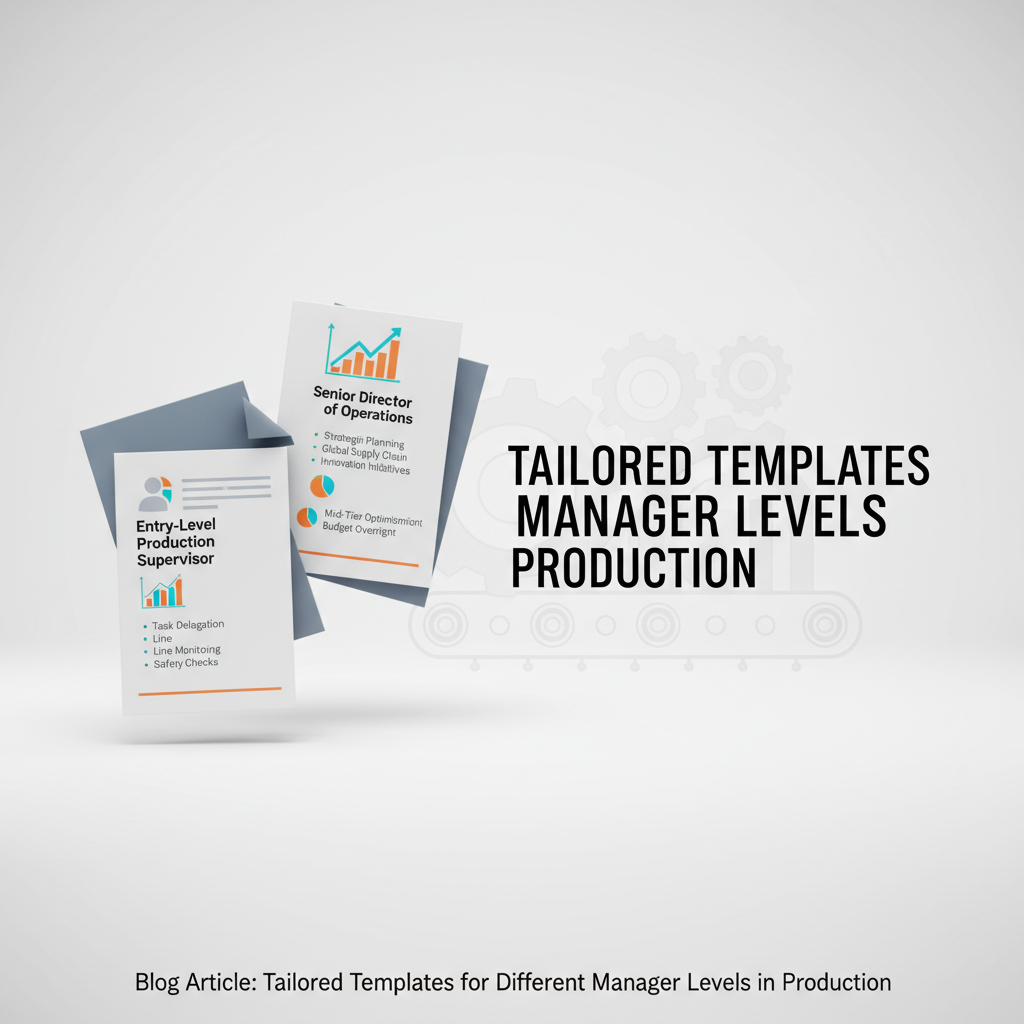
Tailored Templates for Different Manager Levels in Production
Provides specific outlines and adaptable templates for various management levels within the production field, from entry-level supervisors to experienced senior operations managers, covering their unique roles and KPI for production managers.
In Vietnam’s dynamic and rapidly expanding manufacturing sector, clear and precise job descriptions are not just bureaucratic necessities; they are strategic tools. For companies aiming to attract top talent, streamline operations, and drive growth, having Job Description Templates for Manager Levels in production field in Vietnam is paramount. These templates ensure that every role, from the shop floor supervisor to the executive in charge of an entire factory, has clearly defined responsibilities, required skills, and measurable performance indicators. This specificity aids effective recruitment, performance management, and fosters a robust career path production management. Understanding the nuanced demands of various production management roles is crucial for operational excellence in Vietnam manufacturing jobs.
1. Entry-Level Production Supervisor JD Template
The entry-level production supervisor is the frontline leader, directly overseeing production activities and ensuring smooth daily operations. This role is fundamental to maintaining efficiency and quality on the manufacturing floor. A well-crafted JD for a production supervisor Vietnam should emphasize hands-on leadership and immediate problem-solving skills.
Key Responsibilities:
- Supervise production staff, ensuring adherence to schedules and quality standards.
- Monitor daily output, resolving minor operational issues promptly.
- Enforce safety protocols and maintain a clean, organized work environment.
- Provide on-the-job training and guidance to team members, covering essential production team lead duties.
- Report daily production metrics.
Key Performance Indicators (KPIs):
- Daily/weekly production targets achieved.
- Waste and scrap reduction rates.
- Safety incident rates.
- Production line efficiency and uptime.
Required Skills and Qualifications:
- High school diploma or vocational training.
- 1-3 years of manufacturing experience, ideally with some lead experience.
- Strong communication and interpersonal skills.
- Basic understanding of production processes and machinery.
- Ability to motivate and manage a small team.
This template provides a solid foundation for defining production line supervisor responsibilities, crucial for maintaining operational flow.
2. Mid-Level Production Manager JD Example
A mid-level production manager takes on broader responsibilities, bridging daily operations and strategic objectives. This role often involves managing multiple production lines or departments and plays a critical part in process improvement and resource optimization. The JD for this position, akin to a comprehensive factory manager job description on a smaller scale, demands a blend of operational expertise and managerial acumen.
Key Responsibilities:
- Manage overall production processes, ensuring efficient resource allocation and cost-effective operations.
- Develop and implement production plans, aligning with company goals and demand.
- Lead continuous improvement initiatives (e.g., Lean, Six Sigma) to enhance productivity.
- Oversee budget management for assigned areas, controlling expenditures.
- Recruit, train, and develop production supervisors and staff, fostering manufacturing leadership roles.
- Collaborate with engineering, quality control (incorporating aspects from a quality control manager JD), and supply chain.
- Ensure compliance with regulatory requirements.
Key Performance Indicators (KPIs):
- Overall Equipment Effectiveness (OEE).
- Production cost per unit and on-time delivery rates.
- Inventory turnover rates.
- Employee training and development metrics.
- Quality defect rates.
Required Skills and Qualifications:
- Bachelor’s degree in Engineering, Business, or related field.
- 5-7 years of progressive experience in manufacturing management.
- Proven track record in process improvement.
- Strong analytical, organizational, and project management skills.
- Excellent leadership and communication abilities.
- Understanding of the broader industrial manager job scope.
3. Senior Operations/Factory Manager JD Framework
At the pinnacle of production management, the Senior Operations or Factory Manager is responsible for the overall strategic direction and profitability of the entire manufacturing plant or multiple facilities. This role requires exceptional leadership, strategic vision, and a deep understanding of market dynamics. A robust JD framework for this position demands a comprehensive approach to defining operations manager KPIs and long-term objectives.
Key Responsibilities:
- Oversee all aspects of factory operations: production, quality, maintenance, logistics, and supply chain.
- Develop and execute strategic operational plans to achieve company-wide objectives.
- Manage the factory’s profit and loss (P&L) statement, driving cost efficiencies and revenue growth.
- Lead major capital investment projects.
- Foster a culture of continuous improvement and operational excellence.
- Build and mentor a high-performing management team, integrating insights from a supply chain manager template for holistic oversight.
- Ensure strict compliance with all local and international regulations.
Key Performance Indicators (KPIs):
- Overall factory profitability and EBITDA.
- Market share growth and customer satisfaction.
- Capacity utilization and capital expenditure efficiency.
- Long-term operational strategic goals achievement.
- Overall KPI for production managers across the entire plant.
Required Skills and Qualifications:
- Master’s degree (MBA) or related technical field preferred.
- 10+ years of senior-level management experience in large-scale manufacturing.
- Demonstrated ability to manage P&L and develop strategic plans.
- Exceptional leadership, negotiation, and decision-making skills.
- In-depth knowledge of advanced manufacturing technologies and global supply chain management.
- Fluent in English and Vietnamese, advantageous for the Job Description Templates for Manager Levels in production field in vietnam context.
By providing clear, tiered Job Description Templates for Manager Levels in production field in Vietnam, organizations can create a transparent framework for growth and accountability. These tailored templates are vital for attracting suitable candidates, setting performance benchmarks, and ultimately driving the success of Vietnam’s thriving manufacturing industry.
Optimizing Your JDs for Recruitment Success in Vietnam
In Vietnam’s dynamic manufacturing sector, attracting top-tier production management talent demands more than just listing duties. Your job descriptions (JDs) are critical recruitment tools, serving as the initial touchpoint for potential candidates. Optimizing these JDs with strategic HR best practices is crucial for recruitment success, particularly for manager-level roles in the production field. By crafting engaging, clear, and performance-oriented JDs, companies can significantly enhance their talent acquisition production field efforts and stand out in a competitive Vietnamese labor market.
1. Integrating KPIs & Performance Metrics into JDs
Traditional JDs often focus solely on responsibilities, but modern HR best practices emphasize outcome-oriented communication. For manager-level roles in the production field in Vietnam, integrating Key Performance Indicators (KPIs) and specific performance metrics directly into the JD provides immense clarity and attracts candidates driven by results. Instead of simply stating ‘manage production team,’ specify ‘achieve a 15% reduction in production waste within the first year’ or ‘improve Overall Equipment Effectiveness (OEE) by 10% through lean manufacturing principles.’ This approach immediately sets performance expectations and helps candidates understand the tangible impact expected. Highlighting metrics like defect rates, on-time delivery percentages, or production lead times signals a search for proactive leaders with a track record of operational excellence. This detail clarifies the role and helps filter for candidates with specific skills and experience to meet quantifiable goals. It transforms the JD from a generic task list into a strategic blueprint for success, appealing strongly to ambitious professionals seeking impactful roles in Vietnamese manufacturing talent acquisition.
2. Crafting an Engaging “About Us” and Compensation Section (Salary Expectations)
Beyond technical specifics, a compelling ‘About Us’ section is vital for employer branding and forging an emotional connection with prospective candidates. In Vietnam, where company culture and long-term stability are highly valued, an engaging narrative about your company’s mission, vision, values, and workplace environment can significantly influence a candidate’s decision. Share your commitment to employee development, innovation, or community involvement to humanize your organization and help candidates envision themselves as part of your team.
Equally critical, and often sensitive, is the compensation section. While some companies hesitate to disclose salary expectations upfront, transparency can be a powerful differentiator. For manager-level roles, explicitly stating a competitive salary range or at least indicating ‘competitive salary and benefits package’ is highly recommended. Vietnamese professionals, particularly those seeking stable career development production, appreciate clarity regarding financial remuneration. Detail other perks such as health insurance, bonuses, professional development opportunities, or relocation assistance if applicable. This approach not only manages salary expectations effectively but also demonstrates your commitment to fair and attractive compensation packages Vietnam. Remember, the goal is to attract the best talent, and a well-articulated ‘About Us’ combined with a clear compensation outlook forms a strong foundation for talent attraction strategies.
3. Leveraging JDs for Employer Branding & Talent Acquisition Production Field
Your job description is more than a list of duties; it’s a powerful tool for employer branding and a cornerstone of your talent acquisition strategy, especially in the production field. Each JD should reflect your company’s unique culture and values, acting as a mini-advertisement for why top professionals should choose to work for you. Infuse your JDs with language conveying your organizational culture, whether collaborative, innovative, or results-driven. Highlight opportunities for growth, training, and career progression within the company – for instance, mentorship programs or clear pathways to senior management roles.
Furthermore, consider incorporating testimonials or brief descriptions of successful projects. This adds authenticity and provides a glimpse into daily life within your factory. A well-optimized JD should also be easily searchable, integrating SEO best practices to reach the right audience. By thoughtfully designing your Job Description Templates for Manager Levels in production field in vietnam, you are not just filling a vacancy; you are building your brand as an employer of choice in the Vietnamese labor market for factory manager roles. This strategic approach ensures your recruitment efforts proactively shape your reputation and attract the high-caliber production management jobs talent you need for sustained operational excellence. Leveraging global insights, such as those from the Society for Human Resource Management (SHRM) on effective JD writing, can further enhance these strategies.
Beyond the JD: Onboarding & Performance Management
The journey of a production manager in Vietnam, from a new hire to a seasoned leader, is significantly shaped by the foundational document: the job description (JD). Far from being a mere recruitment tool, a well-crafted JD serves as an enduring blueprint, impacting everything from initial onboarding to continuous performance evaluation and long-term career development. For organizations striving for operational excellence in Vietnam’s dynamic manufacturing sector, investing in comprehensive Job Description Templates for Manager Levels in production field in vietnam is paramount. These templates ensure clarity, consistency, and a strategic link between individual roles and broader organizational objectives, especially when considering the complex responsibilities of production managers.

1. Aligning JDs with Onboarding & Training Programs
Effective onboarding is crucial for quickly integrating new production managers into their roles and the company culture. A detailed JD acts as the cornerstone for this process, outlining key responsibilities, required skills, and expected performance metrics. For new hires, it provides immediate clarity on their purpose, how their role contributes to production goals, and who their key stakeholders are. This clarity reduces initial anxiety and accelerates productivity.
Beyond initial orientation, the JD directly informs the development of targeted training programs. By meticulously detailing the technical competencies, leadership skills, and compliance requirements specific to production management in Vietnam – from lean manufacturing principles to quality control standards – HR and department heads can design training modules that directly address skill gaps identified in new hires. For instance, if a JD emphasizes expertise in a specific ERP system or a particular quality management framework, training can be tailored to ensure proficiency. This proactive approach not only shortens the ramp-up time but also embeds the manager more deeply into the operational flow, ensuring they can effectively oversee production lines and teams from day one. It’s about ensuring that the expectations set during recruitment are met with the necessary support and development opportunities, creating a seamless transition into a high-impact role.
2. Using JDs for Effective Performance Evaluation & Feedback
The true utility of a robust job description shines brightest in performance management. When it comes to evaluating production managers, the JD provides an objective, measurable standard against which their performance can be assessed. It transforms subjective opinions into concrete discussions based on agreed-upon responsibilities and key performance indicators (KPIs). For instance, if a JD specifies a production manager is responsible for “achieving a 98% on-time delivery rate” or “reducing material waste by 5%,” these become clear benchmarks for evaluation.
Regular performance reviews, facilitated by a well-defined JD, become constructive conversations rather than confrontational exchanges. Managers can use the JD to provide specific feedback, highlighting areas where the production manager excels and identifying areas needing improvement based on the outlined duties and expected outcomes. This transparency fosters a culture of accountability and continuous improvement. Furthermore, JDs help in setting SMART (Specific, Measurable, Achievable, Relevant, and Time-bound) goals that are directly tied to the job’s core functions. For example, a goal might be to “implement a new preventive maintenance schedule for machinery by Q3 to reduce unplanned downtime by 10%, as per responsibility for operational efficiency outlined in the JD.” This makes performance management fair, transparent, and directly relevant to the organization’s strategic objectives. Organizations can leverage frameworks for effective performance management, many of which stress the importance of clear job roles as a foundation for setting expectations and providing feedback. Harvard Business Review offers insights on performance management strategies that emphasize role clarity.
3. Career Pathing and Development for Production Managers
Beyond day-to-day operations and performance reviews, comprehensive Job Description Templates for Manager Levels in production field in vietnam are instrumental in charting career paths and fostering long-term development. By clearly delineating the responsibilities, required skills, and reporting structures for different managerial levels (e.g., Team Leader, Production Supervisor, Production Manager, Senior Production Manager, Plant Manager), JDs provide a roadmap for ambitious individuals.
A production manager, by reviewing the JD for the next level up, can identify the skills and experiences they need to acquire to advance their career. This allows for personalized development plans, whether through formal training, mentorship, or taking on special projects that align with higher-level competencies. For example, a JD for a Senior Production Manager might emphasize strategic planning, budget management, and cross-departmental collaboration, prompting a current Production Manager to seek opportunities to develop these skills. This structured approach to career progression not only motivates employees but also ensures a robust pipeline of qualified internal candidates for future leadership roles within the production facility. It allows organizations to cultivate internal talent, reducing recruitment costs and leveraging existing institutional knowledge. In essence, the JD transforms from a static document into a dynamic tool that empowers both the employee and the organization to plan for future growth and success, contributing to a stable and highly capable workforce of 13.
Partner with Shelby Global
You are looking for reliable HR Sevice Suppliers? Contact Shelby Global Now! To connect with verified talents and upgrade your orginization.
—————————————
References
– The Future of Manufacturing in Vietnam: Trends and Opportunities: https://www.vietnam-briefing.com/news/future-manufacturing-vietnam-trends-opportunities.html/
– Vietnam’s Labor Law Updates and Regulatory Changes: https://www.vietnam-briefing.com/news/vietnams-labor-law-updates-and-regulatory-changes.html/
– The Importance of KPIs in Manufacturing – IndustryWeek: https://www.industryweek.com/operations/article/21960256/the-importance-of-kpis-in-manufacturing
– How to Write a Job Description – SHRM: https://www.shrm.org/resources-and-tools/hr-topics/talent-acquisition/pages/how-to-write-a-job-description.aspx
– Harvard Business Review on Performance Management: https://hbr.org/topic/performance-management