
Understanding Vietnamese Labor Law for Beauty Businesses
Navigating the legal landscape of human resources is paramount for any business, and the beauty sector in Vietnam is no exception. For salons, spas, and aesthetic clinics, a clear understanding of Vietnamese labor law is not just about compliance; it’s about fostering a stable, fair, and productive work environment. This overview delves into the foundational labor laws and regulations that specifically impact Legal HR terms & conditions for beauty field in vietnam, ensuring businesses operate within the legal framework while attracting and retaining top talent.

-
1. Key Labor Codes & Relevant Decrees (2019 Labor Code and amendments)
The cornerstone of Vietnamese labor law is the 2019 Labor Code, which came into full effect on January 1, 2021. This comprehensive legislation governs employment relations, working conditions, and the rights and obligations of both employers and employees across all sectors, including beauty businesses. Key provisions highly relevant to beauty salons and spas include detailed regulations on employment contracts (types, terms, termination procedures), working hours and rest periods, minimum wage requirements, overtime pay, and social insurance contributions. For instance, understanding the nuances between indefinite-term, definite-term, and seasonal contracts is crucial when hiring beauticians, therapists, or administrative staff.
Beyond the primary Labor Code, various decrees and circulars provide specific guidance. Decree 145/2020/ND-CP, for example, elaborates on working conditions, labor relations, and state management of labor, offering practical instructions on implementing many articles of the 2019 Labor Code. Beauty businesses must also stay updated on regulations regarding occupational safety and health, particularly given the use of specialized equipment, chemicals, and close client contact. Adherence to these legal instruments ensures fair practices and mitigates potential legal disputes.
-
2. Employer and Employee Rights and Obligations in the Beauty Sector
In the dynamic beauty industry, understanding the mutual rights and obligations outlined in Vietnamese labor law is vital for harmonious employer-employee relationships. Employers in the beauty sector have specific duties, including providing a safe and hygienic working environment (especially critical in spas and clinics), ensuring appropriate training for specific beauty treatments, contributing to social, health, and unemployment insurance funds, and paying wages punctually and in full. They also hold the right to manage their workforce, establish work rules, and implement disciplinary actions in accordance with legal provisions. This balance allows businesses to maintain operational efficiency while upholding employee welfare.
Conversely, employees in beauty salons and clinics are entitled to fair remuneration, safe working conditions, training opportunities, and various social security benefits. They have the right to join trade unions and engage in collective bargaining. Their obligations include performing duties as per their employment contract, adhering to company policies and professional standards (e.g., hygiene protocols, client confidentiality), and protecting the company’s assets and intellectual property (such as unique treatment techniques or client lists). Given the personal nature of beauty services, adherence to ethical conduct and customer service standards is not just a business imperative but often implicitly linked to professional conduct clauses in employment contracts.
-
3. Specific Legal Frameworks for Foreign-Invested Beauty Businesses
Foreign-invested enterprises (FIEs) looking to establish or operate beauty businesses in Vietnam face additional layers of legal and administrative requirements beyond those applicable to domestic entities. While the core Vietnamese Labor Code 2019 applies equally to FIEs, foreign investors must navigate regulations pertaining to their investment license, business registration, and capital contributions. Crucially, hiring foreign employees for management or specialized technical roles in beauty clinics requires strict adherence to work permit regulations, which involve specific criteria for qualifications, experience, and health checks. FIEs must also ensure compliance with visa and temporary residence card requirements for their foreign staff, often requiring proactive planning and liaison with immigration authorities.
Furthermore, FIEs may encounter additional reporting obligations to local authorities concerning their labor utilization and wage structures, especially if they benefit from investment incentives. Understanding the process for repatriating profits, foreign exchange controls, and tax implications related to both local and foreign employees is also essential for a comprehensive Legal HR terms & conditions for beauty field in vietnam strategy. Engaging with legal counsel experienced in both Vietnamese labor law and foreign investment regulations is highly advisable to ensure smooth operations and full compliance.
Essential HR Documentation & Employment Contracts
Navigating the intricate landscape of employment law in Vietnam is paramount for any business, especially within the dynamic and client-focused beauty field. Proper HR documentation and legally compliant employment contracts are not just administrative formalities; they are foundational pillars for smooth operations, employee retention, and mitigating potential legal disputes. Understanding the specific Legal HR terms & conditions for beauty field in vietnam is crucial for beauty salons, spas, and aesthetic clinics looking to hire and manage staff effectively, ensuring compliance with Vietnamese labor laws and fostering a professional work environment.
1. Standard Employment Contract Requirements and Key Clauses
In Vietnam, employment contracts are primarily governed by the Labor Code, dictating essential requirements for their validity and content. For beauty businesses, establishing clear, legally sound contracts from day one is critical. A standard contract must include fundamental information: names and addresses of employer/employee, job title, work location (e.g., specific salon branch), contract duration (indefinite, definite for 12-36 months, or seasonal), and start date. Key clauses demand careful attention, including detailed job duties, working hours (often non-standard in beauty, requiring explicit definition), rest periods, and remuneration (basic wage, allowances, commission structures common in the beauty industry). Mandatory provisions for social, health, and unemployment insurance are crucial. Other vital elements encompass probationary periods, termination terms, and dispute resolution. Contracts must be in Vietnamese. Adhering to these protects both business and employees, laying robust legal groundwork. For a comprehensive overview of the governing legal framework, refer to insights on Vietnam’s New Labor Code: Key Changes for Businesses.
2. Non-Disclosure, Non-Compete, and Training Bond Agreements
Beyond the standard employment contract, several supplementary agreements are indispensable for safeguarding proprietary information, competitive edge, and investment in employee development within the Vietnamese beauty sector.
Non-Disclosure Agreements (NDAs): Crucial for the beauty field, NDAs protect sensitive information like client databases, treatment protocols, and business strategies. They legally bind employees (e.g., senior therapists, management) to confidentiality both during and after employment, preventing misuse or disclosure.
Non-Compete Clauses: While challenging to enforce under Vietnamese law, non-compete clauses can be important for highly specialized roles. They aim to prevent employees from working for direct competitors or starting similar businesses within defined parameters after leaving. Enforceability generally requires mutual agreement, reasonable scope, and often compensation. Legal expertise in drafting is essential.
Training Bond Agreements: Common for specialized training (e.g., advanced aesthetics), these allow businesses to recover costs if an employee resigns prematurely. They stipulate a minimum service period and proportional repayment, which must be fair, clearly defined, and compliant with the Labor Code to be legally binding.
3. Internal Labor Rules, Policies, and Employee Handbooks
A comprehensive set of internal rules and policies forms the backbone of effective HR management, complementing individual employment contracts and ensuring consistent operational standards across your beauty establishment.
Internal Labor Rules (ILRs): Under Vietnamese law, employers with 10 or more employees must establish and register their ILRs with the provincial Department of Labor, Invalids and Social Affairs (DOLISA). These mandatory rules cover workplace conduct, working hours, safety, discipline, and asset handling. For beauty businesses, specific clauses addressing hygiene standards, client interaction, and dress codes are crucial. Compliance is key to avoiding disciplinary issues.
Policies: Beyond mandatory ILRs, businesses should implement additional policies tailored to their needs. Crucial examples include sexual harassment prevention, data privacy (especially client information), grievance procedures, and anti-discrimination. These ensure legal compliance and cultivate a safe, respectful, and productive work environment. Policies on maintaining client confidentiality and professional conduct are particularly significant for beauty businesses.
Employee Handbooks: An employee handbook serves as a consolidated, user-friendly guide for all staff, encompassing ILRs, key company policies, and other vital information. While not always mandatory, a well-drafted handbook is an invaluable tool for onboarding, communicating values, and ensuring employees understand their rights, responsibilities, and workplace norms. It acts as a primary reference, minimizing misunderstandings and reinforcing a transparent HR framework.
Wages, Benefits, and Working Conditions Compliance
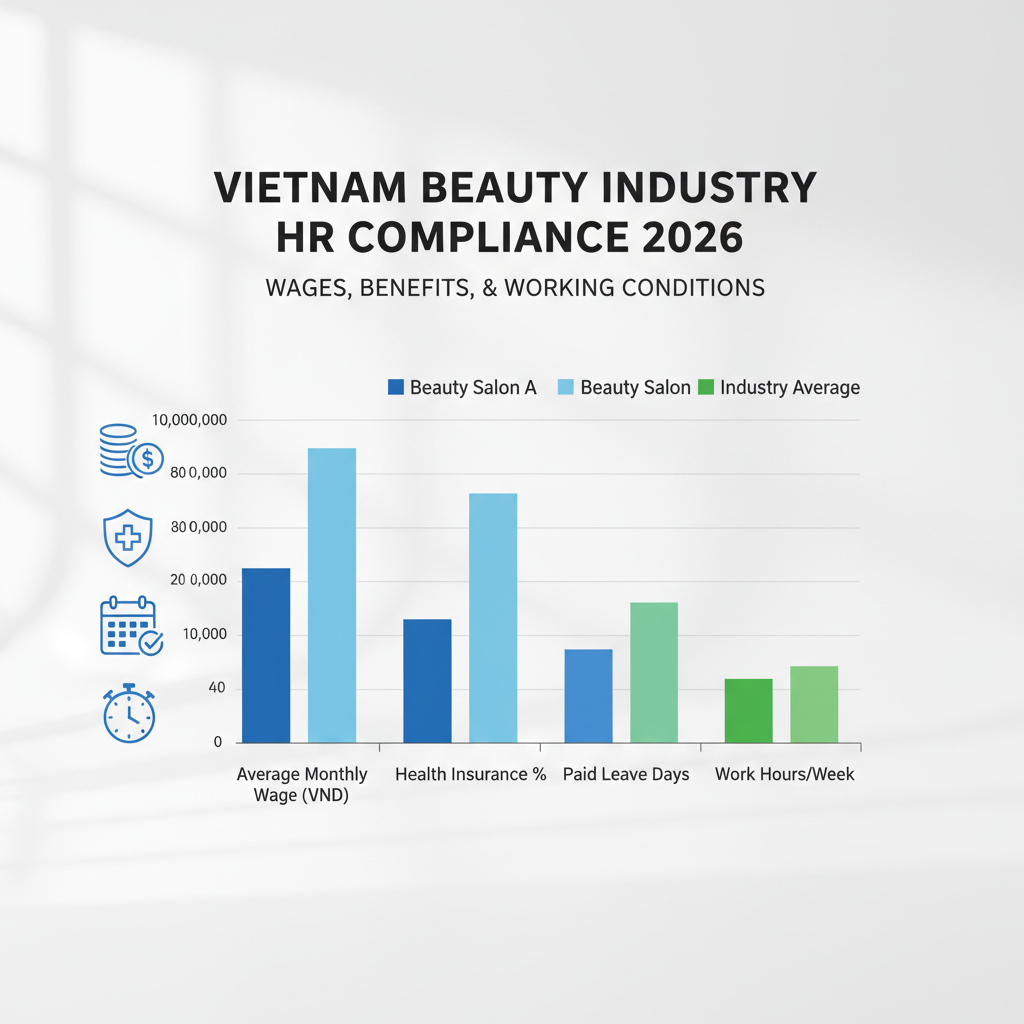
Navigating the legal landscape of human resources is paramount for any business in Vietnam, especially within the vibrant beauty industry. Adhering to regulations concerning minimum wage, social insurance, health benefits, and permissible working hours isn’t just a legal obligation; it’s a cornerstone for building a reputable, ethical, and sustainable enterprise. Understanding the intricacies of Legal HR terms & conditions for beauty field in vietnam is crucial for ensuring fair treatment of employees, avoiding hefty penalties, and fostering a positive work environment that attracts and retains top talent.
1. Minimum Wage, Overtime Regulations, and Salary Structures
Compliance with minimum wage regulations is a fundamental requirement. The Vietnamese government sets regional minimum wages, which vary across four regions based on living costs. Beauty businesses must ensure their employees’ basic salaries meet or exceed the applicable regional minimum. Beyond basic wages, meticulous management of overtime is essential. Vietnamese labour law stipulates clear guidelines: typically 150% of the standard hourly rate for weekdays, 200% for weekends, and 300% for public holidays or paid annual leave. Accurate tracking of working hours and timely compensation are critical.
A well-defined salary structure is also vital, encompassing basic salary, allowances (e.g., for responsibility, attendance, or specific skills), and performance bonuses. Clear employment contracts detailing these components prevent disputes. Providing itemized payslips detailing all earnings, deductions, and contributions fosters transparency and trust, ensuring adherence to the Vietnamese Labour Code.
2. Mandatory Social, Health, and Unemployment Insurance Contributions
A significant aspect of HR compliance in Vietnam involves mandatory insurance contributions. Employers are legally required to contribute to Social Insurance (SI), Health Insurance (HI), and Unemployment Insurance (UI) for their employees. These provide a crucial safety net, covering sickness, maternity, occupational diseases, retirement pensions, and medical care.
- Social Insurance (SI): Covers sickness, maternity, occupational accidents/diseases, retirement, and death. Employer contribution is typically around 17.5% of salary, employee 8%.
- Health Insurance (HI): Provides medical expense coverage. Employer contribution is generally 3%, employee 1.5%.
- Unemployment Insurance (UI): Offers support during unemployment. Both employer and employee typically contribute 1% each.
These contributions are calculated based on the employee’s declared monthly salary for insurance, capped at a certain multiple of the regional minimum wage. Failure to register employees or incorrect calculations can lead to significant fines, retroactive payments, and reputational damage. Meticulous management ensures compliance and that employees receive their entitled benefits.
3. Working Hours, Rest Periods, and Annual Leave Entitlements
Vietnamese labour law sets strict guidelines for working hours and rest periods to protect employee well-being. The standard working week is generally 48 hours (e.g., 8 hours/day over 6 days), or 40 hours for administrative staff. Employees are entitled to at least 30 minutes of rest within a continuous 6-hour working period and a weekly rest period of at least 24 consecutive hours. Overtime is permitted but strictly regulated, with limits of 12 hours per day, 40 hours per month, and 200 hours per year (up to 300 hours for specific industries with approval).
Annual leave entitlements are also clearly defined. Employees typically receive 12 days of paid annual leave after 12 months of employment, with additional days for hazardous conditions or long service. Government-determined public holidays are also paid days off. Businesses must maintain accurate records of leave accrual and usage. Specific provisions exist for special leave, such as maternity leave (typically six months) and personal leave for family events. Proper management of these entitlements is crucial for both compliance and maintaining employee satisfaction, reinforcing positive Legal HR terms & conditions for beauty field in vietnam practices.
In conclusion, meticulous attention to wages, benefits, and working conditions compliance is not just about avoiding penalties; it’s about fostering a fair, attractive, and legally sound workplace for beauty professionals in Vietnam. By understanding and proactively implementing these regulations, beauty businesses can ensure operational stability, enhance their reputation, and create a thriving environment for both employers and employees.
Health, Safety, and Workplace Standards in Beauty
The beauty industry in Vietnam, characterized by its rapid growth and diverse service offerings, presents unique challenges and responsibilities concerning health, safety, and workplace standards. Ensuring a safe and hygienic environment is not merely a best practice; it is a legal imperative that underpins client trust, employee well-being, and business sustainability. From intricate spa treatments to sophisticated aesthetic procedures, adherence to stringent regulations is paramount. Understanding the specific Legal HR terms & conditions for beauty field in vietnam is crucial for employers and professionals alike, safeguarding against risks and fostering a reputable service landscape. This section will delve into the critical aspects of occupational health and safety, hygiene protocols, and workplace compliance tailored to Vietnam’s dynamic beauty sector.
-
Hygiene, Sanitation, and Sterilization Standards for Beauty Services
Hygiene is the bedrock of any reputable beauty establishment. In Vietnam, beauty salons, spas, and clinics are expected to adhere to rigorous sanitation, disinfection, and sterilization protocols to prevent the spread of infections and safeguard client health. This includes strict guidelines for handwashing, proper cleaning and disinfection of all surfaces, tools, and equipment between each client. Reusable tools such as nippers, pushers, and tweezers must undergo a multi-step sterilization process, typically involving cleaning, disinfection (e.g., with EPA-registered disinfectants), and then high-level sterilization methods like autoclaving for invasive tools. Single-use items, from cotton pads to disposable gloves, are mandatory where applicable and must be properly disposed of after use. Water quality for services like pedicures and facials is also a critical consideration, often requiring specific filtration and disinfection measures to prevent bacterial growth. Regular inspections by local health authorities ensure compliance, with non-adherence potentially leading to severe penalties, including license revocation, underscoring the importance of meticulous record-keeping for all hygiene practices.
-
Chemical Handling, Product Safety, and Equipment Maintenance Protocols
The beauty industry extensively uses a variety of chemicals, from hair dyes and perming solutions to nail polishes, acrylics, and skincare formulations. Proper handling, storage, and disposal of these products are crucial for employee and client safety. Businesses must ensure that all products comply with Vietnamese cosmetic regulations, possessing necessary import licenses and safety certifications where applicable. Material Safety Data Sheets (MSDS) or Safety Data Sheets (SDS) for all chemical products should be readily available, providing vital information on potential hazards, safe handling procedures, and emergency first aid. Ventilation systems are essential to minimize exposure to fumes and airborne particles. Furthermore, all beauty equipment, including lasers, IPL devices, microdermabrasion machines, and electrical tools, must be regularly inspected, calibrated, and maintained according to manufacturer specifications and national safety standards. Employees must receive comprehensive training on the correct and safe operation of all equipment, as well as on recognizing and reporting malfunctions. Non-compliance with these protocols not only endangers health but also carries significant legal liabilities for the business.
-
Policies Against Harassment, Discrimination, and Workplace Violence
Beyond physical safety, ensuring a psychologically secure and respectful workplace is equally vital. The beauty industry, like any other, is not immune to issues of harassment, discrimination, or workplace violence. Vietnamese labor law, particularly the Vietnamese Law on Occupational Safety and Health, alongside general human rights principles, mandates employers to create an environment free from such abuses. Businesses in the beauty sector must implement clear, comprehensive policies that explicitly prohibit all forms of harassment (sexual, verbal, psychological), discrimination (based on gender, age, religion, ethnicity, disability), and violence. These policies should include a transparent reporting mechanism, ensuring that employees can confidentially report incidents without fear of retaliation. Prompt and impartial investigation of all complaints, followed by appropriate disciplinary action, is essential. Regular training for all staff on these policies, fostering a culture of mutual respect and awareness, is crucial for preventing incidents and ensuring that every employee feels valued and safe. Such measures contribute significantly to a positive work culture and legal compliance.
Adhering to robust health, safety, and workplace standards is not merely a regulatory burden but a strategic imperative for beauty businesses in Vietnam. It enhances professional credibility, builds client loyalty, and protects the well-being of invaluable staff. Proactive engagement with these standards, coupled with a deep understanding of the Legal HR terms & conditions for beauty field in vietnam, positions businesses for sustainable success in a competitive and evolving market. Investing in ongoing training, regular audits, and fostering a culture of safety and respect are fundamental steps towards achieving excellence and compliance.
Termination, Dispute Resolution, and Penalties
Navigating the complexities of employment termination, labor dispute resolution, and potential penalties is paramount for any business operating in Vietnam, especially within the dynamic beauty sector. Adherence to the Vietnamese Labor Code and related regulations is not just a legal obligation but a cornerstone for sustainable business practices and maintaining a positive work environment. Understanding the precise Legal HR terms & conditions for the beauty field in Vietnam is crucial for salon owners, spa managers, and beauty product distributors to avoid costly non-compliance and foster a stable workforce.
1. Lawful Termination Procedures, Severance Pay, and Notice Periods
In Vietnam, the process for lawful employment termination is strictly governed by the Labor Code. Employers in the beauty sector must understand valid grounds for ending employment, which include mutual agreement, unilateral termination by the employer for specific reasons (e.g., employee’s repeated failure to perform duties as per contract, economic restructuring, force majeure), or unilateral termination by the employee (e.g., if the employer fails to fulfil contractual obligations). Each scenario dictates specific requirements.
A critical aspect of lawful termination involves adhering to prescribed notice periods. For an indefinite-term labor contract, employers typically must provide 45 days’ notice for unilateral termination, while employees need 30 days. For definite-term contracts, these periods are generally 30 days for employers and 3 working days for employees, depending on the specific reason. Failure to observe these notice periods can lead to legal challenges and penalties. Additionally, employees are generally entitled to severance pay, calculated as half a month’s salary for each year of service for the period not covered by unemployment insurance. Accurate calculations and timely payment are essential to prevent labor disputes.
2. Labor Dispute Resolution Mechanisms: Conciliation, Arbitration, and Court
When labor disputes arise within the Vietnamese beauty sector, the legal framework provides a clear hierarchy for resolution, aiming for amicable settlement before resorting to formal legal action. The first step for most individual labor disputes is mandatory conciliation, often facilitated by a labor conciliator at the district level or an internal conciliation council within the enterprise. Conciliation aims to reach a mutual agreement between parties, offering a swift and cost-effective resolution.
If conciliation fails or is not applicable, certain disputes may then proceed to a Labor Arbitration Council. This council is a quasi-judicial body that issues decisions which, while not immediately enforceable as court judgments, carry significant weight and can become legally binding if not challenged within a specified period. Finally, if these initial mechanisms prove unsuccessful, or if the dispute falls outside their jurisdiction, either party can escalate the matter to the People’s Court. Understanding these mechanisms is vital for both employers and employees to navigate conflicts effectively and ensure compliance with the Vietnamese Labor Code on dispute resolution.
3. Penalties and Fines for Non-Compliance with HR and Labor Laws
Non-compliance with Vietnamese HR and labor laws, particularly in sensitive areas like termination and dispute resolution, can lead to severe consequences for businesses in the beauty industry. The most common penalties include administrative fines imposed by labor inspectorates. These fines can be substantial, ranging from millions to tens of millions of VND, depending on the severity, nature, and frequency of the violation. For instance, unlawful termination, failure to pay severance pay, or not adhering to notice periods can result in significant financial penalties per affected employee.
Beyond monetary fines, businesses face other serious repercussions. Reputational damage can be particularly detrimental in the customer-facing beauty sector, eroding client trust and making it harder to attract and retain talent. Legal costs associated with defending against lawsuits, coupled with potential orders for reinstatement of employees or payment of back wages, can further strain financial resources. In severe cases, particularly those involving exploitation or grave safety violations, criminal liabilities might even be pursued. Proactive adherence to the Legal HR terms & conditions for the beauty field in Vietnam is therefore not just a best practice, but a critical risk management strategy for long-term success.
Partner with Shelby Global
You are looking for reliable HR Sevice Suppliers? Contact Shelby Global Now! To connect with verified talents and upgrade your orginization.
—————————————
References
– 2019 Labor Code: https://www.ilo.org/dyn/natlex/natlex4.detail?p_lang=en&p_isn=111453
– Vietnam’s New Labor Code: Key Changes for Businesses: https://www.vietnam-briefing.com/news/vietnams-new-labor-code-key-changes-businesses.html/
– PwC Vietnam: Employment Law Updates: https://www.pwc.com/vn/en/services/tax/tax-insights/employment-law-updates.html
– Vietnamese Law on Occupational Safety and Health: https://vanban.chinhphu.vn/portal/page/portal/chinhphu/hethongphapluat/chitietvanban?docid=180126
– Vietnamese Labor Code on dispute resolution: https://thuvienphapluat.vn/van-ban/Lao-dong-Tien-luong/Bo-luat-lao-dong-2019-335804.aspx



































































































