Foundations of Employment Law in Malaysian E-commerce
The rapid expansion of e-commerce in Malaysia has reshaped traditional business models, creating new opportunities and, simultaneously, complex legal challenges, particularly concerning human resources. For online businesses, understanding the core Malaysian employment legislation is not merely a compliance exercise but a strategic imperative. Establishing a robust legal baseline for all HR practices is crucial to mitigate risks, ensure fair treatment of employees, and foster sustainable growth in the digital economy. This overview delves into the fundamental Legal HR terms & conditions for Ecommerce field in malaysia, guiding online entrepreneurs and HR professionals through the essential frameworks.

1. The Employment Act 1955: Digital Relevance and Updates
The Employment Act 1955 (EA 1955) remains the cornerstone of employment law in Peninsular Malaysia and Labuan, directly impacting virtually all facets of HR in e-commerce. While originally drafted for a different era, recent amendments have significantly enhanced its digital relevance. As of 1 January 2023, the scope of the EA 1955 has expanded to cover all employees, irrespective of their salary level, in most key provisions. This broadens the protection afforded to a diverse workforce often found in e-commerce, from warehouse packers to digital marketers.
Key updates relevant to online businesses include the reduction of maximum working hours from 48 to 45 hours per week, provisions for flexible working arrangements, enhanced maternity and paternity leave, and stronger anti-discrimination clauses. These changes directly influence HR policies for managing remote teams, scheduling customer service operations, and ensuring a work-life balance for employees involved in 24/7 online retail environments. E-commerce platforms must meticulously review their employment contracts, policies, and payroll systems to ensure full compliance with these updated Malaysian employment law provisions, which are designed to offer greater worker protection and adapt to modern employment practices.
2. Defining ‘Employee’ vs. ‘Independent Contractor’ in E-commerce
One of the most critical distinctions in the e-commerce sector, particularly with the proliferation of the gig economy, is between an “employee” and an “independent contractor.” This differentiation has profound legal and financial implications. An employee is typically entitled to statutory benefits like contributions to the Employees Provident Fund (EPF), Social Security Organisation (SOCSO), Employment Insurance System (EIS), annual leave, sick leave, and protection against unfair dismissal under the Industrial Relations Act 1967. Conversely, independent contractors, often engaged for specific tasks or projects (e.g., freelance designers, delivery riders for online marketplaces, content creators), are generally not entitled to these benefits as they are considered self-employed.
Malaysian courts typically apply a “control test” and “integration test,” among others, to determine the true nature of the relationship, focusing on factors like the degree of control exercised over the individual, their integration into the business’s operations, and the economic reality of the arrangement. Misclassification can lead to significant liabilities for e-commerce businesses, including retrospective payment of statutory contributions, penalties, and potential unfair dismissal claims. Businesses must carefully assess each engagement, drafting clear contracts that accurately reflect the working relationship to avoid legal pitfalls and ensure robust Legal HR terms & conditions for Ecommerce field in malaysia compliance.
3. Key Legal Requirements for Hiring in Malaysian Online Businesses
Beyond the fundamental Act, Malaysian e-commerce businesses must adhere to several other legal requirements when hiring. This begins with providing a clear, written employment contract or offer letter outlining essential terms such as job scope, remuneration, working hours, leave entitlements, and termination clauses. Registration with relevant statutory bodies is mandatory: for EPF (retirement savings), SOCSO (social security and industrial accident insurance), and EIS (unemployment benefits). These registrations and subsequent monthly contributions are critical for both employer and employee welfare.
Other vital considerations include adhering to the National Minimum Wage Order, ensuring compliance with occupational safety and health regulations (even for remote workers, to the extent applicable), and implementing fair grievance procedures. For businesses handling personal data of employees, compliance with the Personal Data Protection Act 2010 (PDPA) is also essential. By proactively addressing these Legal HR terms & conditions for Ecommerce field in malaysia, online businesses can build a compliant, ethical, and productive workforce, laying a strong foundation for their operations in Malaysia’s dynamic digital market.
Essential HR Documentation & Contractual Terms for E-commerce Employees
The dynamic and often borderless nature of e-commerce presents unique human resources challenges, especially when operating within Malaysia’s legal framework. Crafting compliant employment agreements and critical HR documents tailored for the online retail sector is not merely good practice—it’s essential for mitigating risks, ensuring operational efficiency, and fostering a productive remote or digital workforce. Navigating the specific legal HR terms & conditions for the Ecommerce field in Malaysia requires a deep understanding of local labour laws, data protection regulations, and the nuances of digital work environments.
1. Crafting Compliant Employment Contracts for Remote & Digital Roles
For e-commerce businesses in Malaysia, employment contracts must go beyond conventional stipulations to address the specificities of remote and digitally-centric roles. These contracts should clearly define job scopes that often involve cross-functional responsibilities, flexible working hours, and the use of personal devices or company-issued equipment off-site. Key considerations include establishing unambiguous reporting lines, performance metrics suitable for remote oversight, and provisions for communication protocols. Given the prevalence of project-based work and performance incentives in e-commerce, compensation clauses should detail base salaries, commission structures, and bonus schemes transparently. It’s also crucial to specify the governing law as Malaysian law, ensuring compliance with the Employment Act 1955 and subsequent amendments. For employees engaged in cross-border e-commerce activities, clarify the legal jurisdiction for dispute resolution. A robust contract will detail remote work policies, including provisions for work-from-home allowances, IT support, data security guidelines, and expectations regarding availability and responsiveness. This forms the bedrock for compliant Malaysia e-commerce employment law and secure remote work contracts Malaysia, ensuring fair practices for all digital employee agreements Malaysia.
2. Non-Disclosure, Intellectual Property & Data Protection Clauses (PDPA)
The highly competitive and data-rich environment of e-commerce necessitates stringent clauses concerning non-disclosure, intellectual property (IP), and data protection. Non-Disclosure Agreements (NDAs) are paramount to safeguard proprietary business information, including marketing strategies, customer databases, pricing algorithms, and product development plans, from being leaked to competitors. These clauses should define confidential information broadly and specify the duration of the obligation, even post-employment. Intellectual Property clauses are equally vital; they must clearly stipulate that all content created by employees during their employment—such as website copy, product descriptions, marketing visuals, software code, and unique business processes—is the sole property of the company. This protects your brand’s unique assets and innovations. Furthermore, compliance with Malaysia’s Personal Data Protection Act 2010 (PDPA) is non-negotiable. Employment contracts and handbooks must include comprehensive PDPA e-commerce Malaysia clauses, outlining employees’ responsibilities in handling customer data, payment information, and other sensitive personal data in accordance with the Act. Training employees on data privacy employment Malaysia protocols and cybersecurity HR policies Malaysia is also a critical preventative measure. These clauses are fundamental for protecting your business’s secrets, innovations, and customer trust in the online marketplace, addressing core elements of Intellectual property e-commerce staff and Non-disclosure agreements Malaysia online business.
3. Employee Handbook: Customizing for the Online Workspace
While employment contracts lay the legal groundwork, a comprehensive employee handbook provides the practical guidelines and cultural expectations for an e-commerce workforce. This document serves as a living guide, customizing standard HR policies for the unique context of an online workspace. It should clearly articulate remote work guidelines, covering aspects such as communication etiquette (e.g., response times for emails, use of collaborative platforms), virtual meeting protocols, and expectations for maintaining work-life balance in a flexible environment. Crucially, an e-commerce handbook must include robust IT and cybersecurity policies, detailing acceptable use of company systems, data backup procedures, password security, and incident reporting protocols to protect against digital threats. A well-defined social media policy is also essential, guiding employees on how to represent the company online and safeguarding the brand’s reputation. Performance management processes should be adapted for remote teams, focusing on measurable outcomes rather than face-time. The handbook also provides clarity on grievance procedures, disciplinary actions, and termination protocols, all while adhering to Malaysian labour laws. By detailing these HR policies e-commerce Malaysia, businesses can ensure smooth operations, maintain high standards of conduct, and provide clear guidance on Malaysian employment terms digital roles and online retail HR compliance, ultimately fostering a cohesive and productive remote or hybrid team.
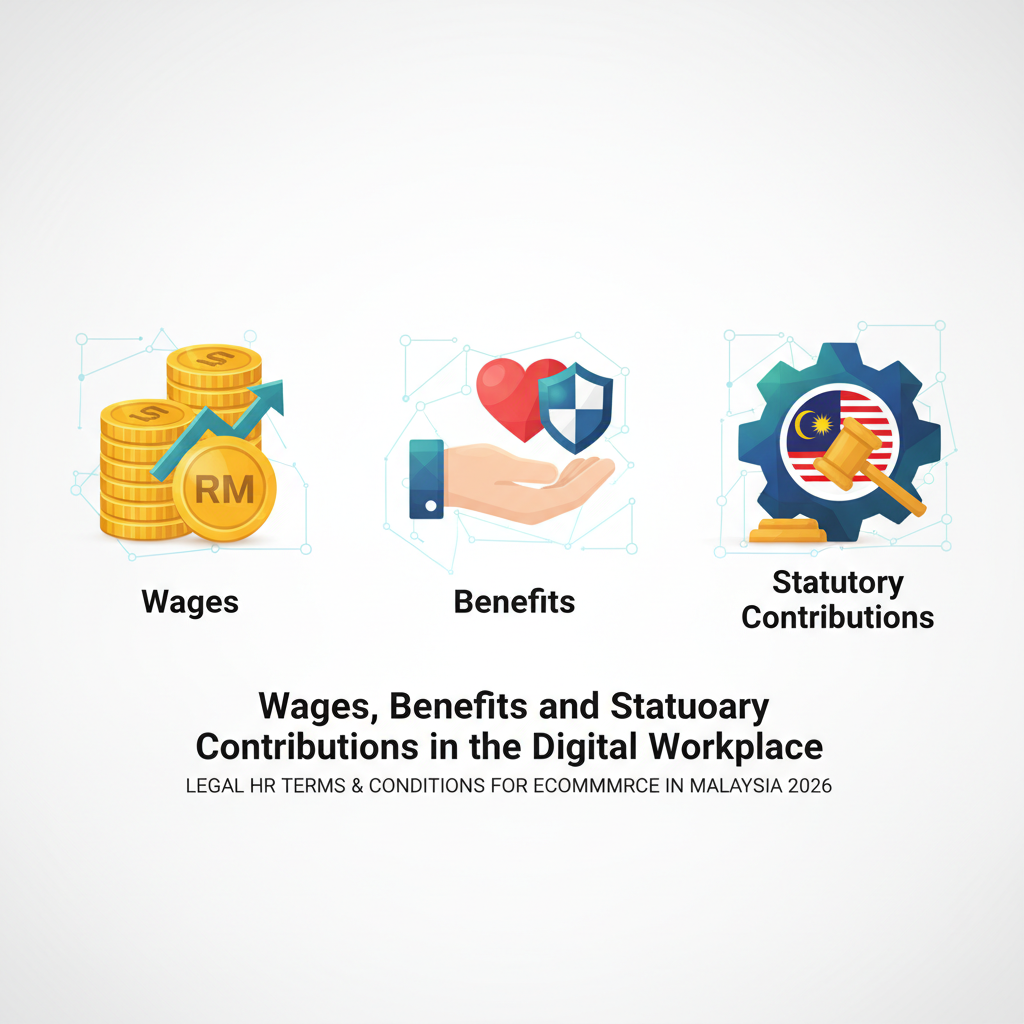
Wages, Benefits, and Statutory Contributions in the Digital Workplace
Navigating employment law is crucial for any business, especially in Malaysia’s rapidly evolving e-commerce sector. Employers must meticulously adhere to local labor laws, ensuring fair compensation, comprehensive benefits, and timely statutory contributions for their workforce. Understanding the specific Legal HR terms & conditions for Ecommerce field in malaysia is paramount to fostering a compliant, productive, and attractive work environment, whether employees are based in a physical office or operating remotely. This section details core obligations regarding wages, statutory deductions, and employee entitlements, tailored for the unique landscape of the Malaysian e-commerce industry.
1. Minimum Wage Order and Overtime for E-commerce Employees
The Minimum Wage Order forms the foundation of fair compensation in Malaysia. E-commerce businesses must comply with the Minimum Wage Order 2022, stipulating a national minimum wage of RM1,500 per month for all employees, regardless of employment status or location. This applies uniformly across all sectors, including those operating online or with remote digital teams. Beyond basic pay, the Employment Act 1955 (EA 1955) dictates stringent rules regarding overtime. Given the often fluctuating demands of online retail, e-commerce employees may frequently work beyond standard hours. Overtime rates are clearly defined: typically 1.5 times the hourly rate for work exceeding normal hours on a workday, 2 times for work on a rest day, and 3 times for work on a public holiday. Employers must accurately track working hours, especially for remote staff, to ensure correct overtime calculations and prevent legal disputes concerning wage and hour compliance in the digital workplace.
2. EPF, SOCSO, and EIS Contributions for Online Workers
Mandatory statutory contributions are another critical pillar of HR compliance for Malaysian e-commerce companies. These social security schemes protect employees and provide a safety net, applicable whether they are office-bound or online workers. Employers are legally obligated to make monthly contributions for all eligible employees to three main funds:
- Employees Provident Fund (EPF): A compulsory retirement savings scheme. Both employer and employee contribute a percentage of the monthly salary. Current employer contribution is 13% (for salaries RM5,000 or less) or 12% (above RM5,000), while employee contribution is typically 11%.
- Social Security Organization (SOCSO): Provides coverage under the Employment Injury Scheme (for work-related accidents/diseases) and the Invalidity Pension Scheme (24-hour coverage against invalidity or death). Employers pay the majority of these contributions.
- Employment Insurance System (EIS): Administered by SOCSO, EIS offers financial assistance to retrenched workers and aids in re-employment. Both employers and employees contribute a small percentage.
These contributions are mandatory for all Malaysian citizens and permanent residents, including part-time and flexible arrangement employees typical of digital teams. Employers must register and ensure accurate, timely deductions and remittances to avoid significant non-compliance penalties.
3. Leave Entitlements and Flexible Work Arrangements for Digital Teams
Despite flexible and remote work arrangements in e-commerce, Malaysian employees are entitled to statutory leave benefits under the Employment Act 1955. These entitlements are crucial for employee well-being:
- Annual Leave: Paid annual leave based on service length: 8 days (less than 2 years), 12 days (2-5 years), 16 days (5+ years).
- Sick Leave: Paid sick leave based on service length, from 14 to 22 days per year, plus up to 60 days for hospitalisation.
- Public Holidays: Employees are entitled to 11 gazetted public holidays, with 5 mandatory.
- Maternity and Paternity Leave: Maternity leave is 98 consecutive days; paternity leave is 7 consecutive days (effective from 1 Jan 2023).
For digital teams, clear HR policies must outline how leave is requested, approved, and tracked for remote workers, ensuring equitable treatment. Recent EA 1955 amendments also formalize flexible working arrangements, allowing employees to request variations to their working hours, days, or place. Employers must consider such requests in good faith. This flexibility can attract and retain talent in the competitive e-commerce landscape, provided it is managed within Malaysian labor law and promotes work-life balance.
Navigating Workplace Conduct, Grievances, and Termination in E-commerce
In the rapidly evolving landscape of e-commerce, businesses in Malaysia face unique challenges in managing human resources, particularly when dealing with remote and virtual teams. Establishing clear Legal HR terms & conditions for Ecommerce field in malaysia is not just good practice; it’s a legal imperative to ensure fair treatment, maintain productivity, and mitigate potential legal disputes. This section delves into the essential legal protocols for managing employee conduct, effectively handling disputes, and ensuring fair and lawful termination procedures in an online business environment.
1. Developing an Effective Code of Conduct for Remote & Virtual Teams
The rise of e-commerce has normalized remote and virtual workforces, making a robust code of conduct more crucial than ever. For Malaysian e-commerce businesses, a well-defined code of conduct acts as the bedrock for maintaining professionalism, safeguarding company assets, and fostering a healthy work environment. This document should explicitly outline expectations regarding professional behavior, communication protocols, and adherence to company values, regardless of geographical location. Key areas to address include data security, given the sensitive nature of customer and business information in e-commerce, and the protection of intellectual property, which is vital for any online venture. Policies against discrimination, harassment, and bullying must be clearly articulated, ensuring a safe space even in virtual interactions. Furthermore, guidelines on the appropriate use of company resources and digital tools are essential to prevent misuse. Regular training and clear communication of these standards are paramount, especially when teams are dispersed, to ensure all employees understand their obligations under Malaysian labor law and the company’s internal policies.
2. Handling Disciplinary Actions, Grievances, and Sexual Harassment Online
Managing disciplinary issues and grievances in a virtual setting requires a systematic and legally compliant approach. When misconduct occurs, e-commerce employers in Malaysia must adhere to established protocols, which typically involve a thorough investigation, documented written warnings, and, if necessary, a domestic inquiry as stipulated by the Malaysian Employment Act 1955. The process for handling grievances should be equally clear, providing accessible and confidential channels for employees to report concerns without fear of reprisal. This includes issues ranging from workload disputes to unfair treatment. A particularly sensitive area in online environments is sexual harassment, which can manifest through inappropriate digital communication, virtual meetings, or cyberbullying. E-commerce businesses must establish zero-tolerance policies and clear reporting mechanisms, ensuring swift, impartial, and confidential investigations. It is critical to document every step of the disciplinary and grievance resolution process, from initial complaints to final outcomes, to maintain transparency and provide a strong defense against potential legal challenges. Impartiality and prompt action are key to resolving these issues effectively and upholding employee trust.
3. Fair Termination Practices and Notice Periods for E-commerce Roles
Terminating employment is a delicate process laden with legal implications, and e-commerce companies in Malaysia must navigate it with utmost care to avoid claims of unfair dismissal. Lawful termination grounds include poor performance (with documented warnings and opportunities for improvement), serious misconduct (following a proper domestic inquiry), and redundancy (adhering to retrenchment procedures). Before any termination, employers must ensure due process and natural justice are observed, meaning the employee has been given a fair hearing and a chance to explain their side. The notice period for termination is governed by the Employment Act 1955 or the individual employment contract, whichever provides a more favorable term to the employee. For instance, employees with less than two years of service typically require four weeks’ notice, extending to eight weeks for those with over five years. E-commerce roles often involve access to sensitive data and intellectual property; thus, specific considerations post-termination, such as data access revocation, return of company equipment, and confidentiality agreements, are paramount. Understanding and meticulously following these procedures is essential to ensure that all terminations are conducted fairly, lawfully, and in compliance with Malaysian labor laws, thereby minimizing the risk of costly legal disputes.
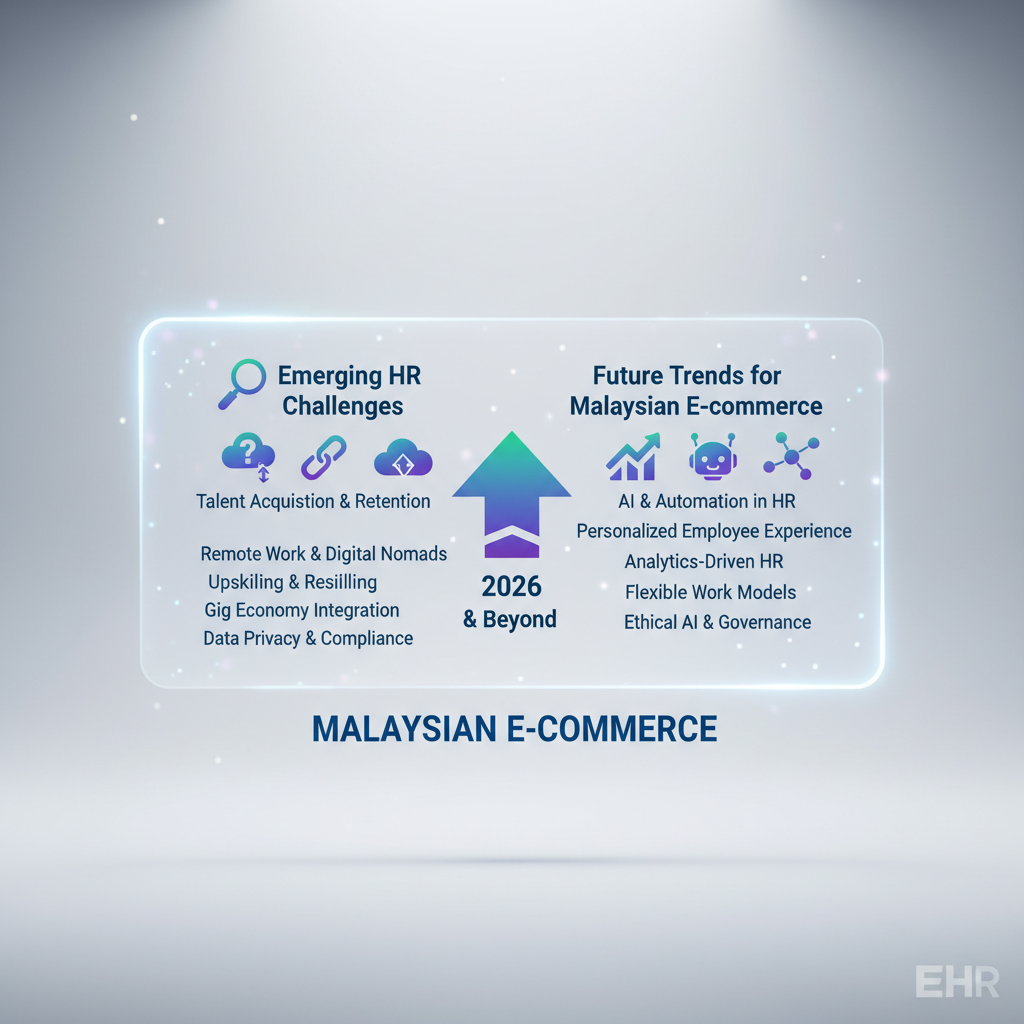
Emerging HR Challenges & Future Trends for Malaysian E-commerce in 2026
The rapid evolution of Malaysia’s e-commerce landscape presents a unique set of challenges and opportunities for Human Resources departments. As online businesses expand, attracting, retaining, and managing talent becomes increasingly complex, demanding HR strategies that are not only agile but also deeply rooted in sound legal frameworks. Navigating the intricate web of Malaysian labor laws, while simultaneously embracing technological advancements and anticipating future legislative changes, is paramount for sustainable growth. This section delves into the contemporary HR issues faced by Malaysian e-commerce businesses, focusing on adapting to new technologies, and anticipating upcoming legal considerations relevant to the sector, ensuring that Legal HR terms & conditions for Ecommerce field in malaysia remain robust and compliant.
1.
The Gig Economy: Legal Status and Implications for E-commerce Platforms
The rise of the gig economy has fundamentally reshaped workforce dynamics, particularly within the e-commerce sector, which heavily relies on flexible and on-demand labor for logistics, delivery, content creation, and customer service. For Malaysian e-commerce HR, a critical challenge lies in clarifying the gig worker legal status Malaysia. The current legislative framework, primarily the Malaysian Employment Act 1955, was not initially designed to accommodate the nuances of independent contractors versus employees. This ambiguity creates significant risks regarding employment benefits, social security contributions (EPF, SOCSO), and termination rights. As of 2026, we anticipate continued efforts to refine e-commerce labor laws Malaysia to provide clearer guidelines. HR departments must meticulously review their contracts with gig workers to avoid misclassification, which could lead to hefty penalties and legal disputes. Developing clear Legal HR terms & conditions for Ecommerce field in malaysia specifically for independent contractors is essential, outlining work scope, remuneration, intellectual property rights, and dispute resolution mechanisms. Future HR trends Malaysia will likely involve a push for hybrid employment models and a more defined legal standing for gig workers, necessitating proactive policy development to ensure compliance and fair treatment. Companies must also consider the implications for workforce flexibility e-commerce operations, balancing agility with legal obligations.
2.
Cybersecurity & Data Privacy in HR Operations for Online Businesses
In the digital-first world of e-commerce, cybersecurity HR e-commerce and data protection HR Malaysia have escalated from operational concerns to strategic imperatives. HR departments manage vast amounts of sensitive personal data, including employee records, payroll information, performance reviews, and health data. Breaches can lead to severe financial penalties under the Personal Data Protection Act (PDPA) 2010, reputational damage, and erosion of employee trust. For online businesses, where digital interaction is constant, safeguarding this information is even more complex. Implementing robust cybersecurity protocols, including secure HRIS systems, regular data security audits, and mandatory employee training on employee data privacy e-commerce best practices, is crucial. Compliance with PDPA compliance HR Malaysia extends beyond technical measures; it requires clear HR policies on data collection, storage, processing, and disposal. As digital transformation HR accelerates, the adoption of AI in HR e-commerce for recruitment, performance management, and analytics introduces new layers of data privacy considerations. HR must ensure that these technologies comply with data protection regulations and ethical AI guidelines, actively future-proofing policies against evolving cyber threats and data regulations. Addressing automation HR challenges also arises in ensuring data integrity and security within automated processes.
3.
Future-Proofing HR Policies Against Technological and Legislative Changes
The pace of technological innovation, coupled with ongoing legislative reforms, necessitates a forward-thinking approach to HR policy development in Malaysian e-commerce. Recent amendments to the Malaysian Employment Act 1955, particularly concerning flexible working arrangements and paternity leave, are just a precursor to what lies ahead. HR professionals must stay abreast of these changes, translating them into actionable Legal HR terms & conditions for Ecommerce field in malaysia. The increasing adoption of HR tech adoption Malaysia, from AI-powered recruitment tools to blockchain for payroll, requires HR policies that address issues such as ethical AI use, algorithmic bias, and the legality of automated decision-making. Furthermore, the growing prevalence of remote work regulations Malaysia will continue to shape HR policies around work-from-home arrangements, cross-border employment, and digital nomad policies. Preparing for these future HR trends Malaysia involves not only updating existing policies but also anticipating potential legal vacuums or new compliance requirements. Developing agile HR frameworks that can adapt quickly to legislative amendments and technological shifts is vital for maintaining compliance, fostering a positive work environment, and ensuring that Malaysian e-commerce HR remains competitive and resilient. This proactive stance is key to navigating the complexities of the modern workforce effectively.
In conclusion, the Malaysian e-commerce sector stands at a critical juncture where HR agility, legal compliance, and technological integration will define success. Addressing the intricate legalities of the gig economy, fortifying cybersecurity and data privacy practices, and proactively future-proofing HR policies are not merely administrative tasks but strategic imperatives. By embracing these challenges with a comprehensive understanding of Legal HR terms & conditions for Ecommerce field in malaysia, businesses can build resilient workforces capable of thriving in an ever-evolving digital marketplace. The journey ahead requires continuous learning, adaptation, and a steadfast commitment to ethical and legal HR practices.
Partner with Shelby Global
You are looking for reliable HR Sevice Suppliers? Contact Shelby Global Now! To connect with verified talents and upgrade your orginization.
—————————————
References
– Key Amendments to Malaysia’s Employment Act 1955: https://www.malaysianbar.org.my/article/news/legal-and-general-news/general-news/key-amendments-to-the-employment-act-1955
– Malaysian Employment Act 1955: https://www.malaysianbar.org.my/article/the-employment-act-1955
– Employment Act 1955: https://www.mohr.gov.my/index.php/en/labour-standards/employment-act-1955
– Malaysian Employment Act 1955: https://www.mohr.gov.my/index.php/en/legislation/acts/employment-act-1955
– Major Amendments to the Employment Act 1955 W.E.F 1 January 2023: https://www.skrine.com/insights/alerts/september-2022/major-amendments-to-the-employment-act-1955-w.e.f