Foundations of Employment for Sales Professionals
Navigating the intricacies of employment law is paramount for any business operating in Singapore, especially when building a robust sales team. Establishing a solid legal foundation from the outset ensures not only compliance but also fosters a fair and productive working environment. This section delves into the core legal framework governing sales employment in Singapore, providing essential insights to ensure compliant hiring practices from the initial recruitment phase through to ongoing employment management. Understanding these principles is key to mitigating risks and cultivating a motivated sales force, well-versed in the Legal HR terms & conditions for sale field in singapore.

1. Understanding the Employment Act (EA) in Singapore
The bedrock of employment law in Singapore is the Employment Act (EA), which sets out the basic terms and conditions of employment for most employees. For sales professionals, understanding the EA’s applicability is crucial. While some executives or professionals may have specific provisions, the EA generally provides baseline protections for working hours, leave entitlements (annual, sick, public holidays), rest days, and termination notice periods. It also clarifies the distinction between “contract of service” and “contract for service,” crucial for commission-based or freelance sales roles. Employers must ensure that their employment practices for sales personnel, regardless of their commission structures, adhere to these fundamental legal requirements. This includes correctly classifying employees and ensuring their remuneration meets minimum standards, even when a significant portion of their income is variable. Compliance with the EA helps prevent disputes and sets a clear framework for employer-employee relations, offering essential guidelines for managing sales teams effectively and ethically.
2. Key Elements of a Sales Employment Contract
A well-drafted employment contract is indispensable for sales professionals, acting as a clear agreement between the employer and employee. Beyond standard clauses, a sales contract requires specific attention to remuneration, often a base salary complemented by commissions, bonuses, and incentives. Key elements to include are:
- Job Scope and Key Performance Indicators (KPIs): Clearly define the sales targets, responsibilities, reporting lines, and the metrics by which performance will be measured.
- Remuneration Structure: Detail the base salary, commission rates (e.g., percentage of sales, tiered structures), bonus criteria, and payment schedules. Transparency here is paramount to avoid future disputes. Clarify when commissions are deemed earned and payable.
- Working Hours and Leave Entitlements: While sales roles often demand flexibility, the contract must outline working hours and ensure compliance with EA provisions for leave and rest days.
- Confidentiality and Intellectual Property: Protect proprietary sales strategies, client lists, and product information.
- Non-Compete and Non-Solicitation Clauses: These restrictive covenants are enforceable if reasonable in scope, duration, and geography, protecting legitimate business interests without being unduly oppressive. Legal advice is critical here.
- Termination Clauses: Clearly state notice periods for resignation or dismissal, referencing EA requirements.
The specificity in these clauses, particularly regarding variable pay, minimizes ambiguity and forms the foundation of a fair and legally sound employment relationship for sales teams. Properly structured contracts are vital for setting clear expectations and managing the unique dynamics of sales roles.
3. Fair Employment Practices & Anti-Discrimination
Singapore champions a merit-based employment system, underpinned by the Tripartite Guidelines on Fair Employment Practices (TGFEP). These guidelines, championed by the Tripartite Alliance for Fair and Progressive Employment Practices (TAFEP), advocate for fair employment based on merit, skills, and experience, rather than discriminatory factors. For sales professionals, this means hiring decisions should solely focus on a candidate’s ability to meet sales targets, possess relevant industry knowledge, and demonstrate strong communication and negotiation skills, irrespective of age, race, gender, religion, marital status, or disability. Employers are encouraged to:
- Hire based on Merit: Assess candidates objectively using fair selection criteria.
- Provide Equal Opportunities: Ensure all employees have equal access to training and development, and career progression opportunities.
- Treat Employees Fairly: Implement fair performance management and appraisal systems.
Adhering to TGFEP is not just a matter of good HR practice; it is increasingly becoming a legal expectation with potential enforcement actions for egregious breaches. Employers should ensure their recruitment advertisements, interview processes, and internal policies reflect these principles. Building a diverse and inclusive sales team by adopting fair practices can significantly enhance an organization’s talent pool, fostering a culture of respect and equity that resonates positively with both employees and clients. This commitment to fairness is crucial for attracting and retaining top sales talent in a competitive market.
Compensation & Benefits in the Sales Field
Compensation and benefits play a pivotal role in attracting, motivating, and retaining top sales talent. However, navigating the intricate landscape of sales compensation in Singapore requires a keen understanding of the prevailing legal framework. For businesses operating in the Lion City, ensuring compliance with the Employment Act and other related regulations is not merely a best practice but a legal imperative. This section delves into the critical Legal HR terms & conditions for sale field in singapore, providing a comprehensive overview of compliant commission structures, mandatory benefits, and the nuances of bonus payments, all designed to safeguard both employer and employee interests.
1.
Legal Framework for Commission and Incentive Schemes
The foundation of any compliant sales compensation plan in Singapore lies in robust contractual agreements. Under the Employment Act, while commission structures are not explicitly detailed, general principles of fair employment practices and clear terms of employment apply. It is crucial for employers to draft comprehensive commission agreements that clearly delineate the calculation methodology, payment schedules, eligibility criteria, and conditions under which commissions may be forfeited or clawed back (e.g., in cases of product returns or early customer termination). Ambiguity in these terms is a common source of disputes. Such agreements should also address situations like an employee’s resignation or termination, specifying how outstanding commissions will be handled. Best practices dictate that these terms are communicated transparently and agreed upon in writing before an employee commences their sales role. Employers must understand that even if a commission plan is considered discretionary, once communicated and acted upon by employees, it can establish a legitimate expectation, making unilateral changes challenging without proper notice and consultation. Ensuring your commission structures adhere to these legal HR terms & conditions for sale field in singapore is paramount to avoiding costly legal challenges.
2.
Mandatory Benefits: CPF, Annual Leave, Sick Leave
Beyond direct compensation, employers in Singapore are legally obliged to provide a suite of statutory benefits to their employees. The Central Provident Fund (CPF) is a comprehensive social security savings scheme to which both employers and employees contribute monthly. For Singaporean citizens and permanent residents, employers must make CPF contributions based on the employee’s ordinary and additional wages, adhering to prescribed rates and limits. Failure to do so can result in severe penalties. Similarly, the Employment Act mandates specific entitlements for annual leave and sick leave. Employees are entitled to a minimum number of annual leave days, which typically increases with years of service, and these days must be granted and utilized in accordance with company policy and legal provisions. For sick leave, employees are entitled to paid sick leave and hospitalization leave, provided they obtain a medical certificate from a registered doctor and meet certain service period requirements. It’s essential for sales organizations to integrate these mandatory benefits seamlessly into their HR policies, ensuring accurate record-keeping and compliance with all relevant regulations. These benefits are non-negotiable and form a fundamental part of the employee’s total compensation package.
3.
Bonus Structures and Discretionary Payments
Bonuses often serve as a powerful tool to incentivize sales performance, but their legal implications in Singapore warrant careful consideration. Bonuses can broadly be categorized into contractual and discretionary. A contractual bonus is one that an employer is legally obliged to pay based on specific terms outlined in an employment contract or company policy, often tied to performance metrics or company profitability. Conversely, a discretionary bonus is one where the employer retains full discretion over whether to pay it, its amount, and the timing of payment. While seemingly flexible, even discretionary bonuses can become legally binding if a pattern of consistent payment establishes a “legitimate expectation” among employees, particularly if the criteria for payment have been consistently communicated and met. To maintain discretion, employers must clearly state that such payments are entirely at the company’s sole discretion, contingent on various factors, and do not constitute a contractual entitlement. Performance-based bonuses, while effective, must also be underpinned by transparent, measurable criteria to avoid disputes. Adhering to robust communication practices and clear documentation of all bonus policies is vital for sales organizations to manage expectations and ensure compliance with the intricate Legal HR terms & conditions for sale field in singapore surrounding these incentive payments.
In conclusion, managing compensation and benefits in the Singaporean sales field demands meticulous attention to legal details. From crafting compliant commission structures and ensuring adherence to mandatory benefits like CPF, annual leave, and sick leave, to carefully designing bonus schemes, employers must navigate a complex regulatory environment. Proactive compliance not only mitigates legal risks but also fosters a fair and transparent work environment, ultimately contributing to a motivated and productive sales force.
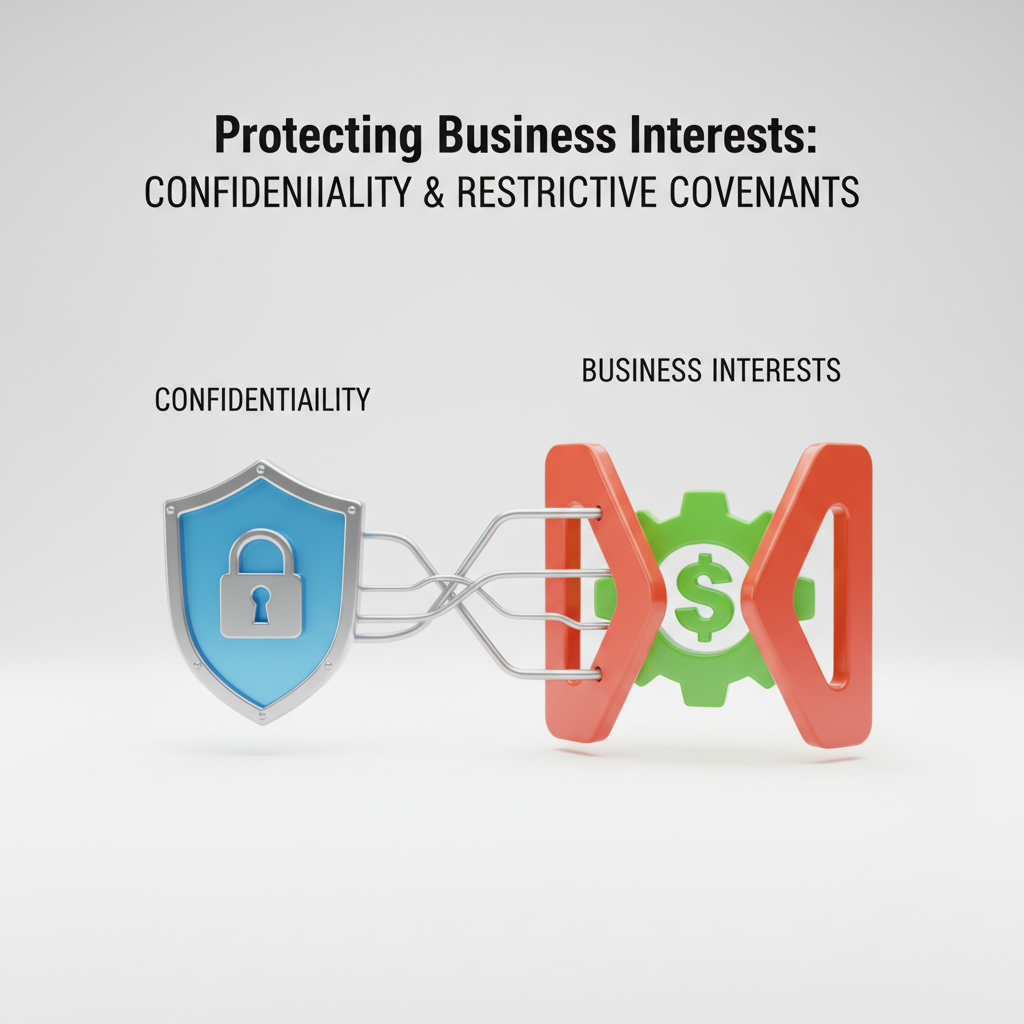
Protecting Business Interests: Confidentiality & Restrictive Covenants
In the dynamic and competitive sales landscape of Singapore, safeguarding a company’s invaluable assets – its confidential information, intellectual property, and established client relationships – is paramount. For businesses employing sales staff, robust Legal HR terms & conditions for sale field in singapore are not just a best practice; they are a strategic imperative. These crucial clauses, embedded within employment contracts and company policies, are specifically designed to protect business interests both during and, critically, post-employment. This section delves into the essential legal mechanisms that fortify a company’s position against potential misuse of sensitive data or unfair competition by former employees, ensuring business continuity and competitive advantage.
1. Non-Disclosure Agreements (NDAs) for Sales Teams
Non-Disclosure Agreements, or NDAs, are foundational instruments for protecting a company’s confidential information. For sales teams, access to proprietary data is inherent to their role. This includes, but is not limited to, client lists, pricing strategies, detailed product specifications, marketing plans, sales methodologies, lead generation processes, and market intelligence. An NDA legally obligates the sales employee to keep such sensitive business information confidential, preventing its unauthorized disclosure or use for personal gain, even after their employment terminates. In Singapore, NDAs are generally enforceable, provided they clearly define what constitutes confidential information and outline the scope and duration of the confidentiality obligation. A well-drafted NDA is a critical component of any sales employment contract, serving as a powerful deterrent against the leakage of trade secrets and ensuring that proprietary sales strategies remain within the company.
2. Non-Compete and Non-Solicitation Clauses
Beyond confidentiality, companies often seek to prevent former sales employees from directly competing or poaching clients and staff. This is where non-compete and non-solicitation clauses come into play. A non-compete clause (also known as a restraint of trade clause) seeks to restrict a former employee from working for a competitor or setting up a competing business for a specified period and geographical area. In Singapore, these clauses are viewed strictly by the courts and are only enforceable if they are reasonable in their scope, duration, and geographical extent, and if they protect a legitimate proprietary interest of the employer. Courts generally lean towards upholding an individual’s right to work, so the employer bears the burden of proving reasonableness. For sales roles, protecting client relationships and unique selling propositions often constitutes a legitimate interest. Non-solicitation clauses, which prevent former employees from soliciting the company’s clients or employees for a certain period, are generally easier to enforce than non-competes, provided they are also reasonable. These clauses are vital for sales organizations to maintain their client base and team stability post-departure of a key sales individual. For a deeper understanding of their enforceability, consider reviewing resources on restraint of trade clauses in Singapore.
3. Intellectual Property Rights and Sales Materials
Sales professionals frequently utilise, and sometimes even contribute to, a company’s intellectual property (IP). This can range from customised sales presentations, product demonstration materials, proposals, marketing collateral, and even unique sales processes or software tools. It is crucial for employment contracts to clearly define the ownership of all intellectual property created by employees during the course of their employment. Typically, any IP developed by a sales employee within the scope of their duties belongs to the company. Clauses addressing IP rights prevent former employees from using, reproducing, or distributing company-owned sales materials, proprietary methodologies, or client relationship management (CRM) data for personal or competitive gain. Establishing clear guidelines and legal provisions for IP protection ensures that the investment in developing unique sales tools and strategies remains an exclusive asset of the business, preventing unauthorised replication or distribution that could undermine the company’s market position and investment in innovation.
Implementing comprehensive Legal HR terms & conditions for sale field in singapore covering confidentiality, restrictive covenants, and intellectual property rights is indispensable for protecting a business’s competitive edge. Proactive legal drafting and clear communication of these policies to sales staff ensure that employees understand their post-employment obligations and the serious implications of breaches. By doing so, companies in Singapore can effectively safeguard their critical assets, maintain strong client relationships, and mitigate risks associated with employee transitions in the highly competitive sales domain.
Performance Management & Disciplinary Actions
In the dynamic sales environment, effective performance management and fair disciplinary actions are not merely operational necessities; they are critical components of maintaining a productive workforce while adhering strictly to legal mandates. For sales teams operating in Singapore, understanding the nuances of legal HR terms & conditions for sale field in Singapore is paramount. This section outlines the legal requirements for managing sales performance, addressing misconduct, and handling grievances fairly and compliantly, ensuring that HR policies align with the nation’s robust employment laws.
1. Performance Improvement Plans (PIPs) & Legal Compliance
Addressing underperformance within a sales team requires a structured and legally compliant approach, with Performance Improvement Plans (PIPs) being a common tool. In Singapore, the implementation of PIPs must align with principles of fairness and transparency, adhering to the Employment Act and other relevant subsidiary legislation. Before initiating a PIP, employers must clearly define performance expectations and provide regular feedback to the sales personnel. When performance shortfalls are identified, a PIP offers a formal framework to help employees improve, outlining specific, measurable, achievable, relevant, and time-bound (SMART) goals.
From a legal standpoint, crucial steps include documenting all communication, setting realistic timelines for improvement, and providing adequate support and training. Failure to provide fair opportunity for improvement, or a lack of objective criteria, could expose the employer to claims of unfair dismissal if the process ultimately leads to termination. HR compliance dictates that the PIP process must not be used as a pretext for removing an employee without just cause. It’s essential to ensure consistency in application across the sales force, avoiding any perception of discrimination. Robust performance management systems, underpinned by clear HR best practices, are vital to protect both the employer and employee, especially when dealing with the unique challenges of sales force performance where targets can fluctuate.
2. Disciplinary Procedures and Investigations
When instances of employee misconduct or breaches of company policy arise within the sales team, a structured and legally sound disciplinary procedure is essential. Singaporean employment law emphasizes the importance of natural justice and due process in all disciplinary actions. This means ensuring that employees are informed of the allegations against them, given a fair opportunity to explain their side (right to be heard), and that the investigation is conducted impartially and thoroughly.
The process typically begins with a prompt and objective investigation. This involves gathering evidence, interviewing relevant parties, and maintaining meticulous documentation. Once the investigation is complete, if misconduct is confirmed, the employer must decide on an appropriate disciplinary action, which could range from verbal or written warnings to suspension or, in severe cases, termination of employment. It is critical that any disciplinary action taken is proportionate to the offense and consistent with previous precedents. Employers must also adhere to the terms and conditions outlined in the employment contract and company handbook. Non-compliance with these principles can lead to disputes and claims of unfair dismissal, potentially involving the Ministry of Manpower (MOM) or the Tripartite Alliance for Dispute Management (TADM). A fair disciplinary process ensures legal obligations are met while upholding workplace standards and employee conduct.
3. Managing Grievances & Conflict Resolution
A proactive and fair approach to managing workplace grievances is crucial for maintaining a positive and productive environment within the sales field. Unresolved conflicts can significantly impact morale, productivity, and ultimately, sales performance. Singaporean companies are encouraged to establish clear internal grievance handling procedures, allowing employees to raise concerns without fear of reprisal. These procedures should outline the steps an employee should take, the individuals or departments responsible for addressing grievances, and the expected timelines for resolution.
Effective conflict resolution strategies often begin with informal mediation, where parties are encouraged to communicate and find mutually agreeable solutions. If an informal approach is unsuccessful, a formal grievance process should be initiated, involving a thorough investigation of the complaint. This process should be transparent, impartial, and respect the confidentiality of all parties involved. Employers have a legal responsibility to provide a safe and fair working environment, and addressing grievances promptly and fairly is a key aspect of this. In situations where internal resolution proves difficult, employees or employers may seek assistance from external bodies like TADM for mediation or adjudication. Adhering to these principles not only fulfills legal requirements but also fosters better employee relations, reduces turnover, and reinforces HR compliance across the organization, protecting employee rights in Singapore.
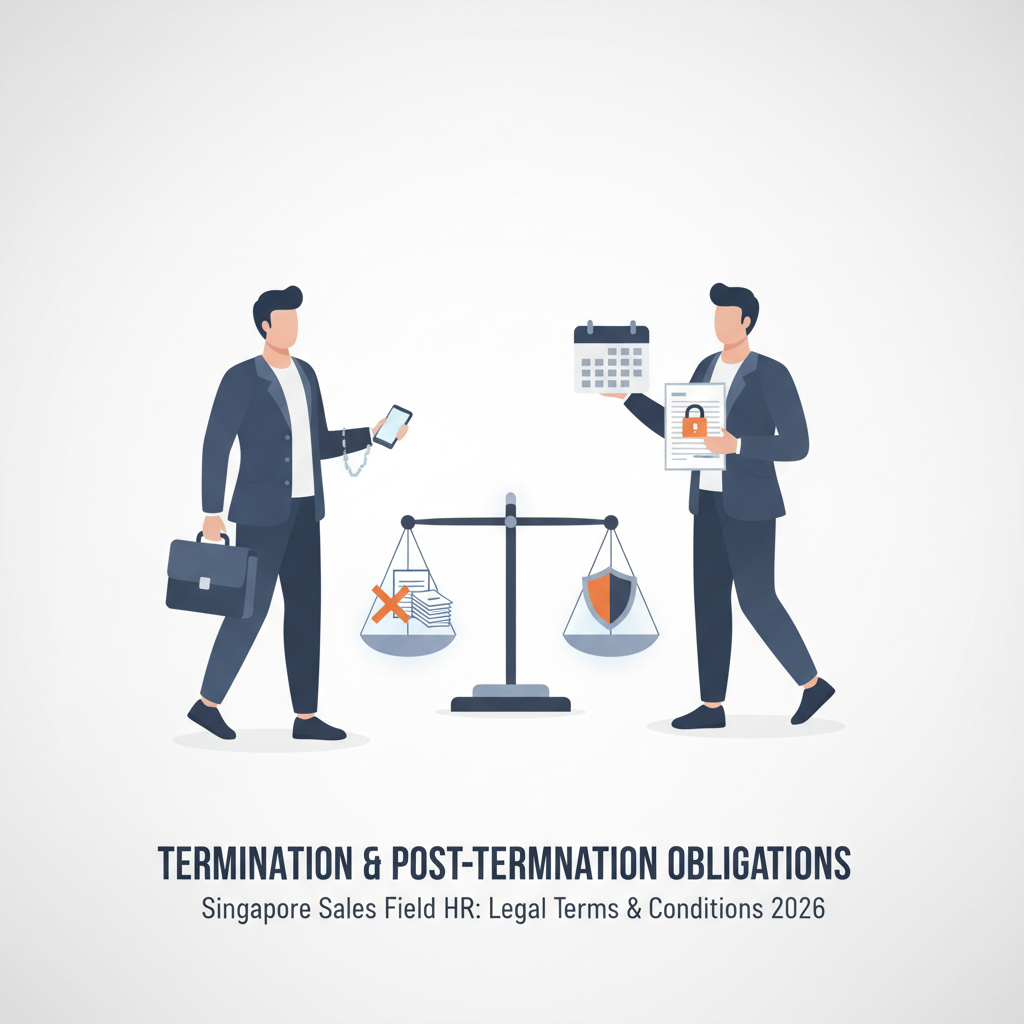
Termination of Employment & Post-Termination Obligations
Navigating the termination of employment in Singapore, particularly within the dynamic sales field, requires a thorough understanding of stringent legal HR terms & conditions for sale field in singapore. For businesses and sales professionals alike, adherence to the Employment Act and various subsidiary legislations is paramount to ensure a fair and lawful process, mitigating risks of disputes and legal challenges. This section delves into the intricate legal framework governing employment termination and the subsequent post-termination obligations for both employers and employees in Singapore.
1. Grounds for Termination: Redundancy, Misconduct, Poor Performance
Singaporean employment law recognizes several legitimate grounds for terminating an employee’s contract. Employers must ensure any termination is justifiable and executed with due process.
Redundancy: Genuine redundancy occurs when an employer no longer requires an employee’s services due to business restructuring, technological advancements, or economic downturns. Employers must ensure the redundancy is genuine, select employees fairly, and adhere to any collective agreements or consultation requirements.
Misconduct: Termination due to misconduct is generally reserved for serious breaches of contract or company policy, such as theft, fraud, insubordination, or gross negligence. Before summary dismissal (termination without notice), employers must conduct a thorough, impartial investigation, provide the employee with an opportunity to explain their actions (a “show cause” letter), and consider their representations. This adherence to due process is critical to prevent claims of wrongful dismissal.
Poor Performance: Terminating an employee for poor performance requires a documented process. It typically involves setting clear performance expectations, providing adequate training and support, issuing warnings, and implementing a formal Performance Improvement Plan (PIP). If performance fails to improve, termination with notice may be considered, backed by comprehensive documentation of reviews, warnings, and PIPs.
2. Notice Periods & Payment in Lieu of Notice
Notice periods are a critical aspect of Singapore’s employment law, allowing both parties time to adjust to the impending separation.
Statutory Notice Periods: Under the Employment Act, the minimum notice period depends on the employee’s length of service:
- Less than 26 weeks of service: 1 day’s notice
- 26 weeks to less than 2 years of service: 1 week’s notice
- 2 years to less than 5 years of service: 2 weeks’ notice
- 5 years and above of service: 4 weeks’ notice
These are minimums. Employment contracts often stipulate longer notice periods, which supersede the statutory minimums. For sales professionals, especially those with client portfolios, contractual notice periods may be longer to facilitate proper handover and client transition.
Payment in Lieu of Notice (PILON): An employer may choose to pay an employee their salary for the notice period instead of requiring them to work it. This is known as PILON. Conversely, an employee may also offer PILON if they wish to leave before their notice period expires, subject to the employer’s agreement. PILON is typically calculated based on the employee’s gross salary, including fixed allowances, and must be clearly stipulated or mutually agreed upon.
3. Final Settlements and Reference Checks
Upon termination, both parties have specific post-termination obligations to ensure a clean and lawful break.
Final Settlements: Employers must provide a final settlement within a stipulated timeframe (typically 3-7 days). This settlement usually includes:
- Outstanding salary up to the last day of employment.
- Pro-rated annual leave encashment for any untaken leave.
- Any pro-rated bonuses or commissions as per the employment contract.
- Severance or redundancy payments, if applicable, typically for employees with at least 2 years of service, as outlined in the contract or collective agreement.
For sales roles, earned commissions, including those paid post-termination, must be accurately calculated and disbursed.
Post-Termination Obligations (Both Parties):
- Employee: Generally, the employee must return all company property (laptops, phones, access cards, client lists). They are also typically bound by post-termination clauses in their contract, such as confidentiality, non-solicitation of clients or employees, and non-competition. These clauses must be reasonable in scope, duration, and geographical area to be enforceable under Singapore law.
- Employer: Beyond the final settlement, employers must ensure compliance with all data protection regulations when handling former employee information.
Reference Checks: When providing references for former employees, employers should generally stick to factual information (e.g., dates of employment, job title) to avoid potential claims of defamation or misrepresentation. Employers are not legally obliged to provide a reference but if they do, it must be fair and accurate.
Adhering to these legal HR terms & conditions for sale field in singapore is paramount for seamless transitions and maintaining a reputable employment brand. Employers seeking further guidance on termination processes can consult the official guidance provided by the Ministry of Manpower (MOM) Singapore.
Partner with Shelby Global
You are looking for reliable HR Sevice Suppliers? Contact Shelby Global Now! To connect with verified talents and upgrade your orginization.
—————————————
References
– Tripartite Alliance for Fair and Progressive Employment Practices (TAFEP): https://www.tafep.sg/
– Salary and Pay – Ministry of Manpower Singapore: https://www.mom.gov.sg/employment-practices/salary-and-pay
– Restraint of Trade Clauses in Singapore: Are They Enforceable?: https://www.singaporelegaladvice.com/law-articles/restraint-of-trade-clauses-singapore/
– MOM Guide to Termination of Employment: https://www.mom.gov.sg/employment-practices/termination-of-employment
– MOM Singapore Termination of Employment: https://www.mom.gov.sg/employment-practices/termination-of-employment