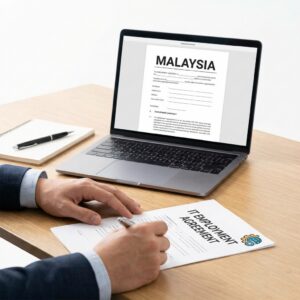

- Understanding Employment Contracts & Offer Letters
- 1. Mandatory Clauses in F&B Employment Contracts
- 2. Probationary Periods, Confirmation & Performance Reviews
- 3. Distinguishing Part-Time vs. Full-Time Employee Rights
- Wages, Benefits, and Statutory Contributions
- 1. Malaysia’s Minimum Wage Act & F&B Sector Compliance
- 2. Overtime Pay, Public Holidays & Rest Day Provisions
- 3. Navigating EPF, SOCSO, and EIS Contributions
- Workplace Safety and Health Standards
- 1. Food Handling Hygiene & Safety Protocols (Food Act 1983)
- 2. Occupational Safety and Health Act (OSHA) Compliance for Kitchens
- 3. Procedures for Reporting Workplace Incidents & Accidents
- Employee Conduct, Discipline, and Termination
- 1. Establishing a Clear Code of Conduct & Disciplinary Procedures
- 2. Legal Grounds for Termination & Due Process Requirements
- 3. Handling Constructive Dismissal Claims & Employee Grievances
- Special HR Considerations for F&B Operations
- 1. Managing Shift Work, Split Shifts & Public Holiday Remuneration
- 2. Legal Framework for Employing Foreign Workers in F&B
- 3. Data Privacy Regulations (PDPA) & Employee Information Handling
- Partner with Shelby Global
- References
Understanding Employment Contracts & Offer Letters
This section delves into the foundational legal documents that govern employment relationships in the Malaysian Food & Beverage sector, ensuring clarity and compliance from the outset. Navigating the intricate landscape of legal HR terms & conditions for the Food & Beverage field in Malaysia is crucial for both employers and employees. Properly structured employment contracts and offer letters form the backbone of a fair and transparent working environment, minimizing disputes and fostering productivity. Employers in the dynamic F&B sector must be diligent in drafting these documents to reflect not only company policies but also adherence to Malaysian labour laws, primarily the Employment Act 1955 (EA 1955) and its subsequent amendments.
1. Mandatory Clauses in F&B Employment Contracts
An employment contract, whether for a chef, waiter, manager, or dishwasher in the Malaysian F&B sector, must contain specific mandatory clauses to be legally sound. These provisions ensure that the basic rights and obligations of both parties are clearly defined. Key elements include the full names and addresses of the employer and employee, the job title and a comprehensive job description outlining responsibilities, and the agreed commencement date of employment. Remuneration details are paramount, specifying the basic salary, allowances, overtime rates, and payment frequency. Given the often irregular hours in F&B, clarity on working hours, rest days, and public holiday pay is essential. Beyond salary, contracts must detail statutory contributions such as the Employees Provident Fund (EPF), Social Security Organization (SOCSO), and Employment Insurance System (EIS), which are vital HR compliance Malaysia requirements. Other critical clauses cover leave entitlements (annual, sick, maternity/paternity), grievance procedures, disciplinary actions, and clear termination provisions, including notice periods for resignation or dismissal. Confidentiality clauses, especially concerning recipes, customer data, or operational secrets, are also common in F&B employment to protect proprietary information.
2. Probationary Periods, Confirmation & Performance Reviews
Most Malaysian F&B employment contracts incorporate a probationary period, typically ranging from three to six months. This period serves as a critical assessment phase for both the employer to evaluate the employee’s suitability for the role and for the employee to gauge the work environment and culture. During probation, employees are expected to demonstrate their skills, work ethic, and ability to integrate into the team. While probationary employees have rights under the EA 1955, their employment can often be terminated with a shorter notice period if performance is unsatisfactory or if the employer decides against confirmation. At the end of the probationary period, a formal performance review process is crucial. This review evaluates the employee’s performance against pre-defined objectives and job descriptions. Based on this review, the employer decides whether to confirm the employee’s service, extend the probationary period, or terminate employment. Clear communication, documented feedback, and consistent application of performance review process standards are key to avoiding disputes and ensuring fair treatment, aligning with best practices for legal HR terms & conditions for the Food & Beverage field in Malaysia.
3. Distinguishing Part-Time vs. Full-Time Employee Rights
The Malaysian F&B sector heavily relies on both full-time and part-time staff, making it crucial to understand the distinct rights and entitlements for each. Full-time employees typically work 40-48 hours per week and are entitled to the full spectrum of benefits under the EA 1955, including all statutory contributions (EPF, SOCSO, EIS), annual leave, sick leave, public holiday pay, and maternity/paternity leave. Their full-time employee benefits are generally robust. Part-time employees, defined as those who work not more than 70% of the normal working hours of a full-time employee in a similar capacity, are also protected by the EA 1955, specifically under the Employment (Part-Time Employees) Regulations 2010. While their leave entitlements are pro-rated based on their working hours, they are still entitled to statutory contributions, public holidays, and specific rest days. It is a common misconception that part-timers have fewer rights; however, they are still afforded significant protections concerning wages, working conditions, and termination. Employers must clearly delineate the terms for part-time employee rights and full-time employee rights in their respective employee contracts F&B to ensure compliance and avoid potential legal ramifications for misclassification or unfair treatment. Adherence to these specific workplace regulations F&B ensures fair employment practices across the board, solidifying proper HR compliance Malaysia in this diverse industry.
Wages, Benefits, and Statutory Contributions
Navigating the complex landscape of employee compensation and statutory requirements is paramount for any Food & Beverage (F&B) business operating in Malaysia. Adherence to Legal HR terms & conditions for Food & Beverage field in malaysia is not just about compliance; it’s about fostering a fair and productive work environment while avoiding hefty penalties. This section delves into the essential legal requirements concerning employee compensation, encompassing minimum wage, overtime calculations, and crucial statutory contributions that every F&B employer must understand to ensure robust F&B payroll compliance and uphold HR best practices F&B Malaysia.
1. Malaysia’s Minimum Wage Act & F&B Sector Compliance
The Minimum Wage Order (MWO) 2022 sets the standard for employee remuneration across all sectors, including the bustling F&B industry. Effective May 1, 2022, the national minimum wage is RM 1,500 per month for all employees, regardless of location or sector. For F&B establishments, understanding and implementing this act is critical for Malaysian labor laws food industry adherence. Employers must ensure that no full-time employee receives less than this amount. Part-time employees’ minimum wage is calculated proportionately based on their hours worked. Failing to comply with the minimum wage F&B Malaysia provisions can lead to significant fines and reputational damage. It’s crucial for businesses to regularly review their payroll systems and employment contracts to ensure full HR compliance Malaysia hospitality. The law applies to all employers, irrespective of the number of employees, making meticulous record-keeping and clear communication with staff essential for smooth operations within the food service industry regulations Malaysia framework.
2. Overtime Pay, Public Holidays & Rest Day Provisions
Beyond the minimum wage, the Employment Act 1955 (EA 1955) meticulously outlines provisions for overtime pay, public holidays, and rest days, forming a cornerstone of Malaysia F&B employment law. For employees earning less than RM 4,000 per month, the EA 1955 stipulates clear rules for overtime rates: ordinary working days are paid at 1.5 times the hourly rate, rest days at 2 times for the first 8 hours and 3 times thereafter, and public holidays at 2 times the ordinary rate for the first 8 hours, and 3 times for subsequent hours. Understanding these overtime rules Malaysia hospitality is vital, especially given the often irregular hours in the F&B sector. Employees are entitled to 11 gazetted public holidays, with 6 being mandatory, and failure to observe these can result in legal repercussions. Furthermore, every employee is entitled to one rest day per week, usually Sunday, and working on a rest day incurs specific compensation. These provisions are fundamental to safeguarding worker rights Malaysia F&B and ensuring fair payroll management Malaysia F&B practices. Clear employment contracts F&B Malaysia should detail these terms to prevent disputes and maintain transparency.
3. Navigating EPF, SOCSO, and EIS Contributions
A comprehensive understanding of statutory contributions – namely the Employees Provident Fund (EPF), Social Security Organization (SOCSO), and the Employment Insurance System (EIS) – is a non-negotiable aspect of legal obligations employers Malaysia F&B. These contributions are designed to provide social and financial security for employees. EPF is a mandatory retirement savings scheme where both employers and employees contribute a percentage of the employee’s monthly wages (currently, employees contribute 11% and employers 13% for wages above RM 5,000, or 12% for wages RM 5,000 and below). SOCSO provides protection against employment injury and invalidity, with contributions typically split between employer and employee, though some schemes are fully employer-borne. The rates depend on the employee’s monthly wage. EIS, introduced more recently, offers financial assistance and job search support to employees who lose their jobs. Both employers and employees contribute 0.2% of the employee’s monthly wage to EIS. Accurate and timely remittance of these statutory contributions Malaysia is critical for F&B payroll compliance. These schemes form a significant part of employee benefits F&B Malaysia, offering crucial safety nets. Employers should refer to official sources like the Department of Labour Peninsular Malaysia (JTKSM) for the most up-to-date information on the Employment Act and its provisions, including regulations on labour laws and employment standards. Ensuring proper handling of EPF SOCSO EIS F&B Malaysia is not just a legal duty but a testament to an employer’s commitment to employee welfare.
In conclusion, meticulous adherence to these wages, benefits, and statutory contribution guidelines is fundamental for sustainable operations within the F&B sector. By prioritizing compliance with legal HR terms & conditions for Food & Beverage field in malaysia, businesses can safeguard their reputation, ensure employee satisfaction, and contribute to a thriving and equitable hospitality industry.
Workplace Safety and Health Standards
Ensuring a safe and healthy working environment is not merely a best practice; it is a critical legal obligation for Food & Beverage (F&B) employers in Malaysia. Adherence to these standards is paramount for safeguarding employee well-being, preventing operational disruptions, and maintaining compliance with national regulations. Neglecting these responsibilities can lead to severe penalties, including fines and imprisonment, alongside reputational damage. Employers must understand the Legal HR terms & conditions for Food & Beverage field in Malaysia to foster a secure and productive workplace.

1. Food Handling Hygiene & Safety Protocols (Food Act 1983)
The cornerstone of food safety in Malaysia is the Food Act 1983, complemented by the Food Hygiene Regulations 2009. These legislations mandate stringent hygiene and safety protocols for all F&B establishments. Employers are legally bound to ensure that all food handlers are trained, healthy, and adhere to proper personal hygiene practices, including wearing appropriate attire, regular hand washing, and refraining from handling food when ill. Beyond personal hygiene, the protocols cover critical aspects such as safe food procurement, proper storage temperatures, prevention of cross-contamination between raw and cooked foods, effective pest control measures, and meticulous cleaning and sanitisation of premises and equipment. Regular audits and strict adherence to these guidelines are essential not only for public health but also for the F&B business’s operational legality and reputation. Non-compliance can lead to hefty fines, closure orders, and even imprisonment, underscoring the necessity of robust internal controls and continuous staff training on food safety standards.
2. Occupational Safety and Health Act (OSHA) Compliance for Kitchens
The Occupational Safety and Health Act (OSHA) 1994 extends its protective umbrella to all workplaces in Malaysia, including F&B kitchens, which are inherently high-risk environments. Employers bear the primary responsibility to “so far as is practicable, ensure the safety, health and welfare at work of all their employees.” This involves identifying and mitigating common kitchen hazards such as slips, trips, and falls due to wet floors or obstacles; burns from hot surfaces, liquids, or open flames; cuts from knives and machinery; and exposure to hazardous cleaning chemicals. Compliance requires comprehensive risk assessments, implementation of safe work procedures, provision of appropriate Personal Protective Equipment (PPE) like non-slip footwear, cut-resistant gloves, and heat-resistant mitts, and regular maintenance of equipment. Furthermore, employees must receive adequate training on safety procedures, emergency protocols, and the correct use of machinery and chemicals. Employers must also provide a safe system of work, including proper ventilation, ergonomic workstations, and clear signage. Proactive measures not only prevent accidents and injuries but also foster a culture of safety, reducing absenteeism and improving productivity, which are vital Legal HR terms & conditions for Food & Beverage field in Malaysia aspects.
3. Procedures for Reporting Workplace Incidents & Accidents
Establishing clear and effective procedures for reporting workplace incidents and accidents is a non-negotiable legal requirement under OSHA 1994 and the Factories and Machinery Act 1967. Every F&B establishment must have a system in place that encourages immediate reporting of all incidents, no matter how minor, including near misses. This typically involves several key steps: ensuring immediate first aid or medical attention for the injured party; promptly notifying a supervisor or designated safety officer; and thorough documentation using official forms such as JKKP 6 or JKKP 8 for serious accidents (as required by the Department of Occupational Safety and Health, DOSH). The reporting process is crucial for enabling timely investigations into the root causes of incidents, implementing corrective and preventive actions, and preventing recurrence. Failure to report accidents appropriately can lead to legal complications for the employer. Transparent reporting also contributes to a safer working environment by highlighting potential hazards and demonstrating the employer’s commitment to employee well-being, reinforcing the Legal HR terms & conditions for Food & Beverage field in Malaysia related to safety management and employee rights.
Employee Conduct, Discipline, and Termination
Managing a workforce effectively in Malaysia’s vibrant Food & Beverage (F&B) sector requires a robust understanding of local labor laws concerning employee conduct, disciplinary actions, and fair termination processes. Adhering to these regulations is not just a legal obligation but a strategic imperative to foster a positive work environment, prevent costly disputes, and ensure business continuity. This section outlines the essential legal framework for employers in the F&B industry to navigate these crucial HR functions in accordance with Malaysian labor laws, particularly the Employment Act 1955 and the Industrial Relations Act 1967.
1. Establishing a Clear Code of Conduct & Disciplinary Procedures
A fundamental step for any F&B establishment is to develop and implement a comprehensive Legal HR terms & conditions for Food & Beverage field in malaysia, particularly an employee handbook that clearly articulates the company’s code of conduct and disciplinary procedures. Given the unique demands of the F&B sector, this code should specifically address standards related to hygiene, customer service, cash handling, and adherence to operational protocols. Compliance with the Employment Act 1955 is paramount, dictating minimum standards for working conditions and employee rights.
When instances of misconduct arise, employers must follow a structured approach to disciplinary action. This typically begins with informal warnings, escalating to formal warning letters and then show cause letters requiring an explanation from the employee. For more serious infractions, a formal domestic inquiry (DI) is indispensable. This process must uphold the principles of due process and natural justice, ensuring the employee is given a fair hearing, the opportunity to present their defense, and cross-examine witnesses. Proper documentation of every step, including evidence and minutes of meetings, is vital to substantiate any disciplinary action, distinguishing between minor infractions and gross misconduct.
2. Legal Grounds for Termination & Due Process Requirements
Terminating an employee in Malaysia requires adherence to strict legal frameworks, primarily governed by the Industrial Relations Act 1967. Employers must have just cause and excuse for dismissal, which can stem from various grounds such as misconduct, poor performance, or redundancy due to operational changes. Crucially, the burden of proof lies with the employer to demonstrate the fairness and legality of the termination.
For dismissals related to misconduct, the prior conduct of a domestic inquiry is often a prerequisite to avoid claims of unfair dismissal at the Industrial Court. Even in cases of poor performance, employers must show that they provided adequate training, warnings, and opportunities for improvement. For redundancy, the selection criteria must be fair and objective, and proper notification given. Furthermore, employers must observe the statutory or contractual notice period, as stipulated in the Employment Act 1955 or the individual employment contract. While Malaysia does not have a statutory severance pay entitlement for all terminations, certain conditions or contractual terms may warrant such payments. Following meticulous termination procedures is essential to mitigate legal risks.
3. Handling Constructive Dismissal Claims & Employee Grievances
Beyond direct termination, employers in the F&B sector must also be vigilant against claims of constructive dismissal. This occurs when an employer commits a fundamental breach of an employment contract or creates an intolerable working environment, compelling an employee to resign. Examples might include arbitrary demotions, significant changes in job scope without consent, or persistent harassment. In such cases, the employee is deemed to have been dismissed, and they can lodge an unfair dismissal claim with the Industrial Relations Department. The onus is then on the employee to prove that the employer’s conduct made it impossible for them to continue their employment.
To proactively manage these risks, F&B businesses should establish clear and accessible employee grievances procedures. Encouraging open communication channels and promptly addressing employee concerns can prevent minor issues from escalating into major disputes or constructive dismissal claims. Regular reviews of HR policies and practices, coupled with ongoing training for managers on Legal HR terms & conditions for Food & Beverage field in malaysia, are critical to ensuring fair treatment and maintaining a compliant and harmonious workplace. Thorough documentation of all interactions and resolutions is paramount for defense against potential claims.
Special HR Considerations for F&B Operations
The bustling and dynamic food and beverage (F&B) industry in Malaysia presents a unique set of human resources challenges that go beyond typical corporate environments. Navigating the intricate landscape of legal HR terms & conditions for Food & Beverage field in malaysia requires a deep understanding of sector-specific regulations, particularly concerning irregular working hours, the employment of foreign workers, and stringent sector-specific licensing requirements. F&B operators must master robust HR best practices to ensure compliance, maintain a productive workforce, and avoid hefty penalties.

1. Managing Shift Work, Split Shifts & Public Holiday Remuneration
One of the most defining characteristics of F&B operations is the necessity for flexible and often irregular working hours. Effective shift scheduling is paramount, often involving split shifts where employees work non-continuous blocks of hours in a single day. Malaysian labour law Malaysia, specifically the Employment Act 1955, dictates strict guidelines on working hours, rest days, and overtime. Employers must meticulously track employee hours to ensure compliance with the maximum working hours per week and proper remuneration for overtime and work performed on rest days. Special attention must be paid to public holiday remuneration, which typically requires employees to be paid double their ordinary rate of pay or be granted an additional day off in lieu. Mismanagement of these aspects can lead to significant financial penalties and employee dissatisfaction. Adherence to wage regulations is critical, ensuring all staff, from part-timers to full-time chefs, receive their entitled pay for all hours worked, including any split shifts or overtime rules.
2. Legal Framework for Employing Foreign Workers in F&B
The F&B sector in Malaysia heavily relies on foreign labour to fill critical roles. This brings a complex web of regulations that F&B establishments must navigate. Employers must adhere to the stringent requirements set by the Immigration Department Malaysia and the Ministry of Human Resources for obtaining foreign worker permits and ensuring valid work permit Malaysia for all their non-Malaysian employees. This includes understanding the various categories of visas, levies, and application processes. Beyond permits, employers bear significant responsibilities for the welfare of foreign workers, including providing suitable accommodation, ensuring access to medical care, and adhering to specific terms outlined in their F&B employment contracts. Failure to comply with these regulations can result in severe fines, imprisonment, and deportation, making robust HR compliance and careful documentation for every foreign worker essential. Keeping abreast of changes in immigration policies and labour laws is vital for sustainable F&B operations.
3. Data Privacy Regulations (PDPA) & Employee Information Handling
In the digital age, managing employee data responsibly is a non-negotiable aspect of HR best practices. Malaysia’s Personal Data Protection Act 2010 (PDPA) governs how personal data is collected, processed, and stored, and this extends directly to employee information within F&B establishments. From application forms and payroll details to performance reviews and health records, F&B operators collect vast amounts of employee data privacy. Ensuring PDPA compliance means obtaining explicit consent for data collection, safeguarding sensitive information against unauthorized access or breaches, and only retaining data for legitimate purposes. This impacts everything from the secure storage of physical and digital F&B compliance records to the secure transmission of payroll information to third-party providers. Proper protocols for data handling and maintaining a comprehensive privacy policy are crucial to protect both the employees’ rights and the establishment’s legal standing. Non-compliance can lead to hefty fines and reputational damage, underscoring the importance of treating employee data with the utmost care and confidentiality.
Partner with Shelby Global
You are looking for reliable HR Sevice Suppliers? Contact Shelby Global Now! To connect with verified talents and upgrade your orginization.
—————————————
References
– Employment Act 1955 – Ministry of Human Resources Malaysia: https://www.mohr.gov.my/index.php/en/labour-laws-and-policy/employment-act-1955-ea-1955
– labour laws and employment standards: https://www.mohr.gov.my/index.php/en/labour-laws-employment-act
– Food Act 1983: https://www.agc.gov.my/agcportal/uploads/files/Publications/LOM/MY/Act%20281.pdf
– Amendments to the Employment Act 1955: Key Takeaways: https://www.skrine.com/insights/publications/january-2023/amendments-to-the-employment-act-1955-key-takeawa
– Employment Act 1955: https://www.mohr.gov.my/index.php/en/legislation/acts/employment-act-1955