Employment Contracts & Onboarding Essentials
Covers the foundational legal aspects of employment contracts specific to the Malaysian retail sector, ensuring clarity from day one.
For retail businesses in Malaysia, establishing robust Legal HR terms & conditions for retail companies in malaysia from the outset is paramount. A well-drafted employment contract not only safeguards the interests of both the employer and employee but also ensures compliance with the Employment Act 1955 (EA 1955) and its subsequent amendments, which govern labour practices across the nation. Understanding these foundational legal aspects is crucial for seamless onboarding and fostering a productive working environment in the dynamic retail sector.
1. Key Clauses in Retail Employment Contracts
A comprehensive employment contract for the Malaysian retail sector must meticulously detail several critical clauses to avoid future disputes and ensure legal compliance. Beyond the basic identification of parties, a robust contract should articulate the job scope and responsibilities, clearly defining the employee’s role within the retail hierarchy. Remuneration details, including basic salary, allowances, commissions (if applicable), and benefits, must be transparently laid out. Working hours and days, adhering to the limits prescribed by the EA 1955, alongside provisions for overtime and public holidays, are indispensable. Leave entitlements, encompassing annual leave, sick leave, maternity/paternity leave, and other statutory leaves, must comply with national regulations. Furthermore, clauses pertaining to confidentiality and intellectual property are crucial, especially in retail where trade secrets, customer data, and sales strategies are vital. Termination clauses, outlining notice periods and conditions for dismissal in accordance with the EA 1955, protect both parties. Finally, explicit mentions of statutory contributions like the Employees Provident Fund (EPF), Social Security Organization (SOCSO), and Employment Insurance System (EIS) are mandatory, reinforcing the employer’s commitment to Malaysian labour law compliance. Neglecting any of these clauses can lead to significant legal and financial repercussions for retail companies.
2. Probationary Periods and Confirmation Procedures
The probationary period serves as a vital assessment phase for both the retail employer and the new employee, allowing both parties to determine suitability for the role and the company culture. Typically, probationary periods in Malaysia range from three to six months, though specific industry practices or the complexity of the role may influence this duration. During this period, it is essential for retail companies to establish clear performance evaluation criteria, providing regular feedback and support to the probationary employee. This includes setting measurable goals, conducting regular check-ins, and documenting progress. At the culmination of the probationary period, a structured confirmation procedure should be followed. This generally involves a formal performance review, where the employee’s suitability is assessed against the established criteria. Based on this review, the employer can either confirm the employee’s permanent status, extend the probationary period with valid reasons, or, if unsuitable, terminate employment in accordance with the agreed terms and the EA 1955 notice requirements. A written confirmation letter or an extension letter must be issued promptly, ensuring transparency and legal enforceability. Effective management of probationary periods is a cornerstone of fair employment practices and robust HR compliance for retail companies in Malaysia.
3. Legal Requirements for Offer Letters
The offer letter is often the first formal document extended to a prospective employee in the retail sector, preceding the full employment contract. While not a substitute for the comprehensive contract, it plays a critical role in setting initial expectations and demonstrating the employer’s commitment. Legally, the offer letter must contain essential information to be considered valid and binding. This includes the explicit job title, the proposed start date, and the agreed basic salary and any guaranteed allowances. It should clearly state that employment is contingent upon the signing of a more detailed employment contract and satisfactory background checks. Though less comprehensive than the full contract, the offer letter should outline key terms and conditions of employment, often by referring to the full employment contract as the governing document. The emphasis here is on clarity and avoiding ambiguity, which could lead to misunderstandings later. Under the Employment Act 1955, employers are obliged to provide written particulars of employment within ten days of the employee commencing work, and the offer letter acts as an initial step towards fulfilling this requirement. Ensuring the offer letter is legally sound and transparent is fundamental for a smooth onboarding process and establishing strong Legal HR terms & conditions for retail companies in malaysia from the very beginning.
Wages, Benefits & Statutory Contributions
Navigating the intricate landscape of employee compensation is a cornerstone of effective HR management, especially for retail companies operating in Malaysia. This section delves into the fundamental legal HR terms & conditions for retail companies in Malaysia, outlining the mandatory frameworks that govern employee wages, benefits, and statutory contributions. Ensuring strict adherence to these regulations is not just a matter of compliance; it’s crucial for fostering fair employment practices, maintaining employee satisfaction, and avoiding potential legal penalties. We will explore key aspects of retail HR compliance Malaysia, including minimum wage requirements, mandatory contributions like EPF, SOCSO, and EIS, and the legally mandated structures for overtime pay and allowances. Understanding these employee compensation laws Malaysia is vital for developing robust HR policies retail Malaysia and ensuring seamless payroll compliance Malaysia within the dynamic retail sector.
1. Malaysia Minimum Wage Act Compliance
The Minimum Wage Order in Malaysia is a critical piece of legislation that all employers, including those in the retail industry, must meticulously observe. Designed to ensure a baseline standard of living for employees, the current order mandates a specific minimum monthly wage regardless of location or sector. For retail companies in Malaysia, understanding and implementing this order correctly is paramount. Compliance involves not only paying the stipulated basic salary but also ensuring that any deductions are lawful and do not bring the net pay below the minimum threshold. Employers must regularly review updates to the Minimum Wage Order, as changes are periodically introduced by the government to reflect economic conditions and cost of living adjustments. Failing to comply can lead to significant penalties, underscoring the importance of meticulous labour law retail industry adherence and proactive adjustments to HR policies retail Malaysia to reflect current legislation. This proactive approach ensures fair treatment of employees and solidifies the company’s standing as a responsible employer within the competitive retail market.
2. EPF, SOCSO, and EIS Regulations for Retail
Beyond basic wages, mandatory contributions Malaysia retail form a significant part of an employer’s obligations and an employee’s benefits. The three primary statutory contributions are the Employees Provident Fund (EPF), the Social Security Organisation (SOCSO), and the Employment Insurance System (EIS). Each serves a distinct purpose:
- Employees Provident Fund (EPF): A compulsory savings scheme for retirement. Both employers and employees contribute a percentage of monthly wages, varying by age and income. Retail employers must accurately calculate and remit contributions by deadlines to ensure employee financial security.
- Social Security Organisation (SOCSO): Provides social protection under the Employees’ Social Security Act 1969 against employment injury and invalidity. Contributions are mandatory; employers register employees and make regular payments. Benefits include medical care, disablement benefits, and dependants’ benefits.
- Employment Insurance System (EIS): Under the Employment Insurance System Act 2017, EIS offers financial assistance to employees who lose their jobs. Both employers and employees contribute a small percentage of the monthly salary. For retail companies in Malaysia, timely contributions are crucial for supporting the workforce during unforeseen unemployment.
Accurate and timely remittance of these mandatory contributions Malaysia retail is a critical component of payroll compliance Malaysia and overall retail HR compliance Malaysia. Failure to comply can result in substantial penalties and legal action.
3. Overtime Pay and Allowance Structures
The Employment Act 1955 retail sector, along with its recent amendments, meticulously outlines rules governing working hours, rest days, public holidays, and crucially, overtime pay. For retail companies in Malaysia, where irregular hours, shift work, and weekend operations are common, precise management of overtime is indispensable. Employees covered by the Employment Act are entitled to specific overtime rates:
- Normal Working Days: Overtime is typically paid at 1.5 times the hourly ordinary rate of pay.
- Rest Days: Overtime for work on a rest day is paid at 1.5 times the hourly rate for the first half of normal working hours, and twice the hourly rate for subsequent hours.
- Public Holidays: Working on a gazetted public holiday generally entitles an employee to double the ordinary rate of pay, in addition to their normal day’s wages.
Beyond statutory overtime, employee compensation laws Malaysia also address various allowances. While some, like travel or meal allowances, are often contractual and company-specific, others such as shift allowances may be outlined in company policy or collective agreements. Ensuring these allowances are clearly defined, consistently applied, and correctly integrated into payroll compliance Malaysia procedures is vital. Miscalculations or non-compliance can lead to costly disputes and damage employee morale, making robust HR regulations Malaysia and meticulous record-keeping essential for the retail industry.
Working Hours, Leave Entitlements & Rest Days
Navigating the complex landscape of legal HR terms & conditions for retail companies in Malaysia is crucial for ensuring compliance and fostering a fair working environment. This section delves into the specific legal stipulations governing working hours, various leave entitlements, and rest days for retail employees, primarily as outlined by the Employment Act 1955 (EA 1955) and its subsequent amendments. Understanding these provisions is vital for businesses in the retail sector to maintain adherence to Malaysian employment law, avoid penalties, and promote positive employee relations, ensuring comprehensive HR compliance Malaysia.
1. Compliance with Employment Act Working Hours
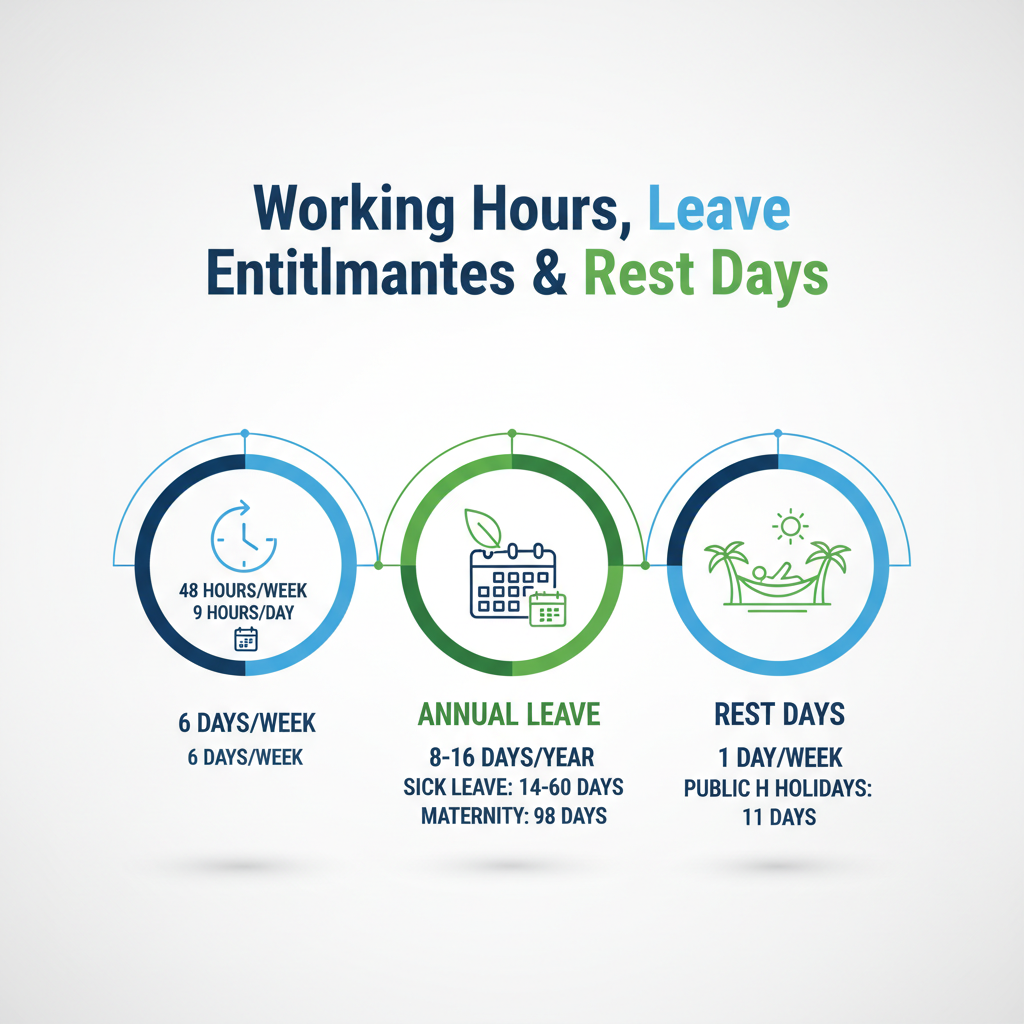
The Employment Act 1955 sets the fundamental framework for working hours in Malaysia, impacting all employees, including those in the vibrant retail sector. Employers must adhere to strict guidelines regarding daily and weekly working hours. Generally, an employee cannot be required to work more than eight hours in one day or 45 hours in one week. Exceptions apply for shift work and continuous operations, where an employee might work up to nine hours a day, provided the weekly limit isn’t exceeded. Crucially, employees are entitled to one rest day per week, typically Sunday, though this can be varied by agreement or due to the nature of the work, such as in retail where weekend work is common. Overtime pay regulations are also a significant aspect, with specific rates applicable for work performed beyond normal working hours on a normal working day, rest days, or public holidays. Compliance with these retail employee working hours Malaysia ensures fair compensation and prevents employee exploitation, contributing to healthy workplace regulations Malaysia and protecting employee rights Malaysia.
2. Annual, Sick, and Public Holiday Leave Provisions
Beyond daily working hours, the EA 1955 mandates various leave entitlements designed to ensure employee well-being and work-life balance. Annual leave entitlement is progressive, based on the length of service with an employer. Employees with less than two years of service are entitled to eight days of paid annual leave per year. This increases to 12 days for those with two to five years of service, and 16 days for five years or more. Retail companies must manage these entitlements diligently to avoid disputes. Sick leave Malaysia employment act provisions dictate that employees are entitled to a certain number of paid sick days per year, depending on their tenure and whether hospitalization is required. For instance, those with less than two years of service are entitled to 14 days of sick leave, increasing to 18 days for two to five years, and 22 days for five years and above, with an additional 60 days for hospitalization. Public holidays retail Malaysia are another critical area. The Act stipulates a minimum of 11 gazetted public holidays, of which five must be specified (National Day, Birthday of the Yang di-Pertuan Agong, Birthday of the Ruler or Governor of the State, Workers’ Day, and Malaysia Day). Employers have the flexibility to substitute remaining public holidays, but proper notice and communication are essential for maintaining HR compliance Malaysia and ensuring employees understand their leave policy Malaysia.
3. Maternity, Paternity & Compassionate Leave Rules
The Malaysian employment framework also provides for essential family-related leave, recognizing the importance of supporting employees through significant life events. Maternity leave Malaysia is a statutory right, granting eligible female employees a minimum of 98 consecutive days of paid leave for each confinement, up to a maximum of five surviving children. This provision is critical for protecting the well-being of expectant mothers and facilitating their return to work. In a significant development for work-life balance retail and gender equality, paternity leave Malaysia was introduced, allowing eligible male employees seven consecutive days of paid leave for each confinement of their legitimate wife, limited to five confinements. This acknowledges the father’s role in early childcare and family support, enhancing statutory benefits Malaysia. While compassionate leave is not explicitly defined or mandated by the EA 1955, many retail sector HR companies incorporate it into their employee benefits Malaysia package as part of their employment contracts or company policy. This discretionary leave, often granted for family emergencies, bereavement, or critical illness of a close family member, reflects a company’s commitment to employee welfare and can significantly boost morale and loyalty. Understanding these distinct leave types is crucial for businesses seeking to offer comprehensive employee benefits Malaysia and foster a supportive workplace culture, adhering to legal HR terms & conditions for retail companies in Malaysia.
Disciplinary Action & Termination Procedures
Navigating the complexities of disciplinary action and employee termination is a critical aspect of human resource management, particularly for retail companies operating in Malaysia. Adhering strictly to Malaysian employment law and established Legal HR terms & conditions for retail companies in Malaysia is paramount to minimizing legal risks, avoiding costly disputes, and maintaining a positive employer brand. Non-compliance with the Industrial Relations Act 1967 and the Employment Act 1955 can expose businesses to unfair dismissal claims, substantial compensation payouts, and reputational damage. This section outlines the correct legal processes, emphasizing best practices for workplace discipline guidelines and ensuring HR compliance retail Malaysia.
Effective management of disciplinary issues requires a structured and fair approach. Employers must be well-versed in dismissal procedures Malaysia, ensuring that every step taken is justifiable and well-documented. From initial investigations into misconduct handling retail to formal hearings and, if necessary, termination, each phase must align with the principles of natural justice. Prioritizing legal counsel and robust internal policies can significantly strengthen an employer’s position in the event of a dispute, safeguarding the company’s interests while respecting employee rights Malaysia.
-
Fair Disciplinary Hearing Procedures
The foundation of any defensible disciplinary action lies in conducting fair and transparent hearing procedures. Employers must adhere to the principles of natural justice, which essentially means providing the employee with a fair opportunity to present their case. The process typically begins with a thorough investigation into the alleged misconduct. Following this, if a prima facie case exists, a “show cause” letter must be issued, detailing the allegations and requiring the employee to explain their conduct within a specified timeframe. This step is crucial for ensuring proper misconduct handling retail.
Subsequently, a domestic inquiry or disciplinary hearing should be convened. During this hearing, the employee has the right to be heard, to question witnesses, and to present their defense, often accompanied by a colleague or union representative. The panel conducting the inquiry must be impartial and make a decision based solely on the evidence presented. Any disciplinary action, ranging from a warning to a demotion or termination, must be proportionate to the offense and clearly communicated. Meticulous documentation of every stage – from investigation reports and show cause letters to hearing minutes and final decision letters – is indispensable for proving adherence to employment law Malaysia and sound termination best practices, thereby strengthening the employer’s position against any potential future claims.
-
Constructive Dismissal and Unfair Dismissal Claims
Understanding the nuances of constructive dismissal and unfair dismissal claims is vital for retail companies. An employee can claim unfair dismissal if they believe their employment was terminated without just cause or excuse. Under the Industrial Relations Act 1967, the burden of proof lies with the employer to demonstrate that the dismissal was for good reason and carried out fairly. This underscores the importance of thorough disciplinary processes and robust documentation discussed earlier.
Constructive dismissal, on the other hand, occurs when an employer commits a fundamental breach of contract, making it impossible for the employee to continue working. While the employee technically resigns, they effectively claim to have been dismissed by the employer’s actions. Examples include significant changes to job roles without consent, consistent harassment, or a substantial reduction in salary. In such cases, the employee must prove that the employer’s conduct was sufficiently serious to justify resignation and that they resigned promptly in response to the breach. Retail employers must be mindful of their contractual obligations and working conditions to prevent situations that could lead to such claims, as these can be particularly challenging and costly to defend, often requiring a deep understanding of Malaysian employment law.
-
Redundancy and Retrenchment Guidelines
When business exigencies necessitate a reduction in workforce, companies must strictly adhere to redundancy and retrenchment guidelines mandated by Malaysian law. Retrenchment law Malaysia requires that any redundancy exercise must be genuine, arising from valid economic, structural, or technological reasons, and not merely as a guise for dismissing unwanted employees. Employers must demonstrate that all other options, such as freezing recruitment, reducing overtime, or offering voluntary separation schemes, have been explored.
Key legal requirements include providing adequate notice periods as stipulated in employment contracts or the Employment Act 1955. Additionally, the employer must notify the nearest Labour Office at least 30 days before the retrenchment exercise using the prescribed form (PK form). A fair and objective selection criterion must be applied, often following the “Last In, First Out” (LIFO) principle, unless other objective criteria are demonstrably more appropriate for business needs. Severance payments, calculated according to the Employment (Termination and Lay-Off Benefits) Regulations 1980, must also be provided. Neglecting these procedures can result in successful unfair dismissal claims, underscoring the vital role of meticulous planning and legal adherence in all termination best practices.
By meticulously following these legal HR terms & conditions for retail companies in Malaysia, businesses can effectively manage disciplinary actions and terminations, safeguarding their legal standing and fostering a compliant and ethical workplace environment.
Workplace Safety, Harassment & Discrimination
For retail employers in Malaysia, understanding and adhering to the legal framework surrounding workplace safety, harassment, and discrimination is not just a matter of compliance but a cornerstone of ethical business practice. This section delves into the critical Legal HR terms & conditions for retail companies in Malaysia, outlining the obligations designed to protect employees, foster a healthy environment, and prevent costly legal repercussions. From ensuring physical safety to cultivating a culture free from harassment and discrimination, these guidelines are paramount for any responsible retail operation.
1. Occupational Safety & Health Act (OSHA) in Retail
The Occupational Safety & Health Act 1994 (OSHA) is the primary legislation governing workplace safety in Malaysia. For retail companies, this means a proactive approach to identifying and mitigating risks inherent in the retail environment. Employers are legally obligated to ensure, as far as is practicable, the safety, health, and welfare of all employees at work. This includes conducting regular risk assessments, implementing safety protocols, and providing adequate training on hazard identification and emergency procedures. Retail premises, with their constant movement of goods, customers, and staff, present unique challenges. Common hazards include slips, trips, falls, manual handling injuries from stocking shelves, electrical safety issues, and even security risks during opening or closing hours. Employers must provide and maintain a safe working environment, safe plant and machinery, and safe systems of work. Furthermore, employees must be provided with necessary information, instruction, training, and supervision to ensure their safety and health. The provision of suitable personal protective equipment (PPE), where necessary, is also a critical requirement, particularly for roles involving manual handling or working in storage areas. Compliance with Malaysia’s occupational safety and health regulations is not merely a legal checkbox; it’s an investment in employee well-being and operational efficiency, directly impacting employee morale and productivity.
2. Policies Against Sexual Harassment
Malaysia’s Employment Act 1955, significantly amended in 2012, now explicitly addresses sexual harassment in the workplace, making it a legal requirement for employers to investigate complaints. Sexual harassment is broadly defined as any unwanted conduct of a sexual nature, whether verbal, non-verbal, visual, gestural, or physical, directed at a person which is offensive or humiliating or is a threat to their well-being, arising in the course of their employment. For retail companies, establishing clear, accessible, and robust policies against sexual harassment is crucial. These policies should define what constitutes sexual harassment, outline a confidential complaint procedure, and guarantee that all complaints will be taken seriously and investigated promptly and impartially. Employers have a statutory duty to inquire into all complaints of sexual harassment. Failure to do so can result in significant penalties and reputational damage. Comprehensive training for all staff, from management to front-line employees, on these policies and the appropriate conduct is vital. It creates awareness, encourages reporting, and reinforces a zero-tolerance stance, ensuring that the workplace remains respectful and safe for everyone. A strong policy not only protects employees but also protects the company from legal liabilities and fosters a positive work culture where individuals feel valued and respected.
3. Preventing Discrimination & Promoting Equality
While Malaysia does not yet have a comprehensive anti-discrimination law akin to those in many Western countries, the spirit of preventing discrimination and promoting equality is embedded in various legal provisions and fundamental human rights principles. Employers in the retail sector are expected to uphold fair employment practices, ensuring that decisions regarding hiring, promotion, training, compensation, and termination are based on merit, qualifications, and performance, rather than on protected characteristics such as race, religion, gender, age, disability, or marital status. The Employment Act 1955, alongside other specific legislations (e.g., Persons With Disabilities Act 2008), provides some protection against discrimination. Proactive measures include developing inclusive recruitment processes, implementing diversity and inclusion training, and fostering an environment where all employees feel they have equal opportunities to succeed. Promoting equality extends beyond avoiding overt discriminatory acts; it involves actively creating an inclusive workplace where diverse perspectives are valued and respected. This not only enhances employee morale and retention but also strengthens the company’s brand image and appeal to a broader customer base. Retail companies that champion diversity and equality set themselves apart as employers of choice, contributing positively to societal well-being and ensuring compliance with the evolving expectations of modern employment standards.
Partner with Shelby Global
You are looking for reliable HR Sevice Suppliers? Contact Shelby Global Now! To connect with verified talents and upgrade your orginization.
—————————————
References
– Skrine: Major Amendments to Malaysian Employment Act 1955: https://www.skrine.com/insights/alerts/september-2022/major-amendments-to-the-malaysian-employment-act-1955
– Minimum Wage Order: https://www.mohr.gov.my/index.php/en/labour-laws-regulations/labour-laws/minimum-wage-order
– Employment Act 1955: https://www.agc.gov.my/agcportal/uploads/files/Publications/LOM/MY/Act%20265%20-%20Employment%20Act%201955.pdf
– Unfair Dismissal in Malaysia – C.K.C. & Associates: https://www.ckc.com.my/legal-insight/unfair-dismissal-in-malaysia
– Malaysia’s occupational safety and health regulations: https://www.dosh.gov.my/