Overview of Vietnam’s Education Landscape & Economic Drivers

Vietnam’s education sector is experiencing a period of profound transformation, fueled by robust economic growth, a burgeoning middle class, and proactive government policies. Understanding the dynamics of this vibrant market requires a deep dive into its current state, economic influences, and future trajectories. This overview sets the stage for a comprehensive market demand trend report of education field in Vietnam, highlighting the key drivers shaping demand across various educational segments.
1. Current State of Education: Key Statistics and Demographics
Vietnam boasts an impressive commitment to education, evident in its high literacy rates and significant public investment. With a population exceeding 100 million and a median age around 33, the country has a substantial and young demographic, eager for quality learning opportunities. Enrollment rates are high at primary and secondary levels, nearing universal access. However, the focus is increasingly shifting towards enhancing quality, relevance, and access to higher education and specialized training. The rapidly expanding urban centers and a rising middle class are driving demand for private education, international schools, and extracurricular learning, attracting significant private education investment. Parents are increasingly willing to invest in their children’s future, creating a significant push for diverse educational offerings, from early childhood development to advanced vocational and university programs. This evolving landscape underscores the need for a detailed market demand trend report of education field in Vietnam to capture these nuanced shifts.
2. Vietnam’s Economic Growth and Impact on Education Spending
Over the past decades, Vietnam has consistently been one of the fastest-growing economies in Southeast Asia, with a commendable GDP growth rate. This sustained economic expansion has profoundly impacted the education sector. Increased disposable income among households directly translates into higher spending on education. Families are allocating more resources towards better schools, supplementary classes, English language learning Vietnam, and overseas study opportunities. The shift from an agrarian to an industrial and service-based economy has created a strong demand for a skilled workforce, particularly in high-tech manufacturing, IT, and specialized services. This economic restructuring highlights the urgency for education providers to align their curricula with industry needs, fostering growth in vocational training demand and professional development. Foreign direct investment (FDI) further stimulates this demand by creating new job opportunities that require specific skill sets. According to the World Bank, Vietnam’s economic outlook remains positive, indicating continued growth in education spending and further expansion of the Vietnam education market.
3. Government Policies & Initiatives Shaping the Sector
The Vietnamese government views education as a cornerstone of national development and has implemented various policies to reform and enhance the sector. The National Education Development Strategy aims to modernize the education system, improve teaching quality, and align learning outcomes with socio-economic development goals. Key initiatives include the comprehensive curriculum reform for general education, emphasizing competency-based learning. There’s also a significant push towards digitalization, fostering digital learning trends Vietnam, and integrating technology into classrooms nationwide. Vocational education and training (VET) are receiving increased attention and investment to address the skills gap, supporting the nation’s industrialization and modernization. Furthermore, policies promoting international cooperation and the internationalization of higher education are opening up new higher education opportunities and fostering partnerships with foreign institutions. These strategic government interventions are not only shaping the supply side but also significantly influencing the education sector growth Vietnam, creating new segments and demands within the market. Providers must closely monitor these policy shifts to effectively navigate and capitalize on the evolving landscape, as detailed in any comprehensive market demand trend report of education field in Vietnam.
Emerging Trends in Demand for Specific Education Segments
The education landscape in Vietnam is undergoing a dynamic transformation, driven by a confluence of technological advancements, evolving economic demands, and shifting consumer preferences. A comprehensive market demand trend report of the education field in Vietnam reveals a clear pivot towards segments that offer flexibility, practical skills, and demonstrable quality. These shifts not only redefine learning methodologies but also challenge traditional educational institutions to adapt rapidly. Understanding these emerging trends is crucial for educators, investors, and policymakers aiming to capitalize on growth areas and meet the burgeoning needs of students and the workforce.
1. The Rise of Online Learning & EdTech Adoption
The proliferation of digital technologies, significantly accelerated by the global pandemic, has firmly established online learning and EdTech as a cornerstone of modern education in Vietnam. What was once a niche offering has now become a mainstream preference, driven by its unparalleled convenience, accessibility, and the potential for personalized learning paths. Students, from K-12 to professional development, are increasingly opting for online platforms that provide flexibility, allowing them to balance studies with other commitments. This surge in demand is evident across various subjects, from language acquisition and test preparation to coding and digital marketing skills.
EdTech platforms are not merely digitizing existing content; they are innovating with interactive tools, AI-powered tutoring, gamification, and virtual reality experiences, making learning more engaging and effective. Investment in the EdTech sector in Vietnam has seen remarkable growth, attracting both domestic and international players keen to tap into this expanding market. The ease of access to a broader range of courses and instructors, irrespective of geographical barriers, positions online learning as a permanent and expanding fixture. According to industry analyses, the global EdTech market, which includes significant contributions from emerging economies like Vietnam, continues its robust expansion, with projections indicating sustained growth in the coming years, reflecting a fundamental shift in how education is consumed worldwide. This growth underscores the increasing comfort and reliance on digital solutions for learning, a trend that is particularly pronounced among younger demographics in Vietnam. HolonIQ reports, for instance, consistently highlight the strong investment and adoption rates in digital learning infrastructure globally, echoing the Vietnamese experience.
2. Growth in Vocational and Skills-Based Training (Addressing Skill Gaps)
Vietnam’s rapid economic development and integration into the global supply chain have created a significant demand for a skilled workforce. This has led to a pronounced shift in educational preferences towards vocational and skills-based training programs. Employers are increasingly prioritizing practical competencies over purely theoretical knowledge, leading to a skills gap Vietnam is actively working to address. Students and professionals are recognizing the direct correlation between acquiring specific, in-demand skills and improved employment prospects and career advancement.
This trend is fueling growth in technical and vocational education and training (TVET) institutions, as well as private training centers offering specialized courses in areas such as IT (e.g., software development, cybersecurity, data analytics), advanced manufacturing, digital marketing, hospitality, and healthcare support. The focus is on hands-on experience, industry-relevant curricula, and certifications that are immediately applicable in the workplace. Many programs are developed in close collaboration with industries to ensure graduates possess the exact skills required by employers. This pragmatic approach to education not only benefits individuals by enhancing their employability but also supports national economic objectives by fostering a competent and adaptive labor force.
3. Increasing Demand for Higher Education & Private Sector Quality
While vocational training addresses immediate skill needs, the demand for higher education remains strong, albeit with a growing emphasis on quality and relevance. Vietnamese students and their parents are increasingly discerning, seeking universities and colleges that offer internationally recognized programs, modern facilities, and strong links to industry. This discerning preference often translates into a greater demand for institutions in the private sector, as well as joint ventures with foreign universities, which are perceived to offer higher quality education, more innovative curricula, and better career outcomes.
Private universities and international programs often excel in providing practical, real-world relevant education, strong English language instruction, and opportunities for international exposure. They are also quicker to adapt their curricula to emerging industry trends, making their graduates highly sought after. The desire for a competitive edge in a globalized job market drives this premium on quality. Families are willing to invest more in education that promises a clearer path to successful careers, leading to continued expansion and diversification within the higher education sector, particularly among institutions that can demonstrate strong academic rigor, industry partnerships, and successful graduate employment rates. This sustained interest in quality higher education, particularly within the private sector, highlights a maturation of education consumer preferences Vietnam, moving beyond mere access to prioritizing value and tangible career benefits.
Key Challenges and Opportunities in the Market
Vietnam’s education sector stands at a pivotal juncture, grappling with significant challenges while simultaneously presenting a wealth of opportunities for innovation, investment, and strategic development. As the nation continues its rapid economic ascent, the demand for a highly skilled workforce intensifies, placing immense pressure on the existing educational infrastructure and methodologies. Understanding the nuances of these challenges and identifying viable pathways for growth is crucial for stakeholders looking to contribute to and benefit from the evolving landscape of education in Vietnam. A comprehensive market demand trend report of education field in Vietnam reveals a dynamic environment where traditional learning models are being reshaped by technological advancements and global integration.
1. Bridging the Rural-Urban Education Divide and Access
One of the most persistent and critical challenges facing Vietnam’s education system is the stark disparity between rural and urban areas. While urban centers often boast modern facilities, well-trained teachers, and access to advanced learning resources, many rural and remote regions struggle with inadequate infrastructure, limited access to technology, and a shortage of qualified educators. This divide significantly impacts student outcomes, perpetuating cycles of inequality and limiting the potential of a considerable portion of the nation’s youth. Bridging this gap requires multi-faceted approaches, including increased government funding for rural schools, incentives for teachers to work in underserved areas, and the strategic deployment of digital learning solutions. Expanding access also involves developing flexible learning pathways, adult education programs, and support for marginalized groups, ensuring that quality education is not a privilege but a universal right.
2. Teacher Training, Curriculum Development & Quality Improvement Needs
The backbone of any robust education system is its teaching force and the relevance of its curriculum. In Vietnam, there is an urgent need for continuous professional development programs for teachers, particularly in pedagogical approaches that foster critical thinking, creativity, and problem-solving skills, moving beyond rote learning. Many educators require updated training in digital literacy and the integration of technology into the classroom. Concurrently, curriculum development must be agile, reflecting global standards and the evolving demands of the job market. This includes strengthening STEM (Science, Technology, Engineering, and Mathematics) education, promoting foreign language proficiency, and incorporating essential 21st-century skills such as collaboration and communication. Quality improvement initiatives also extend to robust assessment frameworks and accreditation processes that ensure educational institutions meet specific benchmarks, thus enhancing the overall quality and international recognition of Vietnamese qualifications. To truly adapt and thrive, Vietnam’s education system needs to focus on adapting its education system to these modern demands.

3. Investment Opportunities in Specialized Programs and Infrastructure
Despite the challenges, Vietnam’s education sector is ripe with investment opportunities, driven by a growing middle class, increasing parental awareness of education’s importance, and government support for modernization. There is a strong demand for specialized programs, particularly in vocational training that aligns directly with industry needs, equipping students with practical skills for immediate employment. STEM education remains a high-priority area, attracting significant interest from both public and private investors. English language training and international curricula are also experiencing burgeoning demand, with many families seeking global educational pathways for their children. Furthermore, the need for modern infrastructure, including digital learning platforms, smart classrooms, and high-speed internet connectivity, presents substantial avenues for investment. Public-Private Partnerships (PPPs) are increasingly being explored as a mechanism to channel private capital and expertise into developing high-quality educational facilities and programs, especially in areas like digital transformation and specialized skill development. These investments are not merely financial; they are strategic contributions to building a future-ready workforce and fostering a knowledge-based economy.
In conclusion, while significant hurdles persist, the Vietnamese education market is characterized by a strong will to overcome them, coupled with substantial growth potential. By addressing the rural-urban divide, enhancing teacher capabilities and curriculum relevance, and embracing strategic investments in specialized areas and infrastructure, Vietnam can solidify its position as a regional leader in education and human resource development. The ongoing shifts underline the critical need for continuous analysis and a forward-thinking approach to meet the evolving educational aspirations of its citizens and the demands of a globalized economy.
Investor Sentiment and Market Dynamics
The Vietnamese education sector has emerged as a beacon for both domestic and international investors, drawing significant private capital due to its robust growth potential and evolving demand. A burgeoning middle class, coupled with a strong emphasis on quality education and skill development, underpins the positive investor sentiment. This section delves into the financial pulse of Vietnam’s education market, examining the flow of foreign direct investment, the vibrant local private sector, and the strategic maneuvers of market consolidation, including mergers, acquisitions, and partnerships. Understanding these dynamics is crucial for anyone seeking a comprehensive market demand trend report of education field in vietnam. The increasing sophistication of the market, driven by technological advancements and policy support, continues to attract substantial investment, making it a key area for economic analysis.
1. Foreign Direct Investment (FDI) in Vietnam’s Education
Vietnam’s steadfast economic growth and favorable regulatory environment have positioned it as a prime destination for foreign direct investment across various sectors, with education increasingly becoming a magnet. Investors are drawn by the country’s young, ambitious population and the government’s commitment to enhancing educational standards. FDI inflows into the Vietnamese education market are typically channeled into several key areas. These include K-12 private schools, which cater to the growing demand for international curricula; English Language Training (ELT) centers, witnessing explosive growth due to the global importance of English and serving the vast ELT market Vietnam; vocational training institutions, critical for addressing skills gaps in the workforce; and higher education, where foreign universities often partner with local institutions or establish branch campuses.
The engagement of foreign capital brings not only financial resources but also global best practices, innovative pedagogies, and advanced technologies, contributing significantly to the modernization of Vietnam’s educational infrastructure. Government incentives, such as tax breaks and streamlined licensing processes, further sweeten the deal for foreign investors, underscoring the potential for strong Vietnam education investment. This influx of capital has directly influenced the market demand trend report of education field in vietnam, signaling a strong belief in its long-term viability and growth trajectory. The push for digitalization, accelerated by the pandemic, has also opened doors for EdTech Vietnam investments, attracting foreign players keen on leveraging digital platforms for learning delivery. This sustained interest underscores the sector’s robust health and future prospects, contributing to overall Vietnam’s economic vibrancy and attractiveness for FDI.
2. Local Private Sector Growth, Competition & Market Consolidation
While FDI plays a significant role, the local private sector is the backbone of Vietnam’s education landscape. A surge in domestic private educational institutions, from kindergartens to universities, reflects a profound entrepreneurial spirit and a response to the diverse needs of Vietnamese learners. These local players often demonstrate a deep understanding of cultural nuances and local curriculum requirements, allowing them to compete effectively against international counterparts, particularly in terms of affordability and accessibility. The growth of private education Vietnam has led to intensified competition, pushing institutions to differentiate themselves through academic quality, specialized programs, and innovative learning environments.
This competitive landscape is naturally leading towards market consolidation. Smaller, less established players may find it challenging to keep pace with the investments in technology, infrastructure, and talent required to remain competitive. Consequently, larger domestic groups are beginning to acquire smaller entities or merge to create more comprehensive and resilient educational ecosystems. This trend helps in achieving economies of scale, standardizing quality, and expanding geographical reach. It also contributes to shaping the market demand trend report of education field in vietnam, as consolidated entities often have greater resources for market research and development. The need for qualified human resources and the increasing demand for higher education investment Vietnam are key drivers for this consolidation, aiming to build stronger, more sustainable educational enterprises.
3. Mergers, Acquisitions, and Partnership Trends
The drive for market expansion, technological integration, and talent acquisition has fueled a notable trend of mergers, acquisitions (M&A), and strategic partnerships within Vietnam’s education sector. Both local and international players are actively pursuing these strategies to gain a competitive edge, enter new market segments, or enhance their service offerings. International educational groups often seek local partners to navigate regulatory complexities and gain immediate market access, while Vietnamese institutions look for foreign collaborations to upgrade their curricula, faculty expertise, and international accreditations.
Notable M&A activities often involve the acquisition of established private school chains by larger investment funds or educational conglomerates, aiming to expand their K-12 or vocational training Vietnam footprint. Partnerships range from joint ventures in higher education to franchising models for ELT centers and collaborations for EdTech Vietnam solutions. These strategic alliances facilitate knowledge transfer, shared resources, and the development of innovative educational products and services tailored to the evolving demands of the Vietnamese market. Such trends are vital components in any market demand trend report of education field in vietnam, reflecting the sophisticated strategies employed by investors to capitalize on growth opportunities. The landscape is dynamic, with continuous evaluation of potential synergies that can unlock greater value and foster sustainable education market growth Vietnam. This strategic activity underscores the maturity and investment appeal of the sector, paving the way for further evolution and development.
Future Outlook and Strategic Recommendations (2023-2026)
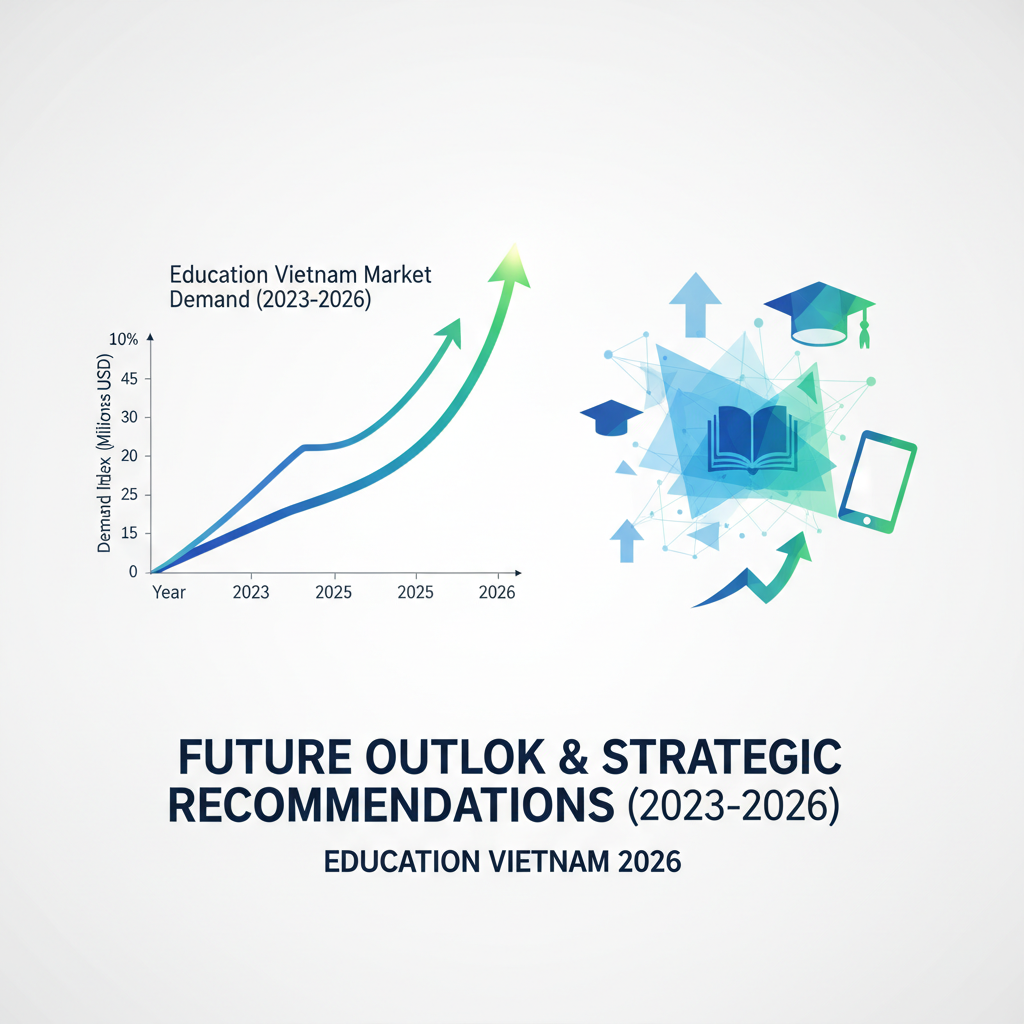
The education landscape in Vietnam is poised for significant transformation, driven by robust economic growth, a burgeoning middle class, and increasing government emphasis on human capital development. This forward-looking section provides a comprehensive market demand trend report of education field in Vietnam, offering strategic insights for education providers, investors, and policymakers navigating the dynamic period between 2023 and 2026. Understanding these evolving demands is critical for capitalizing on emerging opportunities and addressing potential challenges in this vibrant sector. Our analysis forecasts key growth areas and outlines actionable recommendations to foster sustainable educational advancement.
-
Forecasted Growth Areas: By Segment and Region
The coming years will see diversified growth across various educational segments in Vietnam. Early childhood education is projected to experience sustained expansion, particularly in urban and peri-urban areas, as parental awareness of foundational learning benefits increases. The K-12 sector will continue its transition towards international standards and innovative pedagogies, with a rising demand for high-quality private schools and supplementary learning centers focusing on English proficiency and critical thinking skills. We anticipate significant investment in digital learning platforms, driven by improved internet infrastructure and a generation of tech-savvy learners. This will further fuel the growth of the online education market, making quality content more accessible nationwide.
Higher education reform remains a priority, with universities striving to align curricula with industry needs. This will boost demand for specialized programs in technology, engineering, and business. A critical area for expansion will be vocational training and skill development programs, addressing the growing need for a skilled workforce in sectors like manufacturing, IT, and tourism. These programs, often in partnership with industry, will be crucial for enhancing workforce readiness and reducing skill gaps. Geographically, major metropolitan areas like Ho Chi Minh City, Hanoi, and Da Nang will remain hubs for premium educational services, while secondary cities and industrial zones will see increased demand for vocational and digital learning solutions, reflecting regional economic development.
-
Strategic Imperatives for Education Providers and Investors
For education providers and investors, strategic differentiation and agility will be paramount. Investing in advanced technology infrastructure and developing engaging, personalized digital content will be key to capturing market share in the burgeoning online education market. Institutions must prioritize curriculum innovation, integrating critical 21st-century skills such as problem-solving, creativity, and digital literacy across all levels, from early childhood education to professional development. Collaborations with international partners can introduce global best practices and enhance program quality and accreditation, making Vietnamese education offerings more competitive. Ensuring robust quality assurance mechanisms and transparent performance metrics will build trust and reputation in a competitive environment.
Furthermore, understanding localized market needs is crucial. Tailoring programs to specific regional demands, particularly in vocational training for emerging industries, offers significant growth potential. Providers should explore blended learning models that combine the flexibility of digital platforms with the benefits of in-person interaction. Human capital development within educational institutions themselves, through continuous professional development for educators in new pedagogies and technologies, is non-negotiable. For a deeper understanding of Vietnam’s human capital development goals, consult reports from institutions like the World Bank, which often highlight key areas for investment and policy focus. Investors should look for ventures demonstrating scalability, strong digital integration, and a clear path to delivering measurable learning outcomes, especially in areas like English language training and specialized skill enhancement.
-
Policy Recommendations for Sustainable Education Development
Policymakers play a pivotal role in fostering a supportive ecosystem for educational growth and ensuring equitable access. Key recommendations include continuing to invest in public education infrastructure, especially in rural and remote areas, and promoting digital literacy across all demographics. Developing flexible regulatory frameworks that encourage innovation in educational delivery, particularly for digital learning platforms and blended models, is essential. This includes streamlined processes for licensing and accreditation of new educational technologies and private institutions. Incentivizing public-private partnerships can leverage private sector expertise and investment, particularly in areas like vocational training and advanced skill development.
Prioritizing teacher training and professional development, with a focus on modern pedagogies, digital tools, and subject matter expertise, is fundamental to elevating educational quality nationwide. Policies should also aim to better integrate vocational and higher education pathways with industry demands, perhaps through robust national qualification frameworks and apprenticeship programs. Encouraging research and development in educational technologies will position Vietnam as a regional leader in ed-tech innovation. For a detailed exploration of current trends and future projections that inform these recommendations, refer to a comprehensive market demand trend report of education field in Vietnam. Ultimately, a holistic approach that balances quality, accessibility, and relevance will ensure Vietnam’s education sector effectively supports the nation’s socio-economic development goals.
Partner with Shelby Global
You are looking for reliable HR Sevice Suppliers? Contact Shelby Global Now! To connect with verified talents and upgrade your orginization.
—————————————
References
– World Bank: https://www.worldbank.org/en/country/vietnam/overview
– HolonIQ Global EdTech Market Size: https://holoniq.com/notes/global-edtech-market-size
– Vietnam’s Education System Needs to Adapt to a Changing World – World Bank: https://www.worldbank.org/en/news/press-release/2020/12/10/vietnam-education-system-needs-to-adapt-to-a-changing-world
– Vietnam Overview – World Bank: https://www.worldbank.org/en/country/vietnam/overview#1
– World Bank: https://www.worldbank.org/en/country/vietnam/education