Overview of Vietnam’s Economic Landscape and Sales Growth Drivers
This section sets the stage by detailing Vietnam’s current economic health and the macroeconomic factors fueling its dynamic sales sector.
Vietnam has emerged as one of Southeast Asia’s most compelling economic success stories, characterized by remarkable resilience and consistent growth over the past decades. Its vibrant economic health is not merely a statistical achievement but a foundational pillar supporting an increasingly robust and dynamic sales environment. Businesses looking to thrive in this market must understand the interplay of various macroeconomic factors that are not only shaping consumer behavior but also opening new avenues for sales expansion. From rising incomes to widespread digital adoption, Vietnam’s trajectory offers fertile ground for unprecedented commercial opportunities.

1. Vietnam’s GDP growth and evolving consumer spending patterns
At the heart of Vietnam’s economic success is its impressive Gross Domestic Product (GDP) growth. Consistently among the fastest-growing economies globally, Vietnam’s robust economic growth has directly translated into an expanding middle class with increasing disposable income. This demographic shift is profoundly influencing consumer spending patterns. Consumers are becoming more discerning, prioritizing quality, convenience, and brand value over mere affordability. The demand for premium goods, international brands, and a wider variety of services – from F&B to leisure and travel – is on the rise. Urbanization further amplifies this trend, concentrating purchasing power in key metropolitan areas like Ho Chi Minh City and Hanoi, while also expanding into secondary cities. Understanding these evolving preferences is crucial for any business seeking to capture a significant share of Vietnam’s burgeoning consumer market. The shift from basic necessities to aspirational purchases signifies a mature and diverse market ready for innovative product offerings and tailored sales strategies.
2. Impact of digitalization and technology adoption on sales
The widespread digitalization impact is unequivocally one of the most transformative forces driving sales growth in Vietnam. With one of the highest internet penetration rates in the region and a young, tech-savvy population, the adoption of digital technologies has permeated every aspect of commerce. E-commerce platforms are flourishing, enabling businesses to reach consumers across geographical barriers with unprecedented ease. Mobile payments and digital wallets have become commonplace, streamlining transactions and fostering a cashless economy. Social media is not just a communication tool but a powerful sales channel, with live-streaming commerce and influencer marketing playing significant roles in consumer decision-making. Furthermore, advanced logistics and data analytics, powered by increased technology adoption, are optimizing supply chains, enhancing customer service, and providing invaluable insights into market trends. Companies leveraging these digital tools are better positioned to understand, engage, and convert potential customers, creating a highly efficient and responsive sales ecosystem. This digital transformation is not just a trend but a fundamental shift in how sales are conducted and managed in Vietnam.
3. Government policies and foreign investment influence on market demand
Vietnam’s proactive government policies have played a pivotal role in creating an attractive environment for both domestic and foreign investment, directly impacting market demand and sales potential. The government’s commitment to economic liberalization, trade agreements (such as the CPTPP and EVFTA), and a business-friendly regulatory framework has drawn substantial levels of foreign investment. This influx of capital has led to the establishment of new industries, job creation, and infrastructure development, all of which expand the consumer base and increase purchasing power. Furthermore, policies supporting small and medium-sized enterprises (SMEs) and promoting local production contribute to a diversified and competitive market. The focus on developing a robust digital economy and fostering innovation through supportive policies also accelerates the adoption of new technologies that enhance sales capabilities. These strategic governmental interventions, coupled with significant foreign direct investment (FDI), continuously inject vitality into the economy, bolstering consumer confidence and sustaining a positive outlook for the market demand trend report of sale field in vietnam.
In conclusion, Vietnam’s sales sector is propelled by a synergy of strong economic growth, an evolving consumer landscape, pervasive digitalization, and supportive governmental and foreign investment frameworks. These interconnected drivers paint a picture of a dynamic and opportunity-rich market. Businesses equipped with an understanding of these fundamentals and adaptable strategies are poised for substantial growth within Vietnam’s continually expanding economic sphere.
Key Market Demand Trends in Vietnam’s Sales Field by Sector
This comprehensive market demand trend report of sale field in Vietnam delves into the specific forces reshaping the landscape for sales professionals across various industries. As Vietnam continues its dynamic economic expansion, understanding these sectoral shifts is crucial for businesses strategizing their talent acquisition and for professionals charting their career paths within the burgeoning Vietnamese market. This analysis offers insights into the evolving requirements for Vietnam sales jobs outlook, highlighting key areas of growth and the specialized skills now in high demand.
1. Rise of E-commerce and demand for online sales specialists
Vietnam’s digital economy is experiencing exponential growth, driven by increasing internet penetration, smartphone adoption, and a young, tech-savvy population. This surge has profoundly impacted the sales field, creating an insatiable demand for online sales specialists Vietnam. Businesses, from large enterprises to nimble SMEs, are shifting their focus to digital channels, necessitating experts in various facets of e-commerce.
The demand isn’t just for traditional sales roles translated online; it encompasses a new breed of professionals skilled in digital sales strategies Vietnam. This includes roles such as e-commerce sales managers who can oversee end-to-end online sales operations, digital marketing specialists who drive traffic and conversions, and social commerce strategists proficient in leveraging platforms like Facebook, Zalo, and TikTok for direct sales. Customer relationship management (CRM) software proficiency, data analytics for sales performance, and understanding user experience (UX) in an online context are becoming indispensable skills. The competitive nature of the online marketplace also fuels the need for professionals adept at optimizing conversion funnels, managing online inventory, and executing targeted digital advertising campaigns. The evolving landscape means that general sales skills must now be augmented with robust digital competencies, making “e-commerce sales specialists Vietnam” a highly sought-after search term in the job market. This trend is expected to intensify, solidifying the position of digital sales as a primary driver for many businesses.
2. Growth in B2B sales across manufacturing, tech, and logistics
Beyond the consumer-facing digital realm, Vietnam’s industrial and services sectors are fueling significant growth in B2B sales. The country’s strong performance as a manufacturing hub, coupled with its burgeoning technology ecosystem and strategic location for logistics, has created a robust environment for B2B transactions. This section of our market demand trend report of sale field in Vietnam highlights the specialized skills required for these complex sales cycles.
In manufacturing, the demand for B2B sales Vietnam professionals focuses on understanding complex product specifications, supply chain dynamics, and long-term client relationships. Sales engineers, account managers, and business development executives with industry-specific knowledge are highly valued. Similarly, the technology sales demand Vietnam is soaring. As Vietnamese enterprises adopt more sophisticated IT solutions, cloud services, and AI-driven tools, there is a pressing need for tech sales professionals who can articulate complex technical benefits to non-technical business leaders. These roles often require a blend of technical acumen, strategic thinking, and strong negotiation skills.
Furthermore, Vietnam’s role as a regional trade gateway has propelled the logistics sector, creating a robust demand for logistics sales Vietnam experts. These professionals manage crucial client relationships, offering solutions for freight forwarding, warehousing, and supply chain optimization. The B2B sales environment across these sectors emphasizes consultative selling, solution-oriented approaches, and the ability to build trust and long-term partnerships. The sales cycle is typically longer, requiring perseverance, deep product knowledge, and an understanding of client-specific operational challenges. This specialized growth area underscores the diversification of Vietnam sales jobs outlook beyond traditional consumer markets.
3. Consumer goods and services: Shifting sales strategies and roles
The consumer goods (FMCG) and services sectors in Vietnam, while traditionally strong, are undergoing significant transformations that are redefining sales strategies and roles. A burgeoning middle class with evolving preferences, coupled with the impact of digitalization, is forcing companies to innovate their sales approaches. This segment of the market demand trend report of sale field in Vietnam explores these critical shifts.
For FMCG sales evolution Vietnam, traditional distribution channels are being augmented by, and sometimes integrated with, modern trade and e-commerce platforms. This necessitates sales professionals who can manage diverse channels, from traditional wet markets and small convenience stores to supermarkets, hypermarkets, and increasingly, direct-to-consumer (D2C) online sales. Roles are shifting from purely order-taking to more strategic account management, category management, and data-driven sales planning. Understanding consumer behavior, market segmentation, and promotional effectiveness are paramount.
In the services sector – encompassing hospitality, finance, education, and healthcare – the emphasis is increasingly on customer experience sales Vietnam. With greater competition and rising consumer expectations, sales professionals are now expected to be advisors and solution providers, focusing on personalization and building enduring client relationships. This demands excellent communication skills, empathy, and a deep understanding of the service offerings. The rise of digital platforms also means that sales in services increasingly involve online consultations, virtual tours, and digital onboarding processes. Therefore, the skillset for sales professionals in consumer goods and services is becoming more holistic, requiring not just traditional selling techniques but also analytical capabilities, digital literacy, and a strong focus on enhancing the overall customer journey. This evolution ensures that the Vietnam sales jobs outlook in this dynamic sector remains robust, albeit with an ever-changing profile of desired competencies.
Emerging Sales Roles and Essential Skill Gaps in Vietnam
Vietnam’s dynamic economic landscape, characterized by rapid digitalization and a burgeoning middle class, is fundamentally reshaping the sales profession. As businesses strive for competitive advantage, the traditional sales model is giving way to more sophisticated, tech-driven approaches. This shift necessitates a re-evaluation of sales roles, demanding a new breed of professionals equipped with specialized skills. A comprehensive market demand trend report of sale field in vietnam reveals significant skill gaps and the emergence of specialized positions crucial for navigating this evolving environment. To thrive, sales organizations must not only identify these emerging roles but also invest heavily in talent development to bridge the essential skill gaps.

1. Demand for Data-Driven Sales, CRM Expertise, and Analytics
The era of gut-feel selling is rapidly fading. Vietnamese businesses are increasingly recognizing the power of data to optimize sales processes, predict customer behavior, and personalize outreach. This has created a surging demand for sales professionals who are not just charismatic communicators but also adept data interpreters. New roles such as “Sales Operations Analyst,” “CRM Specialist,” and “Data-driven Sales Manager” are becoming integral to high-performing sales teams. These professionals are tasked with managing complex Customer Relationship Management (CRM) systems like Salesforce or HubSpot, analyzing sales funnels, identifying bottlenecks, and generating actionable insights from vast datasets.
The critical skill gap here lies in the ability to translate raw data into strategic sales initiatives. While many sales professionals possess excellent interpersonal skills, few currently combine this with strong analytical capabilities, proficiency in data visualization tools, and a deep understanding of CRM system architecture. Organizations need to foster a culture where sales decisions are informed by metrics, moving beyond anecdotal evidence to concrete, data-backed strategies. This requires training in statistical analysis basics, advanced Excel or Google Sheets, and specific CRM platform certifications. The ability to leverage predictive analytics for lead scoring and forecasting is no longer a luxury but a necessity for sustainable growth in the Vietnamese market.
2. Importance of Digital Marketing and Social Selling Competencies
With Vietnam’s high internet penetration and active social media usage, the digital realm has become an undeniable frontier for sales. Traditional cold calling and door-to-door sales are being augmented, if not replaced, by sophisticated digital marketing and social selling strategies. This has given rise to roles like “Digital Sales Specialist,” “E-commerce Sales Manager,” and “Social Selling Expert.” These professionals are skilled in leveraging platforms such as LinkedIn, Facebook, and local Vietnamese platforms like Zalo, not just for personal branding but for strategic lead generation, content distribution, and direct customer engagement.
The pervasive use of smartphones and online platforms means that buyers often complete a significant portion of their research before ever interacting with a salesperson. Consequently, modern sales professionals must understand SEO, SEM basics, content marketing principles, and how to create compelling digital narratives that resonate with target audiences. The skill gap often manifests as a lack of proficiency in digital tools, an inability to craft engaging online content, and a limited understanding of how to build and nurture relationships virtually. Investing in training programs that cover digital marketing fundamentals, social media engagement best practices, and the use of sales enablement platforms is paramount. This enables sales teams to effectively engage prospects where they spend most of their time online, ensuring a robust digital presence that drives sales.
3. Cross-Cultural Communication, Negotiation, and Relationship Building
Despite the technological advancements, the human element remains central to sales, particularly in a culturally rich and diverse market like Vietnam. As Vietnamese businesses increasingly engage with international partners and customers, and as local markets themselves become more diverse, the nuances of cross-cultural communication and negotiation become paramount. Roles like “International Sales Manager” or “Key Account Manager” now demand an acute sensitivity to cultural protocols, unspoken cues, and varying business etiquettes.
The essential skill gaps here are not just about language proficiency, but about deeper cultural intelligence. This includes understanding the collectivistic nature of Vietnamese business relationships, the importance of ‘face’ (uy tín), and the role of personal connections (mối quan hệ) in securing and sustaining deals. Effective negotiation requires more than just persuasive speaking; it demands active listening, empathy, and the ability to build long-term trust and rapport across cultural divides. Furthermore, strategic relationship building, moving beyond transactional interactions to foster deep, enduring partnerships, is critical for sustained success. Companies must prioritize training that develops cultural awareness, advanced negotiation tactics, and sophisticated relationship management skills to ensure their sales professionals can confidently navigate both local intricacies and global complexities. According to a report on Vietnam’s digital economy, cross-border digital services are expanding, highlighting the increasing need for such global acumen in sales.
The evolution of the sales landscape in Vietnam presents both challenges and immense opportunities. For sales professionals and organizations aiming to stay ahead, understanding and proactively addressing these emerging roles and skill gaps is non-negotiable. Investing in continuous learning, adopting new technologies, and cultivating a forward-thinking sales culture will be key determinants of success in this dynamic market. The journey towards a more sophisticated, data-driven, and digitally adept sales force is underway, and those who embrace it wholeheartedly will reap significant rewards.
Regional Analysis: Sales Opportunities Across Vietnam’s Key Cities
Vietnam stands as a dynamic and rapidly evolving market, presenting a myriad of sales opportunities across its diverse urban landscapes. Understanding the unique economic drivers and consumer behaviors in each key city is crucial for businesses aiming to penetrate or expand their presence in this Southeast Asian powerhouse. From bustling metropolises to burgeoning tourist destinations, a thorough understanding derived from a market demand trend report of sale field in Vietnam reveals distinct sales landscapes shaped by local industries, demographics, and government policies. This regional analysis provides a comprehensive breakdown of sales opportunities and market specifics, offering insights into Vietnam’s major economic hubs and promising emerging areas, making it essential for strategic business planning and investment, especially given Vietnam’s dynamic growth trajectory.
1. Ho Chi Minh City: Consumer goods, finance, and services sales
Ho Chi Minh City (HCMC), Vietnam’s largest city and economic engine, serves as the undeniable epicenter for consumer goods, finance, and services sales. With its youthful and increasingly affluent population, HCMC exhibits robust consumer spending power, driving strong demand for everything from FMCG (Fast-Moving Consumer Goods) to luxury items. The city’s sprawling retail landscape, characterized by modern shopping malls and vibrant street markets, reflects a diverse consumer base eager for innovation and quality. Understanding the nuances of the Ho Chi Minh City consumer market is paramount for success.
In the financial sector, HCMC is a hub for banking, investment, and fintech, attracting both domestic and international players. The rising middle class fuels demand for personal banking services, insurance products, and investment opportunities. Furthermore, the services sector, encompassing hospitality, healthcare, education, and professional services, thrives under the city’s dynamic growth. Digital transformation is also a significant driver, with e-commerce, digital payments, and tech-driven services experiencing exponential growth. Businesses focusing on these sectors in HCMC can capitalize on a large, active market with a high propensity for adoption and consumption.
2. Hanoi: Government, education, and technology sales markets
As the capital and political heart of Vietnam, Hanoi presents a distinct sales environment heavily influenced by government initiatives, a robust education system, and a burgeoning technology sector. The presence of numerous government ministries, state-owned enterprises, and international organizations makes Hanoi a prime market for B2B sales in areas such as infrastructure development, public procurement, and consulting services. Long-term contracts and strategic partnerships are often the key to unlocking opportunities here.
Hanoi is also a prominent educational hub, home to some of Vietnam’s most prestigious universities and research institutions. This creates a significant market for educational technology, learning materials, campus infrastructure, and services catering to a large student population. The city’s growing tech ecosystem, supported by government incentives and a skilled workforce, is fostering innovation in software development, AI, and IT services. Companies targeting Hanoi technology sales will find a receptive audience among startups, established tech firms, and government agencies keen on digital solutions. Cultural and historical tourism also contributes to the services sector, albeit with a different demographic focus than HCMC.
3. Da Nang & Other Tier 2 Cities: Tourism, real estate, and emerging sectors
Beyond the two major economic powerhouses, Vietnam’s Tier 2 cities, led by Da Nang, offer compelling sales opportunities in distinct sectors. Da Nang, strategically located on the central coast, has rapidly transformed into a major tourism and real estate hotspot. Its stunning beaches, international airport, and improving infrastructure attract both domestic and international tourists, creating strong demand for hospitality services, leisure activities, and related consumer goods. The booming tourism sector, exemplified by the rapid growth of hotels and resorts, fuels a robust real estate market, with investments flowing into residential, commercial, and resort properties. This growth makes Da Nang tourism growth a key indicator for this region.
Other emerging Vietnamese cities like Hai Phong, Can Tho, and Bien Hoa are also carving out their niches. Hai Phong, a major port city, is a hub for industrial manufacturing, logistics, and automotive sectors, offering significant B2B sales potential. Can Tho, the largest city in the Mekong Delta, benefits from agricultural processing, aquaculture, and a growing domestic consumer base. These cities represent compelling prospects for businesses willing to explore and invest in emerging Vietnamese cities. They offer lower operational costs, access to developing infrastructure, and increasing disposable incomes, indicating a promising future for diverse sales activities, particularly in manufacturing support, logistics, and localized consumer goods, offering substantial Tier 2 city investment Vietnam potential.
Vietnam’s regional diversity presents a complex yet rewarding landscape for sales professionals. From the consumer-driven dynamism of Ho Chi Minh City to Hanoi’s government and tech-centric markets, and the tourism-led growth in Da Nang and other Tier 2 cities, each region offers unique entry points and growth trajectories. A comprehensive market demand trend report of sale field in Vietnam is indispensable for navigating these varied markets, allowing businesses to tailor their strategies to specific regional demands and capitalize on the country’s continuous economic expansion. Strategic localization, informed by deep market insights, is key to unlocking the full potential of sales opportunities across Vietnam’s diverse and vibrant Vietnam sales market.
Future Outlook: Predictions for the Vietnam Sales Market by 2026
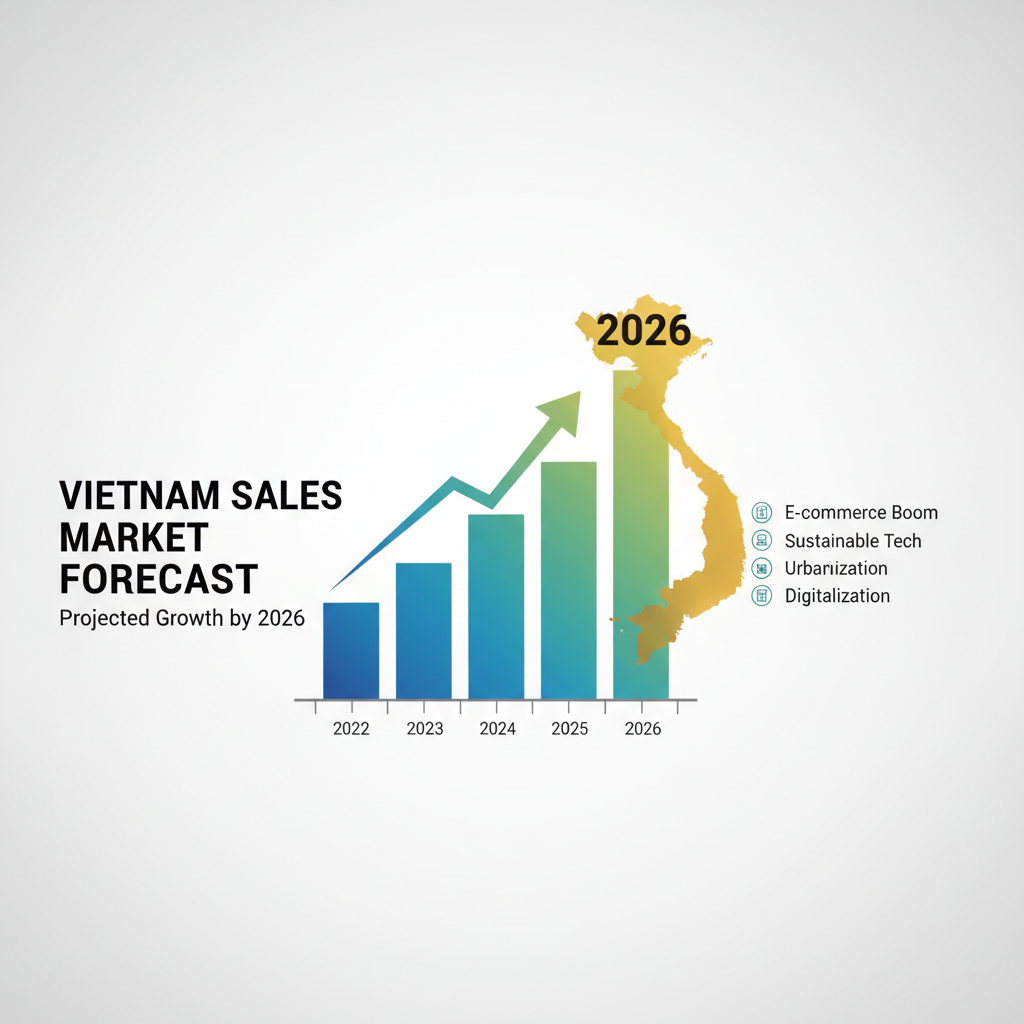
The Vietnamese sales landscape is on the cusp of significant transformation, driven by robust economic growth, a burgeoning middle class, and rapid digital adoption. As we look towards 2026, the market demand trend report of sale field in Vietnam indicates a dynamic period ahead, characterized by both immense opportunities and complex challenges. Businesses and sales professionals operating in this vibrant market must prepare for evolving consumer behaviors, technological advancements, and a more competitive environment to thrive.
1. Anticipated growth rates and investment areas in the sales domain
Vietnam’s economy is projected to maintain a strong growth trajectory, and this prosperity will directly fuel an expansion in the sales sector. Experts forecast robust GDP growth, which will translate into increased consumer spending and business investments, thereby boosting Vietnam sales market trends across various industries. Key sectors expected to see substantial sales growth include:
- E-commerce and Digital Services: With one of the fastest-growing internet economies in Southeast Asia, online sales will continue their exponential rise. Investments in digital marketing, sophisticated e-commerce platforms, and seamless online customer experiences will be paramount. This area presents a significant opportunity for businesses focusing on market demand trend report of sale field in Vietnam.
- Technology and Software: As businesses prioritize digital transformation Vietnam, demand for enterprise software, cloud solutions, cybersecurity, and AI-driven analytics will surge, requiring specialized B2B sales expertise.
- Consumer Goods (FMCG) and Retail: A growing middle class and urbanization will drive demand for both domestic and international brands. Sales strategies will need to adapt to a hybrid model, blending traditional retail with advanced online channels.
- Healthcare and Pharmaceuticals: Increased healthcare awareness and investment will create opportunities for medical device and pharmaceutical sales.
Investment in sales infrastructure will pivot towards data analytics, Customer Relationship Management (CRM) systems, and AI-powered sales tools to enhance efficiency and personalization. Furthermore, companies will allocate more resources to upskilling their sales teams, focusing on digital literacy, strategic selling, and emotional intelligence.
2. Challenges: Talent retention, competitive landscape, and market volatility
While the growth prospects are bright, the Vietnam sales market in 2026 will not be without its hurdles. Businesses must proactively address these to sustain their competitive edge:
- Talent Retention and Development: The demand for skilled sales professionals is outstripping supply. Companies face intense competition for top sales talent development, leading to higher compensation expectations and increased turnover. Attracting, training, and retaining high-performing sales teams will be a critical challenge.
- Competitive Landscape: The allure of the Vietnamese market has attracted numerous domestic and international players, intensifying the competitive sales environment. Differentiation through superior customer service, innovative product offerings, and unique value propositions will be crucial.
- Market Volatility: Global economic uncertainties, supply chain disruptions, and evolving trade policies could introduce periods of market volatility. Sales strategies must be agile and adaptable to respond quickly to unforeseen changes in consumer confidence or purchasing power.
3. Strategic recommendations for sales professionals and businesses to adapt
To navigate the future sales landscape successfully, both individuals and organizations must embrace continuous adaptation and strategic foresight:
- For Sales Professionals:
- Continuous Learning: Invest in developing digital skills, including social selling, data analysis, and proficiency with CRM systems. Enhance soft skills such as negotiation, empathy, and problem-solving.
- Specialization: Consider specializing in high-growth sectors like e-commerce growth Vietnam or technology sales, where demand for expert knowledge is high.
- Relationship Building: Prioritize building long-term relationships and trust with clients, moving beyond transactional selling to become a trusted advisor, essential for effective customer engagement strategies.
- For Businesses:
- Invest in Technology: Implement advanced sales tech stacks, including AI-driven analytics for predictive selling, personalized customer experiences, and efficient lead management.
- Foster a Learning Culture: Create robust training programs focusing on digital competencies, product knowledge, and strategic selling techniques to address the challenge of sales talent development.
- Embrace Agility: Develop flexible sales models and strategies that can quickly adapt to market shifts and consumer preference changes. Leverage data to inform real-time decision-making.
- Employee Well-being: Focus on creating a supportive work environment, offering competitive compensation, and providing clear career progression paths to improve retention.
- Data-Driven Insights: Regularly consult comprehensive analyses, such as a market demand trend report of sale field in Vietnam, to stay informed about evolving future sales outlook Vietnam and refine strategies.
By understanding these predictions and implementing strategic adjustments, stakeholders in the Vietnamese sales market can not only mitigate potential risks but also capitalize on the significant opportunities that lie ahead towards 2026 and beyond.
Partner with Shelby Global
You are looking for reliable HR Sevice Suppliers? Contact Shelby Global Now! To connect with verified talents and upgrade your orginization.
—————————————
References
– World Bank Overview of Vietnam: https://www.worldbank.org/en/country/vietnam/overview
– Vietnam E-commerce Market Outlook – Statista: https://www.statista.com/outlook/dmo/ecommerce/vietnam
– PwC Vietnam’s Digital Economy Report: https://www.pwc.com/vn/en/industries/vietnam-digital-market.html
– Vietnam: Economic Update – October 2023 | World Bank: https://www.worldbank.org/en/country/vietnam/overview
– World Bank Overview of Vietnam’s Economy: https://www.worldbank.org/en/country/vietnam/overview