
The Current Landscape of Vietnam’s Transportation Field
Vietnam’s rapid economic ascent and ambitious industrialization goals have irrevocably shaped its transportation sector, transforming it into a dynamic and critically important backbone for national development and international trade. Understanding the market demand trend report of transportation field in Vietnam requires a comprehensive look at its underlying economic strengths, the existing state of its diverse infrastructure, and the intricate interplay of market forces and regulatory frameworks. This section provides an essential overview of Vietnam’s transport infrastructure, economic context, and current market size, setting the stage for future trends and opportunities in this vibrant Southeast Asian nation.
1. Snapshot of Vietnam’s Economic Growth and Industrialization
Vietnam has emerged as one of Southeast Asia’s most compelling economic success stories over the past few decades. Fueled by robust foreign direct investment (FDI), an expanding manufacturing base, and strategic integration into global supply chains, the nation has consistently achieved impressive GDP growth rates. This strong economic development Vietnam has been a primary driver for increased demand across all transportation modes. Industrialization, particularly in key economic zones and major cities, has led to a surge in both raw material imports and finished goods exports, necessitating efficient freight transport Vietnam solutions. The burgeoning middle class and a thriving tourism sector also contribute significantly to the demand for efficient passenger transport Vietnam services. This relentless growth trajectory underscores the urgent need for continuous investment and modernization within the country’s transport network to sustain its economic momentum and support its long-term industrialization aspirations. The intricate relationship between economic prosperity and infrastructure development is particularly evident in Vietnam, where logistics efficiency directly impacts global competitiveness.
2. Existing Infrastructure: Road, Rail, Air, and Water Networks
Vietnam’s existing Vietnam transport infrastructure comprises a complex tapestry of roads, railways, airports, and waterways, each playing a distinct role in the nation’s logistics landscape. The road network Vietnam is the most extensive, accounting for the vast majority of domestic freight and passenger movement. While significant investments have been made in upgrading national highways and constructing new expressways, challenges like congestion in urban areas and the need for further rural connectivity persist. The rail upgrades Vietnam efforts are underway, but the railway system remains relatively underdeveloped compared to its regional peers, primarily serving long-haul cargo and inter-city passenger routes with limited high-speed capabilities. Meanwhile, aviation growth Vietnam has been remarkable, with an increasing number of international and domestic airports handling surging passenger numbers and critical air cargo. Major hubs like Tan Son Nhat (Ho Chi Minh City) and Noi Bai (Hanoi) are undergoing expansion to meet escalating demand. Perhaps most crucial for Vietnam’s export-driven economy are its deep-sea port development Vietnam and extensive inland waterways. Major ports such as Cai Mep-Thi Vai and Hai Phong are vital gateways for international trade, facilitating the flow of goods globally. The Mekong Delta’s intricate river system is also indispensable for regional trade and agricultural distribution. The continuous investment in these diverse networks is critical for enhancing overall Vietnam’s logistics competitiveness and addressing the evolving needs of its rapidly expanding economy.
3. Current Market Size, Key Players, and Regulatory Environment
The Vietnam logistics market is experiencing robust growth, driven by manufacturing output, e-commerce boom, and strong domestic consumption. Valued in billions of US dollars, the sector is characterized by intense competition and a diverse set of participants. Key players include large state-owned enterprises (SOEs) like Vietnam Railways and Vietnam National Shipping Lines (Vinalines), which dominate specific segments. Alongside them, numerous domestic private logistics firms, ranging from small trucking companies to integrated logistics providers, contribute significantly. International logistics giants have also established a strong presence, leveraging their global networks and expertise to capture a share of the burgeoning market, especially in complex supply chain management. The regulatory environment is overseen by various government bodies, primarily the Ministry of Transport, which sets policies for infrastructure development, operational standards, and investment. Policies are increasingly geared towards attracting private investment, both domestic and foreign, into infrastructure projects through public-private partnerships (PPPs). The government’s Master Plan for Transport Development aims to create a modern, integrated, and sustainable transportation system, addressing current bottlenecks and preparing for future demand. Understanding this complex ecosystem of infrastructure, market players, and evolving regulations is fundamental for anyone seeking insight into the dynamic supply chain Vietnam and the overall market demand trend report of transportation field in Vietnam.
The strategic development of Vietnam’s transportation field is not merely about expanding physical networks; it’s about fostering an efficient, resilient, and technologically advanced system capable of supporting national growth and enhancing global trade connectivity. As Vietnam continues its journey towards industrialization, the demands on its transportation infrastructure will only intensify, making continuous innovation and strategic investment paramount.
Key Drivers Shaping Market Demand to 2026
The transportation sector in Vietnam is experiencing dynamic growth, propelled by a confluence of economic, demographic, and policy-driven factors. Understanding these primary drivers is crucial for stakeholders looking to navigate and capitalize on the evolving landscape. This section delves into the forces that are not only sustaining but accelerating demand for transportation services across the nation, providing a comprehensive overview for any market demand trend report of transportation field in Vietnam seeking future projections.
1. Impact of E-commerce Boom and Rapid Urbanization
Vietnam’s digital economy is booming, with e-commerce emerging as a significant catalyst for transportation demand. The rapid adoption of online shopping platforms, spurred by increasing internet penetration and smartphone usage, has led to an exponential rise in parcel volumes and last-mile delivery services. This shift necessitates a robust logistics infrastructure, including modern warehousing facilities, efficient distribution networks, and a diverse fleet of delivery vehicles capable of reaching customers in both urban and increasingly rural areas. The demand extends beyond mere delivery, influencing cold chain logistics for perishable goods, and reverse logistics for returns.
Concurrently, rapid urbanization is reshaping the demographic landscape, particularly in major cities like Ho Chi Minh City, Hanoi, and Da Nang. The concentration of population in urban centers strains existing infrastructure but simultaneously creates concentrated pockets of demand for passenger transport, public transit, and intra-city freight movement. This growth fuels demand for sophisticated urban logistics solutions, smart traffic management systems, and new forms of shared mobility. As cities expand, so does the need for efficient movement of goods from industrial zones to retail hubs, and raw materials to manufacturing facilities, thereby consistently elevating the requirement for optimized transportation solutions.
2. Government Policies and Strategic Infrastructure Investment Plans
The Vietnamese government’s proactive stance on infrastructure development is a cornerstone in shaping future transportation demand. Recognizing the pivotal role of connectivity in economic growth, the government has embarked on ambitious strategic investment plans under national master plans for transport development. These plans prioritize significant investments in upgrading and expanding key infrastructure assets, including expressways, deep-water seaports, international airports, and railway networks. Projects like the North-South Expressway, expansion of key ports such as Cai Mep-Thi Vai, and upgrades to major airports are designed to enhance logistics efficiency, reduce transit times, and lower overall transportation costs. Such strategic infrastructure projects not only improve the flow of goods and people but also stimulate economic activities in previously underserved regions, thereby generating new corridors of demand for freight and passenger services. These substantial investments are critical for Vietnam to maintain its competitive edge and support its burgeoning economy, as highlighted by various analyses of the country’s economic development and infrastructure needs from global financial institutions like the World Bank.
3. Regional Trade Agreements and Growing Export-Import Volumes
Vietnam’s integration into the global economy through a network of regional and bilateral trade agreements is a powerful driver for the transportation sector. Participation in agreements such as the Comprehensive and Progressive Agreement for Trans-Pacific Partnership (CPTPP), the EU-Vietnam Free Trade Agreement (EVFTA), and the Regional Comprehensive Economic Partnership (RCEP) has significantly boosted Vietnam’s export-import volumes. These agreements facilitate trade by reducing tariffs and non-tariff barriers, making Vietnamese products more competitive internationally and increasing the inflow of raw materials and finished goods. As Vietnam continues to solidify its position as a key manufacturing and export hub in Southeast Asia, the demand for international freight forwarding, shipping, air cargo, and cross-border trucking services escalates. This upward trend in trade volumes directly translates into a heightened need for sophisticated logistics management, customs brokerage, and multimodal transport solutions, all of which are essential components for a comprehensive market demand trend report of transportation field in Vietnam. The intricate web of global supply chains requires robust, reliable, and efficient transportation partners to ensure seamless movement of goods from production to consumption points across continents.
In conclusion, the convergence of a thriving e-commerce landscape, rapid urbanization, strategic government investments in infrastructure, and robust participation in global trade agreements creates a highly favorable and dynamic environment for the transportation sector in Vietnam. These interconnected drivers are expected to fuel sustained demand growth through 2026, necessitating continuous innovation and investment in logistics and transport capabilities to meet evolving market needs.
Segment-Specific Trends: Freight vs. Passenger Transport
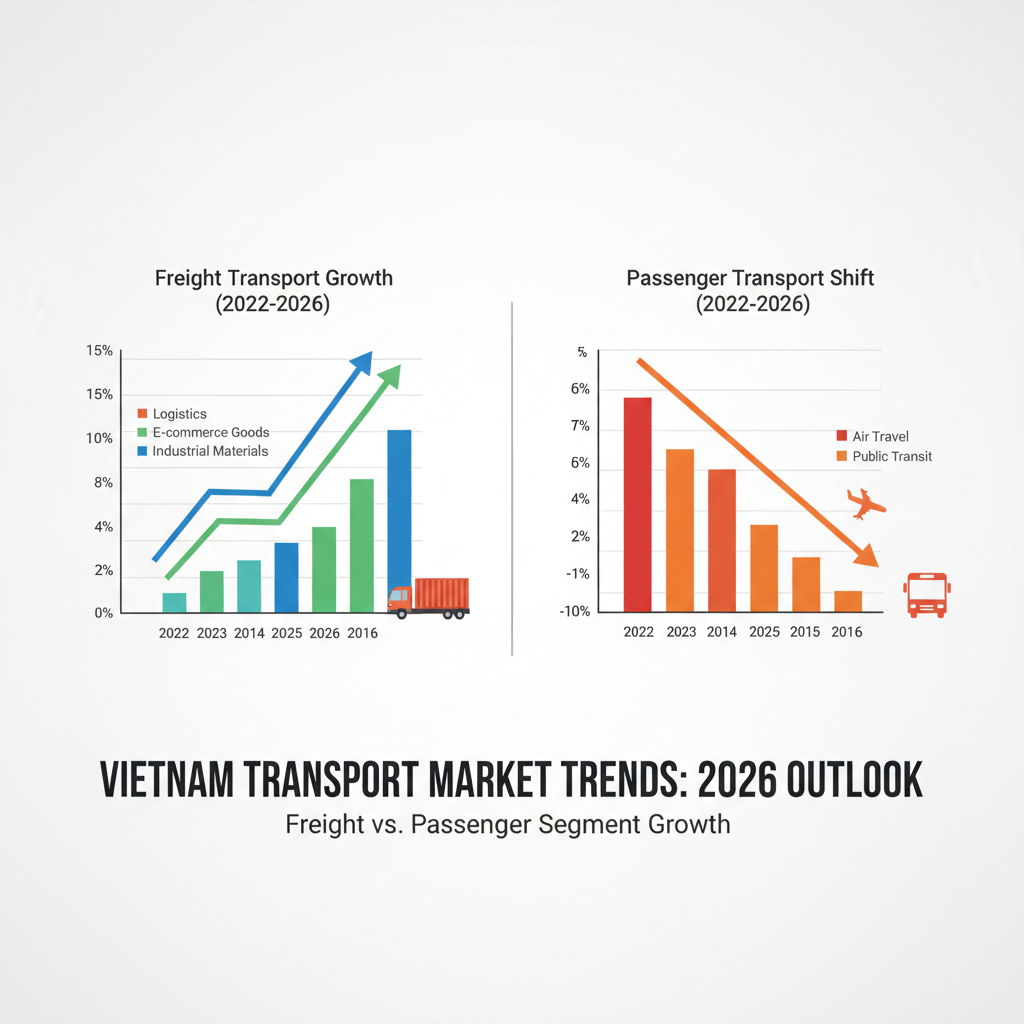
Vietnam’s dynamic economic landscape continues to reshape its transportation sector, presenting distinct market demand trend report of transportation field in vietnam across freight and passenger segments. While both are experiencing significant growth, driven by digitalization, urbanization, and a burgeoning middle class, their underlying demand drivers and future trajectories diverge, highlighting unique growth areas and investment opportunities. Analyzing these segment-specific trends is crucial for stakeholders to navigate the complexities and capitalize on the immense potential within Vietnam’s evolving transportation ecosystem.
1. Rising Demand for Logistics, Warehousing, and Cold Chain Services
The freight transportation sector in Vietnam is experiencing an unprecedented boom, primarily fueled by the country’s robust manufacturing base, burgeoning e-commerce market, and increasing integration into global supply chains. As Vietnam solidifies its position as a global manufacturing hub, the demand for efficient and reliable logistics services, including warehousing and last-mile delivery, has surged. This growth is further amplified by the rapid expansion of cross-border trade and the need for sophisticated supply chain solutions. Businesses are increasingly seeking partners who can offer comprehensive services, from customs clearance and freight forwarding to inventory management.
A key area of specialized growth is the cold chain logistics sector. With a rapidly growing domestic consumer market and an expanding agricultural and seafood export industry, the need for temperature-controlled storage and transport is paramount. This segment demands significant investment in specialized infrastructure, such as refrigerated warehouses, cold storage facilities, and a fleet of refrigerated vehicles. The focus on food safety standards, coupled with the increasing consumption of perishable goods, ensures that cold chain logistics will remain a high-growth area, driving innovation in refrigerated transport and distribution networks. This trend underscores the importance of efficient infrastructure investment and technological adoption to maintain competitive freight volume capabilities.
2. Evolution of Urban Mobility, Public Transit, and Ride-Sharing
In contrast to the freight sector’s focus on goods movement, passenger transport trends in Vietnam are heavily influenced by rapid urbanization and changing consumer preferences regarding personal mobility. Major cities like Hanoi and Ho Chi Minh City are grappling with traffic congestion and pollution, prompting a push towards more sustainable transport solutions. This has led to an increased emphasis on developing modern public transit systems, including metro lines and improved bus networks. Government initiatives aimed at enhancing urban infrastructure are critical in shaping future passenger traffic patterns.
Alongside traditional public transport, the ride-sharing economy has profoundly transformed urban mobility. Platforms offering car, motorbike, and even taxi-hailing services have become an integral part of daily life, providing convenience and flexibility. This segment continues to evolve, with players introducing new services like food delivery and parcel delivery, blurring the lines between passenger and light freight transport. The demand for seamless, on-demand transportation solutions, often integrated with smart city initiatives, continues to grow, posing both opportunities and challenges for city planners and traditional transport operators. The evolution of urban mobility reflects a broader shift towards multimodal transport options and personalized travel experiences.
3. Growth in Domestic and International Air Travel and Tourism
Vietnam’s passenger aviation sector is experiencing a vigorous rebound, driven by the strong recovery of its tourism industry and a growing middle class with increased disposable income for travel. Both domestic and international air travel are witnessing significant growth, contributing substantially to the country’s economic resurgence. The government’s efforts to promote Vietnam as a premier tourist destination, coupled with the expansion of existing airports and the development of new ones, are key catalysts. This trend highlights a strong market for both leisure and business travel, underscoring the resilience and potential for tourism recovery.
The strategic expansion of flight routes, both regionally and globally, is attracting more visitors and facilitating easier movement for business travelers. Low-cost carriers continue to play a crucial role in making air travel more accessible to a broader segment of the population, further stimulating demand. The focus is not just on volume but also on enhancing the passenger experience, with investments in modern airport facilities and efficient airline operations. This robust growth in air travel is a testament to Vietnam’s increasing connectivity and its appeal as a global travel destination, creating significant opportunities for airlines, airport operators, and related service providers. Understanding these demand trends is vital for anyone analyzing the market dynamics of Vietnam’s transportation field.
Technological Innovations and Sustainable Practices
The global transportation landscape is undergoing a profound transformation, driven by rapid technological advancements and an escalating imperative for environmental sustainability. In Vietnam, this evolution is particularly dynamic, as stakeholders increasingly focus on efficiency, connectivity, and eco-friendly solutions to meet the burgeoning demands of a rapidly developing economy, fueled by significant e-commerce growth in Vietnam. Understanding these shifts is crucial for any market demand trend report of transportation field in Vietnam, which consistently highlights the interwoven future of technology and sustainability.
1. Digitalization: IoT, AI, and Data Analytics in Logistics Operations
The advent of digitalization has revolutionized logistics, offering unprecedented opportunities for efficiency and optimization across the supply chain. In Vietnam’s bustling transportation sector, the integration of the Internet of Things (IoT), Artificial Intelligence (AI), and advanced data analytics is no longer a luxury but a strategic necessity for competitive advantage and sustainable transportation. IoT sensors embedded in vehicles, infrastructure, and cargo provide real-time data on location, condition, and performance, enabling precise monitoring and predictive maintenance. This real-time visibility is critical for supply chain optimization, allowing businesses to react swiftly to disruptions and streamline operations. AI algorithms, meanwhile, process vast amounts of this data to predict demand, optimize delivery routes, and manage inventory more effectively, significantly reducing fuel consumption and operational costs. For example, AI-powered systems can analyze traffic patterns, weather conditions, and historical delivery data to determine the most efficient routes, thus cutting down transit times and carbon emissions. The rise of smart logistics platforms leverages these technologies to create interconnected and intelligent networks, enhancing everything from warehouse management to last-mile delivery. This technological leap forward is reshaping the future of logistics operations, driving smarter decision-making and fostering a more resilient and responsive transportation ecosystem in Vietnam through advanced logistics technology.
2. Emergence of Electric Vehicles (EVs) and Green Logistics Solutions
The global pivot towards electric vehicles (EVs) is a cornerstone of the sustainable transportation revolution, and Vietnam is increasingly embracing this trend. Driven by a growing environmental consciousness and evolving environmental regulations, the electric vehicle adoption in Vietnam is gaining momentum, particularly in urban centers and for commercial fleets. EVs offer a compelling solution to reduce air pollution and greenhouse gas emissions, directly contributing to cleaner urban environments. Beyond individual vehicles, the concept of green logistics solutions encompasses a broader approach to minimize the ecological footprint of transportation activities. This includes not only the deployment of electric trucks and vans for freight and last-mile delivery but also the development of charging infrastructure, the use of renewable energy sources for logistics facilities, and the implementation of fuel-efficient driving practices. Companies are investing in hybrid and fully electric fleets to meet corporate sustainability goals and consumer demand for eco-friendly services. Government incentives, coupled with advancements in battery technology and decreasing EV costs, are further accelerating this transition. As Vietnam’s transportation infrastructure continues to develop, the integration of EVs and other sustainable practices will play a pivotal role in creating a more resilient and environmentally responsible logistics sector. According to the International Energy Agency (IEA), global EV sales continue to break records, indicating a clear trajectory for increased adoption worldwide, influencing markets like Vietnam to follow suit in pursuing sustainable mobility. This trend is a key component of any comprehensive market demand trend report of transportation field in Vietnam.
3. Smart City Initiatives and Integrated Multimodal Transport Systems
As Vietnam undergoes rapid urbanization, smart city initiatives are emerging as a holistic approach to managing urban growth and enhancing the quality of life. At the heart of these initiatives lies the development of integrated multimodal transport systems, designed to create seamless and efficient movement of people and goods across various modes – including road, rail, water, and air. Leveraging advanced logistics technology and connectivity, smart cities aim to optimize traffic flow, reduce congestion, and improve public safety. For instance, intelligent traffic management systems use real-time data from sensors and cameras to dynamically adjust signal timings, minimizing delays. Public transportation networks are being integrated with digital platforms, offering real-time schedules, e-ticketing, and personalized travel information to citizens, thereby encouraging the shift from private vehicles to public transport. This focus on urban mobility solutions also includes the promotion of shared mobility services, cycling infrastructure, and pedestrian-friendly zones. These efforts are closely tied to significant transport infrastructure development, such as expanded metro lines, improved port facilities, and better road networks, which are essential for supporting the efficient operation of multimodal systems. The goal is to create a more accessible, convenient, and environmentally friendly urban environment, where different modes of transport work in harmony. By embracing these integrated solutions, Vietnamese cities are paving the way for a more sustainable transportation future and technologically advanced urban living.
Challenges, Opportunities, and Future Investment Outlook
Vietnam’s rapid economic growth and integration into global supply chains have placed its transportation sector at a pivotal juncture. As a dynamic emerging market, understanding the market demand trend report of transportation field in Vietnam is crucial for strategic planning. This section addresses the significant hurdles facing Vietnam’s transportation field and identifies promising areas for future growth and strategic investment, offering insights for both public and private sector stakeholders.
1. Infrastructure Gaps, Traffic Congestion, and Environmental Concerns
Despite considerable progress, Vietnam’s transportation infrastructure still faces significant challenges. Decades of underinvestment and rapid urbanization have led to persistent critical infrastructure development gaps, particularly in its road and rail networks. Major economic hubs like Hanoi and Ho Chi Minh City grapple with severe traffic congestion, impacting productivity, increasing logistics costs, and reducing urban livability. This urban mobility crisis is exacerbated by an insufficient public transport network and a high reliance on personal vehicles. Furthermore, the environmental footprint of the expanding transportation sector is a growing concern. Rising carbon emissions from a burgeoning fleet of vehicles, coupled with the pollution from an inadequately regulated freight transport system, demand urgent attention. Addressing these issues requires a holistic approach, focusing on smart urban planning, efficient public transit, and a commitment to green logistics solutions to mitigate environmental degradation and ensure sustainable economic development.
2. Opportunities in Last-Mile Delivery, Intermodal Transport, and Logistics Hubs
Amidst these challenges lie significant opportunities. The explosion of e-commerce has catalyzed an immense demand for efficient last-mile delivery services across Vietnam. This segment is ripe for innovation, attracting investment in advanced logistics technologies, fleet optimization, and localized distribution networks. Concurrently, the strategic geographical position of Vietnam, with its long coastline and proximity to major shipping lanes, makes intermodal transport a powerful area for growth. Developing robust rail-port and road-rail connections can significantly enhance supply chain efficiency, reduce transit times, and lower overall freight costs, boosting the nation’s regional connectivity. Moreover, the establishment and modernization of integrated logistics hubs – incorporating smart warehousing, cold chain logistics, and specialized freight handling facilities – are essential. These hubs will serve as crucial nodes for domestic distribution and international trade, streamlining operations for businesses and improving Vietnam’s overall logistics performance index. Investment here directly supports the evolving market demand trend report of transportation field in Vietnam, especially in urban and industrial zones.
3. Strategic Investment Areas for Public and Private Sector Development
To capitalize on these opportunities, strategic investment is paramount. The public sector must continue prioritizing large-scale infrastructure projects, including the expansion of the expressway network, development of high-speed rail corridors, and upgrading deep-water ports and international airports. These foundational investments are critical to improving national connectivity and supporting economic growth. Simultaneously, leveraging public-private partnerships (PPPs) can unlock substantial private capital and expertise for these ambitious projects. For the private sector, key investment areas include the digital transformation of logistics operations through IoT, AI, and big data analytics to create smart logistics systems. There’s also immense potential in sustainable transport initiatives, such as the adoption of electric vehicles for urban delivery, the development of charging infrastructure, and investments in green logistics solutions. Furthermore, foreign direct investment (FDI) in specialized logistics services, cold chain technology, and automated warehousing presents a robust avenue for growth. Focusing on these areas will not only enhance Vietnam’s transport capabilities but also foster a more resilient and environmentally responsible supply chain, reinforcing its position as a key player in the global economy.
Partner with Shelby Global
You are looking for reliable HR Sevice Suppliers? Contact Shelby Global Now! To connect with verified talents and upgrade your orginization.
—————————————
References
– Enhancing Vietnam’s Logistics Competitiveness is Key for Post-Pandemic Economic Recovery and Growth: https://www.worldbank.org/en/news/press-release/2021/08/17/enhancing-vietnam-s-logistics-competitiveness-is-key-for-post-pandemic-economic-recovery-and-growth
– World Bank Vietnam Overview: https://www.worldbank.org/en/country/vietnam/overview
– Vietnam’s Logistics and Supply Chain Market Outlook: https://www.vietnam-briefing.com/news/vietnams-logistics-and-supply-chain-market-outlook.html
– Global EV Outlook 2023 – International Energy Agency: https://www.iea.org/reports/global-ev-outlook-2023
– Enhancing Infrastructure Investment for Sustainable Development in Vietnam: https://www.worldbank.org/en/news/press-release/2021/04/14/enhancing-infrastructure-investment-for-sustainable-development-in-vietnam



































































































